BBC: “There will be virtually nothing left to fish from the seas by the middle of the century if current trends continue, according to a major scientific study. Stocks have collapsed in nearly one-third of sea fisheries, and the rate of decline is accelerating.”
Year / 2006
Lethem & Schatzberg
Jonathan Lethem (one of the good Literary Jonathans) sends word that he’s hosting an 826NYC fundraiser. The movie is Scarecrow, which I contend is a pretty good flick with Hackman and Pacino. The action goes down at The IFC Center on November 9 in 7:30 PM. If you’re in New York and you want to see Lethem geek out with director Jerry Schatzberg, you may want to check this out.
American Readers Are Made of Stern Stuff, Thank You Very Much
Globe & Mail: “A French-language novel by Calgary-born Nancy Huston that was awarded France’s prestigious Prix Femina this week was expected to be published in English first — but the novelist’s Canadian publisher and New York agent held off doing that this year because they wanted Huston to change portions of her text to avoid offending U.S. readers.”
Return of the Slate Audio Book Club
After announcing that they had “returned from a late-summer hiatus” in September, those swank sophists at the Slate Audio Book Club have, after a six week absence, returned for more shallow hijinks. Buddha help us all.
Regular Reluctant readers will recall that, the last time this intrepid trio graced the microphones, they let loose all manner of racist generalizations about Toni Morrison’s Beloved and, so far as anybody knows, only one brave listener (Powell’s Books blogger Lewis) was able to make it to the thirteen minute mark.
This time out, the book is Michael Pollan’s The Omnivore’s Dilemma. After an august introduction from a dour man named Andy Bowers and a “jazz” tune reminiscent of something I heard in an elevator last week, Meghan O’Rourke again returns to hosting duties, suggesting that the group should get ready to discuss “plot points.” (Go Team!) Never mind that Pollan has not authored a novel, but a nonfiction book, what O’Rourke refers to as “a complicated book,” perhaps because she forgot to set the fiction/non-fiction toggle switch in her head shortly before recording this podcast.
She then asks for reactions from Stephen Metcalf and Katie Roiphe. Metcalf refers to corn as the “the sort of binding, kind of guiding, you know, object in the book.” (Perhaps he intended “subject.” But then, given O’Rourke’s inability to separate fact and fiction, I suppose Metcalf was facing similar difficulties adjusting.) The corn, in Metcalf’s words, “gives the narrative some thrust and strength early on.” (One would hope so, if we view Pollan’s corn as a phallic metaphor, assuming that Pollan’s book can be read as fiction.)
Strangely, Metcalf points out that The Omnivore’s Dilemma can be categorized in a new nonfiction genre that concern food issues, including Fast Food Nation and Super Size Me, a book I must confess unfamiliarity with. Presumably, much as O’Rourke cannot distinguish between fiction and nonfiction, Metcalf cannot distinguish between books and films. (Although, Morgan Suprlock did, in fact, author a book called Don’t Eat This Book.) Even stranger, Metcalf near plaigiarizes the LBC term of art “in a flooded marketplace” by noting how Pollan’s book finds an audience “in a crowded marketplace,” leaving one to wonder if the Slate Audio Book Club is Slate’s airheaded rejoinder to the Litblog Co-Op’s efforts.
And then Katie Rolphe, the Elizabeth Hasselbeck of podcasting, emerges from the honeycomb, proudly announcing that the book “had a strong effect on my thinking.” Roiphe, never one to offer an example to support her generalizations, surprising given her Ph.D., then switches gears in seconds, finding the book “flawed, deeply flawed” — complaining not of the positions that Pollan takes, but of the book’s apparent sentimentality. Roiphe, perhaps unnerved by anything challenging her possible belief that New York is the center of the universe, then states that she found Pollan’s concentration on the farm “off-putting,” as if delving into how food is cultivated and manufactured was somehow bucolic instead of scientific. Given this bizarre logic, I am curious what Roiphe’s take would be on a quantum physics book. Would she find it “off-putting” because she doesn’t care for cats or multiconsonant names like Schroedinger? Would she rail similarly against subjects that are absolutely vital to the subject at hand?
But Roiphe’s objections become even stranger. Witness this grand morsel of stupidity:
“And I also found what I take as sort of fu…kind of almost like a yuppie fussiness over food that I just am…can’t get that interested in. And this is a 400 page book….and part of me, part of his argument and some of the places he takes his argument, I just couldn’t go along with it.”
And with affirmative susurrations by fellow dunces O’Rourke and Metcalfe, without either of these Two Great Thinkers asking Roiphe for specifics about what made Pollan’s argument so “flawed” or unpalatable, with assenting head nodding and thoughtful grunts, the podcast continues. O’Rourke then complains about Pollan setting a portion of his book in the San Francisco Bay, scraping salt from the bottom of the bay for his own homemade salt because of “yuppie fussiness.” Never mind that Pollan has written a book attempting to explain why Americans eat the way that we do and that examining why so much of our current food is laden with corn is far from “fussy” or “yuppie,” but more within the territory of scrutiny.
Indeed, I fail to understand what class has to do with ecological concerns. An equally disinterested and ignorant reader might very well apply “yuppie fussiness” to an environmental scientist investigating the melting polar icecaps. By what stretch of the imagination is investigation “fussy” or “yuppie?”
Disgusted by this myopic and anti-intellectual tone (and Roiphe’s eager Chihuahua-like voice), I Alt-F4ed my player at the 4:14 mark, unable to handle any more of this nonsense. And I now firmly believe that the Slate Audio Book Club is beyond repair. Keep in mind that this jejune conversation occurred with at least six weeks of preparation. Not since the film adaptation of The Hitchhiker’s Guide to the Galaxy have I seen a more stunning waste of time and resources.
Nevertheless, I put forth the challenge to you: can you make it longer than four minutes?
[UPDATE: It looks like Jessa Crispin listened to the whole podcast, thus making her the only person we know of on the Internet courageous enough to listen to the whole thing.]
Can the Demos Take the Senate? (Part One)
As next week’s election approaches with an uncertain focus, the question that every progressive is asking right now is whether the Democrats have a shot at securing a majority in both houses (and, most importantly, the Senate). Yes, the House of Representatives looks pretty strongly Democrat at this point. If today’s voters get in touch with their inner Charles Bronsons at the polls (assuming the Diebold machines don’t malfunction), their grand acts of payback will almost certainly be in the lower Congressional races.
But the Senate remains a more troubling arena of concern. Those who recall the way that Senator Henry Cabot Lodge sabotaged Woodrow Wilson’s League of Nations in 1919 know very well that this is where the true Macbeth-like figures commit their quiet homicides. Senators, having four more years in their term than those who occupy the lower house, know very well that they can outlast a President. And it is here where the ruthless impulses of social Darwinism are the finest. Senators do not often wave to those shown out the door. They ask their pages to do this, if they are feeling generous (and this is frankly not that often). Thus, there is greater effrontery and often greater hubris at work.
Larry Sabato has peered into his crystal ball and suggests the Demos will win six seats and thus capture the majority. Me? I’m not so sure. (And given that Lieberman is running as an Independent, a fact overlooked by Sabato, is he really a true-blue Democrat?)
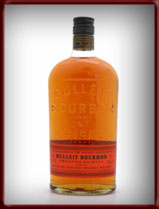 Rest assured, I’ll be holed up in my apartment with a bottle of bourbon on Tuesday night: the television blared up at full volume, the neighbors pounding on my door, my apartment filled with eldritch cries of triumph and terror, the Department of Elections websites bookmarked, my twitchy finger hitting F5 more frenetically than a mescaline addict. Perhaps my incoherent ruminations will be posted here. I do not know. These are the sad confessions of a political junkie who gives a damn and has become quite savagely optimistic about the whole November mess, hoping that more than a few corpulent pigs will be roasted over painful, career-killing conflagrations set by vengeful constituencies who have had enough.
But for the moment, here’s part one of my sober take on the midterm elections. More alcohol-fueled speculations will occur on Tuesday night.
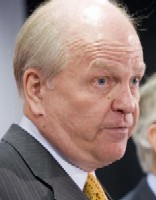 Candidates: John Kyl (R) and Jim Pederson (D)
Tuscon Weekly reports that a KAET poll shows that Kyl is ahead 47 to 41%. Bill Clinton is appearing today to boost Pederson.
Without citing anything specific, the San Francisco Chornicle reports that “Pederson’s poll numbers show him trailing by only single digits.” What poll numbers? The KAET poll? What kind of lazy reporting is this?
Meanwhile, the National Review‘s John J. Miller is having his doubts about Kyl, based on the KAET poll.
I’m forced to conclude that the race is close but by no means locked. A lot can happen in five days. I’m not certain that the Bill Clinton effect will have that dramatic an impact. Then again, with Bush’s recent announcement of the immigration fence, the GOP may have taken a stick at a beehive.
Analysis: Likely Kyl, but it ain’t over till it’s over.
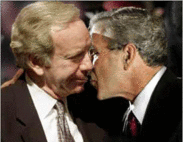
Candidates: Joe Lieberman (I) and Ned Lamont (D)
Ned Lamont hasn’t been performing nearly as strongly in Connecticut as progressives had hoped. While it is true that Lamont has made gains, decreasing his trailing gap in the polls from 17% to 12% over the past two week, this isn’t enough momentum to secure a close race in five days, even with this most recent campaign financing scandal.
So we’re left with Lieberman, the Democrat who couldn’t even win his own party’s primary. And I think Sabato is being very naive in thinking that Lieberman will vote with the Democrats. Perhaps at first, in a Democratically controlled Senate, he will. But once Joe gets in the hot seat again, he’ll have six more years to expand his hubris, all pledges of “supporting Democratic leadership” to the contrary.
(And Ralph Nader campaigning for the Connecticut Greens when Lamont is running is just ridiculous.)
Analysis: Lieberman will win.
Candidates: Michael Steele (R) and Ben Cardin (D)
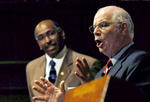 If anything, we can thank Rush Limbaugh. His callous and ignorant allegations directed at Michael J. Fox have given Cardin a bit of a boost and spawned a Maryland-based debate on stem cell research, with Steele insisting that he too supports stem cell researchl. Despite the Limbaugh debacle, Steele has tightened his trail as of Wednesday. Cardin leads Steele 49 to 43%, an improvement from September, when he fell behind by 11 points.
I think the African-American voting bloc question is moot, given that, as of Tuesday, 74% of blacks support Cardin. Black voters aren’t dumb.
Analysis: Cardin will win.
 Candidates: George Allen (R) and Jim Webb (D)
The latest CNN and SurveyUSA polls suggest that Webb is ahead by somewhere between 3-4%. Perhaps the biggest surprise was the Rasmussen poll unveiled on Monday, with Webb finally pulling forward in what has been a very close race.
The Virginia Senate race doesn’t cause one to drink nearly as much as the Missouri race, but it’s still just insane enough to cause some concern. There was, most recently, Senator Allen’s crazed encounter with blogger Michael Stark (see video here), in which a question about Allen’s wife elicited several thugs to tackle Stark, who is now pressing charges. Allen’s team has attempted to point the finger at Webb, which makes this all very interesting, given that it was Allen’s team, after all, who decided to manhandle the blogger.
Contrary to the Kos’s colossal hubris, I doubt very highly whether most Virginians actually care about bloggers, but this violent moment may very well crystalize the difference between Allen and Webb.
Further, Webb has been smart enough to employ veterans and Wesley Clarke to speak in favor of him, playing up Webb’s military experience.
This is certainly a close race, but it looks to me that Webb’s campaign is far more focused and less accusatory than Allen’s and that he may pull a victory by a nose.
Analysis: Webb will win, just barely.
Candidates: Mike McGavick (R) and Maria Cantwell (D)
 McGavick is looking more preposterous every day. If he genuinely believes that condemning Cantwell for responding to Kerry’s botched joke with “not just silence but an immediate fundraiser,” then he severely underestimates not only the intelligence of Washington voters. Silence, as anyone who’s attended a high school rhetoric class knows, does not necessarily mean endorsement. And Cantwell’s team responded by stating that they supported the troops.
That McGavick wants to make a mountain out of this picayune undulation is telling of his desperation, reflected also in his recent pulling of Seattle television ads. In light of his history, it will be interesting to see if the guy goes crazy on election night just after his concession speech.
With Cantwell holding a comfortable twelve point lead, it’s clear who will end up the winner.
Analysis: Cantwell will win.