Salinger’s Secrets

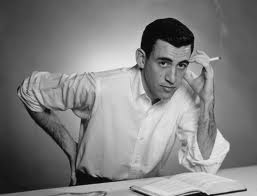
The New York Post reports* that Jamie Clarke’s upcoming book, O What Fun We’ll Have! O the Times! reveals the following tidbits about J.D. Salinger:

1. His favorite movie is The Lost Weekend.
2. Jeffrey Katzenberg attempted to buy the film rights for Catcher in the Rye (with the promise that Spielberg would direct). So did Harvey Weinstein. Both of their offers weren’t even passed onto Salinger.
3. Salinger’s hearing has gone and he “prefers to receive written letters as communication, to be sure that he understands what he is being told.”
4. Salinger destroyed a telephone enhancer in a rage.
5. His house caught on fire several years ago, but has been rebuilt.
6. He travels under several pseudonyms, but always uses the first name Jerry to help his wife out.
7. There is no wealth of manuscripts that he’s sitting on for posthumous publication.

Now if only Conan O’Brien can get Salinger to appear for “Salinger’s…Secrets,” we’d be truly set. I wonder if similar memoirists will blow the reclusive covers of Pynchon and DeLillo in a decade or so.

(via Publisher’s Lunch)

Addendum (May 21, 2013):

* — Sadly, The New York Post has been remiss about preserving its online content. This came from a Page Six item circa December 3, 2003. But Web Archive only preserved this rapidly updated gossip column in monthly spurts. Salinger is now dead. But there is a forthcoming Salinger biography coming in September 2013 from David Shields and Shane Salerno.

As for Pynchon and DeLillo, there hasn’t been nearly as much prying into their private selves as I anticipated.

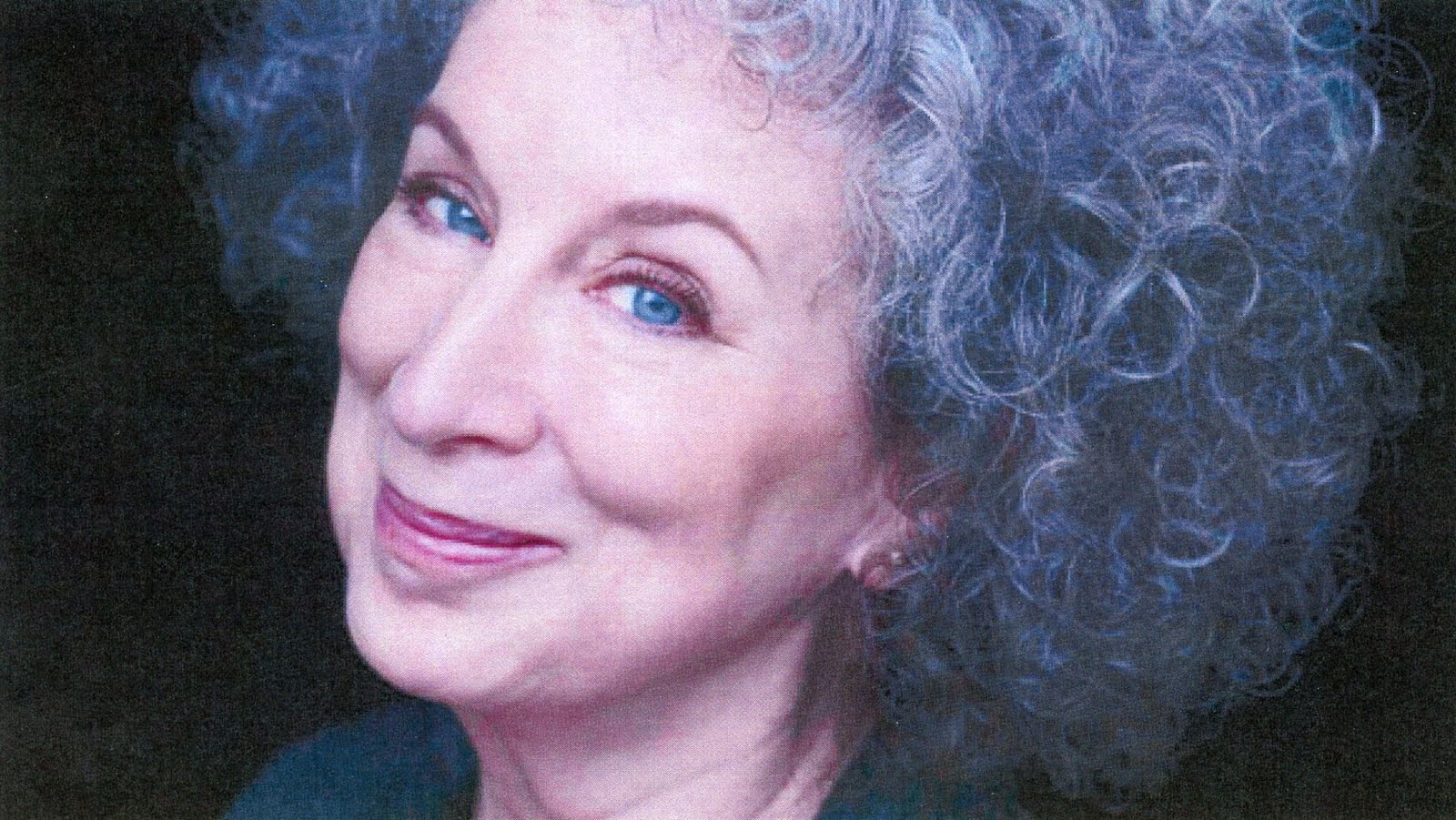
Does Maragaret Atwood Hate Food?

atwood.jpegIn the Margaret Atwood universe, not even an innocent cookie is safe.
From The Blind Assassin:

“Myra had left me one of her special brownies, whipped up for the Alumni Tea — a slab of putty, covered, in chocolate sludes — and a plastic screw-top jug of her very own battery-acid coffee.” (37)

“She says [hamburgers] are pre-frozen patties made of meat dust. Meat dust, she says, is what’s scraped off the floor after they’ve cut up frozen cows with an electric saw.” (44)

“On the menu, displayed in the window — I’ve never gone inside — are foods I find exotic: patty melts, potato skins, nachos. The fat-drenched staples of the less respectable young, or so I’m told by Myra.” (51)

“jars of jam with cotton-print fabric tops, heart-shaped pillows stuffed with desiccated herbs that smell like hay” (52)

“I sat on the park bench, gnawing away at my cookie. It was huge, the size of a cow pat, the way they make them now — tasteless, crumbly, greasy — and I couldn’t seem to make my way through it….I was feeling a little dizzy too, which could have been the coffee.” (54)

“There was nothing much I wanted to eat: the draggled remains of a bunch of celery, a blue-tinged heel of bread, a lemon going soft. And end of cheese, wraped in greasy paper and hard and translucent as toenails.” (56)

“Consomme, rissoles, timbales, the fish, the roast, the cheese, the fruit, hothouse grapes dressed over the etched-glass epergne. Railway-hotel food, I think of it now; ocean-liner food.” (60)

“Breakfast in a haze of forgiveness: coffee with forgiveness, porridge with forgiveness, forgiveness on the buttered toast.” (77)

“I purchased a small iced tea and an Old-fashioned Glazed, which squeaked beneath my teeth like Styrofoam. After I’d consumed half of it, which was all I could get down, I picked my way across the slippery floor to the women’s washroom.” (83)

“I’d eaten too many cookies, too many slivers of ham; I’d eaten a whole slice of fruitcase.” (96)

“We’d have buttered white bread spread with grape jelly translucent as cellophane, and raw carrots, and cut-up apples. We’d have corned beef turned out of the tin, the shape of it like an Aztec temple. We’d have hard-boiled eggs.” (138)

I’d keep going, but I think the point is clear. Either the narrator’s very being is hindered by eating, or Atwood is a closet anti-culinary type. To which I reply, if music be the food of love, play on.

Addendum (May 21, 2013):

Margaret Atwood’s remarkably nihilistic food description has continued unabated in the past decade, helped in large part by the fact that she’s spent much of her fiction writing time building an apocalyptic universe in the Oryx and Crake trilogy. Here are more recent samples:

From Oryx and Crake:

He said it was only pure dumb chance he wasn’t dead — that this fucking country hadn’t killed him with its lousy food.

Worms and grubs were what he recommended for a snack food. You could toast them if you wanted.

…the food in the cafeteria was mostly beige and looked like rakunk shit.

No point thinking about it, not in this heat, with his brain turning to melted cheese. Not melted cheese: better to avoid food images.

From The Penelopiad:

Have I mentioned that there’s nothing to eat except asphodel?

He was sorry he’d asked them for something to eat.

From Moral Disorder:

I was not an orphan, I told myself; I was not nearly enough of an orphan. I needed to be more of one, so I could eat food that was bad for me… — “The Other Place”

As a child she’d separated her food into piles: meat here, mashed potatoes there, peas fenced into a special area reserved for peas, according to a strict plan of her own. One pile could not be eaten before the one already started had been consumed: that was the rule. — “Monopoly”

From The Year of the Flood:

“Why would we hunt?” said Zeb. “To eat,” said Amanda. “There’s no other good reason.”

When Bad Writers Reveal Loneliness

This year’s Bad Sex Prize goes to Aniruddha Bahal for his novel Bunker 13. The winning line: “Her breasts are placards for the endomorphically endowed.”

Discounting celebrities that go out of their way to sign bosoms (a phenomenon I’ve never understood), I’ve never thought of breasts as placards. Placards, by their very definition, are flat. “Endormophically endowed,” which would imply a surfeit of silicone or softness, contradicts that.

But that’s just the tip of the iceberg: “You see a designer pussy. Hair razored and ordered in the shape of a swastika. The Aryan denominator… “

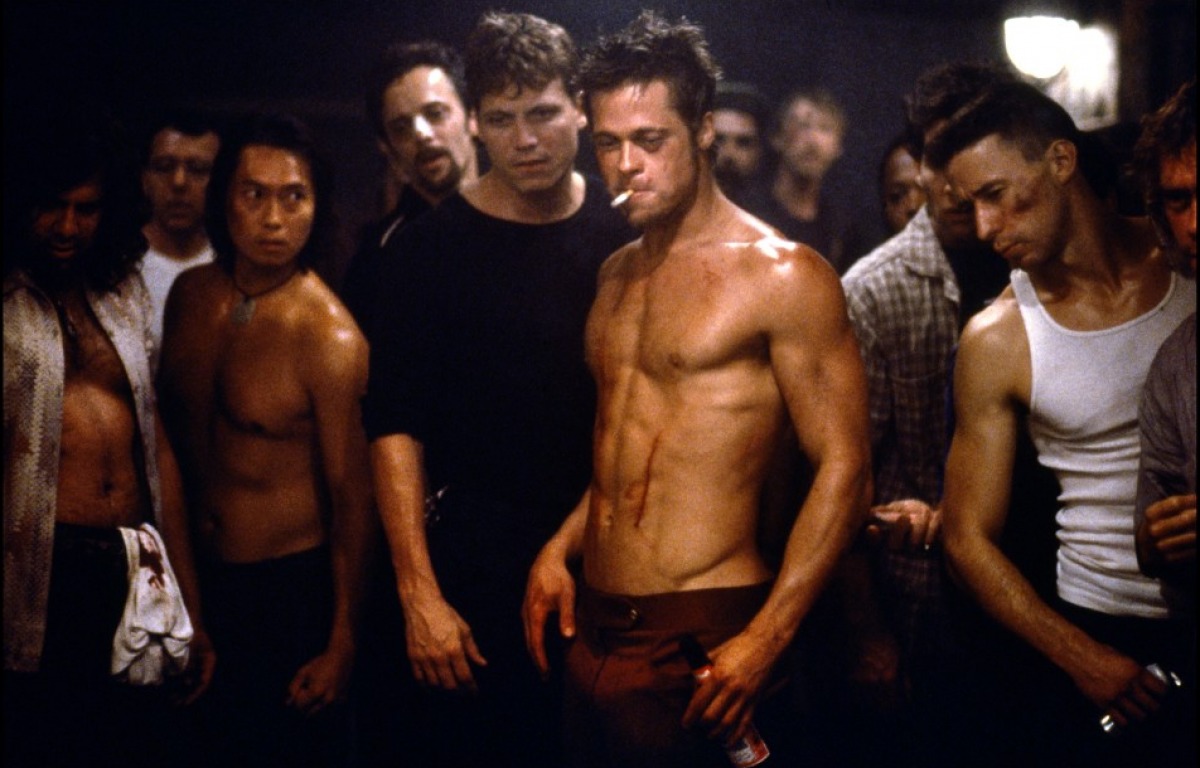
The Charge of the Fight Club Brigade

Half a tale, half a tale
Half a book onward,
All in the hackrooms of Death
Wrote Chuck six hundred
“Forward, the Fight Club Brigade!
“Charge for the books,” Chuck said:
Into the hackrooms of Death
Wrote Chuck six hundred

“Forward, the Fight Club Brigade!”
Was there a reader dismay’d?
Not tho’ the fanboy knew
Some Laura had blunder’d:
Hers not to fly a kite
Hers not to think or write,
Hers not to like one mite:
Into the hackrooms of death
Wrote Chuck six hundred.

Lullaby to right of them,
Survivor to left of them,
Choke in front of them,
Purchas’d and plunder’d,
Gorged through with rage and unschool’d,
Boldly they read and watched,
Into the jaws of Fincher,
Into the mouth of Chuck’s checking account
Wrote Chuck six hundred

Tomes Out of Touch?

The Washington Post reports* that eight out of the nine Democratic presidential candidates have books out. Here are a few excerpts culled from the article and other places:

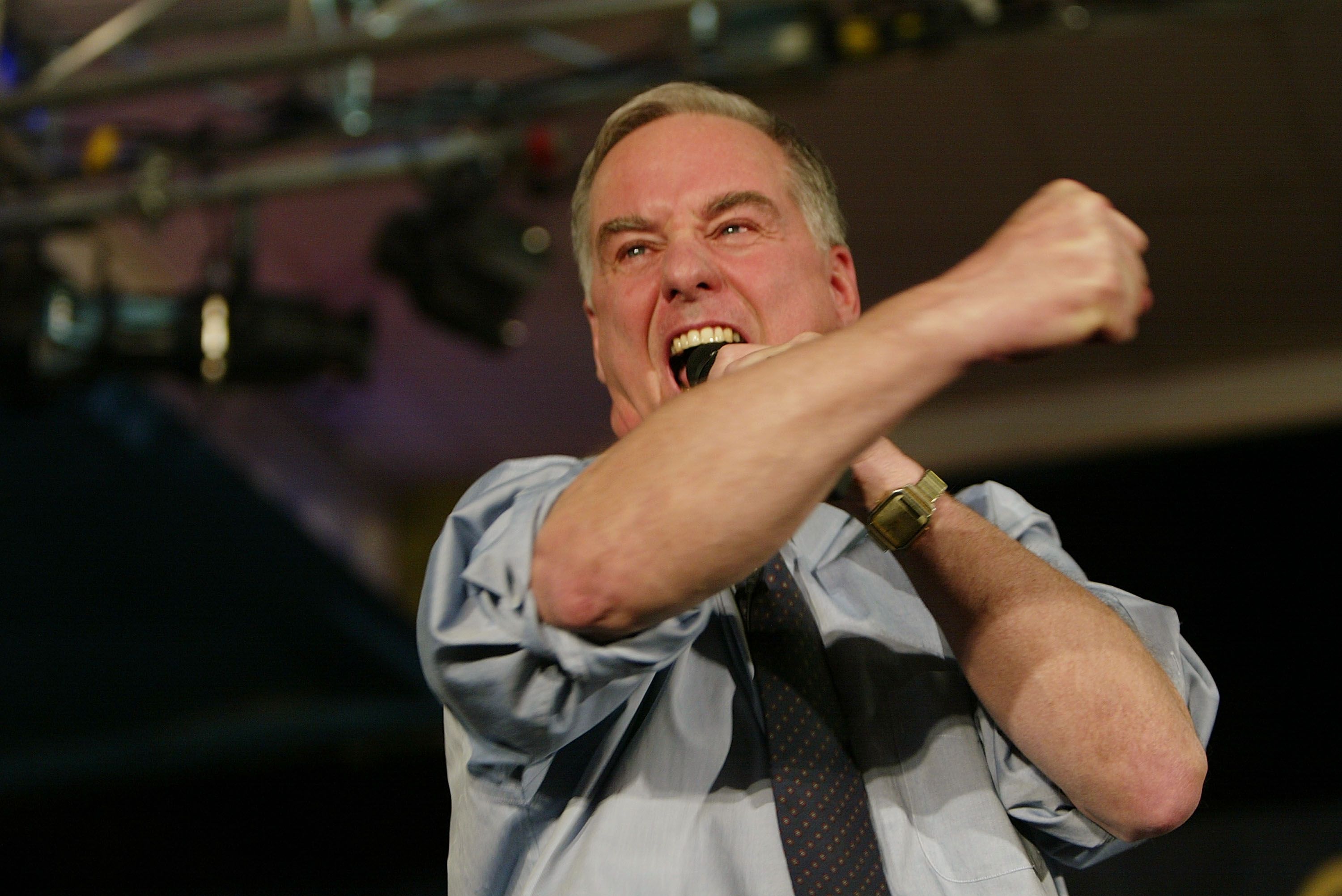
Winning Back America by Howard Dean: “I don’t indulge myself when it comes to clothes. . . . I have a suit that cost $125 at J.C. Penney in 1987.” Well, every son of a multimillionaire stockbroker needs a hobby.

A Call to Service: My Vision for a Better America by John Kerry: “I am so addicted to ice hockey that I still fantasize about starting a professional over-fifty senior league.” Too bad that nobody’s told Kerry that he’s also addicted to a primary race he can’t win.

Winning Modern Wars: Iraq, Terrorism, and the American Empire by Wesley K. Clark: Clark’s enamored of awkward clauses and repetition. “America’s primacy in the world — our great power, our vast range of opportunities, the virtual empire we have helped create — have given us a responsibility for leadership and to lead by example. Our actions matter. And we cannot lead by example unless we are sustained by good leadership. Nothing is more important.”

A Prayer for America by Dennis Kucinich: This one’s a collection of essays and speeches. The titular speech offers a blustering homage to the Declaration of Independence.

Al on America by Al Sharpton (with Karen Hunter): Sharpton’s fond of stating the obvious. “Racism may make the workplace and housing market unequal. But racism doesn’t make you put gold teeth in your mouth, spending thousands of dollars when you don’t have enough food to feed your family. Racism doesn’t make you buy a new, expensive car when you don’t own the home you live in. Racism doesn’t make you make babies that you aren’t going to raise and support both financially and spiritually. Racism doesn’t do that.”

In An Even Better Place: America on the 21st Century, Richard Gephardt (with Michael Wessel) offers parenting hints: Read to your children, help kids with your homework, try to make every school function, and spend time with them. It’s nice to know Gephardt’s so in touch with working class realities. Little is said of time and money.

The Joseph Conrad Award goes to Four Trials by John Edwards (with John Auchard): “At first it seemed strange that so few people who came into my office were angry. In some ways they were probably beyond anger, for their lives had been altered completely – completely and forever – and they just sought something that could bring it back and make it good again. Anger might come later, or it might have been there before, but I almost never saw it in my office – for now they only hoped that things would change.” With a campaign contribution to Edwards, you can get a complimentary copy. Not unlike getting a worthless trinket after pledging a sizable sum to PBS.

And then there’s Lieberman, who offers An Amazing Adventure: Joe and Hadassah’s Personal Notes on the 2000 Campaign, co-written with his wife. The books sounds about as fun as being forced to watch a slide show narrated by some hoary, rambling relative. “A funny thing happened in 2000. I became known for being funny. It began on opening day. At the announcement rally in Nashville on August 8, I told the crowd I was surprised that the Republicans’ first reaction to my selection had been to say that ‘George Bush and I think alike.’ Well, I said, ‘With all due respect, I think that’s like saying the veterinarian and the taxidermist are in the same business — because either way you get your dog back.'” I wonder if that came from Bob Hope’s joke file?

Carol Mosley Braun, who has about as much of a chance as Kucinich, has thankfully spared us a book. Not that a book will offer her any additional leverage.

Jimmy Carter, on the other hand, just came out with a historical novel, The Hornet’s Nest, set during the Revolutionary War. The Washington Post‘s Noel Perrin writes*, “I had hoped to love the novel, because I so admire the man. Alas, I don’t love it. Mind you, it’s a true novel, with many effective scenes and a few stunning ones….[b]ut some of the best scenes are only tenuously connected with the American Revolution.” The St. Louis Post-Dispatch‘s Martin Northway notes, “a chilling encounter with a venomous cottonmouth is no time to pause for a treatise on Agkistrodon piscivorus.” The reviews in general have praised Carter’s historical erudition, while quibbling over his lack of character depth. But the great irony is that Carter has seventeen books behind him.

Addendum (May 20, 2013):

The original Washington Post article, published on December 3, 2003, is now behind a paywall. I have switched the link to a rewritten version of the article. Regrettably, the Noel Perrin review is not available anywhere online. Martin Northway’s St. Louis Post-Dispatch review is online, but behind a paywall. Noel Perrin passed away on November 21, 2004 and I have no way of contacting his widow, Sara Coburn. I also can’t find contact details for Martin Northway. But if these two individuals wish to contact me and share the articles, I will happily feature them here. But it looks like these two links are permanently lost to time. (5/20/2013)