I was twenty-one when I first put a cigarette to my lips. I was oh so stupid, swiftly addicted to the bursts of artificial dopamine that nicotine seemed to guarantee. Cigarettes fueled my writing, my conversational energy, and, pathetically, my reason to be alive. In my early twenties, three thousand crisp and witty words spilled out of me with libertine glee every Wednesday night, with a few late lead dispatches or an eleventh-hour interview transcript on a Thursday. I documented the week’s film releases with verve and eclat and I would chain smoke as I happily banged all this madness out of me, operating in some fumy fugue state.
I would pore proudly over the remains of fifteen to twenty cigarettes in my ashtray as my 56k modem emitted that telltale screech of an Internet handshake. And when I connected, I would send a triumphant email gravid with Word attachments to my editor. I delivered such clean copy that there usually wasn’t much of a punch up.
We’ll never see the likes of those days again, now that writing long and lavish thoughts about books and film seems to have fallen by the wayside with eight-track tape, zines assembled with scissors and Sellotape, and video store clerks who memorized the Leonard Maltin movie guide with Talmudic resolve. Years later, I would learn how much my weird knack for accessible intellectualism aggravated and angered my colleagues. The more envious and invidious practitioners often read through my work for gaffes so they could announce what a charlatan I was in the comments. It was truly amazing how many enemies you could make in the literary world by simply having a fun time or writing with genuine passion and exuberance. Hopeless and humorless hacks wasted astonishing amounts of their spare time shit-talking and spreading unsubstantiated falsehoods about me to anyone they deemed “important.” Had they possessed any true idea of how fragile and uncertain and self-hating I was at the time, they might have raised their sniper rifles and instantly murdered the maniac who wrote as rapidly as Lester Bangs, but who somehow did so without Darvon and Nyquil. But I did have the cigarettes. There was enough of a command in my writing voice for me to carry on. And for a long time, as recently as last August, cigarettes were so poisonously intertwined with my good faith efforts to deliver something original in words.
When the late great Roger Ebert was extraordinarily gracious and commended my writing in those puckish and punkish days, when writing online was akin to being some top-tier leper that no legacy media practitioner roosting in a high place wished to talk about, I didn’t believe him. I stupidly assumed he was praising the latest fresh hard pack of Lucky Strikes or Marlboro 100s I had tapped four or five times against the edge of my palm before ferociously ripping off the foil which protected my vile babies. I had precious little self-esteem in those days and I would learn decades later that I was carrying a remarkable amount of accumulated pain and trauma that contributed heavily to my many failings. This made me an easy mark for tobacco. And I told myself that it was the cigarettes, not me. It never occurred to me that I could write well or live better without cigarettes. When I met other writers who smoked, some of them believed the same thing.
The cancer sticks were there for every victory and every loss. Almost like a long lost uncle who would never leave you. Lovers bolted. Friendships dissolved. Prospects fizzled. But the cigarettes always stayed. And that security — the extremely lethal reliability measured out in lots of twenty — seemed to overshadow the yellow teeth and the bad breath and the nicotine stains on my fingers and the wretched odor that settled upon every article of clothing I donned and every piece of furniture I reclined on. Every time I fired up a gasper while shivering in the cold, puffing hard and greedy upon the five packed inches of deadly tobacco rapidly reduced by selfish sucks into soft sprinkles of ash, I would tell myself that I was warm and that this atoned for how winded I felt whenever I climbed multiple flights of stairs.
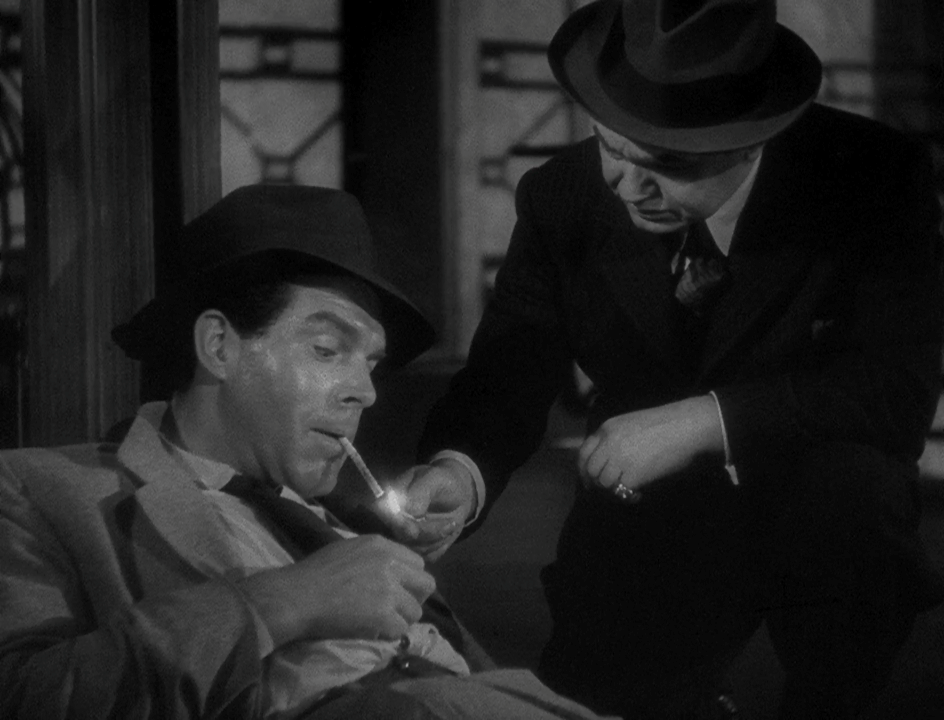
In my younger days, I was incredibly shy and awkward and sensitive. Still am today to some degree, though I am better at cloaking it when I am in the presence of the baleful and the obnoxious. Since cigarettes seemed to provide a solution to every problem, I deferred to their sham expertise. I could plant myself on a barstool, ask the barkeep for any drink I had the bread for, put one of those hideous sticks between my lips, light it up, and watch the blue smoke flutter in an upward whirl that reminded me of all the great noir films that I wolfed down like some starved animal eating Thai or Indian food for the first time in years. But my great hunger for cigarettes, all part of an insidious scam manufactured by malevolent bloodthirsty capitalists in the tobacco industry and their chemist accomplices, soon eclipsed that relatively harmless addiction.
The nicotine screamed within my bloodstream like some coddled toddler demanding candy packaged in seductive multihued paper. Cigarettes were my answer to those sweet goodies stacked right next to the supermarket checkout line as all the poor single people begrudgingly waited in line to buy their Saturday night pints of Haagen-Dazs or their bottles of merlot while suffering through the piercing tantrums of a child pointing at a brick of Kit-Kat waiting for an adult with a fat wallet. Oh yes. That was nicotine and me, except that I was a petulant addict without the parents to blackmail or the audience to terrorize.
You see, nicotine is one of the most addictive alkaloids ever created by mercantile men. And back when I first started smoking in the mid nineties, the cigarette companies began to increase nicotine levels through improved chemical technology. It was the worst time in American history to become ensorcelled by these dreaded coffin nails. The tobacco conglomerates added ammonia, sugars, additives, and other nasty chemicals to ensure that the nicotine was sent faster to my brain and that tobacco smoke settled more smoothly into my lungs.
The tobacco companies had this sinister idea of profiting by creating millions of lifelong addicts, who would become dedicated consumers until just before the tombstone, smoking their way into COPD, emphysema, heat disease, and lung cancer and hopefully passing on the addiction to their children. Even the Nazis, who actually had anti-smoking programs in place, didn’t go that far. (But let’s not pat those evil bastards on the back. Especially as we chillingly repeat history in this wildly awful immigrant-detaining and Iran-bombing age.) It became so difficult and unpleasant for smokers to quit that some drug addicts have described cigarettes as more addictive than heroin.
No matter how hard you tried, you’d eventually go back to smoking.
I first started smoking while walking the streets of San Francisco by myself. Scratch any addict and you’ll see that it starts as a temporary cure for loneliness or anxiety. I was hooked on the ironically pure-white scags within a week.
I started smoking in the twentieth century with a decidedly twentieth century brand: unfiltered Lucky Strikes. This was a partial nod to my father, who smoked Pall Malls. But Pall Malls weren’t easy to find in the nineties. Lucky Strikes were the closest thing.
My father had smoked more or less to the end of his life, dropping dead at the age of seventy-three during the pandemic. The probate attorney who informed me of his passing told me that the furniture around him had been pocked and riddled with careless and prolific burns. She told me over the phone that there came a point in which my father just didn’t have the will to live. He gave up, much as he had given up writing sometime in his forties, presumably having little more than smokes to soothe his paranoia and his bitterness. And this spooked me. I didn’t want to be a cynic. And I very much wanted to live. In large part because I needed to write. I wanted to live even as I was puffing away while the attorney squawked more details through the tinny Android speaker pressed to my ear. Here I was. Still slowly killing myself and not quite knowing what to feel about the man who had abused me for years, the man whom I had cut myself off from three decades before for my own protection.
After I said my goodbye to the attorney, I imagined a future twenty-five years from now in which I might suffer the same fate. That’s the irony of cigarette time. Backwards and forwards. Forwards and backwards. Sex or a meal punctuated by a rapaciously inhaled toby rib. The nicotine muddling your memory and sending you into a terrifying future. My dad. Me. Seventy-three. A face as dour and drained as Kerouac near the end, underappreciated at forty-seven after the booze finally got him. No reason to carry on. Puttering around. Becoming indifferent. Smoke ‘em if you got ‘em. Dropping half-smoked cigarettes onto the floor with learned negligence. Burning holes in anything that had not fallen apart. Giving up. Did he finish his last pack before he passed? I suspect he did. He was always a committed smoker.
And then a bolt back to the past. The waft of tobacco that curled from the open gate of the pipe shop in the mall. Yes, believe it or not, they had pipe shops in malls near the end of the seventies. The days in which shady men hoped to hook kids on lung darts, paying off the Salkinds with forty grand to have Superman tossed by General Zod into a Marlboro truck. I recalled my father’s daily saunter into the convenience store, with me tagging alongside him as a scrawny kid. I remember the frightening roar of the fan, insecurely mounted just above the entrance. My father would buy beer and a pack of cigarettes, grunting and looking sour and never thanking the congenial Indian man behind the counter, who gave me the kindly smile that my father was supposed to tender to me. And I would look up at the fan, worried that it would fall down and chop my gaunt underfed little body into tiny bits. In a way, the fan did fall on me. Because two decades later, I would be the one repeating my father’s beer and cigarettes convenience store routine, though I would improve upon my father’s sullen demeanor by making small talk with the guy behind the counter, always thanking him for selling me highly addictive goods that were designed to kill me.
Cigarettes weren’t just an addiction with my dad. They were a weapon. He burned me with the bright red ends when he wasn’t filling the living room with blue smoke. Despite all this, I romanticized my father, preferring to remember his better moments to bury the pain he burned into me sometimes daily, which obviously extended beyond cigarettes. And when I took up cigarettes as an adult — or, more accurately, a foolish and desperate infant of an adult — they turned out to be a brilliant accessory at inhuming sizable portions of my humanity. I didn’t know that three decades ago, but I know that now — nearly two hundred days after puffing on my last cigarette.
Near the end of my deadly smoking run, which ended shortly after my fifty-first birthday, I was reduced to hideous but cheaper Newports picked up through the black market trade at my bodega. These tasted like filthy mint, with the smoke crackling like a crumbling pillar within my heavy lungs, slicing my alveoli like fine crystal daggers. I was just one of an estimated 28.8 million American smokers who did this to himself. Most of us want to stop. Most of us can’t.
I had always been contemptuous of cigarette regulation, in large part because the overly tanned and smugly speaking men who declared cigarettes evil really seemed to have no significant understanding of how viciously addictive cigarettes are. Instead of helping nicotine addicts by regulating cigarette production to reduce the addictive qualities (akin to the 3.2% beer during Prohibition) or offering free nicotine replacement therapy, local and state governments preferred to profit from gasping gasper junkies like me by raising cigarette taxes. It was a bit like Trump’s tariff scam. Pass on the costs of the grift onto the addicted consumer and have him feel the biggest pinch. Big Tobacco profited either way.
When I started smoking, a pack of cigarettes cost $1.50. At the end of my on again/off again smoking career (I have no exact number, but I’m pretty sure I “quit” smoking at least two hundred times), I was buying contraband smokes at eleven dollars a pack. Now if you didn’t know a guy who knew a guy (or knew a bodega who knew an illicit trader), you’d have to purchase cigarettes legally, which would set you back $18 to $20 here in New York City. And if you smoked one pack a day, that would add up to $600 a month: roughly the cost of a CUNFON RZ800 electric scooter. (By contrast, a pack of cigarettes cost twenty cents in 1940. Adjusted for inflation, that’s $4.65, a far more manageable luxury at $139/month.)
But it was especially difficult for me to quit because of the permanent nexus between smoking and writing. I’d usually scarf down a cigarette every two or three paragraphs. And if I was really hardcore, I’d chain smoke while slicing through my sentences with a pen. When I was a smoker, I could write a one thousand word essay in about two and a half hours.
But if you quit cold turkey — and I didn’t want to be a vampiric Maron hording nicotine lozenges — this godlike superpower slips away for many months. Because even when your physical cravings disappear, you’re still contending with the psychological attachment to cigarettes. You’re still dealing with a damaged brain in which the receptors, which not so long ago were pummeled relentlessly by the slings and arrows of outrageous nicotine, need time to heal. The scientists say that it takes three months of not smoking for your dopamine levels to return to normal. But the last time I quit before I finally stopped, it was more along the lines of four or five months before I felt that I could read and write like my former self. This is one of many reasons why it’s difficult for creative people, who often rely on dopamine, to quit smoking. When the great Lady Gaga became a smoking apostate, she claimed she saw Jesus for an entire week. I fully believe that she did.
Last summer, I had reached a point in which I needed to quit. I had quit before. And then I started right back up with the ciggies after a Polish woman gaslighted me and broke my heart. (She had two kids. So it was like breaking up with three people. I had given the trio every bit of my heart and I was damaged goods.) Then, when I was finishing up the editing of “Libromendel,” I started feeling a strange pain near my left lung. This was it, I thought. All those years of smoking were coming back to bite me in the ass. What hideous diagnosis could be awaiting me? Would there be a mask and an oxygen tank in my immediate future?
I had also seen Weird Al Yankovic perform live in Bethel and it was one of the best live shows I had ever seen. I had been utterly astonished at how spry and alive he was as a performer. The dude performed nonstop for three and a half hours, complete with costume changes, and never once sang a wrong note. And the man was sixty-five. Weird Al’s indefatigable energy was so deeply inspiring that it became an instrumental part in persuading me to quit. I wanted to be a goofy old dude with that level of energy.
So I stopped smoking. Not quit. Stopped. There’s a difference. And I saw many doctors and I got everything looked at. I found a primary care physician who was hilariously brutal with his data-driven analysis and who informed me that I had to take up a quasi-pescatarian diet. I responded by showing up to a followup appointment and saying, “Yo, doc, I ate a bacon egg and cheese before arriving here just to spite you.” He patiently repeated the data — his eyes rolling gloriously like those alphanumeric characters on an old Solari board — and said, “Do you want to live long?” And I conceded that he had a point. So I (mostly) went back to the diet, with occasional deviations. It turned out that the pain was a pulled muscle, not my lung. I didn’t have cancer. I had moved a 200 pound piece of furniture up four flights of stairs with a bit too much fervor. Sorry, I’m a man. And any honest man will tell you that he approaches his life with some stupid variation of stubborn male pride. At least I wasn’t one of those hopelessly hateful and ditch-dirt dumb and feebly aimless and lamentably illiterate Trump fuckheads claiming to be a phony victim of the mythical “male loneliness epidemic” because he doesn’t know how to shut the fuck up and listen to women.
I applied my deranged obudracy to staying off cigarettes. It helped that I was hell-bent on outliving my enemies. Yes, my mind was gone. I couldn’t write much else other than “Thank you for meeting for lunch” or “Say, that was a pretty good episode of Only Murders in the Building.” I was so profoundly idiotic that I felt very much like Dougie in Twin Peaks: The Return and even considered buying a lime green blazer that was several sizes too big on me.
After two months of functioning like a veritable vegetable (and failing to find a Dougie style blazer that matched the color of chayote sequash), I refused to smoke cigarettes, but I couldn’t take this new lifestyle in which my ability to write was so deracinated. I had to write not just from need, but out of spite. You see, I have sadly watched so many bright and burning lights decline and dim into zestless and soulless hacks as they made the shift from blogs and alt-weeklies to the more vanilla and unadventurous pastures of corporate media. But I have always loved writing. And I adamantly refuse to bore an audience or phone it in. I am Sammy Davis, Jr. singing a number from Golden Rainbow before the soft drink companies appropriated that marvelous ode to authenticity. When these same commercial outlets hired me to write pieces for them, I fought them with great feist or won them over with a barrage of jokes every time they tried to neuter my voice. Most of the writers I once knew became no different from corporate drones who saunter the earth with that dead “fuck my life” look in their eyes. The soulless husks you see on the subway who are about two bad days away from mimicking Hemingway’s final act with a twelve-gauge. This is a deliberate decision that happens around the age of forty. And I have always stubbornly resisted this. I’m the guy who defiantly wears floral and paisley shirts into an office, leaning with unpunctured felicity into some early form of my Mister Furley years. If you don’t rock it on the fashion front until your final day on this mortal coil, you’re doing life very wrong.
I didn’t smoke, but I had no mind. So I came up with a workaround. I began to ride my exercise bike every day to generate dopamine.
And it worked.
Twenty minutes at around 20 miles per hour generated around five hundred words that were close to my former smoking self.
So I rode and I wrote. And I rode and I wrote.
And now I don’t even have to ride the bike to write. The brain fog is gone. And most of this essay has been written, au natural, sans cigarettes. Eat the inner pieces within the deepest recess of my posterior, RJ Reynolds!
But there has been something else I’ve learned.
What nobody tells you about smoking is that, much like any drug, you learn just how much you’ve pushed down a lot of your emotions by cleaving to the stimulant. In the last few months, I’ve felt more. Happiness, sadness, anger, hypersensitivity, an evermore burgeoning worry about the future of my nation. I’ve cried a lot more in the last six months than I have in the last six years.
And then I met a woman near the end of last year. An amazing woman. Tall, gorgeous, beatific eyes gleaming with ambition and mischief, gloriously weird, delightfully quirky, tremendously kind, incredibly smart, hilariously intense at times, sweet in ways that demand me to be more emotionally present, adorably loud like yours truly.
Our first date was rocky. Our second date was better. By our third date, we started to have some inkling that we were meant for each other. And now? We are inseparable and we are forging mighty plans. Every night that she is not in my arms is deeply painful. But we love each other. What can I say? When you know, you know. And I know. And she knows. I have told her all the terrible things about me and she’s still around. How? I have no idea. The universe has been so relentlessly against me that I did not think I would ever catch one of the luckiest breaks of my life. But I have. And I also have to give myself a little credit.
If cigarettes remained a part of my life, she would not be here.
If cigarettes remained a part of my life, I would not have the courage to let her in.
I needed to quit smoking because there was so much of me buried under peat moss.
I needed to quit smoking so that the real man, the real writer trapped within me, could at long last reveal himself.
Thirty years with cigarettes (1995-2025) is a very long time. Longer than most marriages. But when you grow up with a toxic and abusive family, as I did, you develop a narcotic attraction to toxic elements. You may even give off some uncanny aura of toxicity when you’re holding the door open for a stranger or helping a mother carry her stroller up the subway steps. Because it takes such a long time for the contamination to clear. A contagion enters you and announces to surrounding parasites lurking about for a new host that this emotionally bruised dude is a ripe mark to maim.
There have been a number of bad actors, pathological liars, and outright prevaricators who have tried to destroy me with falsehoods. In their own way, they were just as poisonous as the cigarettes. They have spent an inordinate amount of time obsessed with me. I’m still fending off two stalkers, one of whom has created six dozen accounts to intimidate me on TikTok. A talentless lowlife who works at a Penske Media outlet spent a week on social media harassing and spreading lies about me last year. And in the last weekend, I was physically assaulted by someone who resented the happiness and purpose that I had finally found in middle age. But I refused to be a victim. I refused to strike back. After I was attacked, I dusted myself off and wrote this essay.
I am not afraid to lean into love and empathy and the far more meaningful realm of being sensitive and giving and vulnerable. The important people in my life know who I truly am. The rest is just noise. The haters latch onto me because they have no lives of their own, no ambition or beauty or purpose that they can summon. And I now realize they see something in me that they covet but will never find within themselves.
I can say all this now because I finally removed cigarettes from my life. I’m the real deal now more than I ever was before. I stopped being an addict and I raised the barrier for entry into my life. I finally became myself. Who knew that this was the real tough guy move?
 You see, I really believe that audio drama, like any artistic form, needs to be written and produced at the highest possible level. But to give this guy some credit, we do have to start somewhere! As someone who has written about 1,400 pages of audio drama and who often labors months over a script until it’s right (as opposed to someone who
 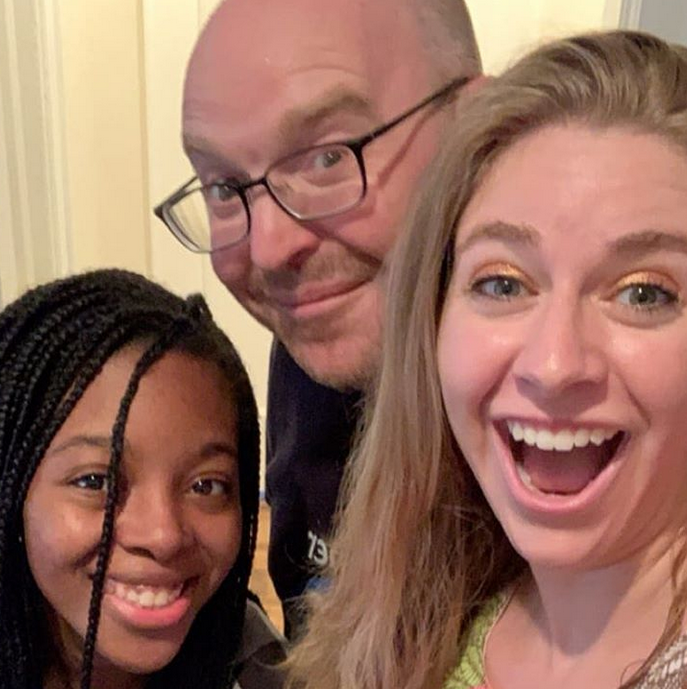 Don’t worry too much about your sound design when you’re conceiving your story. You certainly need to remember that this is a medium driven by sound, but, if you’re doing audio drama right, your characters (and thus your actors) will be sharp and lively enough to conjure up a divergent sound environment. It’s absolutely foolhardy and creatively bankrupt to enslave your actors to a soundscape. This represents tyranny, not creative possibility. Actors need to be free to create in a fun and relaxed environment. (In my case, I cook all of my actors breakfast, compensate everyone instantly after recording, and try not to work them more than three hours per recording session.) As perspicacious as you may be, as certain as you may think you are about the rhythm and the delivery, your actors will always have fresh ideas that you haven’t considered. You need to have a script and a recording environment that is committed to your actors first. If you’re looking to be some petty despot, become some small-time corporate overlord. Don’t toil in art. If your actors are hindered by your dictatorial decisions as writer or director, they won’t be able to use their imagination. At all stages, audio drama is a process of collaborative discovery. When you write the script, it’s about creating memorable and three-dimensional characters. When you’re recording with actors, it’s about listening to how an actor interprets the characters and shaping the scene together with openness, trust, and experimentation. Then, when you’re putting together the rough edit (dialogue only), you have yet another stage of discovery. The actors have given you all that you need. You’ll be able to imagine where they are in a room, what they’re doing, and what else might be with them. From here, you start to form the sound design. Worldbuilding always comes from human investigation. And if you’re fully committed to the human, then your instinctive imagination will be able to devise a unique aural environment.
 But to get to this place, you need to have characters who are unusual and who contain subtlety, depth, and detailed background. What kind of family did they have? Are they optimistic or moody? What was their most painful experience? Their happiest? Are they passionate about anything? If you’re stuck, you could always try revisiting some personal experience. For
 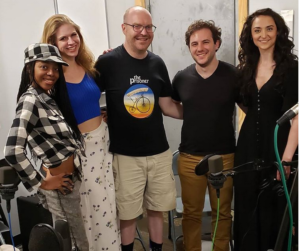 The misguided dramatist also reveals how pedestrian and unambitious he is in his storytelling when he tells you that you shouldn’t have more than four separate voices in a scene. This is only a problem if, like the misguided dramatist, you are too reliant upon seemingly clever ideas and don’t know how to write recognizable characters. If your characters are dimensional, then your audience will be able to follow the story. But you can also have your characters forget the names of the people who they are with so that you have an opportunity to remind your audience who they are. There are, after all, few people who attend a party and who manage to remember everybody’s first names. This expositional move doubles as a touch of realism and a subtle way of helping your audience keep track of a very large cast. Don’t squelch your ambition! If the dialogue is natural and the rhythm reflects real human conversation, then this will also help your audience lock into the narrative.
  Once again, the misguided dramatist lacks the ability to comprehend how an audience vicariously relates to an audio drama. You can do kissing in audio drama. I’ve included it in
 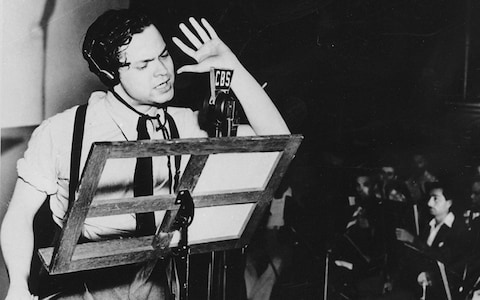 You’re not going to please everyone. So why spend so much time worrying about it? There are incredibly talented and impeccably kind people who produce beloved audio dramas and even they receive hate mail and vicious criticism. Critics, by and large, are far less useful than the honest and experienced people you have in your corner who understand both you and the hard work that goes into making audio drama. You need to be surrounded by beta readers and beta listeners who will not bullshit you. Your duty as an artist is to not give into the often insane demands of rabid fans (much as one very popular audio drama did a few years ago, forcing this truly terrific show to ignobly close its doors) and to concentrate on putting out your best work. The real crowd, your truly loyal listeners and the ones who you actually learn from, will trust you enough to continue with the journey. The same goes with your actors. I took a huge risk on a Season 2 script. And I was incredibly surprised, humbled, and honored when the actors were crazy about it and told me what a thrilling twist it was and brought their A game when we recorded. You have a duty to keep on growing. Keep in mind that critics, especially the small-time character assassins on Twitter driven by acute resentment, reflect a vocal minority. You’re also probably never going to get a TV deal. So why chase that kind of outsize success? Besides, it’s far more rewarding to tell stories entirely on your own terms. If the work is good and you treat people well, you will attract very talented actors. And they in turn will tell their actor friends about how much fun you are to work with. But if you tell the same story over and over again, or you aren’t sufficiently answering the many questions you’ve set up, chances are you’ll be pulling a Damon Lindelof. And everyone will rightfully ding you for writing a lazy and inane climax.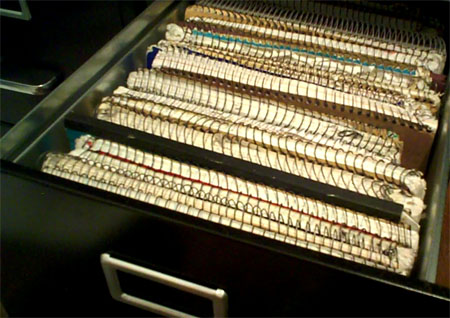
 The result of all this scribbling has involved quite a few notebooks, most of which I have kept in two file drawers. I’ve just pulled one out at random and I see a drawing of a floor plan for a San Francisco streetcar. Flipping the pages, I see lists of interesting words I’ve noted in novels, such as “contrapposto” and “ephemeron.” There’s an awkward poem that begins with the line “Pigeon pecking pieces from discarded pizza boxes / Whopper wrappers flayed upon a health nut in detox.” I see a hasty budget I’ve drafted for a film shoot, noting the costs of renting fresnels, Tota kits, flex-fills, and C stands. Another page offers this curious list: