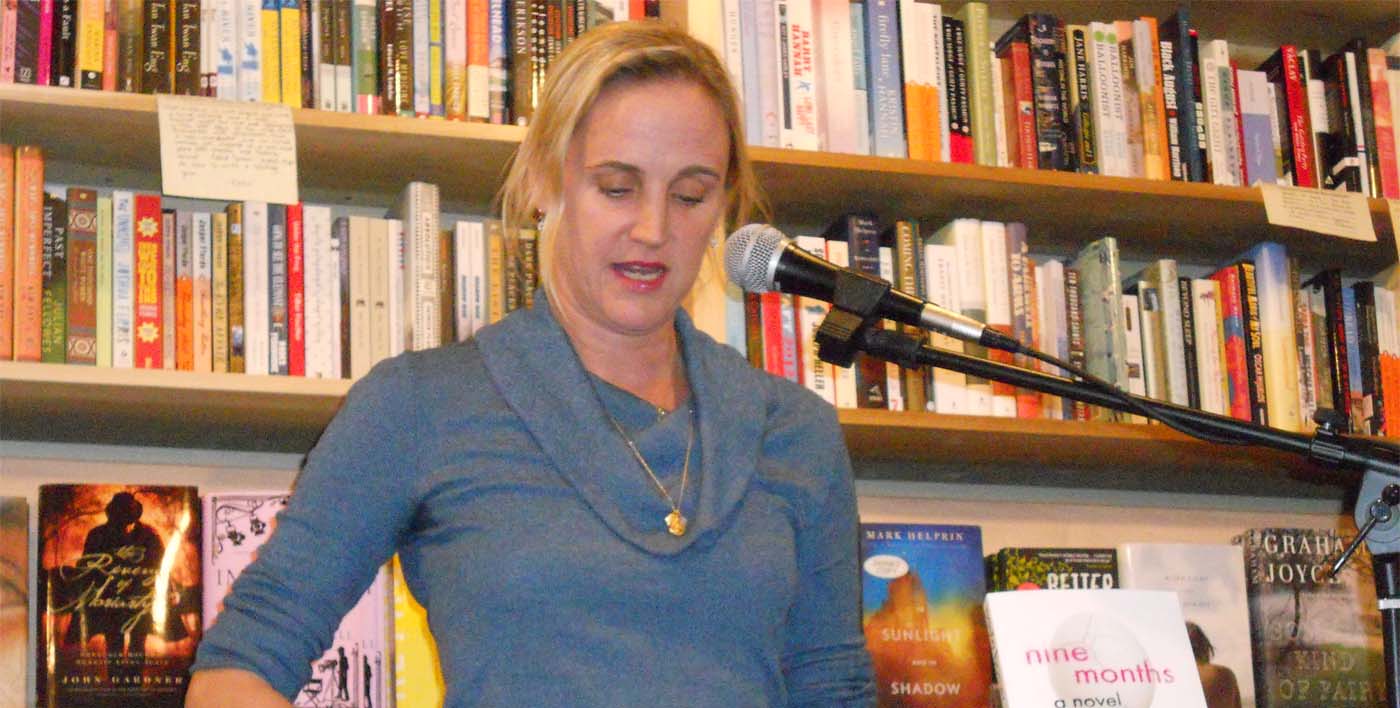
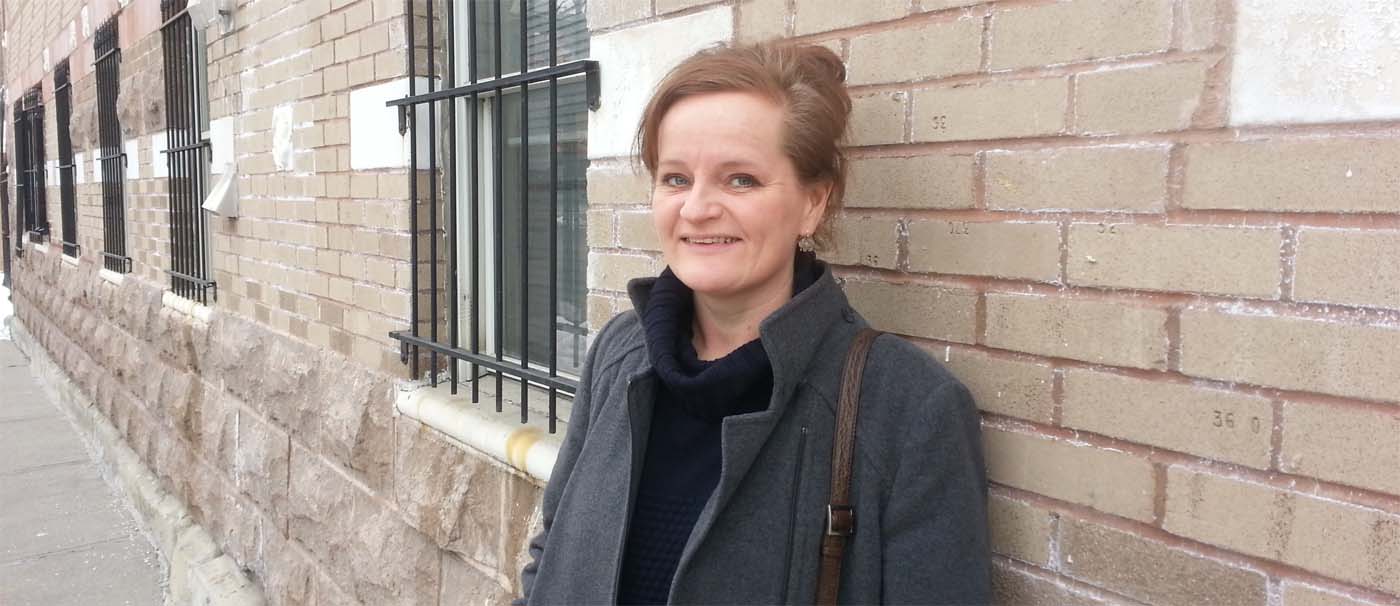
Liz Moore (BSS #434)

Liz Moore is most recently the author of Heft.

Condition of Mr. Segundo: Swelling with untapped emotional weight.

Author: Liz Moore

Subjects Discussed: Emotional sincerity through a twin narrative, Mary Gordon, McNally Jackson, “grotesque” characters, Flannery O’Connor, complicated relationships with food in the developed world, body image issues, the perception of physicality, researching addictions and obsessions, Harper Lee, Beverly Cleary, Holden Caulfield, masculinity as a virtue and as a pathetic quality, feminine qualities, being the strong person in a relationship, emotional sensitivity, Paul Murray’s Skippy Dies, looking at the failings of our contemporary world through children, broken families and togetherness, the necessity of breaking a character in some way, the difficulties of generating plot, mystery narratives, maintaining a stacked series of coincidences, writing insecurities, ensuring the believability of events, imposing incidents, shifting back-and-forth on the book’s ending (not revealed in this conversation: don’t worry!), parallel character qualities, red herrings, readers who impose their own notions of authenticity, Elizabeth Bowen’s The Death of the Heart, confusing sentiment with sentimentality, writing nasty and unlikable characters, the necessity of liking your characters, sincerity as a revolutionary act in 2012, Gordon Lish and style-oriented fiction, modernist writers, reading James Joyce as a teenager, “The Dead,” “Counterparts,” how different readers choose different favorite stories from Dubliners, giving Arthur a monied background, various characters who give Kel money, how money changes everything, withholding godlike interventions when writing fiction, an early version of Heft written in the third person, first person vs. third person, The Words of Every Song, playing around with third-person, the influence of music upon writing, listening to lots of jazz, dashed dialogue, artificially congealed viewpoints, working at a guitar shop, the best places to observe people, being easily distractable, peripheral hearing, writing exercises from Colum McCann, teaching, the meanness of people who stare through other people and pretend that they don’t exist, people who cry by themselves, the giddy embrace of an old friend, the relationship between observation and imagination, when your friends begin to die, when your friends get married and having kids, increasingly delayed marriage among twentysomethings, and assorted existential possibilities.

EXCERPT FROM SHOW:

Correspondent: I was curious, first of all, about a certain quality in this novel that is channeled through these two very different perspectives. You have, of course, Arthur, who is this man who is an ex-professor. He is just under 600 pounds. You have this kid, Kel, who has an alcoholic mother and the like. What’s interesting to me is that these types of perspectives in another author’s hands might almost be grotesque or caricaturish. Yet there’s a good deal of emotional sincerity to this work. And I’m wondering what you did to get that. I mean, is it a matter of knowing the characters extremely well before you set out on this journey to describe their intertwined fates? What of this? Let’s start from there.

Moore: Sure. Well, it’s interesting that you use the word “grotesque.” Because last night, actually, I had an event at McNally Jackson with Mary Gordon. It was a conversation with Mary Gordon. And I used the word “grotesque” to describe the characters.

Correspondent: Aha!

Moore: And she looked at me. She correct me and said, “They’re not grotesque. Not in the literary sense.” They’re not grotesque the way Flannery O’Connor’s characters are grotesque because neither one of them is mean or intentionally malevolent in a way. So I think they both have good intentions. And despite the fact that Arthur is certainly grotesque-looking, I think his internal life or his interior life is — I don’t know. There’s something pathetic about him in a way. But I like to think that his thoughts kind of save him from whatever lack of appeal he has physically. I hope his interior life is appealing in some way.

Correspondent: The thing is: I read this and I was both conscious and not conscious of Arthur’s physicality. I mean, he describes it also on a compartmentalized level. Like he’ll sometimes describe his belly or he’ll describe what he eats more so than who he is. I mean, he is what he eats. And I guess this goes back to the question of emotional sincerity and how you managed that. Whether this is the way to turn any physicality into something more. To nail that. I mean, four years is a long time to work on a book. So I’m curious.

Moore: Yeah. You’re talking about how…

Correspondent: How you put yourself on the line emotionally. Yeah.

Moore: Well, it was difficult. So, okay, I am not obese. I know this is a radio interview. But I’m not. And so I think some people have asked me, I guess, a two-part question. One is how I know what it’s like to be obese or to compulsively overeat. And the other is what right do I have to write from that perspective — in the same way that you might ask somebody why am I writing from the point of view of men. What authority do I have to do that?

Correspondent: I’m more in the former camp. (laughs)

Moore: You’re more in the former camp. Okay. Well, I’ll say this. I think it is impossible in the developed world not to have a somewhat messed up relationship with food. So I’ll say this. Because I’m a woman, from my point of view, every woman that I know has some sort of messed up relationship with food or I can imagine very clearly what it would be like to let go and to go to the very extreme place I can imagine food-wise and to just say, “That’s it. I’ve given up. I’m done restricting what I eat. And therefore I’m just going to eat whatever it is that I want.” And ao, in a sense, that was easy to imagine. Because I have imagined it. I mean, I don’t want to speak for every woman or every person. But I think it’s a place that I could easily imagine myself going. And so investing those thoughts into Arthur was easy. I’ve had them. In terms of his physicality, I guess that was more imaginary. But even again, we all loathe. I think he’s a self-loathing character. And we all loathe certain parts of ourselves. Even our own bodies. I mean, I have spent energy in my life loathing certain parts of myself. So that too comes, even though it’s not extreme, I’m –

Correspondent: Such as what?

Moore: I’m some place on the spectrum of both those things.

Correspondent: What is it that you loathe about yourself that you can draw from?

Moore: My physicality — if you want me to get specific? No, I’m not going to get specific.

Correspondent: Okay. No problem.

Moore: But there’s…

Correspondent: I’m just trying to get a general idea here.

Moore: Yeah. I mean, just growing up as a young woman, you fixate. You almost disconnect certain parts of your body from yourself. You disconnect. You fixate on whatever part of your body you imagine to be grotesque — to use that word again. And you just…you spend a lot of time and energy detaching yourself from it or imagining it as some thing outside of yourself. And I guess that I think Arthur does that a lot by describing his failure, his gut. The way he describes it. Or describing his chins. Or describing the way that his gut hangs down between his legs when he sits down. That’s almost something outside of himself. I mean, it is outside of him. But the way I have, or people in general sometimes think of their bodies as not being part of themselves, as being something else, interests me. And that’s what I was imagining when I was writing Arthur.

Correspondent: But for his specific feelings and thoughts on food — especially the early incident with the chocolate eggs that is late in the book — I mean, did you talk to people who are overweight? Did you observe? Or did you draw from this sense of the imagination or this transposition of your own experiential point of view?

Moore: I did not go out and intentionally binge ever in researching this character. Although that would have been a good excuse to. If I really wanted to.

Correspondent: Yes. “I’m having that second bowl of ice cream, dammit!” (laughs)

Moore: Research! I didn’t do that. I know what it’s like to. From history. And I know people who are overweight. And more than that though. I know people who have had addictions. And when I think of Arthur — I mean, he doesn’t just eat too much. He has an addiction to food. And to other things too. To isolation and solitude and to being inside of his home. He’s certainly, I would say, agoraphobic on some level. And other characters in the book have addictions too. And so I was drawing from, when I say my own experience of addiction, I don’t mean my own addictions, but my personal experience with people who have had addictions. I wouldn’t call it research. Because it’s just been part of my life. And the research that I did tended to be more technical. Like I spoke to a couple of different doctors about the medical consequences of obesity and also the medical consequences of long-term alcoholism. There’s another character in the book who’s an alcoholic. And also, without giving too much of the plot away, I had to research some medical interventions. Emergency treatments and stuff like that.

Correspondent: You don’t necessarily have to have your left tail in your car go out in order to actually write about it. Or did you?

Moore: Never had my left taillight in my car out. Good memory. That’s outstanding. And I’ve never punched anyone. And I’ve never… (laughs)

Correspondent: Punched by accident too.

Moore: I’ve never…I’ve never…well, now we’re getting into too many plot points. But I think every author that I’ve ever spoken to will say that personal experience is what invests the book with its energy. But certainly very little of this book is autobiographical.

Correspondent: Would you say, especially with Kel, that it has been drawn from reading, for example, of Harper Lee? There’s a Cleary in there. Beverly Cleary?

Moore: Oh, I love that. Beverly Cleary. (laughs)

Correspondent: I’m wondering, I suppose, if the muse in a sense wasn’t just the transposition theory I have offered, but also a lot of reading and wanting to capture that feeling of what it is to be young so that you can have this emotional sincerity alive on the page with Kel.

Moore: Yeah. I mean, I’ve heard Kel compared to Holden Caulfield and angry young man type characters, and I’m sure that I’ve been influenced over the years by a lot of the young — I guess the most famous adolescent characters in history. I think it’s impossible to avoid. But for me, he comes out of a lot of kids I grew up with, many of whom had very serious burdens that they were carrying around. But especially the young men, who had to perform this kind of extreme bravado. Especially the athletes too. There’s something so sad and kind of pathetic, again, I guess you could use that word again, about watching kids, young kids, being externally macho or externally tough and internally just torn apart and really sad and lonely and needing help and having to still be tough.

Correspondent: Masculinity’s a pathetic quality? Not just that quality in youth — speaking as a man, we all have our little moments, I suppose. But why do you find it to be pathetic? I mean, maybe I’m not viewing it that way — in large part because I found the book to also really grapple with issues of sensitivity in these characters. So maybe this is a way to anchor what you might view as pathetic.

Moore: Yeah. I think masculinity can be a virtue in a lot of cases. But I think it’s the idea of having to perform it when you don’t feel it. Or perform an extreme version of it or something that is pathetic and that makes me sad to see. Mostly it makes me sad to see in children.

Elliot Perlman (BSS #429)

Elliot Perlman is most recently the author of The Street Sweeper.

Condition of Mr. Segundo: Collecting the dregs of his spatulate ambitions.

Author: Elliot Perlman

Subjects Discussed: Perlman living across the street from Memorial Sloan-Kettering Cancer Center, whether an author has to reside in a place to write about it, why some Australians consider the US and the UK to be part of the same neighborhood, how to make New York your friend, smoking outside of a hospital, the Mayor of East 77th and York, the improbable idea of characters in their thirties listening to Jonathan Schwartz, Kafka’s Statue of Liberty sword, rental rates and gentrification, writing an “anything you want” book that takes on such a wide social canvas, knowing the endings of Seven Types of Ambiguity and The Street Sweeper, how research enriches the writing process, whether a novelist can entirely avoid coincidences and convenient run-ins, being “a child of the 19th century,” It’s a Wonderful Life, cutting art from the past some appreciative slack, cynicism vs. efforts by fiction to feel and grapple with the world, sincerity and postmodernism, writing something you believe in, fiction interpreted as too didactic, Dietrich Bonhoeffer, how certain types of postmodernism masks sloppy thinking, conducting vigorous research and gravitating to the visceral, novelists as professional liars, the obligation to get serious historical details right, finding comfort in Auschwitz by going there six times, the ground beneath one’s feet as a starting point, “memory as a willful dog,” Daniel Schachter’s The Seven Sins of Memory, positive people who don’t learn from the past, avoiding Holocaust book fatigue, Godwin’s law, people who think they know about the Holocaust but really don’t, the Musselmann state, Auschwitz being half the size of Manhattan, Ricky Gervais sending up the Holocaust, Perlman’s family background, moral efforts to rid ourselves of superstitions, the American civil rights movement, the fictitious Henry Border vs. the real David Boder, the adjective-verb ratio, being inspired an episode of This American Life, whether it’s fair to speculate on what real historical figures are thinking, how to respect historical figures in fiction, interviewing Illinois psychiatrists and Boder’s students, the Voices of the Holocaust project, characters who steal objects as a narrative bookend, failed teachers who perform irrational acts in Perlman’s fiction, the inevitability of parallel characters, how to live without hurting people, hurting other characters as an effective dramatic device, Ern Malley’s idea: “the emotions are not skilled workers,” heightened anxiety, Morningside Heights, inventing a fictive construct instead of confronting an emotional reality, real and fictional voices serving as narrative counterpoints, obsessing with the jet black hair aesthetic of a student, and not being able to tell everybody’s story.

EXCERPT FROM SHOW:

Correspondent: Let’s talk about this research and the social canvas here. I mean, this book, it deal with the Holocaust. You have mid-20th century developments in American labor. You have a man who just got out of jail. You have the nature of history. You have the Great Migration. You have the academic world. You have the adjective-verb quotient ratio and wire recording involving Dr. Border — and I’ll get into that more in a bit. So it’s almost a kitchen sink book or perhaps, if you want to pay homage to [The Street Sweeper Chicago laborer] James Pearson, an “anything you want” book. I know that many of these elements came to you by serendipity. But I’m wondering how much you need to have these thematic connections worked out in advance. I mean, can you really deal with a novel when you have a scale that is this large — both with The Street Sweeper and Seven Types of Ambiguity? Were there any things that you threw out along the way?

Perlman: Oh yeah. Definitely. I know you hear a lot of writers say that they invent characters and characters grab them by the ear and take them along to the conclusion of the book. And I think that’s often true. But I think sometimes it’s not true. They say it. And perhaps it sounds romantic or in some way interesting. I’m not like that. I’m anxious and anal retentive — particularly with the last two books, The Street Sweeper and Seven Types of Ambiguity. I needed to know the books were going to end before I got too far into them. And pretty much at the beginning, I think even with Seven Types, I did. And I’m probably that way with pretty much everything I write, except maybe some short stories. The danger is that you spend years of your life writing these things and the end doesn’t satisfy you. And that would be a tragedy for me. And I’m not suggesting that the endings of those two books will satisfy everybody. But they need to satisfy me before I’m willing to commit. You know, what it’s really been — Seven Types of Ambiguity took almost four years to write. And The Street Sweeper took about five and a half years. So you want to be satisfied — at least I think — that it’s a story worth telling. So I do plan it out quite meticulously. And, of course, what happens is that it gets enriched by your research along the way. And there are certain things that don’t help you. So you’re disinclined to use them. But if there are certain things that do help you, well then obviously you grab it. And it might look like you’ve been building to that along the way. But it’s a combination of having the architecture or the spine of the thing worked out with certain key points that you’ve already researched. But then there are certain little things that you find serendipitously that can be incredibly helpful. And they go in. And it might look like you knew that all along when in fact you didn’t come to that a bit later.

Correspondent: Well, speaking of serendipity, I was curious about this. I mean, can you entirely avoid coincidences or convenient run-ins or contrivances with your method? Aren’t there certain strands where the bandage is not exactly neatly applied to the wound? How does this work?

Perlman: Well, you know, some people have said that I’ve used coincidence. I can’t even remember which book it was. And maybe it’s more than one book. I guess I try not to overdo it. But I have a little fondness for it. And maybe it’s because in certain senses I’m a child of the 19th century in terms of the stuff that was important to me as a young man growing up. And I try not to use it as much as it’s been used by some of my heroes. Because I don’t think in the 21st century a writer can probably get away with it in the same way as a filmmaker can probably couldn’t make something as beautifully sweet as It’s a Wonderful Life. As much as we all might love that movie, if somebody literally tries to make that now, it would probably not be revered anywhere near as much. Because society’s so different from the society that came to in which It’s a Wonderful Life was made.

Correspondent: How so? Is it because of sincerity?

Perlman: With It’s a Wonderful Life now, we’re cutting it some slack because of the time it was made. So we might cut, and I hope we do, so many of the 19th century greats some slack for coincidences that I might not be cut now. But having said that, I do use it a little bit. But whether I overuse it or not is probably for some readers to decide. I hope I don’t. I try not to.

Correspondent: You know, that’s a very crafty way of suggesting that contemporary fiction is perhaps not giving enough slack for depicting certain realities. Is that what you’re suggesting, Mr. Perlman?

Perlman: (laughs) I’m probably not being crafty. I’m probably being sleep-deprived and not expressing myself so eloquently. Look, I don’t know. I had the feeling — in the 90s at least — that we had become almost too cynical. A little too clever in the sense of: It’s all very well to delineate, even meticulously, what it is that you’re mulling over. What it is that you’re disenchanted by. But sooner or later, shouldn’t art remind us what we should really aspire to? And the danger with doing that is that you’re wearing your heart on your sleeve and you’re making yourself an easy target and super-hip, ultra literary people, they can be more interested and get more pleasure out of deriding the status quo and perhaps dreaming or aspiring to something better. And I’ll take the risk — whether it’s successful or not, I don’t know. Certainly in the three novels that I’ve written so far, and even some of the short stories, I’m trying to offer some hope. And I do that because that’s what I would like. I think that’s something that can be very helpful in art.

Correspondent: You know, Elliot, another way of phrasing this might just be this: I’m curious if, from the vantage point of Australia, you as a novelist were under siege with this wave that was against sincerity in fiction and against postmodernism in fiction. And that essentially the last two novels are partially a response to that. I mention this because I note that sometimes in your fiction, you’re very fond of saying “you” in a way that is rather curious. It’s not quite second person and it’s not quite omniscient. It’s somewhere in between. And I’m fascinated by that. There are also often these strange moemnts in your novels where you almost command the reader. And I can get into that. One thing I think of is: “Pay attention the small details. It is the mark of a professional.” That whole business with Adam Zignelik. And I’m curious if this has plagued you in any way or how this not quite omniscient but leaving room for taking room for perspective approach developed.

Perlman: Well, you know, that particular example that you brought up, Edward, is actually — well, I guess it’s a device really. It’s Adam, who’s a historian at Columbia. An insecure untenured historian who is certain that his time at Columbia is just about up and he hasn’t written anything new in five years. And he is delivering a lecture to his undergraduate students. So when he says things like “Pay attention,” it’s the character talking to his students. You might also say, “Well, that’s the author talking to his readers.” It doesn’t need to be taken that way but, look, I suppose I can’t hide the fact that I feel certain things quite strongly. And it’s very difficult writing anything. You may as well write something you believe in and that matters to you, and clearly I guess I put my heart on my sleeve with my political views with all of the books. And in doing that, sometimes perhaps I can be overly prescriptive. I don’t think it would have bothered me as a reader. And that’s why I put it in there. I suppose if someone has particular views that are really antithetical to mine, diametrically opposed, then they’re going to be annoyed by what might appear finger waving. But at the very least, I did in the context of a character talking to other characters. Look at me. I’m trying to troll through my memory of all the negative things that have been said about me in an attempt to bend over backwards to help you. Isn’t that pathetic? It has been said that I can be didactic at times. Again, it’s a question of degree. And obviously, you and I defend that movement and it’s sent to editors. I think it’s not totally didactic. To some people, it will be, I guess.

Correspondent: Well, let me clarify. I think that the “What is history?” chapter is one of the most interesting points in the book. I mean, you have this situation where Adam is describing the personal tidbits of Gandhi, Dietrich Bonhoeffer befriending this black man over the Union Theological Seminary, and things like that. So in that moment, you do in fact write not in Adam’s words but those of the narrator, “Pay attention to the small details.” But I thought that it wasn’t necessarily a command. It was more of a cue to the readers. But it also made me think, “Well, hmmm, I wonder if he’s up to some larger game to encourage readers to look almost beyond the book.” To look at the sources you have in the back. Or whether this was some modest gesture to postmodernism where you basically just thought that the whole thing was kind of a wild game. Or it was possibly a genuine interest on your part over whether history could in fact predict the future. But it sounds to me that what you’re saying is that that was driven from a pure moment of emotional sincerity and that’s pretty much how you operate. And this may explain some of the things I’m observing from your book. These very visceral heightened moments couched in really unusual philosophical terms?

Perlman: Well, gee, I dig your questions. I didn’t mean to say that. Because you already decided to interview me. But you really do. And I hope that in my sleep-deprived state I’m able to do justice to them. I guess what I’m trying to do, I think, is marry a certain passion that makes you want to write in the first place. Because it is in some respects an irrational activity. I mean, you’re alone. You’re frequently not particularly physically comfortable. And you’re never going to be adequately financially rewarded for all the hours it takes you to produce the thing. So in a sense, it’s for the most part an antisocial thing to do. So it’s an irrational activity. So why are you doing it? You’re doing it because something in you, you’d feel worse if you didn’t do it. It’s a kind of a passion. And you really want to grab the reader and hold him or her and say, “Look at this. Look at this story. Look at the world.” At least as I see it. And yet you go and impose some kind of order on it. And that’s where the other side of me — I suppose the anal retentive side. The side that became a lawyer or maybe it was fostered and assisted and nurtured by being a lawyer. Anyway, leaving aside any attempts to psychoanalyze myself on a long distance call, it is a marriage of the two — the passion and the intent to impose some order over it. And in a sense, the structure of the book is where I’m definitely using more intellect than emotion. But then within the pockets, there is an attempt to really say to the reader, “Yeah. Look at this. I’m thinking about it. Would you like to think about it too? And I’ll try to express it as eloquently as I can to get you to see at least common things from the perspective I have.” When it’s a character who shares what could essentially be described as a series of views which constitutes my worldview, but often — particularly in Seven Types — I might not be writing about characters who definitely don’t share my views. But even then you try and give as much as you can, imbuing it with every bit of humanity you can garner to make the suggestion that often means that there is more that we have in common which separates us. And if we could just put aside so much of our preconceptions, we might get on a little better. But that runs the risk of making it sound like literature is a tool to social cohesion only. And it isn’t. It does many things. And that’s only one of the things it can do.

William Kennedy (BSS #427)

William Kennedy is most recently the author of Changó’s Beads and Two-Tone Shoes. For related material, you can read my Modern Library Reading Challenge essay on Ironweed.

Condition of Mr. Segundo: Caught in a migratory comedy of errors.

Author: William Kennedy

Subjects Discussed: Resonances in historical fiction that align with the present day, the William Gibson notion (“The future has already arrived. It’s just not evenly distributed yet.”), Guantanamo Bay and waterboarding, the 2008 Greek riots, writing Ironweed while being firmly immersed in the 1930s, referring to the homeless before “homeless” existed as a word, prophetic novelists, Bernard Malamud’s The Fixer, the tradition of torture, Margaret Atwood’s The Handmaid’s Tale, Roscoe, writing about the Albany political machine for forty years, stolen elections and kickbacks, interviewing morally shady figures as a novelist and as a journalist, meeting with Charlie Ryan, Dan O’Connell, how Kennedy coaxed political figures to tell him stories over the years, sources who insist on being on the record as insiders, intrusive noise, the journalist as the intellectual equivalent to the bartender or the barista, politicians who talk differently when microphones are present, Newspaper Row in Albany, lead filings and rats descending from newspaper ceilings, journalistic squalor, Kennedy’s relationship with Hunter S. Thompson, Pulitzer’s notion of journalism, Fear and Loathing in Las Vegas, fiction vs. journalism, The Ink Truck, Fellini, how a multidimensional fictitious form of Albany sprang from extremely devoted research, writing seven drafts of Legs, invention and informed speculation, the importance of letting imagination settle, Legs‘s resistance to realism, structuring a novel on The Tibetan Book of the Dead, discovering newness as a writer, precedents for Ironweed, parallels between Cuban history and civil rights, efforts to find the right Cuban history period for Chango’s Beads, Fulgencio Batista’s kids going to school in Albany, the “Circe” chapter of Ulysses as a possible inspiration point, The Gut in Albany, Black Power and community action during the late 1960s, Stokely Carmichael, Malcolm X sitting in the balcony of the New York Senate, Eldridge Cleaver, the Albany Cycle beyond 1968, telescoping Albany history for the sake of telling a story, arson and riots, the figure of Matt Daughterty, having to publish newspaper stories in out-of-town newspapers to avoid the wrath of the Albany political machine, comparisons between Quinn’s Book and Chango’s Beads, following personalities contained within fictitious families over many years, journeys away from Albany in the Albany cycle, avoiding Albany burnout, a new play based on a departure from Very Old Bones, and fiction driven by bullet-like dialogue.

EXCERPT FROM SHOW:

Correspondent: We were drawing a distinction between the journalist who is the bartender or the barista — the intellectual equivalent to that — and the novelist, who may in fact have an even greater advantage. Some novelists who were former journalists have told me that they’ll get people to talk with them more if they say they’re a novelist. I’m sure this has been the case with you.

Kennedy: Oh yeah. When the Mayor invited me over to talk about writing a book with him, he didn’t say quite why. I couldn’t understand it. Because I thought he had great antipathy toward me. But I went over. And we just had this conversation. And I sat there and talked to him. And I took a lot of notes. And he said he wanted me to maybe interview him and dredge up whatever I wanted to and write whatever I wanted to. And then he would rebut it. And I didn’t think that was going to work. But I knew that it was a great opportunity to talk to the Mayor.

So anyway we carried on. And it turned out I did write a lot about him in this book. It was kind of a biography. I wrote three pieces actually on him. And he was great in the first meeting. And then the second time, I brought over a mike and a tape recorder. And he clammed up. I mean, he didn’t stop talking, but he didn’t say anything. I mean, he was very salty in the first conversation. And he was a very intelligent man and very well-educated and smart as they come politically. And he had a great sense of humor. But it was boring in the second interview. So I took him out again. I took him to lunch. And he opened right up again as soon as he knew there was no tape recorder. And I took notes. He’s safe with notes because he can say, “He got it wrong.” There’s no proof.

Correspondent: Well, I actually wanted to ask — speaking of history, there are moments in Billy Phelan’s Greatest Game and Quinn’s Book where you have newspapermen who are wearing hats as the lead filings are falling upon them. In the case of Billy Phelan, there’s actual rats falling from the ceiling.

Kennedy: That’s true.

Correspondent: I’m curious. Did you have first-hand experience of this?

Kennedy: No. This was at the newspaper that I was working on. But in their previous incarnation, which was only a few years before I got there, they were on Beaver Street in a very old, old center of the city. The South End. In The Gut. And it was Newspaper Row. The Albany Journal was there. The Albany Argus. The Knickerbocker News. The Knickerbocker Press. Etcetera etcetera. The Times Union was up the street a bit. And then they moved into new digs. But I remember that one of the reporters and the copy editors said that the rats used to come down, walk the ceiling. The composing room was upstairs. Over the city room. And there was always these lead filings that were coming through the cracks in the floor. And so these guys wore their hats around the desks. And the reporters wore their hats indoors.

Correspondent: The pre-OSHA days. (laughs)

Kennedy: You know, it had a practical application, those hats. In addition to being the style of the day. And the rats used to come down and eat the paste out of the paste pots.

Correspondent: Which is also immortalized in Billy Phelan.

Kennedy: That’s in Billy Phelan. They were all stories that these guys who had grown up there, they’d seen it. One of my buddies, he’d been a reporter for ten years or so all during that period in Beaver Street. And he was a great storyteller. And he told me…well, you know.

Correspondent: Did you experience any first-hand journalistic squalor?

Kennedy: Journalistic squalor.

Correspondent: Along those lines. Or perhaps other forms of squalor.

Kennedy; (laughs) Well, no. Not quite like that. The paper had modernized. I mean, I was there in the age of the typewriter and the clacking teletypes and papers would stack up on the floor like crazy. At the end of the work day, everybody threw everything onto the floor. The old newspapers. All the old teletypes. And it was a great mess. There was….hmm, squalor. (laughs)

Correspondent: Rotting walls? Asbestos-laden environments? (laughs)

Kennedy: Sorry, I can’t. I knew all the guys who had gone through it.

Correspondent: Well, on a similar note, Hunter S. Thompson. I have to ask this largely because The Paris Review interviewed you and cut this bit. He said, “He refused to hire me. Called me swine, fool, beatnik. We go way back.” But I also know that he wrote you a quite hubristic letter. How did you two patch things up after this early exchange of invective and all that?

Kennedy: Well, I never called him a swine.

Correspondent: (laughs)

Kennedy: It’s possible in a letter, in later years, I might have called him a swine. But that was his terminology.

Correspondent: He was trying to prop you up.

Kennedy: I would just throw it back at him or something like that. You know, there was no rancor at all. After the first exchange of letters, almost immediately it was patched up. I mean, he was furious at me for rejecting him when he applied for a job. You’re talking about the quote there where he said…

Correspondent: He said that on Charlie Rose.

Kennedy: Charlie Rose. But he was referring to my attitude toward The Rum Diary. Which was the novel that he was writing down in Puerto Rico when I got to know him. And he had just started it. And in later years, he sent it to me. I wish I had kept it. I don’t know why. I can’t find it. I don’t think I have any remnants of it and I’ve got a lot of his stuff. But maybe I have some pieces. But I don’t remember. And I can’t even remember the letter I wrote. But I wrote him a letter and I told him, “Forget about this novel. You can’t publish this. This is terrible.” And it was a big fat novel. It was fat and it was logorrhea. And it was a young man’s ruminations and discoveries of all of that.

Correspondent: A journalist aspiring to be a novelist.

Kennedy: Right, right, right. And he was a smart guy. Very, very smart guy. But that novel just didn’t work. What was published — the book that was published is one third of the text of the old book. It doesn’t have any of those flaws that I could see — I just started to read it again the other day. I tried to see the movie three times, and I can’t.

Correspondent: Oh really?

Kennedy: Well, I’m in the Academy and I get these screeners from the Academy. But it didn’t work. The screener didn’t work. It says “Wrong disc.”

Correspondent: Oh no.

Kennedy: So I have to get another one. But I’m anxious to see it. I think it’s full of probably libelous accusations against the [San Juan] Star, the newspaper down there and the people who run it. But that was expected from Hunter.

Correspondent: What do you think distinguishes your approach — being a journalist turning into a novelist — from Hunter’s approach? I mean, was he just not serious enough and you were more devoted? Was it a matter of being well-read? What was it exactly that distinguished the two of you?

Kennedy: Well, I was a serious journalist. I mean, he presumed to be. That was the basis for our initial argument about that bronze plaque. You know about that? The bronze plaque on the side of The New York Times — it’s a quote from Joseph Pulitzer When that building was home to The New York World, a great newspaper that Pulitzer ran in New York. Anyway, he revered that. You know, it’s this high-minded attitude toward the news. No fear of favor or whatever. Work against the thieves. Whatever. I’ve absolutely forgotten what Pulitzer said.

[Note: The Pulitzer plaque reads: "An institution that should always fight for progress and reform, never tolerate injustice or corruption, always fight demagogues of all parties, never belong to any party, always oppose privileged classes and public plunderers, never lack sympathy with the poor, always remain devoted to the public welfare, never be satisfied with merely printing news, always be drastically independent, never be afraid to attack wrong, whether by predatory plutocracy or predatory poverty."]

Kennedy; I remember its tone. And I could find it. And this whole episode is summed up in the introduction to Hunter’s book, The Proud Highway — his first collection of letters. He asked me to write an introduction to that. And I told the whole story of how he applied for the job and didn’t get it and so on. But his attitude toward journalism was high-minded. But when he started to practice it, a year or so later, roaming around South America, he started writing — he was winging it, you know? He wasn’t interested in “Just the facts, ma’am.” He was half a fiction writer in those days. Roaming around. Whatever caught his fancy or his imagination, he would write it. I mean, it came to a point where he went to the Kentucky Derby and that was the one that really put him on the map. “The Kentucky Derby is decadent and depraved.” It ran in Scanlan’s Monthly, I think. And it had nothing to do with reporting. He was making it up. And it was fiction.

There may have been some basis in all that happens in the story for it. But he just invents the dialogue that goes on between the various people and follows his own chart and reacts as a novelist, and then presents it as journalism. This is what Fear and Loathing in Las Vegas was presumably journalism. But it’s fiction. It’s a novel. And he claimed in retrospect that he had notes to prove every element in that novel. But he didn’t. (laughs) I mean, all the hallucinations. Whatever his hallucinations were, they were hallucinations. And they’re his. And they’re internal. And who’s to say who’s hallucinating when he’s writing what he’s writing. The sum and substance of Thompson was that he started off as a journalist and he became this wild crazy gonzo journalist, which was half a fiction writer’s achievement. And he was always in the early days thinking about the novel and new forms of the novel. And he created one. Novels are very valuable in their wisdom and their insights and their reporting and their historical penetration of the world that they’re centering on. And he was famously talented in all those realms to achieve those things. And he did. But in the end, I mean he comes off as a career journalist and a singular one. There was nobody like him and there never will be. A lot of people have tried. He’s inimitable. But when he started out, he had all the baggage that goes with the aspiring novelist. And he always made the distinction that I started off to be a journalist and turned into a novelist and he started off to be a novelist and turned into a journalist. And that’s true enough.

My journalism very rarely could be challenged — it could never be challenged as a work of fiction. I never did anything like that. I found ways to enliven the text with language. So did Hunter. But Hunter also reimagined history and reimagined daily life when he invented his world.

Correspondent: To go to your work, The Ink Truck — I wanted to ask you about this. Your first published novel. This is interesting because, unlike the topographical precision that you see in the Albany Cycle, the details of Albany in The Ink Truck are not nearly that precise. They’re more abstract. And I’m curious why that sense of place only emerged in the subsequent novels.

Kennedy: Well, because when I wrote that novel, I was reacting to my resistance to traditional realism and naturalism. You know, I had been there with Steinbeck, Dreiser, James T. Farrell, and so on. And Hemingway also was a great realist. Not the naturalist, but the great realist and the great reporter. And I was in a different mode. I was immersed in Joyce at that time and very much aware of Ulysses and the wildness of the invention that pervades that novel. I was thinking of the surrealists. I was in the grip of Buñuel the filmmaker. I loved his work.

Correspondent: Also a wonderful late bloomer too.

Kennedy: (laughs) And Fellini. I though that 8 1/2 was one of the great movies ever made. It may be the greatest to me and I’m not sure I don’t think that still.

Correspondent: What of Satyricon? (laughs)

Kennedy: Well, I thought it was interesting. So much of Fellini I do love. But 8 1/2, because it was in one guy’s head and it just went in and out of reality, that’s what I wanted to do. I used to say that novel was always six inches off the ground. So levitating was important. And I wasn’t really interested in grounding myself in the squalor of that situation. That was a pretty squalid time when we were in the guild room during that strike. There was a strike that I went through and was the inspiration for that novel. But that book is sort of an excursion to comedy and surreal comedy. I mean, it presumes to be serious in certain stages of its intensity. But basically it’s a wild, crazy, surreal story.

Correspondent: But when you have the character of Albany begin to appear in your work, suddenly I think there’s more of a kitchen sink approach. You have very hard-core realism. You have hallucinations. Surrealism. You have all sorts of things. Almost a kitchen sink approach. And I’m curious if the increasing complexity of your books, where this comes from. Does it arise out of your very meticulous and fastidious research? Does it arise from wanting to reinvent the form of the novel? To not repeat yourself? Does it arise from having established a Yoknapatawpha-like universe of characters? What of this?

Kennedy: Well, all of the above. Everything you said. I was always trying to do something that I hadn’t done before, that I couldn’t attach to anybody in particular. You know, you can’t imitate Joyce. You can’t imitate Hemingway. I tried and I did all the way along in various failed enterprises. And I knew that it was a dead end. I was trying for something new. With Legs, I was inundated with research. I spent two years under the microfilm machine. We no longer have to do that. Just punch in Google. Now it’s amazing. But in those days, I would spend days. All day. Half the week inside the library. Not only microfilm, but all the books of the age. All the magazines. I went to New York and got the morgues of all the major newspapers. The Times. The New York Post. The Daily News, which was fantastic. And so on. And I researched everything there was to find on Legs Diamond serendipitously. And then I also kept turning — I probably interviewed 300 people. I don’t know how many. Sort of cops and gangsters. Retired gangsters with prostate trouble. And I really stultified myself at a certain stage in that novel. And I had to stop and take account of what was really going on. And I had to reinvent the book.

Correspondent: You wrote it seven times, I understand.

Kennedy: I guess the seventh was the final time. I wrote it six times. Or was it six years and eight times? The eighth time was a cut. I had finished it but it was too fat. So I cut 70, 80 pages. I don’t remember what I cut. But I don’t miss them. Whatever I cut, it was all right. But I started from scratch really. After six drafts, I went back and spent three months just designing the book all over again and designing history of every character all over again and putting a totally new perspective on it. Because I had too much material. And there was no way to stop it from coming to me. Except to just close it off and say, “I’m not going to read another newspaper. I’m not going to crack another book. I’m going to write the story. I’m done with the research.” Of course, that never really happens. You have to go back and check. But that’s what I did. And that’s how I finished the book.

(Image: Judy C. Sanders)

Joyce Carol Oates (BSS #426)

Joyce Carol Oates is most recently the author of The Corn Maiden and the editor of New Jersey Noir.

Condition of Mr. Segundo: Contending with needless tempers and false heaters.

Author: Joyce Carol Oates

PROGRAM NOTE: For many years, I had hoped to schedule Joyce Carol Oates on this program. And the opportunity at long last came in November. Wishing to make the most of this, I read eight Joyce Carol Oates books in advance of the conversation. The interview was to take place in Otto Penzler’s basement office at the Mysterious Bookshop.

There was just one problem. Otto Penzler didn’t like me. You see, five years ago, I had written some satirical blog post about Penzler. Something I barely remember. For all I know, I was drunk or stoned at the time. I probably banged it out in about twenty minutes. What I did not know was that Penzler had neither the humor nor the ability to let any perceived sleights roll off his back.

Why is any of this important? Because during this program, I had the misfortune of having one of the audio channels – the channel that was recording Ms. Oates’s voice – blow out on me. Normally, this wouldn’t have been a problem. Because I could have salvaged the sound from the other channel. Unfortunately, because Penzler is not the type who likes to give up a petty grudge, he decided to turn on what he insisted was a “heater” during the course of our conversation. Not only did this “heater,” which spewed out cold air, cause Ms. Oates to shiver, but it also disrupted the conversation. And this “heater” is also the reason why Ms. Oates, despite my best efforts with EQ and noise removing tools, sounds like a robot for about eight minutes of this conversation. It is also the reason why this episode contains the most passive-aggressive moment in the history of The Bat Segundo Show. Thank you for listening.

Subjects Discussed: Prolific writing, nightmares in fiction, psychological realism, Edgar Allan Poe, carving swastikas into foreheads, pesky heaters, feral characters, the history of violence contained within tragic narrative, stories generated by characters who meet, My Sister, My Love, experiments in style, being the child of a well-known infamous figure, JonBenet Ramsey, articulate sociopaths, writing in the satirical mode, Expensive People, humor in Joyce Carol Oates’s work, characters who have a penchant for malapropisms, A Fair Maiden, characters who give into naive situations, pathetic fantasies, editorial relationships with Daniel Halpern and Otto Penzler, not sending novels out for publication until they’re ready, advances and author contracts, needy authors and first drafts, Russell Banks, Richard Ford, when business concerns impede into artistic discovery, keeping a novel in a drawer for a year to avoid emotional connections, on whether JCO requires an immediate response to the world, contending with short story requests for anthologies, Otto Penzler’s rejection of a JCO short story title, words that JCO is fond of (including “glisten”), word choice, Nicholson Baker, James Joyce, “formula” contained within Ulysses, similarities between feeling and image, the allure of vacuum cleaning, memoir vs. fiction, A Widow’s Story, feral cats that wander around dumpsters, the tough clime of New Jersey, Martin Scorsese, organized crime, fictitious communities that are inspired by the classics, appropriating places and giving the place a very different way, places like Princeton, Russell Banks and Miami, Jaimy Gordon’s Shamp of the City-Solo, Jonathan Lethem’s Chronic City, revisiting a 1982 keynote address collected in Woman Writer, being a woman writer in 2011, William James and multiple selves, chick lit, Kate Christensen, contemplating The Sportswriter as a “boy novel,” Margaret Atwood’s In Other Worlds, Ursula K. Le Guin, Dostoevsky as crime writer, epistolary fiction, Twitter, the pleasures of reading letters, finding pleasure during the difficult early stages of writing a novel, TC Boyle, and comparisons between writing and heroin.

EXCERPT FROM SHOW:

Correspondent: In considering the ideas of nightmares as fiction — because, of course, this is The Corn Maiden and Other Nightmares, that’s the title of this book — I think of John Hawkes. I think of Poe. I think of Kafka. I think of Shirley Jackson. The nightmares in The Corn Maiden, I think, differ. Because these tales are careful in the way that they relate psychological realism to the dream state. In the title novella, you juxtapose this troubled mother who is losing her daughter with this sacrificial ritual. There’s the psychological grief in “Helping Hands,” which triggers a nightmare, it could be argued. In “Fossil-Figures,” you describe Eddy Waldman’s work as “covered in dream/nightmare shapes.” So I’m curious how psychological realism gives shape to these nightmares that are in your fiction.

[Otto Penzler turns on an alleged "heater" in his office, which, unbeknownst to Correspondent and Oates, begins to pump cold air throughout the room in the next few minutes. Said "heater" also creates noticeable interference on the audio, which producer does his best to rid from this program with parametric EQ. Said hiss of "heater" also interferes with collective concentration.]

Correspondent: Do you find that, without such realism, these nightmares can sometimes be too burly to contend with?

Oates: Well, it’s a very good question. I think it’s a matter of what sort of genre one is working in. If you’re working in a horror or fantasy genre, you would have no hesitation about writing about the supernatural. But I tend often to write in a realistic mode. And, of course, in reality, people have dreams. So the psychic experience or the neurological experience of a dream is real, even though it’s invisible. So in writing about dreams and nightmares, I’m not writing about a supernatural world at all. Particularly The Corn Maiden is completely realistic. There’s nothing in it that’s far-fetched or particularly preposterous. Some of the other stories shade into the surreal. Sort of the Edgar Allan Poe zone. And I think Shirley Jackson often moved into that zone where the more supernatural figures.

Correspondent: Violence. I have to bring that up. It’s an ineluctable quality in your work as well. In “Beersheba,” you have a character who is denied his diabetic shot and who experiences this very specific yet savage wound. At the end of A Fair Maiden, another book, you have a character bleeding from a deep cut at his right eye and cuts at his nose and mouth. You have, of course, the trepanning in “A Hole in the Head.” You have Herschel carving the swastika in Jeb Meunzer’s forehead in The Gravedigger’s Daughter. I could go on. But what I’m interested in is how precise your violence is. And this leads me to wonder. Well, what do you do to get that level of precision? Does this come entirely from the imagination? Do you read a lot of police reports? A lot of true crime stuff? What of this?

Oates: I don’t read any police reports or true crime material really. I don’t write about violence. I write about people. And some of the people find themselves in dramatic or tragic situations in which violence is a consequence of some choices that they made or decisions that they made. But I don’t set out to write about violence. It’s more about human beings and their complexity. And they might make a bad decision. When Shakespeare writes his great tragedies of Macbeth and Othello, they are extraordinary people who’ve made a mistake. And they take a wrong turn. King Lear is another great example. And Hamlet. They’re all examples. But Shakespeare is beginning with the character. That’s what interests him. And I begin with characters and with language. A certain tone. Certain cadences. A certain music. That to me is very interesting. And it’s interesting. I’m surprised that you mentioned the swastika cut in the forehead in The Gravedigger’s Daughter. Because that sort of came to me as I was writing that scene. That this particular character has been so mistreated, his family of Jews have been treated so badly, and now it’s his turn to get revenge. And he does something almost spontaneously. Even unconsciously. He carves the swastika in the forehead of his enemy. But I didn’t set out to write that. It’s more like it was a consequence of that character.

Correspondent: Well, that swastika certainly makes itself known in the text. But describe this. How does such violence keep coming up in your work? Is it a matter of a character proving so feral that things up that way? I mean, how does this exploration of the human condition lead to such stark and striking imagery?

Oates: Well, tragic fiction — so tragedy deals with acts of violence that sometimes are ritualistic. In works of tragedy by Aeschylus or Euripides, the acts of violence are offstage or they came before. Before the action of the play. But it’s caught in certain ritualistic, almost ceremonial language. And that’s what I’m more interested in. How people enact their destinies. I’m interested in maybe two people meeting. Or three people. Or a family. Moving through time and encountering events that then translate into their personal destinies.

[Oates is now visibly shivering, with Otto Penzler seemingly oblivious to his malfunctioning "heater."]

Oates: It’s just a little cold in here.

Correspondent: Oh. (to Otto Penzler) Uh, Joy…

Oates: Otto?

[Otto Penzler pretends not to be paying attention.]

Oates: Hello? Otto?

Otto Penzler: Yeah.

Oates: Hi. It’s just a little cold in here. The vent.

Otto Penzler: (faux incredulous) It’s cold? That’s the heater.

Oates: It’s the heater?

Correspondent: (baffled by this bizarre Dickensian exchange) It seems like cold air.

Oates: It’s actually like an air conditioner.

Otto Penzler: It’s not. It’s a heater.

Oates: Oh.

Otto Penzler: But I’ll turn it off.

Oates: Because it seems like the ai…

Otto Penzler: It’s probably just because you’re right in front of the vent, which is…

Oates: Okay. It seems like the air conditioner.

Correspondent: Yeah. It’s cool air. Or it’s one of those heaters that take the length of this conversation to get started.

Oates: Yeah. But also, it’s a little distracting with the noise.

(Image: Shawn Calhoun)

Dennis Cooper (BSS #425)

Dennis Cooper is most recently the author of The Marbled Swarm.

Subjects Discussed: Cannibalism, worming, BDSM, “industriously garbled syntax,” reconciling confusion within literature, being a Francophile, Rimbaud, irritating certain readers, attempts to tame language, Alain Robbe-Grillet, de Sade, Cooper’s efforts to disguise his own voice, violent metaphors as a writing strategy, shock value, listening to other people, garbage languages and British dialect, rereading The Marbled Swarm and a universal explanation, confusion as the new literary strategy, Occupy Wall Street, expanding space within literary space, tight jeans, red herrings, the truth offered by the protagonist, 21st century literature and longueurs, Blake Butler and the HTML Giant crowd, David Lynch, Enter the Void, humor as an entry point for experimental writing, violence in contemporary fiction, raw first drafts, constructing a voice with every book, the difficulties of not being clever all the time, secret tunnels and connections, hostility towards anime, technology and keeping up with youth culture, The Sluts, clarifying relationships between the unnamed protagonist in The Marbled Swarm and George Miles, Joshua Cohen’s review of The Marbled Swarm, the future of transgressive fiction, whether Beckett and Joyce can be deviant in the 21st century, Lars von Trier, William Burroughs, reading as a more specialized pastime, Little Caesar, whether punk can be applied to today’s literary culture, Tao Lin, contemporary experimental writers, MFA students, revolution, the absence of sincerity in today’s age, the dilemma of ignoring sophistication, emo culture, whether or not mainstream culture matters, definitions of “cult writer,” Dancing with the Stars, outsiders who are actually insiders, Harper Perennial, Shane Jones, Amelia Gray, being disliked, receiving death threats, comparing reactions to literature over the past few decades, being excluded vs. not caring, the luck of having a following, and whether a young Dennis Cooper could flourish today.

EXCERPT FROM SHOW:

Correspondent: Let’s start with cannibalism. I think that’s a very good place to start. I mean, this is not exactly a subject in which one can find first-hand material in quite easily. So I’m wondering — sort of using this as a jumping point to talk about the overall violence in your work — how do you get that precision? Of biting into things?

Cooper: Well, you know, the Internet. Imagination. I did some research into it. I did a lot of research into it.

Correspondent: Such as?

Cooper: Oh, you know, there’s a lot of people who do it. (laughs) And actually there’s not only people who do it, but there’s these fetish sites where people advertise themselves as maybe interested in all sorts of things. And one of the fetishes is cannibalism. And I don’t think anybody ever does it. Because otherwise there’d be arrests all the time. But they’re very detailed about their fetishes. About the ones who want to eat and the ones who want to be eaten. It’s not a huge subculture, but it is there. And so I go that. And, you know, there’ve been guys throughout history who’ve done it. And then ultimately in the book, there really isn’t that much. He just talks about it all the time.

Correspondent: It’s a good litmus test as to whether one should carry on further. So you looked at underground websites?

Cooper: They’re not that underground.

Correspondent: Your IP must have been tracked while you were performing these searches.

Cooper: Well, they’re not that underground. There’s this site called Recon. Essentially it’s a master and slave site. Which is what it is. But there’s all kinds of subtext for people who like it. There’s weirder things than that. There are these guys who want to get wormed.

Correspondent: Oh.

Cooper: That’s the thing. They want to be wormed. It means having their arms and legs cut off — and live as a worm for their masters. So there’s stuff that’s weirder than cannibalism.

Correspondent: Wow. Worming. They actually do get wormed.

Cooper: Well, I don’t think anybody ever — I think it’s all…

Correspondent: Yeah. Sort of BDSM onto the next level.

Cooper: But they’re very serious about it. So yeah, those are all totally above board sites.

Correspondent: Above board. The “marbled swarm” in this book. It’s described as an “industriously garbled syntax,” a quote unquote — quote unquote appears quite a lot in the book — “exalted style of speaking” that the protagonist learns from his father and that becomes in his tongue “more of an atonal fussy bleat.” So you have this protagonist who is constantly alluding to hints of a deeper story throughout the text. But he’s also using language as an excuse for his behavior, his fantasies, and what not. He claims at one point, “My father used the marbled swarm to…well, I was going to say become a wealthy man, but to say he ruined would my life would be as accurate.” So the interesting thing about that is that the implication is that language — especially this stylized language — is really almost comparable to moral justification for why you had a shitty upbringing and the like. So I’m curious about this. Especially with most of the paragraphs beginning with “still comma.” There’s almost a comic formality about this reconciliation. I’m wondering how this patois developed and to what degree is this a response to reconciling confusion.

Cooper: Well, yeah, my books are in some fundamental way always about reconciling confusion. Because that’s of super interest to me. And language presents this idea that confusion can be corralled and all that stuff. And it can’t. And that tension does interest me. But how this happened? I don’t know. It took me a long time. I’m really slow and I do all these experiments. I test out things and try different forms and things. And it was a combination of living in France and not speaking French very well. And it was a very interesting thing to be on the Métro or whatever, and hearing people talk, and sort of understanding a little bit of what they’re saying. But not completely. And having to make it up or something and imagining. Because people always say that I romanticize French people enormously. Because I’m a huge Francophile. So when I’m on the subway with these people. And I imagine them talking about Rimbaud or something. And, of course, they’re talking about their laundry or whatever. So that begin to interest me. That I do that. So that started the idea of trying to create that in fiction. And I had usually written in a spare way. But I wanted to make it really, really dense so it would really multitask. Because I like things to be really layered and experimental. And so I tried to find this voice that was really, really dense and could do a whole bunch of stuff at once, and just fiddled around until that one came up. And then I had to figure out — because it’s really limited in what it can do. Its tone is really particular. And it’s really irritating. And so then it was just a matter of how fast will the pace be. Because will people not get too sick of this guy? And he can be kind of funny. But he can be really sincere, but only in a certain way.

Correspondent: Yeah. Did you actually end up speaking like this character during the course of your writing?

Cooper: No, no, no.

Correspondent: I mean, certainly I’m listening to you now and you don’t sound anything like that.

Cooper: No. I have to do readings now and it sounds so awful. (laughs)

Correspondent: Did you read any of it aloud to make sure that it could be plausible or anything like that?

Cooper: No. It all worked in my head like that.

Correspondent: Well, you mentioned this voice being irritating and slowing things down. And I’m wondering. Your books do have a tendency to irritate some people. Especially the mainstream. So how much irritation is enough in your fiction?

Cooper: It has to be really balanced out. I mean, I always feel like I have to do something formally or stylistically or structurally to justify that stuff. Because I’m not interested in — there’s this idea that — not just me, but other writers who do stuff like me are out to shock and all this. And it’s so not true. It’s completely the opposite. It’s like: How can you use really aggressive language like that and not be shocking? That’s my interest. Cause it’s such amazing language and it’s very emotional and it’s very pure. If you take that away, if you start treating it like a horror movie, or if you start doing this psychoanalytical kind of thing about what the motivations are behind that stuff, you really lose the powers. I wrote that power and I want to try and tame it or something. So I don’t know. It’s always tricky. With this book, there’s not as much violence in it. And the language like — so when you get to the part, there’s one part that’s really kind of intense. And I’m hoping that the language, you’re so involved with the language in a pleasurable — like it’s funny or something — that that’s kind of the barrier.

Correspondent: Well, you mentioned taming the language. Can your type of language ever be entirely tamed? Especially this moment that we’re alluding to about, I think, 120 pages in the book. You know, I found parts of that both funny and vaguely horrifying. But the funny to my mind outweighed the horrifying. Maybe I’m just warped.

Cooper: Well, yeah. You can only do so much. And I try different strategies at different times in different books and things. And this one, you get used to how he’s circumventing everything and subverting everything and doing everything. And he uses metaphor all the time. So that when he gets to the scene, it’s really totally metaphoric. When something violent happens, he’ll reference like an alligator or something. So that’s just my strategy. And it isn’t going to prevent people from being shocked. But with this book, you have to really be looking for it. Because it’s not as aggressive as in my other books.

Correspondent: That’s true. I’m wondering if you looked to any specific types of people to get the marbled swarm of this book. Or the “garbled marbled swarm.” Did you listen to a specific type of affluent wanker? Or what?

Cooper: It’s a little bit like the sound of French literature. Or certain kinds of French literature. I mean, there’s a little bit of that. Like Alain Robbe-Grillet and Sade and some of the writers who were important to me. And then my own voice. I mean, it’s basically me disguising my own voice. So a lot of it is just my usual stuff. I mean, the sentences are much more complicated than my usual sentences. But it’s all basically my voice. It was just more like trying to keep it sounding foreign and maybe be kind of French, but also having this weird American stuff thrown into it. And so it was kind of like a garbage language. I mean, the thing, it sounds British.

Charles Yu (BSS #424)

Charles Yu is most recently the author of How to Live Safely in a Science Fictional Universe.

Condition of Mr. Segundo: Saying goodbye before saying hello.

Author: Charles Yu

Subjects Discussed: Accusations of egomania, Abbott and Costello, the real Charles Yu vs. the fictive Charles Yu, writing a novel in a nonlinear fashion, how time travel encourages emotional truth, father-son bonding experiences, viewing your own memory as a bystander, freedom of movement within text, skimming vs. careful reading, intense reading experiences, Finnegans Wake and recursive reading, David Foster Wallace, Faulkner, lack of concentration and the Internet, Dan O’Bannon, Red Dwarf, working stiff protagonists, schlubbiness, inner worlds and inner schlubs, gazes and looks within fiction, non-conflict conflict, drawbacks within time travel novels and extended meditation, diagrams contained within the middle of books, loneliness and sexbots, genre and MacGuffins, sticking with skeletal plot no matter what, gobbledygook and cryogenics, Richard Feynman, legitimate and illegitimate research into quantum mechanical texts, the appeal of language vs. the appeal of ideas, the fun tone of fake science, “Problems for Self-Study” (PDF) as a precursor for How to Live Safely, schematics as the genesis for finished fiction, smudging a list and Silly Putty, not laughing at one’s own comic writing, the funny qualities of email vs. fiction, Twitter, Moisture Man, schlubbiness vs. Asimov’s robotics, Phil the Computer Program, crushing the sentient feelings of computers in the future, reconstructing individual AI personalities from Twitter feeds, personality algorithms generated from books, books as simulacrums of consciousness, fakery injected into fakery, stories that are told in other voices, the use of hypothetical robots within fiction, fakery used to aid the idea of conflict, tangible boxes that have levers and stuff, and projections of machinery.

EXCERPT FROM SHOW:

Yu: I think schlubbiness is my default protagonist, unfortunately.

Correspondent: Oh yeah?

Yu: Yeah. I’ve yet to write — and lots of people have pointed it out, but really now it’s coming into focus. Because I realize how much I kind of schlub it up when I start designing. Not designing. But that’s how they come out. Maybe it’s a reflection of my inner schlub that I don’t know how to create a dashing hero yet.

Correspondent: (laughs)

Yu: I want to.

Correspondent: You’ve made attempts? (laughs)

Yu: I’ve probably made some half-hearted attempts. But I’m going to try harder to make a non-schlub protagonist. Because I want to try something different. I think it’s partly a reflection of just the worlds too that these guys live in — and so far they have been guys. That they’re sort of slightly broken, damaged worlds in the stories I’ve written too, for the most part. So they fit into that, I guess.

Correspondent: Inner worlds create inner schlubs.

Yu: (laughs)

Correspondent: So you’re saying that the schlubbiness is dictated more by the worldbuilding that you’re undergoing in a short story or a novel. Or the fact that you can be more, I suppose, confidently schlubby on paper as opposed to life.

Yu: No, I think the worlds make the schlub. And I think there’s a bit of a change in the Charles Yu character. I think he tries to stop being such a depressed navel gazer and look forward a bit. I mean, I don’t mean to spoil anything for people who haven’t read it and want to read it. But it also seems easier for me to see the change that I want to have in the character. Or to start with somebody who’s really sort of broken. And have them find some measure of some resolution or something.

Correspondent: Well, on that subject of something else being in plain sight — no pun intended for the next question, which is rather elaborate — in describing a sexbot, you write, “Something about the look in her eyes gets me, even though I know they aren’t really eyes.” When an older Charles observes a younger ten-year-old Charles and his father, you write, “And it looks as if they are staring, not through me, but right back at me, and with their minds immersed in the theory of time travel and their eyes fixed on the future.” Late in the book, when Charles Yu faces a serious existential crisis and contemplates several options, he has one choice. “Nor can I change the path of my body, the words from my lips, not even the focus of my eyes.” So it’s interesting to me that Charles Yu — in the book, not you — is just as aware of these fixed looks and staring into these windows of the soul and he can’t quite connect through the space-time continuum and through the act of writing. So I’m curious where this interest in eyes came about. Was this a way of informing the reader on what Charles Yu is missing out on? These recurring stares? This recurring communication with souls and the like?

Yu: Yeah, that was an elaborate question. So I’m going to try and give an appropriately elaborate answer.

Correspondent: Fantastic.

Yu: It only seems right to do justice for that question. Because I think you’ve put your finger on something I was trying to get out. Which is this kind of feeling of missed connection across time. And yet when Father and Mother are gazing toward the future, or Charles is looking at something, can sometimes sense something in the room, it’s this idea that now that future Charles is in that room looking back, maybe the first time around you feel the future there too. And that’s what you’re looking at. But you can’t connect. As you pointed out, you’re not directly looking at it. But there’s a sense in which what’s going to happen is already in the room with you and you can feel it there. You can’t see it yet. And then in the past, you can see it now. But you can’t change anything about it. And that also, in terms of narrative mechanics, there is some squiahiness to my sci-fi here. It’s not hard at all.

Correspondent: Squishy and schlubby. This is great.

Yu: That’s right. Yeah. Not hard sci-fi. Squishy, schlubby, mushy sci-fi.

Correspondent: It was never on the jacket copy though.

Yu: (laughs) But the one constraint I wanted to have in there. And I won’t pretend to know whether or not I ever violated it. But I think I said as a rule that you can’t change the past. And if you do, you shoot off into an alternate reality. But here’s where the sort of paradox comes in. You can’t — like the Charles when he realizes he’s caught in his time loop, if he wants to stay within his chronology, he can’t say or do anything different. And he can’t even look in a different place. But he can think something different. So I’m drawing what I understand is an artificial distinction between thinking and doing. But that was sort of where that comes from. It’s that even if my eyes — you know, everything I do is exactly the same as the first time down to where I’m looking. I have the tiny degree of freedom of changing how I feel about the same experience. Therein sort of lies the difference where he goes through this for the second time, basically.

Correspondent: Any alteration in the time stream causes the protagonist Charles Yu to not be able to see or to interact. Which is a really bummer offshoot of any of his decisions. Even a stray drift from this prevents him from doing anything. That’s quite a high wire act you set for yourself as a writer. How do you generate conflict if you have a protagonist who is incapable of doing what most humans are doing? When his pro-active decisions create this mess?

Yu: Right. That was a problem. It really was. And I’m not sure I surmounted that problem. I think if I were to judge by some of the responses I’ve gotten, some people have said, “Not enough conflict in this book.” And I think that’s a fair statement. And what conflict there is is necessarily pretty internal. One drawback for having a time loop novel and one in which the form of time travel requires you cannot change anything.

Correspondent: Was this form of non-conflict conflict the best way for you to explore these issues of memory and consciousness and choice and loneliness? That that was really the only comfortable or reader-accessible way for you to tackle these issues?

Yu: I think so. It’s the only way I could figure out how. I mean, I wanted it to be sort of an extended meditation on something. And that doesn’t make it sound terribly attractive when you’re thinking of reading and writing a book that’s going to last for a couple hundred pages at least on a meditation. But it was, to me, the only form that — it just kind of grew out of what I was writing about. For better or worse. So I was like, “Well, this is going to be the plot.” And as you know, there’s that diagram in the middle of the book, which sort of gives you the plot points. And there aren’t many of them But that’s what I did pretty early, like very early I drew that. And I said I’m going to stick to this. Because this will keep me from getting lost and violating the rules I’ve set up. And keep me focused on exploring the ideas of consciousness and memory that you pointed out.

Alan Hollinghurst (BSS #422)

Alan Hollinghurst appeared on The Bat Segundo Show #422. He is most recently the author of The Stranger’s Child.

Condition of Mr. Segundo: Pondering a new career that has nothing to do with literary biography.

Author: Alan Hollinghurst

Subjects Discussed: Ivy Compton-Burnett, attention to character panoramas in 21st century literature, the appeal of huge gaps in the narrative, Alice Munro’s Runaway, how Hollinghurst decides which characters get to pop up later, Chekhov’s gun, characters who have affairs with the same man, factoring in the reader’s need to know, The Line of Beauty, Michael Apted’s Up series, unanticipated flourishes that run throughout different historical epochs, the 1967 Sexual Offenses Act, avoiding writing directly about the Great War, the dangers of too much research, the James Wood review, how a single verb choice can alter a sentence, “muddle,” the paucity of laughter verbs in English, our correspondent’s highly pedantic (and unsuccessful) attempt to pinpoint Hollinghurst’s affinity for verbs containing the letter U, Paul Bryant as one of the most compelling cases against literary biography and literary criticism, real world Paul Bryants, how minor biographies are often written by the wrong people, Ronald Firbank, obsessiveness as a character trait, media overexposure, being comfortable with the inevitability of obsolescence, fiction and posterity, Auden and biography, Mick Imlah’s “In Memoriam Alfred Lord Tennyson,” legitimate literary biography, Michael Holroyd’s work on Lytton Strachey, Richard Ellmann’s Joyce bio, the fallibility of human memory, the corruption of poetry, the allure of the second-rate, life vs. art, having a vivid sense of someone over a weekend but not really knowing them, The Man Who Shot Liberty Valance, referential character names, why Hollinghurst couldn’t get through the whole of Anthony Powell’s A Dance to the Music of Time, depicting older people, having a wide range of friends, The Swimming-Pool Library, relationships between young and old people, sticking with “said” in dialogue and appending description, Evelyn Waugh, dealing with idiosyncratic translations, the word “satiric” offered as a cue for later satirical exercises, loose environmental description, jostling characters around, class trappings, TS Eliot and PG Wodehouse’s past experience as bankers, growing up with a father who was a bank manager, and Hollinghurst’s novels increasingly moving further into the past.

EXCERPT FROM SHOW:

Correspondent: In the first section, we are informed that Cecil’s servant cleans his change. Later in the book, you have Paul Bryant, who I want to talk about quite a bit — he works in a bank and he washes the money smell off of his hands in the gent’s room. Then you give Cecil a very firm handshake. And then in the third part, you have Paul with his bandaged hand. So there are these interesting historical parallels, historical contrasts, that I detected. And I’m curious how many of these you calculated in the book.

Hollinghurst: Well, you’re a wonderfully observant reader, I must say. I hadn’t actually been struck by the fact of the bandaged hand and the firm handshake. Yes, a great deal has been made of Cecil’s hands being very large. He’s always climbing up mountains and rowing boats and things. And seducing people with them. I mean, one is always cleverer than one knows, of course.

Correspondent: (laughs)

Hollinghurst: (laughs) One’s unconscious is just happily seeding all sorts of little details of that kind, which I may not have actually calculated. It’s always very gratifying when they’re picked up by reviewers, if they were fully conscious. But truly they’re often not.

Correspondent: Well, I’m curious. The five part structure. To what extent was this motivated by knowing the characters in advance? Or did you just know the historical settings in advance?

Hollinghurst: Did I know when I started what the different periods were going to be?

Correspondent: Well, that, and also did, for example, considering the characters and how they would evolve determine when you set those particular parts?

Hollinghurst: Possibly, yes. I mean, the first and third sections in particular happened on the eve of very significant things for their lives. The first section is on the eve of the summer before the Great War. And the 1967 section happens just before the passing of the Sexual Offenses Bill in England, which decriminalized homosexuality or homosexual acts between two consenting adults in private.

Correspondent: And the course of your book is post-Wilde as well. So there you go.

Hollinghurst: Exactly. So those dates were both significant. Partly these gaps are a way of avoiding writing about things such as the Great War and so on. Which I knew I didn’t want to write about. And I know that what I always wanted to write about really was the more intimate lives of sometimes slightly strange people. Rather than large heavily researched panoramic sorts of things. You know, the Great War has been so wonderfully well written about by people who were in it and by people since. That’s just not the kind of writer I am, I think. But I like the idea of writing scenes that the reader would know what was overshadowed by historically imminent things.

Correspondent: But most importantly, it’s a very skillful way to avoid long years of research to these battles.

Hollinghurst: (laughs) Exactly.

Correspondent: I mean, most of these scenes — most of the settings are inside. And very often, we get these wonderful descriptions of architecture and the like. So I’m wondering if setting much of the novel indoors, in specific area, was a strategy to avoid perhaps this obsessiveness that would in fact go on to researching obscure details.

Hollinghurst: Yes. I think that may be right. There’s something defensively domestic about the whole scale of the book. I mean, it’s a large book in a way. It covers a long period. But I think it is domestic in scale.

Correspondent: This leads me to ask you about how often in your sentences a verb will transform something that is normal into something that becomes beautiful and intoxicating. One example. There’s one sentence where you have a servant pour soup into a bowl. And instead of saying “pour,” you use “swim.” And I became obsessed with this verb. How that one verb choice transforms the entire sentence. And it gives you this completely different look at an ordinary action. And this leads me to ask you. How much do you agonize over a verb choice? Like something like that.

Hollinghurst: I can’t remember that particular one. Well, I do write very, very slowly, as you probably realized. So I wouldn’t generally write more — you know, on a good day, two or three hundred words. It’s not quite agony. Because it’s actually very exciting and gratifying when it goes well. And as you say, when I surprise myself by a choice for a word. Which I think is probably an improvement on the obvious one.

Correspondent: Deliberation. Okay, so there’s this James Wood review in The New Yorker of your book. And I thought that it was a little on the silly side. Because he was going on about how you use the word “muddle” repeatedly. And I asked some friends, “Do you honestly are how often Hollinghurst uses muddle?” But this also leads me to ask you. I mean, when you have the entire book done, do you go through the entire manuscript hoping you don’t use the same word multiple times? Or is there a conscious choice to use a word like muddle? Or how much does this matter to you? I’m curious.

Hollinghurst: “Muddle” I was entirely conscious of. Yes. So it’s rather galling then to have it put back into something.

Correspondent: He had a list of all the sentences. I was like, “What?”

Hollinghurst: Yes. It was ridiculous. The schoolmaster like had a finger wagging. Yes, I think it’s very interesting. I think each stage — because I write things in longhand in the first place. And then I put onto them and print them out. And then they go into the proof. But at each stage, new things rise to the surface. And you’re aware of new patterns.

Correspondent: Such as what?

Hollinghurst: Recurrences of words. I mean, the first time I printed this out and it was read — I mean, I wasn’t aware of it. But a great friend of mine noted the word “chuckle.” “Frown” and “chuckle” appeared and alternated. Sometimes people frowning and chuckling even at the same time. So I had to go through. There’s a terrible paucity of laughter verbs in English. I mean, “chuckle” doesn’t really have an easy equivalent. And I think I perhaps replaced one or two of them with “giggle.” And then I had to do a “giggle” purge as well. I think there are things that one is not quite in control of. But “muddle” was a word I was very consciously using. Because in a way, it’s what the whole book is about. “Muddle” is also consciously Forsterian.

Téa Obreht (BSS #421)

Téa Obreht is most recently the author of The Tiger’s Wife, winner of the Orange Prize and finalist for the National Book Awards (to be announced on Wednesday: check out Reluctant Habits and the Twitter feed for live coverage from the floor that evening).

Condition of Mr. Segundo: Pondering a future in which writers are trained by Carl Weathers.

Author: Téa Obreht

Subjects Discussed: Survivor’s “Eye of the Tiger,” how much one needs to know about tigers, being a National Geographic nerd, research and laziness, readers who have different takes on a story, clumsiness, musicians who become butchers, precise metaphors within The Tiger’s Wife, having the illusion of knowing what you’re doing, talking in first person plural, storytelling and The Secret, regularly arriving at the wrong formula, the elephant scene, deathless men, finding inspiration at the Syracuse Zoo, why brains need to sit with ideas, working in a faux Balkans world, finding verisimilitude for faraway places within common present-day incidents, sharing earbuds on Walkmen and iPods, immediate points within life that connect you to stories, family members who avoid writers, writing what you know “at the moment,” trigger points, similarities between Underground and The Tiger’s Wife, Emir Kusturica, gypsy film soundtracks, learning English from Disney films, legends particular to Belgrade, the Kalemegdan fortress, film as a greater influence for dialogue than real life, Howard Hawks, bad cinematic trilogies, the Qatsi Trilogy, treating fiction as something fabricated, relationships between truth and fabrication, humor bridging the gap between magic and realism, laughing over awful events, Shoah, The Gulag Archipelago, Gabriel Garcia Marquez, The Master and Margarita, finding a humorous path to the real, Stewart O’Nan’s A Prayer for the Dying, bonding emotional with a book, whether death is inherently funny, Fawlty Towers, coffee grounds as personal mythology, thick Turkish coffee in the Balkans, parrots that quote poetry, legends that tend to spring up about English Bull Terriers in Belgrade, Kipling’s The Jungle Book vs. the 1967 Disney film, mythological animals, the rosy Disney view, reading from a non-American standpoint, being shocked by Kipling’s imperialism when discovered later in life, the dangers of embedded narrative, academics obliged to find silly interpretations in order to keep their jobs, mythology that is tied to a specific place, learning everything from Disney, American mythology, cowboy hats and immigrant stories, unnecessary suburban symbolism, hostile reviews from women, being confused as a YA novelist, paying attention to reviews, good art and polarizing people, The Unbearable Lightness of Being, critics who see things that the author never intended, standing by work, having doubts about early work, the inevitability of a few clunkers, deleting pages, overexposure and overexplaining, the possibility of Obreht turning into Smeagol if she wins the National Book Award, becoming corrupted by attention, J. Robert Lennon, insulating one’s self from attention, Sunset Boulevard, the importance of humility, defending the pursuit of writing and the need for books in a terrible economy, Richard Powers’s “What Does Fiction Know?”, the Occupy movements, and fiction as a form of help.

EXCERPT FROM SHOW:

Correspondent: I must confess that Survivor’s “Eye of the Tiger” was in my head on the way over here the entire time. And I have you to blame for that.

Obreht: (laughs) Thank you. I keep hearing it on radios now. Like whenever I do, I get embarrassed.

Correspondent: Really? You get embarrassed? You get shamed?

Obreht: I don’t know why. Because I get really into it. It’s pertinent now. And then I get embarrassed about myself.

Correspondent: Do you get sick of tigers now that you have dwelt upon them quite heavily and you have to constantly talk about them?

Obreht: You know, I don’t think I do. I think it’s just getting more and more entrenched into what I do every day. Every email I send has a tiger picture attached to it that’s pertinent to the conversation.

Correspondent: (laughs) Wow.

Obreht: I’m sure that at aome moment a big break will come and I’ll say, “I never want to see any feline again!” And I’ll kick cats as I go down the street. No, not really. Not really.

Correspondent: (laughs) Violence is welcome on this program.

Obreht: (laughs)

Correspondent: Even hypothetical violence. So you have to become a tiger expert, I presume? Have you been reading up on cats and the like?

Obreht: You know, I studied tigers a little bit for the writing of the book and went and sat in zoos a lot. And I’m a total National Geographic nerd anyway. So it came naturally.

Correspondent: Well, let’s talk about nerdom. National Geographic nerdom.

Obreht: Yay!

Correspondent: How much do you have to know about tigers to know about them? Or do they exist within the wonderful theater of the mind? What’s up?

Obreht: I’m a big believer in the theater of the mind. Especially when you’re dealing with fiction. I mean, there’s only so much you can know. And then there’s only so much of what you know that you can transmit before it begins to be clinical. So I think research, while it helps, can sometimes destroy you. And I was very happy to take a little bit of what I knew and run with that and let a thousand imaginations bloom about tigers.

Correspondent: Wow. So you’ve learned this fairly early on. A lot of writers have to wait decades before they realize sometimes, “You know, maybe I shouldn’t read every book on a subject.” You’ve actually managed to avoid that from the get-go. To what do you attribute this extra wisdom?

Obreht: Laziness. (laughs)

Correspondent: Laziness? Oh, I see. I see. Practical temperament concerns. (laughs)

Obrhet: No. I think I’m always terrified — I think a lot of students that I have had at Cornell have been terrified of not making their intentions known in their writing or not having something clear in their writing. I’ve always been terrified of the exact opposite. I’ve always been afraid of letting too much be known too quickly or hitting the reader over the head with something. Because I know that used to be one of my flaws. So I’m so overly cautious about it that I think that it sometimes cripples me. I think that there are some things that I could research a little more heavily or whatever I write about them.

Correspondent: Being too explicit about stuff. Like. Such as?

Obreht: Such as? I don’t know. I think that such as a particular kind of character interaction or…

Correspondent: Such as?

Obreht: Such as — well, actually I’m thinking about my short story — for some reason I can’t think of an example from the book, but my short story, “The Laugh” — there’s this tension between the two main characters. One is the husband of a recently deceased woman. And the other is his best friend, but also someone who was interested in the deceased wife. And I was terrified of laying this out too quickly and immediately and explicitly at the beginning of the story. Because it would totally break the tension. And so in an early — in the first five drafts of the story, it wasn’t clear at all. And people were like, “Why is this happening?” And I was like, “Well, he likes her! Or used to and now she’s dead.” So, for me, it’s always this holding back and then trying to ease into being okay with the information being there.

Correspondent: Is this one of the chief concerns when you’re going through this endless rewriting and endless revising? To find that tonal balance that really strikes between what the reader needs to know and what the reader needs to infer?

Obreht: Absolutely. And that’s one of the great endeavors of the short story — this negotiation between the reader and the writer and how that information is being transferred. And you can transfer information in a way where the reader knows. Like the implication is already there and all you have to do is trigger it with that one word for the reader’s neural pathways to open up in that particular direction. And it’s so much fun.

Correspondent: You sound like a drug dealer. Dopamine hits or something. (laughs)

Obreht: I do use a lot of caffeine! (laughs) But as a reader, I enjoy seeing how that happens. You know, how I came to the same conclusion as anther reader. That was one of the great exercises of workshop. How did you get to this place with this story? And I got to a completely different place? Or how did we arrive at the same place? Where was the information that led us both there? I love that as a reader. So I enjoy that as a writer as well.

Correspondent: But if you’re constantly revising to get that precision, how do you keep yourself in surprise? Because that, of course, is very important to maintain the life of a story.

Obreht: Oh, that just comes normally. Because I have no idea what I’m doing! (laughs)

Correspondent: Yeah. The big thing that nobody really understands. That writers really don’t know what they’re doing often.

Obreht: Yeah. Exactly. You know, you stumble into things. And you’ll be 75% of the way through something and suddenly it’s like, “Oh, I changed my mind! Actually, this is going to happen because it feels more normal, more natural.” Then you have to backtrack and shift everything. (flourishes with considerable exuberance, nearly knocking an object over)

Correspondent: (reflexes kicking in, saves object from falling off table) Almost knock things over.

Obreht: I’m gesticulating here!

Correspondent: No, no, no. If we knock something over, it will make this conversation 300% better.

Obreht: That’s awesome.

Correspondent: It’s already going very well.

Diana Abu-Jaber (BSS #419)

Diana Abu-Jaber is most recently the author of Birds of Paradise.

Condition of Mr. Segundo: Salivating in tandem with his diminishing wallet.

Author: Diana Abu-Jaber

Subjects Discussed: The dangers of French pastries, Abu-Jaber’s propensity for describing food in lurid terms, growing up with food-obsessed parents, wooing people and readers with food, Abu-Jaber’s former life as a restaurant critic, the atmosphere of revolving restaurants, getting irate letters from restauranters, early skirmishes with vegans, faux meat and tofurkey, the differences between foodies and egalitarian food lovers, Brillat-Savarian, MFK Fisher, needless food elitism, gourmet food trucks and gentrification, people who shy away from cooking, overpriced farmers markets, the dark side of sugar, writing without a routine, writing while cooking and while being stuck at a red light, Christos Tsiolkas’s The Slap, studying elements of craft, consumerism and literature, finding precision within a chaotic work environment, outlines, laborious revision, setting imaginary deadlines, working with artistically-minded editors, characters who play with their hair throughout Abu-Jaber’s novels, writing about hair loss in women, being bitten by a brown recluse spider, suppurating wounds, when writing about a subject leads you to people who are living with the subject, the difficulties of cutting curly hair, exploring the Florida gutterpunk culture, real estate and Glengarry Glen Ross, talking with street kids, predatory people in their thirties living with kids in abandoned shacks, income disparity in Miami Beach, the dregs of club kids culture, earning the trust of street kids, maintaining an optimistic sheen while writing about victims of capitalism, readers who have complained about Birds of Paradise being too dark, Last Exit to Brooklyn, whether fiction has the obligation to solve problems, Dickens, Cristina Garcia’s review, Cynthia Ozick, Amazon reviewers who demand uplifting stories, unlikable characters being stigmatized in contemporary fiction, Elizabeth Strout’s Olive Kitteridge, literary audiences and competing reader desires, Meghan Cox Gurdon’s uninformed YA stance, Sherman Alexie’s response, encouraging readers to take risks in fiction, commercial forces and offering novel samples, the origin of Origin, the pros and cons of having a genre-reading husband, the benefits of having a writing group (as well as having actual human beings in your life), character names names after notable American figures (Muir and Emerson), Idiocracy, autodidacts and American spirit, finding the good qualities within monstrous people, serial killers and the 1%, being very inspired by sunlight and water, cinematic imagery within Abu-Jaber’s prose, colons, Graham Greene, laziness and thwarted screenwriting ambitions, Elizabeth Taylor as a model for Felice, Richard Burton, Who’s Afraid of Virginia Woolf?, tinkering with the idea of beauty, steering readers away from flattened culture, the narcotic allure of cooking shows, how food can enlarge a story, European novelists and food, T.C. Boyle, Kate Christensen, and food memoirs.

EXCERPT FROM SHOW:

Abu-Jaber: Writing about a French pastry chef? All these venues are bringing in French pastries. People are bringing me pastries.

Correspondent: Oh no.

Abu-Jaber: People bring me cookies and croissants and Napoleons. I mean, it’s just fantastic. But it’s kind of like, oh my god! How am I going to fit into my airplane seat on the way home? Because it’s wild. And, of course, I have to eat them all.

Correspondent: So you have to eat them all? You can’t give them away to generous readers who have been standing in line?

Abu-Jaber: (laughs) Yeah, right. My excellent interviewers. Actually, I have given out some of my pastries. But I have to admit. I want to eat all of them, if possible.

Correspondent: I noticed that with Ron Charles, the first sentence of his review in the Washington Post was “Diana Abu-Jaber’s delicious new novel weighs less than two pounds, but you may gain more than that by reading it.” So this seems as good a time as any to talk about your propensity for describing food in very lurid terms. I mean, to offer an example, you even have those moments between dialogue. In Crescent, you have, “She starts splitting open heads of garlic and picking at the papery skin covering the cloves.” Now this is between lines. So it forces one to both be engaged with the text and it forces one’s saliva to start running. And so the question is how this business with food started.

Abu-Jaber: Oh! It’s not something I did deliberately. I didn’t choose this metaphor. It’s weird. I think that a lot of it came up because of being raised by a food-obsessed parent. My dad always wanted to have his own restaurant. As an immigrant from Jordan, he used food as a way of giving his children culture. And so I grew up with a sensibility just informing the very fabric of our days. And then my grandmother was a very serious Irish Catholic baker. And so my grandmother and my father waged this war over our souls — the children — to try and woo us through their separate crafts. And so I grew up between falafel and cream puffs. And between Dad’s wonderful Jordanian cuisine and my grandmother’s incredibly yummy cookies and cakes and pastries.

Correspondent: And no doubt, along with that, came a very imposing exercise regimen.

Abu-Jaber: (laughs)

Correspondent: I mean, that’s got to be terrible. Wooing people through food. You’re wooing your readers with food. Why was food the ultimate axe to wield here? As opposed to, say, fashion or conversation or what not?

Abu-Jaber: It’s something that kind of happened organically in this book. I saw this woman. I was thinking about the book. And I had this image in my head of a woman wearing a chef’s apron. And I could see her back. And I could see that she had these very strong arms and shoulders. So I knew that she was someone who worked with her hands. And it became very clear to me that she was a pastry chef. And I had worked in food journalism for a while. I used to have a restaurant column.

Correspondent: You were a restaurant critic?

Abu-Jaber: I was.

Correspondent: Did you ever tear a restaurant to shreds?

Abu-Jaber: I think…I’m a pretty nice person! I tried to offer constructive criticism.

Correspondent: (laughs)

Abu-Jaber: But you are aware that you’re doing a social service by being a food critic. So you have to help the consumer, as well as the purveyor. And I might have shredded a little bit.

Correspondent: Like…such as what? What kind of constructive criticism was the worst that you possibly endowed?

Abu-Jaber: Oh jeez! Well, you know what I would do? I would try to offer people little guidelines about what to avoid in general. And I remember one of my big ones was that, if a restaurant has a great view, beware of the food.

Correspondent: (laughs Yeah. That’s actually very true.

Abu-Jaber: Uh huh.

Correspondent: Especially in this city too.

Abu-Jaber: Yes. Exactly. Or if it’s in a railroad car. Or if there’s a gigantic playground in the middle. It’s probably not going to be the best.

Correspondent: Or the infamous revolving restaurants.

Abu-Jaber: Ah, yes! If it moves, don’t chew. (laughs)

Correspondent: Which is a shame! Because it’s such — I’m a big fan of revolving restaurants. Not for the food, but for the kitsch of the experience.

Abu-Jaber: Sure. Sure. Just remember that some people are going for experience.

Correspondent: Yeah.

Abu-Jaber: I am somebody who likes to eat for the food. But I know that for many, many people, atmosphere trumps all.

Correspondent: Did you ever get a restaurant wrong during these early days? Did you get irate readers sending you letters saying, “Diana! You are absolutely off! Who do you think you are?” Anything like that?

Abu-Jaber: I used to get irate letters from restauranters.

Correspondent: Yes.

Abu-Jaber: From the people who felt that I’d gotten them wrong. I remember that I did a vegetarian roundup once. The vegetarian restaurants of Portland. And one of the local restaurant owners wrote to me irate. Absolutely irate. Because he had some vegetarian dishes on his menu. And he just thought that I should have included him. And he just really wanted to let me know that I had disrespected him.

Correspondent: Be thankful that you didn’t get involved with the vegans. Because they weren’t around back then.

Abu-Jaber: Yikes! Oh, lord in heaven. I think at that time — now this was the late ’90s.

Correspondent: Yeah.

Abu-Jaber: So at that time, there was maybe one vegan restaurant. And what they tried to do was present faux meat. So you’d go and you’d have turkey sculpted out of soy bean.

Correspondent: Tofurkey.

Abu-Jaber: Yeah. Exactly. So that was a whole other can of beans, so to speak.

Correspondent: So just to be straight here on the food issue, I mean, you would not identify yourself as a foodie, but a more egalitarian food person?

Abu-Jaber: Yeah. I’m sympathetic to the whole foodie idea. But I think that foodieism — if that’s a word — tends to elevate food to this sacred thing. It’s like this exalted object on an alter place, basically. And I just have never felt that that was never the point of enjoyment of any kind of primary activity like eating. That food is something that adds enormously to our lives, but that it’s a simple thing. And that we’re animals and that animal enjoyment is just a natural easy part of our lives. Or it should be.

Correspondent: Well, it went from something that was fairly harmless. Like Brillat-Savarin and MFK Fisher, who offer the perfectly sensible advice, “Well, if we’re spending so much of our time eating, we should probably pay attention to it,” but who are also championing food culture during the Great Depression. And this is the thing. It went from this rather egalitarian place to something that was ridiculously elitist or Ortega y Gasset-like, you know?

Abu-Jaber: Yes. Yes. We have started rhapsodizing about food and nobody wants to make it. People go out and buy cookbooks because they love the images and they love the idea of it and reading the cookbook like literature. But really nobody tries the recipes.

Correspondent: Yeah! I know, that’s the fun part!

Abu-Jaber: Yeah.

Correspondent: Especially when you make it with other people, who are as clueless as you are.

Abu-Jaber: You’re all in it together. You know, as an individual and as a parent, I want to make good, easy, nutritious food. And as a writer, I like the metaphor of food. Because it’s so malleable. It casts light on all these different elements in our psyche. All the different ways that we look at relationships in general. I don’t write about food to stop in food. That’s not the point. It’s more a filter through which to look at experience.

Correspondent: Sure. Have you seen, while you’ve been here in New York, some of our ridiculous gourmet food trucks? It totally defeats the purpose. Where before you’d get a hot dog for a dollar.

Abu-Jaber: Right.

Correspondent: Or you’d get some shish kabob or some sort of falafel really cheap. Now they have gourmet food trucks here. You should check these out. Empanadas that are really overpriced. Like six bucks.

Abu-Jaber: Oh really.

Correspondent: It’s now become — they’ve taken our food trucks!

Abu-Jaber: (laughs)

Correspondent: The food trucks have gentrified!

Abu-Jaber: (laughs) Wow.

Correspondent: I mean, this leads me to wonder, just as a fiction writer, whether you may explore this in a future book. This issue of, well, we make our food, but now even the price of food goes up and the experience of eating food goes up.

Abu-Jaber: Right.

Correspondent: And even something like white trash cuisine, even the good parts of that, becomes taken away from us. So there is no affordable base. Like there used to be. The traditional kind of food.

Abu-Jaber: Right.

Correspondent: I guess I have some feelings on this issue, now that we’ve talked about this.

Abu-Jaber: Yeah. Absolutely. Well, because it’s an economic issue. It’s health and it’s relationships and family and economics, for sure. And that’s part of the problem with the foodie movement. Foodies indulge in a kind of extreme experience. They’re the top of the pyramid. The people who can afford to go into Williams-Sonoma and buy a special strawberry huller. Or just that experience of going into a glorious kitchen in which none of the instruments in the kitchen have been touched. You know, it’s s more like an operating room than it is a kitchen.

Correspondent: It’s almost like the Trail of Tears.

Abu-Jaber: (laughs)

Correspondent: Because you have to find the produce places that the middle-class people have not found yet.

Abu-Jaber: Right.

Correspondent: So I’m never going to name them on the air — the places where I get really kickass produce.

Abu-Jaber: Yeah. And you see that in the farmers markets.

Correspondent: Overpriced. Needlessly organic. God, don’t get me started on that.

Abu-Jaber: Absolutely.

Correspondent: We will discuss fiction. Don’t worry!

Anne Enright (BSS #417)

Anne Enright is most recently the author of The Forgotten Waltz.

Condition of Mr. Segundo: Troublesomely willing to sign on the dotted line.

Author: Anne Enright

Subjects Discussed: Writing a novel as a minute allegory of the Celtic Tiger, Gresham’s law, books with shifting moral alignment, marriage as a financial relationship, punctuation and subordinate clauses in prose, David Mamet, Caryl Churchill, people who interrupt each other, male and female dialogue, Enright being one of the great penis chroniclers in contemporary literature, the hydraulics of hard-ons, Yeats’s “Sailing to Byzantium,” The Gathering vs. The Forgotten Waltz, flesh and fat in fiction, how women think about anatomy, stigmas against women writers, how character names can be used to describe fraught relationships, unsuccessful attempts to find a sexy Irish name for a man, Australian men, material that Enright would not write about, Catholicism and blasphemy, the specific conditions it takes to earn an injury, the relationship between spirituality and sensuality, Leonard Cohen, reflections and looks within Enright’s fiction, interior and exterior description, whether the world would be better if it were run by 12-year-old girls, characters who cling to what remains of youth, candid moments, the repression of consciousness, being blatant through the spirit of omission, faux partitive noun phrases, “the luxury of the kiss,” the origins of the character name Fiarcha, bountiful character populations in a novel, and old-fashioned knowledge.

EXCERPT FROM SHOW:

Correspondent: I wanted to first of all ask you about the notion of this book possibly serving as a mini-allegory or a minute allegory. I noted that there was the Gresham Hotel, which nicely mimics Gresham’s law in this book. And there were a number of lines about the acquisition of things. Flirting with someone just to flirt with someone. So I have to ask how you honed the right amount of allegory for this. Or was that even important? Was it kind of a bonus that came to your interesting series of squabbles here?

Enright: Yeah. I think the thing about allegories is that they stay still. And what I wanted to do was to write a book that shifted morally. So it was more morally poised than an allegory might be. So it’s a book that can be read by the likes of the readers themselves. So whatever the reader thinks of Gina Moynihan, who is the central character and who is either a woman in love, wonderfully in love, or a homewrecker — depending on your point of view. So I wanted the readers to maybe even shift their points of view about what Gina’s up to. So it does parallel the boom in Ireland. So there is a kind of allegorical content there for adultery, that feeling of just getting what you want, of getting away with it, was very suitable to Ireland in the last ten years before the boom. When there was so much glee and a kind of fantasy and a kind of denial that was going on. Also a huge amount of belief. You had to believe. If you didn’t believe in the economic miracle, you were kind of heretic, you know? Because if you take belief out of the system, there’s nothing left. There’s only debt and not money anymore. It’s a confidence trick. So I thought all of that was brilliant for an adulterous affair. Because you’re living at two levels at the same time, which was pretty much what people were doing.

Correspondent: What’s interesting though is that it is money that has Gina and Conor marrying. Which I found to be an interesting choice. Gina’s view in terms of her relationships — whether it is Conor or Sean — is very much predicated upon, well, it happens to be there. And so this leads me to ask if this kind of moral concern predated the alignment with the Celtic Tiger and the like.

Enright: Money is both important and interesting. It’s also quite highly taboo. People don’t talk about their money. They think about money all the time. And they never or rarely articulate their relationship with money. Yeah. Gina and Conor get a mortgage almost before they get the wedding reception. But that was the reality. That is the reality in Ireland as it was. And I think in many places in the Western world, it was hard to find a place. And it was better to find a place if you were with somebody else. And I think marriage is also a financial relationship.

Correspondent: Yes.

Enright: Whether it’s primarily a financial relationship is — well, that varies from couple to couple. But I don’t think it was primarily here. I mean, Gina, she’s quite materialistic. But she’s not a greedy girl. I mean, she does think about money. But she’s not relentlessly acquisitive. It’s just that wanting is problematic when money is involved.

Correspondent: I also wanted to ask about the use of commas and dashes throughout the prose.

Enright: Oh! Nightmare!

Correspondent: A nightmare?

Enright: My nightmare! (laughs)

Correspondent: Well, it’s interesting because it does lend itself to a very conversational voice. But on the other hand, thinking of like The New York Times Book Review where you can always spot where they’ve edited it, where they have the dash and some sort of subordinate clause and then the dash, I’m curious as to how this worked for you. Whether some of these dashes and commas and various thoughts entered into the editing or were they there from the get go?

Enright: It was always a painful decision about punctuation. Gina is addicted to qualifications, subordinate clauses. A little bit more, a little on the side. The sentences don’t run really simply. It mirrors the way people think. I have a real problem, and I’m going to confess it to you now, with the run-on sentence and the semicolon. But I do like putting a clause in the middle of a sentence to disturb it a little.

Correspondent: The dashes, I suppose, are a more pure unit than say the colon.

Enright: Yes, they are. And they give a bit of space on the page. I like typing. Because I like the rhythm of typing. To me, it’s like dancing on a sprung floor. I like a bit of trip and a bit of rhythm in the prose. Because my narrators are often not omniscient. They don’t know exactly what the end of the sentence is. I like to surprise. I like to see their surprise as their thoughts leap along.

Correspondent: It would seem to me that this more free-form approach to prose will probably lend you to discover more about the characters.

Enright: For sure. But all the time, the content for me is a kind of given. And all the time, I’m trying to make the cadences and the rhythms somehow beautiful. And somehow to get the emotion and the poignancy into that rhythm. I mean, that to me is what it’s all about. And so I love the spoken voice on the page. I love the challenge of it. I mean, if you put a tape recorder on someone, they don’t speak in sentences.

Correspondent: Sure.

Enright: And the prose. Of course, even if you write in realistic type, first-person, it’s a mannered thing. David Mamet. There’s a guy who I love to read as well as…

Correspondent: The earlier Mamet. Not the more recent one. (laughs)

Enright: The earlier Mamet. And, you know, I worked in the theater very early on. And Caryl Churchill as well. Do you know Churchill puts a forward slash before interruptions?

Correspondent: Yes.

Enright: People interrupting each other on stage. Which is actually the way women talk. They rap off each other. It’s more improvisational. A kind of jazz thing that they do. So they’re always interrupting each other. Men are slightly more territorial about their speech. I’d love to be able to do that on the page. But, you know, it would wreck people’s head.

Yannick Murphy III (BSS #414)

Yannick Murphy’s most recent novel is The Call. She has previously appeared on The Bat Segundo Show #158 and The Bat Segundo Show #41.

Condition of Mr. Segundo: Terrified of picking up the telephone.

Author: Yannick Murphy

Subjects Discussed: Chatty people named Ed, imagining the proper format for an illusory veterinary log, husbands who claim prodigious memory, how little bits of anecdotes help fiction, the virtues of limitations and structure, the candor in Here They Come vs. the candor in The Call, seasonal cycles, working with editor Maya Ziv, how fiction can be inspired by thinking about things in a car, the national economical environment, sensing possibilities without having a sense of time, publishing a book as a paperback original instead of a hardcover, crackpots who telephone you at home, earning the right to know the name of the character, the unanticipated origin of fictional spacemen, being asked by Dave Eggers to contribute a “sci-fi story,” Kirk Maxey and sperm donors, inventing thoughts of mice, flies, and other animals, judgment in contemporary fiction, avoiding cliches while pursuing earnestness, independent will and work, balancing ambiguous and precise description to relay the observational spirit, injecting life into side characters, and characters who read within a novel.

EXCERPT FROM SHOW:

Correspondent: I was really honored to identify with the Ed who likes to talk with people. I don’t know if I was possibly an inspiration. That might be presumptuous of me. But it was nice to see a very chatty Ed in your novel.

Murphy: Okay. Well, you might have been at the back of my mind, but…

Correspondent: The rearest. First off, I wanted to determine where the daily log format arose from. Call, Action, Results. This is what is the framework of the book. I’m wondering if you consulted specifically with log books — your husband is a veterinarian — and whether you scoured through that. Did you try varying formats before you found something that was just right? What of this?

Murphy: Well, I think the idea came from the fact that my husband doesn’t keep any call logs. And I’m always wondering why not. That would be something I would do. I would know who I visited on what date and what I did to actually treat that specific animal. And he says, “No. I don’t need that. I just remember this stuff. Or, if I don’t remember it, it really isn’t relative to the next case that the animal may have or that I’m treating the animal for.” So I think it arose out of my disbelief that he doesn’t have this kind of system.

Correspondent: How does he stay organized?

Murphy: He’s pretty organized.

Correspondent: Just no log.

Correspondent: He’s one of those people who remembers. And I always thought, “What if he had a call log? What would it look like?” Because it certainly wouldn’t look like what I think it should like. It probably would look more like the book, or how the book is written. Where it’s his ruminations on the world and ruminations on just driving around and who he meets. He loves to talk with people and he really has a knack with the New Englanders. Even though they tend to be stoic, he can draw out their life stories. So what I find really fascinating is when I go along with him on those visits and he engages people and gets them talking and it’s this kind of windfall for me. Because I get to hear their stories that I would never dare to ask. Because I’m more shy than he is.

Correspondent: Well, this leads me to ask two questions. But let’s talk about these stories. How many of these anecdotes did you make up? And how many of them came from your husband’s chronicles?

Murphy: Most of them came from his chronicles. Some were mixed up with others. I think very few I had to imagine completely. There was a little bit of inspiration behind all of them that was based on a real incident.

Correspondent: Yes. So having little bits of the story helped to have your imagination fire up and invent further?

Murphy: Right. Right.

Correspondent: Well, what about the actual log format itself? If you had no logs at home, did you consult any veterinarian associations? Other veterinarians?

Murphy: No. No. I just started writing. Okay, what is the reason the veterinarian is going out on the call? Well, I’ll call that THE CALL. And then, okay, ACTION. What did I do there? RESULT. How did that end up? And then when he would leave that particular farm, then it was what I saw on the drive home. WHAT THE WIFE COOKED FOR DINNER. So I was able to integrate his home life with his work life that way.

Correspondent: What’s interesting though is, as you read the book, you find that he isn’t able to compartmentalize as much as he thinks he can. I mean, we start to see that even though he starts to think of something, it then goes into describing the action. And what’s also interesting is that, when you have WHAT THE WIFE SAID, you often have him interjecting. It’s almost as if WHAT THE WIFE SAID is like an open quote with which to carry on here. And so I’m curious. To what degree were you conscious of this design? Or did this just happen through the course of a sentence in this book in the early draft?

Murphy: Well, I knew partway in — maybe a couple pages in — that the structure had to be a little more wieldy than what I had set up. I knew that I was going to run into trouble really fast and that I had to have as much fun with it as I could. So when you set up a structure like that, sometimes you can have a lot of freedom with it. Because you’re in the structure. So you can see where places are that you need to jump out of. It actually — for some reason having the imposition of a structure actually liberates my writing a lot more. So I know that as long as I stay within that framework, I can say anything I want to say. Which makes it a lot more fun.

Alexander Maksik (BSS #411)

Alexander Maksik is most recently the author of You Deserve Nothing.

Condition of Mr. Segundo: Staring into unreliable news outlets for confirmation of existence.

Author: Alexander Maksik

Subjects Discussed: Writing an anti-Parisian novel in Paris, experiential qualities that find their way into fiction, being seduced by a cliche, reading Camus in the original, English prose that is deliberately written as if it is translated from another language, thinking and feeling in French and writing in English, broaching philosophy in the simplest possible manner, designing a perspective that don’t seem like a voice, depression, whether a character’s fall from grace interpreted as “devastating” can also be liberating, institutional trappings in teaching, whether a novel about depression can be a positive book, explicit revelations toned down over the course of many drafts, the finale as a revelatory meter, experiencing fear as a novelist, being edited by Alice Sebold, character change, nervousness and writing a novel within a vacuum, being fearless, existentialism and being judged by others, Sebold’s editorial emphasis on sound and language, the similarities between changing lives and leading cults, living with a directionless viewpoint, dead characters as models, introducing monstrous characters to sympathize with “less monstrous” actions in a protagonist, pushing readers into a mode of sympathy vs. challenging a reader’s assumptions, working without outlines and without moral points, time, location, and place as the best narrative confines, seeing a situation unfold from two perspectives, worrying about playing into moral ambiguity, sex and affection portrayed as directional, the teacher-student power dynamic, using minor characters to depict interpersonal tragedy, John Fowles’s The Magus, worrying about protagonists being perfect, and parallels between the voluntary senior seminars class and the voluntary reading experience.

EXCERPT FROM SHOW:

Correspondent: I wanted to first of all start off by discussing the experiential requirements in writing an anti-Parisian novel in Paris. You told Largeheartedboy that you made it a point to avoid certain music while working on the novel. Now I’m going to have to ask you — do you also have to avoid certain people or certain locales when you’re writing this kind of novel? From an artistic position, isn’t avoiding some of these normal or privileged aspects of Parisian life just as bad as the other side? How do you fashion a perspective — or several perspectives, in this case — when you ignore certain aspects of Paris? Can’t you mine something from the totality of experience? Just to start out here.

Maksik: Yeah. I mean, I have to say that I lived in one of the most, if not the most, expensive neighborhoods in Paris. But I lived on the top floor of a building without an elevator, which allowed me to pay a lower rent.

Correspondent: Just like Will.

Maksik: Yes.

Correspondent: It makes me wonder about other experiential qualities. (laughs)

Maksik: Well, we can talk about that. We can talk about that. But when I first moved to Paris, I had this very clear sense of the kind of Paris I wanted to experience. And very quickly, it was boring to me. And I started to explore. Particularly the northern parts of the city. And I found those parts of the city to be far more interesting, and spent more and more time there, and started to read at a bar in the north of Paris. A bar called Cabaret Populaire. It was sort of there that I started to see the city as it really is. Because when I first moved to the city, it was all Hemingway and Boulevard Saint-Germain and all of that. And now I see the city in a far more different light.

Correspondent: What bored you specifically about the neighborhood you had to escape from?

Maksik: I mean, it is wonderful. Because it is a cliche. Because it is, at least physically, exactly as the postcards make it. The Luxembourg Gardens looks exactly as I imagined it would look. And the cafes remain — at least outwardly — Parisian. Like a Robert Doisneau photograph. And now it becomes — Paris is often criticized now as a museum city. Where there’s nothing behind those beautiful facades. I don’t think that that’s true. I just think that it requires a little investigation.

Correspondent: Well, you could have perhaps knocked on a few doors and asked to see the insides, introduce yourself…

Maksik: Yeah.

Correspondent: I mean, this whole idea of “I’m bored; I have to go somewhere else” intrigues me. Because a lot of novelists are determined to get at the wonder underneath the boredom or just find something that’s interesting.

Maksik: Right.

Correspondent: Why couldn’t you have found something that was interesting?

Maksik: Well, I did! I did. And, of course, it is simplistic to say that everything in the 6th [arrondissement] or the 5th or the 7th is one thing. I can’t make that argument. But because there’s so many tourists, because the city uses the center of Paris as an advertising campaign — you know, it’s very well preserved. It’s very clean. All of the gold is polished. All of the doors are kept in a certain fashion. And the outskirts of the city, in large part, are ignored by the city and by the government. Things are dirtier. The river is less elegant at the outskirts of the city.

Correspondent: It’s fascinating to have this conversation when we’re here in Midtown, which some might argue is the most boring aspect of Manhattan.

Maksik: Yeah, I would tend to agree.

Correspondent: Well, what of this? Do you think that hitting the outside of a city is really the only way to understand it? Both as a novelist and as a human being? Has this been the sort of pattern throughout your life?

Maksik: I mean, I don’t think. No. There’s never been a place in my life ever that has held so much appeal to me from afar. You know, I was never sort of caught up in New York, for example. It’s the city for many people. But I was never really seduced from afar by New York. So Paris is very particular to me.

Correspondent: What was it about it that seduced you?

Maksik: All of the cliches. All of the cliches. And I’ve said this before in other interviews. But Hemingway and Shakespeare & Company and Gertrude Stein and the whole deal. And I read A Moveable Feast many times. At a time when I was very impressionable. And I had these notions of wanting to be a writer. And I just thought — somehow it got in my mind that Paris would be the answer to all of my questions, all of my problems. This is where I would be my truest self. And that’s a recipe, I think.

Correspondent: Has this been the pattern throughout your life? Of essentially being seduced by a cliche and then pursuing the cliche and then finding out what’s around it? That this is really the only way for you to find this identity here?

Maksik: Yeah. I mean, I think I have this tendency to imagine that a place will solve the problems of my life. I will be another person in this place. Wherever it is.

Correspondent: A topographical panacea, basically.

Maksik: Yes. Absolutely. And I love to make plans. And I love to travel. And I think part of that love is this sense of reinvention. That I can be a different human being. That I can wipe the slate clean. And, of course, as I discovered in a very concrete way in Paris, you are who you are wherever you go.

To subscribe/unsubscribe to The Bat Segundo Show newsletter and to receive email updates when we put up new shows, go here.
If you like The Bat Segundo Show, your donations to help keep the joint running are greatly appreciated.


This text will be replaced


Please direct all inquires concerning booking guests, advertising, messages to Mr. Segundo, and the like to Edward Champion. Please note that while we return all email (eventually), because of the unique and heavily researched nature of these interviews, it is impossible to interview everybody. Although we certainly do our best.

You can also send books, materials, fan mail, and other assorted materials to:

Edward Champion
The Bat Segundo Show
315 Flatbush Ave., #231
Brooklyn, NY 11217


portrait

The above portrait was taken sometime in 2006, when someone made the mistake of inviting Bat Segundo to a party. Since then, his public appearances have been very rare. But he does sometimes come out of his Motel 6 room.


Link here and plug the URL into your feed-reader of choice or subscribe through iTunes


Mr. Segundo has a MySpace page and does not quite understand it.


Mr. Segundo also has a Facebook page and understands this only slightly better.

You can also join the Bat Segundo Facebook group!

Yahoo! Picks

"a dazzling array of interviews"
-- Yahoo! Picks

"It was great to hear one of my favorite writers talk honestly about his work."
-- Metafilter

"This cat does EXTENSIVE research! I mean, he puts in the kind of research that like James Lipton would have his crew do on Inside the Actor's Studio."
-- Cool as Hell Theatre

"a great reader and a tough guy"
-- T.C. Boyle

"the world's best literary podcast" -- Largehearted Boy

"I was interviewed by a very bright and engaging fellow."
-- Jonathan Ames

"Wow, do I tell him things I wouldn't expect to say in an interview. He's that good. It's the closest I've come to being on Inside the Actors Studio."
-- Pamela Ribon

"You're very observant. You read it very closely."
-- Ursula Hegi

"Very seldom do I get to say all these things, because I'm not asked about them. And I appreciate your asking."
-- James Lipton

"He’s a funny smart guy and asked a lot of good questions."
-- Alison Bechdel

"Your questions are much too profound for me."
-- Katha Pollitt

"a patriot" -- Naomi Wolf

"one of the great literary interviewers of our time — listen for how often his subjects are struck by his discovery of an unknown-to-them pattern of imagery or tic of diction."
-- Professor Fury

"I'm absolutely laughing my ass off."
-- Gina Frangello

"manages to blend silly and insightful quite artfully"
-- Linda Richards

"NPR, eat your heart out"
-- Eliza Tucker

"always entertaining"
-- Mark Sarvas

"That should have been my first warning. When you first said, I’ll give you a softball question, like, there’s going to be a hardball? But what?"
-- Danica McKellar

"I know who you are! I know exactly what you do!"
-- a publicist who shall remain unnamed

"deft, funny and wildly unique"
-- George Kelly

"I giggled listening to the Bat Segundo podcast."
-- The Mongrel

"the literary world's best podcast"
-- Pinky's Paperhaus

"While I had listened to several of the Bat's 'casts over the last year, it is only when you consume one (sometimes two) a day over the course of a week, that you really begin to get the wow factor of all the Bat has time to do. I mean, the intros alone are sort of other-worldly."
-- Callie Miller

"Bat Segundo even kissed me!"
-- Matt Cheney

"Bat Segundo survives the soup!" -- Miss Snark

"I'm a Bat Segundo fan from the early days."
-- Bud Parr

"Better than radio, it's Internet radio."
-- Ron Hogan

"Bat Segundo is clearly a nutcase. I would advise anyone against paying him any credence."
-- Edward Champion

"a boiling cauldron of podcasts" -- Scott McKenzie

"what could quite possibly be the coolest radio show in the history of ever"
-- Shiva Spacetech

"I cannot believe she would question the importance of the Bat Segundo show!" -- Jean

"affably incessant" -- Brian Crane

"doesn't resort to wine-review vocabulary"
-- Guide to Midwestern Culture

"among the snarkiest characters in the literary blogosphere"
-- The Written Nerd

"really a Matt Segundo who is vamping it up with a vampire accent" -- boku

"an interweb sideshow of great distinction and absolutely spiffing podcasts"
-- The Bedside Crow

"essential listening"
-- The Bibliophile

"I have been listening nonstop to Bat Segundo"
-- Try Harder

"a terrific literary podcast that boasts some absolutely stellar author interviews"
-- Corey Redekop

"Stay away from The Bat Segundo Show!"
-- Dave White

Archives

Meta