NYFF: An Impromptu Interview with Ed Lachman

[This is the third in a series of posts relating to the 2009 New York Film Festival.]
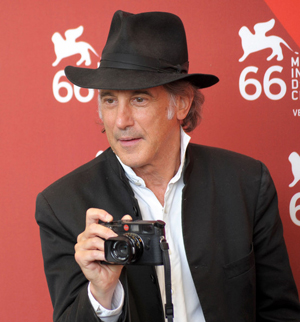
lachmanAt the Life During Wartime press conference, I noticed that director of photography Ed Lachman was a bit grumpy about differences between shooting on film and shooting digital. Life During Wartime had been shot, like Steven Soderbergh’s The Informant!, on the RED digital system. Now Soderbergh’s film looked a bit soft and strained to my eye. Lachman, on the other hand, had managed to beef up much of Life During Wartime using color correction. But I was really curious about how Lachman got these results. Plus, Lachman was wearing a pretty snazzy and stylin’ hat.

So I tracked him down, figuring that two guys sharing the same first name might just get along, and recorded an impromptu interview, which you can listen to at the end of the post. Many thanks to Mr. Lachman for being very gracious in talking with me just as he was heading out the door. My apologies to any cinematography die-hards for being a tad rusty.

Here’s the transcript.

Correspondent: I wanted to ask you about the use of the RED digital system for this versus what you’ve done in terms of film. You alluded during the press conference to having some struggle trying to get the color right. Presumably, a lot of color correction in post. I’m curious to what degree you relied on preexisting locations, whether planning has completely shifted thanks to the RED digital system, and whether you have any possible regrets over this possibly inevitability of where film is headed.

Lachman: Well, I think there’s a place for the digital world and a place for film, and also the merge between the film and digital world. It’s just that my eye and feeling is toward film. Because that’s what I grew up with. It’s not to negate that certain stories can’t be told digitally. But I think it’s an erroneous argument to worry that the digital world should be film. Because the color space is different and the exposure latitude is greatly lessened. Now with a lot of time and money, you can get the digital world closer to film. But for me, it’s still not there yet. And the question they always bring up is that it’s a cost factor. Because it’s like $1,000 a roll for processing of 35mm. But I’ve seen the trend back towards film. Even if you shoot in Super 16 or three-perf 35mm or two-perf 35mm, and then go through a digital intermediate, to me, that’s like the best of both worlds. Where you’re originating on film because of the exposure and the color latitude of the film and also because, in the digital world, at least with the RED, you’re not actually seeing what you’re getting on the set. And the cameraman has to rely on what his eye and, when we use film, our light meter and our lenses. And with the RED, you have to estimate what it’s going to look like. Because you’re not actually seeing at what they say 4K, but is actually 3.2K at the output. Because monitors aren’t at 4K or 3K.

Correspondent: I’m curious. Where do you think digital filmmaking needs to go in order to be acceptable for you? Is it a matter of anticipating how you second-guess how it’s going to look? Once you factor in the potential color correction, the potential fixing in post, and the like? I mean, how does the eye adjust with such developments?

Lachman: Once the digital world can equate the exposure latitude with film, which I would say is close to ten or twelve stops. And for me, in the digital world, it’s about half of that. And then also, you know, there’s something to say about why an image looks the way it does. Being analog versus digital. And there’s a random access to the analog image on film in which actually it’s like an etching. The film is being created by light because of the action — not to get too technical, but the silver in the film is being etched away by the film. And then you’re projecting with light through a piece of film when you see a film. And digital, you’re on one plane. So your shadows and your highlights are on this one plane. And it has a different feeling. And I’m saying there are certain stories that I think can be told very well digitally. And I used the digital world as best I could in Life During Wartime, and I’m happy with the results. But I had to do a lot of post work to bring out things I wanted to feel and see in the digital format that in film I would have had.

Correspondent: What was the worst case scenario in terms of color correction? Did you have a situation in which you lit the heck out of a scene and you got it absolutely how your eye wanted it and it didn’t turn out that way when you looked at it?

Lachman: It’s not so much in lit situations. I can control that. It’s more in unlit situations when you’re outdoors and when you have a strong contrast of over ten or twelve stops. Between shadow, detail, and highlights. And there’s a scene — it’s a fantasy sequence — when you pan around a lake and you see the boy standing there. And you cut back and forth. I had to do that in a number of different passes to bring out the shadow detail, to bring out the highlight. And then I did it for the color space. And that’s not something I would have had to do in film.

Correspondent: How many passes did you do for that shot?

Lachman: Well, each take, I probably did about six passes.

Correspondent: Did you have to record a certain amount of information per pass and mix it all together?

Lachman: You do a matte actually. So you matte out. Let’s say you go for the shadow detail. Matte out the other part. Then I went for the highlights. So I just did different passes. And they can put it together. But that’s very time-consuming.

Correspondent: Well, I’m curious. For a practical situation. For example, the night time parking lot scene. There you have a situation in which you have very little light. And you have to get this image of a woman walking in her nightgown across a parking lot. And so with a situation like that, was that pretty much all color correction? What did you do in terms of lighting the scene to ensure that there was some kind of information there to work with?

Lachman: Well, I’m glad you thought there wasn’t much light. And there wasn’t a lot. But I had to light it on a crane. A 12K on a crane. An 18K. And then a bounce. So I lit it the way I would have done it on film. Another aspect of the digital world that nobody tells you about is: Film right now, you can shoot at ASA 500, push it a stop, 1000, and get incredible results. The digital format, it’s about 200 to get an image that’s acceptable, that isn’t noisy and you have problems later with. So you’re losing a stop to a stop and a half to almost two stops. So then you’re in a position that you have to use more light. So then why are you gaining something by shooting in the digital world over film? Now the digital format loves low light. And I think that shooting at night scenes digitally is wonderful. Because you have lower contrast ratio. But in high contrast situations, where there’s a lot of light, the digital world, you get artifacts. You get highlights burning out. You don’t get as much information as you do with film.

Correspondent: What’s the ideal lighting for a digital situation? Presumably, how would Kino Flos work in relation to film versus digital?

Lachman: Well, you have to keep it within a certain range. Let’s say a 3:1 ratio. Where in film, you might go with a 6:1 ratio. So you just have to be a lot more careful. It’s almost for me like shooting with reversal film. Positive film, what we used to shoot. Now we shoot primarily negative. Well, we do shoot negative film. But when we used to shoot in positive film. Let’s say with documentaries or whatever. You had to be much more careful about the exposure latitude you shot with.

Correspondent: Since you’re dealing with such a limited spectrum, how have you adjusted, say, getting a spot meter reading or a light meter reading?

Lachman: Even though it’s a digital world and people laugh at me, I use my spot meter once I’ve evaluated what the ASA of the digital medium is. And I like to rate it around 200. I then just balance it with my spot meter the way I do with film.

Correspondent: Have you managed to get it so that you pretty much get an ASA 200 reading that more or less reflects the final results without artifacts? Or are you still having problems?

Lachman: No, I rate it at 200 and then do an exposure latitude of a stop and a half on the highlights and the shadow detail. That’s what you’re looking at in the film. When you see just the detail in Michael Kenneth Williams’s face, he’s African-American. And it’s so wonderful. You just read the detail. That’s because I made sure about what my ratio was between the highlight and the shadow. You know, I think part of the mystique of the whole digital world is the idea that for directors, it’s a liberating thing. If they see an image, they can shoot. But it’s a lot more than seeing the image that you have. It’s also about balance in the scene and it’s about creating the continuity of the image, so to speak. So it’s not enough to say, “Oh, I have an image we can shoot.” What happens when you go into the close-up? What happens when you start at one point of the day and you have sunlight and at the end of the day you’re in shadow or clouds? So it’s about balancing to make a scene look like it’s a continuation of the same time period, which many times you’re not allowed to do.

Correspondent: This leads me to actually ask you about depth of field and focus lengths. Obviously, if you don’t have as much of a spectrum, you’re going to have limits in terms of how far you can use the Z-axis. And I’m curious about how your photography has changed in light of the focus problem.

Lachman: I don’t worry about that. People say you have more depth of focus digitally than you do with film. That doesn’t worry me. If I use a longer lens. If I want to knock the background out.

Interview with Ed Lachman (Download MP3)

This text will be replaced

NYFF: The White Ribbon (2009)

[This is the first in a series of posts relating to the 2009 New York Film Festival.]

whiteribbon

(This post will be updated. Review of The White Ribbon TK.)

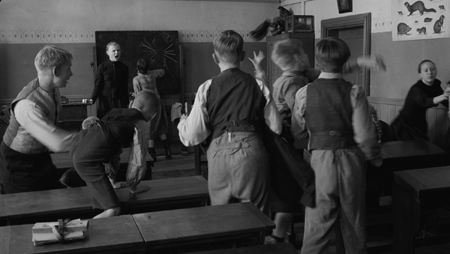
On October 7, 2009, the New York Film Festival held a press conference with writer/director Michael Haneke. To listen to the press conference, as recorded and mastered by Edward Champion, click on the podcast below. Haneke answered questions in German, with English translation by Robert Gray.

Press Conference; Michael Haneke — October 7, 2009 (Download MP3)

This text will be replaced

The Bat Segundo Show: Nicholas Meyer

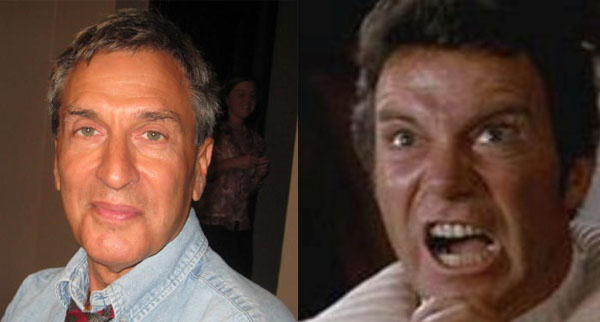
Nicholas Meyer appeared on The Bat Segundo Show #310.

Nicholas Meyer is perhaps best known for his work on Star Trek II: The Wrath of Khan. He is most recently the author of The View from the Bridge.

segundo310

Condition of Mr. Segundo: Ah, listener my old friend, do you know the Klingon proverb that tells us revenge is a dish best served cold?

Author: Nicholas Meyer

Subjects Discussed: Lotus positions, talking back to prescience, writing books when the Writers Guild goes on strike, Samuel Johnson, the origins of The Seven Per-Cent Solution, words as a place of retreat, William S. Baring-Gould, generating “scholarly” commentary, Meyer’s dislike of Sherlock Holmes movies, Watson being portrayed as a buffoon, using the old Warner shield for Time After Time, the unusual opening shot of Time After Time and developing a directorial voice, Stanley Kubrick on the set of Spartacus, on-the-job training about cinematography, directing Ricardo Montalban, making specific choices, directors who don’t know what they want, the importance of understanding actors, finding distinct style with a preexisting Star Trek cast, William Shatner’s concerns on Star Trek II, the Coca-Cola product placement in Volunteers, responding to Ken Levine’s remarks on the scene that ruined Volunteers, Meyer’s problematic metrics with cinematic comedy, Black Orchid, whittling down the original draft of The View from the Bridge, being a script doctor on Fatal Attraction and determining Meyer’s precise involvement with the bathtub ending, calculating a film for an audience and the problems with doing so, how to write a good screenplay with Philip Roth’s source material, the differences between source material and other versions of the story, The Wizard of Oz, arguments about Dickens film adaptations, thoughts on Josh Olson’s “I Will Not Read Your Fucking Script,” The Avengers, and why Meyer’s frequent flyer miles are in the University of Iowa archive.

nmeyer

EXCERPT FROM SHOW:

Correspondent: You’re sitting in a rather strange lotus position.

Meyer: No.

Correspondent: Do you sit like this often?

Meyer: I’m not lotus actually.

Correspondent: Oh. Not lotus.

Meyer: You can’t see, but, underneath this table, my legs are stretched out in a very conventional position.

Correspondent: I’m sorry I wasn’t noticing your muscular legs.

Meyer: The anti-lotus.

Correspondent: How are you doing?

Meyer: I’m doing fine so far.

Correspondent: Okay. I had a question pertaining to recent events and also pertaining to your work and your tendency to have scripts mirror certain international events. I think, going back to Star Trek VI and Company Business, how real events tended to unfold in relation to those particular scripts. But simultaneously I might argue that you were prescient with one particular character in the Star Trek films. Most recently, as you’ve probably been reading the headlines or seeing various clips, a certain Congressman from South Carolina basically said something to the President. And I couldn’t help but think when that happened, Chekhov saying to Khan, “You lie!” Which I thought was quite prescient of you possibly. But simultaneously, in relation to Chekhov and Presidents, I should point out that Chekhov was able to correctly pronounce “nuclear,” whereas the previous President was not. So what do you attribute this linguistic prescience on your part?

Meyer: Well, talking back to prescience is like one of the weirder things that you can do. And I think the fact that Chekhov addressed Khan so disrespectfully in the well of the Botany Bay obviously qualifies him for a Federation reprimand.

Correspondent: Yeah.

Meyer: Does this address your question?

Correspondent: It sort of does. But it’s interesting that Chekhov could pronounce “nuclear” where George Bush could not. 43.

Meyer: The list of things that George Bush was unable to pronounce. In order to pronounce some of these things, I think you have to conceive of what they are first.

Correspondent: And Chekhov was able to conceive of what they were. I mean, it’s funny that Chekhov was the guy here. This could also have a lot to do with my own particular connections to your work and the larger canvas. But you did bring this up in your book and so I was tempted to infer many things in your scripts that possibly were intended or prescient or seer-like.

Meyer: Well, I think Chekhov’s remark clearly, as far as Congressman Wilson is concerned, is an accident. It was about thirty years before. And there are people who go around saying “You lie!” at the drop of a hat. Chekhov, I think, is more right than not when he accuses Khan.

Correspondent: Yeah. I also wanted to ask — just to go to a general question that isn’t so convoluted or so crazy. This particular book. Was this written during the writers strike at all?

Meyer: Yes.

Correspondent: It was.

Meyer: I write my books when the Writers Guild goes on strike. You’re not allowed to write screenplays. And I usually write it because I have to make money. And Dr. Johnson said a man is a blockhead who writes for any reason except money.

Correspondent: Yes. Well, that’s paraphrasing it a bit. But it’s close enough.

Meyer: Well, I got “blockhead” and…

Correspondent: You got “blockhead” and “money” definitely. Nobody but a fool wrote for money…

Meyer: For anything except for money, yes.

Correspondent: I think I’m mangling it now. Yeah, I’m familiar with that quote. You were a movie reviewer at the University of Iowa. You then wrote press kits for Paramount. And then you wrote The Love Story Story. And then you headed out west to become a screenwriter and what was, of course, this novel that came about. Quite a circuitous route in terms of approaching the inevitable. And so I’m curious why you postponed it for so long over the years. Was there a definitive answer? You say that you’re not an analytical person. But I’m sure you’ve had many years to think about this roundabout way of going to your present profession.

Meyer: Well, I always wanted to make movies from the time I was very young. I never thought much about the writing part of it. Which is interesting, because I’ve been writing since I was five years old. Writing was just something I always did. Words were the place to which I retreated. Sort of instinctively and intuitively all my life. I tried writing novels as a young man and I didn’t like my novels very much. And by the way, neither did anyone else. So I went to California eventually to seek my fortune and try and get into the movie business. And I was lucky. I started to make some progress. And then just as I was starting to have stuff produced, the Writers Guild did go on strike. This was back in 1972 or ’73, I think. And I was sharing digs with a young woman who said, “Well now, since you’re not allowed to write screenplays, you can write that book you are always talking about.” And that book was my fanciful notion of a Sherlock Holmes adventure, in which Holmes met and joined forces intellectually as well as narratively with Sigmund Freud. And there really wasn’t any good reason at that point not to try doing it. I don’t think I was expecting it to add up to much. But it was as much a way of passing the time when I wasn’t on the strike line as anything else.

And so, yes, it became a big success. It was the number one best-selling novel for a while in the United States. And then when it was optioned for the movies, I said, “Yes, I will sell you the option on condition that I write the script.” And the script with all its faults was lucky enough to be nominated for an Oscar. And so that sort of led me to the next level. And the next screenplay I wrote, I said, “Yes, I will sell you the script, but I must direct the movie.” And so I leapfrogged my way into my profession.

BSS #310: Nicholas Meyer (Download MP3)

This text will be replaced

Review: Capitalism: A Love Story

capitalismlovestory

It seems to me that, if you’re rolling out the howitzers with the intent to destroy an ideology, you should probably blow the shit out of everything. But Michael Moore’s latest film, Capitalism: A Love Story, feels passe and diffident, despite the fact that it has gone out of its way to include footage from only a few weeks ago. Maybe this film’s dated feel has much to do with our present information age. In an age of YouTube and Twitter, how can any well-meaning documentary capture a permanent image for posterity? But Moore’s best films (Bowling for Columbine and Sicko) have worked because they operated within a specific focus. By examining one aspect of the failed American system, Moore has demonstrated a knack for showing a regular audience how the world works according to his mind. But with a more general emphasis, Capitalism: A Love Story, much like Moore’s narcissistic offering The Big One, is unfocused, messy, and even contemptuous of its intended audience.

For example, Moore suggests that the derivatives which guide the stock market cannot be understood by anybody but the Wall Street guys. As one economist explains a derivative to Moore, we see Moore’s eyes glaze over. Moore then cuts to an academic having difficulty explaining a derivative. Lost within all this didactic comedy is the fact that a collective website called Wikipedia allowed people to come together to explain a derivative in fairly straightforward terms .

But forget how the Internet can galvanize the people (and lead Obama to presidential victory). Let’s talk about the distinct possibility that Moore’s starting to rust within his gilded cage. Since Moore has clearly not thought much about his thesis, he seems to have fallen asleep at the wheel of his liberal limousine. He looks into the recent Pennsylvania child care scandal, in which two Pennsylvania judges bartered kids for cash. But he doesn’t use his ambush tactics to interview the two judges. (In fact, unlike Moore’s other films, this film lacks a heavy along the lines of Phil Knight or Charlton Heston for Moore to confront at the end. And without that perceived villain, Moore’s hollow demagoguery is revealed for what it is.)

To the film’s credit, it does go after Democrats — including Senator Christopher Dodd — and points to Democratic complicity in the Goldman Sachs bailout. Moore hasn’t been this vocal about the lies of the two-party system since he campaigned for Ralph Nader in 2000. (He later campaigned against him in 2004.) But Moore is hardly the fearless agitator he thinks he is. He’s too afraid to criticize Obama’s many failings, preferring instead to dwell on that hopeful day in November when we elected “our” candidate and we used “our” votes to get the Democrats into office. Of course, months later, millions of jobs have been lost, the unemployment rate hovers around 10%, and universal health care — part of FDR’s Second Bills of Rights, a clip of which is included in this film — remains distant. But Moore doesn’t pin any of this on Obama. In fact, Bush 43 receives more camera time than Obama. (That’s a bit like a bunch of philosophers arguing about the 1968 riots as people are losing their jobs. Oh wait. I saw that happen last year when Bernard-Henri Levy and Slavoj Žižek argued last year at the Celeste Bartos Forum. I guess we’ll never have the guts to discuss current predicaments.)

Moore points out that Jonas Salk offered his polio vaccine for free. And at the film’s end, Moore suggests that the audience should be doing what Moore’s doing. Of course, this comes after we’ve paid $10 to see the movie. Moore stands to make millions from this movie. Is he really all that different from a rapacious CEO? Glenn Beck may want all of his pie, but then so does Moore. It’s insulting to have someone in the film referring to mainstream media coverage as “propaganda,” when this film clearly serves the same function.

This is not to suggest that our nation doesn’t need a corrective or that Moore’s services are no longer required. There is, frankly, no other filmmaker out there who can get progressive messages out to a mass audience. He is not, as The New York Times suggested, our little tramp, but there’s nobody else out there stepping up to the plate in quite this way. But Moore’s party mix of stock footage, snarky narration, and righteous indignation is starting to wear thin. It’s the kind of thing we expect out of a filmmaker in his twenties and his thirties, not a 55-year-old filmmaker. Moore naively believes that Wallace Shawn’s presence will somehow attract his established liberal affluent audience. But this is clearly a film made for Middle America, and it doesn’t understand that Middle Americans are often much smarter than bicoastal elitists.

Case in point. The naive majorette Rachel Sklar, who participated in an intellectual sweatshop during her tenure at the Huffington Post by collecting a salary while not paying her contributors, tweeted in response: “WOW. Michael Moore’s latest movie is gonna stir up some SERIOUS shit. Wow. Wow. One more time: Wow.”

No, it’s not. You can cream your pants like it’s the first time all you want, but capitalism isn’t going away.

In fact, Moore’s film really isn’t all that anticapitalist. As Moore points out, capitalism under a more equitable tax system wasn’t so bad for the middle-class. (See this helpful spreadsheet from the IRS containing lowest and highest bracket tax rats from 1913 through 2008. From 1944 to 1963, the highest bracket tax rate hovered around 91%.)

Moore pins the blame on Reagan. And the highest bracket tax rate did indeed fall from 70% to 50% in 1982, eventually down to 30% in Reagan’s second term. But drops, as we all know, occur in degrees. This didn’t happen overnight. Surely President Johnson should be held just as accountable.

So if we accept Michael Moore’s latest film, Capitalism: A Love Story, as a series of generalist sentiments designed to fire up the masses, then, to my mind, it’s probably Moore’s most toothless and tepid film. The film is entertaining enough. We get the obligatory shots of Moore being denied entrance into corporate buildings by security and Moore shouting through a bullhorn. We are horrified by Wal-Mart filing a life insurance policy against one of its employees and collecting a tidy sum (without a cent going to the family), as well as the phrase “dead peasants” used in the insurance policy. On the other hand, if people have allowed capitalism to continue, shouldn’t they be taken to task just as much as the corporations? The film’s credits feature numerous quotes from John Adams and Thomas Jefferson. One key Jeffersonian sentiment that’s missing: People get the government they deserve.

Review: Cloudy with a Chance of Meatballs (2009)

cloudy

It’s safe to say that any imaginative soul will welcome the prospect of tasty food descending from the heavens. It’s a great idea. Not only does this cut down or entirely eliminate precious minutes in the kitchen, but it also benefits the lazy and profligate types who eat out all the time. Instead of driving to some restaurant, you could merely stick your hands out a window and await immediate results. You wouldn’t even need a microwave. Then again, if the food isn’t prepared to your liking, you’re not exactly in the position of returning it to the kitchen. Getting the ideal meal is more akin to scratching off a lottery ticket with a nickel. Maybe you’ll win. Maybe you won’t. But with so many free-falling viands, you have a pretty good law of averages on your hand. But what of quality? The food may come from the atmosphere, but if a chicken bursts through your roof during a candlelight dinner, chances are that the mood will be killed. These are gustatory dilemmas that Cloudy with a Chance of Meatballs, based on Judi Barrett’s book, is remiss to investigate. But then I was probably the only guy in the audience looking for philosophical arguments within a mainstream family film. I am sorry. But if you give me food fused with weather, you’re going to get my brain going.

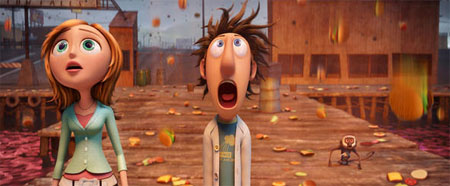
These perfect food storms come from a whiny scientific punk named Flint Lockwood, who has somehow built a giant hidden laboratory without his father knowing and has a somewhat annoying tendency to speak in gerunds when building something. (The lab is accessible through an elevator hidden in a portable toilet.) Flint, voiced by Saturday Night Live regular Bill Hader, has come up with several rum inventions, including spray-on shoes, remote control televisions, monkey translators, and electric cars. But he now has an invention that can turn water into food. (Why he hasn’t considered turning his talents to the far more lucrative sideline of alchemy is a question this film never answers.) His scientific endeavors are misunderstood by his father (voiced by James Caan and largely hidden behind a unibrow and a moustache), a sardine shop proprietor too taken with communicating through fishing metaphors. Our man Flint is also menaced by Baby Brent, who appeared on numerous sardine cans in his callow infancy and who has been riding on this diaper-wearing fame ever since. It’s also worth noting that Bruce Campbell plays the town’s mayor, and this casting is every bit as pleasant as you might expect. Flint’s invention is let loose at the unveiling of a preposterous sardine theme park — with The Alan Parsons Project’s “Sirius” suitably matching this crass commercialism. Inclement weather soon takes on a new meaning. There is also Sam Sparks, a one-dimensional meterologist voiced by Anna Faris, who offers a contrived romance subplot and a tired geek vs. beauty dichotomy that’s out of step with the film’s scientific sympathies.

This nifty-looking universe — centered on a town located on “a tiny island hidden under the A in Atlantic” called Swallow Falls (no relation to the Maryland park) — hasn’t entirely accounted for the supreme messes arising from these food-related meteorological mishaps. Sure, there is a vehicle that drives around town, hurling leftovers into a giant pile. But surely great torrents of ice cream and spaghetti sauce would slick up the hamlet. There are rat-birds flying around the place, and they’re seen several times chomping away at the stray bits of food. But do they carry disease? (Indeed, why do we never see animated rodents for the bacteria-carrying vermin that they are?) And why doesn’t Swallow Falls have an exterminator? Furthermore, if the Swallow Falls population has been eating nothing but sardines during its history, why does Steve the Monkey — Flint’s happy servant, appositely voiced by Neil Patrick Harris –have a Gummi Bears fixation? Surely, his master wouldn’t know about Gummi Bears if there’s been nothing but sardines on the menu.

And when all this food falls from the heavens, why are the townsfolk familiar with it? I must presume that, despite the town’s limited resources (no exterminator, no doctor, no lawyer), all citizens somehow manage to take several months of vacation. But surely there are dishes here that they have never tried before. Come to think of it, the pelting cuisine is mostly American. We get burgers, steaks, pizza, nachos, jelly beans, and hot dogs. Lots of breakfast food but no frittata or smoked salmon? Foodies will be upset. For that matter, no Indian food? Chinese food? Mexican food? When some vaguely Italian spaghetti drops from the sky, one character shouts, “Mamma mia!” I will leave the PC types to argue over whether this possibly Anglo-Saxon, anti-multiculturalist conspiracy. In the film’s defense, I must point to Chief Earl Devereaux, a cop voiced by Mr. T, who scrunches his butt before dealing with his a stressful scenario and somersaults before writing a ticket. Poor Mr. T is assigned this mouthful by the screenwriters: “You know how fathers are supposed to express their appreciation for their sons.” That doesn’t quite have the ring of “I pity the fool,” but Mr. T does what he can.

How can one find plausibility in this giant peach of a premise? To cite another incident, giant pancakes fall from the sky, followed by two square dabs of butter, and then followed by a melange of syrup. Since all this is animated — in 3-D and in IMAX, ideal for a 420-friendly crowd were this not a family film — this is all very pleasant to watch. But the pancake dilemma also assumes that all three breakfast components will fall at precisely the right times and spatial coordinates. Likewise, a roofless restaurant has diners holding out their plates waiting for steaks to pelt down hard from the sky. The success of this operation hinges upon (a) the sky remaining sunny, (b) the steaks somehow magically landing in the desired plate positions, (c) the steaks not hitting these diners in the head and rendering them unconscious (there are apparently no lawyers or courts in this town; so I presume nobody in Swallow Falls is litigious), (d) the steaks maintaining an ideal warmth over the course of a fall of several thousand feet, and (e) the steaks landing on the plates without breaking apart or otherwise being split into inedible pieces upon impact.

You see the problems.

In an open letter to Alexei Mutovkin, the writer Ursula K. Le Guin suggested that plausibility within fantasy is uprooted by wishful thinking. And Cloudy, as enjoyable as the film frequently is, relies very much on wishful thinking. It is wishful thinking to expect a really cool idea like falling food to hold up. Then again, Roald Dahl managed to hold our attention with James Trotter back in 1961. So maybe we should blame the filmmakers. Expanding her thoughts further, Le Guin also wrote that a fantasy story’s plausibility rests upon “the coherence of the story, its constant self-reference.”

By Le Guin’s standards, Cloudy is a failure. And I suspect that because the film often lacks narrative coherence, it will not last very long in the heads of children hoping to ride this gleeful storm out. This film possesses too much energy for its own good. It feels the need to constantly insert characters doing funny things in the background. It is terrified of inserting a natural break, perhaps because we’re not meant to think too much about the world that the film presents. The film therefore lacks confidence, in large part because the coherence and the constant self-reference, as I’ve just demonstrated, fails to make sense.

(For parents, I should probably also note that I observed two kids having a difficult time near the end because of the film’s relentless tsunami of visual information. One boy retreated to his mother’s lap, crying and exhausted. Another was frantically waving his arms at the screen and began to jump up and down in confusion. The 3-D is certainly impressive at times, but little ones may get overwhelmed.)

I don’t mean to suggest that this film isn’t fun. But it doesn’t quite live up to its potential. It is more interested in perpetuating a concept than building a world. The filmmakers have avoided Ron Barrett’s illustrations from the book, opting for a peppy and textured look that does away with Barrett’s lines and shadings. But Barnett understood that a fantastic premise, particularly an unlikely one, needs a little reality to make it work, to make it coherent, and to avoid wishful thinking. Had this film opted for conceptual quality instead of quantity, it might have stood toe-to-toe with Pixar.