The City in History (Modern Library Nonfiction #76)

(This is the twenty-fifth entry in The Modern Library Nonfiction Challenge, an ambitious project to read and write about the Modern Library Nonfiction books from #100 to #1. There is also The Modern Library Reading Challenge, a fiction-based counterpart to this list. Previous entry: Battle Cry of Freedom.)

I’ve been a city man all my life. Certainly all of my adult life. At the age of twenty, I escaped from the dour doldrums of suburban Sacramento — the kind of hideous Flintstones-style recurring backdrop that seems to encourage broken dreams, angry tears, and rampant abuse behind model home replica doors — for the bright foggy beauty and the joyful pastels of San Francisco.

That gorgeous place from the not so distant past — with the co-op movie theatres playing weirdass indie flicks you couldn’t find on video or teevee, the cafes pattering with political idealism and the streets rattling with the chatty pugnacious jingle of strange conceptual punks, the crumbling encyclopedic bookstores and the boldly strange dive bars of the Tenderloin, and the wonderful mariachi players serenading Valencia Street taquerias for a quick buck, a Mexicoke, and a smile — was exactly the urban realm I needed at the time. Only real souls committed to an increasingly rarefied inclusiveness like Michelle Tea and William T. Vollmann knew how to capture these meat-and-potatoes freak-friendly details in their novels. What I didn’t know, as San Francisco became an unaffordable playground invaded by elitist and not especially perspicacious techbro affluents, was that this coastal metropolis was no longer a place for weirdos like me. I was outpriced and outmatched, like so many who bolted to Oakland, Los Angeles, and elsewhere. It was an all-too-common tale of gentrification and migration, of a city permanently regurgitating its most promising inhabitants and falling victim to an influx of wealth that forever altered its essence. Like any foolish romantic, I fell in love with someone who was absolutely wrong for me and became seduced by the Brooklyn brownstones, the skyscrapers spiring along the rivers, and the giddy pace of a megacity demanding all of its inhabitants to make something of themselves. I’ve been in New York City now for fourteen years — most of my thirties and all of my forties. I hope to continue to live here. But like anything in life, it’s largely the luck of the draw, hoping that the law of averages will work out in your favor. Especially in this age of mass unemployment and pandemic uncertainties and anybody who doesn’t make more than $200,000 a year left in the cold and declared the enemy.

I mention these bona-fides in advance of my thoughts on the great Lewis Mumford to give you a sense of why his amazing book, The City in History, took me much longer to read than I anticipated. The problem with an encyclopedic smartypants like Mumford is that he’ll drop a casual reference that is supremely interesting if you are even remotely curious. One paragraph will send you down an Internet rabbit hole. The next thing you know, you’ve just spent hours of your life trying to find any information on the ancient Greek artisans who hustled their goods in the agora and why slavery was simply accepted as a part of city life for centuries. An email correspondent, learning that I was taking a deep dive into Mumford, urged me to plunge into the four volumes kick-started by Technics and Civilization. And I have to say, given the many months I spent not so much reading The City in History but taking in the many references orbiting its scholarship, I will probably have to wait until perhaps my seventies — should I live that long — for such an enormous undertaking. I could easily see myself as an old bachelor on a beach — filling in crossword puzzles, tendering stories about my misspent youth to any sympathetic ear, respectfully flirting with any lingering divorcé with the decency to not see me as invisible, and carrying along the four Mumford volumes with me (along with whatever will then pass for a tablet to look up all the references) in a satchel.

This is my roundabout way of saying that Lewis Mumford’s The City in History is a wonderfully robust and often grumbly tome from a dude who spent most of his years considering how cities thrive through technological and architectural development. One of the book’s charms is seeing Mumford gradually becoming more pissed off as he gets closer to the modern age. It’s almost as if he resents what the city transformed into in the twentieth century. For example, in a weird aside, Mumford complains about the increased number of windows in residential buildings after the seventeenth century, bemoaning the lack of privacy with a touch of principle rarely remembered by people who grew up with nothing but the Internet’s exhibitionistic cadences. He also has a healthy aversion to the “often disruptive and self-defeating” nature of constant growth. It is, after all, possible for a city or a small town to develop too much. Once cities ditched their walls, there were no longer any physical boundaries to how far any teeming area could spread while arguably become lesser the further it rolled along. (See, for example, the anarchic sprawl of Texas today. Everyone from the likes of the Manhattan Institute’s Michael Hendrix to James Howard Kuntsler has spoken, in varying degrees of horror, about this endless expansion.) On this point, Mumford pushes back against the myth of the medieval town as a place of static boredom. He points to religious edifices somehow transforming these clusters where, for the first time in history, “the majority of the inhabitants of a city were free men.” Even when mercantile centers dried up as trade died, Mumfurod points to the limitless evolution of the countryside. Feudalism subsided for a stabler and more available food supply and new forms of home-spun industry that made many of these smaller villages special. Textile industries flourished in northern Italy and not only resulted in innovations such as the spinning wheel, but some healthy revolutionary pushback against tyrants — such as the weavers rebelling against the ruling elite in 1370-1371. In short, Mumford argues that a reasonably confined city was capable of nearly anything.

But what of the modern metropolis? The cities that called to people like me as a young man? Mumford’s view was that the enormity of a place like Paris or Rome or London or New York City wasn’t merely the result of technological progress. As he argues:

…the metropolitan phase became universal only when the technical means of congestion had become adequate — and their use profitable to those who manufactured or employed them. The modern metropolis is, rather, an outstanding example of a peculiar cultural lag within the realm of technics itself: namely, the continuation by highly advanced technical means of the obsolete forms and ends of a socially retarded civilization.

Well, that doesn’t sound too nice. So the punks who I jammed with in Mission District warrens and the scrappy filmmakers piecing together stories and the bizarre theatre we were putting on while eating ramen and Red Vines were cultural atavists? Gee, thanks, Lewis! Would Mumford apply this same disparaging tone to the CBGB punk crowd and artists who flourished in the East Village and arguably altered the trajectory of popular music? Or, for that matter, the 1990s hip-hop artists who flourished in Bed-Stuy and Compton? This is where Mumford and I part ways. Who are any of us to dictate what constitutes cultural lag? In my experience, obsolete forms tend to square dance with current mediums and that’s usually how the beat rolls on. Small wonder that Jane Jacobs and Mumford would get involved in a philosophical brawl that lasted a good four decades.

It’s frustrating that, for all the right criticism Mumford offers, he can be a bit of a dowdy square. He’s so good at showing us how the office building, as we still know it today, initiated in Florence thanks to Giorgio Vasari. It turns out that this amazing Italian Renaissance man wasn’t just committed to corridors. He designed an interior with an open-floor loggia — those reception areas that can now be found in every damned bureaucratic entity. We now have someone to blame for them! Mumford offers us little details — such as the tendency of early cities to repave streets over the layers of trash that had been thrown over the past twenty years. This resulted in developments such as doorways increasingly becoming lower — often submerged beneath the grade entirely — as history carried on. There are very useful asides in Mumford’s book on the history of multistory buildings. We learn how Roman baths and gymnasiums did make efforts to accommodate the rabble, despite the rampant exploitation of humans. Calvino was only scratching the surface. As long as cities have been around, humans have created new structures and new innovations. For all we know, the Coronavirus pandemic could very well lead to some urban advancement that humankind had hitherto never considered.

Because of all this, I can’t square Mumford’s elitism with the beautiful idealism that he lays down here:

The final mission of the city is to further man’s cautious participation in the cosmic and the historic process. Through its own complex and enduring structure, the city vastly augments man’s ability to interpret these processes and take an active, formative part in them, so that every phase of the drama it stages shall have, to the highest degree possible, the illumination of consciousness, the stamp of purpose, the color of love. That magnification of all the dimensions of life, through emotional communion, rational communication, technological mastery, and, above, all, dramatic representation, has been the supreme office of the city in history. And it remains the chief reason for the city’s continued existence.

Who determines the active and formative development of the city? Do we leave it to anarchy? Do we acknowledge the numerous forces duking it out over who determines the topography? I can certainly get behind Mumford railing against mercantilism. But who establishes the ideal? One of the most underrated volumes contending with such a struggle between social community and the kind of “high-minded” conservative finger-wagging that Mumford too often espouses is Samuel R. Delany’s excellent book, Times Square Red, Times Square Blue, a brilliant portrait of the undeniable “color of love” practiced in the Times Square adult movie theatres through the mid-1990s — until Mayor Giuliani declared war on what he deemed unseemly. In a sidebar, Delany, buttressing Jane Jacobs, observes that the problem here is that this sort of idealism assumes two conditions: (1) that cities are fundamentally repugnant places and that we must therefore hide the poor and the underprivileged and (2) the city is defined by the big and the monumental.

The sheer amount of suffering undergone by the impoverished is something that Mumford, to his credit, does broach — particularly the unsanitary conditions that those in London and New York lived in as these cities expanded. (For more on the working stiffs and those who struggled, especially in New York, I highly recommend Luc Sante’s excellent book Low Life.) But while Mumford is willing to go all in on the question of bigness, he’s a little too detached and diffident on the issue of how the have nots contribute to urban growth, although he does note how “the proletariat had their unpremeditated revenge” on the haves as New York increasingly crammed people like sardines into airless cloisters. And, as such, I found myself pulling out my Jane Jacobs books, rereading passages, and saying, with my best Mortal Kombat announcer voice, “Finish him!”

But maybe I’m being a little too hard on Mumford. The guy wasn’t a fan of architect Leon Battista Alberti’s great rush for suburban development, with this funny aside: “one must ask how much he left for the early twentieth-century architect to invent.” Mumford had it in for Le Corbusier and his tower-centric approach to urban planning (which is perhaps best observed in Chandigarh, India — a place where Le Corbusier was given free reign), but he was also a huge fan of Ebeneezer Howard and his “Garden City” movement, whereby Howard suggested that some combination of city and country represented the best living conditions. Even if you side with Jane Jacobs, as I do, on the whole Garden City question, believing that there can be some real beauty in staggering and urban density, you can’t help but smile at his prickliness:

For the successor of the paleotechnic town has created instruments and conditions potentially far more lethal than those which wiped out so many lives in the town of Donora, Pennsylvania, through a concentration of toxic gases, or that which in December 1952 killed in one week an estimated five thousand extra of London’s inhabitants.

Oh, Mumford! With endearingly bleak observations like this, why couldn’t you be more on the side of the people?

Next Up: Paul Fussell’s The Great War and Modern Memory!

Battle Cry of Freedom (Modern Library Nonfiction #77)

(This is the twenty-fourth entry in The Modern Library Nonfiction Challenge, an ambitious project to read and write about the Modern Library Nonfiction books from #100 to #1. There is also The Modern Library Reading Challenge, a fiction-based counterpart to this list. Previous entry: Why We Can’t Wait.)

In his 1966 essay “The White Man’s Guilt,” James Baldwin — never a man to mince words or to refrain from expressing searing clarity — declared that white Americans were incapable of facing the deep wounds suppurating in the national fabric because of their refusal to acknowledge their complicity in abusive history. Pointing to the repugnant privilege that, even today, hinders many white people from altering their lives, their attitudes, and the baleful bigotry summoned by their nascent advantages, much less their relationships to people of color, Baldwin noted:

For history, as nearly no one seems to know, is not merely something to be read. And it does not refer merely, or even principally, to the past. On the contrary, the great force of history comes from the fact that we carry it within us, are unconsciously controlled by it in many ways, and history is literally present in all that we do. It could scarcely be otherwise, since it is to history that we owe our frames of reference, our identities, and our aspirations.

Fifty-four years after Baldwin, America now finds itself enmired within its most seminal (and long delayed) civil rights movement in decades, awakened from its somnambulistic malaise through the neck-stomping snap of systemic racism casually and ignobly practiced by crooked cops who are afforded impunity rather than significant consequences. The institution of slavery has been replaced by the indignities of racial profiling, income disparity, wanton brutality, constant belittlement, and a crass cabal of Karens who are more than eager to rat out people of color so that they can scarf down their soy milk lattes and avocado toast, rarely deviating from the hideous cues that a culture — one that prioritizes discrimination first and equality last — rewards with all the perfunctory mechanics of a slot machine jackpot.

Thus, one must approach James McPherson’s mighty and incredibly impressive Civil War volume with mindfulness and assiduity. It is not, as Baldwin says, a book that can merely be read — even though it is something of a miracle that McPherson has packed as much detail and as many considerations as he has within more than 900 pages. McPherson’s volume is an invaluable start for anyone hoping to move beyond mere reading, to significantly considering the palpable legacy of how the hideous shadow of white supremacy and belittlement still plagues us in the present. Why does the Confederate flag still fly? Why do imperialist statues — especially monuments that celebrate a failed and racist breakaway coalition of upstart states rightly starved and humiliated and destroyed by Grant and Sherman — still stand? Battle Cry of Freedom beckons us to pay careful attention to the unjust and bestial influences that erupted before the war and that flickered afterwards. It is thankfully not just a compilation of battle summaries — although it does do much to mark the moments in which the North was on the run and geography and weather and lack of supplies often stood in its way. The book pays welcome scrutiny to the underlying environment that inspired the South to secede and required a newly inaugurated Lincoln to call for 75,000 volunteers a little more than a month after he had been sworn in as President and just after the South Carolina militia had attacked Fort Sumter.

* * *

It was technological innovation in the 1840s and the 1850s — the new machines putting out watches and furniture and bolts and damn near anything into the market at a rapid clip previously unseen — that helped sow the seeds of labor unrest. To use the new tools, a worker had to go to a factory rather than operating out of his home. To turn the most profit possible and sustain his venal wealth, the aspiring robber baron had to exploit the worker at subhuman wages. The South was more willing to enslave people. A barbaric racist of that era ranting in a saloon could, much like one of Trump’s acolytes today, point to the dip in the agricultural labor force from 1800 to 1860. In the North, 70% of labor was in agriculture, but this fell to 40%. But in the South, the rate remained steady at 80%. But this, of course, was an artificial win built on the backs of Black lives.

You had increasing territory in the West annexed to the United States and, with this, vivacious crusaders who were feeling bolder about their causes. David Wilmot, a freshman Congressional Representative, saw the Mexican War as an opportunity to lay down a proviso on August 8, 1846. “[N]either slavery nor involuntary servitude shall ever exist in any part of said territory” were the words that Wilmot added to an appropriations bill amendment. Like any politician, Wilmot was interested in settling scores. The Wilmot Proviso was as much the result of long pent-up frustration among a cluster of Northern Democrats who cared more about holding onto power than pushing forward abolition. The proviso kept being reintroduced and the Democratic Party of the time — much of it composed of racists from the South — began to splinter.

Northern Democrats shifted their support from the Wilmot Proviso to an idea known as popular sovereignity, which placed the decision on whether to sustain or abolish slavery into the hands of settlers moving into the new territories. But Wilmot’s more universal abolition approach still had the enthusiastic support of northern Whigs. The Whigs, for those who may not recall, were essentially middle-class conservatives living it large. They represented the alternative to Democrats before the Republican Party was created in 1854. The Whigs emerged from the ashes of the Nullification Crisis of 1832 — which you may recall me getting into when I was tackling Herbert Croly a few years ago. Yes, Andrew Jackson was responsible for (a) destroying the national bank, thus creating an economically volatile environment and (b) creating enough fury for Henry Clay and company to form an anti-Jackson opposition party. What’s most interesting here is that opposing Jackson also meant opposing one of his pet causes: slavery. And, mind you, these were pro-business conservatives who wanted to live the good life. This is a bit like day trading bros dolled up in Brooks Brothers suits suddenly announcing that they want universal healthcare. Politics may make strange bedfellows, but sometimes a searing laser directed at an enemy who has jilted you in the boudoir creates an entirely unexpected bloc.

Many of the “liberals” of that era, especially in the South, were very much in favor of keeping slavery going. (This historical fact has regrettably caused many Republicans to chirp “Party of Lincoln!” in an attempt to excuse the more fascistic and racist overtures that these same smug burghers wallow in today.) Much like Black Lives Matter today and the Occupy Wall Street movement nine years ago, a significant plurality of the Whigs, who resented the fact that their slave-owning presidential candidate Zachary Taylor refused to take a position on the Wilmot Proviso, were able to create a broad coalition at the Free Soil convention of 1848. Slavery then became one of the 1848 presidential election’s major issues.

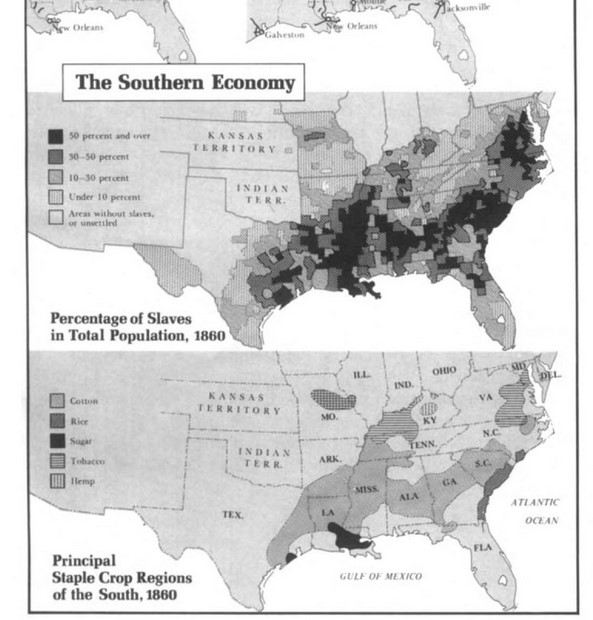
In Battle Cry, McPherson nimbly points to how all of these developments led to a great deal of political unrest that made the Civil War inevitable. Prominent Republican William H. Seward (later Lincoln’s Secretary of State) came out swinging against slavery, claiming that compromise on the issue was impossible. “You cannot roll back the tide of social progress,” he said. The 1854 Kansas-Nebraska Act (authored by Stephen Douglas) repealed the Missouri Compromise, which in turn led to “Bleeding Kansas” — a series of armed and violent struggles over the legality of slavery that carried on for the next seven years. (Curiously, McPheron downplays Daniel Webster’s 1850 turncoat “Seventh of March” speech, which signaled Webster’s willingness to enforce the Fugitive Slave Act and forever altered his base and political career.) And while all this was happening, cotton prices in the South were rising and a dying faction of Southern unionists led the Southern states to increasingly consider secession. The maps of 1860 reveal the inescapable problem:

* * *

The Whigs were crumbling. Enter Lincoln, speaking eloquently on a Peroria stage on October 16, 1854, and representing the future of the newly minted Republican Party:

When the white man governs himself that is self-government; but when he governs himself, and also governs another man, that is more than self-government — that is despotism. If the negro is a man, why then my ancient faith teaches me that “all men are created equal;” and that there can be no moral right in connection with one man’s making a slave of another.

Enter the Know Nothings, a third party filling a niche left by the eroding Whigs and the increasingly splintered Democratic Party. The Know Nothings were arguably the Proud Boys of their time. They ushered in a wave of nationalism and xenophobia that was thoughtfully considered by the Smithsonian‘s Lorraine Boissoneault. What killed the Know Nothings was their failure to take a stand on slavery. You couldn’t afford to stay silent on the issue when the likes of Dred Scott and John Brown were in the newspapers. The Know Nothings further scattered political difference to the winds, giving Lincoln the opportunity to unite numerous strands under the new Republican Party and win the Presidency during the 1860 election, despite not being on the ballot in ten Southern states.

With Lincoln’s win, seven slave states seceded from the union. And the beginnings of the Confederacy began. Historians have been arguing for years over the precise reasons for this disunion. If you’re a bit of a wonk like me, I highly recommend this 2011 panel in which three historians offer entirely different takeaways. McPherson, to his credit, allows the events to unfold and refrains from too much editorializing. Although throughout the book, McPherson does speak from the perspective of the Union.

* * *

As I noted when I tackled John Keegan’s The Face of Battle, one of my failings as an all-encompassing dilettante resides with military history, which I find about as pleasurable to read as sprawling myself naked, sans hat or suntan lotion, upon some burning metal bed on a Brooklyn rooftop during a hot August afternoon — watching tar congeal over my epidermis until I transform into some ugly onyx crust while various spectators, saddled with boredom and the need to make a quick buck, film me with their phones and later email me demands to pay up in Bitcoin, lest my mindless frolicking be publicly uploaded to the Internet and distributed to every pornographic website from here to Helsinki.

That’s definitely laying it on thicker than you need to hear. But it is essential that you understand just how much military history rankles me.

Anyway, despite my great reluctance to don a tricorne of any sort, McPherson’s descriptions of battles (along with the accompanying illustrations) did somehow jolt me out of my aversion and make me care. Little details — such as P.G.T. Beauregard designing a new Confederate battle flag after troops could not distinguish between the Confederate “stars and bars” banner from the Union flag in the fog of battle — helped to clarify the specific innovations brought about by the Civil War. It also had never occurred to me how much the history of ironclad vessels began with the Civil War, thanks in part to the eccentric marine engineer John Ericsson, who designed the famed USS Monitor, designed as a counterpoint to the formidable Confederate vessel Virginia, which had been created to hit the Union blockade at Ronoake Island. What was especially amazing about Ericsson’s ship was that it was built and launched rapidly — without testing. After two hours of fighting, the Monitor finally breached the Virginia‘s hull with a 175-pound shot, operating with barely functioning engines. For whatever reason, McPherson’s vivid description of this sea battle reminded me of the Mutara Nebula battle at the end of Star Trek II: The Wrath of Khan.

But even for all of McPherson’s synthesizing legerdemain, the one serious thing I have to ding him on is his failure to describe the horrors of slavery in any form. Even William L. Shirer in The Rise and Fall of the Third Reich devoted significant passages to depicting what was happening in the Holocaust death camps. Despite my high regard for McPherson’s ability to find just the right events to highlight in the Civil War timeline, and his brilliantly subtle way of depicting the shifting fortunes of the North and the South, can one really accept a volume about the Civil War without a description of slavery? McPherson devotes more time to covering Andersonville’s brutal statistics (prisoner mortality was 29% and so forth) before closing his paragraph with this sentence:

The treatment of prisoners during the Civil War was something that neither side could be proud of.

But what of the treatment of Black people? Why does this not merit so much as a paragraph? McPherson is so good at details — such as emphasizing the fact that Grant’s pleas to have all prisoners exchanged — white and Black — in the cartel actually came a year after negotiations had stopped. He’s good enough to show us how southern historians have perceived events (often questionably). Why then would he shy away from the conditions of slavery?

The other major flaw: Why would McPherson skim over the Battle of Gettysburg in just under twenty pages? This was, after all, the decisive battle of the war. McPherson seems to devote more time, for example, on the Confederate raids in 1862. And while all this is useful to understanding the War, it’s still inexplicable to me.

But these are significant nitpicks for a book that was published in 1988 and that is otherwise a masterpiece. Still, I’m not the only one out here kvetching about this problem. The time has come for a new historian — ideally someone who isn’t a white male — to step up to the challenge and outdo both Ken Burns and James McPherson (and Shelby Foote, who I’ll be getting to when we hit MLNF #15 in perhaps a decade or so) and fully convey the evils and brutality of slavery and why this war both altered American life and exacerbated the problems we are still facing today.

Next Up: Lewis Mumford’s The City in History!

Why We Can’t Wait (Modern Library Nonfiction #78)

(This is the twenty-third entry in The Modern Library Nonfiction Challenge, an ambitious project to read and write about the Modern Library Nonfiction books from #100 to #1. There is also The Modern Library Reading Challenge, a fiction-based counterpart to this list. Previous entry: The Rise of Theodore Roosevelt.)

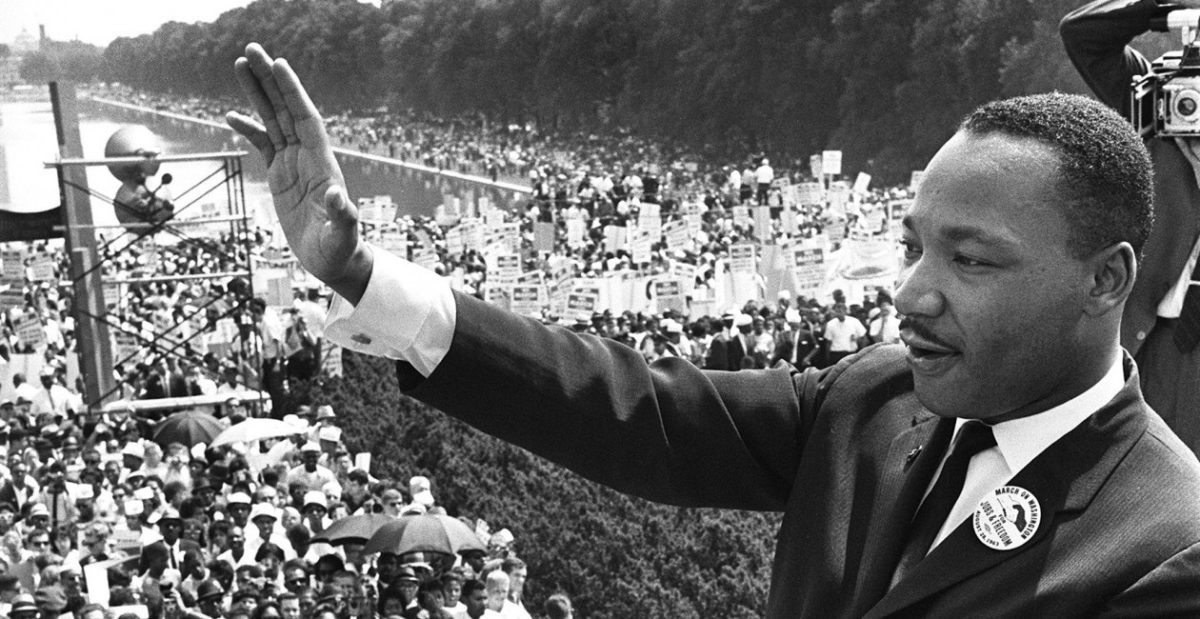
It was a warm day in April when Dr. Martin Luther King was arrested. It was the thirteenth and the most important arrest of his life. King, wearing denim work pants and a gray fatigue shirt, was manacled along with fifty others that afternoon, joining close to a thousand more who had bravely submitted their bodies over many weeks to make a vital point about racial inequality and the unquestionable inhumanity of segregation.
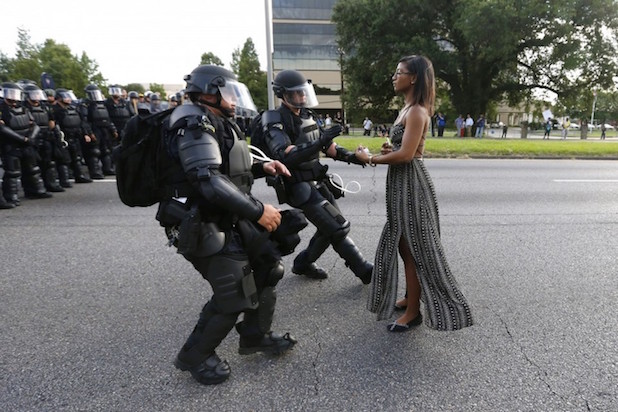
The brave people of Birmingham had tried so many times before. They had attempted peaceful negotiation with a city that had closed sixty public parks rather than uphold the federal desegregation law. They had talked with businesses that had debased black people by denying them restaurant service and asking them to walk through doors labeled COLORED. Some of these atavistic signs had been removed, only for the placards to be returned to the windows once the businesses believed that their hollow gestures had been fulfilled. And so it became necessary to push harder — peacefully, but harder. The Birmingham police unleashed attack dogs on children and doused peaceful protesters with high-pressure water hoses and seemed hell-bent on debasing and arresting the growing throngs who stood up and said, without raising a fist and always believing in hope and often singing songs, “Enough. No more.”

There were many local leaders who claimed that they stood for the righteous, but who turned against King. White leaders in Birmingham believed — not unlike pro-segregation Governor George Wallace just three months earlier — that King’s nonviolent protests against segregation would incite a torrent of violence. But the violence never came from King’s well-trained camp and had actually emerged from the savage police force upholding an unjust law. King had been very careful with his activists, asking them to sign a ten-point Commitment Card that included these two vital points:

6. OBSERVE with both friend and foe the ordinary rules of courtesy.

8. REFRAIN from the violence of fist, tongue, or heart.

Two days before King’s arrest, Bull Connor, the racist Birmingham Commissioner of Public Safety and a man so vile and heartless that he’d once egged on Klansmen to beat Freedom Riders to a pulp for fifteen minutes as the police stood adjacent and did not intervene, had issued an injunction against the protests. He raised the bail bond from $200 to $1,500 for those who were arrested. (That’s $10,000 in 2019 dollars. When you consider the lower pay and the denied economic opportunities for Birmingham blacks, you can very well imagine what a cruel and needless punishment this was for many protesters who lived paycheck to paycheck.)

And so on Good Friday, it became necessary for King, along with his invaluable fellow leaders Ralph Abernathy and Fred Shuttlesworth, to walk directly to Birmingham Jail and sing “We Shall Overcome.” King took a very big risk in doing so. But he needed to set an example for civil disobedience. He needed to show that he was not immune to the sacrifices of this very important fight. The bondsman who provided the bail for the demonstrators told King that he was out as King pondered the nearly diminished funds for the campaign. In jail, King would not be able to use his contacts and raise the money that would keep his campaign going. Despite all this, and this is probably one of the key takeaways from this remarkable episode in political history, King was dedicated to practicing what he preached. As he put it:

How could my failure now to submit to arrest be explained to the local community? What would be the verdict of the country about a man who had encouraged hundreds of people to make a stunning and then excused himself?

Many who watched this noble march, the details of which are documented in S. Jonathan Bass’s excellent book Blessed Are the Peacemakers, dressed in their Sunday best out of respect for King’s efforts. Police crept along with the marchers before Connor gave the final order. Shuttlesworth had left earlier. King, Abernathy, and their fellow protestors were soon surrounded by paddy wagons and motorcycles and a three-wheel motorcart. They dropped to their knees in peaceful prayer. The head of the patrol squeezed the back of King’s belt and escorted him into a police car. The police gripped the back of Abernathy’s shirt and steered him into a van.

King was placed in an isolation cell. Thankfully, he did not suffer physical brutality, but the atmosphere was dank enough to diminish a weaker man’s hope. As he wrote, “You will never know the meaning of utter darkness until you have lain in such a dungeon, knowing that sunlight is streaming overhead and still seeing only darkness below.” Jail officials refused a private meeting between King and his attorney. Wyatt Tee Walker, King’s chief of staff, sent a telegram to President Kennedy. The police did not permit King to speak to anyone for at least twenty-four hours.

As his confidantes gradually gained permission to speak to King, King became aware of a statement published by eight white clergy members in Birmingham — available here. This octet not only urged the black community to withdraw support for these demonstrations, but risibly suggested that King’s campaign was “unwise and untimely” and could be settled by the courts. They completely missed the point of what King was determined to accomplish.

King began drafting a response, scribbling around the margins of a newspaper. Abernathy asked King if the police had given him anything to write on. “No,” King replied, “I’m using toilet paper.” Within a week, he had paper and a notepad. King’s “Letter from Birmingham Jail,” contained in his incredibly inspiring book Why We Can’t Wait, is one of the most powerful statements ever written about civil rights. It nimbly argues for the need to take direct action rather than wait for injustice to be rectified. It remains an essential text for anyone who professes to champion humanity and dignity.

* * *

King’s “Letter” against the eight clergymen could just as easily apply to many “well-meaning” liberals today. He expertly fillets the white clergy for their lack of concern, pointing out that “the superficial kind of social analysis that deal with effects and does not grapple with underlying causes.” He points out that direct action is, in and of itself, a form of negotiation. The only way that an issue becomes lodged in the national conversation is when it becomes dramatized. King advocates a “constructive, nonviolent tension that is necessary for growth” — something that seems increasingly difficult for people on social media to understand as they block viewpoints that they vaguely disagree with and cower behind filter bubbles. He is also adamantly, and rightly, committed to not allowing anyone’s timetable to get in the way of fighting a national cancer that had then ignobly endured for 340 years. He distinguishes between the just and the unjust law, pointing out that “one has a moral responsibility to obey unjust laws.” But he is very careful and very clear about his definitions:

An unjust law is a code that a numerical or power majority group compels a minority group to obey but does not make binding on itself. This is difference made legal. By the same token, a just law is a code that a majority compels a minority to follow and that it is willing to follow itself. This is sameness made legal.

This is a cogent philosophy applicable to many ills beyond racism. This is radicalism in all of its beauty. This is precisely what made Martin Luther King one of the greatest Americans who ever lived. For me, Martin Luther King remains a true hero, a model for justice, humility, peace, moral responsibility, organizational acumen, progress, and doing what’s right. But it also made King dangerous enough for James Earl Ray, a staunch Wallace supporter, to assassinate him on April 4, 1968. (Incidentally, King’s family have supported Ray’s efforts to prove his innocence.)

* * *

Why We Can’t Wait‘s scope isn’t just limited to Birmingham. The book doesn’t hesitate to cover a vast historical trajectory that somehow stumps for action in 1963 and in 2019. It reminds us that much of what King was fighting for must remain at the forefront of today’s progressive politics, but also must involve a government that acts on behalf of the people: “There is a right and a wrong side in this conflict and the government does not belong the middle.” Unfortunately, the government has doggedly sided against human rights and against the majestic democracy of voting. While Jim Crow has thankfully been abolished, the recent battle to restore the Voting Rights Act of 1965, gutted by the Supreme Court in 2013, shows that systemic racism remains very much alive and that the courts for which the eight white Birmingham clergy professed such faith and fealty are stacked against African-Americans. (A 2018 Harvard study discovered that counties freed from federal oversight saw a dramatic drop in minority voter turnout.)

Much as the end of physical slavery inspired racists to conjure up segregation as a new method of diminishing African-Americans, so too do we see such cavalier and dehumanizing “innovations” in present day racism. Police shootings and hate crimes are all driven by the same repugnant violence that King devoted his life to defeating.

The economic parallels between 1963 and 2019 are also distressingly acute. In Why We Can’t Wait, King noted that there were “two and one-half times as many jobless Negros as whites in 1963, and their median income was half that of the white man.” Fifty-six years later, the Bureau of Labor Statistics informs us that African Americans are nearly twice as unemployed as whites in a flush economic time with a low unemployment rate, with the U.S. Census Bureau reporting that the median household income for African-Americans in 2017 was $40,258 compared to $68,145 for whites. In other words, a black family now only makes 59% of the median income earned by a white family.

If these statistics are supposed to represent “progress,” then it’s clear that we’re still making the mistake of waiting. These are appalling and unacceptable baby steps towards the very necessary racial equality that King called for. White Americans continue to ignore these statistics and the putatively liberal politicians who profess to stand for fairness continue to demonstrate how tone-deaf they are to feral wrongs that affect real lives. As Ashley Williams learned in February 2016, white Democrats continue to dismiss anyone who challenges them on their disgraceful legacy of incarcerating people of color. The protester is “rude,” “not appropriate,” or is, in a particularly loaded gerund, “trespassing.” “Maybe you can listen to what I have to say” was Hillary Clinton’s response to Williams, to which one rightfully replies in the name of moral justice, “Hillary, maybe you’re the one here who needs to listen.”

Even Kamala Harris, now running for President, has tried to paint herself as a “progressive prosecutor,” when her record reveals clear support for measures that actively harm the lives of black people. In 2015, Harris opposed a bill that demanded greater probing into police officer shootings. That same year, she refused to support body cams, only to volte-face with egregious opportunism just ten days before announcing her candidacy. In the case of George Gage, Harris held back key exculpatory evidence that might have freed a man who did not have criminal record. Gage was forced to represent himself in court and is now serving a 70-year sentence. In upholding these savage inequities, I don’t think it’s a stretch to out Kamala Harris as a disingenuous fraud. Like many Democrats who pay mere lip service to policies that uproot lives, she is not a true friend to African Americans, much less humanity. It was a hardly a surprise when Black Lives Matter’s Johnetta Elzie declared that she was “not excited” about Harris’s candidacy back in January. After rereading King and being reminded of the evils of casual complicity, I can honestly say that, as someone who lives in a neighborhood where the police dole out regular injustices to African-Americans, I’m not incredibly thrilled about Harris either.

But what we do have in this present age is the ability to mobilize and fight, to march in the streets until our nation’s gravest ills become ubiquitously publicized, something that can no longer be ignored. What we have today is the power to vote and to not settle for any candidate who refuses to heed the realities that are presently eating our nation away from the inside. If such efforts fail or the futility of protesting makes one despondent, one can still turn to King for inspiration. King sees the upside in a failure, galvanizing the reader without ever sounding like a Pollyanna. Pointing to the 1962 sit-ins in Albany, Georgia, King observes that, while restaurants remained segregated after months of protest, the activism did result in more African-Americans voting and Georgia at long last electing “the first governor [who] pledged to respect and enforce the law equally.”

It’s sometimes difficult to summon hope when the political clime presently seems so intransigent, but I was surprised to find myself incredibly optimistic and fired up after rereading Why We Can’t Wait for the first time in more than two decades. This remarkable book from a rightfully towering figure seems to have answered every argument that milquetoasts produce against radicalism. No, we can’t wait. We shouldn’t wait. We must act today.

Next Up: James M. McPherson’s Battle Cry of Freedom!

The Rise of Theodore Roosevelt (Modern Library Nonfiction #79)

(This is the twenty-second entry in The Modern Library Nonfiction Challenge, an ambitious project to read and write about the Modern Library Nonfiction books from #100 to #1. There is also The Modern Library Reading Challenge, a fiction-based counterpart to this list. Previous entry: Studies in Iconology.)

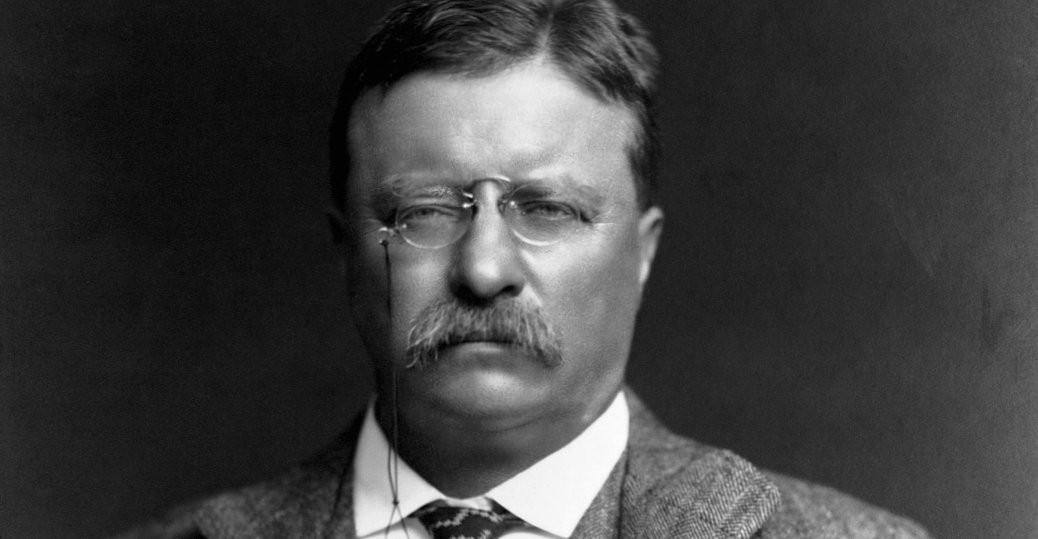
One of many blistering tangerines contained within Mark Twain’s juicy three volume Autobiography involves his observations on Theodore Roosevelt: “We have never had a President before who was destitute of self-respect and of respect for his high office; we have had no President before who was not a gentleman; we have had no President before who was intended for a butcher, a dive-keeper or a bully, and missed his mission of compulsion of circumstances over which he had no control.”
He could just as easily have been discussing the current doddering charlatan now forcing many otherwise respectable citizens into recuperative nights of heavy drinking and fussy hookups with a bespoke apocalyptic theme, but Twain’s sentiments do say quite a good deal about the cyclical American affinity for peculiar outsiders who resonate with a populist base. As I write these words, Bernie Sanders has just decided to enter the 2020 Presidential race, raising nearly $6 million in 24 hours and angering those who perceive his call for robust social democracy to be unrealistic, along with truth-telling comedians who are “sick of old white dudes.” Should Sanders run as an independent, the 2020 presidential race could very well be a replay of Roosevelt’s Bull Moose Party run in 1912.

Character ultimately distinguishes a Chauncey Gardner couch potato from an outlier who makes tangible waves. And it is nearly impossible to argue that Teddy Roosevelt, while bombastic in his prose, often ridiculous in his obsessions, and pretty damn nuts when it came to the Rough Riders business in Cuba, did not possess it. Edmund Morris’s incredibly compelling biography, while subtly acknowledging Teddy’s often feral and contradictory impulses, suggests that Roosevelt was not only the man that America wanted and perhaps needed, but reminds us that Roosevelt also had the good fortune of being in the right place at the right time. Had not Vice President Garret Hobart dropped dead because of a bum ticker on November 21, 1899, and had not a sour New York Republican boss named Tom Platt been so eager to run Teddy out of Albany, there is a good chance that Roosevelt might have ended up as a serviceable two-term Governor of New York, perhaps a brasher form of Nelson Rockefeller or an Eliot Spitzer who knew how to control his zipper. Had not a Russian anarchist plugged President McKinnley two times in the chest at the Temple of Music, it is quite possible that Roosevelt’s innovative trust busting and his work on food safety and national parks, to say nothing of his crazed obsession with military might and giving the United States a new role as international police force, would have been delayed altogether.

What Roosevelt had, aside from remarkable luck, was a relentless energy which often exhausts the 21st century reader nearly as much as it fatigued those surrounding Teddy’s orbit. Here is a daily timetable of Teddy’s activities when he was running for Vice President, which Morris quotes late in the book:

7:00 A.M. Breakfast 
7:30 A.M. A speech
8:00 A.M. Reading a historical work
9:00 A.M. A speech
10:00 A.M.  Dictating letters
11:00 A.M. Discussing Montana mines
11:30 A.M. A speech
12:00 Reading an ornithological work
12:30 P.M. A speech
1:00 P.M. Lunch
1:30 P.M. A speech
2:30 P.M. Reading Sir Walter Scott
3:00 P.M. Answering telegrams
3:45 P.M. A speech
4:00 P.M. Meeting the press
4:30 P.M. Reading
5:00 P.M. A speech
6:00 P.M. Reading
7:00 P.M. Supper
8-10 P.M. Speaking
11:00 P.M. Reading alone in his car
12:00 To bed

That Roosevelt was able to do so much in an epoch before instant messages, social media, vast armies of personal assistants, and Outlook reminders says a great deal about how he ascended so rapidly to great heights. He could dictate an entire book in three months, while also spending his days climbing mountains and riding dozens of miles on horseback (much to the chagrin of his exhausted colts). Morris suggests that much of this energy was forged from the asthma he suffered as a child. Standing initially in the shadow of his younger brother Elliott (whose later mental collapse he callously attempted to cover up to preserve his reputation), Teddy spent nearly his entire life doing, perhaps sharing Steve Jobs’s “reality distortion field” in the wholesale denial of his limitations:

In between rows and rides, Theodore would burn off his excess energy by running at speed through the woods, boxing and wrestling with Elliott, hiking, hunting, and swimming. His diary constantly exults in physical achievement, and never betrays fear that he might be overtaxing his strength. When forced to record an attack of cholera morbus in early August, he precedes it with the phrase, “Funnily enough….”

Morris is thankfully sparing about whether such superhuman energy (which some psychological experts have suggested to be the result of undiagnosed bipolar disorder) constitutes genius, only reserving the word for Roosevelt in relation to his incredible knack for maintaining relations with the press — seen most prominently in his fulsome campaign speeches and the way that he courted journalistic reformer Jacob Riis during his days as New York Police Commissioner and invited Riis to accompany him on his nighttime sweeps through various beats, where Roosevelt micromanaged slumbering cops and any other layabout he could find. The more fascinating question is how such an exuberant young autodidact, a voracious reader with preternatural recall eagerly conducting dissections around the house when not running and rowing his way with ailing lungs, came to become involved in American politics.

Some of this had to do with his hypergraphia, his need to inhabit the world, his indefatigable drive to do everything and anything. Some of it had to do with deciding to attend Columbia Law School so he could forge a professional career with his new wife Alice Hathaway Lee, who had quite the appetite for social functions (and whose inner life, sadly, is only superficially examined in Morris’s book). But much of it had to do with Roosevelt regularly attending Morton Hall, the Republican headquarters for his local district. Despite being heckled for his unusual threads and side-whiskers, Roosevelt kept showing up until he was accepted as a member. The Roosevelt family disapproved. Teddy reacted in anger. And from moment forward, Morris writes, Roosevelt desired political power for the rest of his life. Part of this had to do with the need for family revenge. Theodore Roosevelt, Sr. suffered a swift decline in health (and quickly died) after Roscoe Conklin and New York State Republicans set out to ruin him over a customs collector position.

These early seeds of payback and uncompromising individualism grew Roosevelt into a fiery oleander who garnered a rep as a fierce and feisty New York State Assemblyman: the volcanic fuel source that was to sustain him until mortality and dowdiness sadly caught up with him during the First World War. But Roosevelt, like Lyndon B. Johnson later with the Civil Rights Act (documented in an incredibly gripping chapter in Robert A. Caro’s Master of the Senate), did have a masterful way of persuading people to side with him, often through his energy and speeches rather than creepy lapel-grabbing. As New York Police Commissioner, Roosevelt upheld the unpopular blue laws and, for a time, managed to get both the grumbling bibulous public and the irascible tavern keepers on his side. Still, Roosevelt’s pugnacity and tenacity were probably more indicative of the manner in which he fought his battles. He took advantage of any political opportunity — such as making vital decisions while serving as Acting Secretary of the Navy without consulting his superior John Davis Long. But he did have a sense of honor, seen in his refusal to take out his enemy Andrew D. Parker when given a scandalous lead during a bitter battle in New York City (the episode was helpfully documented by Riis) and, as New York State Assemblyman, voting with Democrats on March 7, 1883 to veto the Five-Cent Bill when it was discovered to be unconstitutional by then Governor Grover Cleveland. Perhaps his often impulsive instincts, punctuated by an ability to consider the consequences of any action as it was being carried out, is what made him, at times, a remarkable leader. Morris documents one episode during Roosevelt’s stint as Assistant Secretary of the Navy in which he was trying to build up an American navy and swiftly snapped up a Brazilian vessel without a letter. When the contract was drafted for the ship, dealer Charles R. Flint noted, “It was one of the most concise and at the same time one of the cleverest contracts I have ever seen.”

Morris is to be praised for writing about such a rambunctious figure with class, care, and panache. Seriously, this dude doesn’t get enough props for busting out all the biographical stops. If you want to know more about Theodore Roosevelt, Morris’s trilogy is definitely the one you should read. Even so, there are a few moments in this biography in which Morris veers modestly into extremes that strain his otherwise eloquent fairness. He quotes from “a modern historian” who asks, “Who in office was more radical in 1899?” One zips to the endnotes, only to find that the “historian” in question was none other than the partisan John Allen Gable, who was once considered to be the foremost authority on Teddy Roosevelt. Morris also observes that “ninety-nine percent of the millions of words he thus poured out are sterile, banal, and so droningly repetitive as to defeat the most dedicated researcher,” and while one opens a bountiful heart to the historian prepared to sift through the collected works of a possible madman, the juicy bits that Morris quotes are entertaining and compelling. Also, to be fair, a man driven to dictate a book-length historical biography in a month is going to have some litters in the bunch.

But these are extremely modest complaints for an otherwise magnificent biography. Edmund Morris writes with a nimble focus. His research is detailed, rigorous, and always on point, and he has a clear enthusiasm for his subject. Much of Morris’s fall from grace has to do with the regrettable volume, Dutch, in which Morris abandoned his exacting acumen and inserted a version of himself in a biography of Reagan. This feckless boundary-pushing even extended into the endnotes, in which one Morris inserted references to imaginary people. He completely overlooked vital periods in Reagan’s life and political career, such as the Robert Bork episode. Given the $3 million advance and the unfettered access that Morris had to Reagan, there was little excuse for this. Yet despite returning valiantly to Roosevelt in two subsequent volumes (without the weirdass fictitious asides), Morris has been given the Wittgenstein treatment (“That whereof we cannot speak, thereof we must remain silent”) by his peers and his colleagues. And I don’t understand why. Morris, much like Kristen Roupenian quite recently, seems to have been needlessly punished for being successful and not living up to a ridiculous set of expectations. But The Rise of Theodore Roosevelt, which rightfully earned the Pulitzer Prize, makes the case on its own merits that Morris is worthy of our time, our consideration, and our forgiveness and that the great Theodore Roosevelt himself is still a worthwhile figure for contemporary study.

Next Up: Martin Luther King’s Why We Can’t Wait!

A Farewell to Arms (Modern Library #74)

(This is the twenty-seventh entry in the The Modern Library Reading Challenge, an ambitious project to read the entire Modern Library from #100 to #1. Previous entry: Scoop.)

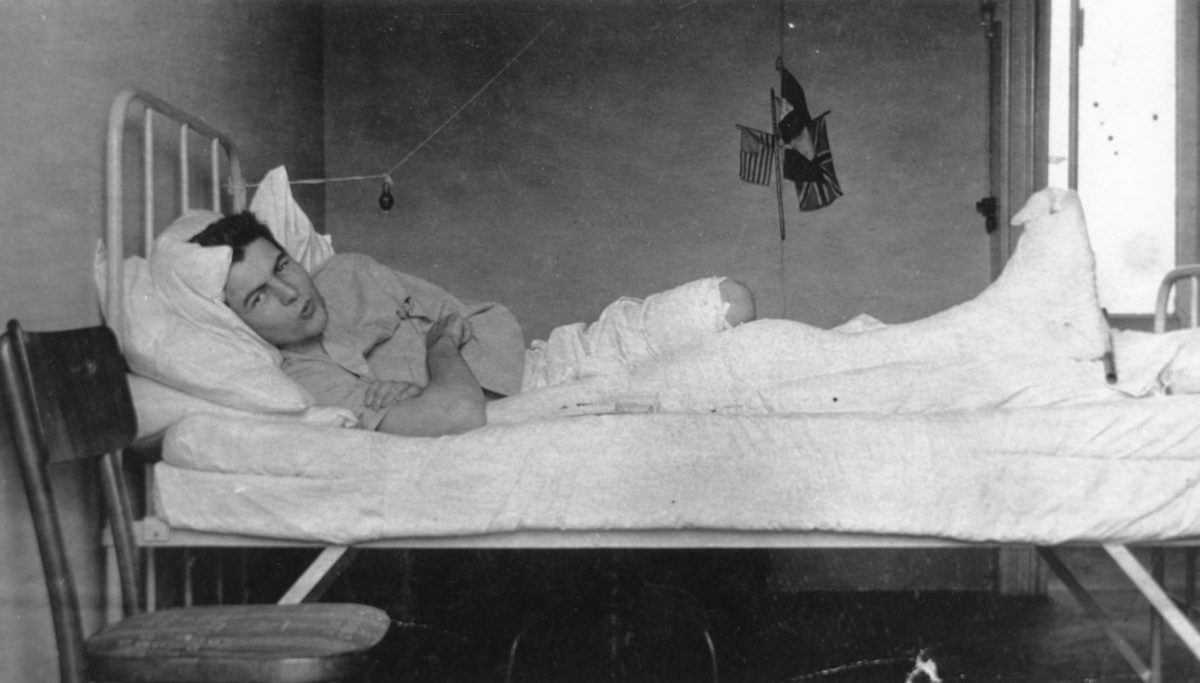
You likely know the basics: An American goes to Italy and enlists as a “tenente.” He drives a battlefield ambulance just before his nation enters World War I. He gets wounded. He meets a nurse at a hospital. He falls in love. He feels free as he recovers. He feels trapped as he returns to the front. He gets disillusioned. He flees. He finds her again. Bad things happen. But A Farewell to Arms is so much more than this. It is a heartbreaking love story. It is a remarkably subtle indictment of war. It shows how people bury their romantic longings behind duty and how there’s a greater bravery in fulfilling what you owe to your heart. It argues for life and love. Its final paragraph is devastating. It zooms along with masterly prose that is buried with treasure. It is one of the greatest novels of the early 20th century. This statement is not hyperbole.

It is now quite fashionable to bash Hemingway rather than praise him, as the flip Paul Levy recently did in his oh so hip and not very bright “hot take”: “The Hemingway corpus is full of artistic failure.” Well, sure it is. I’ve read it all three times at different periods in my life and I don’t think any honest reader would deny that. When I was an obnoxious punk in my twenties, I resisted Hem big time, feeling that he could not teach me to be a man in the way that James Baldwin and F. Scott Fitzgerald had, yet I somehow held onto his books, sensing that I could be colossally wrong. (I was.) Even today, I have to acknowledge that To Have and Have Not is an embarrassment. The Garden of Eden is an interesting but unconsummated train wreck. For Whom the Bell Tolls has its moments, but the Old English verbs and the lack of subtlety can be risible. I’ve never quite been able to leap into The Old Man and the Sea, but that says more about me than Hem. The upshot is that there are quite a few clunkers in Hem’s collected works and some of the Nick Adams tales ain’t all that, but one could make this claim about any author. In the end, when you have a masterpiece like A Farewell to Arms that never grows tedious no matter how many times you reread it, who in the hell cares about the misses? There’s no profit in calculating a shallow statement when the crown jewels shine bright in your face.

The other way that people ding Hem these days is by singling out his macho posturing or peering at his pages through the prism of unbridled masculine hubris. The naysayers dismiss Lady Brett Astley in The Sun Also Rises as an archetype without recognizing her enigma or the way she aptly epitomized the Lost Generation. They don’t acknowledge how Hem had to prostrate himself before Beryl Markham in a letter to Maxwell Perkins and that he did get on (for a time) with Martha Gellhorn, who neither suffered fools nor caved to condescension.

Yet there is certainly something to Hemingway’s women problem, especially as seen in the correspondence between Fitzgerald and Hemingway. In June 1929, F. Scott Fitzgerald sent Hem a letter and observed how, in his early work, “you were really listening to women — here you’re only listening to yourself, to your own mind beating out facily a sort of sense that isn’t really interesting.” (Hemingway’s reply: “Kiss my ass.”)

Scott’s warning remains a very shrewd assessment on what’s so fascinating and frustrating about Hemingway. I’d argue that one of the best ways to ken Hem is to recognize that he was a wildly accomplished giant when he placed his own ego last and that any transgressions that today’s readers detect only emerged when Hem became overly absorbed in his own self. And on this point, one can find a strange sympathy for the man, thanks in part to Andrew Farah’s recent biography, Hemingway’s Brain, which points to Ernest’s many head injuries (which included nine concussions) and concludes that he suffered from CTE, the brain disease seen in professional football players after too many years of violent tackles. This theory, which takes into account the decline of Hemingway’s handwriting in his latter years, would also offer an explanation for the wildly disparate writing quality and thus invalidates Mr. Levy’s foolish pronouncement.

* * *

The world breaks every one and afterward many are strong at the broken places. But those that will not break it kills. It kills the very good and the very gentle and the very brave impartially. If you are none of these you can be sure it will kill you too but there will be no special hurry.

A Farewell to Arms thankfully places us shortly after the rising sun of Hem’s career and, like its predecessor, the book contains razor-sharp prose, keen observations (ranging from Umberto Notani’s infamous The Black Pig, trains packed with soldiers, and the repugnant wartime indignity of a hopped up tyrant fiercely questioning a man who is fated to be shot), and a beautiful epitomization of the famous “iceberg theory” that Hemingway posited in Death in the Afternoon:

If a writer of prose knows enough of what he is writing about he may omit things that he knows and the reader, if the writer is writing truly enough, will have a feeling of those things as strongly as though the writer had stated them. The dignity of movement of an ice-berg is due to only one-eighth of it being above water. A writer who omits things because he does not know them only makes hollow places in his writing.

Much has been spilled over Hemingway’s declarative sentences, which are beautifully honed in this masterpiece. (Hem wrote 47 versions of the ending.) But I’d like to single out “was,” the most frequently used word in this novel. On a surface level, “was” is the most expedient way to hurl us into Frederic’s world: a simple verb of action and hard deets, but one that likewise deflects interior thought. It’s easy to dis Hem as a man’s man summing up life and the earth and the grit and all else that makes us want to ape him even though there can be only one, but the key to seeing the beauty of “was” is knowing that this book is all about pursuing a lost and deeply moving romantic vision, one kept carefully hidden from the beginning. Style advances the perspective and keeps us curious and lets us in and “was” is the way Hem gets us there.

Hemingway uses language with extraordinary command to clue us in on the distinct possibility that this story is in some sense a dream — indeed, a dream involving death based on what Hem was never able to make with the nurse Agnes von Kurowsky while holed up in a ward. There’s the makeshift hospital office, with its “many marble busts on painted wooden pillars,” which is further compared to a cemetery. In the novel’s first part, there are very few adverbs — save “winefully” early on and “evidently” and “directly” in the same sentence as guns rupture Frederic’s existence. The first rare simile (“seeing it all ahead like moves in a chess game”) occurs when Frederic first tries to kiss Catherine and is greeted with a slap (which Catherine apologizes for). This is a far cry indeed from what The Daily Beast‘s Allen Barra recently claimed, without citing a single example, as “flowery and overwritten.” A Farewell to Arms basks in the same beautiful realm between the real and the ethereal that The Great Gatsby does, albeit in a different landscape altogether, but it offers enough ambiguity to speculate about the characters while encouraging numerous rereads.

Language also carries the deep resonances of what people mean to each other. Catherine cannot stand a triple-wounded vet named Ettore and repeats “dreadful” twice and “bore” four times when she vents to Frederic. The words “She won’t die” are also repeated in one harrowing paragraph near the end. (Indeed, if you see a word or a phrase repeated in Hemingway’s fiction, there’s a good chance that something bad will happen.) Shortly after Frederic is moved to the freshly built hospital in Milan (itself a marvelous metaphor for the fresh start of Frederic’s blossoming love for Catherine), he takes to Dr. Valentini, who speaks in a series of short sentences over the course of a paragraph (a small sample: “A fine blonde like she is. That’s fine. That’s all right. What a lovely girl.”) and who Frederic later calls “grand.” The syntax, chopped and sheared and housed within manageable units, represents a telegraph from the human heart like no other.

Frederic acknowledges that he lies to Catherine when he tells her that she’s the first woman he’s loved. Now it’s tempting to roll your eyes over the “I’ll be a good girl” business that often comes from Catherine, but it’s also a safe bet to speculate that Frederic is likewise lying about what Catherine has actually told him, much as Hem himself has fudged the full extent of his “affair” with Agnes von Kurowsky through fiction. (“Now, Ernest Hemingway has a case on me, or thinks he has,” wrote von Kurowsky in her diary on August 25, 1918. “He is a dear boy & so cute about it.”)

An enduring romance is often built on a pack of lies. We often fail to recognize the full totality of who a lover was until we are well outside of the relationship. As for friendship, I’d like to argue that Miss Gage is a fascinating side character who stands up for this. She’s someone who ribs Frederic about not fully understanding what friendship is. Later, when Frederic returns to the front lines, Rinaldi tells him, “I don’t want to be your friend. I am your friend.” And if Frederic can’t recognize friendship, does he really know how to read the room when Cupid shows up with a puckish smile? Hem’s subtle acknowledgment of these basic truths allows us to trust and become invested in Frederic’s voice. And I’d like to think that even Hem’s opponents could get behind such idyllic imagery as Frederic and Catherine “putting thoughts in the other one’s head while we were in different rooms” or agreeing to sneak off to Switzerland together or even the funny “winter sport” business with customs. These are endearing and beautiful romantic moments that certainly show that Hem is far more than a repugnant hulk.

Love is a high stakes game, but it’s always a game worth playing. If you beat the odds, the payout is incalculable. Small wonder that the happy couple ends up throwing their lire into a rigged horse race. Indeed, Frederic’s early days with Catherine are a game like bridge where “you had to pretend you were playing for money or playing for some stakes.” For all of Frederic’s apparent confidence in not knowing the stakes, he does not reveal his name for a while — on its first mention, Frederic only partially spills his name as he is drinking. He is also more taken with the allure of being alone — as seen later in a Donnean nod when he says that “[w]hat made [Ireland] pretty was that it sounded like Island.” His loneliness is further cemented when Miss Ferguson says that Catherine cannot see him.

Is this the loneliness of war? We learn later that Frederic came to Rome to be an architect, although this is likely a lie, given that it is repeated a second time to a customs officer. But it does suggest that Frederic cannot build his own life without another. Perhaps this is the solitude that comes from the relentless pursuit of manly vigor (boxing, bullfighting, hunting) that Hemingway was to explore throughout his life? There is one clue late in the book when Hemingway writes, “The war seemed as far away as the football game of someone else’s college,” and another midway through when Frederic wonders if major league baseball will be shut down if America entered the war. (Fun fact: There was indeed a World War I deadline put into place, but the two leagues squeezed in numerous doubleheaders to ensure that the season could play out.) If the First World War arose in part because humanity was involved in a vicious game, then Hemingway seems to be suggesting that further games rooted in play and peace must be promulgated to restore the human condition. Frederic cynically quips to the 94-year-old Count Greffi, “No, that is the great fallacy; the wisdom of old men. They do not grow wise. They grow careful.” But if being careful is the true measure of existence, why then do we celebrate valor that often emerges from reckless circumstances? Indeed, Hemingway sends up the very nature of heroism up when Frederic wakes up in the hospital and is greeted by Rinaldi, who presses him to confess the specific act he committed to earn his medal. “No,” replies Frederic. “I was blown up while we were eating cheese.”

In an age where razor blade ads are urging us to question what manhood should represent, there’s something to be said about studying what’s contained within masculinity’s ostensible ur-texts and with how careful men are in saying nothing but everything. A Farewell to Arms is a far more sophisticated and deeply beautiful novel when you start examining its sentences and questioning its motivations. Caught in a mire between love and war, Frederic opts for the laconic rather than the prolix. And in doing so, he tells us far more about what it means to love and lose than most authors can convey in a lifetime.

Next Up: Nathanael West’s Day of the Locust!