The Age of Innocence (Modern Library #58)

(This is the forty-third entry in The Modern Library Reading Challenge, an ambitious project to read the entire Modern Library from #100 to #1. Previous entry: Zuleika Dobson.)
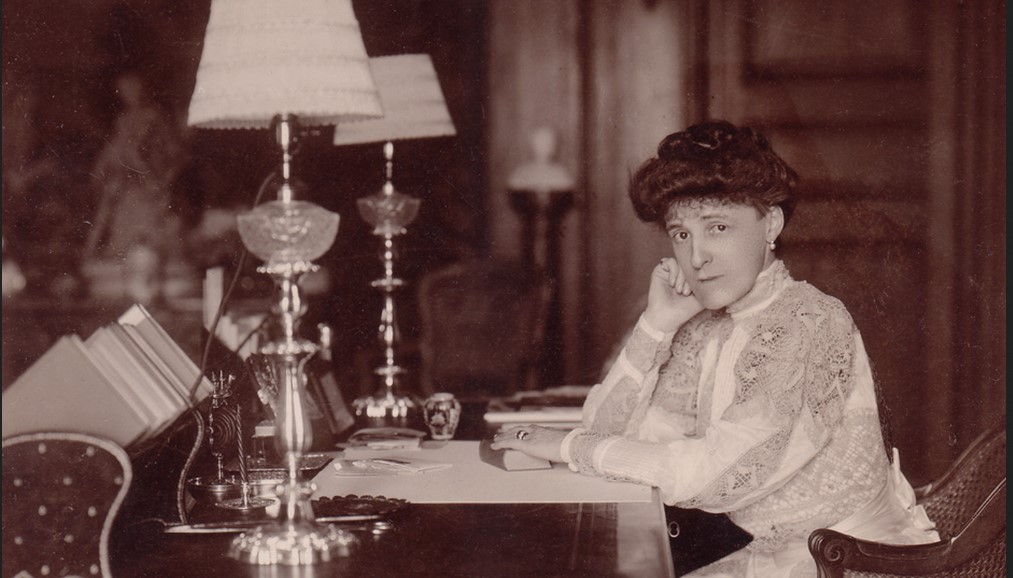
Newland Archer — the “hero” of Edith Wharton’s most celebrated novel (and the first book written by a woman to win the Pulitzer Prize) — is the 1870s answer to some privileged techbro half-heartedly trading crypto out of some Sand Hill Road office rental split with an AI slop merchant, leaving the finer details of regular cash flow to a hungrier underling living paycheck to paycheck. Yes, he’s a lawyer, although we never see him drafting a brief or appearing in court. (He does review “unwelcome documents,” the Mingotts ask him to persuade Ellen Olenska to talk her out of a divorce, and there is an off-stage lawsuit mentioned near the end of the book, but that’s about it.)

He has everything and more. If you ran into him today, he’d probably be bragging about his kitchen renovation or his Duolingo streak. Fortunately, he is confined to the atmospheric pages of Wharton’s novel, where we witness Newland attending friendly parties at Highbank and living in that dreaded conformist manner that even Emerson associated with the living dead in “Self-Reliance.” He has boxes containing the newest books. Yet all this privilege is just not enough for this foppish and artless staple slacking in nigh high society just before Gotham became the center of the universe. Oh sure, he’s got a fetching fiancée named May Welland who is nearly as vapid as he is (until she comes touchingly alive with an act of genuinely moving generosity during one particularly poignant moment halfway through the book, which naturally made me abhor Newland more). May has a cousin named Countess Ellen Olenska, a hot piece of ass who stirs Newland’s languorous Johnson into an upward bolt by way of her putative cosmopolitan experience. Thus, in The Age of Innocence, it’s hello Ellen, goodbye May, without the decency of Roger Hodgson’s high tenor singing “Will we ever meet again?” over cheerful keyboards in A♭ Major.

You may be thinking that I hated the book. But that’s not true. Wharton’s prose and storytelling craft in Age is as delicately crafted as any of the other high watermarks of her awe-inspiring career, frequently saddled with that understated sardonic quality of hers that I love so much. She notes that a woman’s hair “had tried to turn white and only succeeded in fading.” Her description of Ned Winsett also crackles when she notes how he “moved his arms with large pawing gestures, as though he were distributing lay blessings to a kneeling multitude.” And even though Wharton notes, during a hubba hubba moment, how Newland and Ellen’s “vain terrors [shriveled] up like ghosts at sunrise,” a brilliantly evocative image conjuring those last chance pangs that feel more immediate with oxytocin hits, I don’t buy for a second that Newland truly loves or cares about anyone.

In case I haven’t been subtle enough, it’s Newland Archer I hate. It’s a hell of a thing to hang a subtle evisceration of hoary societal virtues on such a cipher. I’m fine with reading books about unlikable characters, but it’s another thing when they are uninteresting. Sure, Wharton walks the walk in executing a narrative momentum despite such an unremarkable upper-crust zero at the cynosure. But I’m not going to lie. Newland Archer such a subtly obnoxious prick on the page that I would happily orchestrate one of the bloodiest ass-beatings known to humankind if I had the power to enter classic works of literature like the characters in Jasper Fforde’s Thursday Next series. Newland is, essentially, the mediocre man of his time and his infuriating entitlement is captured agonizingly well by Wharton:

…there were always two or three young men, fairly well-off, and without professional ambition, who, for a certain number of hours of each day, sat at their desks accomplishing trivial tasks, or simply reading the newspapers. Though it was supposed to be proper for them to have an occupation, the crude fact of money-making was still regarded as derogatory, and the law, being a profession, was accounted a more gentlemanly pursuit than business.

Marriage, for Newland, is little more than a medium with which to pass a substantial chunk of years. Early on in the novel, when Countess Olenska responds to one of his messages, he is smitten by the first three words “I ran away.” Like most young men who refuse to understand that moving to a new city or taking up a new job aren’t going to rid you of your preexisting problems, Newland is intoxicated by amorphous flight. And instead of asking Olenska what in the sam hill she means by “running away,” he instead imagines “some dark menace from abroad.” Newland’s limited imagination seems to be the very impetus that kickstarts his patriarchal desire to dominate her.

Newland’s indolence and his First World problems are probably the primary reason why I’m not as hot on this Wharton volume as I’d like to be. At least with “New Year’s Day” (contained in Old New York), Wharton demonstrated great craft on the affair between Henry Prest and Mrs. Lizzie Hazeldean, revealing how society’s understanding of this ostensible series of horizontal hookups did not quite live up to the reality. But there is no such disparity with Newland Archer. Newland is exactly who he appears to be: a chin-scratching slab of meat with an ADHD approach to women and a lack of curiosity matching some lonely mansplainer complaining about the mythical “male loneliness epidemic” when the truth of the matter is that he doesn’t know how to shut up and listen to women. All that spare time and no ambition to guide it. Excuse me while I bust out the world’s smallest violin.

Wharton’s best biographer, Hermione Lee, has astutely observed that The Age of Innocence, of all of Wharton’s books, represented the widest gap between the time Wharton was writing (a remarkably swift six months ending in March 1920) and the time she was writing about (1871-1873), although I don’t fully buy her thesis that Innocence represented an autobiography. For one thing, Innocence is far more muted and guarded (but also more exquisitely understated) than The House of Mirth, which takes place a good two decades later. (With greater permissiveness allowed by later folkways, the characters will obviously dance to a slightly more liberated groove.)

At times, this remote detachment makes Innocence feel more like a work of history than fiction — even more so than Wharton’s Old New York novellas, which all contain far more zest than they get credit for. Age has a more subdued approach than the exuberance on display in Mirth. Lee rightly notes that Wharton had this tendency to leap away every time the characters revealed anything intimate, which suggests that the unpredictable vagaries of human agency are at odds with the fixed nature of history. So it should probably come as no surprise that a blunt and irreverent type like me was more passionate about Mirth than Age and that Wharton’s detached legerdemain proved a little too similar to the mannered logorrhea of her good friend Henry James — a writer whom I largely despise and whose novels I am sadly fated to write about. (Join the fun of watching a bald man lose his mind when we get to ML32, ML27, and ML26!) Still, I cannot gainsay Wharton’s great achievement here.

This is the New York of the 1870s: the onset of the Gilded Age and the tail end of Tweed. It is a little over two decades before the five boroughs consolidated, marching with mad passionate unity to forge a motile metropolis in which iron stalagmites sprouted into the sky with feverish chaotic glee. It is three decades before the sleek beatific curves of City Hall Station inaugurated a new subterranean mode of travel and Wharton’s great heroine Lily Bart lost it all. We are reminded all throughout Age that New York, despite its impressive development, is still something a runt on the world stage. But it is a metropolis blissfully unaware (truly innocent?) of the corruption and grift that will eventually define it. As Wharton writes with muted irony, “New York was inexorable in its condemnation of business irregularities. So far there had been no exception to its tacit rule that those who broke the law of probity must pay.”

Yet even at this premodern nascent point, Gotham’s class aspirations feel preordained. Newland remarks that The Shaughraun, a wildly popular melodramatic play of that pre-Broadway epoch, is as good as anything in Paris or London. Much later in the book, when Newland does find himself in London on his honeymoon, he cluelessly asks, “But don’t Englishwomen dress like everybody else in the evening?” Wharton also reminds us near the end of the novel that this is also the New York before the North River Tunnels carried trains to Penn Station (and one vital takeaway is that Newland doesn’t want these tunnels to be built):

there were people who thought there would one day be a tunnel under the Hudson through which the trains of the Pennsylvania railway would run straight into New York. They were of the brotherhood of visionaries who likewise predicted the building of ships that would cross the Atlantic in five days, the invention of a flying machine, lighting by electricity, telephonic communication without wires, and other Arabian Night marvels.

When Newland considers one of Madame Olenska, he observes that “the things she took for granted gave the measure of those she had rebelled against.” Could this not likewise be the beginning of the New York temperament?

Of course, you can’t gainsay The Age of Innocence‘s prose style. Some of the snarky imagery in the juicier Wharton novels does bubble up in Age from time to time, such as May Welland’s face wearing “the vacant serenity of a young marble athlete.” And Wharton’s glorious eclat for punchy noun-modifier rhythm is admirably fierce when she describes May “looking her loveliest under a wide-brimmed hat that cast a shadow of mystery over her too-clear eyes.”

It’s a pity then that Newland Archer is far flatter than the women, especially since Newland is the dude we have to spend time with while reading this. I get what Wharton was trying to do in sending up society with a doe-eyed meatbag of no great distinction as the protagonist. Stanley Kubrick’s best film, Barry Lyndon, succeeds in part because of the juxtaposition of Michael Hordern’s wry narration against the bland opportunism of Ryan O’Neal playing the titular character. (I suspect that Martin Scorsese’s film adaptation of Age was trying to recapture Kubrick’s stylistic approach to period-piece social critique with Joanne Woodward’s narration.) But after a certain point, shouldn’t exhuming the past like this offer a corresponding set of virtues? A nimble evisceration of the upper crust needs to have a few characters who remind us why life is worth living. And Age, despite numerous mesmerizing passages, will never hit me in the way that The House of Mirth and The Custom of the Country do. Even Pride and Prejudice, for all of its brilliant lunges at snobbery and reputation, still reminds us that marriage, if one is to do it, should be taken seriously and be predicated upon mutual respect rather than whether or not you meet the right people who can get you courtside seats for a Knicks game. And I feel that this is Age‘s fatal flaw. The emotional distance that Wharton demands of us deadens the journey.

On the other hand, the manner in which Newland and Madame Olenska gradually transform into “exhibits” of their time as the book leisurely moves to its end is legitimately brilliant. At one point, the adulterous couple visits the Wolfe collection at the Met and Newland remarks, “Some day, I suppose, it will be a great Museum.” Shortly after that, May remarks on exhibits that don’t matter being put under a label reading “Use unknown.” Newland’s confidence in the future becomes sad and absurd and his fate is sealed in the novel’s haunting final moments:

It was little enough to look back on; but when he remembered to what the young men of his generation and his set had looked forward—the narrow groove of money-making, sport and society to which their vision had been limited—even his small contribution to the new state of things seemed to count, as each brick counts in a well-built wall

It is a stern warning about the dangers of neutering your existence while conforming to patrician dipsticks. Sometimes being true to yourself, rather than avoiding “anything melodramatic and conspicuous” to fit in, is the very life choice you must make to ensure that history doesn’t repeat itself.

Next Up: Ford Madox Ford’s Parade’s End!
Zuleika Dobson (Modern Library #59)

(This is the forty-second entry in The Modern Library Reading Challenge, an ambitious project to read the entire Modern Library from #100 to #1. Previous entry: The Moviegoer.)

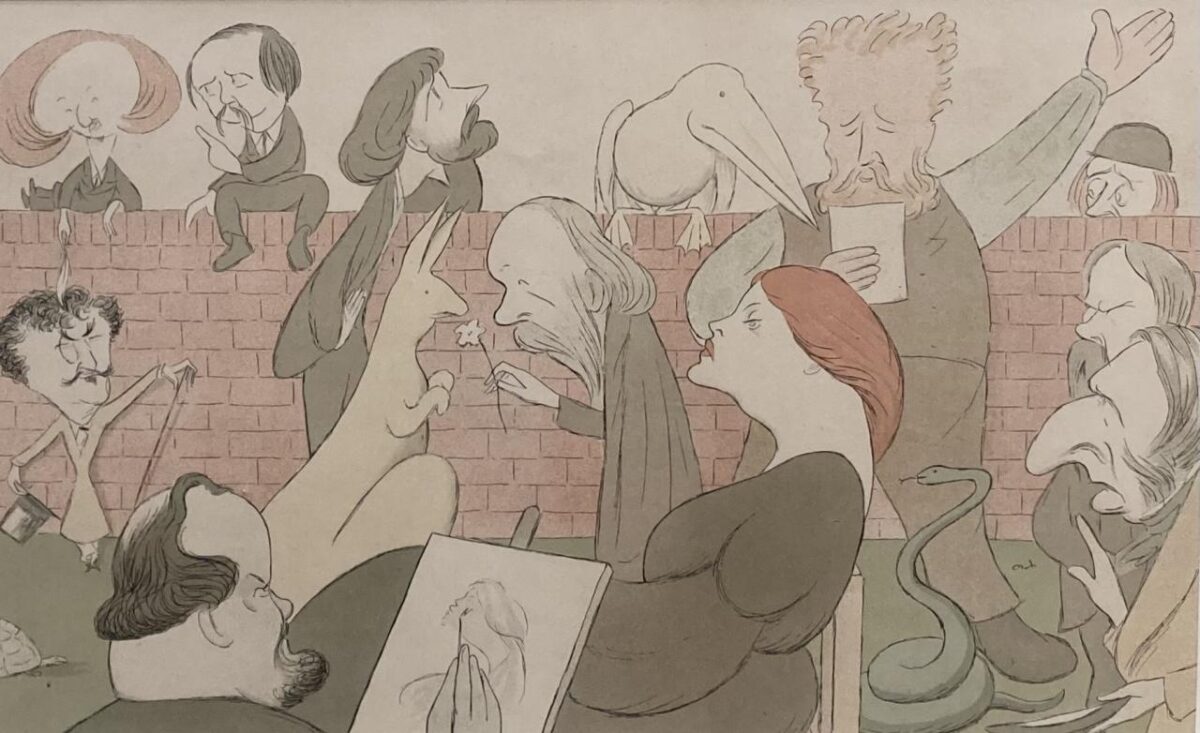
Max Beerbohm’s Zuleika Dobson — a wildly enjoyable and erudite sendup of romantic obsession that is astonishingly peerless and more than a little punk rock in its originality — was included on the Modern Library list, but this Beerbohm stumping was not without modest controversy. Judge William Styron — fulminating in the August 17, 1998 issue of The New Yorker — dismissed Zuleika (as well as The Magnificent Ambersons) as a “toothless pretender.” A novel in which nearly all of the characters commit mass suicide at the end is “toothless”? It does have me wondering if Styron ever dismissed Evelyn Waugh’s Black Mischief, Philip Roth’s Sabbath’s Theatre, and Martin Amis’s Money or what he would have made of Edward St. Aubyn’s Patrick Melrose novels or Alissa Nutting, Angela Carter, Anne Enright, or Mary Gaitskill at their fiercest. Styron was certainly right about Tarkington, who stands now with the sturdiness of a tray of blueberry muffins baked during the Obama Administration, left for decades on a kitchen island to attract generations of flies and rot into dowdy dust. Of Beerbohm, however, one can only conclude by this ridiculous and unwarranted dismissal that Styron was having a drunken or depressive episode.

As Beerbohm biographer N. John Hall has pointed out, this mustached satirist — who was friendly with Oscar Wilde, Henry James, and Edmund Gosse — was brilliant enough to attract the attention of William Empson in Seven Types of Ambiguity. Empson singled out this passage:

Zuleika was not strictly beautiful. Her eyes were a trifle large, and their lashes longer than they need have been. An anarchy of small curls was her chevelure, a dark upland of misrule, every hair asserting its rights over a not discreditable brow. For the rest, her features were not at all original. They seemed to have been derived rather from a gallimaufry of familiar models. From Madame la Marquise de Saint-Ouen came the shapely tilt of the nose. The mouth was a mere replica of Cupid’s bow, lacquered scarlet and strung with the littlest pearls. No apple-tree, no wall of peaches, had not been robbed, nor any Tyrian rose-garden, for the glory of Miss Dobson’s cheeks. Her neck was imitation-marble. Her hands and feet were of very mean proportions. She had no waist to speak of.

Of the “trifle,” Empson commended the ambiguity of not knowing whether to be charmed or appalled by the detail. Of the “No apple-tree” and “no wall of peaches” (and even, I append to Empson’s consideration, Beerbohm’s “not discreditable bow”), he praised Beerbohm’s negatives for casting doubt upon the lush imagery. Of “imitation-marble,” he rightfully asked whether Zuleika’s neck was imitating marble or imitating imitation marble. And he likewise called Zuleika’s professed beauty into question, pondering whether it was unique or conventional. Zuleika’s comely qualities are certainly impressionable enough to drive numerous Oxford students mad, leading many to commit suicide. Empson concludes his analysis by writing, “I hope I need not apologize, after this example, for including Mr. Beerbohm among the poets.”

Empson is recused. There are layers within layers here. And Zuleika Dobson is the rare satirical novel of this type that beckons you to read it again, if only to sort the real from the zany. Beeerbohm was a poet of the dandy comic strain — in addition to being a meticulously devilish satirist (“The Mote in the Middle Distance” is unsurpassed as the definitive sendup of Henry James’s hideously bloviated late career style), a formidable caricaturist, and an unexpected radio star in his later years. The language itself, with its recondite words (“chevelure” and “gallimufry”) and its potent phrases guaranteeing rich dopamine hits to anyone with true literary taste (“a dark upland of misrule,” “an anarchy of small curls”), surely reaches the heights of poetry. T.S. Eliot and W.H. Auden were just two prominent poets who sang bountiful praises to this “prince of minor writers.”

Even so, Max Beerbohm’s legacy in 2025 is quite possibly in shakier eminence than the underappreciated and veritable genius Henry Green. If Green was a “writer’s writer’s writer,” then surely Beerbohm is a “writer’s writer’s writer’s writer,” enjoyed only by those of us who still schlep dogeared paperbacks of John Barth and Robert Coover and who revere perverse and playful postmodernism even as we feel the hairs bristle on the backs of our necks as some doltish Goodreads sniper targets anyone with bold and subversive taste within their hopelessly unadventurous crosshairs. Even so, Beerbohm is still nestled enough in the canon to have inspired a high schooler to opine last month that she found the narration shift near the novel’s end to be “excitingly strange.” Let us not forget that great literature, even works published more than a century ago, can often be potent enough to stir vital and newfound passion within the young. And in our presently bleak epoch, we need all the good faith exuberance we can get.

That sudden transition to first-person after so many close third-person passages is indeed a thrill. I would likewise contend that the men who get so worked up over Zuleika — to the point of coveting a desire to unalive themselves over her — are still reflected today within the mythical “male loneliness epidemic” served up by wildly obnoxious MAGA incel types as the casus belli for their failure to find any woman who will endure their incessant mansplaining and their monstrous entitlement. Zuleika is rightfully bored by these hopped up doofuses and Beerbohm serves up some dependable zingers over how graphene-thin their souls are (intriguingly, the emphatic allcaps is in the original):

And oh, the tea with them! What have YOU been doing all the afternoon? Oh John, after THEM, I could almost love you again. Why can’t one fall in love with a man’s clothes? To think that all those splendid things you have on are going to be spoilt–all for me. Nominally for me, that is.

And unlike prolix and condescending nitwits like Arnold Bennett (his reputation rightfully destroyed by Virginia Woolf, with only imperious Tory scumbags like Philip Hensher eager to embrace this ancient sexist fiction better used for lining the bottoms of birdcages), Beerbohm is also surprisingly forward-thinking in 1911 when it comes to Zuleika seeing no difference between older men and youth who “fatuously prostrate to her,” inuring her of any deference she could possibly feel for them. At the end of the day, Zuleika, like so many of us, just wants someone to love. And when she does go gaga over the Duke, Beerbohm describes her soul “as a flower in its opetide.” Yet this is a “love” rooted on the Duke’s physical appearance. She is more transfixed by the “glint cast by the candles upon his shirt-front.” And Beerbohm doesn’t stop there. He compare the two pearl buttons on the Duke’s shirt to “two moons: cold, remote, radiant.”

It’s tempting to rope in Zuleika Dobson with Stefan Zweig’s Beware of Pity. While the two novels are entirely different in tone and sprang from the two writers observing wildly contrasting social milieus, they are both strangely mesmerizing about that one singular feeling that hasn’t yet been hammered out of the human race, even as our dating app age appears primed to reach a natural close: the mad claptrap rush of superficial attraction followed by an obligation to care for an increasingly wilting flower perceived to have lost its bloom. If anything, the 21st century has revealed that all of the social media layers intended for “connection” only buttress the primal superficiality that lurks beneath us all when it comes to matters of the heart and loins. It is the failure to consider some lover or this week’s main character as a palpable human being. True love — predicated on a physical, emotional, and intellectual connection of substance and depth — cannot hope to push past the solipsistic D.H. Lawrence nonsense that remains in place among many Feeld and Fetlife users today. Zuleika Dobson reminds us of the vital need for coruscating wordsmiths to send up this selfish stupidity from time to time, if only to preserve some hope for those who remain committed to the attenuating possibilities of real and enduring romance and the fulsome belonging that naturally emerges from it.

Next Up: Edith Wharton’s The Age of Innocence!

The Moviegoer (Modern Library #60)

(This is the forty-first entry in The Modern Library Reading Challenge, an ambitious project to read the entire Modern Library from #100 to #1. Previous entry: Death Comes for the Archbishop.)

There are many go-nowhere men like Walker Percy’s Jack “Binx” Bolling in American life: the type who creates nothing and who lives like some vaguely seedy salesman overly concerned with easy comities and sartorial aesthetics, the quasi-urbane man who, at his worst, is so terrified of even remotely staining his choppers that he slurps nothing but colorless sugar-free smoothies for breakfast, lunch, and dinner. I can’t say that I’ve wanted to spend a day (much less a life) like this. I am too much of a creative, feverishly curious, and pro-active man with a formidable work ethic and a great brio for life (and all of its attendant messes) to do so, but I do have my moments when I feel the draw to lie in bed for hours and listen to the beautiful rap of rain against my window pane, which is certainly a more human pastime than sucking on the cheap glass teats of television and being extremely online. Then I come to my senses and realize that I do need to make something that day, with the fulsome freedom of not needing approbation, so that I can sleep better at night and feel some self-respect — a drive for independence and authenticity that is decreasingly shared by my fellow Americans as the apocalyptic headlines lull many formidable workhorses into permanent or partial fatigue. I don’t blame anyone for slumming it. This is an exhausting asceticism for anyone to practice and the prolificity that results from my febrile commitment is probably one reason why some people fear me.

But poor Binx Bolling has nothing like that, which is why I find him so interesting and why I find Walker Percy’s The Moviegoer to be more weirdly meaningful with each fresh reeread. Absent of any real purpose, Bolling spends much of this plotless novel trying to shoehorn his rudderless life into something, particularly a “search,” which is not really a search for anything. He seems unwilling to ride or die with unconscious instinct, with the sheer enjoyment of being alive. (Typical of Bolling, he has no allegiance. At one point, he even declares himself “Jewish by instinct.”) He recognizes that instinct is something that people possess, but that doesn’t seem enough for him:

At the great moments of life — success, failure, marriage, death— our kind of folks have always possessed a native instinct for behavior, a natural piety or grace, I don’t mind calling it. Whatever else we did or failed to do, we always had that. I’ll make you a little confession. I am not ashamed to use the word class. I will also plead guilty to another charge. The charge is that people belonging to my class think they’re better than other people. You’re damn right we’re better. We’re better because we do not shirk our obligations either to ourselves or to others. We do not whine. We do not organize a minority group and blackmail the government. We do not prize mediocrity for mediocrity’s sake…Our civilization has achieved a distinction of sorts. It will be remembered not for its technology nor even its wars but for its novel ethos. Ours is the only civilization in history which has enshrined mediocrity as its national ideal.

But is this really so “better”? This is fairly similar to Holden Caulfield’s insufferable kvetching, except that it is far more fascinating because Bolling, unlike Caulfield, is more actively self-aware and constantly observant of others. He chooses to think and feel this way. It is what I call the “fuck my life” look that you see on people’s faces after they have given up on any dreams after the age of forty.

While the Binx Bollings of our world are capable of a few spontaneous decisions and may possess some cultural tastes and perhaps a soupçon of passion, they differ from the “slacker” types that Richard Linklater rightfully celebrated in his wonderful 1991 film in that exuberance is often absent and there isn’t an unusual nobility or even an ethos to their indolence. (And I would contend that Bollling’s “novel ethos” is a false one. For he says this when he has nothing in particular he is striving for. And those who strive for something rarely have a mediocre ideal in mind.)

The Binx Bollings simply live and that’s about it. They are, in short, working stiffs and the burden of surviving is often too much to do much more than that. You’ll find them represented in varying shades within Richard Yates’s Revolutionary Road, Richard Ford’s Frank Bascombe books, John Kennedy Toole’s A Confederacy of Dunces, Frederick Exley’s A Fan’s Notes, John P. Marquand’s The Late George Apley, Sam Lipsyte’s Homeland, Richard Russo’s Nobody’s Fool, Stewart O’Nan’s Last Night at the Lobster, and John Williams’s Stoner. And while I have no desire to leave out women in my literary consideration, yes, the fear of becoming “mediocre” or “detached” like this — the natural “evolution” of Dostoevsky’s “Underground Man” or what Colin Wilson unpacked in The Outsider — does seem to be an overwhelmingly male concern. Contemporary novelists as brilliant as Adelle Waldman, Kate Christensen, and Lauren Groff (you should very much read their work too) have also tackled this to great effect, although they are usually more interested in effect rather than cause or state and the vicarious first-person experience is of less importance. Think of the way that the characters in Edith Wharton, Muriel Spark, and Iris Murdoch (all literary queens who I will enthuse about to my dying day!) are so much more alive than the Binx Bolling type. I also can’t help but think of the way Ross McElwee (also a man of the South) brilliantly and vulnerably put himself front and center in such a way with his fascinating series of personal documentaries. Updike, in particular, was one of the foremost literary Johns drawn to these men and he nimbly spoke to American readers who recognized the telltale cadences of Durkheimian anomie.

Which is not to negate the quotidian struggles of the Binx Bollings. The miracle of Percy’s novel is that we’re still with him on his journey despite all this. Still, it often never occurs to these types to pay attention to the “beloved father” or “husband of X” found so ubiquitously on tombstones, which matters so much more than the roll of a Taylorist scroll memorializing an endless concatenation of checked off tasks. The worst of these aimless men possess no sense of humor and somehow transform into a homely insectoid creature worse than anything that ever bolted upward from Kafka’s imagination, a listless monstrosity commonly referred to as a “critic.” The critic, who is often a cretin, is a pitiful and unsmiling quadraped incapable of expressing joy, much less stridulating his legs together to make a pleasant sound in springtime.

And while we’re on the subject of bugs, as it so happens, there is a cameo appearance from a coterie of creepy-crawlies in Walker Percy’s The Moviegoer that saunter right past our malaise-fueled man Binx: “They dive and utter their thrumming skonk-skonk and go sculling up into the bright upper air.” Percy’s emphasis on sounds and gerunds here really says it all. That same whirlydirsh language is often beyond poor Binx.

* * *

The source for Boiling — as well as Williston Barrett, a Percy protagonist who would be explored in two stages of life (youthful folly and middle age) in, respectively, The Last Gentleman and The Second Coming) — was Percy’s essay “The Man on the Train” (collected in The Message in the Bottle) — in which Percy firmly established the type of protagonist he was interested in writing about:

There is no such thing, strictly speaking, as a literature of alienation. In the re-presenting of alienation the category is reserved and becomes something entirely different. There is a great deal of difference between an alienated commuter riding a train and this same commuter reading a book about an alienated commuter riding a train….The nonreading commuter exists in true alienation, which is unspeakable; the reading commuter rejoices in the speakability of his alienation and in the new triple alliance of himself, the alienated character, and the author. His mood is affirmatory and glad: Yes! that is how it is! — which is an aesthetic reversal of alienation.

In other words, Percy could not bring himself to write about a character in unbearable despair (it is not an artistic focus for the faint of heart) — largely because his natural writing voice is driven by a fine comedic impetus, with the Catholic novelist’s concern for philosophy planting one foot in the wings and the other on stage. (Look no further than Antonia White, Gene Wolfe, and Graham Greene for similarly intriguing juxtapositions.) Much like Richard Linklater’s “slacker” archetype, Percy seeks to pursue the bare minimum of alienation, although, as can be seen with Dr. Thomas More in Love in the Ruins, Percy’s characters are more eggs-in-one-basket types (in More’s case, the Ontological Lapsometer that he sees as a decaying society’s cure-all) and less committed to the free-floating spontaneity of hitching a ride with strangers, taking the entire day to assemble an elaborate rock structure to represent femininity, or being interviewed for a film student’s documentary.

At this point, the gusto-driven reader may rightfully ask, “So why read about this?” For the same reason that we read about any “unlikable” character. This is a form of living, albeit while clutching the bottom of one’s hemp, that is part of the human experience. The eccentric film journalist Jeffrey Wells has recently suggested that the criteria of art (specifically movies) involves being put into “a kind of alternate-reality mescaline dream state.” And while escapism is certainly a dopamine-fueled pastime practiced by a population increasingly hostile to pleasurable cerebration, requiring little of the mind but an uncritical blank slate and a sybarite’s zeal for incessant orgasm, what of the wisdom picked up from raw human experience? Art gives us the advantage of having access to the interior thoughts and feelings of those we may be disinclined to meet in the here and now. Wells’s limited definition therefore nullifies Jonathan Glazer’s excellent film adaptation of Martin Amis’s novel, The Zone of Interest, which is nothing less than a vital and deeply horrifying atmospheric experience warning us of the shockingly pedestrian character of fascism, which is dangerously close to permanently destroying the very fabric of this bountiful nation should the Orange Menace emerge victorious in November.

Likewise, Walker Percy’s masterpiece is a similar (if less baleful) cautionary tale of what it means to coast and how commitment to something (or, in Bolling’s case, someone) represents the inevitable reckoning that anyone is fated to face at one point or another. It is a sneaky warning to anyone with true fuck-it-all drive that even the dreamer faces the risk of slipping into adamantine complacency and is ill-equipped to gently pluck a rose from the carefully maintained bush planted atop a Sisyphean alp.

The New Yorker‘s Paul Elie has smartly observed that The Moviegoer is curiously ahistorical: less taken with unpacking the neverending residue of the Civil War, racial tension, or other hallmarks found prodigiously within typical Southern fiction. The novel is also, by its own prefatory admission, an inexact version of New Orleans: far from meticulously recreated like Joyce’s Dublin, though not entirely fabulist.

But I do think Elie is a tad too dismissive of Southern inventiveness to suggest that Percy mined exclusively from the European existentialists to summon his vision of the unlived and shakily examined life — even though the debt to Kierkegaard is obvious in The Moviegoer (and in “The Man on the Train”), not just because of the opening epigraph:

As for my search, I have not the inclination to say much on the subject. For one thing, I have not the authority, as the great Danish philosopher declared, to speak of such matters in any way other than the edifying. For another thing, it is not open to me even to be edifying, since the time is later than his, much too late to edify or do much of anything except plant a foot in the right place as opportunity presents itself – if indeed asskicking is properly distinguished from edification.

But what is this search? I strongly recommend Rose Engler’s smart unpacking, which eloquently outlines the religious component that was dear to Percy, but there is something intriguingly postmodern about it. One of Percy’s early reviewers — Edwin Kennebeck in Commonweal — believed that The Moviegoer entailed a search not merely for meaning, but for something beyond despair. And there is something to this, given how Bolling categorizes the search early on as “what anyone would undertake if he were not sunk in the everydayness of his own life.” The movies that Bolling regularly watches do not present a true search. And, for Bolling, it can be argued that his search involves doing everything possible to avoid that search, even though he knows inherently that he must search. Denied definitive time and space by Percy, Bolling splits up his search into horizontal and vertical ones, framed without any proper construct from Eddington’s The Expanding Universe. He complains of his family not understanding his search. He searches for a starting point by scribbling in a notebook and, after all this “effort,” tells us, “The search has spoiled the pleasure of my tidy and ingenious life in Gentilly.”

Kenneback pinpointed, quite rightly, that Bolling’s decision to marry Kate represented “a search ended and an ordeal begun.” Belonging then, which most of us crave for and which Bolling is not especially good at, represents the cruel gauntlet thrown down by the universe. Bolling tells us, “Show me a nice Jose cheering up an old lady and I’ll show you two people existing in despair.” He believes that Kate sustains a look of being serious, “which is not seriousness at all but despair masquerading as seriousness.”

Perhaps we’re all pretending in one way or another as we saunter about this mortal coil. But the tragedy of Binx Bolling is that, even with his apparent religious conversion, he cannot seem to accept life at face value. But he is not the only one suffering. Kate has this to say:

“Have you ever noticed that only in time of illness or disaster or death are people real? I remember at the time of the wreck — people were so kind and helpful and solid. Everyone pretended that our lives until that moment had been every bit as real as the moment itself and that the future must be real too, when the truth was that our reality had been purchased only by Lyell’s death. In another hour or so we had all faded out again and gone our dim ways.”

If our presence here is indeed ephemeral, should this not provide greater motive to connect and to find joy? The Catholic mind, and thus the Catholic novel, is not without its involutions and contradictions.

Next Up: Max Beerbohm’s Zuleika Dobson!

Death Comes for the Archbishop (Modern Library #61)

(This is the fortieth entry in The Modern Library Reading Challenge, an ambitious project to read the entire Modern Library from #100 to #1. Previous entry: From Here to Eternity.)

Most of the largely sexist pigs who came up with the Modern Library canon were ancient men more fond of oinking and logrolling rather than upholding literary standards. (There was only one woman among these judges: to evoke a recent Marc Maron bit, “It was a different time”).

Most of these judges are now dead. Just as the regressive viewpoints they tapped within their 20th century hearts are now mostly pushing up the daisies. (Thank you, #metoo movement!) Oddball Christopher Cerf is the only judge still alive and I invite him to verbal pistols at dawn (or perhaps, more accurately, a feisty reckoning over a cup of morning tea) if he wants to respond to the list’s hideous gender imbalance. The remaining judiciary corpses include Gore Vidal (dead, past his prime in ’98), Daniel J. Boorstin (dead, past his prime in ’98), Shelby Foote (dead, covert Confederacy apologist, we’ll be getting to him in a few years, past his prime in ’98), Vartan Gregorian (dead, but, from all reports, a decent dude), A.S. Byatt (GOAT, literally just died in November, should have pushed back harder against these testosterone-charged fossils, being a Willa Cather fan seems to be her only fault), Edmund Morris (dead, past his prime in ’98 and about to destroy his career with Dutch), John Richardson (dead, past his prime in ’98), Arthur M. Schlesinger Jr. (dead, past his prime in ’98), and William Styron (dead, perilously close to being done in ’98, but dammit he at least gave us Darkness Visible, which was rightly included on the Modern Library nonfiction list).

Anyway, it says a great deal about the casual misogyny of these then doddering judges that a hopeless and unremarkable square like Willa Cather (the kind of teeming bore that other teeming bores genuflect to) somehow secured a much higher slot than such indisputable virtuosos as Iris Murdoch, Jean Rhys, and Muriel Spark. It says a great deal that Willa “Cream Corn” Cather — a plodding rustic rube without a soupçon of edge who wrote sentences so loathsome that, only ten minutes after reading an especially awful exemplar, I sprout wings from my back, descend with my fangs upon innocents in Manhattan, and destroy random chevron-studded façades and angelic statuary mounted on art deco skyscrapers hundreds of feet above the streets (if you Google around, you’ll find TikToks out there depicting my frightening transmutation; it is a display that is not for the faint of heart) — is apparently more worthy of commendation than Toni Morrison, Margaret Atwood, Flannery O’Connor, Octavia Butler, Angela Carter, Zora Neale Hurston, Jane Bowles, Ursula K. Le Guin, or Harper Lee, who were all denied a single spot on the list.

In 1998, did the Modern Library Judges fear what was then called an “outspoken” woman? Did they wish to consign “innovation” solely to men? Were they unsettled by the many waves of feminism? Did they try to argue that an insufferable reactionary goody little two-shoes like Cather was a feminist because she exposed spousal discontent through only the barest minimum amount of effort (see Alexandra in My Ántonia; if you think that’s a “radical” depiction of what women had to go through, I’ve got a bridge I can sell you here in Brooklyn) and because she was a closeted lesbian (even as she was tearing down other women of letters privately and publicly)?

At this point, we’ll probably never know. The likeliest scenario is that Cerf will stay mum and take the problematic history of these internal discussions to the grave. And let’s face the facts: the dude wouldn’t meet me for tea even if I whipped up a fun electro cover of one of his two hundred plus compositions for Sesame Street. (Yo, Chris, I’ve got terabytes of samples on my desktop! If a goofy emo punk version of “Monster in the Mirror” whipped up on my synth over the weekend will get you to cough up about this regrettable state of affairs, then I’ll do it! Seriously, that “wubba wubba wubba wubba woo woo woo” just begs to be rasped out in the manner similar to the late Can singer Damo Suzuki.)

The wondrous Dame Hermione Lee, who remains one of our greatest living literary scholars, has written a solid and truly admirable bio advocating for Cather. And while I appreciated Lee’s volume in much the same way that I will always stump for Carl Wilson’s Let’s Talk About Love, which reckons with the question on why so many people love Celine Dion, make no mistake: I consider anyone willing to go to the mat for Willa Cather to be some terminally unhip rooster without a shred of literary taste, the kind of unadventurous sod who would invite suicidal thoughts if you got cornered by him at a cocktail party. Lee gets special dispensation from me because she’s awesome — in large part because she wrote an invaluable Edith Wharton book (and I am, of course, crazy about Wharton). In fact, in quoting a passage from One of Ours that described junk, Lee identified a possible class-based literary divide between people like me who detest Cather and certain frou-frou bourgie types who think that she’s the cat’s pajamas (Christian Lander, you were so asleep at the wheel on the Cather front when you ran your excellent satirical blog!):

There is a hint that junk, once it starts ageing into antiques, might be seductive (an American writer with more entropic tendencies, like Nathanael West or Thomas Pynchon, would have loved that cellar) but, more often, junk is just pitiful, like the debris of Claude’s marital house: ‘How inherently mournful and ugly such objects were, when the feeling that had made them precious no longer existed!’ [OOO, p. 223] When Claude comes to the ‘dump-heap’ of the French battlefields, he has already been living in a civilization (Cather suggests) which has not needed a war to turn itself into rubbish.

You have to love that “Cather suggests” parenthetical that Lee drops into this cogent analysis. (Don’t worry, Hermione! We cool! I have Quincy Jones’s wonderful Sanford and Son theme playing in the back as I write this paragraph!) I guess you could say that I’m one of those readers who is more drawn to authors with “entropic tendencies.” I believe you can find beauty in damned near anything. Including junk. But Cather, despite stumping for the heartland, is more of a rebuking prude who never earned the right to be a snob. She’d rather throw out the junk and align herself with the sanitarium/cornflakes crowd: you know, the alternative medicine quacks sent up decades later in T.C. Boyle’s The Road to Wellville. I know you whipper-snappers are keeping up with me in our age of conspiracy theories, rampant cognitive decline, and unfounded character assassination on social media. Or at least I hope you are!

There’s also the question of whether Cather’s “literary sensibilities” can be entirely trusted. Of The Awakening, Cather had the audacity to write, “I shall not attempt to say why Miss Chopin has devoted so exquisite and sensitive, well-governed a style to so trite and sordid a theme.” One might say the same of a hopeless stiff like Cather herself, though she does not possess anything especially exquisite in her early works beyond country bumpkin exclamation marks. She condemned Mark Twain — arguably the greatest wit that American letters has ever produced — as a man of “limited mentality” and “neither a scholar, a reader or a man of letters and very little of a gentleman.”

Yes, I realize that all this was written in the nineteenth century and it is incredibly absurd to pick a fight with somebody who has been dead for nearly eight decades. But I’m telling you. After reading far more Cather than I needed to for this essay, I had actual nightmares about Cather strangling me while laughing in a menacing high-pitched titter. These dreams were so terrifying that I would not even wish them on my worst enemy. And if I have to write about this mediocre and humorless nitwit from Nebraska because she’s on this goddamned Modern Library list, well, in the immortal words of Bugs Bunny, them’s fighting words.

Let’s take a look at some of the trite and treacly bullshit that Cather was banging out when she rolled out the howitzers against these legends.

From “Paul’s Case”:

The young man was relating how his chief, now cruising in the Mediterranean, kept in touch with all the details of the business, arranging his office hours on his yacht just as though he were home, and “knocking off work enough to keep two stenographers busy.”

Note the redundancies here (“cruising in the Mediterranean” and “arranging his office hours on his yacht”). Even an oft prolix mofo like me recognizes this sentence as interminably long, presumably extended to cash in on the word rate.

Or how about this overwritten nonsense from “The Sculptor’s Funeral”?

The grating sound made by the casket, as it was drawn from the hearse, was answered by a scream from the house; the front door was wrenched open, and a tall, corpulent woman rushed out bareheaded into the snow and flung herself upon the coffin, shrieking: “My boy, my boy! And this is how you’ve come home to me!”

I’m very forgiving of melodrama in fiction, but this is unpardonable corn pudding with an objectively disagreeable sweetness that would be rightly laughed out of any MFA workshop today. The sequence of events here is all wrong. “Drawn from the hearse”? Well, where else would the casket come from? Some giant descending from the heavens? The attempt here to create poignant emotion falls flat with this overwrought dialogue. “My boy” was enough. But we get two in a row, followed by the kind of awful expository dialogue I go out of my way to avoid as a radio dramatist.

And then I read the soul-destroying novels. O Pioneers! was a vicious slog. The Song of the Lark — with its hideous reactionary parochialism and its incessant reliance upon gossip — will have you howling at the ceiling over how stiff and superficial it is. And My Ántonia? You’d honestly be better off spending your time listening to The Knack’s “My Sharona” on repeat for six hours.

Which finally brings us to Death Come for the Archbishop after a lot of throat-clearing. (Look, I’m trying to have fun here. My Cather deep dive was a deeply unpleasant reading experience!)

The common narrative propped up by Cather’s fusty and foolish boosters is that, much like Robert Johnson meeting the Devil, Cather went down to the Southwest (particularly Santa Fe) in the summer of 1925 and came back “reborn” with a renewed “sensitivity” for other cultures. But this, of course, is a lie. And it certainly doesn’t explain why Cather, much like a hopped up Zionist airhead denying Israel’s genocidal complicity, didn’t glom onto the indigenous people who lived in the region, but chose to fixate on the Christian authorities who longed to convert them.

I can see the Cather acolytes arriving at this point in my essay, suggesting that I have deliberately misread Death, which is oh so “sympathetic” to the indigenous people of New Mexico. But at what cost? Depicting Mexicans as noble savages? Emily of It Was Evening All Afternoon arrived at a similar conclusion in 2009. So did Kali Fajardo-Anstine over at LitHub. But why not just go straight to the text to see how docile and obliging the locals are?

When this strange yellow boy played it, there was softness and languor in the wire strings—but there was also a kind of madness; the recklessness, the call of wild countries which all these men had felt and followed in one way or another. Through clouds of cigar smoke, the scout and the soldiers, the Mexican rancheros and the priests, sat silently watching the bent head and crouching shoulders of the banjo player, and his seesawing yellow hand, which sometimes lost all form and became a mere whirl of matter in motion, like a patch of sand-storm.

A strong argument can be made that Cather was a white supremacist, particularly given her treatment of non-white characters in her odious final novel, Sapphira and the Slave Girl, which features hideous Black caricatures in the form of Bluebell and Lizzie. In an October 14, 1940 letter to Dorothy Canfield Fisher available at the online Willa Cather Archive (I am greatly indebted to Hermione Lee for her endnote), Cather wrote:

I loved especially playing with the darkey speech, which was deep down in my mind exactly like phonograph records. I could remember exactly what they said and the quality of the voice. Just wait till our wise young reviewers, such as Clifton and Louis, sadly call attention to the inconsistency in Till’s and Nancy’s speech,- never knowing that all well trained house servants spoke two languages: one with white people and one with their fellow negroes.

I hope this blatant racism and this boorish boasting helps you to understand why I have felt morally obliged to ratchet up the rage.

When Cather was at work on Death, a Cleveland Press reporter asked her what it was about. She replied, “America works on my mind like light on a photographic plate.” Jesus Christ, could you be any more pretentious? (Hermione Lee informs us that Cather, when making a trip to a writer’s colony as Death squeaked out of her precious mind, was “not remembered for her conviviality.” Which is a gentle way of telling us that Cather was completely fucking insufferable.)

To give Willa the Imperialist Prig some credit, I will say that Death Comes for the Archbishop is slightly better than the early turgid works, although that’s a bit like saying that the Limburger with the least amount of mold that you pick up from the charcuterie plate — you know, that stinky piece you nibble at out of politeness at a party simply because the poor host is blind and she had no idea that she was paring pieces from ancient heads that had been sitting in the fridge since the Clinton Administration — is the bomb.

Death opens with three cardinals and a bishop “talking business” about establishing a new vicarite in New Mexico, which Cather with full colonialist glee tells us is “a part of America recently annexed to the United States.” Bishop Ferrand, the missionary who headed out to the Old West, is ancient and weather-beaten and describes the desolate and fissure-ridden landscape for which these vaguely sinister religious mobsters hope to open up a franchise.

Jean Marie Latour, a thirty-five-year-old naif from Lake Ontario, is enlisted to be the point man converting all the Mexcians and the indigenous people who live in the region. And after these men of the cloth scoff over Latour’s intelligence (or lack thereof), Cather cuts to 1851, where Latour is on his way to Santa Fe. Cather does a decent job describing the limitless “uniform red hills” that Latour takes in on his journey. And there is a modicum of grit in this early chapter that, while a far cry from the satisfying description of Cormac McCarthy at his best, I largely enjoyed.

Unfortunately, after this promising start, my interest waned significantly when Latour began whining about not packing enough water for his journey and losing all of his possessions other than his books. It’s safe that Latour is a far cry from Chaucer’s many priests, G.K. Chesterton’s Father Brown, or even Father John from M*A*S*H. He reveals himself quite rapidly to be an insufferable little shit and I started feeling sorry for Father Joseph Vaillant, Latour’s boyhood friend who accompanies him on the journey to Santa Fe. On the other hand, if you’re friends with a pompous windbag like Latour, then you probably deserve your shared misfortune.

As Father Latour is taken in by some locals, he finds a strange peace in the “bareness and simplicity” of the settlement. He quickly occupies space in a quietly domineering way and listens to the “simple” life stories of these people. I couldn’t help but wonder why a religious man like Latour was so ungrateful, but then I remembered how Cather herself hadn’t exactly been gracious to the many writers who tried to help her. Maybe the fact that Death can be read as a critique of religious imperialism is largely an accident.

Latour starts bragging about how great Americans are. You know, those white people who swooped in and destroyed the Mexican churches and stripped these good people of their religion? Those colonial assholes? They’re great, aren’t they? And, of course, Cather, by way of close narration through Latour, cannot feel any empathy for such debasement.

At this point, I began to loathe Latour with all my heart because of his cluelessness and his insensitivity. And I very much hoped that Cather would deliver on the promise of her title well before I was halfway through the book. Latour is very particular about a meal, telling some indigent to serve him a portion without chili because, as a Frenchman, he does “not like high seasoning.”

Not long after this, Latour is setting up his vicarite. And, of course, it’s Vaillant who is assigned to do all the cooking so that Latour can write endless letters in French. The bishop then takes the opportunity to bitch about the soup. Some friend this motherfucker is.

And even though condemning white privilege with this setup is easier than shooting monkeys in a barrel, I’ll give Cather some points for acknowledging hardscrabble reality:

The wiry little priest whose life was to be a succession of mountain ranges, pathless deserts, yawning canyons and swollen rivers, who was to carry the Cross into territories yet unknown and unnamed, who would wear down mules and horses and scouts and stage-drivers, tonight looked apprehensively at his superior and repeated, “No more , Jean. That is far enough.”

I suppose that Cather defenders will defend her belittling of Mexicans by pointing out how Vaillant is described as ugly. Maybe they’ll point to the way that Vaillant and Latour save an old Mexican slave named Sada. But their “help” involves this woman “obeying” the Padre and being ordered to go to church and pray. Sada really doesn’t have any agency other than wanting to return to her religion. And this, quite frankly, is nothing less than an insulting scene of religious tyranny and white privilege. As for the sinister murderer Buck Scales, it says quite a bit about Cather’s dormant xenophobia that his evil is defined equally in terms of interracial marriage: “All white men knew him for a dog and a degenerate—but to Mexican girls, marriage with an American meant coming up in the world. She had married him six years ago, and had been living with him ever since in that wretched house on the Mora trail.”

If you thought Jeanine Cummins was bad, try taking Willa Cather out for a spin. There’s no way I can defend Willa Cather and her repugnant insouciance in 2024. Her prose simply isn’t good enough for me to align myself with Hermione Lee. And I am pleased as punch that I will never have to read this mean and hideous writer ever again.

Next Up: Walker Percy’s The Moviegoer!

From Here to Eternity (Modern Library #62)

(This is the thirty-ninth entry in the The Modern Library Reading Challenge, an ambitious project to read the entire Modern Library from #100 to #1. Previous entry: The Wapshot Chronicle.)

American history has always been a series of tranquil and joyful moments just before some terrible spill of the cosmic wheelbarrow. The ebb and flow of American life, as it has been and as it always will be, can be perceived as a recurring nightmare: of life, love, felicity, and possibility cast asunder in an unsettling uproar claiming some permanent end to innocence. The hanging chads and butterfly ballots ushering in a presidential monster, only to be eclipsed (and even normalized) sixteen years later by an even greater beast, a lusus naturae even more unhinged and more unsettling. The planes hitting the towers. A pandemic wiping out more than one million Americans. And, of course, the planes that attacked Pearl Harbor and stirred America from its slumber, shoving us into the Second World War.

In our rush to wrap our shivering minds in the warm blanket of nostalgia, as we recall epochs that were seemingly safer and stabler, we often forget that living did not stop and progress was not halted by the deafening clamor of sinister cornets warbling from left field. The best artists have always understood that each deep stab of history’s merciless dirk is answered by reflection and repose, of the battered and bruised emerging triumphantly from these setbacks with resilience and rejuvenation.

We were never like that. We were always like that. The push and pull continues unabated by the “winners” snorting with sow-soaked hubris at the top of the media food chain, with scant regard given to the unsettling totality.

Enter James Jones in 1951, whose massive masterpieces From Here to Eternity and The Thin Red Line are little remembered by anyone under fifty today.

I may very well be the last person under fifty to have signed on for the full James Jones experience. Not even the perspicacious film critic Glenn Kenny finished the Jones doorstopper that he named his thoughtful blog after, but I did.

* * *

From Here to Eternity is a peacetime novel bolstered by a trinity of misfits: a former boxer who grew up poor and who invites trouble named Private Robert E. Lee Prewitt (or Prew), a total maniac from Brooklyn who works in the kitchen named Private Angelo Maggio (in other words, a violent and unhinged toxic man who would be immediately canceled, if not arrested on sight, in 2024), and Sergeant Milt Warden, who is having an affair with Karen Holmes, naturally the wife of Captain Dana Holmes, who is the man in charge of G Company. Ther’s also Mess Sergeant Maylon Stark, who, while a minor character in Eternity, I mention here because Jones would take the names and temperaments of these men and reuse them for The Thin Red Line and Whistle, the next two books in his World War II trilogy. So in The Thin Red Line (another Jones masterpiece), Prewitt becomes Witt, Stark changes into Storm, Warden transmutes into Welsh. Then Whistle comes along and Witt is Winch, Prew is Prell, and Stark is Strange. It’s a clever move by Jones to show the interchangeability of certain personality types within the military-industrial complex. Thirty years before Richard Gere famously wailed “I got nowhere else to go!” in An Officer and a Gentleman, Jones understood the painful truth about rudderless men flocking to the military more than anyone.

Mention From Here to Eternity to anyone today and they will probably remember (that is, if they do remember) the famous love scene on the beach with Burt Lancaster and Deborah Kerr. But as undeniably romantic as this cinematic moment is, I would say that “Re-Enlistment Blues” probably captures the spirit of the book better than the waves sweeping across gorgeous Hollywood actors (and, hey, I’m not going to deny that Lancaster and Kerr are both incredibly sexy in that scene). I’ve taken the liberty of covering the song, if only to remind the world that it was Jones who wrote the lyrics (since fewer people read these days, why not set the record straight on TikTok?):

You see, Jones rightly perceived the military as an all-encompassing instrument designed to turn fuckups into soldiers through often brutal regimentation. (One can see the full unforgiving horrors against the more libertine and free-thinking men on display in the novel’s brutal chapters in the stockade.) In a December 8, 1939 letter to his brother Jeff, Jones wrote, “I, who am better bred than any of these moronic sergeants, am ordered around by them as if I were a robot, constrained to do their bidding. But I can see their point of view. Nine out of every ten men in this army have no more brains than a three year old. The only way they can learn the manual and the drill commands is by constant repetition. It is pounded into their skulls until it is enveloped by the subconscious mind. The tenth man cannot be excepted. He must be treated the same as the others, even if in time he becomes like them.” A little less than four decades later, Jones would hold to this unsettling truth in his compelling memoir, WWII: A Chronicle of Soldiering: “Men who had been raised to believe, however erroneously, in a certain modicum of individual free-thinking were being taught by loud, fat, devoted sergeants to live as numbers, by the numbers. Clothes that did not fit, when they could see clothes on the shelves that did fit…Being laughed at, insulted, upbraided, held up to ridicule, and fed like pigs at a trough with absolutely no recourse or rights to uphold their treasured individuality before any parent, lover, teacher or tribune. Harassed to rise at five in the morning, harassed to be in bed by nine-thirty at night.”

When From Here to Eternity dropped in 1951, few novelists — with the possible exception of Richard Aldington’s bracingly sardonic Death of a Hero — had dared to betray this unspoken memorandum of understanding. That the truth arrived in fiction six years after the surrender of Japan suggests that it was meant to be confronted, though not in expedient fashion. Three years before, Norman Mailer had merely presented the loneliness and dehumanization of his soldiers. But Jones was prepared to go much further than this, tackling military life with all of its blunt involutions. And it is testament to Jones’s great talent as a writer that Angelo Maggio — the anarchic id at the center of this massive novel — remains an inexplicably poignant figure, a character who charmed Frank Sinatra and, according to his biographer James Kaplan, caused Ol’ Blue Eyes to brood at night speaking his lines from the book and insisting that only he could play the part. (The role salvaged Sinatra’s then flailing career. Sinatra would go onto win an Academy Award for his performance in the 1953 movie. Indeed, it can be plausibly concluded that Sinatra would never have been Sinatra without James Jones. Without Maggio, Sinatra would have ended up as a forgotten crooner, some footnote in 20th century history.)

* * *

In stitching all these threads together, Jones was hindered by Scribner’s legal team, which demanded a low-salt version of the authentic soldier dialogue. Only a few years before, Norman Mailer had caved to the censors to get The Naked and the Dead published, using “fug” in lieu of a now commonplace word that one hears frequently from the mouths of enthusiastic teenagers (and causing Dorothy Parker to say, upon being introduced to Mailer, “So you’re the man who can’t spell ‘fuck.'”).

But Jones saw the revision as a creative challenge. In his poignant memoir, James Jones: A Friendship, Willie Morris (who was so tight with Jones that he finished writing the final installment of the World War II trilogy, Whistler, after Jones’s death) got the inside skinny from editor Burroughs Mitchell on how Jones approached this:

It was very hard work; Jim’s ear was so exact that you couldn’t easily remove a word from the dialogue or substitute for it. But he kept doggedly at it, and eventually he began to treat the job as a puzzle, a game, and was delighted with himself when he found solutions. It was characteristic of him, then and afterward, that when an editorial decision was made, a look of anguish would come over his face, he would get up and pace, and finally he’d either accept or say, “I just can’t change that,” looking even more anguished. Finally I reported to Mr. Scribner that we had cut all the fucks we could cut, although not the lawyers’ full quota, and Mr. Scribner cheerfully accepted the situation. That was certainly part of reason why, when Charles Scribner died suddenly, Jim insisted on going to the funeral. He said he knew that Mr. Scribner had been worried about Eternity — but he had gone ahead and published it.

In our present age of sensitivity readers and books being banned or unpublished for spurious reasons, righteous career-destroying ideologues are no less wild-eyed or humorless than their right-wing, anti-art, anti-Critical Race Theory, and casually transphobic counterparts — the kind of regressive dipsticks who wrongly complain about how Russell T. Davies’s new stories for Doctor Who are “too woke” because of pronoun recognition, Davies equipping the TARDIS with a wheelchair ramp (and proudly introducing Ruth Madeley as a disabled UNIT adviser), and the marvelous inclusion of nonbinary characters. But make no mistake: tyranny against expression is not confined to any political affiliation. It is difficult to fathom any modern day corporate publisher who would possess the stones to stick with an author’s artistic vision in the way that Charles Scribner did. (Only four decades after the publication of From Here to Eternity, a gutless vulgarian by the name of Richard E. Snyder, head of Simon & Schuster (which would gobble up the Scribner imprint in 1993), would kibosh the publication of Bret Easton Ellis’s American Psycho, before it was picked up by Vintage, where it would become a huge success (and be reinvented by the inventive Mary Harron as an unforgettable film adaptation mocking toxic masculinity, much as Ariel Levy and John Turturro recently adapted Philip Roth’s Sabbath’s Theatre for the stage in similar fashion). Thankfully, Snyder had the decency to drop dead of heart failure last June after living a long and spineless life lining the coffers of his corporate overlords by publishing “inoffensive” tomes.)

Jones wandered into the writing world a bit too late to get the full Maxwell Perkins treatment (he famously demanded to see Perkins in person as a young writer; Perkins received him and encouraged him, but passed away before he could devote his editorial energies to the entirety of Eternity), but he did have timing on his side, with the valves of permissible dialogue being slowly loosened in the early 1950s, culminating in the opprobrium that Grace Metalious would receive five years later for Peyton Place.

The uncensored version of From Here to Eternity was published by The Dial Press a few years back and, having read both the original and the uncensored versions, I would say that the latter is far superior. There are small differences, such as Maggio allowing a man to go down on him to land some extra cash:

“Oh, sall right. I admit its nothing like a woman. But its something. Besides, old Hal treats me swell. He’s always good for a touch when I’m broke. Five bucks. Ten bucks. Comes in handy the middle of the month.”

But these restored scenes really tell you about the quiet desperation of soldiers. They wait for payday. They augment their meager pay with card games in the latrine. They spend ridiculous amounts of money on sex workers. And they do this because, well, there is nothing else for them. In her incredibly underrated book Stiffed, Susan Faludi documented this problem in the 1990s from a variety of vantage points and concluded that the repugnant patriarchal cues and the way that American culture is conveniently superficial about anxieties that scar lives is equally applicable to men as well as women. And we cannot even begin to solve the underlying problems unless we are honest about all this. As journalists now lose their jobs and sites like The Messenger close their doors and kill their content without notice, it’s incumbent upon us to find the ballsy artists like Jones and stick up for them even when their honest sentiments are offensive or make us uncomfortable. More than five decades after its publication, From Here to Eternity still makes a valiant case for the need to tell and publish the truth.

Next Up: Willa Cather’s Death Comes for the Archbishop!