The Strange Career of Jim Crow (Modern Library Nonfiction #70)

(This is the thirty-first entry in The Modern Library Nonfiction Challenge, an ambitious project to read and write about the Modern Library Nonfiction books from #100 to #1. There is also The Modern Library Reading Challenge, a fiction-based counterpart to this list. Previous entry: The Rise of the West.)

All historical reconsiderations have to start somewhere. And before C. Vann Woodward combed fastidiously through newspapers to change our perception of Jim Crow, he had to unseat a formidable (and wrongheaded) standard.

In 1941, a journalist by the name of W.J. Cash published a strange book called The Mind of the South and then hanged himself. This volume, aloof and offensive by 2020s standards, nevertheless reflected a good faith effort to attempt to document the Southern region of America: namely, the strains of thought and sensibilities that contributed to its distinctive character.

The problem was that Cash, more seduced by the filigree of writing in the assumed voice of a racist Southern white man rather than offering a coherent, inclusive, and well-sourced anthropological breakdown, was keen on wrapping the unruly region in a mighty blanket of generalizations. Cash believed that the South had no mind, was driven by a romantic instinct boxed into an inflexible historical continuity, and that this was all largely fueled by hedonism and paralogia. This is obviously extremely inaccurate when one considers, oh say, the birth of the blues, the fiction of Jesmyn Ward, Zora Neale Hurston, and William Faulkner, the fact that you will find some of the world’s best gumbo in Louisiana, or, even more importantly, the evolution of civil rights. Cash conveniently elided a great deal of the odious imperialism that jumpstarted the Civil War and, perhaps most criminally, he glossed over slavery (“a vastly wasteful system,” focusing on “the white victims of slavery” rather than Black people, lip service to the aristocrats occasionally huffing about “moral indefensibility,” et al.).

While Mind serves up occasionally smart insights into farmers and class loyalty, it is a largely unsatisfactory volume when it comes to the class and race divides. It is a bit too pat and conveniently poetic for Cash to say that the dominant mood of the South was “one of well-nigh drunken reverie — of a hush that seems all the deeper for the far-away mourning of the hounds and the far-away crying of the does” (and I could quote more from this ridiculously prolix passage, but you get the picture).

Cash’s most unpardonable characterization of the South is his failure to consider the origins and nuances of systemic racism. Black people are nigh invisible through large sections of the book. Yet his highly flawed study became the textbook tendance for postwar intellectuals because there were few other Mencken-endorsed volumes measuring up Southern identity at the time.

* * *

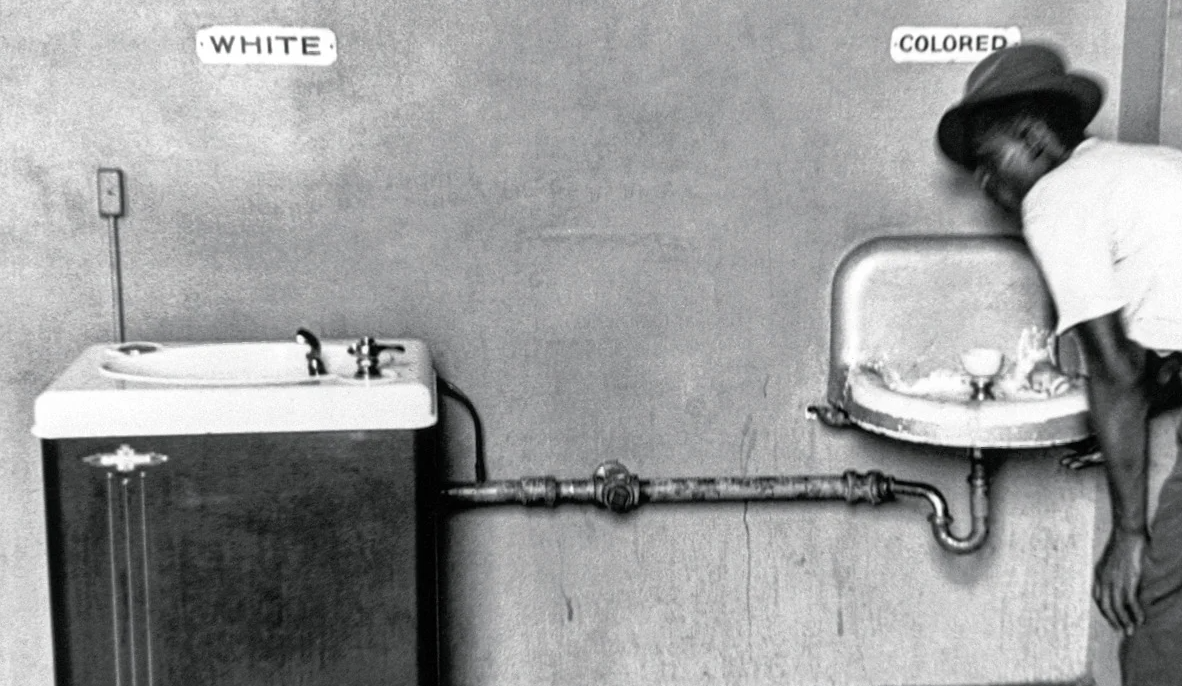
That’s when C. Vann Woodward — a Southern historian who had established himself as an expert on naval history and who quietly wrote recommendation letters for more Blacks to be appointed into academic positions — entered the picture with his excellent volume The Strange Career of Jim Crow. He introduced a vital thesis that was to challenge understanding of racial integration in a deeply important way: In the immediate decades after the Civil War, there were natural moments of social inclusion in which Blacks and whites lived and intermingled together. But these vital steps forward were completely overturned by a group of 19th century white supremacist “influencers” turned lawmakers who ensured that the evils of Jim Crow, which separated public facilities by race, were on most of the state law books south of the Mason-Dixon line and enforced by sinister men perhaps best epitomized by the likes of Bull Connor unleashing German Shepherds upon Black protesters in 1963.

It’s extremely important to understand that there were moments in the 19th century’s waning years in which Jim Crow legislation (which actually originated in the North) was mocked and ridiculed in major Southern cities. One can, in fact, make a persuasive argument that Southerners, in some cases, were willing to put aside their bigotry. Prior to Woodward, the dominant view held by historians was that racial segregation emerged rapidly as Reconstruction began to implode. But a close examination of the sources dredged up by Woodward reveals that his thesis of racial integration emerging in unanticipated spots, which was by no means Panglossian and certainly didn’t erase the repugnant racial violence of that postbellum epoch, holds up in 2026.
* * *

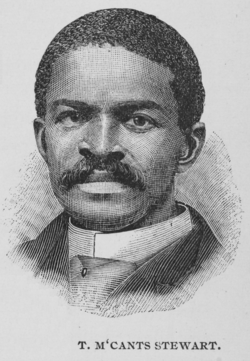
Woodward observed that, as late as 1885, T. McCants Stewart, a Black lawyer and journalist and a close friend of Booker T. Washington, journeyed to his homestate of South Carolina to see how life was shaking out after not stepping foot there for ten years. (Stewart’s extraordinary reporting, published on April 18, 1885 and April 25, 1885 and titled “Rambles in the South,” can be read in its entirety at the Library of Congress.) As he was traveling by rail, Stewart discovered much to his surprise that the car was full and white people were sitting on their luggage and he had a seat. But he was not asked by the conductor to give it up. If anything, the conductor had been gentle and courteous to Stewart when requesting him to move his luggage to accommodate a white passenger. He sat in a dining car in the same room as whites.

Perhaps most remarkably, Stewart said that he actually experienced more racism in Wilmington, Delaware than he did in Virginia and South Carolina. Indeed, white Southerners — in 1885 — made small talk with him. Stewart wrote (and this is not quoted by Woodward): “In the South it is no unusual thing for a man to ask the distance to the next point, to borrow your paper, to remark about the weather, to enter into conversation.” Stewart further remarked, “I feel about as safe here as in Providence, R.I. I can ride in first class cars on the railroads and in the streets. I can go into saloons and get refreshments even as in New York. I can stop in and drink a glass of soda and be more politely waited upon than in some parts of New York.”
* * *

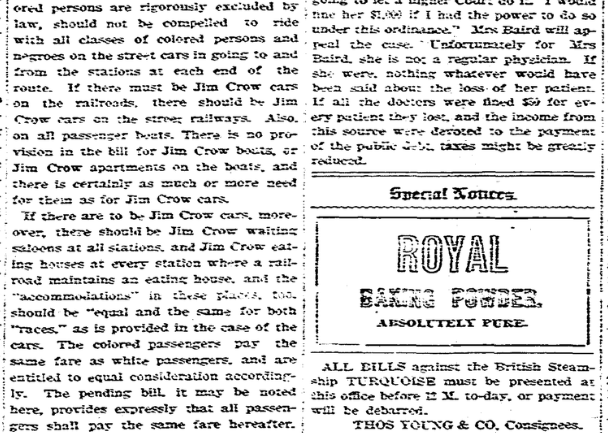
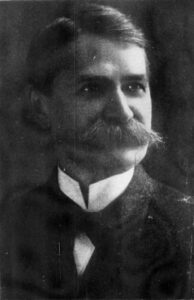
On January 25, 1898, the Charleston News and Courier published an item of devilish satire in response to a Jim Crow law then under consideration by the South Carolina Legislature. Much like people in 2024 never believing that ICE would become a massively budgeted paramilitary force randomly shooting American citizens and kidnapping taxpaying immigrants without due process, it then seemed unthinkable to call for railroad cars to be segregated by race. And so a shit-stirring editor by the name of James C. Hemphill, who had an extremely impressive mustache and who had written many editorials against lynching, had this to say (Woodward quotes some of it, but when I found the entire piece on Newsbank, I couldn’t resist offering more of it):

There should be a Jim Crow section in the jury box, and a separate Jim Crow deck and witness stand in every Court — and a Jim Crow Bible for colored witnesses to kiss. It would be advisable also to have a Jim Crow section in county auditors’ and treasurers’ offices for the accommodation of colored taxpayers. The two races are dreadfully mixed in these offices for weeks every year, especially about Christmas, and just afterward, when the time for making returns and paying taxes, without penalty, is about to expire. The cars are provided with seats, so that everybody can sit down and keep separate from everybody else. It is not so in the county offices. There the crowd stands together in a bench, or is strung out in a waiting and highly variegated line. There should be a Jim Crow “department” for making returns and paying for the privileges and blessings of citizenship.
Unfortunately, the Charleston News and Courier was taken over by a different editor (Robert Lathan, who did not have an amazing mustache or a sense of humanism), where the Jim Crow stance shifted from high 19th century snark to bona-fide xenophobia.

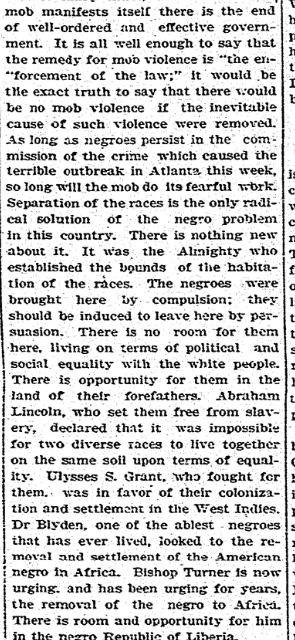
On September 26, 1906, in response to a massacre in Atlanta, one that was as vile and as forgotten as the 1921 Tulsa riots, in which whites murdered dozens of Black people because the Georgia gubernatorial race between then candidates Hoke Smith and Clark Howell stoked racist fears about a Black upper class, the News and Courier blamed racial integration on this:

As long as the negroes [sic] persist in the commission of the crime which caused the terrible outbreak in Atlanta this week, so long will the mob do its fearful work. Separation of the races is the only radical solution of the negro problem in this country. There is nothing new about it. It was the Almighty who established the bounds of the habitation of the races. The negroes were brought here by compulsion; they should be induced to leave here by persuasion. There is no room for them here, living on terms of political and social equality with the white people.

The item also notes that the “problem” “is worse now [1906] than it was ten or twenty years ago.” Never mind that only eight years before, the same newspaper roundly ridiculed any application of Jim Crow laws. But Lathan had no problem leaning into racism, concluding, “[The problem] can be settled effectively only by the separation of the races. The sooner it is settled the better for both races and for the sake of all humanity.” Fortunately, Lathan had the decency to drop dead at the early age of fifty-six before he could blow more racist dog whistles.

Woodward’s salient point still resonates today. Would some of these Jim Crow laws have been abandoned if the people had stood up to the racist lawmakers? Would some of the terrible violence in the aftermath of the Civil War and extending into the 20th century — the East St. Louis riot in 1917, the “Red Summer” of 1919, et al. — have been mitigated? Then and now, it takes only a handful of hateful demagogues delivering repugnant sermons from the mount to make a terrible idea stick.

* * *

Like any pithy historian with his finger firmly on the pulse of institutional ills, Woodward has had a few scholars challenge his thesis. In Bind Us Apart, Nicholas Guyatt observed that some abolitionists in the early 19th century (notably William Short) stumped for racial segregation (what Short called “amalgamation”) because they feared interracial sex. Interracial love could only be tolerated by covertly racist Jacksonian Democrats like President Andrew Johnson if it involved non-whites passing as white. Some ostensible “liberals” even argued that freed slaves should be sent off to Africa. (Lincoln himself was keen on sending freed slaves to Liberia in 1854. He also tendered famously abhorrent remarks against racial inequality in his 1858 debates with Douglas.)

These are all fair and unsettling observations, but it doesn’t entirely overturn Woodward’s thesis, particularly since Guyatt is vague about the timeline in his book. Woodward was explicitly talking about how Jim Crow laws were put onto the books and how this codification galvanized more whites to endorse what they had previously either disregarded or countered with high-caliber badinage, not hypocritical whites who professed to stick up for Blacks even as they simultaneously promoted versions of segregation. Unlike Woodward, Guyatt mentions “segregationist Jim Crow laws that had swept through southern legislatures after the collapse of Reconstruction in 1877,” but never cites the states, the dates these laws were passed, or, perhaps most importantly, the severity of these statutes. Woodward, by contrast, is far from ambiguous about what states did what:

Up to 1900 the only law of this type adopted by the majority of Southern states was that applying to passengers aboard trains. And South Carolina did not adopt that until 1898, North Carolina in 1899, and Virginia, the last, in 1900.

In 1896, Plessy v. Ferguson created the conditions for these “separate but equal” iniquities to flourish at the state level until Brown v. The Board of Education of Topeka overturned this interpretation in 1954, leading to what Woodward fairly describes as a volatile time.

Racism certainly did flourish after the Civil War. But Woodward’s more important point is that laws helped to enable white supremacy — to give Southern racists who were on the fence some terrible ideas about accepting Black people into their regular lives. It’s not unlike the way that Trump emboldened racists with his false claims that Haitian immigrants were “eating cats and dogs” during the September 2024 debate with Kamala Harris. And people, who often long to be law-abiding citizens, are more inclined to believe such racist malarkey, capitulating their natural ability to get along with each other, if an institution or a significant person in power tells them that bigotry is not only okay, but very much something enforced by malevolent legislation. This was why Martin Luther King adamantly declared in Why We Can’t Wait that “one has the moral responsibility to disobey unjust laws.”

But it isn’t just statutes we need to worry about. If there is no accountability for the manner in which well-meaning institutions operate, then these can also become enablers of regressive policy. Historian Eric Foner, in his great and massive volume on Reconstruction, noted that Woodward later observed that postbellum “progress” was, much like most of the Democratic Party in the 2020s, “essentially nonrevolutionary and conservative.”

Foner cited two later Woodward volumes — (1) 1960’s The Burden of Southern History, in which Woodward proposed that a “third war aim” (that is, racial equality) had been practiced by Union soldiers and (2) 1971’s American Counterpoint, in which Woodward retracted this. The Freedmen’s Bureau — a federal agency which existed from 1865 to 1872 to help integrate nearly four million formerly enslaved Blacks and poor whites — became a pale shadow of its lofty intentions. Union General Oliver Howard, in cahoots with President Andrew Johnson, went well out of his way to subvert the radical policy that had initiated the bureau. Howard sought to remove “virtually every subordinate who sought to fulfill the original mission of the Bureau and help the freedmen.”

C. Vann Woodward didn’t confine his studies to how the tyranny of law encouraged racism to triumph over equality and decency. He was also deeply worried about how well-meaning federal agencies become corrupted, neutered of their original purpose. Various editions of The Strange Career of Jim Crow became less optimistic with every new revision. Perhaps this is because a great historian always remembers that, even when he exhumes the vital scholarship revealing a more sophisticated understanding of the past, we are always contending with odious loudmouths in the present manipulating a potentially more humane population to settle for the worst.

(Next Up! Thomas S. Kuhn’s The Structure of Scientific Revolutions!)
The Age of Innocence (Modern Library #58)

(This is the forty-third entry in The Modern Library Reading Challenge, an ambitious project to read the entire Modern Library from #100 to #1. Previous entry: Zuleika Dobson.)

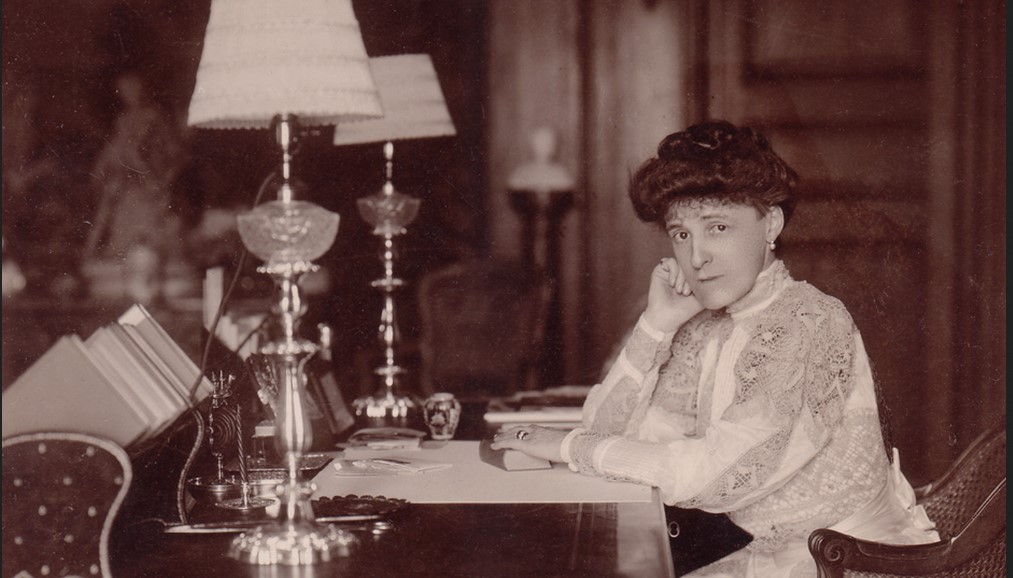
Newland Archer — the “hero” of Edith Wharton’s most celebrated novel (and the first book written by a woman to win the Pulitzer Prize) — is the 1870s answer to some privileged techbro half-heartedly trading crypto out of some Sand Hill Road office rental split with an AI slop merchant, leaving the finer details of regular cash flow to a hungrier underling living paycheck to paycheck. Yes, he’s a lawyer, although we never see him drafting a brief or appearing in court. (He does review “unwelcome documents,” the Mingotts ask him to persuade Ellen Olenska to talk her out of a divorce, and there is an off-stage lawsuit mentioned near the end of the book, but that’s about it.)

He has everything and more. If you ran into him today, he’d probably be bragging about his kitchen renovation or his Duolingo streak. Fortunately, he is confined to the atmospheric pages of Wharton’s novel, where we witness Newland attending friendly parties at Highbank and living in that dreaded conformist manner that even Emerson associated with the living dead in “Self-Reliance.” He has boxes containing the newest books. Yet all this privilege is just not enough for this foppish and artless staple slacking in nigh high society just before Gotham became the center of the universe. Oh sure, he’s got a fetching fiancée named May Welland who is nearly as vapid as he is (until she comes touchingly alive with an act of genuinely moving generosity during one particularly poignant moment halfway through the book, which naturally made me abhor Newland more). May has a cousin named Countess Ellen Olenska, a hot piece of ass who stirs Newland’s languorous Johnson into an upward bolt by way of her putative cosmopolitan experience. Thus, in The Age of Innocence, it’s hello Ellen, goodbye May, without the decency of Roger Hodgson’s high tenor singing “Will we ever meet again?” over cheerful keyboards in A♭ Major.

You may be thinking that I hated the book. But that’s not true. Wharton’s prose and storytelling craft in Age is as delicately crafted as any of the other high watermarks of her awe-inspiring career, frequently saddled with that understated sardonic quality of hers that I love so much. She notes that a woman’s hair “had tried to turn white and only succeeded in fading.” Her description of Ned Winsett also crackles when she notes how he “moved his arms with large pawing gestures, as though he were distributing lay blessings to a kneeling multitude.” And even though Wharton notes, during a hubba hubba moment, how Newland and Ellen’s “vain terrors [shriveled] up like ghosts at sunrise,” a brilliantly evocative image conjuring those last chance pangs that feel more immediate with oxytocin hits, I don’t buy for a second that Newland truly loves or cares about anyone.

In case I haven’t been subtle enough, it’s Newland Archer I hate. It’s a hell of a thing to hang a subtle evisceration of hoary societal virtues on such a cipher. I’m fine with reading books about unlikable characters, but it’s another thing when they are uninteresting. Sure, Wharton walks the walk in executing a narrative momentum despite such an unremarkable upper-crust zero at the cynosure. But I’m not going to lie. Newland Archer such a subtly obnoxious prick on the page that I would happily orchestrate one of the bloodiest ass-beatings known to humankind if I had the power to enter classic works of literature like the characters in Jasper Fforde’s Thursday Next series. Newland is, essentially, the mediocre man of his time and his infuriating entitlement is captured agonizingly well by Wharton:

…there were always two or three young men, fairly well-off, and without professional ambition, who, for a certain number of hours of each day, sat at their desks accomplishing trivial tasks, or simply reading the newspapers. Though it was supposed to be proper for them to have an occupation, the crude fact of money-making was still regarded as derogatory, and the law, being a profession, was accounted a more gentlemanly pursuit than business.

Marriage, for Newland, is little more than a medium with which to pass a substantial chunk of years. Early on in the novel, when Countess Olenska responds to one of his messages, he is smitten by the first three words “I ran away.” Like most young men who refuse to understand that moving to a new city or taking up a new job aren’t going to rid you of your preexisting problems, Newland is intoxicated by amorphous flight. And instead of asking Olenska what in the sam hill she means by “running away,” he instead imagines “some dark menace from abroad.” Newland’s limited imagination seems to be the very impetus that kickstarts his patriarchal desire to dominate her.

Newland’s indolence and his First World problems are probably the primary reason why I’m not as hot on this Wharton volume as I’d like to be. At least with “New Year’s Day” (contained in Old New York), Wharton demonstrated great craft on the affair between Henry Prest and Mrs. Lizzie Hazeldean, revealing how society’s understanding of this ostensible series of horizontal hookups did not quite live up to the reality. But there is no such disparity with Newland Archer. Newland is exactly who he appears to be: a chin-scratching slab of meat with an ADHD approach to women and a lack of curiosity matching some lonely mansplainer complaining about the mythical “male loneliness epidemic” when the truth of the matter is that he doesn’t know how to shut up and listen to women. All that spare time and no ambition to guide it. Excuse me while I bust out the world’s smallest violin.

Wharton’s best biographer, Hermione Lee, has astutely observed that The Age of Innocence, of all of Wharton’s books, represented the widest gap between the time Wharton was writing (a remarkably swift six months ending in March 1920) and the time she was writing about (1871-1873), although I don’t fully buy her thesis that Innocence represented an autobiography. For one thing, Innocence is far more muted and guarded (but also more exquisitely understated) than The House of Mirth, which takes place a good two decades later. (With greater permissiveness allowed by later folkways, the characters will obviously dance to a slightly more liberated groove.)

At times, this remote detachment makes Innocence feel more like a work of history than fiction — even more so than Wharton’s Old New York novellas, which all contain far more zest than they get credit for. Age has a more subdued approach than the exuberance on display in Mirth. Lee rightly notes that Wharton had this tendency to leap away every time the characters revealed anything intimate, which suggests that the unpredictable vagaries of human agency are at odds with the fixed nature of history. So it should probably come as no surprise that a blunt and irreverent type like me was more passionate about Mirth than Age and that Wharton’s detached legerdemain proved a little too similar to the mannered logorrhea of her good friend Henry James — a writer whom I largely despise and whose novels I am sadly fated to write about. (Join the fun of watching a bald man lose his mind when we get to ML32, ML27, and ML26!) Still, I cannot gainsay Wharton’s great achievement here.

This is the New York of the 1870s: the onset of the Gilded Age and the tail end of Tweed. It is a little over two decades before the five boroughs consolidated, marching with mad passionate unity to forge a motile metropolis in which iron stalagmites sprouted into the sky with feverish chaotic glee. It is three decades before the sleek beatific curves of City Hall Station inaugurated a new subterranean mode of travel and Wharton’s great heroine Lily Bart lost it all. We are reminded all throughout Age that New York, despite its impressive development, is still something a runt on the world stage. But it is a metropolis blissfully unaware (truly innocent?) of the corruption and grift that will eventually define it. As Wharton writes with muted irony, “New York was inexorable in its condemnation of business irregularities. So far there had been no exception to its tacit rule that those who broke the law of probity must pay.”

Yet even at this premodern nascent point, Gotham’s class aspirations feel preordained. Newland remarks that The Shaughraun, a wildly popular melodramatic play of that pre-Broadway epoch, is as good as anything in Paris or London. Much later in the book, when Newland does find himself in London on his honeymoon, he cluelessly asks, “But don’t Englishwomen dress like everybody else in the evening?” Wharton also reminds us near the end of the novel that this is also the New York before the North River Tunnels carried trains to Penn Station (and one vital takeaway is that Newland doesn’t want these tunnels to be built):

there were people who thought there would one day be a tunnel under the Hudson through which the trains of the Pennsylvania railway would run straight into New York. They were of the brotherhood of visionaries who likewise predicted the building of ships that would cross the Atlantic in five days, the invention of a flying machine, lighting by electricity, telephonic communication without wires, and other Arabian Night marvels.

When Newland considers one of Madame Olenska, he observes that “the things she took for granted gave the measure of those she had rebelled against.” Could this not likewise be the beginning of the New York temperament?

Of course, you can’t gainsay The Age of Innocence‘s prose style. Some of the snarky imagery in the juicier Wharton novels does bubble up in Age from time to time, such as May Welland’s face wearing “the vacant serenity of a young marble athlete.” And Wharton’s glorious eclat for punchy noun-modifier rhythm is admirably fierce when she describes May “looking her loveliest under a wide-brimmed hat that cast a shadow of mystery over her too-clear eyes.”

It’s a pity then that Newland Archer is far flatter than the women, especially since Newland is the dude we have to spend time with while reading this. I get what Wharton was trying to do in sending up society with a doe-eyed meatbag of no great distinction as the protagonist. Stanley Kubrick’s best film, Barry Lyndon, succeeds in part because of the juxtaposition of Michael Hordern’s wry narration against the bland opportunism of Ryan O’Neal playing the titular character. (I suspect that Martin Scorsese’s film adaptation of Age was trying to recapture Kubrick’s stylistic approach to period-piece social critique with Joanne Woodward’s narration.) But after a certain point, shouldn’t exhuming the past like this offer a corresponding set of virtues? A nimble evisceration of the upper crust needs to have a few characters who remind us why life is worth living. And Age, despite numerous mesmerizing passages, will never hit me in the way that The House of Mirth and The Custom of the Country do. Even Pride and Prejudice, for all of its brilliant lunges at snobbery and reputation, still reminds us that marriage, if one is to do it, should be taken seriously and be predicated upon mutual respect rather than whether or not you meet the right people who can get you courtside seats for a Knicks game. And I feel that this is Age‘s fatal flaw. The emotional distance that Wharton demands of us deadens the journey.

On the other hand, the manner in which Newland and Madame Olenska gradually transform into “exhibits” of their time as the book leisurely moves to its end is legitimately brilliant. At one point, the adulterous couple visits the Wolfe collection at the Met and Newland remarks, “Some day, I suppose, it will be a great Museum.” Shortly after that, May remarks on exhibits that don’t matter being put under a label reading “Use unknown.” Newland’s confidence in the future becomes sad and absurd and his fate is sealed in the novel’s haunting final moments:

It was little enough to look back on; but when he remembered to what the young men of his generation and his set had looked forward—the narrow groove of money-making, sport and society to which their vision had been limited—even his small contribution to the new state of things seemed to count, as each brick counts in a well-built wall

It is a stern warning about the dangers of neutering your existence while conforming to patrician dipsticks. Sometimes being true to yourself, rather than avoiding “anything melodramatic and conspicuous” to fit in, is the very life choice you must make to ensure that history doesn’t repeat itself.

Next Up: Ford Madox Ford’s Parade’s End!

The Rise of the West (Modern Library Nonfiction #71)

(This is the thirtieth entry in The Modern Library Nonfiction Challenge, an ambitious project to read and write about the Modern Library Nonfiction books from #100 to #1. There is also The Modern Library Reading Challenge, a fiction-based counterpart to this list. Previous entry: The Gnostic Gospels.)

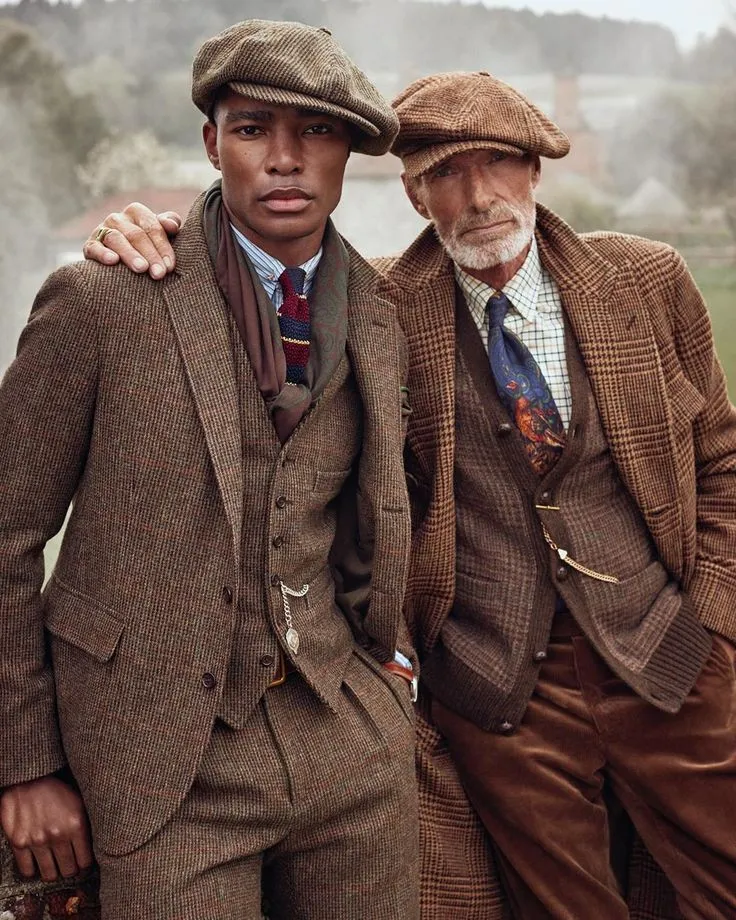
Sixty-three years after The Rise of the West‘s publication, it’s easy to take William McNeill for granted. You see, for many years, scholars widely accepted the worldview, one remarkably myopic in hindsight, that civilizations were not influenced by other civilizations. Perhaps this casual and subconscious strain of passive xenophobia was all the rage among upper-crust academics because, for several decades, these historians had walked the earth wearing too much tweed.
I don’t think we discuss just how dangerous tweed is in our culture. Oh sure, it’s a rough-and-tumble wool that is often handwoven into highly appealing earth tones. But it does turn colorful personalities with the memorably destructive charm of a Molotov cocktail into bores with an inexorably reactionary view of the universe.

In the course of my five decades on this planet, I have witnessed dependable punks — surly o.g. types who once donned studded leather jackets, safety pins, mohawks, a dependably formidable sneer ratio on their faces, and ripped up T-shirts with the most obscure bands on the more recherché side of The Licks and The Angry Samoans — transform into the blandest and most intransigent and most insufferable home-owning, macchiato-sipping academics imaginable. Many of them are named Mark, Leon, Jonathan, Dwight, or Chuck. You may not know this, but those who wear tweed are now required to register with the Online Tweed Registry, lest the remaining hordes of innocent anti-authoritarian readers in America be subsumed by the baleful fabric that, much like golf, was one of the few inventions from Scotland in which the full implications on everyday life had not been seriously considered.

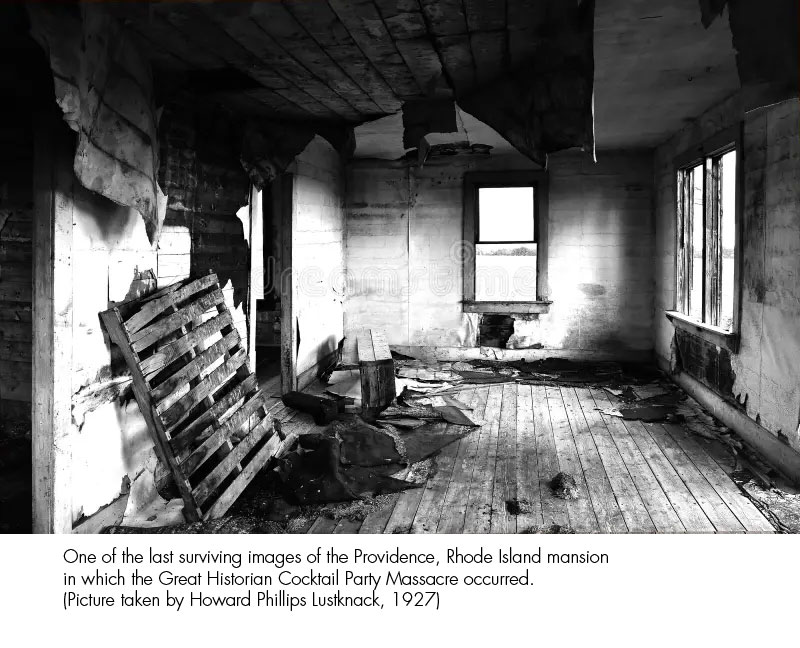
While those who have been enveloped — nay, terrorized — by tweed and converted into dull and invidious downers (they can now be found hawking timeshares to the few remaining affluent Americans with expendable income) are a tad more conversational than the pod people profiled by the great documentary filmmakers Don Siegel and Philip Kaufman, if you wear too much tweed, you tend to become a socially clueless introvert, which affects your ability to invite the right people to your weekend barbeque. I need not trot out the Great Historian Cocktail Party Massacre of 1867, in which many obnoxious academics fond of sucking the life out of the room — all naturally wearing tweed, of course — were momentarily congregated in a vestibule of a fancypants spread owned by a septuagenarian millionaire fond of kidnapping starving grad students — Edinburgh Medical School style (Scotland again!) — and withdrawing their blood in a desperate attempt to live throughout the duration of the 20th century.

The collective social energy within this sprawling manse located in Providence, Rhode Island (razed to the ground sometime in the 1920s by a group led by Howard Phillips Lustknack to deter any additional academic homicides) was so draining that letter openers became improvised daggers. Soft hands that had once been solely committed to flipping the pages of obscure tomes became feverishly devoted to strangling the most annoying guests. While there was an undeniably effective social Darwinist remedy to this horrible tragedy, it took many years before historians could wear tweed again without transmuting into killers with blandly vampiric energy.

For the next two decades, historians stopped being social, fearing that vital scholarship would be curtailed by sudden violence until they were able to isolate tweed as the common factor. But time passed and the historians learned how to be gregarious while showing greater caution in the amount of tweed they wore on any given week. Thus, the troubling backwards thesis in which historians — egged on by Toynbee — believed that civilizations did not communicate and exchange ideas when caravans passed each other on a trade route remained.

Until William McNeill came along, believed by many to mostly eschew tweed, putting together a thick and formidable volume with more annotations than David Foster Wallace and a bag of chips.

Yes, I realize I’ve bullshitted about tweed in an attempt to divagate from writing an essay about a thoughtful book about the interconnected nature of disparate cultures that is incredibly depressing to read as we presently contend with a highly dangerous madman who has threatened the Iranian people with nuclear annihilation and shows no immediate sign of dropping dead. (Grim Reaper, you had one job!) What can I say? I have procrastinated for two years on this essay because, while McNeill served up a commendable arsenal of information, he did write this book in a far more intellectual time that the one we presently live in: an epoch that was fueled in part by less judgment, more curiosity, and a take-it-or-leave-it form of American exceptionalism that seems healthier than the present efforts by a fascist government to erase our greatest mistakes from the museums.

And while I do not feel especially proud of our ugly and cruel nation right now, I am at least able to summon some enthusiasm for a sunny and idealistic book that has valiantly covered thousands of years of human history, reminding me that even America, particularly in its present iteration, will eventually cease to exist. Perhaps sooner than we know.

Africa, McNeill rightly informs us, was the cradle of human civilization. This is likely extremely difficult for certain red state CHUDs of the hayseed Klansman pedigree to understand (not that I expect them to be reading my essay), but it’s true. Africa became the premiere continent for hunting, art, human inventiveness, agriculture (which has been reinvented throughout human history more times than David Bowie’s career), and pastoral culture. I mention pastoral culture because these were not idyllic and rustic shepherds living in harmony — a myth promulgated most notably by Hesiod, who needed his fantasies as much as anyone. No, these were rugged individualists who discovered rather swiftly that the easiest path to acquiring wealth was to steal other people’s crops and animals, particularly during droughts. These early human tyrants often did so with heightened aggression and were far from polite about it. Chivalry and codes of honor were some centuries away, although it is believed that at least one cutthroat cabal did mutter the equivalent of “pretty please with sugar on top” shortly after smiting down some poor bastard and his family with their scimitars.

Obviously something had to change. Despite the troubling tendency of ape-descended life forms to pass the time by engaging in selfishness and cruelty, Neolithic barbarism, much like capitalism today, wasn’t exactly a winning formula for endurance, given that there were countless victims and many deaths from the “plutocrats” (early adopters?) back then who insisted on hoarding all of the resources.

And while many of our ancestors became depressed and developed deadly new wrist slicing techniques over this state of affairs, McNeill notes that, even in the years before Christ, various civilizations began to realize that there were better forms of social camaraderie than brute force upon your neighboring farmers and foragers! Seasonal labor led to the early rise of culture. Mesopotamia worked out the canal system. And agricultural developments led to a grain surplus, which resulted in a managerial class. (Thankfully none of the managers were named Karen.)

The early cities came from the Sumerians, which resulted in water engineering maintenance. And by 2500 B.C., the first ziggurats during the Third Dynasty of Ur. (And who doesn’t like ziggurats?) Priests often served as actuaries and, when crops were tabulated, humans started to understand that they could feed and take care of other people! (Religious practitioners quickly started to understand that if you kept tabs on the population, you could track who was religious and who tithed. It was not unlike the Hollerith punch card machines given to the Nazis by IBM to track the Jews in the extermination camps.)

But it was Mesopotamia that outdid the Sumerians, devising the following elements that later civilizations would roll with:

1. The development of an imperial political theory
2. The development of bureaucracy (i.e., the aforementioned managerial class)
3. The improvement of administrative technique (it remains unknown if the Mesopotamians had anything similar to free parking validation and casual Friday)
4. The growth of trade and a merchant class

It is with the fourth element that William McNeill’s thesis starts to congeal. Trade wasn’t just a way for you to offload your ingots to another civilization. Journeys in those ancient times often took months and years. So it made sense for you to rest for a few days and, oh say, chat with the Assyrians about iron metallurgy or engage in a discussion of Vedic literature with the Brahmans. These cultural clashes were not always conciliatory. But if they were angry about any intersectional setbacks, they were, much like today’s keyboard warriors on social media, quite vociferous in memorializing their umbrage, which resulted in accidental innovation. As McNeill notes, “Had writing remained the monopoly of a privileged clique, the angry words of prophets who so freely attacked established practices would never have been written down. Hence the democratization of learning implicit in simplified scripts must be counted as one of the major turning points in the history of civilization.”

William McNeill had a remarkable talent for exhuming the vital trade-happy virtues of any civilization. Of the Mycenaeans, he notes that, even though they were very fond of war and armor, the elaborate fleets that they constructed to dominate the waters ushered in a fresh wave of trade and piracy. But it’s also important to note that McNeill’s emphasis is quite different from modern-day neoliberalism in which free-market Keynsian capitalism, often deregulated, is seen as the dubious Curad doled out to remedy most problems. For McNeill, trade is the delivery system for cultural and intellectual developments, not the ideological blunt blow that keeps impoverished nations in manumission to the wealthier ones. Additionally, despite the title, McNeill was an inclusive enough historian (perhaps too inclusive) to account for more “Eastern” civilizations. He took great care to include the Ecumene steppe warriors who turned to Islam between the fifteenth and the seventeenth centuries, noting that Muslim expansion did not curtail even as the Europeans colonized Africa. Trevor Getz of the OER Project has rightly observed that one of the reasons why The Rise of the West became such a big hit in the early 1960s was because it was believed at the time that was then no limit to what Western style capitalist economies could do. Of course, we know now that corporate greed, income inequality, and the egregious reduction of taxes against corporations and the wealthy have ushered in a new frightening age of mass layoffs from corporations during highly profitable quarters, job interviews conducted by AI, and ever-increasing assaults on affordability and the cost of living by avaricious plutocrats. Nobody in 1963 could see the great hellscape of the 2020s. And when McNeill revisited his magnum opus twenty-five years later, he was very careful to point out that China, Japan, and Eastern nations were as important as Europe and America in shaping the course of human history.

I don’t believe that William McNeill should be condemned for his 1960s optimism. He was hardly a grifter in the manner of Francis Fukuyama, who has been roundly ridiculed in the years since The End of History was published for his risibly Panglossian faith in Western neoliberalism. It’s clear from reading The Rise of the West that he was both a realist about the evil that humans do while also pinpointing the virtues of any civilization he studied. It may be a tough ask right now to commit to a massive 800 page book (one mercifully outside the sinister influence of tweed) that dares to suggest hope instead of bloodshed when civilizations meet up at an unexpected interbordered clambake. But in an age of vapid demagogues propped up by both political parties in America, you can do far worse than believing, if only for a minute, that history might be restored to helping each other instead of mindless destruction. Maybe in such an age, an eccentric oddball like me would be more concerned with devising progressive policies that help everyone on this planet rather than cloaking his considerable fears and anxieties about the future of the human race in long and ridiculous passages about tweed. But we do what we can to keep our souls surviving.

(Next Up! C. Vann Woodward’s The Strange Career of Jim Crow!)