The Bat Segundo Show: Aminatta Forna

Aminatta Forna appeared on The Bat Segundo Show #383. She is most recently the author of The Memory of Love.

Condition of Mr. Segundo: Trying to remember where his lost car keys are so he can learn to love again.

Author: Aminatta Forna

Subjects Discussed: Writing about Sierra Leone without naming the country, adopting a tone that is simultaneously universal and specific, combating the “news vision” of the Western mind set, the moon landing and the historical sense, “Kung Fu Fighting” in a different context, media mechanisms and attempts to memorialize, Albert Dada and roaming travelers, fugue controversy, narrative ideas emerging out of research, having to leave some research behind, entering other people’s lives, spending two weeks in an operating theater, carrying over the character of Adrian from Ancestor Stones, when “lesser” countries are asked to explain their existence, Adrian playing a role for the reader, the disparities between Kai and Adrian in The Memory of Love, kinship between cooking and surgery, challenging someone to a race on a beach and breaking an Achilles tendon, how similar character qualities can be a benefit and a risk, characters and a prefigured narrative, writing a perspective from the male vantage point, roadside stops and car moments used to foreshadow tragic events, getting arrested, the ethics of colluding with corruption, “writing like a scientist,” avoiding conscious thinking about metaphor, conflating fiction with fact, how a “unique” Sierra Leone story is ubiquitous in Sierra Leone, Argentina as an early influence for The Memory of Love, “pasting the facsimile of a smile on my face,” being a people person, why “not being evil” doesn’t necessarily make you good, PTSD as a normal characteristic, “write about what you know” versus “write about what you want to find out,” and the novel as a medium for relative normality.

EXCERPT FROM SHOW:

Correspondent: I wanted to talk about Albert Dada, who is a figure in A History of Mental Illness, the invented book within the book. You have Adrian come across the case of this guy, who decided to abandon his gas station. And this, interestingly enough, is a psychiatrist. And then he goes ahead and starts traveling at 70 kilometers a day. Just becoming this crazy, wild, roaming traveler. I’m curious how that served as this cultural reference point. Because he’s not exactly as popular as, say, Neil Armstrong.

Forna: Oh, well it went the other way around actually. It went the other way around. I was told a story about a woman. A true story. By a human rights worker. A Sierra Leone human rights worker. And I was told a story about what this woman had suffered during the war. How she had fled to a refugee camp in a neighboring country and then come back. And what she found, this human rights worker told me. And I don’t want to give the story away. But it was so shocking. It absolutely left me speechless. And that story returned to me when I came to write The Memory of Love. And I wanted to create a patient for Adrian. You know, Adrian is there looking — he’s there to help himself as well. But anyway, what happened was that I tried to think of, to actually imagine, if that happened to you, what your mind would do. Or what it would do to your mind. How can we survive that? And I came up with something that I had already seen happen a little in Sierra Leone, which was that people often did step out of their lives. And women in particular often did just step out of their lives and go walking. Not in that fugue state. Not in a dissociative state. It was just a self-healing thing. They would say, “I’ve got to get away from here for a bit.” And they would just go traveling and they would come back. And nobody thought this was curious. It was just part of the culture. So I thought, “Well, here’s something she might do.” Because she has suffered this extreme trauma.

So I began to read about fugue. And then I realized that there was this whole controversy around it. I wrote a book about it. And it all seemed to fit. It fit with what Adrian was there to do, which was try to find something that might advance his career. As well as help the country, of course. But you know, he had other motivations. It fit with Agnes: the character, the patient he sees. So these are wonderful moments where you get this perfect storm in your research. But that’s the way I work. I do quite a lot of research and after the research comes the ideas usually. I go places. I know some writers work like this and others have a plot and then they fit everything to the plot. But I tend to go and see. And then the stories arise out of that.

Correspondent: But there must be a danger in getting bogged down in too much research. The idea perhaps that you attempt a narrative, but that it doesn’t necessarily flesh out. Is this an issue with you?

Forna: Yes. Both of them. (laughs) The “too much research” — it’s less of a problem because I used to be a journalist. So we got used to having to leave some of our research out. We knew that you can’t get it all in. Which is always the danger. The first failing of young journalists. Attempt to use everything they’ve discovered. I know that there will always be a place for it in a later book. And I was once asked this by a creative writing class that I was talking to. “Well, what do you do with the research that you don’t use?” And I said, “Well, it’s usually the next book.” Or it’s the one after it. So nothing’s ever lost. I don’t worry too much about that. And what was the other part of the question?

Correspondent: Oh. It was about the amount of research and also what happens if some finding doesn’t work its way into the narrative. Yes.

Forna: Well, of course, my books are character-led rather than plot-led. So I will always refine the plot to what they are likely to do. But research is important for all kinds of reasons to me. Because it sparks so much. I love it. The reason I am a writer, the reason I was a journalist, is because I love entering other people’s lives. So in that period before I actually sit down to inhabit the character that I’ve created and become that person, I spend quite a lot of time trying on parts of their life. So for Kai, I spent two weeks in an operating theater. For Adrian and Attila, the African psychiatrist that is rather ill-tempered who he works with, I also spent two weeks in a mental hospital in Sierra Leone. So I try on their lives to see if they’ll fit when I come to create the characters. Somebody called it “method writing.” And maybe sometimes I go too far. But I enjoy it a great deal. I enjoy all of that. And when I come to write it, I feel that I fully constructed this person. And now I can be them.

The Bat Segundo Show #383: Aminatta Forna (Download MP3)

This text will be replaced

The Bat Segundo Show: Eduardo Porter

Eduardo Porter appeared on The Bat Segundo Show #381. He is most recently the author of The Price of Everything.

Condition of Mr. Segundo: Shopping for a new religion.

Author: Eduardo Porter

Subjects Discussed: Faith and the Pascalian wager, whether or not Americans perceive faith in fair prices, the idea of a price embodying the making of a thing, Marx and labor, how our understanding of prices is a function of transaction, worker exploitation, Dan Ariely and behavioral economics, “buying a sense of our own goodness,” tipping in Japan, Porter being needlessly concerned with the price of a Los Angeles condo he sold years earlier, new economic frontiers without speculative bubbles, Robert C. Wright and predicting bubbles, Keynesian beauty contests, orange juice and the weather, derivatives and probability, the inability to separate legitimate bubbles with sham bubbles, subprimes and low interest rates, John Rawls and society maximizing the well-being of the least fortunate, the extension of the Bush tax cuts for the wealthy, ephemeral jobs and speculative bubbles, unfair income redistribution and prices, diversity and labor, William Julius Wilson, Sir Nicholas Stern’s idea of the wealth of the individual remaining steady throughout the years vs. human life as priceless, the 9/11 Commission and Kenneth Feinberg’s compensation discrepancy, anti-egalitarianism, competing subjective viewpoints about the price of a life, economic consequences that emerge from changing a speed limit, the value of a person toiling in a maquiladora vs. the value of Clive Owen, connections between pricing and elitism, time and the value of human life, France’s price on Haiti, and the colonialist implications of price.

EXCERPT FROM SHOW:

Porter: In the mid-1990s, a study by the Intergovernmental Panel on Climate Change tried to come up with an early estimate of the economic impact of global warming. And to do this, it used some of these estimates of the value of life. And it decided that the value of life in poor countries was $150,000 and in rich countries $1.5 million. Now you can imagine that didn’t go down very well at an international meeting with rich and poor countries. I mean, this was a rebellion. “What do you mean?” So if rising seas are going to wipe out Bangladesh, it’s cheap. But if something is going to happen in Switzerland, then we really have to worry. So ultimately, at the end of the day, they came to a political compromise. And they redid this, valuing everybody at $1 million.

Correspondent: But on the other hand, for the sake of argument, if you have some central authority making such an insensitive statement — that a person born in one country is worth less than someone born in an industrialized nation — wouldn’t that open up the fact that we’re all living within unseen disparities? That the value of someone toiling right now in a maquiladora or an export processing zone is, we all know, worth less than the life of President Obama. Or the life of actor Clive Owen, who is probably worth more than either of us ever will be.

Porter: Well, yes. This is a manifestation of the inequities in life. That it’s just a replication after death of a very unequal distribution of opportunities and rewards. That’s true.

Correspondent: Well then. If pricing essentially confirms that, it’s almost as if pricing confirms an Ortega y Gasset-like notion of elitism. That really what we’re denying in denying these crude and cold and insensitive prices is denying the inherent elitist nature of the capitalist system that we live by in this purported democracy that you, in the book, actually uphold.

Porter: I would say that that’s essentially correct. I mean, capitalism is not an equal society. And I don’t think it can work as an equal society. Disparities are what steer resources to be allocated into one place or another. Pay differentials lead people to take one choice rather than another. To move into one job or another. To get one type of education or another. So the idea that everybody must be paid equal is, I don’t think, functional. It does not function within a capitalistic society. If you’re asking for my opinion on the ultimate — I don’t want to use the word “justice.” If you’re asking for my opinion on whether this is an ideal way to live, I would tell you no. But it’s because of the depth of the disparity. Not because of its existence. I will agree that disparities will exist. I have a problem with the size of them.

Correspondent: You mention Bangladesh earlier. And this is in relation to climate change. William Nordhaus’s idea that in estimating future damages, we need to use a rate that reflects the productivity of long-term investments. Then of course, you’ve got Sir Nicholas Stern’s idea: “The welfare of a person hundreds of years from now is worth the same as as the welfare of someone alive today.” And of course, not everybody can agree on that either. Now we’re adding time to this. Even more problems. If you were to look at the history of Haiti, you see France in 1825 — they don’t wish to recognize Haiti’s sovereignty unless Haiti paid them 150 million gold francs. Haiti, of course, couldn’t pay back the money until 1947. And they had to take up long-term interest loans.

Porter: That’s incredible.

Correspondent: This is the ultimate in a big joke about price. Haiti wanted to be recognized as a nation and they have to pay this considerable amount of money. So this leads me to wonder if price — I seem to think, particularly after this conversation — is a huge mess that creates ever more problems about other viewpoints, other peoples, and simply existing. The more we think about the way money is attached to an individual person, the more we realize that certain systematic norms cause the person to be trivial. I think that’s rather sad.

Porter: The thing is that here we’re moving between senses of price that are really kind of unrelated. The purchase of Haiti’s independence, I think, has very little to do with capitalism. It has more to do with colonialism.

Correspondent: Capitalism could be argued as a strand.

Porter: But this deal could have been made outside of a capitalistic society. This deal is not a function of capitalism. It is a function of the fact that one country controlled another and would not relinquish it unless getting something in return. And in fact, this has been a characteristic of colonialism way back into pre-capitalistic times. I wonder whether you’re not attributing too much significance to the idea of price as an ultimate driver of things that functions throughout history. And always in the same way. It seems to me that when you’re talking about the price of Haiti or the price of gas or the price of milk, the processes that you’re describing, with which you arrive at this ultimate variable of price, are totally different. And the transactions that are involved are totally different. And so yes, they’re all prices of course. But I’m not sure that they’re comparable. They seem a little bit like apples to oranges.

Correspondent: Even though price has a serious consequence upon a human life in some capacity, you’re saying that it’s best to look at price in terms of who sets the price and the consequence? I think I’m looking at it consequentially and you’re looking at it from a causist standpoint.

Porter: Well, yeah. But consequentially. Let’s say clothes have enormous consequences. Lack of clothes have enormous consequences. The fact that having or not having the appropriate clothes for the appropriate weather is consequential. I’m not sure that that allows me to go any further in trying to tell me anything about the dynamic underlying clothes or the goodness of clothes. They are consequential. Sure.

The Bat Segundo Show #381: Eduardo Porter (Download MP3)

This text will be replaced

The Bat Segundo Show: Toby Ball

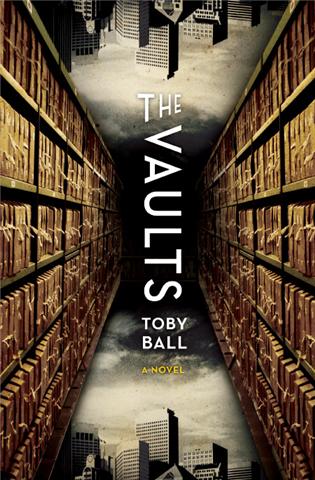
Toby Ball appeared on The Bat Segundo Show #380. He is most recently the author of The Vaults.

Condition of Mr. Segundo: Spilling green ink all over the public records.

Author: Toby Ball

Subjects Discussed: The descriptive connection between sound and voice, Ball’s background in teaching, envisioning a scene before writing it, devising a 1935 parallel universe, alternative forms of photography, prethinking information technology, children who intrude upon the conversation and ask about the microphones, telling an old-fashioned pulp yarn, the Berlin Document Center, the Nora chapters as placeholders within The Vaults, the frantic qualities of pulp literature, characters locked in location, Hard Case Crime, Nicholson Baker’s Room Temperature, detecting another person’s typing from observing the strokes, keylogging, Suge Knight as inspiration, the Anti-Subversive Unit inspired by 9/11 propaganda, designing a three book arc, Philip K. Dick’s The Man in the High Castle, marijuana cigarettes, Hearst and the criminalization of marijuana, mentioning alternative countries (Poland, et al.) instead of the key players in World War II, the city as physical space, ideological information, character life that comes from specific limitations in vernacular, turning a preexisting rumor into narrative fodder, working at Congressional Quarterly, Red Henry’s mistress reading Nietzsche, and tight consequential corners.

EXCERPT FROM SHOW:

Correspondent: It is interesting how the voice — somebody’s voice — tends to be imposing. More so than the bigness of Big Henry and the like. It’s very interesting to me that sound seems to be the linchpin. Particularly because the technology in this book is rather interesting. I mean, here we are roughly around 1935. A little parallel universe. And we don’t really have motion pictures. We have some possible version of photography with the replacement system that comes in the Vaults. And that’s why it is very interesting to me why sound is such an important quality. It’s almost as if sound in your world matters more than image to a large degree.


Ball: That’s an interesting idea. And I think a lot of the book is about information. Both the information that is overt and then there’s a certain amount of information that has to be gleaned from other pieces of information. And I think that the idea that people can assert powers in ways other than the physical or through violence or through having political power or whatever sometimes comes through. Certainly with your ability to dominate things vocally. Maybe not even verbally. You don’t have to necessarily have a great way with words. But if you can take up more space around you than the other person to serve as an alpha male thing, I guess.

Correspondent: Well, did you prethink any of the technology in the book? Or for that matter any of the history? We do have allusions to the Great War. We also have the Birthday Party Massacre, which is both a funny and a grisly idea. And it makes me wonder whether you had any masterplan for this alternative history or you were inventing things and filling in the gaps as you went along?

Ball: Well, what I was most interested in, I think, was how do you organize information. And because of that, it had to be before a certain period. Say the 1960s. And moving it back to the ’30s and combining it with these ideas we have about the ’20s and ’30s gangs, and things like that, I think that that was the first step in doing it. But I also wanted to create a complicated and…

[Two children walk up to the table and start staring intently at the microphones.]

Child #1: Where did you get that?

Correspondent: Well, hi.

Ball: Hi.

Correspondent: There’s a…

Ball: The microphones?

Correspondent: Yes, the microphones. You can get these microphones at just about any audio place. We have a child here who’s decided to…(laughs). Hi. What’s your name?

Child #2: (more aggressively) Where’d you get that?

Correspondent: Well, we got these through — I got these through an audio supplier. So.

Ball: Pretty cool.

Correspondent: But anyway, you were saying?

Ball: Well…

Correspondent: We have an audience. (laughs)

Ball: We have an audience of two. So from there, while I kind of wrote and sort of developed some more things I was interested in writing about, I think that’s where things kind of move on. What’s the importance of having accurate information? What’s the value of that? What can you get by taking discreet facts? And simply by organizing them, by insuring their purity, how does that in itself become information? And to try and combine that with — you know, I think there’s a certain fun aspect to the ’20s and ’30s. Where you can get this noir-y feel abut things. To a certain extent, the book has to be fun too. You have to want to read it, and the atmosphere, and things like that. Does that kind of answer your question?

Correspondent: It sort of does. I think what I’m also kind of curious about — since you are talking about information as a starting point, when did you drift off this focus on information and more into just telling a good old-fashioned pulp yarn?

Child #1: (still enraptured by microphones) Do those really work?

Correspondent: Yes, they do.

Ball: Yup, they work.

The Bat Segundo Show #380: Toby Ball (Download MP3)

This text will be replaced

The Bat Segundo Show: Andrew O’Hagan

Andrew O’Hagan appeared on The Bat Segundo Show #372. He is most recently the author of The Life and Opinions of Maf the Dog, and of His Friend Marilyn Monroe.

Condition of Mr. Segundo: Feeling sartorially inadequate and unwilling to beg for his dinner from the table.

Author: Andrew O’Hagan

Subjects Discussed: [List forthcoming]

EXCERPT FROM SHOW:

Correspondent: It is interesting. You want to have the dog smarter than everybody else in the book. And this leads me to ask you about the footnotes in this. I mean, from a formalistic standpoint, well, we view dogs at our feet. And the footnotes, of course, reflect that particular —

O’Hagan: And the dog’s always going to love footnotes because they can identify the position.

Correspondent: Exactly. But initially many of these footnotes are there to clarify little cultural tidbits. Almost gossip. Like: What is Douglas Sirk’s real name? But as we read the footnotes more, they then become very concerned with clarifying specific facts. Almost in a hectoring tone towards the reader. I’m curious about how the footnotes came to be from just this tonal shift that goes throughout the book, and also if you were tempted to allow the footnotes to go maybe further than eight lines at some point. What did you do to keep that down?

O’Hagan: Well, it’s interesting that. If I had my own way, if I lived in a world of pure O’Haganism, then the footnotes would have gone on for volumes and have a Shandy-ian or Borgesian nightmare where the footnotes were longer than the book. I like the comic potential with that sort of thing. And I like the idea that this was a work of bricolage, as the French would say. That it was an attempt to build up phenomenon in the reader’s mind. Which could increase their confidence about what consciousness was. Cause after all, this was really a book about inventing the notion of consciousness for an animal. I built it up from the ground up. And he does say early in that process of life for him — quite early in the book when he’s still in England — he says, “Dogs love digression.” So it made it natural to me that at some point he would start to deploy the footnote. Which is nothing if not a little contained digressionette. I liked the idea that he would occasionally stop the narrative in order to point something out to the reader. To wag a finger or a paw and give a notion of other worlds of knowledge which might be available. Maybe while pointing towards. He’s a friendly little scholar as much as anything else. He’s a pedant too. And all these things are exciting character traits of his to me. So I had to make him stay in character. And it would be in his character to offer footnotes. Even ones that were hectoring or were strictly unnecessary. They add to the entertainment value overall, I feel.

Correspondent: But to go back to what we were discussing earlier about the comedy vs. the tragedy, and how this reflects human life, early on in the book Maf says in one of these footnotes, “Unlike humans, we can hear what people are saying from themselves. And we can sniff illusion.” Later you have Maf finding “the real difference between humans is that some care about authenticity and some don’t care at all.” Why must the humans in this book be so tied or interconnected with authenticity and illusion?

O’Hagan: Because I think it’s an utterly 20th century obsession. The mid-20th century obsession particularly. Hollywood having held such a position in cultural life the world over. American moviemaking created a sensibility in the 20th century. It didn’t just reflect sensibilities. It actually created a mind set. A notion of natural human behavior and democracy, which I often think was illusory too. But then it was very attractive to the world. Very viable. And I knew that this dog was going to be having its life at the center of that. So I wanted these questions — illusion and reality, illusion dipping into delusion, our condition of being overwhelmed by fakery almost — to be something that the dog had an inside view on. An inside view for a number of reasons: (1) Which is that he’s a novelist at heart. And novelists really know what illusion is all about. We are a conjuring artist as a novelist. You’re playing god with lives and experiences and parts of history and vocality and patterns of speech. You know, you are a trickster. And I think that I’ve always been interested in that fact. And I wanted this little avatar of mine. This little novelist manqué, of Maf the Dog, to be somebody who could look at not only the world of Hollywood and psychoanalysis and politics and the early 60s from an insider’s view — which Maf certainly had. The real dog was in all of those worlds with Marilyn at the time. She was a real figure who had very deep experience of illusion. And I wanted to manipulate that for the reader to present an opportunity to look at the relationship between reality and imagination in a fresh way.

The Bat Segundo Show #372: Andrew O’Hagan (Download MP3)

This text will be replaced

The Bat Segundo Show: Paul Murray, Part Two

On December 5, 2010, the Irish novelist Paul Murray encountered one of Mr. Segundo’s many agents before a full audience at Word Brooklyn. The two gentlemen proceeded to talk, with smart audience interjection and Mr. Murray reading from the book, for a little under 90 minutes. Just as the tape ran out, the very patient Word Brooklyn staff wisely put an end to this gabfest. The two gentlemen had no idea they had rambled on for so long. From all reports, neither did the crowd.

The first part of this conversation is now available for your listening pleasure as The Bat Segundo Show #370 (also referred to as “Phyllis Presents,” for reasons known only to those possessing the appropriate handbook). It is about 41 minutes long and involves the initial Q&A between Mr. Murray and our most mysterious agent.

The second part of this conversation is now available for your listening pleasure as The Bat Segundo Show #371 (which does not possess any alternate name, we are sorry to report). It is about 38 minutes long and features Mr. Murray reading from his latest novel, Skippy Dies, along with further questions from our agent (and many from the crowd). If you listen carefully to this second part, you may be able to detect a broken haiku.

The producers wish to thank Brian Gittis, Stephanie Anderson, Jenn Northington, Sarah Weinman, and (of course) Paul Murray for their great assistance (much of it at the last minute) in making this special conversation happen. We hope to offer similar “live” conversations in the future.

Condition of Mr. Segundo: Recoiling from the pleasures of being applauded by a recorded audience.

Author: Paul Murray

Subjects Discussed: The origins of Bethani, the original length of Skippy Dies, storylines cut from Skippy Dies, the narrative need for an adult ballast, the importance of the school as a microcosm, Infinite Jest, open-ended narratives, tradeoffs, the impossibility of second-guessing an audience, Roland Barthes, cartoon sex, absurd editorial exchanges concerning the physicality of mermaids, balancing gender perspective, getting Lori’s emotions right, Catholic schoolboys, amoral characters and teenage beauty, authentic teen voices, requests for a “director’s cut” of Skippy Dies, trying to find uses for scrapped material, when descriptive “transplants” don’t work in revision, and the importance of listening to editors.

EXCERPT FROM SHOW:

Murray: I didn’t want it to be an Infinite Jest level narrative. I think that might have had its day, in fact. That sort of completely open-ended narrative structure. Because once you read Infinite Jest and you get to the end of 1,000 pages and realize he’s not going to tie it all up. Sorry to anyone who hasn’t read the book. The butler did it. That in itself is not quite a gimmick. But it’s a device. And it’s a device that people will get bored of. So you need to find new ways. Roland Barthes, who I read a lot unapologetically, he talks a lot about, “If you destroy something. If you try and destroy something, it just comes back.” Like you just sort of preserve the dialectic. So what you need to do is subvert it by making fun of it or just twisting things and tweaking things. I guess that’s what I was trying to do with the book. I really like — I watch tons of — far too many movies and TV programs and stuff. So I wasn’t coming at it with some kind of Puritanical urge to — like an Alain Robbe-Grillet sense of “I puke on the novel.” I wanted it to be a story that some of the people would enjoy. So yeah, it does look like a lot of elements. It’s got characters and it’s got jokes. It’s got plot twists and stuff. I would argue that it doesn’t work in a sort of three-part type of way. Because Skippy dies at the beginning. And then it tracks back. The first two parts are tracking back. What happened to him. And then the last part is just dealing with the effects of his death. So it is kind of chronological. Quite weird.

Correspondent: Well, what do you trade off when you are writing for the audience like this? Are there certain areas that you went into further? Because the book is very candid about the teenage lifestyle. And drugs and sex and things like that. Did you go further in this earlier draft? Were there things that were perhaps just too off-putting for the audience that you were seeking? I’m just curious.

Murray: I genuinely would try and avoid — I mean, if you start thinking of your audience, then it’s impossible to second-guess an audience. Because people react in ways that you can never imagine. So you’re on a losing streak with that. And also you’ll just freeze up if you start worrying about what people will think. So I tried to avoid doing that. That said, I did have more extreme things happening in earlier drafts. And I think it was because it was hard to gauge the right level of shockingness. And it wasn’t that I wanted to shock people. It was more that I was worried about censoring myself. I was worried that the editors won’t like this scene. So I’m going to leave it in there! Which is a very stupid way of writing a book. But that’s what I did.

For instance, the Bethani character, who writes a lot of these strange porno songs. There were more of those than there needed to be initially. And there’s a very disturbed character called Carl. His stuff was initially — there’s a bit where Carl is at home looking at porn on the Internet and he seems to be looking at this toon porn, which is characters from Disney — Pocahantas and the Little Mermaid, Snow White and so forth — having sense with various other toons. Smurfs having sex.

Correspondent: Imagination or research into this?

Murray: Uh, no comment. But there was a humorous exchange with the publishers. With Penguin. Because initially they were saying, “I think Disney may have copyright on these. So we’re going to have to write to them and say is it okay?”

Audience and Correspondent: (laughs)

Murray: Okay, I don’t know if they’ll go for that. But it turns out.

Correspondent: Did you get any yeses? Yes, it’s perfectly okay for a Snow White and a dwarf 69. Or something.

Murray: (laughs) You know that site!

Correspondent: No, I…no comment!

Murray: That’s one frisky dwarf.

Correspondent: (laughs)

Murray: No, but it turned out that it was legal. It was okay. The Penguin legal department checked this out. It was fine. You could use those references. But there was another bit. A Penguin editorial assistant, who is a very nice and lovely girl called Anna Kelly, said, “You have Pocahontas giving a lickout to the Little Mermaid.”

Correspondent: (laughs)

Murray: “Physiologically, that’s not actually possible.”

Audience and Correspondent: (laughs)

Correspondent: Your imagination then!

Murray: “Dear Anna: Thank you so much for that.” So if you know anything about the English publishing industry, then you know it’s run by these very sweet, very polite women. And so there’s this humungously embarrassing email conversation back and forth. “Maybe we should have the Little Mermaid giving a lickout to Pocahantas.”

Audience and Correspondent: (laughs)

Murray: “Oh! That seems like the best solution!”

Audience and Correspondent: (laughs)

Correspondent: Oh boy. Anybody have a question to follow that up with?

The Bat Segundo Show #371: Paul Murray, Part Two (Download MP3)

This text will be replaced