The Bat Segundo Show: Kathryn Schulz

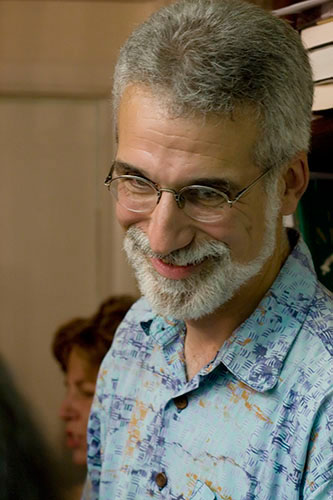
Kathryn Schulz appeared on The Bat Segundo Show #339. Ms. Schulz is most recently the author of Being Wrong: Adventures in the Margin of Error.

Condition of Mr. Segundo: Feeling wrong about whether or not he’s right.

Author: Kathryn Schulz

Subjects Discussed: [List forthcoming]

EXCERPT FROM SHOW:
Correspondent: I wanted to first of all start off with Thomas Kuhn, who you bring up a few times. You note his observation that the breakdown of one belief system and the dawning of another is always characterized by an explosion of competing hypotheses. But he also argued that it was impossible to conduct science in the absence of a preexisting theory. This brings to mind the F. Scott Fitzgerald maxim that the sign of a first-rate intellectual is to be able to hold two opposing notions in the brain at the same time. How can the two opposing viewpoints viewpoint be reconciled with the Kuhnian viewpoint? Do you have any thoughts on this? Or is it really a matter of cognitive dissonance taking care of this problem?

Schulz: I don’t know that those two things are at odds with each other. I suspect that Thomas Kuhn would have been very much in favor of Fitzgerald’s notion that really sophisticated thinking involves the capacity to hold a belief while also being willing to entertain its antithesis, or entertaining evidence that potentially undermines it. And, of course, that’s what practicing scientists — at least in theory — do all the time. Now in practice, is everyone always out there in their labs questioning their own theories? Probably not. But it is part of the ethos in science in general. And there’s a political scientist I quite like named Philip Tetlock, who I cite in the book, who describes this kind of thinking as self-subversive thinking. Which is a phrase I really love. It’s this notion that you can believe something and simultaneously have this undercurrent in your brain that’s saying “Well, what if it’s not true in this situation?” or “What if this part of it’s right or that part of it’s wrong?” or “What if the whole thing falls apart?” And to me, that is the sign. Fitzgerald got it right. That is the sign of sophisticated thinking. And unless I’m missing something, I think Kuhn would have supported that.

Correspondent: Yeah. Well, he believed in this kind of halfway house. Of having competing hypotheses. Or even just having some middle ground. Some transitional middle ground. That’s why I ask the question of whether that middle ground is really reflective of the same Fitzgeraldian viewpoint.

Schulz: Right. I think one distinction is whether you’re talking about an individual person or a system. And I think what Kuhn was getting at was that when you have a scientific paradigm collapse. Like let’s say that we think that the sun revolves around the earth. And suddenly there’s a lot of challenges to that. And we start seeing some counter-evidence. Then there’s this exciting, but also panicky air where everybody is generating new theories to account for this evidence that doesn’t seem to make sense under the old theory. And so you have a whole system that’s in crisis and is generating new theories. And then you’re exactly right. You shift the pedals down. And you arrive at one that new established theory. And I do think that that’s how systems work. Whether it’s science or, for that matter, book publishing. Book publishing is in the middle of a Kuhnian paradigm crisis right now. Where we have an old model. we don’t know what the new model is. And in the meantime, there’s a million competing hypotheses. But within any given individual, I still think that you can hold a belief. And if you are a sophisticated thinker, undermine it, question it, and challenge it in all these ways.

Correspondent: I want to shift tacks and bring up the case of Penny Beerntsen, who you bring up in the book. She was absolutely insistent that Steven Avery had raped and assaulted her. DNA testing demonstrated that Avery was innocent. Then Avery got out of jail and proceeded to murder Teresa Halbach in 2005, the first and only time in the history of the Innocence Project that an exoneree has gone on to commit a violent crime. Penny though, which is a very interesting case — despite the assault, the misidentification, the murder trifecta – she was able to accept the objective evidence of Avery being innocent in relation to her, but guilty in relation to this other woman. What do you think factors into account for that fixed belief? Of being able to look upon the scenario with some objective quality? Is it a matter of having gone through the act of denial? Do you have any particular speculation? Or does it go back to this Kuhnian idea? That once she had gone through the bridge, she was able to reconcile the truth, so to speak. She was not wrong.

Schulz: Well, a couple of things. I mean, first, I will say that having spent quite a lot of time with Penny Beerntsen to get this story out of her and hear all the details, she impressed me as someone who is exceptionally, exceptionally thoughtful about wrongness. And in that respect, could be, probably should be a role model for all of us. And then I think the underlying question is, the one that I assume you’re getting at, is that, well, why? What is it that makes her so able to be responsive in the face of shifting evidence? Because it’s very, very hard to do. Especially in a situation where the stakes are so high, so emotional, so personal. And I asked her that question straight up. You know, how is that when so many people around you were unable to face this evidence — and for that matter, when so many people are unable to face very trivial instances in coping with wrongness — what do you think it is about you that made you able to do this? And it was obviously something she’d thought about a lot, and didn’t have a completely clear answer. In part because personalities are so complicated. And at the bottom of what’s going on, it has something to do with her personality. But one thing she said that was very interesting was that she had spent many years between her assault and Steven Avery’s exoneration working in the prison system. She essentially decided to take the horrible experience that had happened to her and tried to heal herself and other people by working with violent criminals and try and help them understand the impact of their crimes on their victims and on their communities, and really work within a rehabilitation law of criminal justice. So she spent years and years and years talking to people about facing up to being wrong. And I think that she ultimately felt like her turn came. And she could not fail to practice what she had preached.

The Bat Segundo Show #339: Kathryn Schulz (Download MP3)
This text will be replaced

The Bat Segundo Show: Daniel Okrent

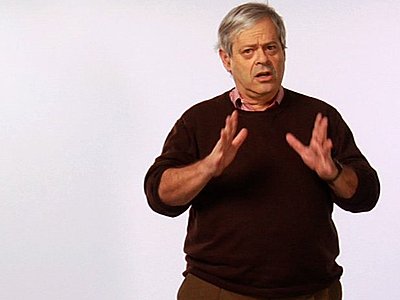
Daniel Okrent appeared on The Bat Segundo Show #337. Mr. Okrent is most recently the author of Last Call: The Rise and Fall of Prohibition.

Condition of Mr. Segundo: Bombarded by too much bathtub gin and too many over-the-top movie trailers.

Author: Daniel Okrent

Subjects Discussed: [List forthcoming]

EXCERPT FROM SHOW:

Correspondent: I wanted to ask you about Walgreen’s. You point out that it went from twenty locations in 1920 to 525 during the 1920s, pointing out that it wasn’t just milkshakes that were responsible for this expansion. Yet all you present in the book to support this possibility is an interview with Charles Walgreen, Jr., who said in an interview with John Bacon that his father didn’t want the fire department in his stores because he was losing cases of liquor. I’m wondering if you made any efforts to corroborate this claim from another source. Has Walgreen’s managed to hush this up?

Okrent: Well, I think — be careful. I don’t make a claim. I say —

Correspondent: Suggestion.

Okrent: I make a suggestion. And that’s all I can do — is make a suggestion. But we do know this to be true. We know from Charles Walgreen, Sr.’s testimony to his son that they had liquor in the stores and he was afraid of losing it to the thieves. Right? Number two. We know that he had twenty stores at the beginning of Prohibition and 525 at the end. And if you want to believe it’s milkshakes, believe that it’s milkshakes. But the fact — the medicinal liquor business was an enormous business. Not just for the Walgreen’s drugstores, but for pharmacists across the country. You know, I have a bottle at home on my shelf. It’s kind of an inspiration. It’s an empty bottle. It says JIM BEAN. BOTTLED AND BOND. FOR MEDICINAL PURPOSES ONLY. This was a pure racket. And druggists, unless they had some kind of scruple that few apparently had, made a fortune because of it.

Correspondent: But beyond the Bacon interview, did you make any efforts to….?

Okrent: Yeah. I made efforts. There’s nobody alive in the Walgreen family today that I tried to make contact with, that had any thoughts about it either way. Or not. I don’t think that there’s been a conscious effort to cover it up. I think that it’s just forgotten.

Correspondent: Al Capone cultivated an image of benevolence. And you also point to Seattle bootlegger Roy Olmstead, who was quite ethical by comparison. He didn’t dilute his liquor. He didn’t resort to mob tactics. I’m wondering what factors made Olmstead a more ethical bootlegger. Was it Olmstead the man? Or was it the makeup of Seattle in comparison to the competitive violent world of Chicago?

Okrent: Yeah, I think that the latter has a lot to do with it. By all evidence, Olmstead was a decent man. You know, he was the youngest police lieutenant in the history of the Seattle Department. He was looked on as a golden boy of sorts. But because of his honesty, because he didn’t dilute, because he didn’t raise prices, he had very happy customers in Seattle. And he also worked very well with anybody else who was in the business. He built a big coalition. Really kind of a market control coalition. He controlled all of the booze that was coming into the Pacific Northwest. Capone was in a very different circumstance. I think that he was a different kind of man to begin with. And secondarily, he was in an extremely competitive cutthroat murderous environment, in which other people were trying to get a piece of the action. Olmstead didn’t try to accrue power to himself. He liked to run a good business. Capone wanted to be in charge.

The thing to me about Capone that is most surprising, relative to the popular image that we have of Capone, is that when he took over Chicago, he was twenty-five years old. He was a kid. And he was gone before he was thirty.

Correspondent: And he was played by all these older actors too.

Okrent: Yeah. I ask people, “How old do you think Al Capone was when he ran Chicago?” They say, forty-eight, thirty-seven, fifty. But he was a baby.

Correspondent: But in Seattle, was there violence involved?

Okrent: There wasn’t much violence in Seattle. There was a nicely cooperative operation between those who enforced the law and those who were breaking the law. Including the fact that the justice of the peace who presided over hearings and trials, they got a piece of the fine. So they liked the idea of people being arrested, paying a fine, and then went about it again — so that they could be arrested again. So they could pay the fine again.

Correspondent: So Olmstead set the precedent of a peaceful, money-oriented coalition here.

Okrent: Yeah. I think that there were others like that were others like that also in the country. But Seattle was remarkably free of the violent crime that hit the Eastern and Midwestern cities.

Correspondent: What other cities were nonviolent in terms of bootlegging?

Okrent: Nonviolent. San Francisco. I think that San Francisco and, to some degree, New Orleans are the ones that come immediately to mind. San Francisco never really acknowledged that Prohibition existed. Even the judges in San Francisco. They threw cases out. The DA of San Francisco, which is both a city and a county — he was an official in the organization against the Prohibition Amendment. He campaigned against it. So violence wasn’t necessary. Because there was nobody trying to corner a market. It was an open market for everybody.

The Bat Segundo Show #337: Daniel Okrent (Download MP3)

This text will be replaced

The Bat Segundo Show: Joseph Wallace

Joseph Wallace appeared on The Bat Segundo Show #336. Mr. Wallace is most recently the author of Diamond Ruby.

Condition of Mr. Segundo: Replacing his failed Atkins diet with three square squirrel meals each day.

Author: Joseph Wallace

Subjects Discussed: [List forthcoming]

EXCERPT FROM SHOW:

Correspondent: Radar guns were introduced in 1935 to measure a baseball’s speed. Before that, you had speed machines, which were increasingly rare. And as I understand it, there’s extremely little recorded information on pre-radar speed machines. In this book, Ruby looks at the machine in question, and you write, “To be honest, she couldn’t make head or tail of it.” This leads me to believe that there was some guesswork or confabulation upon your part.

Wallace: No. The only thing I didn’t know was exactly what — that’s a great question. In 1913, Baseball Magazine decided that they wanted to figure out how fast Walter Johnson and — I can’t remember, Matt. I can’t remember. Another pitcher. Walter Johnson pitched. But of course, that wasn’t so easy to do in 1913. So they went — in fact, as the book says, they went to the Remington Arms Company. And they said, “Help us out. We want to be able to do this.” The Remington Arms Company, in fact, has a device for measuring the speeds that bullets flew that was exactly the way I describe the speed machine here. Baseball Magazine — in fact, this is all completely accurate; it was one of those things that I found for a nonfiction book and loved and said, “Oh, I have to be able to use this somehow” — they ended up doing a fifteen page article that described and photographed the wire mesh that you had to throw the ball through. It was the simplest thing. You’d throw a baseball. It would brush through the mesh, which would register on the device. It would then hit a steel plate that was also wired to the device. They had the ability then to calculate the amount of time in between. And they knew the distance. And they could figure out how fast the ball was going. So they did this article. It was really, really hard for Walter Johnson, who was incredibly fast and incredibly accurate, to throw the ball through the wire mesh. So the only thing I changed from the original was that I made the mesh — the screen that Ruby and the people who are throwing the ball against her — bigger. Because if Walter Johnson had trouble getting it through, it would be really unfair to anybody other than Ruby.

It was a wonderful article. And my favorite thing about it was that, when I was researching the book, I went to the Remington Company and I said, “Tell me more.” And the Remington Company said, “We had never heard of this. We believe it exists. Here’s a historical forum where people talk about Remington’s history. Go to it.” And I went to it. And I posted. And I asked a bunch of questions about it. And people were so fascinated. And they’d seen the article. But none of them still exist. In other words, it’s a lost part of the Remington Arms Company’s history that they used to measure the speed of bullets.

Correspondent: They don’t keep very good records.

Wallace: They must not. I was very disappointed! So the answer is that it’s completely accurate. The only thing that wasn’t accurate, other than the size of the mesh, was the fact that the photographs of the machine itself don’t take you into the inner workings. So everything is accurate. Except I couldn’t describe how it worked inside. Because that wasn’t there. But I probably would not have been able to write the entire Coney Island part. This book — if there’s one article that’s the most important thing to this entire book, it’s the fact that in 1913, Baseball Magazine was smart enough. And, in fact, the same year, they decided to look into whether lengths of arms actually increased how fast you were. And there was a long article with all these shots — again, Walter Johnson, who had very long arms — standing there shirtless as they measured his wingspan versus other pitchers’ wingspans. So Baseball Magazine was this remarkably forward-thinking and clever magazine back in the 1910s.

Correspondent: Very conceptual, it sounds like.

Wallace: And extremely helpful to a writer like me! Who needed both long arms and the speed machine to make the book work.

(Image: Mary Reagan)

The Bat Segundo Show #336: Joseph Wallace (Download MP3)

This text will be replaced

The Bat Segundo Show: Barry Gifford

Barry Gifford appeared on The Bat Segundo Show #335. Mr. Gifford is most recently the author of Sailor & Lula: The Complete Novels.

Condition of Mr. Segundo: Wilder than his heartburn.

Author: Barry Gifford

Subjects Discussed: [List forthcoming]

EXCERPT FROM SHOW:

Gifford: Well, the point is “Don’t be a victim.” I mean, I think I have another chapter somewhere that’s called “Victims.” But that’s always been another kind of thing that I could never abide. People who see themselves as victims. You know, with a capital V. And I just don’t like to be around people like this. People who complain all the time or are a victim or who feel that they’re a victim of their environment, their parents, their husband, their wife, their boyfriend, their girlfriend, God. Whatever it is that they want to call it. It’s convenient, isn’t it? It’s an easy way out. And in the case of the kids in Perdita Durango, they’re just kids. They were like dumb college kids. And here they were kidnapped for the purpose of human sacrifice. I mean, what a terrible thing? And Romeo and Perdita are certainly colorful characters, but malevolent ones. So they’re the natural contrast to Sailor and Lula.

Correspondent: But these two college kids. Did you really feel a good deal of fury or hatred towards them?

Gifford: No! No, I don’t feel any fury or hatred towards any of these characters. I mean, in one sense, yes, we’re all subject to all of the things that have come before, to our upbringing, and to all these things that I mentioned. The key is: How do you deal with them? How do you assert yourself? How do you retain some semblance of control over your own life? Control has always been a big issue with me. I’m not an easily controlled person. In a way, I’m very faithful and loyal and all those things. But it has to be on my own terms. In the sense that if somebody is there purposefully and clearly and obviously attempting to manipulate me, that’s over. There’s no chance of my having any sort of friendship or relationship with that person. And that’s what Perdita Durango is mainly about. Now nobody had a worse childhood than Perdita Durango. She’s definitely — if anybody could be called a victimized person. It laid out her life for her. And what does she try to do? She’s trying to control her own existence. She’s fighting for her life. And that’s the theme that I always felt with Perdita. I love Perdita. I mean, she’s crazy and she’s dangerous. But I love her.

Correspondent: These issues of control are interesting. Because here you have worked in Hollywood, in which the writer is always considered last. For the most part. I know that you appeared on a panel recently in which you had no problem with your books being adapted and being transformed into something different. But there is, in dealing with Hollywood, a sense of capitulating control. And I’m curious as to how you find control in a situation in which you know the writer’s always going to get screwed.

Gifford: Well, as my friend Richard Price has mentioned before, and said the other night, he says, “I’m in it only for the money. I have my books.” And one thing that I said was, after the film Wild at Heart came out, people said to me, “Well, what do you think about what David Lynch did to your book?” I said, “I wasn’t aware that he did anything to my book.” I knew what they were asking. But the book is still there. Read the book. He didn’t change a sentence. He didn’t change a period or a comma. The book is there. The movie may endure the book. It may or may not endure whatever it happens to be. But it’s still there. It’s inviolable. The movie’s another animal. It’s a different form. It’s a different art form. You have other opportunities with movies. And I love the movies. And I learned a lot about how to write from the movies when I was a child. Just watching all-night movies all the time. That sort of thing. And I learned how to tell a story, and how to build character development, and all that kind of thing. That doesn’t mean that I sat down to write movies. I did not. And when I have the opportunity, or choose the opportunity, to write a screenplay, really the writer only has one shot at it. It’s that first draft. So when you write that first draft, you have to see that movie the way you want it to be seen. And so there are no excuses. Of course, there’s more or less manipulation. I mean, sometimes I work better in Europe. Because they change fewer things. But it isn’t the case with Lost Highway, which David Lynch and I wrote together. Everything that’s in that movie is written. It’s all there Nothing was changed. So what could be better than that?

(Image: Robert Birnbaum)

The Bat Segundo Show #335: Barry Gifford (Download MP3)

This text will be replaced

The Bat Segundo Show: Julie Orringer

Julie Orringer appeared on The Bat Segundo Show #334. Ms. Orringer is most recently the author of The Invisible Bridge.

Condition of Mr. Segundo: Bridging the gap between Paris and Budapest.

Author: Julie Orringer

Subjects Discussed: [List forthcoming]

EXCERPT FROM SHOW:

Correspondent: You’re balancing a 200,000 word manuscript, I’m guessing.

Orringer: Yeah, that’s pretty accurate.

Correspondent: The thing I actually wanted to talk to you about in terms of revision. I noticed that you were very careful to use words like “panchromium” and “circlet” and “lemniscate.”

Orringer: That one’s stolen directly from Nabokov.

Correspondent: Oh really? Yeah.

Orringer: Yeah. From Lake Lemniscate in Lolita.*

Correspondent: That’s right. And then “laxard,” which I think is a neologism on your part.

Orringer: It is, I’m afraid.

Correspondent: Yeah. But the thing that interested me about the vocabulary in this book is that you were very careful to ensure that you didn’t use the same word multiple times, but also use a word that wasn’t the ultimate ten-center that sticks out like a sore thumb. I want to know how you agonized to get that balance. The lexical balance here.

Orringer: That’s a great question. I’m so glad you’re asking me about the language of this book. Because that’s not something I’ve had to think about aloud yet. When Andy Greer and I were at MacDowell [writing colony] together a couple of years ago — as he was working on his novel, The Story of a Marriage, and I was revising this book. We would sometimes go swimming in the afternoons and trade a list of neologisms. Coinages that we had created over the course of the day. It became a kind of game. I felt like, if there was a principle behind the language choices that went into this book — I felt like the guide that I followed had something to do with what was actually happening in the narrative. That there were times when a character was in a more reflective moment or when the action was a bit quieter or when we really needed to be able to see something slowly and clearly — those were the moments when I felt like I had a little bit more freedom to allow the language to open up, and to become more interesting and maybe even to call more attention to itself in places. And then there are moments in the book where the action is so painful or the series of events is complicated, or where the events themselves are so emotionally fraught that the language really has to back away and allow the events to speak for themselves. And sometimes it’s tough to do that. Because sometimes those are the moments where you really want to draw out some word that you feel is particularly expressive or particularly unusual. But those are also the times, I think, when it’s really not about the language. It’s really about what’s happening to the characters. And when the language wants to be a little bit quieter.

Correspondent: I observed that too. And I’m glad that you brought this up. Because to me, this almost seems like two books. The “invisible bridge” is between the first half and the second half in my mind. This first half with an elegant, romantic view of Paris, where many of these words that we’re talking about manage to flourish. Versus the darker, bleaker, straightforward part in Hungary. This leads me to wonder if you were bouncing around between these two halves. Whether you were, as you point out, very language happy. Or very happy to portray something romantic. And here you have to portray something that’s particularly bleak and Holocaust-related. Did you bounce around? Or was it pretty much beginning to end?

Orringer: Kind of beginning to end. And in fact, it was really important to me. This wasn’t something that I knew about — the structure of the book beforehand. But I did know that the life that I was creating for Andras Levy in Paris was going to fall apart in the second half of the book. And what surprised me was the fact that, in terms of the number of pages, the book is evenly balanced between the setup, the creation, the future-looking part of Andras’ life and the breakdown and the uncertainty and the horror and the tragedy of the second part. And I feel that this was so important to my understanding of the people who were going through these times. That, in fact, I wanted for the reader to feel with Andras all of his expectation and all of his hopes about the future of his architecture career. And the development of the friendships he made at school with other future architects, and the relationship with Klara, and its complications and all of these currents that really are drawing him forward. But throughout the whole first section, another movement has to do with the increase of his awareness of the political threat that’s building throughout Europe. And there’s also the intimation of the approach of a war. So right around the midpoint of the book, there’s this fulcrum where he loses his scholarship and he has to return to Budapest and is conscripted into the Labor Service. And in a way, I feel like this is the most important thing about the book. To feel all the expectation of the first part. And then to have that juxtaposed with all the disaster of the second part.

* — This little footnote is going to get geeky. But then geekiness is permitted when it comes to Nabokov. The word “lemniscate” first appeared in The Gift, Nabokov’s final Russian novel, and can also be found in Pale Fire: “the miracle of a lemniscate.” It doesn’t appear in Lolita. But I still think this was a nifty appropriation. In fact, if you’re truly a Nabokov junkie, there are discussions of “lemniscate” in Leona Toker’s Nabokov: The Mystery of Literary Structures and Robert Alter’s “Nabokov’s Game of Worlds” in Partial Magic.

(Image: HERS Photo)

The Bat Segundo Show #334: Julie Orringer (Download MP3)

This text will be replaced