The Bat Segundo Show: Juan José Campanella & Allison Amend II

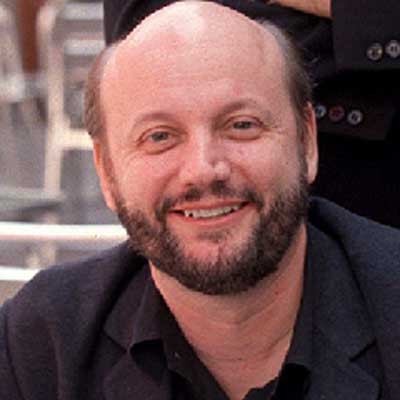
Juan José Campanella and Allison Amend both appeared on The Bat Segundo Show #331.

Mr. Campanella is most recently the co-writer and director of The Secret in Their Eyes, which won the Academy Award for Best Foreign Film and opens in theaters on April 16, 2010.

Ms. Amend is most recently the author of Stations West and previously appeared on The Bat Segundo Show #256.
Condition of Mr. Segundo: Searching for Old West secrets in various eyes.

Guests: Juan José Campanella and Allison Amend

Subjects Discussed: Devising a stadium shot that’s a hybrid between Touch of Evil and Black Sunday, stitching shots together through CGI, using Massive Software, contending with how details change between 1974 and 2010, expressive focal lengths, lava lamps that isn’t replaced over decades, hippie actors who are ideal to play authoritarian judges, piles and piles of paper, the myth of the paperless office, creating a train station through CGI, the steps you need to take to ensure that fake walls aren’t seen by daytime courthouse workers, sports statistics, working with novelist Eduardo Sacheri, why novelists are especially suited to screenplay collaboration, philosophical questions about one man having a singular passion, the best way to look for someone who has disappeared, Campanella’s non-cinematic passions, the tormented eight year creative process of turning a story into a novel, how one does the “find an agent dance,” true sex vs. sexy sex, the role of women in early patriarchal America, questions of “commercial appeal,” prejudice against women in the publishing industry, the Stephen Crane principle of writing about what you don’t experience, anonymous peer reviews of novels at university presses, believability and research, Pullman cars, getting accustomed to thinking about a world without present technology, requirements it takes to be a train enthusiast, Stations West‘s early version as a “Forrest Gump novel,” Harvey House restaurants, internal rhyme, Zima, overwriting, pesky adjectives and adverbs, comparative measurements, eugenics and multiculturalism, Lamarckian descriptions and the American melting pot, Pinckney Benedict, historical precedent with character names, mythical bureaucratic forms, delving too much into census records, getting accurate historical dialogue, talking a ton, the strategy of removed narrators, The Jews of Oklahoma, violence and death, unexpected deaths in history and narrative, train accidents, the glee of killing animals in fiction, and the role of the misunderstood in history.

EXCERPTS FROM SHOW:
Correspondent: The wonderful marvelous stadium shot that’s in the middle of this movie — it’s a hybrid of Black Sunday and Touch of Evil.

Campanella: Yes, exactly.

Correspondent: The question. I mean, obviously, I would love to ask you how you did this. But I’m also really curious how you got all these people in the stadium. I mean, I don’t know what your budgetary scenario was.

Campanella: Well, the budget was very low. As you know, it’s a national Argentine movie. So we don’t have millions of dollars to do it. And we did it with the help of a few buttons and chips and stuff.

Correspondent: Aha! The wonderful CGI.

Campanella: Some of it is CGI. Some of it is real. You never know what is what. Because we interspersed it. So it wouldn’t look like a PlayStation game. But also, you know, most of the work was done not in populating the stadium, but in stitching the shots together. To make it look like one continuous take and to make you feel like we were throwing you from a helicopter into the bleachers, and then chasing the guy together with our heroes.

Correspondent: So the actual crowd. How many extras was that?

Campanella: About 300.

Correspondent: And you just basically composited over and over again.

Campanella: Well, no, it’s more involved with that. Because for the regular composition shot — we call it compleción in Spanish — you need to have the camera locked. And the camera’s moving here all the time. It’s a handheld shot with a lot of crazy movement. We’re actually in an avalanche of people at one point. Trying to keep ourselves standing. So no, no, you cannot do the compleción trick. No, it involves the Massive software. It’s called Massive. It was developed for Lord of the Rings. It’s a very involved work. It’s a very crafty work. That’s another thing. People think that if you get the software, you can do it. And it’s not like that. This is the same thing as if I give you a brush and oil paint, and you paint the Mona Lisa. It’s not like that. You need real artists to pull it off.

Correspondent: Got it. It’s not just a bunch of monkey typing Shakespeare. A million monkeys.

Campanella: (laughs) Exactly.

* * *

Correspondent: You clearly did not settle into the Old West or can foods or run a store.

Amend: No.

Correspondent: At least not to my knowledge.

Amend: I did work at a hot dog stand once.

Correspondent: I’m curious how much invention went into this and how much you were concerned about getting verisimilitude with this. The 80 year epoch that you explore.

Amend: I was originally not particularly concerned with either of those things. I had to do a lot of research just to know even what I was dealing with. And then I went randomly to hear E.L. Doctorow speak. The king of setting books in historical settings. And he said, “Oh, you don’t do research. Just make it up. You’ve seen enough TV and watched enough movies. You’ll probably get it right. And if not, someone will tell you.” Which is easy for him to say. Because he has seven paid research assistants. But that was really liberating. And I thought, “You know, I have seen enough old Westerns. And I’ve been to Oklahoma. I’ll just write the book.” And the truth is that there’s no plot twist that hinges on an invention that hadn’t been invented yet. Everything is changeable.

And for a while there in the middle, I was working with the University of Oklahoma Press. And they had it read by a historian of Oklahoma, who tore the book to shreds. He’s like, “Well, I couldn’t get past Page 5. Because the author says the landscape is very arid. And that part of Oklahoma is actually very lush.” Therefore this book can’t be considered as a legitimate work. And I said, “Okay, cross out ‘arid.’ Insert the word ‘lush.'” It doesn’t change the character development.

Correspondent: Who is this guy?

Amend: He was anonymous. Because he was a peer reviewer. Which is part of the problem with university presses.

Correspondent: I noticed that there was a reference to him in the acknowledgments.

Amend: Yes. That’s actually not him. That was a very wonderful editor who subsequently died of stomach cancer. Which is very sad. But the reviewer in question was known as “Mr. Grouchy Pants.” And I do not know who he is. And if he’s hearing this interview, I changed “arid” to “lush.” Most easy.

Correspondent: Did he set up an anonymous email account? Did he telephone you?

Amend: Oh no. It was like a five page report that he sent to the editor, who then forwarded it to me.

Correspondent: With mysterious initials at the end?

Amend: Yeah, I know.

Correspondent: Wow. That’s how they do things over there.

Amend: Yeah. Well, you know, it was a university press. So the procedure there is that everything goes through a peer review. Which makes a lot of sense if you’re publishing a textbook or a piece of scholarship. Less sense…

Correspondent: (laughs) …if you’re publishing a novel.

Amend: If you’re publishing fiction.

Correspondent: Wow.

Amend: Yeah. But they could not seem to get beyond that step.

Correspondent: This is probably the craziest editing process that you’ve gone through, I would guess.

Amend: Oh. For sure. Although my path through the publishing world has been non-traditional. Let’s put it that way.

Correspondent: I mean, I can’t even imagine working with an editor who’s speaking behind — like Charlie’s Angels or something.

Amend: Yeah, it really was. Like a box on the wall.

Correspondent: Behind the red door.

The Bat Segundo Show #331: Juan Jose Campanella & Allison Amend II(Download MP3)

This text will be replaced

Review: Clash of the Titans (2010)

Even as a lad, I was not a fan of the 1981 version of Clash of the Titans. A grade school teacher, detecting some faint whiff of precocity, suggested that I needed to investigate Roman mythology. Not wishing to disappoint her, I checked out a 200-page book on Roman mythology from the school library. It contained striking illustrations and offered a kid-friendly overview of the gods. I spent several days alone in my bedroom, reading it over and over with more devotion than any variation on the King James Bible. Some of my mother’s wild-eyed friends, sensing that I was an uncommon reader, attempted to get me to read more ecumenical texts. But I was suspicious of these gestures. I didn’t understand then why one needed to choose a religion. If you had to select one, why not place your faith in these marvelous stories? Medusa! Cerberus! Narcissus! Prometheus! The tragedy of Orpheus and Eurydice! These tales all captured my imagination so much that I found myself flipping through the Yellow Pages, wondering if there were any churches devoted to Zeus or Aphrodite.

Seeing no division for “Roman” or “Greek,” I nervously telephoned a few churches when my mother was away, asking where one could go to worship the gods. One man told me that surely I meant a singular one. “No, no, no,” I replied. “I’m talking about the Gods of Olympus!” There were efforts to steer me towards the “true” faith, but I proved recalcitrant. I concluded that religion was not for me, but I still begrudgingly went to church when I was asked and I did my best to keep my mouth shut. Although one congregation member would later say, “There’s something of the devil in that boy.” For all I knew, he was probably right.

So when the Clash of the Titans lunchboxes started showing up in the cafeteria, and when some of the kids began speaking of this “great” film, and when I continued to wonder about the mechanical bird (who reminded me of Tick Tock from the Oz books), I felt obliged to figure out a way to see this movie. I knew the name “Ray Harryhausen” from the amazing stop-motion effects seen in the Sinbad movies that repeatedly aired on UHF stations. And while the Medusa sequence impressed me, the Perseus depicted in Clash (played by a doe-eyed Harry Hamlin) reminded me of the sleazy and self-absorbed men — some strange phase between disco king and yuppie — who drove loud sportscars when I looked out the car window. This Perseus couldn’t possibly compare to the one I had imagined from the books. What was the big deal?

So it’s safe to say that the original Clash didn’t make much of an impression. And now that I’ve had the misfortune of revisiting the original film, I can safely say that it contains very little of value aside from Harryhausen’s effects. Even with the prominent matte lines and the inconsistent lighting between the animation and the live action, Harryhausen remained a consummate master of the tiny gesture that spelled out everything you needed to know about a creature. The specific way that Pegasus kicks up his forelegs or the manner in which the giant hawk waits for Andromeda’s soul to enter the cage. And, most impressively, the way that the Kraken burrowed his three claws into the rocks and peeked his menacing head over the ravine. This attention to detail made these seemingly one-dimensional characters live in my mind.

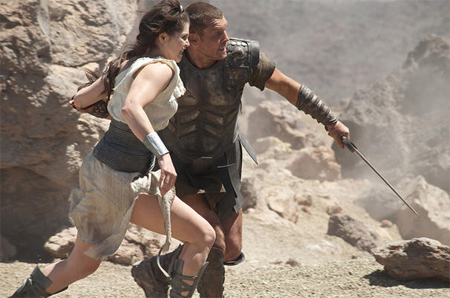
So it is my sad duty to report that the Clash remake, while not nearly as terrible as I expected, doesn’t possess a singular creature gesture to match Harryhausen’s. Gargoyles flap about into a giant mass. There are a few giant scorpions that prove somewhat enthralling. Pegasus, who is referred to not as “Pegasus, the last of the flying horses” (as he was in the original) but merely “the Pegasus” (well, if he isn’t unique, then what’s the big deal?), has been integrated, by way of jet hide, into some strange affirmative action program. It’s clear that the animators are inputting coordinates into a computer. The time for careful attention to monsters is now mostly finished.

Which is too bad. Because Sam Worthington is better as Perseus than that dreadful slab of inexpressive meat (the suitably named Hamlin) cast in the original. While there’s something more than a bit odd about seeing a 33-year-old actor referred to as “boy,” and Worthington appears remiss to show off his pecs in the exhibitionist manner that Hamlin (or director Desmond Davis) was all too eager to practice, Worthington is never insufferable. Alas, his Perseus is less committed to taking charge. He bitches about going back to his old life as a fisherman. He is never given an invisible helmet, as he was in the original, much less a shield from the gods.

Instead of Burgess Meredith, Perseus is accompanied by two mercenaries, who speak some bad dialect that is vaguely Russian and vaguely Slavic, but ultimately the product of lazy Hollywood acting. (When this duo first appears, the film is quick to insert some gypsy music track, as if we won’t notice just how terrible they are. All that money for the effects and the filmmakers couldn’t hire a dialect coach?) Indeed, one of this movie’s curious qualities is that there is no uniform dialect. Some actors speak with an Australian dialect; others, Santa Monica; still others, British. And this slipshod attention to language should give you a sense of where director Lewis Leterrier’s priorities are.

Perseus is constantly under the tutelage of Io (played by the inexpressive Gemma Arterton), who has been watching him all his life. (Never mind that we don’t see her until midway through the film.)

In other words, 2010’s Perseus reflects the vitiated masculinity often found in the insufferable hipster too intoxicated with his own indolence.

But that’s the least of the film’s problems. Given that the original film featured Ursula Andress’s ass and a breastfeeding moment, I was surprised that the remake’s eleventh-hour upgrade to 3-D (reportedly assembled in eight weeks) didn’t take advantage of these Z-axis possibilities. It becomes very clear early on that this movie was never designed with 3-D in mind, and that audiences are being gouged. Clash‘s 3-D “experience” merely involves accentuating planes of focus. One would get livelier surprises from a pop-up book. And the film’s reticence to display blood and visceral fluids (much less the nude form) makes one wonder how this movie landed a PG-13 rating. Yes, there’s a scene in which Perseus cuts his way out of the inside of a computer-generated scorpion. But it all seemed artificial to me. Not just because the film never lets a creature have even ten seconds of camera time to offer some personality, but because we are never given a gesture in which we can believe in the scorpion.

I should probably also mention the remake’s casual misogyny, which comes courtesy of screenwriters Travis Beacham, Phil Hay, and Matt Manfredi. The original film, you may recall, was somewhat careful with the gender balance. There was Thetis’s statue that came alive. Athena and Aphrodite were given some moments. When Perseus declared that he was going to pursue the Stygian witches on his own, Andromeda stood her ground, saying, “No, we will ride with you as far as their shrine. It is a long and perilous journey.” And when Perseus busted out some macho swagger, Andromeda pushed back. Then, with a schmaltzy music cue from Laurence Rosenthal, Andromeda rode forth with her horse, shortly announcing, “We follow the North Star.”

This may not have been much, but at least the women in the original Clash got the chance to engage in a little action. By contrast, the remake has pushed all the goddesses out of the narrative, leaving only Zeus (Liam Nesson) and Hades (Ralph Fiennes) to duke it out with humans as pawns. In the remake, Andromeda doesn’t accompany Perseus on his quest. And it isn’t too long before Io, in a preposterous moment aboard Charon’s ferry, soon becomes little more than a sex object, urging Perseus to “ease your storm.” And it was here that the film lost me. Granted, defenders of this remake (will there be any?) will no doubt respond to my criticisms by pointing out that Io tries to teach Perseus some moves to battle Medusa. But Io never makes any real effort to put Perseus in his place. The film’s anti-women attitude can also be found in the Medusa sequence. Medusa, in the original, was an ass-kicking serpent who fired arrows at Perseus’s comrades. She was a formidable villainess whose omnipresent rattle was enough to command attention. But in the remake, all Medusa does is offer random laughs and slither around her lair. And if that isn’t enough for you, consider the needless explanation for Medusa’s transformation in both films. The original simply mentioned that Aphrodite punished her. The remake offers a description of rape, painting Medusa as a once very beautiful woman. It’s almost as if the filmmakers are suggesting that the bitch had it coming.

So if some kid is coming into this movie, hoping to find some halfway house with which to move onto the likes of Edith Hamilton, then the Clash remake is mostly futile. As my pal Eric Rosenfield was adamant to observe, the film doesn’t even get the mythology right. (Perseus does not marry Andromeda in this movie.) It doesn’t even have the decency to give us Dioskilos, the cool two-headed dog that Perseus’s army fought before Medusa. It does wisely divest itself of Bubo, the mechanical bird from the original, giving it, quite literally, a throwaway cameo. And again, I cannot stress enough how anticlimactic the 3-D is.

I’ve seen movies that are worse. But when you’re dealing with mythological wonder, why settle for less?

New Directors/New Films: Beautiful Darling (2010)

[This is the second in a series of dispatches relating to the New Directors/New Films series, running between March 24, 2010 and April 4, 2010 at MOMA and the Film Society of Lincoln Center.]

“You must always be yourself, no matter what the price.” — Candy Darling’s diary

Candy Darling — born James L. Slattery — was arguably the most intriguing of Andy Warhol’s fearless thespians. She was not only talented enough to dupe The New York Times‘s critical acumen (“this is the first impersonation of a female impersonator I have ever seen,” read one of the Gray Lady’s reviews), but she inspired Lou Reed to write one of his most famous songs and Tennessee William wrote Small Craft Warnings for her. But was Darling, who died of lymphoma at the needlessly young age of 29, truly herself even while charming the thriving New York art scene of the late 1960s and early 1970s?

A fascinating new documentary, Beautiful Darling, produced by Darling’s friend Jeremiah Newton, doesn’t entirely answer this question. But it does offer an invaluable perspective on what it was like to struggle as a transsexual during that time. If the film errs on the side of cautious hagiography, it atones for this understandable partisanship by highlighting some too easily forgotten truths, pointing to certain liberties and folkways now taken for granted. Female impersonation was a dangerous criminal charge during the time, considered an indecent aberration that was doggedly upheld by the police. Drag queens were forced to carry their sartorial bundles during the day and change clandestinely within buildings. The empowering compromise one could get away with, as identified in the film by Agosto Machado, was “a little mascara and a mohair coat.” Triumphant bon vivants would happily shout the name of Gay Street at the intersection of Christopher. New York, now a less tolerant playground for the rich, was then considered, as Fran Lebowitz suggests in the film, “a place for people who couldn’t fit in. People who actually did something that nobody was interested in.” Speed was heavily ingested. Bohos and misfits were often forced to find their meals at parties thrown by the affluently curious, taking home the remains for tomorrow’s lunch.

Darling thrived within this harsh yet permissive climate, attracting a league of potential dates and hanging out in the permissive backroom of Max’s Kansas City, where the squares couldn’t make it past the velvet rope. But the seeds for this twentysomething transformation were sown in Massapequa Park, Long Island, where a young Darling waded through movie magazines, spent an entire day staring at a Kim Novak photo, and endured a nearly soul-crushing wave of isolation. In Beautiful Darling, the diary entries — the words solipsistic but uncompromising — are read by Chloe Sevigny. One harrowing photo that accompanies these narrations, showing a pre-Darling Slattery with a painful look on his face, his arm gripped by his mother, is more than enough to convey a sad backstory. Thankfully, additional details are filled in beyond these primary sources. Aside from the film’s many interviews, which include numerous Factory acolytes and Warhol’s decidedly unnerved former secretary, by Newton’s many interviews in the mid-1970s, conducted after Darling’s death. We learn that Darling’s mother married another man who was anti-gay. An anonymous Long Island acquaintance declares her hatred for Darling, once she saw her adopting her truer identity.

But was Darling’s identity genuine? Or some compromise? The film delicately tiptoes over these questions, but it does point to Warhol’s eventual abandonment of Darling so that he can cash in on the forthcoming yuppie-fueled lucre. He later proved, as one former associate puts it, more interested in selling ads for Interview. Darling declares in her diary, “I’m not a genuine woman. But I’m not interested in genuineness.” Yet Darling was driven to Warhol as a genuine benefactor. The Factory’s obsessiveness with pop culture served as a vital surrogate for Hollywood, even if the remunerative pickings were slim (merely $25 to appear in a Warhol scene). There seemed no other place for Darling to thrive. But she was dogged enough to make this difficult situation work, even after being shunned by Warhol. She proudly boasted that she collected no money and would crash on friends’ couches, sleeping until six or seven at night.

“I must conquer New York or be conquered,” wrote Darling in her diaries. It was a daring ultimatum that seems unthinkable for most artists of her type today. After seeing this film, I wondered what Darling would have made of herself had she lived longer. Would she have been co-opted by marketing forces during the Reagan years? Would she have been shunned further? Darling claimed that she wanted to be loved, but one wonders whether the pop cultural construct and the tolerance would have expired. Beautiful Darling works so well because of the way it quietly reveals the unforgiving characters within alternative culture. If you write off or forget the misunderstood, or you’re too busy designing soup cans or collecting corporate revenue, are you really all that different from a narrow-minded stockbroker?

Review: Cop Out (2010)

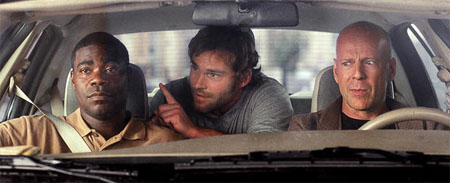
As suggested by Peter Biskind’s Down and Dirty Pictures, Steven Soderbergh initiated his “one for us, one for them” plunge into the Hollywood ocean with 1998’s Out of Sight. Richard Linklater’s occasional dips began with 2003’s School of Rock. Both were perfectly respectable movies, but it wasn’t much of a surprise when these distinctive directors’s later compromises floundered. Now Kevin Smith, a tardy arriviste into the strange club of indie filmmakers turned hired hands, has copped a Hollywood feel with Cop Out, a buddy movie that so desperately wants to be Beverly Hills Cop or Fletch (even composer Harold Faltermeyer has been coaxed out of near-retirement to score this flick), but that squeaks like some by-the-numbers franchise sequel co-directed by Brett Ratner and Abraham Zapruder. Cop Out is a hack movie directed as if it were a home movie, a big shaggy dog that really, really wants to be loved. One feels a bit embarrassed watching Smith attempt to put together a car chase, relying on a routine vehicle spin to win some half-baked sense of excitement. And the film’s firm commitment to choppy amateurism is equally evident in the sloppy attention to detail. There’s one scene where, in a stunning display of shoddy script supervision, a slice of pizza disappears from Kevin Pollack’s right hand. In a later shootout, there’s a lazy nod to John Woo’s double-fisted gunning. The visual palette is, as expected, little more than static shots and long takes, with half-hearted efforts at a TV-friendly color scheme. A primitive amber aura for a restaurant showdown. Willis backlit by blue in a bar. These are a student filmmaker’s templates. With eight feature films under his belt, the fair pass that Smith has received for this type of shoddy camerawork must end. It doesn’t help that Smith has this tendency to film his actors with all that dead space at the top of the frame, as if these characters are awaiting some comic book caption or the audience is enduring some bumbling community theater production.

On the other hand, if the Hollywood hostlers give you a cliche-ridden horse (“These assholes are crazy, brother,” reads one of the unnecessary Spanish subtitles) saddled with dated cultural references (the first ten minutes is a tedious farrago of movie quotes and the film’s later use of “All your base are belong to us” is so 2001), why not direct it like a home movie? Unlike Brett Ratner’s films, one can safely assert that home movies emerge from good intentions. Smith is known for badgering his poor actors into highly specific and highly unnatural line delivery. But Bruce Willis, perhaps because he is too big a star to be prodded by an unambitious filmmaker, plays a very good straight man. He reacts to the anarchy around him with John McClane-like head cocks and James Cole-like introspection. Tracy Morgan, whom I’ve long suspected is more than the loudmouth immortalized on 30 Rock and Saturday Night Live, is refreshingly played against type. His character is given numerous opportunities to spout obscure facts and his monologue with a teddy bear nannycam should not work as well as it does. The material is weak, but Morgan thankfully isn’t. Worrying about his wife’s possible infidelities, Morgan momentarily turns a character who might have become a stock wiseacre into a bustling bundle of neuroses. The film is also wise enough to cast the ass-kicking Susie Essman in a small role. Unfortunately, the underrated Seann William Scott, who showed that he was far more than Steve Stifler in the little-seen 2008 film, The Promotion, is given very little to work with.

I can’t say that I hated this movie — certainly not as much as the people around me. But I also can’t say that I loved the movie either. I’m as fond of crass humor and dick jokes as the next guy. And to ensure that I absconded with any lingering pretensions, I took along the thriller novelist Jason Pinter to the screening. But he felt the same way. While there are a few funny moments, there isn’t a single gag in this movie that is as creative or as funny as Axel Foley stuffing hot dogs up a tailpipe. And while Morgan may have energy, despite my praise for what he does with the material (including a funny scene where he insensitively crunches on tortilla chips), he’s simply not given much of a character to work with. Sitting in a hotel room with a sexy woman has only so many variations before the material gets old. And say what you will about 1985’s Fletch, but Chevy Chase owned that role, even if the script wasn’t nearly as good as Gregory McDonald’s books. Willis may anchor this movie with his serious presence, but because Cop Out hasn’t been written to fit Morgan, what should have been a breakout role for him devolves into more of the same. He’s far more interesting than Chris Tucker, but, unfortuantely, thanks to writers Robb Cullen and Mark Cullen, he’s just as forgettable.

Smith, of course, came very close to rebooting Fletch for the big screen, with Jason Lee set to play McDonald’s famous reporter. And the closing credits, just before a scene set in a morgue, grace us with Stephanie Mills’s “Bit by Bit,” the theme song from Michael Ritchie’s 1985 movie. Clearly, Cop Out, a film that more than lives up to its title, must have appealed to Smith as a fun substitute for the aborted Fletch remake. (Indeed, Smith took a reported pay cut to ensure the R rating, although the film flinches from depicting violence and is about as safe as a PG-13 movie.) But if Cop Out is the lackluster result, it appears that audiences may have dodged a bullet.

Review: Happy Tears (2010)

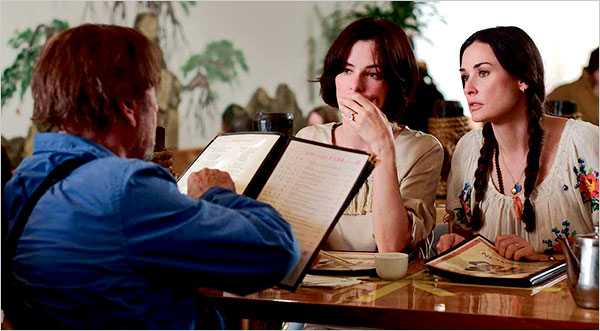
It is difficult to muster much enthusiasm for Mitchell Lichtenstein’s latest film, Happy Tears — in part because Tamara Jenkins gave us the similarly-themed The Savages three years ago, a remarkably moving film about middle-aged scions learning to care for a decaying father — and in part because Lichtenstein strikes me as an insensitive dilettante all too happy to humiliate the talent he has at his disposal. I could very well be wrong, but a gnawing feeling kicked in upon seeing Rip Torn, a talented actor who has had a series of alcohol problems preceding this film’s production period, cast as an alcoholic man climbing into the rough crag of dementia with two near-the-hill daughters. It continued with Ellen Barkin, a talented thespian who, like many aging actresses, has had an army of surgeons carve up her face into something bearing little resemblance to natural physiognomy, cast here as a cartoonish junkie. To a lesser extent, it carried on with Parker Posey, an enjoyable indie film queen whose peppy demeanor has worn a bit thin, who is cast here as a flighty and imbalanced woman wanting to pop a baby with her flighty and imbalanced husband. There’s one point in the film where Lichtenstein is so desperate to pound home this tired character trope that he places a denuded Posey in a cheap-looking CGI aura, the result of drugs, where a voice chants, “Everything turns out for the best.” If that isn’t a desperate deus ex machina originating from an “artist” uninterested or incapable of examining human behavior, then I don’t know what is.

But I’m straying a bit from my point. Torn, Barkin, and Posey were certainly complicit in taking these roles. Still, from an ethical standpoint, it seems to me that a writer-director, working in an occupation that involves protecting the actors, bears a sizable responsibility for ensuring that his cast is given the best opportunities to demonstrate why we marvel at them in the first place. If a director has any decency, he will be aware of where an actor is presently situated in the careerist food chain and will do his damnedest to accommodate. Even Quentin Tarantino, doped up as he is on too many movies, has sought second chances for his overlooked actors. No such luck with Lichtenstein. Judging by the needlessly glossy press booklet I received from the amicable publicist, and from Lichtenstein’s ability to nab Demi Moore for this film, I’m guessing that Lichtenstein made this movie shortly after running into a bit of money from his father’s comic book painting magic. Again, I could be wrong. But I was so underwhelmed by this film that I’m too lazy to Google it. Still, let’s go with it. If Happy Tears (rather than A Single Man) is the result of such lavish self-financing, then perhaps the presentation of connective failings isn’t always compatible with the unfettered expansion of purse strings.

There’s a plotline in this film involving Torn’s character hiding some buried treasure somewhere in his Pittsburgh backyard. One gets the strong sense that this reflected Lichtenstein’s muddled creative process. When Posey’s character divests the family home of furniture, instead of being drawn into the film, I envisioned Lichtenstein tapping away at the keyboard, wondering how he could squeeze some life out of this minimalist situation (and failing). The characters are given cardboard-thin domestic situations with which to mutter predictable lines. Lacking the ability to make these characters pop, Lichtenstein tosses in random backstory (both daughters stripped at one point; dad slept around) that is presumably intended to shock, but that draws additional attention to how one-dimensional these characters are. He can’t even capture Alleghany County very well. He throws his characters in flat-looking Chinese restaurants, but lacks the contrapuntal ability to extend his visuals beyond the mundane. This seems counter-intuitive, seeing as how Lichtenstein wants to make a greater point about what it takes to move forward and stay relatively sanguine when you regularly have to clean up your father’s shit (quite literally). Altman would have made something of this. But Lichtenstein, despite appearing as one of the fresh Vietnam recruits in Streamers, is no Altman. I don’t even know if he’s even a real filmmaker.