The Strange Career of Jim Crow (Modern Library Nonfiction #70)

(This is the thirty-first entry in The Modern Library Nonfiction Challenge, an ambitious project to read and write about the Modern Library Nonfiction books from #100 to #1. There is also The Modern Library Reading Challenge, a fiction-based counterpart to this list. Previous entry: The Rise of the West.)

All historical reconsiderations have to start somewhere. And before C. Vann Woodward combed fastidiously through newspapers to change our perception of Jim Crow, he had to unseat a formidable (and wrongheaded) standard.

In 1941, a journalist by the name of W.J. Cash published a strange book called The Mind of the South and then hanged himself. This volume, aloof and offensive by 2020s standards, nevertheless reflected a good faith effort to attempt to document the Southern region of America: namely, the strains of thought and sensibilities that contributed to its distinctive character.

The problem was that Cash, more seduced by the filigree of writing in the assumed voice of a racist Southern white man rather than offering a coherent, inclusive, and well-sourced anthropological breakdown, was keen on wrapping the unruly region in a mighty blanket of generalizations. Cash believed that the South had no mind, was driven by a romantic instinct boxed into an inflexible historical continuity, and that this was all largely fueled by hedonism and paralogia. This is obviously extremely inaccurate when one considers, oh say, the birth of the blues, the fiction of Jesmyn Ward, Zora Neale Hurston, and William Faulkner, the fact that you will find some of the world’s best gumbo in Louisiana, or, even more importantly, the evolution of civil rights. Cash conveniently elided a great deal of the odious imperialism that jumpstarted the Civil War and, perhaps most criminally, he glossed over slavery (“a vastly wasteful system,” focusing on “the white victims of slavery” rather than Black people, lip service to the aristocrats occasionally huffing about “moral indefensibility,” et al.).

While Mind serves up occasionally smart insights into farmers and class loyalty, it is a largely unsatisfactory volume when it comes to the class and race divides. It is a bit too pat and conveniently poetic for Cash to say that the dominant mood of the South was “one of well-nigh drunken reverie — of a hush that seems all the deeper for the far-away mourning of the hounds and the far-away crying of the does” (and I could quote more from this ridiculously prolix passage, but you get the picture).

Cash’s most unpardonable characterization of the South is his failure to consider the origins and nuances of systemic racism. Black people are nigh invisible through large sections of the book. Yet his highly flawed study became the textbook tendance for postwar intellectuals because there were few other Mencken-endorsed volumes measuring up Southern identity at the time.

* * *

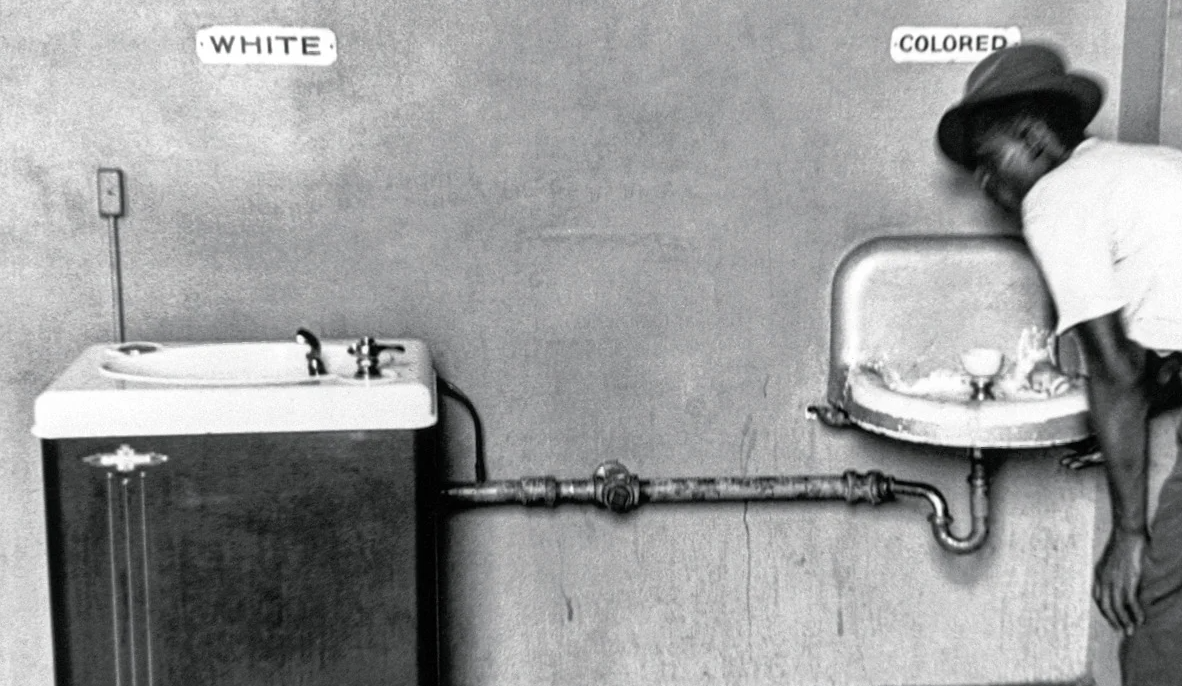
That’s when C. Vann Woodward — a Southern historian who had established himself as an expert on naval history and who quietly wrote recommendation letters for more Blacks to be appointed into academic positions — entered the picture with his excellent volume The Strange Career of Jim Crow. He introduced a vital thesis that was to challenge understanding of racial integration in a deeply important way: In the immediate decades after the Civil War, there were natural moments of social inclusion in which Blacks and whites lived and intermingled together. But these vital steps forward were completely overturned by a group of 19th century white supremacist “influencers” turned lawmakers who ensured that the evils of Jim Crow, which separated public facilities by race, were on most of the state law books south of the Mason-Dixon line and enforced by sinister men perhaps best epitomized by the likes of Bull Connor unleashing German Shepherds upon Black protesters in 1963.

It’s extremely important to understand that there were moments in the 19th century’s waning years in which Jim Crow legislation (which actually originated in the North) was mocked and ridiculed in major Southern cities. One can, in fact, make a persuasive argument that Southerners, in some cases, were willing to put aside their bigotry. Prior to Woodward, the dominant view held by historians was that racial segregation emerged rapidly as Reconstruction began to implode. But a close examination of the sources dredged up by Woodward reveals that his thesis of racial integration emerging in unanticipated spots, which was by no means Panglossian and certainly didn’t erase the repugnant racial violence of that postbellum epoch, holds up in 2026.
* * *

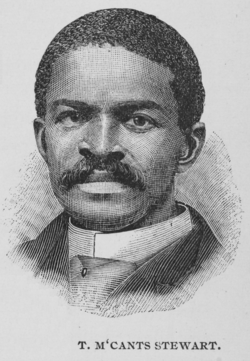
Woodward observed that, as late as 1885, T. McCants Stewart, a Black lawyer and journalist and a close friend of Booker T. Washington, journeyed to his homestate of South Carolina to see how life was shaking out after not stepping foot there for ten years. (Stewart’s extraordinary reporting, published on April 18, 1885 and April 25, 1885 and titled “Rambles in the South,” can be read in its entirety at the Library of Congress.) As he was traveling by rail, Stewart discovered much to his surprise that the car was full and white people were sitting on their luggage and he had a seat. But he was not asked by the conductor to give it up. If anything, the conductor had been gentle and courteous to Stewart when requesting him to move his luggage to accommodate a white passenger. He sat in a dining car in the same room as whites.

Perhaps most remarkably, Stewart said that he actually experienced more racism in Wilmington, Delaware than he did in Virginia and South Carolina. Indeed, white Southerners — in 1885 — made small talk with him. Stewart wrote (and this is not quoted by Woodward): “In the South it is no unusual thing for a man to ask the distance to the next point, to borrow your paper, to remark about the weather, to enter into conversation.” Stewart further remarked, “I feel about as safe here as in Providence, R.I. I can ride in first class cars on the railroads and in the streets. I can go into saloons and get refreshments even as in New York. I can stop in and drink a glass of soda and be more politely waited upon than in some parts of New York.”
* * *

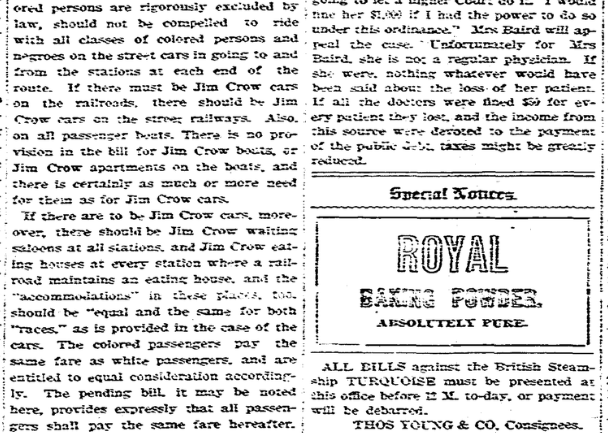
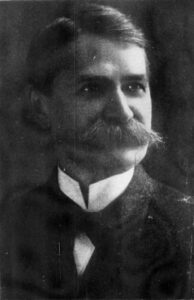
On January 25, 1898, the Charleston News and Courier published an item of devilish satire in response to a Jim Crow law then under consideration by the South Carolina Legislature. Much like people in 2024 never believing that ICE would become a massively budgeted paramilitary force randomly shooting American citizens and kidnapping taxpaying immigrants without due process, it then seemed unthinkable to call for railroad cars to be segregated by race. And so a shit-stirring editor by the name of James C. Hemphill, who had an extremely impressive mustache and who had written many editorials against lynching, had this to say (Woodward quotes some of it, but when I found the entire piece on Newsbank, I couldn’t resist offering more of it):

There should be a Jim Crow section in the jury box, and a separate Jim Crow deck and witness stand in every Court — and a Jim Crow Bible for colored witnesses to kiss. It would be advisable also to have a Jim Crow section in county auditors’ and treasurers’ offices for the accommodation of colored taxpayers. The two races are dreadfully mixed in these offices for weeks every year, especially about Christmas, and just afterward, when the time for making returns and paying taxes, without penalty, is about to expire. The cars are provided with seats, so that everybody can sit down and keep separate from everybody else. It is not so in the county offices. There the crowd stands together in a bench, or is strung out in a waiting and highly variegated line. There should be a Jim Crow “department” for making returns and paying for the privileges and blessings of citizenship.
Unfortunately, the Charleston News and Courier was taken over by a different editor (Robert Lathan, who did not have an amazing mustache or a sense of humanism), where the Jim Crow stance shifted from high 19th century snark to bona-fide xenophobia.

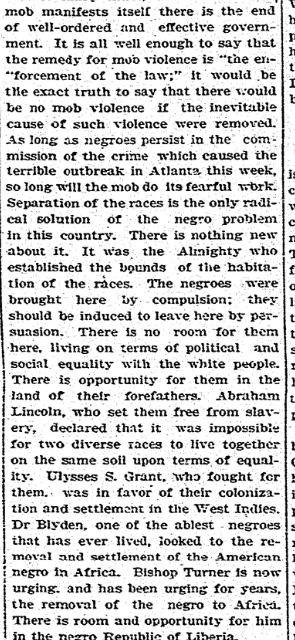
On September 26, 1906, in response to a massacre in Atlanta, one that was as vile and as forgotten as the 1921 Tulsa riots, in which whites murdered dozens of Black people because the Georgia gubernatorial race between then candidates Hoke Smith and Clark Howell stoked racist fears about a Black upper class, the News and Courier blamed racial integration on this:

As long as the negroes [sic] persist in the commission of the crime which caused the terrible outbreak in Atlanta this week, so long will the mob do its fearful work. Separation of the races is the only radical solution of the negro problem in this country. There is nothing new about it. It was the Almighty who established the bounds of the habitation of the races. The negroes were brought here by compulsion; they should be induced to leave here by persuasion. There is no room for them here, living on terms of political and social equality with the white people.

The item also notes that the “problem” “is worse now [1906] than it was ten or twenty years ago.” Never mind that only eight years before, the same newspaper roundly ridiculed any application of Jim Crow laws. But Lathan had no problem leaning into racism, concluding, “[The problem] can be settled effectively only by the separation of the races. The sooner it is settled the better for both races and for the sake of all humanity.” Fortunately, Lathan had the decency to drop dead at the early age of fifty-six before he could blow more racist dog whistles.

Woodward’s salient point still resonates today. Would some of these Jim Crow laws have been abandoned if the people had stood up to the racist lawmakers? Would some of the terrible violence in the aftermath of the Civil War and extending into the 20th century — the East St. Louis riot in 1917, the “Red Summer” of 1919, et al. — have been mitigated? Then and now, it takes only a handful of hateful demagogues delivering repugnant sermons from the mount to make a terrible idea stick.

* * *

Like any pithy historian with his finger firmly on the pulse of institutional ills, Woodward has had a few scholars challenge his thesis. In Bind Us Apart, Nicholas Guyatt observed that some abolitionists in the early 19th century (notably William Short) stumped for racial segregation (what Short called “amalgamation”) because they feared interracial sex. Interracial love could only be tolerated by covertly racist Jacksonian Democrats like President Andrew Johnson if it involved non-whites passing as white. Some ostensible “liberals” even argued that freed slaves should be sent off to Africa. (Lincoln himself was keen on sending freed slaves to Liberia in 1854. He also tendered famously abhorrent remarks against racial inequality in his 1858 debates with Douglas.)

These are all fair and unsettling observations, but it doesn’t entirely overturn Woodward’s thesis, particularly since Guyatt is vague about the timeline in his book. Woodward was explicitly talking about how Jim Crow laws were put onto the books and how this codification galvanized more whites to endorse what they had previously either disregarded or countered with high-caliber badinage, not hypocritical whites who professed to stick up for Blacks even as they simultaneously promoted versions of segregation. Unlike Woodward, Guyatt mentions “segregationist Jim Crow laws that had swept through southern legislatures after the collapse of Reconstruction in 1877,” but never cites the states, the dates these laws were passed, or, perhaps most importantly, the severity of these statutes. Woodward, by contrast, is far from ambiguous about what states did what:

Up to 1900 the only law of this type adopted by the majority of Southern states was that applying to passengers aboard trains. And South Carolina did not adopt that until 1898, North Carolina in 1899, and Virginia, the last, in 1900.

In 1896, Plessy v. Ferguson created the conditions for these “separate but equal” iniquities to flourish at the state level until Brown v. The Board of Education of Topeka overturned this interpretation in 1954, leading to what Woodward fairly describes as a volatile time.

Racism certainly did flourish after the Civil War. But Woodward’s more important point is that laws helped to enable white supremacy — to give Southern racists who were on the fence some terrible ideas about accepting Black people into their regular lives. It’s not unlike the way that Trump emboldened racists with his false claims that Haitian immigrants were “eating cats and dogs” during the September 2024 debate with Kamala Harris. And people, who often long to be law-abiding citizens, are more inclined to believe such racist malarkey, capitulating their natural ability to get along with each other, if an institution or a significant person in power tells them that bigotry is not only okay, but very much something enforced by malevolent legislation. This was why Martin Luther King adamantly declared in Why We Can’t Wait that “one has the moral responsibility to disobey unjust laws.”

But it isn’t just statutes we need to worry about. If there is no accountability for the manner in which well-meaning institutions operate, then these can also become enablers of regressive policy. Historian Eric Foner, in his great and massive volume on Reconstruction, noted that Woodward later observed that postbellum “progress” was, much like most of the Democratic Party in the 2020s, “essentially nonrevolutionary and conservative.”

Foner cited two later Woodward volumes — (1) 1960’s The Burden of Southern History, in which Woodward proposed that a “third war aim” (that is, racial equality) had been practiced by Union soldiers and (2) 1971’s American Counterpoint, in which Woodward retracted this. The Freedmen’s Bureau — a federal agency which existed from 1865 to 1872 to help integrate nearly four million formerly enslaved Blacks and poor whites — became a pale shadow of its lofty intentions. Union General Oliver Howard, in cahoots with President Andrew Johnson, went well out of his way to subvert the radical policy that had initiated the bureau. Howard sought to remove “virtually every subordinate who sought to fulfill the original mission of the Bureau and help the freedmen.”

C. Vann Woodward didn’t confine his studies to how the tyranny of law encouraged racism to triumph over equality and decency. He was also deeply worried about how well-meaning federal agencies become corrupted, neutered of their original purpose. Various editions of The Strange Career of Jim Crow became less optimistic with every new revision. Perhaps this is because a great historian always remembers that, even when he exhumes the vital scholarship revealing a more sophisticated understanding of the past, we are always contending with odious loudmouths in the present manipulating a potentially more humane population to settle for the worst.

(Next Up! Thomas S. Kuhn’s The Structure of Scientific Revolutions!)
Florence Nightingale (Modern Library Nonfiction #74)

(This is the twenty-seventh entry in The Modern Library Nonfiction Challenge, an ambitious project to read and write about the Modern Library Nonfiction books from #100 to #1. There is also The Modern Library Reading Challenge, a fiction-based counterpart to this list. Previous entry: The Great War and Modern Memory.)

Of the four illustrious figures cannonaded in Eminent Victorians, Florence Nightingale somehow evaded the relentless reports of Lytton Strachey’s hard-hitting flintlocks. Strachey, of course, was constitutionally incapable of entirely refraining from his bloodthirsty barbs, yet even he could not find it within himself to stick his dirk into “the delicate maiden of high degree who threw aside the pleasures of a life of ease to succor the afflicted.” Despite this rare backpedaling from an acerbic male tyrant, Nightingale was belittled, demeaned, and vitiated for many decades by do-nothings who lacked her brash initiative and who were dispossessed of the ability to match her bold moves and her indefatigable logistical acumen, which were likely fueled by undiagnosed bipolar disorder.
As someone who has been diagnosed with bipolar, I am inclined to stick up for my fellow aggrieved weirdos. We bipolar types can be quite difficult, but you can’t gainsay our superpowers. A relentlessly productive drive, a magnetism and a magnanimity that bubbles up at our high points, an overwhelming need to help and empathize with others, and a crushing paralysis during depressive spells that often has us fighting the urge to stay in bed. And yet we get up every day anyway, evincing an energy and an eccentric worldview that others sometimes perceive as magical, but that our enemies cherrypick for lulz and fodder — the basis for unfounded character assassin campaigns, if not permanent exile. Hell hath no greater fury than that of aimless and inexplicably heralded mediocrities puffed up on their own prestige and press.

But regular people who aren’t driven by the resentful lilts of petty careerism do get us. And during her life, they got Florence Nightingale. She was flooded with marriage proposals, all of which she rebuffed and not always gently. She was celebrated with great reverence by otherwise foulmouthed soldiers. Yet she also suffered the slings and arrows of bitter schemers who resented her for doing what they could not: obtaining fresh shirts and socks and trays and tables and clocks and soap and any number of now vital items that one can find ubiquitously in any ward, but that were largely invisible in 19th century hospitals and medical military theatres. She had the foresight to study the statistics and the fortitude to work eighteen hour days practicing and demanding reform. And whatever one can say about Nightingale’s mental state, it is nigh impossible to strike at Florence Nightingale without coming across as some hot take vagabond cynically cleaving to some bloodless Weltanschauung that swiftly reveals the superficial mercenary mask of a boorish bargain hunter.

Florence Nightingale nobly and selflessly turned her back from the purse strings of privilege, hearing voices caracoling within her head that urged her to do more. While she was not the only nurse who believed in going to the front lines to improve conditions (the greatly overlooked Mary Seacole, recently portrayed by the wildly gifted and underrated Tina Fabrique in a play, also went to Crimea), it is now pretty much beyond question that she revolutionized nursing and military medicine through her uncommon will and a duty to others in which she sacrificed her own needs (and caused a few early suitors to suffer broken hearts). That she was able to do all this while battling her own demons is a testament to her redoubtable strength. That her allies returned to her, determined to see the best in her even after she was vituperative and difficult, is a tribute to one of humanity’s noblest qualities: putting your ego aside for the greater good.

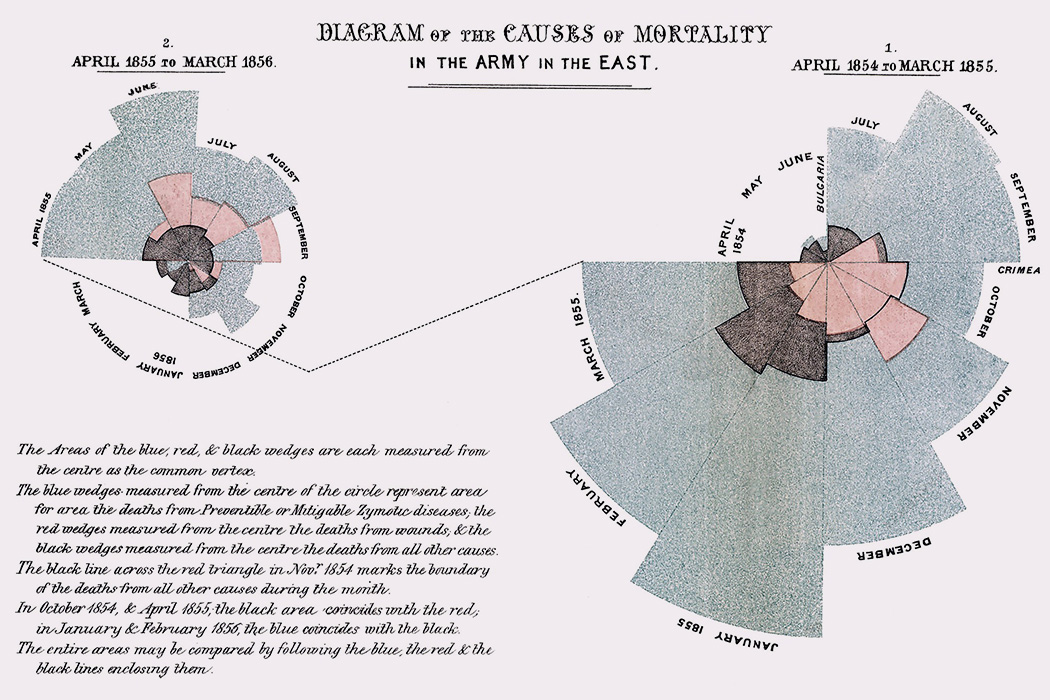
A century before PowerPoint turned 90% of all meetings into meaningless displays of vacuous egotism, Florence Nightingale was quite possibly the first person to use colorful graphical data at great financial expense (see above — it’s beautiful, ain’t it?) to persuade complacent men in power to care for overlooked underlings wounded in war and dying of septic complications in overcrowded and unhygienic hospitals. She was savvy and charismatic enough to win the advocacy of Lord Sidney Herbert, who, despite being a Conservative MP, had the generosity and the foresight to understand the urgent need for Nightingale’s call for revolution. Herbert secured funds. The two became close confidants. Yet poor Herbert suffered a significant erosion in his health and died at the age of fifty because he could not keep up with Nightingale’s demands.

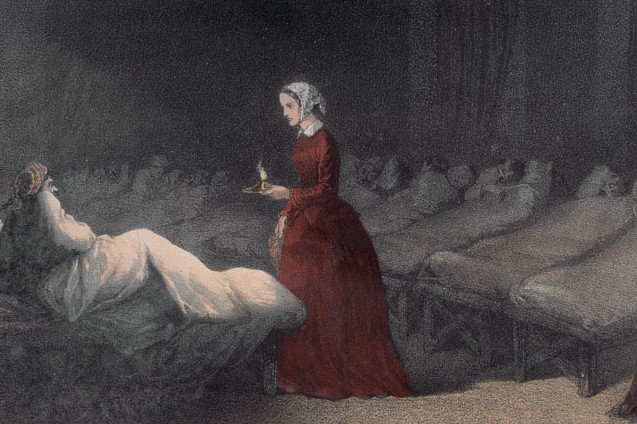
I suspect that men in power resented such noble sacrifices, which could account for why Nightingale was often portrayed as a freak and a deranged outlier in the years immediately following her death. But biographer Cecil Woodham-Smith saw a different and far more complex woman than the haters. Her terrific and mesmerizing and well-researched 1950 biography on Nightingale greatly helped to turn the tide against one of the most astonishing and inspiring women that medicine has ever known. And Woodham-Smith did so not through preordained hagiography, but by taking the time to carefully and properly sift through her papers (and even a well-preserved lock of her bright chestnut hair, still as robust and as lambent as the lamp Nightingale carried in the dark more than a century later). There is a vital lesson here for today’s social media castigators, especially the testosterone-charged troglodytes who casually smear women, that they will likely ignore.

Next Up: Richard Ellmann’s James Joyce!

Audio Drama: “Shadows Have Offended”

We just released “Shadows Have Offended.” This is the seventh and final chapter of our massive epic, “Paths Not Taken,” which takes place from 1994 through 2023 in two parallel universes. This seven part story is part of the second season of The Gray Area. You can follow the overarching story through this episode guide.

This is the most ambitious story we have ever told. It takes place in two parallel universes and follows numerous characters between 1994 and 2023. “Shadows Have Offended” is the seventh chapter of an exciting seven part epic that involves parallel universes, lost love, identity, forgiveness, compassion, fate, fortune tellers, mysterious Englishmen, strange interdimensional creatures named Chester, a wildly exuberant alien fond of hot dogs and Tony Danza, and life choices.

You can listen to the first chapter here, the second chapter here, the third chapter here, the fourth chapter here, the fifth chapter here, and the sixth chapter here.

Here are a number of useful links: (The Gray Area website) (the iTunes feed) (the Libsyn RSS feed) (the Podchaser feed)

For listeners who want to support our show, we have a great deal of behind-the-scenes material available for Season 2 subscribers at grayareapod.podbean.com.

Here’s the synopsis for Chapter Seven:

In the final part of the “Paths” saga, Chelsea and Maya struggle in their forties to keep their relationship alive as they initiate a fateful but necessary Thanksgiving meeting with Maya’s grandfather — a stubborn and “old-fashioned” World War I historian. Meanwhile, the disastrous political trajectory of the parallel universe encroaches upon deeply personal and deeply fatal territory. (Running time: 84 minutes, 55 seconds)

Written, produced, and directed by Edward Champion

CAST:

Chelsea: Katrina Clairvoyant
Maya: Tanja Milojevic
Grandpa: J.K. McCauley
Grandma: Julie Chapin
The DJ: Peter Coleman
Emma: Colette Thomas
Alicia: Elizabeth Rimar
Scarlett: Jessica Cuesta
GPS: Carol Jacobanis
Thomas: Phillip O’Gorman
The Guard: Graham Rowat
Rick: Michael Hisry
The Detective: Phillip Merritt
News Leeches: Pete Lutz, David Nagel, Morgan Corcoran, and Edward Champion
and Zack Glassman as The Receptionist

Additional Voices: Dylan Reed and Christian Caminiti

German Consultant: Vincent Fallow

Sound design, editing, engineering, and mastering by a bald man in Brooklyn who will instantly sing numerous Paul Williams songs if you mention The Phantom of the Paradise to him in person.

The “Paths Not Taken” songs were written and performed by Edward Chmpion

Incidental music licensed through Neosounds and MusicFox.

Thank you for listening!

Behind the Scenes:

View this post on Instagram

Today I recorded one of the most emotionally intense scenes of the second season with J.K. McCauley, a subtly savvy talent who instantly understood that this character was both very real and hyper real. The man had loads of dialogue — dialogue that is among some of the most hardcore I've ever written. And he soldiered on to my great gratitude. (I didn't want to exhaust him!) But his instincts allowed me to see that what I was really doing with this character is renouncing some part of me I don't live with anymore. The hell of it is that J.K. recently returned to acting after a long absence and offered the most eccentric read out of all who auditioned. He was excellent and different and I am so glad I took a chance here. However, I was a bit alarmed by the recognition and, as grueling as it was to unknowingly hold up a mirror to some dark part of me I didn't know I had to contend with, we still had a lot of laughs. Thank you! #acting #audiodrama #darkhalf #character #truth #art

A post shared by Edward Champion (@grayareapod) on

View this post on Instagram

This afternoon, the marvelous Peter Coleman, a really good guy who I had the great pleasure of meeting in an improv class, returned to record new material for The Gray Area. You may recall him as the DJ in "Brand Awareness." I will not divulge how he factors into Season 2. But I will say this: when we recorded last time, I got the sense that Peter, who largely plays comedic roles, had A LOT more range as an actor and that there was a serious part of him that I hoped to gently draw out. So I wrote a scene specifically with this in mind, knowing that Peter could pull it off, in part because he is highly specific about context and line meaning. (And in fact, knowing this, I urged him during our session today to push back against my own view of the story, because I also knew that he would have some interesting interpretation ideas. Sure enough, he did!) The result was an instinctively smart and a very moving performance. I did my best to inject more empathy into Peter's performance and Peter, in turn, graciously called me out on my own motivations. These are the types of collaborations I really, really dig. Because being surprised is how we get closer to making something new and different. I'm thrilled and very honored that Peter has been a part of The Gray Area. Thank you so much, Peter, for fitting me into your busy schedule! #audiodrama #acting #motivation #character #recording #instinct #collaboration

A post shared by Edward Champion (@grayareapod) on

View this post on Instagram

We did it! The incredible @katrinaclairvoyant and I wrapped months of recording this afternoon, finishing up her final scenes in this incredibly epic tale in which she stars. It was, of course, quite necessary to pop open the champagne. There was great joy, a bit of sadness, and, above all, the sense that we had gone through an incredible journey together. I wrote this character with every emotion I had in my heart and Katrina always surprised me every day she came in, finding new angles on this character and always using her instincts to flesh her out further. I cannot conceive of any other actor for this role. My considerable gratitude to Katrina for knocking this out of the park and for her great commitment to this role. This was one of the most incredible and fortuitous artistic collaborations I have had the honor and the pleasure to experience. And I can't wait to see how this comes together. Thank you so much, Katrina! #audiodrama #acting #champagne #character #fun #commitment #real #drama

A post shared by Edward Champion (@grayareapod) on

View this post on Instagram

I just finished a very quick evening session with @mikey_hizy, who squares off against @ogorman.pp in the final scene of the epic Season 2 story! I met Michael through @lit_karaoke (who ALSO said he wanted to be in this, but DIDN'T return my message when I offered him a role — what's the deal, sir? Are you all talk? 🙂 ) and I was immediately impressed with his fine speaking and singing voice. You can learn a lot about an actor by singing karaoke and improvising with him! I had one quick role that I forgot to cast, but then I thought, "Michael! Of course!" Well, Michael was great. He was the first actor to memorize the lines (totally unnecessary for audio drama!). But I steered him towards his instincts and this was very fun. Thanks again, Michael! #audiodrama #acting #audiodrama #character #barbeque #karaoke #voiceover #recording #session #audio

A post shared by Edward Champion (@grayareapod) on

Battle Cry of Freedom (Modern Library Nonfiction #77)

(This is the twenty-fourth entry in The Modern Library Nonfiction Challenge, an ambitious project to read and write about the Modern Library Nonfiction books from #100 to #1. There is also The Modern Library Reading Challenge, a fiction-based counterpart to this list. Previous entry: Why We Can’t Wait.)

In his 1966 essay “The White Man’s Guilt,” James Baldwin — never a man to mince words or to refrain from expressing searing clarity — declared that white Americans were incapable of facing the deep wounds suppurating in the national fabric because of their refusal to acknowledge their complicity in abusive history. Pointing to the repugnant privilege that, even today, hinders many white people from altering their lives, their attitudes, and the baleful bigotry summoned by their nascent advantages, much less their relationships to people of color, Baldwin noted:

For history, as nearly no one seems to know, is not merely something to be read. And it does not refer merely, or even principally, to the past. On the contrary, the great force of history comes from the fact that we carry it within us, are unconsciously controlled by it in many ways, and history is literally present in all that we do. It could scarcely be otherwise, since it is to history that we owe our frames of reference, our identities, and our aspirations.

Fifty-four years after Baldwin, America now finds itself enmired within its most seminal (and long delayed) civil rights movement in decades, awakened from its somnambulistic malaise through the neck-stomping snap of systemic racism casually and ignobly practiced by crooked cops who are afforded impunity rather than significant consequences. The institution of slavery has been replaced by the indignities of racial profiling, income disparity, wanton brutality, constant belittlement, and a crass cabal of Karens who are more than eager to rat out people of color so that they can scarf down their soy milk lattes and avocado toast, rarely deviating from the hideous cues that a culture — one that prioritizes discrimination first and equality last — rewards with all the perfunctory mechanics of a slot machine jackpot.

Thus, one must approach James McPherson’s mighty and incredibly impressive Civil War volume with mindfulness and assiduity. It is not, as Baldwin says, a book that can merely be read — even though it is something of a miracle that McPherson has packed as much detail and as many considerations as he has within more than 900 pages. McPherson’s volume is an invaluable start for anyone hoping to move beyond mere reading, to significantly considering the palpable legacy of how the hideous shadow of white supremacy and belittlement still plagues us in the present. Why does the Confederate flag still fly? Why do imperialist statues — especially monuments that celebrate a failed and racist breakaway coalition of upstart states rightly starved and humiliated and destroyed by Grant and Sherman — still stand? Battle Cry of Freedom beckons us to pay careful attention to the unjust and bestial influences that erupted before the war and that flickered afterwards. It is thankfully not just a compilation of battle summaries — although it does do much to mark the moments in which the North was on the run and geography and weather and lack of supplies often stood in its way. The book pays welcome scrutiny to the underlying environment that inspired the South to secede and required a newly inaugurated Lincoln to call for 75,000 volunteers a little more than a month after he had been sworn in as President and just after the South Carolina militia had attacked Fort Sumter.

* * *

It was technological innovation in the 1840s and the 1850s — the new machines putting out watches and furniture and bolts and damn near anything into the market at a rapid clip previously unseen — that helped sow the seeds of labor unrest. To use the new tools, a worker had to go to a factory rather than operating out of his home. To turn the most profit possible and sustain his venal wealth, the aspiring robber baron had to exploit the worker at subhuman wages. The South was more willing to enslave people. A barbaric racist of that era ranting in a saloon could, much like one of Trump’s acolytes today, point to the dip in the agricultural labor force from 1800 to 1860. In the North, 70% of labor was in agriculture, but this fell to 40%. But in the South, the rate remained steady at 80%. But this, of course, was an artificial win built on the backs of Black lives.

You had increasing territory in the West annexed to the United States and, with this, vivacious crusaders who were feeling bolder about their causes. David Wilmot, a freshman Congressional Representative, saw the Mexican War as an opportunity to lay down a proviso on August 8, 1846. “[N]either slavery nor involuntary servitude shall ever exist in any part of said territory” were the words that Wilmot added to an appropriations bill amendment. Like any politician, Wilmot was interested in settling scores. The Wilmot Proviso was as much the result of long pent-up frustration among a cluster of Northern Democrats who cared more about holding onto power than pushing forward abolition. The proviso kept being reintroduced and the Democratic Party of the time — much of it composed of racists from the South — began to splinter.

Northern Democrats shifted their support from the Wilmot Proviso to an idea known as popular sovereignity, which placed the decision on whether to sustain or abolish slavery into the hands of settlers moving into the new territories. But Wilmot’s more universal abolition approach still had the enthusiastic support of northern Whigs. The Whigs, for those who may not recall, were essentially middle-class conservatives living it large. They represented the alternative to Democrats before the Republican Party was created in 1854. The Whigs emerged from the ashes of the Nullification Crisis of 1832 — which you may recall me getting into when I was tackling Herbert Croly a few years ago. Yes, Andrew Jackson was responsible for (a) destroying the national bank, thus creating an economically volatile environment and (b) creating enough fury for Henry Clay and company to form an anti-Jackson opposition party. What’s most interesting here is that opposing Jackson also meant opposing one of his pet causes: slavery. And, mind you, these were pro-business conservatives who wanted to live the good life. This is a bit like day trading bros dolled up in Brooks Brothers suits suddenly announcing that they want universal healthcare. Politics may make strange bedfellows, but sometimes a searing laser directed at an enemy who has jilted you in the boudoir creates an entirely unexpected bloc.

Many of the “liberals” of that era, especially in the South, were very much in favor of keeping slavery going. (This historical fact has regrettably caused many Republicans to chirp “Party of Lincoln!” in an attempt to excuse the more fascistic and racist overtures that these same smug burghers wallow in today.) Much like Black Lives Matter today and the Occupy Wall Street movement nine years ago, a significant plurality of the Whigs, who resented the fact that their slave-owning presidential candidate Zachary Taylor refused to take a position on the Wilmot Proviso, were able to create a broad coalition at the Free Soil convention of 1848. Slavery then became one of the 1848 presidential election’s major issues.

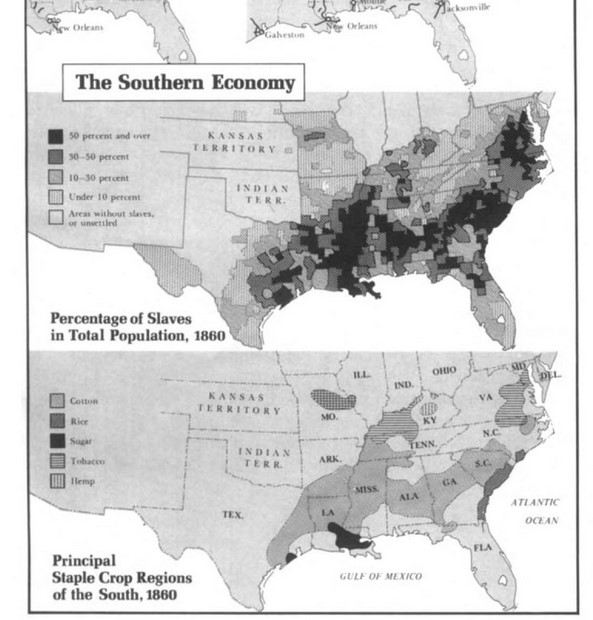
In Battle Cry, McPherson nimbly points to how all of these developments led to a great deal of political unrest that made the Civil War inevitable. Prominent Republican William H. Seward (later Lincoln’s Secretary of State) came out swinging against slavery, claiming that compromise on the issue was impossible. “You cannot roll back the tide of social progress,” he said. The 1854 Kansas-Nebraska Act (authored by Stephen Douglas) repealed the Missouri Compromise, which in turn led to “Bleeding Kansas” — a series of armed and violent struggles over the legality of slavery that carried on for the next seven years. (Curiously, McPheron downplays Daniel Webster’s 1850 turncoat “Seventh of March” speech, which signaled Webster’s willingness to enforce the Fugitive Slave Act and forever altered his base and political career.) And while all this was happening, cotton prices in the South were rising and a dying faction of Southern unionists led the Southern states to increasingly consider secession. The maps of 1860 reveal the inescapable problem:

* * *

The Whigs were crumbling. Enter Lincoln, speaking eloquently on a Peroria stage on October 16, 1854, and representing the future of the newly minted Republican Party:

When the white man governs himself that is self-government; but when he governs himself, and also governs another man, that is more than self-government — that is despotism. If the negro is a man, why then my ancient faith teaches me that “all men are created equal;” and that there can be no moral right in connection with one man’s making a slave of another.

Enter the Know Nothings, a third party filling a niche left by the eroding Whigs and the increasingly splintered Democratic Party. The Know Nothings were arguably the Proud Boys of their time. They ushered in a wave of nationalism and xenophobia that was thoughtfully considered by the Smithsonian‘s Lorraine Boissoneault. What killed the Know Nothings was their failure to take a stand on slavery. You couldn’t afford to stay silent on the issue when the likes of Dred Scott and John Brown were in the newspapers. The Know Nothings further scattered political difference to the winds, giving Lincoln the opportunity to unite numerous strands under the new Republican Party and win the Presidency during the 1860 election, despite not being on the ballot in ten Southern states.

With Lincoln’s win, seven slave states seceded from the union. And the beginnings of the Confederacy began. Historians have been arguing for years over the precise reasons for this disunion. If you’re a bit of a wonk like me, I highly recommend this 2011 panel in which three historians offer entirely different takeaways. McPherson, to his credit, allows the events to unfold and refrains from too much editorializing. Although throughout the book, McPherson does speak from the perspective of the Union.

* * *

As I noted when I tackled John Keegan’s The Face of Battle, one of my failings as an all-encompassing dilettante resides with military history, which I find about as pleasurable to read as sprawling myself naked, sans hat or suntan lotion, upon some burning metal bed on a Brooklyn rooftop during a hot August afternoon — watching tar congeal over my epidermis until I transform into some ugly onyx crust while various spectators, saddled with boredom and the need to make a quick buck, film me with their phones and later email me demands to pay up in Bitcoin, lest my mindless frolicking be publicly uploaded to the Internet and distributed to every pornographic website from here to Helsinki.

That’s definitely laying it on thicker than you need to hear. But it is essential that you understand just how much military history rankles me.

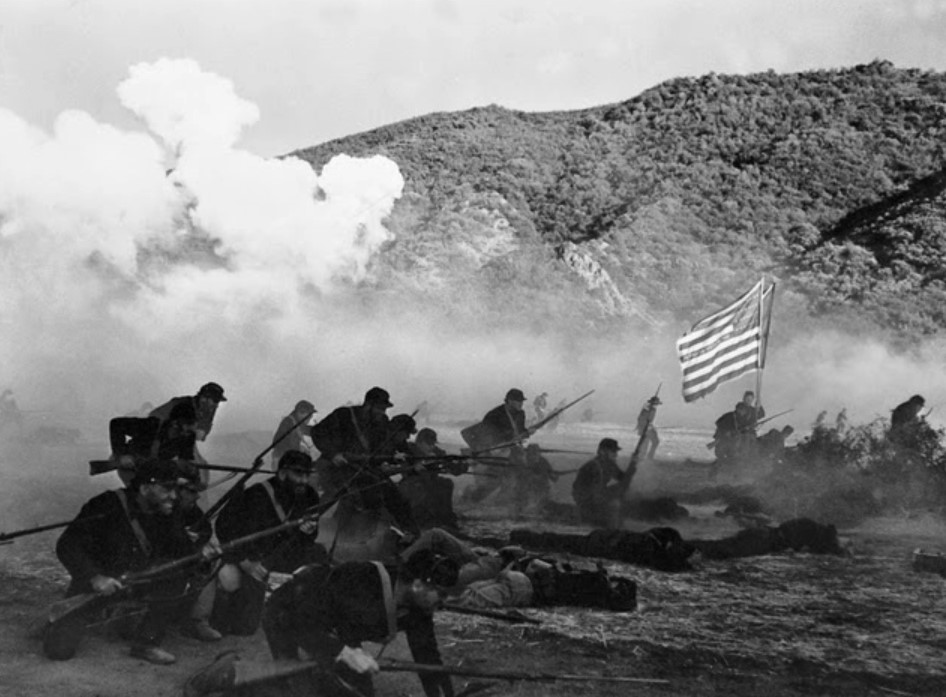
Anyway, despite my great reluctance to don a tricorne of any sort, McPherson’s descriptions of battles (along with the accompanying illustrations) did somehow jolt me out of my aversion and make me care. Little details — such as P.G.T. Beauregard designing a new Confederate battle flag after troops could not distinguish between the Confederate “stars and bars” banner from the Union flag in the fog of battle — helped to clarify the specific innovations brought about by the Civil War. It also had never occurred to me how much the history of ironclad vessels began with the Civil War, thanks in part to the eccentric marine engineer John Ericsson, who designed the famed USS Monitor, designed as a counterpoint to the formidable Confederate vessel Virginia, which had been created to hit the Union blockade at Ronoake Island. What was especially amazing about Ericsson’s ship was that it was built and launched rapidly — without testing. After two hours of fighting, the Monitor finally breached the Virginia‘s hull with a 175-pound shot, operating with barely functioning engines. For whatever reason, McPherson’s vivid description of this sea battle reminded me of the Mutara Nebula battle at the end of Star Trek II: The Wrath of Khan.

But even for all of McPherson’s synthesizing legerdemain, the one serious thing I have to ding him on is his failure to describe the horrors of slavery in any form. Even William L. Shirer in The Rise and Fall of the Third Reich devoted significant passages to depicting what was happening in the Holocaust death camps. Despite my high regard for McPherson’s ability to find just the right events to highlight in the Civil War timeline, and his brilliantly subtle way of depicting the shifting fortunes of the North and the South, can one really accept a volume about the Civil War without a description of slavery? McPherson devotes more time to covering Andersonville’s brutal statistics (prisoner mortality was 29% and so forth) before closing his paragraph with this sentence:

The treatment of prisoners during the Civil War was something that neither side could be proud of.

But what of the treatment of Black people? Why does this not merit so much as a paragraph? McPherson is so good at details — such as emphasizing the fact that Grant’s pleas to have all prisoners exchanged — white and Black — in the cartel actually came a year after negotiations had stopped. He’s good enough to show us how southern historians have perceived events (often questionably). Why then would he shy away from the conditions of slavery?

The other major flaw: Why would McPherson skim over the Battle of Gettysburg in just under twenty pages? This was, after all, the decisive battle of the war. McPherson seems to devote more time, for example, on the Confederate raids in 1862. And while all this is useful to understanding the War, it’s still inexplicable to me.

But these are significant nitpicks for a book that was published in 1988 and that is otherwise a masterpiece. Still, I’m not the only one out here kvetching about this problem. The time has come for a new historian — ideally someone who isn’t a white male — to step up to the challenge and outdo both Ken Burns and James McPherson (and Shelby Foote, who I’ll be getting to when we hit MLNF #15 in perhaps a decade or so) and fully convey the evils and brutality of slavery and why this war both altered American life and exacerbated the problems we are still facing today.

Next Up: Lewis Mumford’s The City in History!

Studies in Iconology (Modern Library Nonfiction #80)

(This is the twenty-first entry in The Modern Library Nonfiction Challenge, an ambitious project to read and write about the Modern Library Nonfiction books from #100 to #1. There is also The Modern Library Reading Challenge, a fiction-based counterpart to this list. Previous entry: The Face of Battle.)

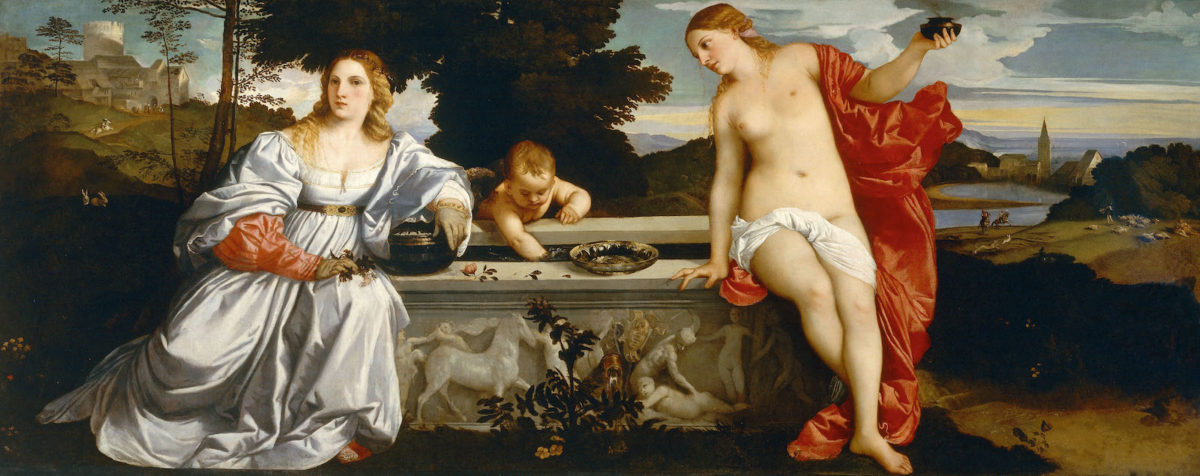
Titian’s Sacred and Profane Love (pictured above) is one of my favorite paintings of the 16th century, in large part because its unquestionable beauty is matched by its bountiful and alluring enigma. We see two versions of love at opposing ends of a fountain — one nearly naked without apology, but still partially clad in a windswept dark salmon pink robe and holding an urn of smoke as she languorously (and rebelliously?) leans on the edge of a fountain; meanwhile the other Love sits in a flowing white gown on the other end, decidedly more dignified, with concealed legs that are somehow stronger and more illustrious than her counterpart, and disguising a bowl that, much like the Kiss Me Deadly box or the Pulp Fiction suitcase, could contain anything.

We know that the Two Loves are meant to coexist because Titian is sly enough to imbue his masterpiece with a sartorial yin-yang. Profane Love matches Sacred with a coiled white cloth twisting around her waist and slipping down her left leg, while Sacred has been tinctured by Profane’s pink with the flowing sleeve on her right arm and the small slipper on her left foot. Meanwhile, Cupid serves as an oblivious and possibly mercenary middleman, his arm and his eyes deeply immersed in the water and seemingly unconcerned with the Two Loves. We see that the backdrops behind both Loves are promisingly bucolic, with happy rabbits suggesting prolific promiscuity and studly horsemen riding their steeds with forelegs in the air, undoubtedly presaging the stertorous activity to commence sometime around the third date.

Sacred’s backdrop involves a castle situated on higher ground, whereas Profane’s is a wider valley with a village, a tableau that gives one more freedom to roam. The equine motif carries further on Sacred’s side with a horse prancing from Sacred to Profane in the marble etching just in front of the fountain, while Profane’s side features equally ripe rapacity, a near Fifty Shades of Grey moment where a muscled Adonis lusts over a plump bottom, hopefully with consensual limits and safewords agreed upon in advance. Titian’s telling takeaway is that you have to accept both the sublime and the salacious when you’re in love: the noble respect and vibrant valor that you unfurl upon your better half with such gestures as smoothing a strand of hair from the face along with the ribald hunger for someone who is simultaneously desirable and who could very well inspire you to stock up on entirely unanticipated items that produce rather pleasurable vibrations.

There are few works of art that are so dedicated to such a dichotomous depiction of something we all long for. And Titian’s painting endures five centuries later because this Italian master was so committed to minute details that, rather incredibly, remain quite universal about the human condition.

But what the hell does it all mean? We can peer into the canvas for hours, becoming intoxicated by Titian’s fascinating ambiguities. But might there be more helpful semiotics to better grasp what’s going on? Until I read Panofsky’s Studies in Iconology, I truly had no clue that Titian had been influenced by Bembo’s Asolani or that the Two Loves were a riff on Cesare Ripa’s notion of Eternal Bliss and Transient Bliss, which was one of many efforts by the Neoplatonic movement to wrestle with a human state that occupied two modes of shared existence. Panofsky also helpfully points out that Cupid’s stirring of the fountain water was a representation of love as “a principle of cosmic ‘mixture,’ act[ing] as an intermediary between heaven and earth” and that the fountain can also be looked upon as a revived sarcophagus, meaning that we are also looking at life and love springing from a coffin. And this history added an additional context for me to expand my own quasi-smartypants, recklessly dilletantish, and exuberantly instinctive appreciation of Titian. In investigating iconology, I recalled my 2016 journey into The Golden Bough (ML NF #90), in which Frazer helpfully pointed to the symbolic commonality of myths and rituals throughout multiple cultures and across human history, and, as I examined how various symbolic figures morphed over time, I became quite obsessed with Father Time’s many likenesses (quite usefully unpacked by Waggish‘s David Auerbach).

Any art history student inevitably brushes up against the wise and influential yet somewhat convoluted views of Erwin Panofsky. Depending upon the degree to which the prof resembles Joseph Mengele in his teaching style, there is usually a pedagogical hazing in which the student is presented with “iconology” and “iconography.” The student winces at both words, nearly similar in look and sound, and wonders if the distinction might be better understood after several bong hits and unwise dives into late night snacks, followed by desperate texts to fellow young scholars that usually culminate in more debauchery which strays from understanding the text. Well, I’m going to do my best to explicate the difference right now.

The best way to nail down what iconography entails is to think of a painting purely in terms of its visuals and what each of these elements means. Some obvious examples of iconography in action is the considerable classroom time devoted to interpreting the green light at the end of The Great Gatsby or the endless possibilities contained within the Mona Lisa‘s smile. It is, in short, being that vociferous museum enthusiast pointing at bowls and halos buried in oil and doing his best to impress with his alternately entertaining and infuriating interpretations. All this is, of course, fair game. But Panofsky is calling for us to think bigger and do better.

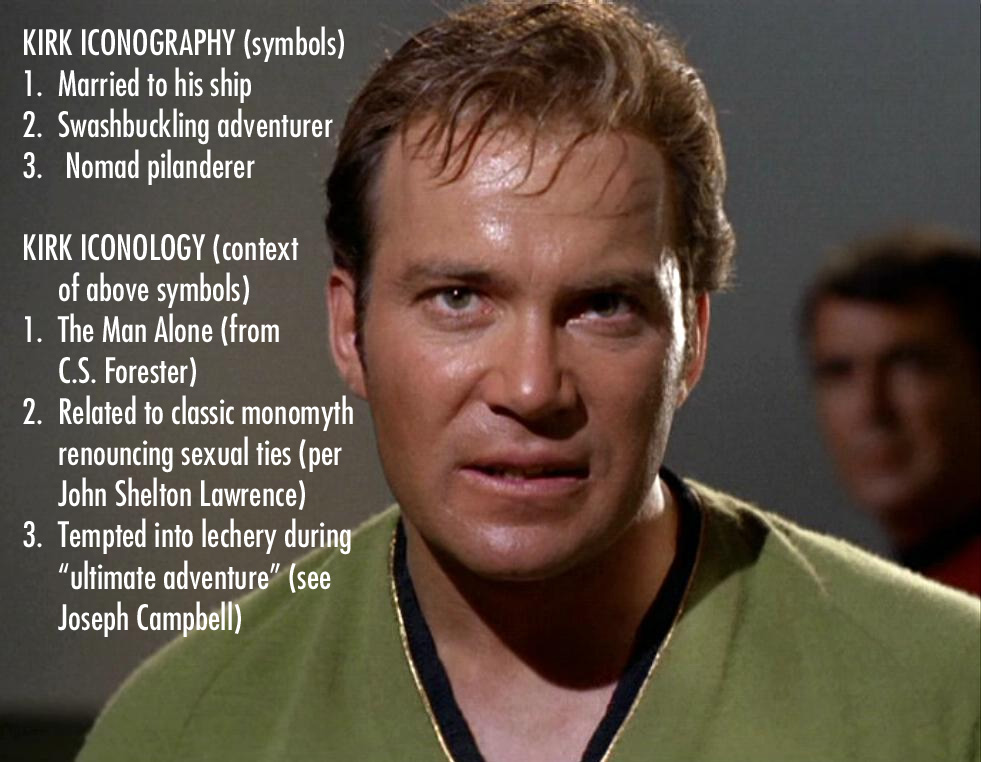
Enter iconology, which is more specifically concerned with the context of this symbolism and the precise technical circumstances and historical influences that created it. Let me illustrate the differences between iconography and iconology using Captain James T. Kirk from Star Trek.

Here are the details everyone knows about Kirk. He is married to his ship. He is a swashbuckling adventurer who gets into numerous fights and is frequently seen in a torn shirt. He is also a nomadic philanderer, known to swipe right and hookup with nearly every alien he encounters. (In the episode “Wink of an Eye,” there is a moment that somehow avoided the censors in which Kirk was seen putting on his boots while Deela brushes her hair.) This is the iconography of Kirk that everyone recognizes.

But when we begin to examine the origins of these underlying iconographic qualities, we begin to see that there is a great deal more than a role popularized by William Shatner through booming vocal delivery, spastic gestures, and an unusual Canadian hubris. When Gene Roddenberry created Star Trek, he perceived Captain Kirk as “Horatio Hornblower in Space.” We know that C.S. Forester, author of the Hornblower novels, was inspired by Admiral Lord Nelson and a number of heroic British authors who fought during the Napoleonic Wars. According to Bryan Perrett’s The Real Hornblower, Forester read three volumes of The Naval Chronicle over and over. But Forester eventually hit upon a trope that he identified as the Man Alone — a solitary individual who relies exclusively on his own resources to solve problems and who carries out his swashbuckling, but who is wedded to this predicament.

Perhaps because the free love movement of the 1960s made the expression of sexuality more open, Captain Kirk was both a Man Alone and a prolific philanderer. But Kirk was fundamentally married to his ship, the Enterprise. In an essay collected in Star Trek as Myth, John Shelton Lawrence ties this all into a classic American monomyth, suggesting that Kirk also represented

…sexual renunciation, a norm that reflects some distinctly religious aversions to intimacy. The protagonist in some mythical sagas must renounce previous sexual ties for the sake of their trials. They must avoid entanglements and temptations that inevitably arise from satyrs, sirens, or Loreleis in the course of their travels…The protagonist may encounter sexual temptation symbolizing ‘that pushing, self-protective, malodorous, carnivorous, lecherous fever which is the very nature of the organic cell,’ as Campbell points out. Yet the ‘ultimate adventure’ is the ‘mystical marriage…of the triumphant hero-soul with the Queen Goddess” of knowledge.

All of a sudden, Captain Kirk has become a lot more interesting! And moments such as Kirk eating the apple in Star Trek II: The Wrath of Khan suddenly make more sense beyond the belabored Project Genesis metaphor. We now see how Roddenberry’s idea of a nomad philanderer and Forester’s notion of the Man Alone actually takes us to a common theme of marriage with the Queen Goddess of the World. One could very well dive into the Kirk/Hornblower archetype at length. But thanks to iconology, we now have enough information here to launch a thoughtful discussion — ideally with each of the participants offering vivacious impersonations of William Shatner — with the assembled brainiacs discussing why the “ultimate adventure” continues to crop up in various cultures and how Star Trek itself was a prominent popularizer of this idea.

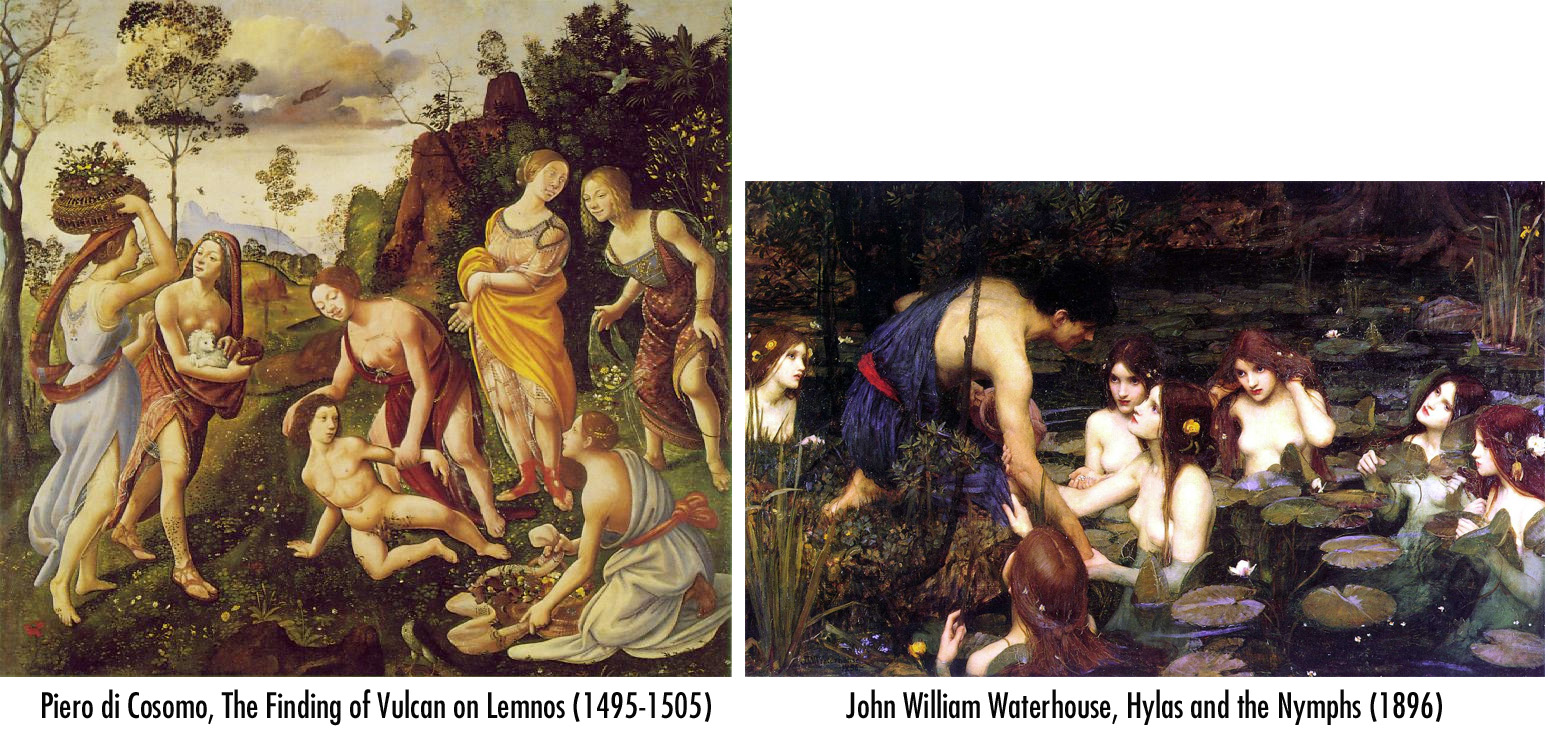
Now that we know what iconology is, we can use it — much as Panofsky does in Studies in Iconology — to understand why Piero di Cosimo was wilder and more imaginative than many of his peers. (And for more on this neglected painter, who was so original that he even inspired a poem from Auden, I recommend Peter Schjeldahl’s 2015 New Yorker essay.) Panofsky points out how Piero’s The Finding of Vulcan on Lemnos (pictured above) differs in the way that it portrays the Hylas myth, whereby Hylas went down to the river Ascunius to fetch some water and was ensnared by the naiads who fell in love with his beauty. (I’ve juxtaposed John William Waterhouse’s Hylas and the Nymphs with Piero so that you can see the differences. For my money, Piero edges out Waterhouse’s blunter version of the tale. But I also chose the Waterhouse painting to protest the Manchester Art Gallery’s passive-aggressive censorship from last year. You can click on the above image to see a larger version of both paintings.) For one thing, Piero’s painting features no vase or vessel. There is also no water or river. The naiads are not seductive charmers at all, but more in the Mean Girls camp. And Hylas himself is quite helpless. (The naiad patting Hylas on the head is almost condescending, which adds a macabre wit to this landlocked riff.) Piero is almost the #metoo version of Hylas to Waterhouse’s more straightforward patriarchal approach. And it’s largely because not only did Piero have a beautifully warped imagination, but he was relying, like many Renaissance painters, upon post-classical commentaries rather than the direct source of the myths themselves. And we are able to see how a slight shift in an artist’s inspiration can produce a sui generis work of art.

Panofsky is on less firm footing when he attempts to apply iconology to sculptures and architecture. His attempts to ramrod Michelangelo into the Neoplatonic school were unpersuasive to me. In analyzing the rough outlines of a monkey just behind two of Michelangelo’s Slaves (the “dying” and the “rebellious” ones) in the Louvre, Panofsky rather simplistically ropes the two slaves into a subhuman class and then attempts to suggest that Ficino’s concept of the Lower Soul — which is a quite sophisticated concept — represents the interpretive smoking gun. This demonstrates the double-edged sword of iconology. It may provide you a highly specific framework for which to reconsider a great work of art, but it can be just as clumsily mistaken for the absolute truth as any lumbering ideology.

Then again, unless you’re an insufferable narcissist who needs to be constantly reminded how “right” you are, it’s never any fun to discuss art and ideas with people who you completely agree with. Panofsky’s impact on art analysis reminds us that iconology is one method of identifying the nitty-gritty and arguing about it profusely and jocularly for hours, if not decades or centuries.

Next Up: Edmund Morris’s The Rise of Theodore Roosevelt!