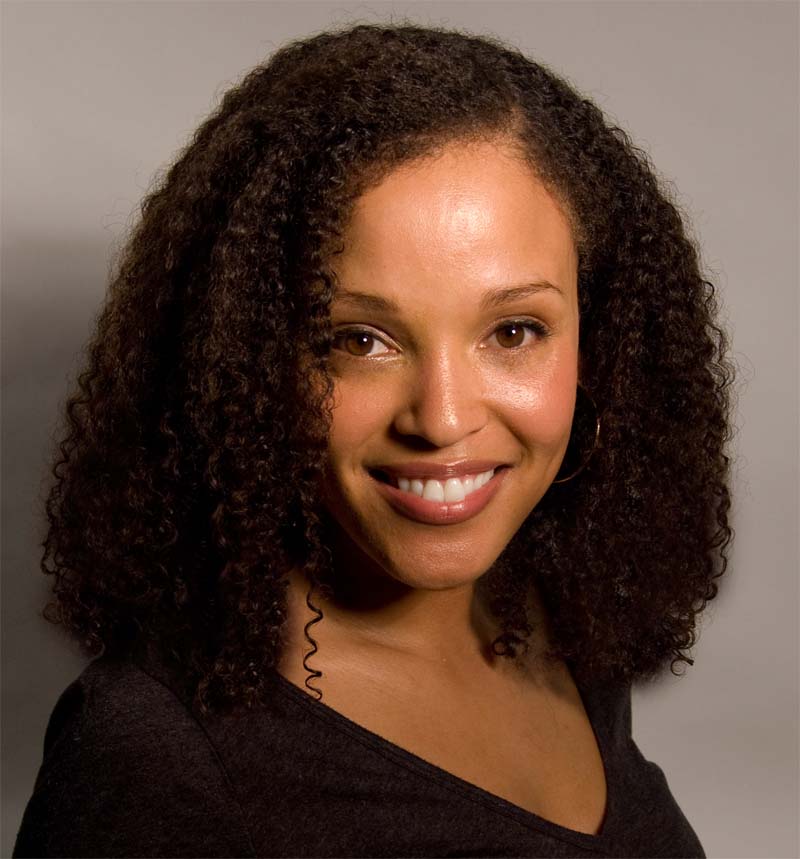
Jesmyn Ward (The Bat Segundo Show)

Jesmyn Ward appeared on The Bat Segundo Show #463. She is most recently the author of Salvage the Bones.

Condition of Mr. Segundo: Testing the limits of his fury towards the Bush family.

Author: Jesmyn Ward

Subjects Discussed: Smoothies, fruit, bad franchises, Edith Hamilton’s Mythology, what it means to be a mother and a woman, Medea, America’s lack of mythology vs. Greek mythology, life within a poor community, Katherine Boo’s Behind the Beautiful Forevers, an author’s responsibility to community, the regional limitations of contemporary American fiction, being made angry by comments relating to Katrina, Pat Robertson, Barbara Bush’s insensitive comments about Katrina, FEMA and Michael Brown, novels of ideas, the physicality of characters, sinewy muscles, stomachs in fiction, close third person vs. first-person perspective, bad models of womanhood in the natural world, language, China as an anagram of chain, words as tokens of physical identity, present stigmas against figurative language, collisional rhythm, Outkast and Deuteronomy, finding an incidental rhythm, when to resist feedback that gets in the way of a natural voice, violence in fiction, creating a ferocious and multidimensional dog in Salvage the Bones, being surprised by the middle, pit bulls, Manny as a conflict generator, the mysterious ghostly mother, Hemingway’s iceberg theory, sexuality and promiscuity, unstoppable emotional forces, not glossing over the truth, describing trees with limbs, paradisaical cesspools, keeping a natural environment alive, and finding the right details to depict impoverishment.

EXCERPT FROM SHOW:

Correspondent: You have Esch reading this Edith Hamilton book, especially Medea. And you also point out near the end that mythology won’t entirely help you out in a fix. Esch says that she is stuck in the middle of the book. And aside from Hamilton, I have to ask, did you draw on any other inspirational mythology when you were creating this book? Was there a point when you abandoned mythology at all like Esch? I wanted to start off here from the origin.

Ward: That’s an interesting question. I didn’t draw from any other mythology. I don’t think. Greek mythology, that was the thing in this book. I think in my first book I did — well, if you consider some of the older tales in the Bible mythology. I drew from some of those in my first book.

Correspondent: Do you consider them mythology?

Ward: Well, they are tales that explain how the world became what it is. So in ways, I think it is. But did I use any other sorts of mythologies in this, in Salvage the Bones? I don’t know. I don’t think that I abandoned it. I think that mythology’s important to her because it’s helping her understand what it means to be a mother and what it means to be a woman. So therefore, like even though she turns away from it, she still can’t help but go before the storm. To come back to that story and read more of Medea. Because see, she’s searching. And in there, she’s found something. She can’t figure out what it is. But she’s found something.

Correspondent: But it’s interesting that you would have her cleave to mythology in America, which is a nation that is constantly in search of its own great mythology. The Great American Novel. We’re Number One. You name it. I’m wondering if this mythological concern was in some sense related to, well, whatever American identity that Esch and her family had.

Ward: Well, I think she feels very much like an outsider. I think that the culture that she is from, that she lives in a small world — you know, a poor black community. I mean, I feel like they think they’re outside of that. They exist outside of that American dream. And so, in ways, they have to look elsewhere. And Esch, particularly, she finds that she is even more isolated than that community that her family is. Because she’s this only girl who grows up in a world full of men. So she really has to look outside what is easily available to her or in front of her in order to find some sort of kinship.

Correspondent: This leads me to wonder. Have you read Katherine Boo’s Behind the Beautiful ForeversWard: No.

Correspondent: Because your book, on a fiction level, reminded me of this great journalism book. Which I think you would love and I’m just in total admiration of. It basically deals with this inner life of the people who are poor, who are collecting trash on the edge of Mumbai. And your book reminded me very much of this response to typical First World guilt or what not. That instead of actually pitying or looking down upon these people, your book is very much about giving all of these characters a great inner life. They do live. And it’s important to remember that they live. And I’m wondering where this impulse came from. Whether this idea of allowing Esch and her family to live was in some sense a way for you to counter any accusations of “Well, I’m responding to politics” and so forth.

Ward: Well, I think that I write about the kind of people that I grew up with, and the kind of people that are in my family and about the place that I’m from. I mean, I’m from a poor rural Southern community that — at least in my part of the community, which is mostly black. And you know, our family’s been there for generations. And I have a very large extended family. I’m related to almost everyone in my town. And so, for me, it’s like writing about the people that I’m writing about — you know, I feel that it’s a responsibility. Because I’m writing about my people. Even though my path is very different from most of the people I grew up with, I still consider myself — you know, that’s still my place. And those are still my people. So for me, that’s what this is. I don’t feel like an outsider. I feel like an insider who’s speaking out for the rest of the people inside my group.

Correspondent: Sure. I totally understand that. Do you think that this is going to be how it’s going to be for your fiction career? That you have to respond to this responsibility of speaking for this group of people? Because nobody else will. Or, in fact, one might argue that maybe American fiction, or regional American fiction, isn’t actually hitting that particular territory. What do you think of this?

Ward: I mean, I think that for the foreseeable future, as far as my writing life is concerned, I intend to write about the place and the people that I come from. Because part of the reason that I do so — I mean, part of the reason that I wanted to write about Katrina is because I was uncomfortable and made angry by the way that I heard others speak about people who didn’t evacuate from the storm. About people who stayed. About poor people who were caught in the maw of that storm. And I wanted to write against that. And so in a way, I do think that the voices of the people that I write about, or even just the people that I write about, that they’ve been absent in the conversation, in the national conversation. And that’s part of what I’m trying to do by writing about them. Introduce their voices into the conversation so that people pay attention and people aren’t so quick to write them off as worthless or stupid or all the other crazy things that I heard after Hurricane Katrina.

Correspondent: Are there specific things that really pissed you off?

Ward: Well, I heard this one woman. She’s from Atlanta too, which is close enough. It’s six hours away from where I live. And she said that the reason that Hurricane Katrina had hit us and done so much damage is because we were sinful. That we were in a sinful place. Like, for her, it was very much about — you know, she was approaching it from a religious standpoint.

Correspondent: The Pat Robertson-like charge.

Ward: Yeah.

Correspondent: “Well, they brought it onto themselves.”

Ward: Yeah. So we deserved it because of our proclivity for gambling and drinking and all the rest. And then other people that I encountered said that, one, they couldn’t understand why people stayed. Why people would stay and try to survive a hurricane like that. And, two, that they didn’t understand why people would return and try to rebuild. Because what’s the point if global warming just means that there are going to be more storms, there are going to be just as powerful as Katrina and more of them are going to hit that part of the United States. And that comment really made me angry. Because that person was from L.A.

Correspondent: Yeah.

Ward: That person was from California, which has its own.

Correspondent: These bicoastal buffoons.

Ward: So I just heard commentary like that. And it just made me really angry. And I wanted to counter those. I really felt that our voices were absent from that. Especially that conversation. You had what’s her name. It’s Bush’s mother. Remember when she said that crazy stuff?

Correspondent: Barbara Bush.

Ward: Yeah. About the people from New Orleans. Like this was like a vacation for them. Because they got to go ahead and stay in the Astrodome. Like really? Are you serious? Just so far removed from the reality of these people’s lives and their struggles. Just so far removed. Comments like that just made me realize how, when people said them, it’s like they didn’t recognize our humanity at all. And that really made me angry, and made me want to address Hurricane Katrina in the book.

Correspondent: Well, this seems as good a time as any to confess to you, Jesmyn, that at the point where they are scrambling for their boiled eggs and their packages of ramen, and there is of course the depiction of the carton of bones in the fridge — and then they say, “Oh, well, FEMA and Red Cross will help us out.” At that point, I thought I had a maximum level of anger towards Bush and Brown. And then I read that. And I became even more furious towards them.

Ward: (laughs)

Correspondent: And you’re talking here about anger. And you’re talking about it in a very calm manner. And this book is extremely focused, I would say. So what did you do to not get so caught up in this understandably furious impulse and actually focus in on the book? Was it really the inner life of these characters that was enough for you to counter any socioeconomic, political responsive bullshit?

Ward: I think so. Because I feel that my book will fail if my characters are not alive on the page. There have been great novels of ideas, right? But, for me, the kind of writer that I am, I can’t write those novels. And I don’t think that they would be successful novels.

Correspondent: Why do you think you can’t write a novel of ideas? Or that the ideas are best represented in the environment that you set down?

Ward: I don’t know. It’s just not my style. What comes naturally to me is telling a story that’s invested in people and in the characters, and making them live on the page.

The Bat Segundo Show #463: Jesmyn Ward (Download MP3)

This text will be replaced

Emily St. John Mandel (The Bat Segundo Show)

Emily St. John Mandel appeared on The Bat Segundo Show #461. She is most recently the author of The Lola Quartet.

Condition of Mr. Segundo: Considering a new career as a sake mangler.

Author: Emily St. John Mandel

Subjects Discussed: Starting a novel from a comic place, Kafka, cornball jokes, never knowing how a book is going to end, Jayson Blair, trusting emotional instincts and finding a fun arena, starting off with a hook, money strapped to a baby carriage, numerous characters who shift their identity, the “mushy middle” problem, switching points of view to hold interest, E.M. Forster’s Aspects of the Novel, writing what you know, the risks of exquisite expertise, uncovering systems (real estate and trafficking), how a novel emerges from what Mandel happens to be reading, The Wire, straying from the path of curiosity, the inevitability of errors in fiction, car culture, A Clockwork Orange, how driving affects urban perception, Guy Debord, walking, finding a concrete narrative schedule out of chaos, disastrous offices, hard-core revision, the freedom of not knowing where you’re going, working out messy sentences, the difficulties of writing about sixteen-year-old girls, learning about people by reading their blogs, being an observer, trying to determine how to make a fake passport for research, not writing about people you know, compulsive behavior, seeking revenge and understanding in fiction, failed newspapermen, the diminished men throughout Mandel’s fiction, getting inside heads, Gina Frangello’s influence on The Lola Quartet, attempts to write characters with a singular identity, introspective writing, avoiding autobiography, memoir in the digital age, Cheryl Strayed’s Wild, Daniele Mastrogiacomo, being abducted by the Taliban vs. First World problems, confessing details to friends, how people forget that their digital details are shared with an audience, safe places to express emotions, Hari Kunzru’s Gods Without Men, Katherine Boo’s Behind the Beautiful Forevers, maintaining privacy and authenticity, Cory Arcangel’s “working on my novel” project, Foursquare, the burdens of party culture, time management, Freedom, characters whose hands shake, depicting behavior in fiction through shorthand description, metaphorical vampirism, heat strokes, intemperate climate, Dark Shadows, inventing a fashion style for an investigator, longing for an older age with more elegance, mutual efforts to introduce “dequirkify” into the English language, the Sasaki name and cultural names, beverage cues in intense social situations, physicality in fiction, trying not to repeat tropes, characters on the run, statute of limitations on mining from personal experience, dance, and what the Internet is for.

EXCERPT FROM SHOW:

Mandel: You know, I make a lot of stuff up. I don’t really feel like I’m an expert in any of these subjects. I’ll read the initial article. It will fascinate me. I’ll read some more online. I’ll follow some links. But I assume I’ve made enormous errors in all three books. Some of them I know about. I found out that there was a real Sebastian, Florida that was in a different part of the state. That was kind of embarrassing, but on the other hand…

Correspondent: It’s fiction!

Mandel: It’s fiction.

Correspondent: It’s fiction. Exactly.

Mandel: Yeah. And there’s a car that doesn’t exist in Last Night in Montreal.

Correspondent: Which car?

Mandel: You know, it’s funny. It shows why you should always Google everything. I had these vivid childhood memories of our family’s first car being in a blue Ford Valiant. And that memory was so strong that I didn’t bother to look it up. It turns out the Valiant is made by Chrysler.

Correspondent: I see.

Mandel: So, you know, eight or ten people have helpfully pointed that out.

Correspondent: On the other hand…

Mandel: It’s fiction. (laughs)

Correspondent: Look, I will always remember the Durango 95 from Anthony Burgess’s A Clockwork Orange. Or rather the cinematic version of it. It just, for whatever reason, leaves a huge thumb out. And it’s possibly more real than any car I’ve driven in my life.

Mandel: Right.

Correspondent: Well, that’s quite interesting. I mean, speaking of cars, I wanted to ask you about the one common metaphor I’ve seen in the last two books. The trail of red taillights. And it pops up in this one again!

Mandel: Oh, does it?

Correspondent: It does.

Mandel: Oh, you’re right. I had taillights disappearing down Park Avenue at the same exact time. I completely forgot about that.

Correspondent: I’m wondering. You know, I was going to ask you about this. Should any writer repeat an image that is fond to her over the course of several books? What do you think about this?

Mandel: I think they probably should. And I think I did that by accident.

Correspondent: Okay. Well, what is it about the taillights that draws you?

Mandel: You know, there’s something beautiful about them. It’s a little wistful. We’re all going away.

Correspondent: Do you own a car?

Mandel: I do not. No, I’ve never learned how to drive.

Correspondent: But cars clearly are an interest of yours, I would think.

Mandel: To some extent. Cars are more — it’s more that they’re a little bit inevitable when you’re writing books that are set outside major cities. You have to move your characters around somehow.

Correspondent: I totally skimmed over the most interesting part. You never learned how to drive.

Mandel: I never did.

Correspondent: Really?

Mandel: No. So in Canada. I’m not sure if it’s the same here. You get your driver’s license at 16.

Correspondent: Yeah. Same here.

Mandel: So when I was sixteen, I didn’t really have access to a car. Because my parents used their cars all the time for their work. And then when I was eighteen, I moved to Toronto. So at that point, I was 3,000 miles away in a major city with a transit system. And I’ve just lived in big cities ever since. So it’s never really been a desire or an opportunity.

Correspondent: It hasn’t been a desire?

Mandel: It hasn’t been a desire.

Correspondent: I mean, I only drive if I have to go from city to city. But going on that road trip and cranking up music and going 90 miles per hour down a highway is a wonderful sensation.

Mandel: Right.

Correspondent: You’re missing out, Emily!

Mandel: But I love being a passenger in those situations. My husband…

Correspondent: Yeah. But driving, you have control. (laughs)

Mandel: That’s an excellent point. Maybe for the next book tour, I should. (laughs)

Correspondent: Okay. Well, that’s interesting. So you have no desire to get behind the wheel. I mean, this must affect your view of cities and your view of places. Do you think?

Mandel: To some extent.

Correspondent: We can go all Guy Debord if you like.

Mandel: Right.

Correspondent: I know you’re a big walker and so forth.

Mandel: I am.

Correspondent: Do you feel that not driving or not having a desire to drive gives you a connection with a place that hard-core driving does not? Have you thought about this?

Mandel: That’s interesting. I haven’t thought about that. You know, I’m not crazy about car culture. I grew up in a very rural place. You needed a car to get anywhere. And I visited a few cities where you needed a car to get anywhere. And it makes your life so inactive in a way. You know, I know a lot of people whose only real activity is going from home to the car and then from the car into the office. And vice versa at the end of the day. And I just prefer to be more — I don’t want to imply that they’re not engaged people in the world. But my preferred form of engagement with the world is doing a lot of walking and being out among people.

Correspondent: And the reading time on the subway too.

Mandel: Yeah. Exactly.

The Bat Segundo Show #461: Emily St. John Mandel (Download MP3)

This text will be replaced

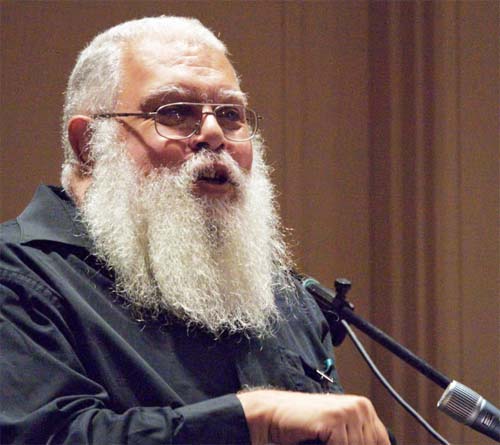
The Bat Segundo Show: Samuel R. Delany

Sameul R. Delany appeared on The Bat Segundo Show #459. He is most recently the author of Through the Valley of the Nest of Spiders.

Condition of Mr. Segundo: Growing a beard to make up for lost time.

Author: Samuel R. Delany

Subjects Discussed: Literary beards, spending the same amount of money on books as food, how many books Delany has read, developing a cataract, Jason Rohrer’s Passage, the structure of Spiders, time moving faster as you get older, Delany’s academic career, the amount of sex contained within Spiders, the male climacteric, how the body changes, About Writing, including a short story in a novel, the original version of Spiders in Black Clock, seven years contained within the first 400 pages, E.M. Forster’s Aspects of the Novel and fleshing out the idea of “writing what you know,” Lear and “runcible,” Times Square Red Times Square Blue, the Dump vs. the Deuce, the pre-1995 porn theaters in Times Square, transplanting New York subcultures to Georgia, the importance of institutional support to a community, gay conservatives, inventing the Kyle Foundation, Goethe’s Elective Affinities, Steven Shaviro’s thoughts on Delany’s intensities, transgressive behavior, connections between The Mad Man and Spiders, pornutopic fantasies, Hogg, when pornotopia sometimes happens in reality, Fifty Shades of Grey, balancing the real and the fantastical in sexual fiction, Delany’s usage of “ass” and “butt,” how dogs have orgasms, making a phone call in the middle of dinner to find out about sexual deviancy, why Shit does a lot of grinning, Freu and infantile sexuality, the paternal thrust to Shit and Eric’s relationship in Spiders, the difficulty of reading Spinoza’s Ethica, whether a philosophical volume can replace the Bible, living a life driven by one book, Hegel, Kant’s Critique of Pure Reason, movies vs. books, interclass conflict, Peter Jackson’s films, how mainstream culture relates to subcultures, Jackson’s original notion of the King Kong remake as Wagnerian ambition, Tristran and Isolde, turning up the idealism dial, whether art can live up to pure ambition, the myth of the wonder decade, living through the 50s and 60s, Freedom Rides, people who are diaphanous to the forces of history, the Beatles, peasant indifference during the Dreyfus affair, the impact of not knowing the cultural canon, nanotechnology, John Dos Passos, fiction which responds to present events, life within California, living in San Francisco, how Market Street has changed, assaults on the homeless in San Francisco, the Matrix I and II programs, the gentrification of the Tenderloin, novels of ideas, whether or not genre labels hold conceptual novels hostage, market conditions that hold ambitious fiction back, Delany’s nine apprentice novels, trunk novels, and editorial compromise.

EXCERPT FROM SHOW:

Correspondent: There’s this video game art project called Passage by Jason Rohrer. Have you heard of this?

Delany: No.

Correspondent: Okay. Because your book reminded me very much of this.

Delany: Really?

Correspondent: I’ll have to forward you the link. Basically, it’s this sidescroller. It’s in a 100 pixel by, I think, 13 pixel window. And you control this person who goes from left to right. From beginning to end of life. And you pick up a partner. In fact, you grow a beard.

Delany: (laughs)

Correspondent: And you die at the end. And it takes the 8-bit sidescroller and it turns it into this unexpectedly poignant moment. If you play it enough times, you can move the cursor down and actually have the figure go into this mire and collect stars, but maybe not have a partner or maybe meet an early demise there. And it absolutely reflects what life is. And I read your book, and I was extremely aware of the physicality. Not just because it was an 800 page book, but because the first 400 pages is basically these escapades of lots of sex, youthful brio, and so forth. And then, suddenly, decades flash by often when we read this. And I’m curious, just to start off here, where did the design of this structure come from? I know you’re very keen on structures. You’ve written about this many times. But how did this come about in Spiders?

Delany: Well, it came from being a person who’s gotten older. I just had my 70th birthday.

Correspondent: Yes. Happy birthday.

Delany: Thank you very much. And one of the things that does happen, and it’s a really interesting phenomena, is that time seems to go a lot faster as you get older. When you were young, time takes forever. You go to the doctor. You wait around for two hours in the doctor’s office. It seems like three months. Whereas I went to the doctor’s office this morning. I went in. And the next thing I knew, I was on my way here. And I’d been there about two and a half hours. And it didn’t seem that any time had passed at all. And I was at the University of Massachusetts between 1988 and 1999, for eleven years. And that seemed much longer than the last twelve years, thirteen years, that I’d been at Temple University, where I’ve been there from 1999 to this year, 2012. And that seems much shorter than the eleven years that I was at UMass. And there’s no way to avoid this. As you get older and older, time just begins to rush by. And I wanted to get this. So actually, the time goes faster and faster through the book. But at a certain point, you realize, “Oh wait a minute! It’s rushing along.” As one of the reviewers said, decades drop out between paragraphs. Well, that’s what happens. That’s how your life kind of goes. So in that sense, the structure of the book is based on the structure of my own experience.

Correspondent: What’s very strange though — I read the book and, actually, I started missing the sex after that 400 page mark. I mean, all of a sudden, wait a minute, they’re not having so much sex anymore. There isn’t all the snot stuff and the pissing and the corprophiia and, of course, the father-son stuff. All of a sudden, we don’t have a lot of that at all. And then you drop some, quite literally, serious bombs later on in the book. And this leads me to ask…

Delany: Well, the sex doesn’t vanish.

Correspondent: Well, of course. It’s there. It keeps going on.

Delany: I mean, the sex is there. But it’s the sex that someone older has. And one of the things that they have to deal with is the fact that your body changes as you get older. And somewhere between 50 and 60, you go through the equivalent of the male climacteric. Which is a very strange thing to go through. Quite as odd…

Correspondent: Oh god. Thanks for warning me.

Delany: Quite as odd as, what is the term for women?

Correspondent: Menopause.

Delany: Menopause, yes. It’s very much like the menopause. And somehow you’re not warned. You aren’t warned how it’s going to change. Everybody notices the body changing. From ten to twenty, there are going to be a lot of changes. But there are going to be just as many changes from twenty to thirty, from thirty to forty, forty to fifty, fifty to sixty. You konw, I’ve been with my partner now, Dennis, for almost twenty-four years. And we still have a sex life. And we’re very fond of one another and very close. But it’s different. Things do change. And that’s one of the things that it’s about. I wanted to explore what the relationship of two men who were notably older was. And so I tried to do that.

Correspondent: You have said also in About Writing, which I’m probably going to be cribbing a lot from for this conversation, that a short story’s not exactly the best thing to include in a novel. And yet this book arose out of a short story that was published in Black Clock. Which leads me back to the original query. How did this thing become structured? How did this take on a life of its own?

Delany: Well, I had to throw away the whole second half of the original short story and rewrite something that flowed into the novel. If you actually compared it, the opening couple of scenes are very similar, although not identical by any means. There were lots of changes all through it. From the very first paragraph. But I wanted to use that as a kind of jumping off point.

Correspondent: Well, that’s one hell of a jumping off point. 800 pages. I mean, why do you think that you were interested in exploring such an expansive format? Why did Eric and Shit demand this sort of attention?

Delany: Well, because I wanted to talk about a lasting relationship between two men. And a very committed relationship. They’re very close to each other. They’re absolutely fixated on one another. I mean, neither one of them could really make it without the other. Which is the tragedy that Eric is faced with at the end. So I just wanted to explore that and see what happened, and deal with all these things. The time speeds up in the first half of the book too. The first 400 pages basically take, what, about seven years. So that’s even years. That’s a good Dickens novel. (laughs) But this is a book that goes on for basically sixty or seventy years.

Correspondent: Yeah. I wanted to also talk about the location. Since my name is Ed, I have to bring up another Ed. E.M. Forster. You have often quoted the advice given in Aspects of the Novel.

Delany: “Write what you know.”

Correspondent: “Write what you know.” But your idea here is to build upon that and say, in addition to writing what you know, it’s very good to keep the writing alive and energetic if you write about something that you’ve only experienced a few times.

Delany: Right. Exactly.

Correspondent: And in this, it’s interesting because it should be evident by your Lear-like use — another Ed — of “runcible” that this Georgia is a fantasy of sorts.

Delany: Yes. It’s a fairytale. The whole book is an 800 page fairytale.

Correspondent: Exactly.

Delany: By which I mean things like Don Quixote. (laughs)

Correspondent: Of course. But my question is: You’re almost writing what you know and you’re writing what you don’t know, or only know a little bit of. Because we have to go to Times Square Red Times Square Blue, which I also read. You write about a man in that named Tommy. He wears a sleeveless denim jacket. Well, there’s a guy with a sleeveless shirt here. And he collected scrap metal. Not unlike this. You look at The Dump. It could also be The Deuce. The Opera House. It could also be the Metropolitan Opera House.

Delany: Easily. Well, it wouldn’t be the Metropolitan. But it could be one of the old porn theaters before ’95. Before New York closed them down.

Correspondent: I guess my question though is: by putting much of these viewpoints that you have raised both in your fiction and your nonfiction to Georgia, to the edge of the earth quite literally, I mean, what does this allow you to do as a fiction writer? How does this allow you to explore a subculture that, say, keeping everything in New York would not?

Delany: Well, one of the things that I wanted to show is that the kind of life that Eric and Morgan — his nickname is Shit.

Correspondent: You can say “Shit” here.

Delany: That Eric and Shit lead — as I said, besides being a fairytale, is also — well, I’m trying to figure out a good way to put this. In some ways, it’s kind of didactic. It’s almost like a Bildungsroman. They have to learn how to live their life. And it can’t be done — and this is, I really feel — and this is one of the reasons why it had to be a fairytale — it needs institutional support. Which is why there has to be the Kyle Foundation and why there has to be a certain support, a certain community support for what they’re doing. And at the same time, they’re very much on the margin of this community. They’re not in the center of this community. So that people like Mr. Potts, for instance. A very conservative man who just doesn’t want his nephew, who has come down to spend the winter with him, associating with these riffraff who use the gay-friendly restroom. Because he doesn’t like the idea of gay men using the restrooms at all.

Correspondent: Where did the Kyle Foundation come from?

Delany: It was purely out of my head.

Correspondent: Really. Because there’s a specific phrasing in their mantra: “an institution dedicated to the betterment of the lives of black gay men and of those of all races and creeds connected to them by elective and non-elective affinities.” And that phrasing recalls any number of Islamic foundations and the like.

Delany: And also the Goethe novel.

Correspondent: Yes!

Delany: Elective Affinities.

Correspondent: So that was really more where it came from?

Delany: It came more from Goethe than it did from Islam.

Correspondent: Sure. Steven Shaviro. He has pointed out that the intensities of your pornography are never presented as transgressive. Now in a disclaimer…

Delany: Although this is pretty transgressive.

Correspondent: Well, of course. I want to talk about this. Because in a disclaimer to The Mad Man, of which we see statues of something that crops up in there appearing in this, you called The Mad Man “a pornotopic fantasy: a set of people, incidents, places, and relations among them that never happened and could not happen for any number of surely self-evident reasons.” Well, there is no such disclaimer for Spiders and we see much of the same stuff, as I said. Piss-drinking, shit-eating, you name it. I’m wondering. How does a pornotopic fantasy — how does one of these, whether it be The Mad Man or Spiders or even the infamous Hogg, how does this help us to understand or come to terms with the realities of sex and what the present limits are? What some people might call deviancy today or perhaps yesterday.

Delany: Well, literature is divided into genres like that. You have the world of comedy, the world of tragedy. And you have the world of pornography. And each of them is a kind of subgenre. And sometimes they can be mixed. You can go from one to the other. And I think pornotopia is the place, as I’ve written about, where the major qualities — the major aspect of pornotopia, it’s a place where any relation, if you put enough pressure on it, can suddenly become sexual. You walk into the reception area of the office and you look at the secretary and the secretary looks at you and the next minute you’re screwing on the desk. That’s pornotopia. Which, every once in a while, actually happens. But it doesn’t happen at the density.

Correspondent: Frequency.

Delany: At the frequency that it happens in pornotopia. In pornotopia, it happens nonstop. And yet some people are able to write about that sort of thing relatively realistically. And some people aren’t. Something like Fifty Shades of Grey is not a very realistic account.

Correspondent: I’m sure you’ve read that by now.

Delany: I’ve read about five pages.

Correspondent: And it was enough for you to throw against the wall?

Delany: No. I didn’t throw it. I just thought it was hysterically funny. But because the writer doesn’t use it to make any real observations on the world that is the case, you know, it’s ho-hum.

Correspondent: How do we hook those moms who were so driven to Fifty Shades of Grey on, say, something like this?

Delany: I don’t think you’re going to. I think the realistic — and there’s a lot that’s relatively realistic about it and there’s also a lot that isn’t. Probably less so in this book than in, let’s say, The Mad Man, which probably has a higher proportion of realism to fantasy.

Correspondent: I also wanted to ask you — what’s interesting is that there is almost a limit to the level of pornography in this. There’s one funeral scene where something is going to happen and they say, “Nuh-uh. You’re not allowed to do that. Show some respect.” And roughly around the 300 page mark, I was very conscious of the fact that you didn’t actually use the word “ass.” And you were always using “butt.” (laughs)

Delany: I didn’t even notice.

Correspondent: And so when “ass” showed up, I was actually shocked by that. So I’m wondering. Does any exploration of sexual behavior, outlandish sexual behavior or sexual behavior that’s outside the norms of what could possibly happen, whether it be frequency or density or what not — does it require limits with which to look at it? With which to see it in purely fantastical terms?

Delany: Well, I think one of the things that you need to write a book, especially a book this long, is you need a certain amount of variety. And I think that this is perhaps a failing. There are only so many things that you can do. I think I give a good sampling of them. But every once in a while, I’m sure it probably gets somewhat repetitious.

Correspondent: Well, it’s a good variety pack. But it’s also: “Okay, reader, you have to get beyond these first 350 pages and then, by then, you are actually able to get into totally unanticipated territory and I’ve already locked you in.” How did you work that out?

Delany: One of the things is that you try and keep telling interesting things about the sex. I mean, things that can be observed about the world that is the case. I mean, I tried to talk about the sex in terms of — I don’t think most people know how a dog has an orgasm.

Correspondent: How do we find this out? (laughs)

Delany: Uh, there’s a wonderful website. (laughs)

Correspondent: (laughs)

(Image: Ed Gaillard)

The Bat Segundo Show #459: Samuel R. Delany (Download MP3)

This text will be replaced

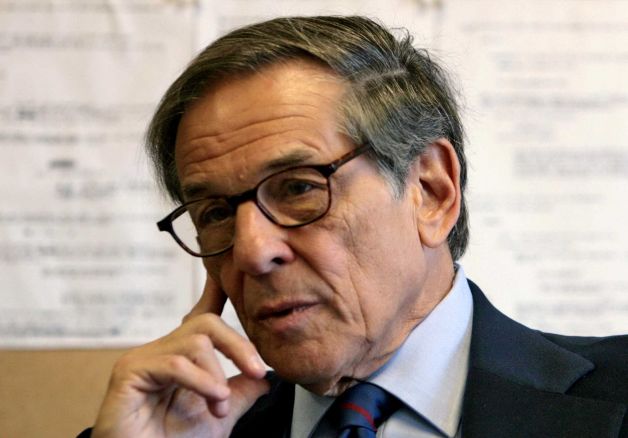
The Bat Segundo Show: Robert A. Caro

Robert A. Caro appeared on The Bat Segundo Show #455. He is most recently the author of The Passage of Power.

Condition of Mr. Segundo: Expressing his determination to keep the forward thrust of America began with notable historians.

Author: Robert A. Caro

Subjects Discussed: Lyndon B. Johnson as a great reader of men, Horace Busby, Johnson talking with people until he got what he wanted, Johnson’s misread of John F. Kennedy, the 1960 Presidential Election and Johnson’s self-sabotage streak in seeking the nomination, Emmett Till and Autherine Lucy, passing the 1957 Civil Rights Act, Jack Kennedy’s use of television, Johnson having his staff calculate the odds of a U.S. President dying in office, “power is where power goes,” Sam Rayburn, Johnson’s mode of desperation vs. Steve Jobs’s “reality distortion field,” Southerners as Presidents, Johnson’s decisiveness in the Senate, John Connally, Johnson’s fear of failure, Sam Houston, Johnson not wanting to be like his father, Johnson’s inability to stare physical reality in the face, smoking and fluctuating weight, challenging Arthur Schlesinger, Johnson being shut out from many of the key Kennedy meetings as Vice President, Johnson’s humiliations, LBJ being reduced to a “salesman for the administration,” the spiteful rivalry between Robert Kennedy and LBJ, character being a defining quality of politics, the importance of vote counting in Washington, Johnson as Senate Majority Leader, Johnson’s preying upon the loneliness of old men, Richard Russell, the Armed Service Committee, Johnson’s manipulation of Russell on civil rights and the Warren Commission, how Southern Senators were duped into believing that Johnson was against civil rights, the phone call in which Johnson forced Russell into the Warren Commission, how Johnson preyed on older men to get what he wanted, Kennedy’s tax bill, how Johnson worked on Harry Byrd, how Johnson dealt with human beings, the impact of personality on policy, Johnson’s terrible treatment of Pierre Salinger, Johnson bullying his subordinates, what Caro found the hardest to write about, triumphs of willpower, Johnson’s involvement with Bobby Baker, the Bobby Baker scandal, the surprising sensitivity with which the media handled Johnson’s corruption after the Kennedy assassination, the Life investigative team on Johnson (as well as Senate investigation), the lowering of the Presidency because of Johnson, some hints about Volume V, and Johnson’s legacy.

EXCERPT FROM SHOW:

Correspondent: You challenge in this book Arthur Schlesigner’s long-standing notion about the relation between Kennedy and Johnson. Now Johnson is in the vice presidential seat. Schelsinger’s idea was that, well, Kennedy was absolutely fond, genial, and generous. The vice president was included in most of the major meetings. And then, of course, we read this chapter “Genuine Warmth” and we find out, well, wait a minute! That’s not always the case. According to Ted Sorenson, Johnson was shut out from a pivotal ExCom decision, a decision meeting relating to the Cuban Missile Crisis. And that also is in large part because Johnson is a bit hawkish to say the least. So my question is: why has the lens of history been so keen to favor the Schlesigner viewpoint? And what was the first key fact that you uncovered that made you say to yourself, “Well, this isn’t exactly true”? What caused you to start prying further and further? That caused you to think, well, things are not all wine and roses.

Caro: Well, you know, part of it was that as soon as you start to look at Johnson and the Kennedys, you hear about the nickname that the Kennedy people called him. “Rufus Cornpone.”

Correspondent: That’s right.

Caro: “Uncle Cornpone.” “Uncle Rufus.” You know, they coined phrases for Lyndon Johnson and Lady Bird. They used to call them “Uncle Cornpone and His Little Pork Chop.” Then you ask someone like Ted Sorensen, who helped me immensely. He was the person probably closest to Kennedy in the administration.

Correspondent: You spent a lot of time with him.

Caro: I spent a lot of time with Ted. And he said, yes, as has previously been said, Johnson was included in all the big meetings, the Cabinet meetings, the National Security meetings. But in the Kennedy government, those weren’t the meetings that mattered. The meetings that mattered were the small little groups that Kennedy would convene. And Johnson wasn’t invited to those. You know, when the 1963 Civil Rights Act is introduced by the Kennedys and Johnson has to say to Ted Sorensen — we happen to have a recording — “You know, I don’t know what’s in this act. I have to read about it in The New York Times.” The greatest legislator possibly of the century, the greatest legislator of the 20th century is not consulted on Kennedy’s legislation.

Correspondent: Why then has the Schlesinger lens been allowed to proliferate for so long? That’s the real question.

Caro: Well, I don’t know that it’s just the Schlesinger lens.

Correspondent: Or this idea.

Caro: I really can’t answer that question. But when you talk to the surviving Kennedy people — like Sorensen — when you read their oral histories, you see it’s simply not true. I mean, Horace Busby talks basically about going to see Sorensen one day and asking, “Well, what role do you want Lyndon Johnson to play in this administration?” And Sorensen says, “Salesman for the administration.” I mean, this is Lyndon Johnson, who is to be the salesman for the administration. Johnson says to an aide, Harry McPherson — you know, they’ve turned the legislative duties over to Larry O’Brien. Johnson says, “You know, O’Brien hasn’t been to see me to ask advice once in two years.” So it’s undeniable that Johnson was shut out from Kennedy’s legislative processes and from the Cuban Missile Crisis — the key meeting of the Cuban Missile Crisis. He’s not invited to it.

Correspondent: I know. It’s really amazing. One of the other great showdowns in this book — the great clash is between Bobby Kennedy and Johnson. I mean, you want to talk about cats and dogs, these two guys were it. You have their first meeting in the Senate cafeteria in 1953 where Kennedy was glowering at Johnson and forced to shake his hand. Then years later, Johnson is Vice President. And he’s largely powerless as we’ve been establishing here. He serves on the Committee on Equal Employment Opportunity. And Bobby Kennedy shows up late, humiliates him over two meetings.

Caro: Yeah.

Correspondent: And then on the Saturday after the Kennedy assassination, there’s this misunderstanding over how the West Wing is going to be cleared out and ready for Johnson. There’s this very tense meeting not long after. But Johnson is in this interesting predicament of having to maintain the Kennedy faction all through Election Day in 1964. Yet he also tests the waters a bit with the Thomas Mann nomination. So my question is: was there any hope of Bobby Kennedy and Johnson putting aside their differences? What factors do you think caused Bobby to acquiesce to Johnson for the good of the nation while Johnson was President?

Caro: Well, he doesn’t always acquiesce.

Correspondent: Sure.

Caro: We see him breaking with him strongly over Vietnam in 1967 and 1968 and running for the nomination. I mean, when Bobby Kennedy enters the race, Lyndon Johnson bows out basically. You know, people don’t understand, in my opinion, enough. And I try to explain in my books how personality, how character, has so much to do with politics and government. And with Robert Kennedy and Lyndon Johnson, whatever the reasons are, at bottom you have this personal hostility. You talked about the first meeting. You know, this first meeting is when Lyndon Johnson is the Leader. He is the mighty Leader. Bobby Kennedy — I think he’s 27. And he’s just gone to work for Senator Joe McCarthy as a staffer. So Joe McCarthy — the Senate cafeteria is on the second floor of the Senate Office Building. And every morning, Johnson goes in there to have breakfast with his aides. And Joe McCarthy is sitting every morning at this big round table near the cashier with four or five or six of his aides, you know. And every time Johnson comes in, McCarthy jumps up as everyone does to Johnson and says, “Hello, Mister Leader. Can I have a few moments of your time, Mr. Leader? Good work yesterday, Mr. Leader.” One morning, there’s a new staffer there. It’s Robert Kennedy. Johnson walked over. Senator McCarthy jumps up. And so, as always, do all his staffers. Except one. Robert Kennedy, his 27-year-old staffer, sits there glaring at Johnson. Johnson knows how to handle situations like this. He holds out his hand to everybody sort of halfway out and forces Bobby Kennedy to stand up and take his hand. And George Reedy said to me — I said, “What was behind that?” George Reedy said, “You know, you ever see two dogs come into a room that never met each other and the hair rises on the back of their neck immediately and there’s a low growl?” That was the relationship between Bobby Kennedy and Lyndon Johnson. Of course, there were other reasons. Robert Kennedy was very attached and devoted to his father, Joseph Kennedy.

Correspondent: Sure.

Caro: And Johnson, who was close to Roosevelt, was always repeating these stories about Roosevelt firing Joe Kennedy, tricking him into coming back to Washington from England, and then firing him. Making him look bad. So I think that Robert Kennedy hated him for that. But it’s not too strong a word to use hatred for what was going on between Bobby Kennedy and Lyndon Johnson. And, you know, at the convention, one of Johnson’s assistants, Bobby Baker, he thinks everything’s just politics. So he’s having breakfast in a coffee shop in Los Angeles at the convention. He sees Bobby Kennedy come in and says, “How about sitting down?” He’s Bobby Baker, sitting with his wife, having breakfast. Bobby Kennedy sits down. But within two minutes, he’s up. And he throws money on the table. And he says to Baker, “Don’t worry. You’ll get yours when the time comes.” Well, the time came. Johnson was Jack Kennedy’s Vice President. Bobby Kennedy has, in effect, power over him. And he makes life miserable for Lyndon Johnson.

Correspondent: What you said at the beginning of this, about character being a defining quality of politics. I mean, Johnson, as you establish in this book and in Master of the Senate, is a master vote counter. He has his tally sheets when he’s in the Senate. He’s going ahead and making sure he knows exactly how things line up. In this book, you point out during the wheat bill that not only does he want enough votes to make the wheat bill [an amendment from Sen. Karl Mundt banning sale of surplus wheat from Russia] die. He wants it murdered, as he says. So the question I have. He may have been a master vote counter. But how much character did he need to go along with that? Was vote counting enough for him? Was that relentless drive just as much of a quality as the sheer statistician approach that he had?

Caro: It was never a sheer statistician, of course.

Correspondent: Of course.

Caro: He was a great legislator. Listen. A key thing in politics is the ability to count. And Johnson was the great counter. He’d send aides to find out how senators were going to vote. So sometimes someone would come back. Usually they didn’t do this more. They said, “I think Senator X is going to vote this way.” Johnson would say, “What good is thinking to me? I need to know.” He never wanted to lose a vote. So vote counting. He was the great vote counter. He’s a young Congressman. He comes to Washington. He’s 29 years old. He falls in with this group of New Dealers, who later become famous. Abe Fortas. Jim Rowe. “Tommy the Cork” Corcoran. These are guys who live and breathe politics. And do you know what they do when they have a dinner party on Saturday night? They get together for dinner. They count votes. They say, “How is Roosevelt’s bill on this going to be?” And Johnson, they said, was always right. We might think this Senator was going to vote this way. Johnson always knew. He was the greatest vote counter. And when he was in the Senate, he was the greatest vote counter of them all. But that’s not all of why Johnson was great. Johnson was this master on the Senate floor. He got through amendments. And there’s the base. And there’s shouting back and forth. He can seize the moment. He sees the moment where he can win. And he acts decisively. He says, “Call the vote.” And he’s Majority Leader. And he would stand there at the Majority Leader’s desk. So he’s towering over everybody else’s front row center desk. He’s got this big arm in the air. And if he’s got the votes, he wants the vote fast before anyone can change. Or maybe some other people on the other side are absent and not there. He makes little circles on his hands, like someone revving up an airplane, to get the clerk to call the rolls faster. And if one of his votes wasn’t there, and he was being rushed from somewhere in a car across Washington, he would make a stretching motion with his hands. He ran this. There were a lot of things that went into Johnson’s dominance of the Senate.

The Bat Segundo Show #455: Robert A. Caro (Download MP3)

This text will be replaced

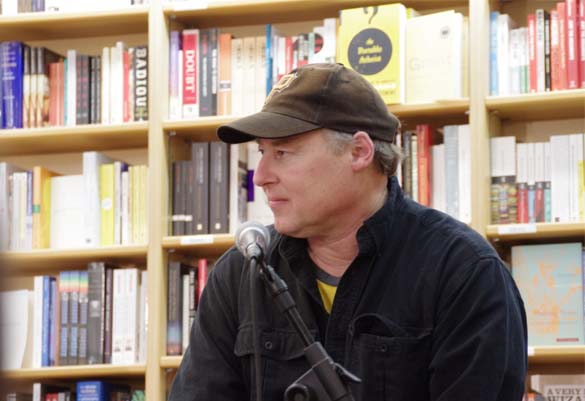
The Bat Segundo Show: Stewart O’Nan II

Stewart O’Nan appeared on The Bat Segundo Show #454. He is most recently the author of The Odds. He previously appeared on The Bat Segundo Show #161. You can also read our lengthy conversation by email in 2011. This 2012 talk was recorded before a live audience at McNally Jackson. My gratitude to Michele Filgate, Langan Kingsley, Holly Watson, and, of course, Stewart O’Nan for their help in putting this event together.

Condition of Mr. Segundo: Inexplicably hungering for Wendy’s hamburgers.

Author: Stewart O’Nan

Subjects Discussed: [forthcoming later this afternoon]

EXCERPT FROM SHOW:

Correspondent: Niagara Falls. Here is a location that’s loaded with all sorts of associations. Joyce Carol Oates wrote a book there.

O’Nan: The Falls.

Correspondent: Yes, exactly.

O’Nan: Yes, I was introduced the other night as “the author of The Falls.”

Correspondent: (laughs)

O’Nan: And I was like, “Not that prolific.” Not nearly.

Correspondent: (laughs) Well, you are churning them out one a year.

O’Nan: Oh thank you. Churning them out. You said cranking before.

Correspondent: Crafting! Cranking, churning. All right. But they’re short! They’re short.

O’Nan: They’re tiny.

Correspondent: There’s craftsmanship in there. Don’t worry.

O’Nan: I understand.

Correspondent: But I’m wondering. You’re taking a location that’s loaded with all sorts of cultural baggage. There’s that Marilyn Monroe/Joseph Cotten film.

O’Nan: Gotta love it.

Correspondent: But I’m wondering. Here you are taking two characters and putting them in a touristy location. I’m wondering if you did that to work up against limitations and see what kind of behavior you could mine based off of that. I’m wondering why you chose this. What was the process of selecting the Ice Bridge or the details of the customs location? What went into nailing Niagara?

O’Nan: Well, it’s a ready made stage. Usually when I take on an area or a setting, it’s virgin territory in a way. Conneaut, Ohio. Kingsville in Songs for the Missing. No one’s ever written about that in any kind of novel. Western Pennsylvania. Butler, PA in 1974. So I always say I’ve written the best Butler, Pennsylvania novel ever written.

Correspondent: (laughs)

O’Nan: Or Avon, Connecticut. Usually these are overlooked places. Like New Britain, Connecticut, that Last Night at the Lobster takes place in. I write in that interzone, that nowhere America of strip malls. It has been kicked around forever. But in the new book, I thought, let’s focus solely on the characters and put them on a stage that everybody knows. So I don’t have to do that disorienting, here is the place that you don’t know and now I’m going to tell you about it. So I had a little less responsibility to the setting and I could spend a little bit more time on the characters.

Correspondent: I have to ask you about the odds as chapter headers for all of these. Some are, in fact, true. “Odds of a black number coming up in roulette: 1 in 2.06.” I Wikipediaed that. Some are unscientifically true. “Odds of a marriage proposal being accepted: 1 in 1.001.” So I’m wondering. How many odds did you collect? I mean, I’m wondering if you were sitting on a bunch of odds sets.

O’Nan: Yes. Yes.

Correspondent: You were?

O’Nan: Yes, I was. And I was trying to figure out: How do I weave these into the book and what effect are they going to have when I get them in there? And they seemed to me to work. When I thought of using them rather than chapter headings, in the way I did with, say, Emily or in Songs of the Missing, I saw them as how the chapter headings are in something like Blood Meridian or in, say, 19th century fiction work, which is “In this chapter I am eaten by sharks.” And before you even get into the chapter, you’re like, “Oh sharks! This could be cool!” So it kind of brings the reader and it gives them an expectation of what may happen in this chapter. Not necessarily has to happen. But it may happen. The odds of dying in a bus crash. Whoa! There might be a bus crash. I’ll stick around and find out.

Correspondent: It’s interesting. Because here you are in one sense messing with the reader for the first ten pages, repelling them, and then on this, you’re subverting their expectations. It’s actually, “Ooh! I want to continue to read this chapter.”

O’Nan: Well, you hope.

Correspondent: What of this bipolar approach to fiction writing?

O’Nan: Flannery O’Cononr. Flannery O’Connor said, “Distract them and hit them over the head.” Absolutely right. Absolutely right. Give them a reason to come into the place. A Prayer for the Dying. The opening sections are very — it’s a terrible thing to say, very beautifully written. I use the language. I make the beauty of the language a key thing to hang into. And so the reader gets rewarded somehow. And by the time they have to go through the book, they’re kind of stuck. They’re like, “Well, I don’t really want to hang around and watch this guy go crazy while I’m inside of his mind.” Well, it’s too late. So like Poe, say, in “The Black Cat.” Once you get them in the door, then after a certain point, they’re kind of yours. They have to follow along. Or you hope so. You always hope so.

Correspondent: I’m curious if the odds sets actually were methods for you to riff off of Art and Marion. If you were stuck at a certain place. Is this a point? I mean, you’re a former engineer. I presume that this was either heavily designed. Or were there false starts? And did the odds help you in anything?

O’Nan: No. There weren’t a whole lot of false starts. I knew the characters very well before I opened up. It’s also a small novel. It’s very much sort of a drawing room novel in a way. It’s the one weekend. You’ve got the unity of place. The unity of time. You’ve got a lot of pressure on them from the memories. This is their second honeymoon. They’re in Niagara Falls. And you have the time pressure of, well, at some point, they’re going to have to put their money down on the wheel. And they’re always kind of at odds with one another. They’re always picking at one another. So I had a lot to work with. The plates were already spinning when I started getting into it.

Correspondent: I wanted to also ask you. One interesting thing that you also do with Marion is body image. She doesn’t like Art to see her undress. And in one of the passages you’re going to read tonight, the only thing you mention is her stomach. We actually don’t really know what she looks like physically. So I’m wondering if this is a method for you to not reveal certain details to the reader or this reflects your relationship to the reader. Is this your way to protect your own characters? To not divulge all? Or is this your way to encourage judgment? Perception on the reader’s behalf?

O’Nan: This is more to encourage the reader to join in the process of creating the work. And I don’t say what the character looks like unless it’s really necessary to the arc of the story there. So what the characters look like is completely up to the reader there. And I leave judgment to the reader. I don’t try to steer the reader too much in terms of who’s good, who’s bad, who’s right, who’s wrong. And it’s always sort of that inkblot that shows how generous the reader can be or how, on the flip side, how stingy they can be. “I hate Marion. I hate her so much.” It’s like, “Easy there, lady. Easy there.”

Correspondent: Have you had this happen before?

O’Nan: Oh yeah.

Correspondent: Wow. Really?

O’Nan: In Wichita of all places.

Correspondent: Wichita!

O’Nan: “I didn’t like her.” Well, that’s good. That’s your prerogative. That’s fine. That’s you.

Correspondent: You know, one of the interesting things — I’ve read a number of reviews of this book. And they actually don’t mention, for example, Karen or these two characters who are having affairs with the couple. And I’m curious about this. Maybe this relates to this issue of giving the reader something. Maybe they don’t want to talk about this aspect of Art and Marion. What do you think of this?

O’Nan: Yeah. I think they want to key more on Art and Marion and just say, “Look, there are problems in the marriage.” And this is how they work them out over this weekend. Or don’t work them out.

Correspondent: Inevitably, because you do deal with Heart, I have to bring up celebrity gossip.

O’Nan: Heart.

Correspondent: So in late 2010, Nancy Wilson and Cameron Crowe initiated divorce proceedings. It was a great shocker to certain waves.

O’Nan: So sad. They had everything going for them, didn’t they? They did.

Correspondent: Yeah. I’m wondering if you including the Heart concert before or after you heard this news. Or if you possibly predicted this dissolution in anyway. I mean, what of this?

O’Nan: I don’t know.

Correspondent: Some sort of angle here.

O’Nan: No. I don’t know. It’s accidental subtext, I guess. I guess it happens from time to time.

Correspondent: Another silly question. Wendy is a character. And I have to ask you, and I know this is really pedantic, but I have noticed in all of your books — nearly all of your books — there’s a moment where someone eats Wendy’s. A Wendy’s hamburger.

O’Nan: Really?

Correspondent: But not, not in The Odds. The last time I saw this was Last Night at the Lobster. There was a Wendy’s moment. It was the Stewart O’Nan Wendy’s moment!

O’Nan: He doesn’t go to Wendy’s.

Correspondent: Oh, he doesn’t go to Wendy’s?

O’Nan: He decides not to go to Wendy’s.

Correspondent: But he does actually consider it!

O’Nan: This is a climax. This is a climax in an actual work of fiction. “Want to go to Wendy’s? Nah.”

Correspondent: Do you eat at Wendy’s quite a bit?

O’Nan: No. Maybe that’s it. Maybe I want to eat at Wendy’s more. I can see my biographer doing a lot on Wendy’s now. A map of all the Wendy’s around my house.

(Photo credit: Here)