Michael Apted (The Bat Segundo Special)

This 30 minute radio special serves as a transitional episode between The Bat Segundo Show, which aired its final episode last November, and Follow Your Ears, a new thematic radio program that will be premiering this month. It features an interview with Michael Apted, director of the Up movies. His latest installment, 56 Up, is now playing in select theaters in the United States.

Play

Guest: Michael Apted

Subjects Discussed: How intimate documentary competes with YouTube and viral video, the creative solidity of a long-standing broadcast guarantee, the Five Guys Burgers review, whether the Up films an appeal to a younger generation, the heightened political nature of 56 Up, why Cameron’s austerity measures affected Apted’s subjects more than Thatcher, pressing Tony on his possibly racist suggestions, avoiding predictability, conflict as the stuff of drama, how Apted’s subjects collaborate beyond being in front of the camera, how Apted is a part of the Up subjects’ lives, self-editing, behaving yourself in front of subjects, efforts to include Peter and Charles, Apted’s anger towards Charles, Charles’s lawsuit against Apted, being transparent with documentary subjects, why the Up subjects didn’t have a choice, persuading the subjects to appear in each new installment, the Up subjects’ sense of ownership, Neil confronting Apted about the filmmaker not knowing anything about his personal life, whether snapshots are fair representations of people, knowing that every grimace or every emotion on camera is going to be dissected by audiences, the ubiquity of the camera (and smartphones) in everyday culture, trust, taking risks, the degree to which people lie, the skill of interviewing, doing a disservice in not being open, why Apted credits himself as researcher, carrying on the legacy of 7 Up, fact checking and corroboration, the difficulties Apted had with 49 Up, passion vs. obligation, and the textures of lives.

peter56up

EXCERPT FROM SHOW:

Correspondent: So there is a big question I wanted to ask you — and, regrettably, I did not talk with you for 49 Up, but during that particular time, we were in a stage where YouTube and viral videos were mere striplings compared to what they are now.

Apted: Right.

Correspondent: And this has led me to ask you, especially with these Up films, how a movie that deals with how humans evolve over nearly six decades of their lives — does a filmmaker like you compete with something like that? Or reality television? Of which interestingly, Peter, one of your subjects, seems to be using some of the moves normally one would associate with reality television for you, of all people. So what do you do to adapt? Or do you not really change up the setup you’ve had going now for several films here?

Apted: No. You see, I think I’ve got one huge advantage over everybody. I am at least thirty years ahead of the game.

Correspondent: Aha.

Apted: No one’s got what I’ve got. You know, and, uh, I think that’s what’s unique about it. That’s why of all the work I’ve ever done, this is to me the most precious. Because it is entirely original. And people have only copied it. No one has really come anywhere near to equaling it in longevity, nor do I think will they ever. Because as much as you talk about modern media, modern media is nothing as unpredictable, on marshy ground, can sink and dive and whatever at the drop of a hat. There’s about seven mixed metaphors in there. But the solidity which was in the broadcast world when we started, which guaranteed it at least into, say, 35 Up without any question about “Should we do this? Can we raise the money to do this in particular version of it?” has given me a running start. And I don’t think that anybody will ever catch me up. So I look at these newcomers with sort of a blase way and say, “Off you go.”

Correspondent: But aren’t you concerned with — for example, there’s — I’ll give you one example. There’s a viral video going around. It’s amusing enough. It’s a guy who is reviewing Five Guys Burgers in the back of his car. And he goes, “DAYM!” And this gets remixed over and over. And then weeks later, we see that he’s now a fixture on Jimmy Fallon.* And then he’ll be forgotten. And whatever natural exuberance he had is almost stifled instantly. And so, yes, I grew up on the Up movies. I watched them throughout my life. And it’s always a pleasure to go back every seven years. And it’s sort of like going to church, except on a seven year schedule. But simultaneously, I mean, doesn’t this bother you? I mean, how can you woo, for example, a younger generation of viewers when presently it’s really all about reducing human behavior to novelties, to something that’s kind of an ephemeral indulgence as opposed to really exploring the depths of someone?

Apted: (laughs) That was a bit of a mouthful. I don’t know. I suppose you’re right. I’ve never lost the audience. I always thought I’d give the series up if the viewing figures dropped away. And they don’t seem to have done. So whether young people are attracted to this, I don’t know. It’s almost staple stuff in teaching, you know, all sorts of sociology and whatever. You know, I don’t believe everything just disappears with the bathwater. I think people do have a sense of the past and a sense of history, especially when they cease to be teenyboppers and then become people with children and people with mortgages and all this kind of stuff. And this is the drama — this is, I call it, the heroism of everyday life of this series And I think everybody responds to that at some point. I mean, maybe nobody between the age of 11 and 25 will want to watch this. But there will come a time when they’ll discover it later on. And because it’s in a sense, without boasting, so rich because it covers so much of people’s lives, which no one else has ever covered, you know, I’m optimistic that it will stay around. So I don’t feel threatened by it. I know what you mean. About how can I attract a young audience, competing with Youtube. I mean, this is all over YouTube from the minute I practically finished editing it. So anyway, it’s a good question. But I’m not worried about it.

56 Up

Correspondent: So this seems to me a far more political installment of the series than previous ones. I mean, we have Jackie, who is on disability, and she excoriates [Prime Minister David[ Cameron at one point. You have Lynn, who we see after she has lost her job as a school librarian. There seems to be a great concern, at least on your part or on the camera’s part, on capturing the consequences of various austerity programs. And I’m wondering why the film tended to shift this way. I mean, these were going on under Thatcher. These were going on under a variety of…

Apted: You’re missing the point. The point is that how does it affect their lives. I’ve never been interested in any of the series of objectified politics. Politics only appears in issues when it affects their lives. Now certainly Thatcher was doing all sorts of bloodthirsty work. But these people were very young then. And it didn’t affect them. These people are now 56 years old. Their pensions are going out the window. Their salaries are going out of the window. The future of their children and their grandchildren is going out of the window. So that’s why it’s in this film. I don’t ask them political questions. They talk about it. Because I gave up asking politics in 42 Up when I foolishly asked them about Princess Diana, who had just been killed, and I threw it out, threw it away, because I was asking them their opinions on something that weren’t organic to their life. I’m not interested in their political opinions. I’m interested in how politics determine their life. And in this generation of people living in the United Kingdom, which is going through a worse time than here and will go through an even worse time and you’ll go through an even worse time, it’s of profound importance to people’s lives. And so my films — this generation from 56 — reflect the personal effect of this political kind of fallout that’s going on. But this is the first time this has ever really happened in the series. Because I haven’t found that politics has so interested or determined or, you know, concentrated itself in people’s lives as it is now.

Correspondent: Politics is only a concern for the Up series when it is personal.

Apted: Yes. Because the politics of the film are their lives. They are the political statement of the film. They’re not objective opinions. I’m not interested in opinions. I’m interested in the organic manifestation of politics in people’s lives.

Correspondent: I’m glad you brought up the Diana moments in 42 Up, which…

Apted: I thought I cut them out. Are they still around?

Correspondent: I’d heard about this. But you do leave the moment with Tony here where he’s very defensive in relation to certain racist connotations of immigration. So in a situation like that, that’s kind of a political..

Apted: Yes. But again, it’s organic. It’s about the culture he grew up in. It’s about the society that he feels has been degraded. Where he grew up, his roots have been degraded by immigration. And, you know, I called him out on it basically. And, you know, it was a pretty scary moment for him and for me. Should I ask the question? I thought, “Sod it. I will ask the question.” I think it’s the question everybody was asking. Is he racist? Or was he not? Does he have a fair point? Maybe he does. He has a right to express it. He was. People were turfed out of their habitats by a great invasion of people from other countries and whatever. And maybe he has a point. So with him, you know, the whole idea of racial integration is very, very crucial. Because it did transform the whole community that he grew up in.

56_UP_NEIL_49YRS_01.JPG

Correspondent: How do you decide what questions to ask of the subjects? Is it largely intuitive?

Apted: Yeah.

Correspondent: I mean, clearly, you’re still getting into trouble after all these years.

Apted: It is intuitive. And it’s…it’s…I wish I could think of an amusing way to express it, but basically I assiduously do not prepare for it. I do not go back into the old films. I do not say, “Oh my god! They’ve said this in 49. What are they going to think about it in 56?” Because I’ve noticed over the generations that the films change tone. They’re not the same films. And I thought the only way to preserve that is to make each episode as fresh as I can. To sit down like we are now and talk and not know which way the conversation’s going to go and what you’re going to ask me, what I’m going to answer you. I’ve no idea. And that kind of spontaneity, I think, is kind of crucial. Because it’s not predictable. Once this series becomes predictable, then I think I’m sort of dead in the water. There’s an element of predictability built into it — i.e., the whole idea that from the minute you’re born, you know what kind of actions you have. But given that, and that’s become kind of less important — again as the series has gone on. Because English society, the society of Great Britain, has changed a lot. Social mores are much more flexible. Education’s much more flexible and all this. These people came into life at a certain period in time in the English class system, seem to be very, very strong. And there’s still a class system. But it’s changed. It’s become more Americanized. It’s more to do with money than it is where you were born and whatever. So I’ve forgotten what the question I’m answering is about.

Correspondent: No, no. I was very curious about forgetting the previous films.

Apted: Ah yes!

Correspondent: I mean, there’s this aspect too. Do you carry enough of a reliable familiarity with the material? Or do you find that the relationships, both positive and fractious, are enough to steer you into the next installment?

Apted: No, it’s both. I mean, I have a huge amount of information in the back of my brain. I mean, I know what the great iconic moments are. What each character, what’s been there, kind of a few key moments. And I know that without having to think about it. But, you know, the provocative fractious stuff that I have with them, I think that’s what gives it life. And that — you can only approach that by having a genuine conversation and surprising each other.

Correspondent: Because conflict is the stuff of drama, it should be the secret ingredient of your relationship with your subjects for the Up movies.

Apted: Yeah. It is. And, you know, there’s lots of ground for conflict. There’s an overwhelming sense of trust, which is why they’re all in it pretty much and how it continues. But on the other hand, there’s also conflict. There’s a residual anger from them, I think. Because they were — they were press ganged into it. They didn’t make a decision at seven to do this. They didn’t make a decision at 14 to do this. And then when they became adults, suddenly they were in the middle of this rollercoaster and sort of stuck with it. So there’s still an anger, I think, which I still find with them about that. But generally I think that’s been kind of now overtaken with a sort of a sense of a trust. And the trust they have in me is that if they’ve got something to say, I’ll let them say it. And I’ll answer it if I can. Or acknowledge it if they’re right and I’m wrong.

Correspondent: But Nick in this movie, he says, “This is not a picture of me. It’s a picture of somebody.”

Apted: Yeah.

Correspondent: He complains that he doesn’t have any control over how he is actually being presented. Suzy says, “Well, I don’t think this is presented as a well-rounded picture of me.” So it’s very interesting that your subjects seem to complain or, at least, I noticed their complaints more this time than I did in previous ones, although you have had skirmishes with them in the past. I mean, what do you do to placate them? I mean, do you allow them to see elements of the film or how it’s actually taking place? And, of course, Charles, he threatened to sue you. And he’s….there’s no trace of him in this movie. I was sort of surprised.

Apted: And do you know what his job is?

Correspondent: He’s a TV producer. I know.

Apted: Documentary filmmaker.

Correspondent: Yeah. But does that recuse him from…

Apted: No. Of course not. It makes it unforgivable. If you live by the sword, you have to die by the sword. But you’ve asked me about a thousand questions in the last twenty seconds and I’m trying to figure out — I mean, what you missed out is the point that Nick is making. He’s saying, “No, this isn’t a proper representation of me. But it is a representation of somebody.” I.e., it isn’t the details of him. But it’s some iconic representation of what he stands for and who he is. Which is what all these things can be. Of course. How can I put people’s lives into eighteen minutes? Or whatever, however long I give them? Of course it’s my judgment. It’s my taste to decide what goes in. That’s true of any film ever made. Whether it’s a documentary. The only film that doesn’t qualify is Andy Warhol pointing at the Empire State Building for 24 hours without changing the film. Everything is a cultural or judgmental decision and I make those and, if I”m wrong, I’m wrong. But all I can say is they’re all still here. They haven’t been so offended by it that they’ve gone away and dumped me, as it were.

* — Note: The broadcast erroneously referred to “Jimmy Kimmel” rather than “Jimmy Fallon.” The transcript reflects the facts, but we apologize for the on-air error.

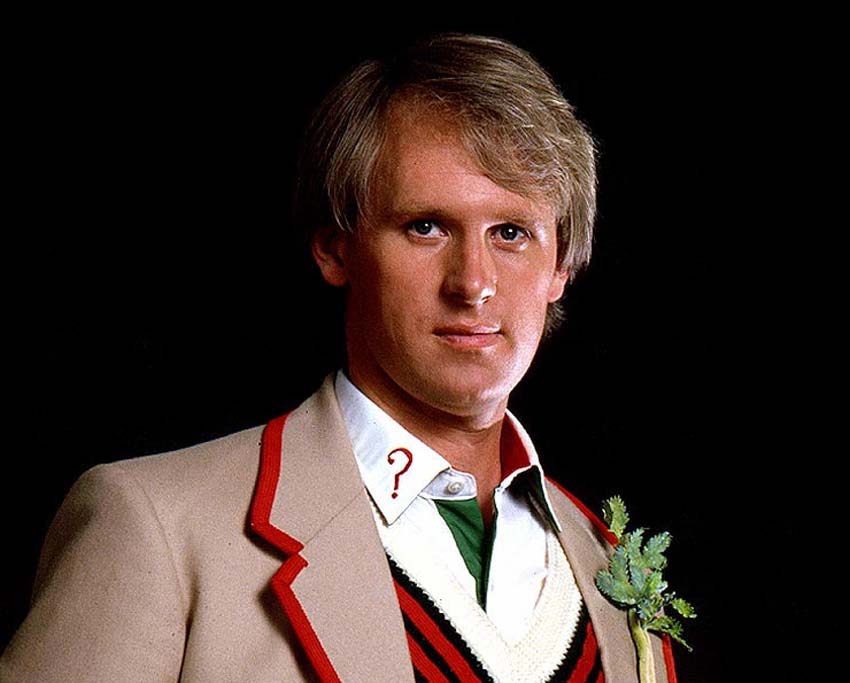
Peter Davison (BSS #493)

Peter Davison played the fifth incarnation of Doctor Who! But he also delivers numerous charming performances in A Very Peculiar Practice, All Creatures Great and Small, At Home with the Braithwaites and The Last Detective.

Play

(Many thanks to Roger Bilheimer for his great help in making this improbable conversation happen and to Yashoda Sampath for consulting on extremely pedantic Who matters in preparation for this talk.)

Condition of Mr. Segundo: Stumbling around his motel room for a celery stick.

Guest: Peter Davison

Subjects Discussed: Whether Davison is a PBS manifestation or a corporeal entity, why Davison tends to avoid psychotic roles, the BBC’s austere costume policy, Davison’s cricket skills, the thespic advantages of keeping your hands in your pockets or behind your back, working with Roger Daltrey, film vs. TV continuity, Davison’s secret aspirations as a pop singer, “Doctor in Distress,” working with the same writer and director for A Very Peculiar Practice, single directors vs. many directors on television, Peter Grimwade’s mysterious ousting as director on Doctor Who, the regrettable deficiencies of “Time Flight,” the inside story on “No, not the mind probe,” when directors don’t even notice line delivery, the live theater approach to doing television, working with Peter Moffatt and Graeme Harper, how Who directors are chosen and how this affects acting and production, why Davison left Who, the slim advance notice that Davison got in relation to stories, the importance of humor in Doctor Who, conflicts with John Nathan-Turner, the problems with having an American companion, Davison’s creative input on Who, the difficulties of playing the Doctor, problems with Season 20, being confronted with the blank slate of virtue, John Nathan-Turner’s middling efforts to make companions more interesting, mew Who vs. old Who, theories that Rose as the most important character in the new series, Mark Strickson’s frustrations, holding up wobbly sets and flimsy production values, acting when the wrong set was lit, whether any virtues and production techniques have been lost from old Who, the disconnect between what’s inside your head as an actor and what’s on camera, Davison having to change appearance after Doctor Who, the burdens of Who, Tom Baker, choosing variegated roles, and Davison ensuring that he’s not defined by notoriety.

EXCERPT FROM SHOW:

Correspondent: You know, I always wondered if you were a manifestation on PBS. But now I actually know that you’re corporeal. You’re here.

Davison: (laughs) I have the same feeling myself sometimes.

Correspondent: Oh you do? How do you distinguish between that? I mean, when you go and perform a role, are you in a fugue state? Do you know who you are when you’re playing it? Do you summon some abstruse emotional energy?

Davison: No. What happens with me is a form of — it sometimes has to be very quick — osmosis. You start off with a blank page and, as you get familiar with the script, the character is joined to you. Like barnacles or something.

Correspondent: I see Tristan off your shoulder right now.

Davison: Exactly. And you do start, depending on the parts you play — you bring them home with you sometimes. If you are playing a bit of a psychotic character, it can mean trouble at home.

Correspondent: But you haven’t really been playing much in the way of psychotic characters.

Davison: No. I think that’s a good thing. (laughs)

Correspondent: I mean, you’re too nice a guy? Have you had a great desire to chew the scenery like that?

Davison: You know, every so often. I have made a career of playing fairly nice guys. And I’m very happy doing that. But every so often.

Correspondent: Very nice doing that.

Davison: Thank you very much. But every so often, you just kind of get a feeling. You just want to be play a nasty character. And fortunately, usually when those feelings come about, one comes along that you like and you’ll accept it. I played a bit of a bad guy recently in an episode of Lewis, which is a British detective series.

Correspondent: Oh really? How evil were you for this?

Davison: I was pretty nasty, actually. I was very much a…

Correspondent: You pushed ladies downstairs? Widmark style?

Davison: I kill people.

Correspondent: You kill people?

Davison: And make them disappear. But in a nice and charming smiley way.

Correspondent: So I’m going to have to ask you about one of the reasons why you’re here. Doctor Who. And I”m going to try and do it through a few unusual angles. There’s one thing I have noticed. I know that when Tom Baker left, he took his boots with him. And during the early run of Doctor Who, you’re wearing what I guess is your own sneakers. Is that true? Is that safe to say? Does the BBC actually allow you your own? Did they actually make shoes for you? Or did you have to come in with your own footwear?

Davison: Oh no, no, no. You have proper costume fittings and people sit down for long periods of time and discuss what you’re going to wear. And I think they were pretty much off-the-peg shoes. But the BBC did pay for them.

Correspondent: Oh, okay.

Davison: And the rest of the outfit.

Correspondent: So you can wear them home.

Davison: Well, no. They wouldn’t trust you to bring it back in the morning.

Correspondent: Oh really? Well, what input did you have into the design of the Doctor’s costume? How was it like for you? I mean, how strict were they? I know you’ve said in other interviews that there were some bizarre union restrictions in which lights went out at 10 or something.

Davison: Oh, the whole thing in those days was a very complex procedure. I mean, I had input into my outfit. But it was very much not in specifics. The producer said, “We’re looking for something that’s more youthful and slightly more energetic and sportier.”

Correspondent: Cricket says youthful.

Davison: And I thought cricket fitted the bill exactly. So I suggested the idea of a cricket outfit. If I’m honest with you, I would have chosen a more off-the-peg look. It was a bit too designer for me. Because the idea with the TARDIS is a room somewhere in the depths of the TARDIS in which is a whole range of clothes. And when the Doctor regenerates, he simply goes into the room and he goes, “Ah, there’s this bit here. I’ll try this on here.” And he comes out with a kind of thrown together outfit. With my outfit, it just seemed like it probably wasn’t sitting around on a peg, which is what I didn’t like about it. On the other hand, I thought it had a very good style to it. I was very happy with it in the end.

Correspondent: You showed off your cricket skills in “Black Orchid.” What were your cricketing skills before that? Or was that pure acting?

Davison: No, no. It wasn’t. I’m not bad at cricket.

Correspondent: Really?

Davison: Compared to most actors, who are pretty rubbish.

Correspondent: You’re not going to name names.

Davison: I could actually, but I won’t. But in one of the scenes there, you can clearly see me actually bowl somebody out. Which I was very fortunate that they were able to get it into the shot. So I wasn’t bad. I was very happy to do that.

Correspondent: While we’re talking about physicality, I have to ask. So I watched a good deal of the Doctor Who run yet again — after many, many years — that you did. And the one thing I noticed is that you kept your hands in your pocket or behind your back quite a bit.

Davison: Yes.

Correspondent: And I’m wondering if you were just a spastic guy or a guy who gesticulates. If this was an effort to try to prevent yourself from doing that on camera.

Davison: (laughs)

Correspondent: Because sometimes you have your hands in your pocket and they’re clenched in there like you know your hands are going to go free. So what of this?

Davison: Well, I don’t know where it first came out. I think probably it just came out of — I played a role before Doctor Who in All Creatures Great and Small.

Correspondent: Yes. That’s right. Tristran.

Davison: Unfortunately, Tristran, I think, is described as forever having his hands in his pockets. So that became such a kind of…

Correspondent: The Davison crutch?

Davison: Yes! A Davison crutch. Absolutely. But I think it just carried on a bit. And probably it shouldn’t have done. On the other hand, I have to say — you know, I did a series about three or four years ago with Roger Daltrey. You know, of The Who.

Correspondent: Oh yeah.

Davison: He played a part. And we were having this scene together in the pub. And we’d do a shot on him where he was doing his lines talking to me. And then we’d do another shot from another angle. And the continuity person would keep coming up to him, going, “Uh, Roger, you raised your hand in the air on this shot. And you put your hand on the drink in this shot. And you put your hand in your pocket on that shot.” And he got into such a terrible state. And nothing was ever said to me. And he said to me, “How come you’re so good at this?” And I said, “Because I never do anything with my hands.” (laughs) By the way, it’s a great advantage to put your hands in your pockets. Because no one comes up to you and says, “Ah! You did this with this hand here.” I think I probably overdid it.

Correspondent: Well, how rigid were the script supervisors, or continuity, during the BBC days in the ’80s and the ’90s? Were they really as anal as they are now? Or what?

Davison: You know, in my experience — and I’ve had a relatively tiny experience in film — but in television, they’re absolutely spot on. You rarely — you do get mistakes. But I’ve seen more mistakes in movies — in editing and things where people’s positions and hands and props and which hand they held their things up in — than I have done in television. They’re pretty good in television. Maybe it’s something to do with the fact that the actors in television are doing a lot of things. They’re fairly disciplined, I think, TV actors. And maybe film actors somehow are, shall we say, maybe less disciplined. Maybe more inspirational. Maybe more original in some areas. But less disciplined. And I certainly notice more mistakes watching the average film than I did in watching TV.

Correspondent: So I have to ask. We talked cricket beforehand. I had heard some sort of rumor that you were pursuing a career as a pop singer roughly around the time of All Creatures Great and Small and even while you were playing Doctor Who!

Davison: How? Where did you hear that? (laughs)

Correspondent: I have my sources. And I was hoping to go ahead and, before they continue on the Internet, to actually get the hard journalistic truth. Did you have pop singer aspirations?

Davison: I did. Well, I’ve always written songs.

Correspondent: Oh you do?

Davison: Yeaaaaaah.

Correspondent: There are loads of tapes hidden in your basement?

Davison: Loads of tapes. And I still have a little mini-studio in my house.

Correspondent: Really?

Davison: Yeah. And I still do stuff. But I think I’ve rather given up the idea of becoming a pop idol.

Correspondent: But do you still record?

Davison: Actually, I do still record stuff. And there was a time — I suppose it was about that time — where I thought, “You know, I’d be really good to just get a band together,” and not use my name. I didn’t want to try and sell it as Peter Davison doing it. So I’d just get a band and just get some songs together and just see what happens with them. If one wasn’t pushing it from a point of view. Because I think it’s a kiss of death. Actors saying they’re in a band. So I just wanted to do it from an entirely different angle.

Correspondent: Or in the case of Doctor Who, “Doctor in Distress.” It was disastrous.

Davison: Absolutely. But it came to grief, for a bizarre reason, that musicians have a completely different lifestyle to actors. It seems like they would be very close, but we would do things like we would call a rehearsal session. Seven o’clock in the evening. So I’d be there at seven o’clock. This was just rehearsal. Seven o’clock in the evening. And then at about 11 PM, the bass player would turn up. Then at about 1:00 in the morning, the lead guitarist would turn up. And at about half past two, we’d actually get enough people there to actually start rehearsing. By which time, it wasn’t long before dawn was breaking. And I was exhausted! ‘Cause I’m not used to it. Musicians just have this idea, you know. “Aw yeah, let’s just do a little bit of jamming for a couple of hours and then let’s get down to it.” So I realized really — although I loved doing it, I didn’t have the mentality of a musician, of a band member. I was a bit too conformist even for that. I thought actors were fairly unconformist.

Correspondent: Well, A Very Peculiar Practice, I know, that you had basically one writer and one director through a good chunk of the run. Do you prefer that kind of constancy as an actor? As a performer? That this is actually better for you? Do you get nervous if there’s a constant shuffle of directors?

Davison: It depends on what it is. I’ve done a couple of series where the same director has directed all the episodes. I did a series called A Very Peculiar Practice. One director. All Creatures Great and Small, The Last Detective — you’re right. We had different directors coming in actually for most of the episodes. But you still have the same crew coming on every week. You have a certain amount of consistency. It’s just — it’s horses for horses. Series television, I think, is quite good to get varied directors in. Because it just gives it a different spark. A different style to the episode. Whereas if you’re doing a serial, I think it’s important to have, at the most, two directors. Ideally one director. ‘Cause they know exactly what they’re doing.

Correspondent: Speaking of directors, I’m hoping you might be able to provide some light on this rumor involving Peter Grimwade. Director of “Earthshock” and “Kinda.” The story goes — at least promulgated by Eric Saward — that he actually snubbed John Nathan-Turner, didn’t invite him to a party. And then Peter Grimwade eventually was just doing writing for the show. Do you have any insight as to why he stopped directing? Because he was really good.

Davison: Um, he — I think Peter was very talented. He wasn’t — I didn’t think he was that great a director really. As far as the actors were concerned. He probably had good ideas.

Correspondent: Aha. More of a visual director.

Davison: I probably undervalued him, to be honest with you. I didn’t have any say on whether he did any more or not. But he didn’t inspire you with great confidence about what he was doing.

Correspondent: Really?

Davison: As a director. Although I think he was a very talented writer.

Correspondent: Even “Time Flight”?

Davison: Well, “Time Flight.” “Time Flight” was unfortunate, you see. Because “Time Flight,” I think, could have been done very well. But we had no money. The sets were probably the most dreadful sets that Doctor Who had ever had to put up with. And we literally shot England before humans…

Correspondent: Pleistocene. Exactly.

Davison: In Studio 8 of the BBC. With a little model of Concorde sitting on the back of the…and it was just…

Correspondent: And the color separation overlay as the airplane leaves. It was amazingly…

Davison: Catastrophically bad. You felt very frustrated by the fact that there was just no money. The monsters were lumps of polystyrene moving around the set. But I think the actual script itself wasn’t bad. But the realization of it was hugely disappointing.

Correspondent: So it seems to me to make a good Who story, you really need to have good direction and good acting in order to sell the illusion. What do you do when you’ve got a guy like Paul Jerricho delivering “No, not the mind probe!” in absolutely horrendous delivery in “The Five Doctors.” “No, not the mind probe!” Which is a very famous…

Davison: Yes, I know.

Correspodnent: How do you as an actor deal with this?

Davison: (laughs) Well, I think you have to use your instinct and not be led astray by the director. Sometimes, I’m always very, very wary of “Give me a bit more! Give me a bit more!”

Correspondent: (laughs)

Davison: You think, “Oh no! I’m sure that’s not right! I’m sure it’s not right.” But I’ve learned now that you have to make a decision as to whether you’re going to trust the director or not. Who are you going to trust? Do you trust yourself more than the director? And it’s a difficult thing to do.

Correspondent: Did anybody even say anything when he delivered the line that way? I mean, it’s so remarkably bad.

Davison: You know, a lot of directors, I’ve discovered, barely even notice.

Correspondent: Really?

Davison: Visual directors. I’ve worked with a lot of directors where I’ve said entirely the wrong line, entirely the wrong line. Stumbled over it and then I hear the click going, “Okay, let’s move on! Great! Let’s move on!” You’re going, “No, hang on a bit. I said the wrong line!” And they’ll go, “Oh, did you?” They don’t notice.

Correspondent: Wow.

Davison: There are some directors that listen. And I love those directors that listen. Because they’re what you might call actors’ directors. Who are really concerned with what you’re giving as an actor. And you trust them. So if they say, “That’s fine. Let’s move on,” you go, “Okay, that’s fine.” Other directors you know are just looking at the picture. They barely notice. Until they sit down. But you know. They will sit down in the cart and go, “He said it like that? And we let him get away with it?” You don’t know. I mean, when you’re on the floor and you hear someone say, “No, not the mind probe,” you don’t quite know how it’s coming over. Upstairs they should have known how it came over. They should have said, “Let’s go again.” But I think there’s panic. There’s rush. There’s not enough time to get the thing done. They think it will be fine. And it’s very often not.

Ross McElwee (BSS #491)

Ross McElwee is most recently the director of Photographic Memory.

Play

Condition of Mr. Segundo: Stepping away from the memories.

Guest: Ross McElwee

Subjects Discussed: Walker Percy’s “certification,” Heidegger’s Alltäglichkeit, whether social media and YouTube can capture the essential quality of “everydayness,” patterns and layers of meaning discovered through the act of filming one’s life for decades, whether or not people have the patience to sit through a two and a half hour movie these days, how McElwee’s cinematic voice has altered with Photographic Memory, the use of Ken Burns-like music for a photographic montage, why McElwee decided to look backwards instead of tackling the present, problems in passing on the McElwee legacy, Adrian McElweee plugged into technology at the expense of conversation, patriarchal dissing, the imprecision of father-son parallels, the godfathers of the cinéma vérité movement, recreating the moon shot from Sherman’s March, the pernicious influence of the YouTube confessional, Time Indefinite as the obverse of Photographic Memory, filming a tumor for 72 seconds, why Marilyn Levine was not included in Photographic Memory, whether removing a family member from a film offers the truth about a dynamic, divorce, preserving privacy while remaining transparent, meeting Josh Kornbluth in Six O’Clock News, McElwee making “fiction films,” the middle ground between fiction and truth, Tolstoy’s maxim about novels not revealing everything, Andy Warhol’s Empire, why Charleen Swansea hasn’t appeared in McElwee’s recent films, a rare McElwee complaint about irrelevance, compartmentalizing the home environment and France, an adamant yet insignificant moment about a dish which caused Our Correspondent to question its significance, the future of documentary filmmaking and reality TV, Catfish, whether the marvel of the everyday will be informed by seducing the audience over questions of truth, the hidden rat at the motel in Bright Leaves, marveling over quotidian details, Steve Im in Six O’Clock News, conversation vs. dramatic evening news elements, when it’s easier to have conversations with strangers, the virtues of sitting still in one place, apocalyptic elements in McElwee’s films, being informed by lingering anxieties about the end, the harmful effects of smoking, confronting your own mortality, how Adrian’s presentation has transformed in McElwee’s films, fishing, the world divide between those who have kids and those who don’t, periods in life when kids are delightful, whether most people remember the last names of all their lovers and roommates, McElwee’s early attempts to write fiction, being inspired by limitations, how libertine digital shooting has impacted documentaries, and the dangers of not being selective enough when making am ovie.

EXCERPT FROM SHOW:

Correspondent: I’m sorry I didn’t wear my Opus shirt. I couldn’t find one. I don’t think they even make them anymore. I was expecting you to come in and film me or something.

McElwee: Well, that can be arranged. I’ve got a little camera right here. (picking up iPhone)

Correspondent: Oh, I see. Well, I’ve got mine right here. (picking up Galaxy) So I know you wrote an essay on Walker Percy’s The Last Gentleman, which is very interesting. Because I’ve seen your films and they really make me think of what Percy said about “certification” in The Moviegoer, which of course is taken from Martin Heidegger’s notion of Alltäglichkeit, “everydayness” in Being and Time. This idea where we go about our lives, we’re always sort of reflecting on what the meaning of this is. And he said that it was essential. So I’m wondering. How can the video medium, which you have actually gravitated to for the first time with this film, and social media in our present landscape take into account this notion of everydayness? I mean, this film almost seems to be an argument for and against it. So what of this?

McElwee: That’s a question? That’s an essay! (laughs)

Correspondent: Well, we do essay questions and answers here. It’s sort of similar to your films, I think. (laughs)

McElwee: It is. It actually perfectly complements my whole way of making films. Because it’s a very complex thing that you’re asking of me. And to me, filming the everyday, filming little moments from everyday life, is totally essential to understanding what life as a whole is about. I think it’s somehow not recording of any specific moment of life that leads to a richer understanding or a deeper presentation of the meaning of that particular life. But it’s the accretion of all of these things and the overlapping, the patterns, the resonances of daily moments filmed that resonate with things you’ve already seen before. And I find as I get older, as I film my friends and my family, that I see patterns and layers of meaning that would not have been there if I had just filmed them one time. So I think it’s partially that curiosity about the moment of being in the present. And that’s very, very important to my filmmaking. And yet now there’s also a kind of layering that seems to be happening de facto, which is because I’ve been filming for a long time. I’m led to putting together combinations of shots and scenes and moments that span decades. And I have the luxury of doing that now. Because I’m getting older. One of the few benefits of getting older.

Correspondent: The films have gotten shorter, however. Interestingly.

McElwee: Yeah, that’s partially because people don’t have the patience to sit through two and a half hour films anymore.

Correspondent: I do.

McElwee: Well, you’re not the typical viewer.

Correspondent: Well, the interesting thing, aside from the fact that this is shot on video, is that there are a number of surprises about this film, aesthetically speaking, where it just does not seem like a Ross McElwee film. We have, of course, the photos with the music. And I was like, “Am I watching a Ken Burns movie or am I watching a McElwee movie?”

McElwee: Right.

Correspondent: Or even the fact that you gravitate more towards the past instead of the present.

McElwee: Yes.

Correspondent: You know, if you are altering your voice to fit the needs of what is required today, is it truly a genuine McElwee movie?

McElwee: No. Well, I’m not altering the voice because of marketing. There’s no way that I’m doing that. But I think it really is a matter of becoming older. I know, for me, for having kids or at least a son who’s a different generation, I’m starting to wonder, “What is this tension that I feel with my son? And why does this seem so extreme?” And that led me to go back to my own past. And I think in doing so, I did fine. I wasn’t shooting film back then and I don’t have images, moving images, to call upon, to represent what was happening at that point in my life. But I do have still photographs. And so, yes, there’s still photographs in my film and it is the first time I’ve used them this extensively. You’re absolutely right about that. And it’s the first time I’ve used stretches of music the way that I have in this film. Music has been in all my films. It’s diegetic. It comes out of the filming itself and the filming environment.

Correspondent: But the music comes before the voice. Whereas in previous films, the voice has ushered in the music.

McElwee: Yes, that’s true. Although I do….yes, you’re right. You’re right. That’s a different way of using music. But I think I felt that these were raw materials that I had available, which represented what my life was like at that time. Therefore, I had to draw on them. And it did make a different kind of film. Of course, the other large difference was that I’m much older now. And so there’s much more to look back on. So that way does become more “historical.”

Correspondent: Much more to look back on? What about looking forward? I mean, literally. I was shocked watching this movie. Because I was expecting the cross-country quest of some kind. But, no, it really is going backwards towards events that are half a lifetime ago. I mean, why should they define who you are in the present? They certainly haven’t in other films that you’ve made.

McElwee: No. And I think it may be a one time departure. But I feel that I have now earned the right to make whatever film I wanted to make and that was the film I wanted to make. And I think it’s mainly because of what I say in the beginning of the film. It’s that I’m a little stymied by my relationship to my son. And I’m confused by the directions he’s going in. And those directions are somewhat representative of his entire generation. But I’m also smart enough to realize that my father had the same questions about me. I didn’t go to medical school. That’s so puzzling. “Why would you not want to do something that would guarantee you a comfortable and fulfilling life?” No, I wanted to become a filmmaker. What is that all about? He must have really wondered about those things.

Correspondent: But the difference between you and your father, and Adrian and you, is that we have this image you have throughout your films of your father showing how to suture up something and your brother going ahead and participating. You’ve used that repeatedly.

McElwee: Yes.

Correspondent: In this, it’s almost like you’re the hired cameraman for Adrian’s movies.

McElwee: Yes.

Correspondent: It’s not necessarily like the passing of a legacy that Adrian rejects, although Adrian also adopts the filmmaking guise. So is there really a parallel here?

McElwee: Not a precise parallel. But there’s some irony too in there. I become Adrian’s camerman at the end of the film and I think that’s meant to be somewhat humorous. People understand that. I’m doing documentaries and determined to do fiction. Not only that, but I become his cinematographer. So, yeah, it’s clearly a departure for me to go in some of the directions I’ve gone in too. But I think it’s very healthy. Why not try something you haven’t tried before? And I’ve done it. Whether I’ll do something similar again remains to be seen.

Correspondent: Going back to adjusting to recent developments of the last five or six years — smartphones, social media, and so forth — one of our first images of Adrian. He is plugged into his laptop, quite literally. He has the laptop in front of him. He has the headphones. He has this massive cafe drink with a bright blue straw. And you’re trying to say, “I need your full attention.” And he refuses this. And this to my mind — because I saw your film twice. The first time, I was horrified by this. The second time, I actually came to sympathize with Adrian a little bit more.

McElwee: Right.

Correspondent: But I initially thought, “My God, he’s a spoiled brat. Here he is. The great Ross McElwee is being dissed by his own son!”

McElwee: But that’s his job as a son. Is to diss his dad.

Correspondent: Yeah, but diss in that sort of way? I mean, not have a meaningful conversation with you? Because it seems that you clearly establish, especially when you drag out all of your old notebooks and all of your old photos, there’s meticulous ideas that you set down in your youth and he’s frivolously typing away on his computer.

McElwee: Well, see, my father through I was frivolously scribbling away in my notebooks. It’s like so judgmental of fathers to be that way about their sons.

Correspondent: Or viewers to be that way about patriarchal relationships.

McElwee: Exactly. And the other thing that you can say is, “Well, yeah, he’s busy texting and listening to some conversation at the same time. He’s multitasking and he doesn’t even hear me when I ask the question or acknowledge that he’s heard me.” But what am I doing? I’ve got a digital camera on my shoulder. Who am I to criticize him for being wrapped up in his technology when I’m also wrapped up in my technology?

Correspondent: Well, you weren’t in the camera shot. But I’m pretty sure you weren’t holding a beverage. I’m pretty certain.

McElwee: That’s true.

Correspondent: He had more distractions than you going on.

McElwee: Or he’s just more ambidextrous than I am.

Correspondent: (laughs) Ambidextrous. But I mean, you say that it’s pretty much the same thing. But I would argue, given all the additional impediments from Adrian, that it’s not. That your quest into France was a quest for the usual frivolities of falling into weird relationships. I mean, you have the image of your son next to his girlfriend and there are two laptops there. I mean, that’s a fundamental difference that disrupts the parallel. So what of this? Is there? Can you actually adopt a parallel between your own life and Adrian’s?

McElwee: No, of course. It’s never precisely the same from generation to generation. We all know that. And I think the things that you point out visually were stunning to me when I actually saw them through the viewfinder. The two laptops opened at right angles to each other at a cafe table.

Correspondent: You didn’t notice when you were filming? It’s sort of like the rat in the motel [from Bright Leaves].

McElwee: Well, I did notice when I was filming. Because I thought, “Ah! This is the image I’m looking for.” I didn’t tell them to do that. But from the minute I saw this, I said, “I’m going to film this. Because it just seems so appropriate.” But I think it’s unfair to be too critical of Adrian and his generation for being so wrapped up in this technology. Because it’s available. And I was shooting 16mm film because it was suddenly available in a portable sense. You could put these cameras on your shoulder and go into the world for the first time. That was the whole cinéma vérité revolution. You know, my dad didn’t understand any of that. He thought it was crazy. In fact, at the very beginning, so did most funding agencies. Public television. Arts agencies. Nobody got it. That this was going to be something significant. That you could take technology into the world and interact with it on its own terms. As opposed to bringing people into the studio and interviewing them. Or recreating things the way Flaherty did. Directing it as if it were a fiction film. Using people from real life. And, in fact, it took a while for people to understand the possibilities of cinéma vérité. This was before I began making films. Those guys. [Richard] Lecock and [Albert and David] Maysles and [D.A.] Penebaker. They had to fight to get their kinds of filmmaking seen and shown and produced. So there’s always a learning curve for the rest of them.

Correspondent: And I dig all those guys. But the one commonality throughout all that early cinéma vérité is that there is a concern for capturing the human as opposed to cutting reality up into a stylistic mélange that gets in the way of really grasping with life. I mean, you try to recreate that famous moon shot from Sherman’s March in this film, but we see that we have all these buildings and your monologue is there. But the moon is more insignificant on video and it’s populated by all these buildings and so forth.

McElwee: Right.

Correspondent: Clearly you’re aware that this is either fading or this is in competition with the YouTube confessional/YouTube star movement. And so forth. I mean, where do you fit in? Is there a place for you, do you think?

McElwee: In this? Yeah, that’s a good question. I’m not really trying to tailor my films for any particular generation or any particular venue. I didn’t know where this film was going to end up. It was commissioned by French television. But aside from that, I had no idea where it would end up. And even that was an obscure presentation and platform. It was a late night experimental television series. And I was very happy to accept their commission and make this film. But I didn’t know what kind of film it would be. And I didn’t feel like I could tailor it to suit any particular category or any particular audience. And so there’s a way in which perhaps I’m shooting myself in the foot by not really thinking more about where these films are destined and is there a way I can make them more accessible to the younger generation who will then download it from their computers. I just…I can’t think like that. For whatever reason, I’m just driven to make a film because I want to make it on my own terms.

Liv Ullmann (BSS #489)

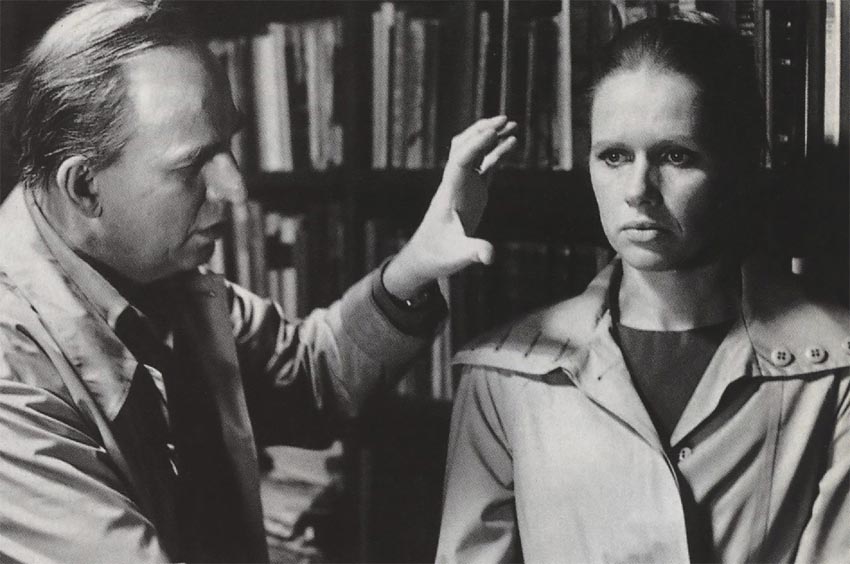
Liv Ullmann is the subject of Liv and Ingmar, which is now playing the New York Film Festival. She has also appeared in many legendary movies.

Play

Condition of Mr. Segundo: Wondering whether his persona is predicated upon cries and whispers.

Guest: Liv Ullmann

Subjects Discussed: Maintaining patience while living with an eccentric genius, living in other people’s dreams, how women’s expectations have changed over the last fifty years, the spate of op-ed pieces about film culture being dead, the distinctions between storytelling and lies, The Guernsey Literary and Potato Peel Pie Society, pride in belonging to the storytellers, Scenes from a Marriage, telling your story in a documentary vs. drawing upon deep emotions as an actor, pretense vs. reality, what it really means to be a filmmaker, finding meaning in people who are difficult, getting negativity out through performance, not giving up, old people who grow bitter (and avoiding this), when the life in people’s eyes fades around forty, staying alive, Søren Kierkegaard’s idea of coming to the world with sealed orders, when shaking hands can be the most important gesture in your life, why Ingmar Bergman got such emotional performances from Liv Ullmann, Bergman’s bitterness over Liv not participating in Fanny and Alexander, Bergman’s efforts to restrict cast members from partying, efforts to control other people, what Liv and Ingmar did to relax, being an introvert, Changing, keeping the quest alive for the “lost kingdom of childhood,” and being disturbed by people who lie.

EXCERPT FROM SHOW:

Correspondent: Tolstoy once suggested that time and patience were the greatest of all warriors. And in watching this film [Liv and Ingmar], the great astonishment I had was how you maintained such grace and such patience with Ingmar throughout this entire run. I mean, here was a guy who locked the doors, who locked you and other cast members up, who built the wall around his house, who did all sorts of things. Didn’t let you see family and friends. Basically boarded you up. And I have to ask just from a basic standpoint, how do you maintain such patience with a figure like that? Is his genius enough to forgive his eccentricities? Were you just in a state where at that young age you were in awe of this man who was so intense and romantic? Just to start off here. I was really curious. I mean, that takes a lot of fortitude.

Ullmann: Well, you know, when you describe it, it sounds more dramatic than it really was. Because he built this house for us. And I think he had a dream that we would be there, painfully connected and really by ourselves. And that is a dream you can have when you are middle-aged, which he was. Because the world had been tiring for him. And I was so much in love that I didn’t question it. And it’s many, many, many years ago when women more easily took to that role. And I don’t think I questioned it so much as I sometimes felt, “I don’t think I could consider living like this for always.” Because I longed for things which were outside of this island. And it’s more when I look back at it, I think, “So that was the Liv I was then. And the Liv that I’m now wouldn’t let that happen.” But mostly it was an incredible time. It was five years of my life living on that island that I would never, never be without.

Correspondent: But you do say in the film, “I was trapped in another person’s fantasy.”

Ullmann: No, I didn’t say I was trapped. I said, “I think I’m living someone else’s dream.”

Correspondent: Living. Got it.

Ullmann: And why I corrected you on that is — one thing is to be trapped. Because that can hurt if you have your tale in there.

Correspondent: Sorry for the paraphrase.

Ullmann: But to live in someone else’s dream, that can be beautiful. And for long time, a dream can seem beautiful. But it’s not your dream. And if you are to live, you have to be in your own reality and/or in your own dream.

Correspondent: But surely even before all this, you had your own dreams. You had perhaps some kind of autonomy that was in bloom. When did you know that you had this independent imagination?

Ullmann: Well, maybe my dream was to live in someone else’s dream. For many women, that is a dream. At that time.

Correspondent: At that time.

Ullmann: Absolutely. But even today, I know women still are dreaming about man coming riding on the white horse. But we are talking now about fifty years ago. Or forty-five years ago. Women at that time, we had different expectations — or we thought we had — than women today. And sometimes I feel that women at that time maybe had a more realistic look at life than women today. I’m very happy.

Correspondent: More realistic? How so?

Ullmann: I think we said yes to moral life. We weren’t into Facebook and Twitters and computers. We didn’t look down at our hand all the time. We looked more at other people’s faces and things that were happening around us.

Correspondent: That actually leads me to ask you. If you have an age defined by smartphones and social media, the very intimate cinema that you made with Ingmar and that you have made on your own — I mean, what chance is there today for that to grow? To have an audience? There’s been a lot of op-ed columns in light of the New York Film Festival, in which people are arguing “Well, why aren’t there more films for adults?” or “Is film culture dead?” What are your thoughts on this? I mean, is it still very much alive? Or is this becoming a more exclusive audience? And what do you do as a filmmaker and as an actor to counter the limiting short attention spans?

Ullmann: I hope it is not dead. Because still, to sit in a dark movie house is one of the few places now that people can be and share laughter and dreams and incredible talent. Like you go and watch a ballet or opera or concert. But it’s less and less of that. Which is very sad. And we are more looking at TV and looking at lies from politicians and so. Or the computers and so. Life is more and more distorted from really who we are as human beings. And we’re living in a world of violence, of strong violence and terror. And so we really need culture. And we really need the art, the creation of people’s thoughts and who they are to remind us about who we are and why we are. And it’s harder and harder to find that out with the help of other people. And if we do it alone right now, we do it through machines, not through other people.

Correspondent: How do the lies of a narrative — because, of course, all narratives are essentially wonderful houses of lies that we open the door to — how does that differ from the lies that we have to endure in our culture? How can that offer us…

Ullmann: A storyteller is never a liar. Because, you know, it’s storytelling. And horrible storytelling — you know, it’s storytelling. And you take out from that the experience you really need, the shock you really need. You know, I’m in the middle now of reading a book. Very strange title. I cannot wait till…

Correspondent: What’s the name of the book?

Ullmann: The Pee…?

Correspondent: No worries if you cant.

Ullmann: It’s on my bed.

[At this point, the very kind publicist sprinted to the other room to grab the book.]

Ullmann: And I cannot wait til this afternoon when it is over and I will go back to that. Because it’s a lie. Because it’s a novel. But I’m getting so many thoughts about the time there was and time that is coming. And it has this strange title of….The [Guernsey] Literary and Potato Peel Pie Society.

Correspondent: Oh yeah, yeah! I’ve heard about this. I haven’t read it.

Ullmann: It’s giving me so much joy and I have so few pages left! Now storytelling is lie. But that is real lies. But to stand on TV and say, “This is the truth.” Because that’s what they do! They don’t say, “No. Here comes a story.”

Correspondent: They say, “This is true.”

Ullmann: This is the truth.

Correspondent: If you are lying and you say that it’s the truth, it’s worse than if you’re lying, but it’s a story. So you accept it. It’s about believing.

Ullmann: And you don’t say it’s a lie!

Correspondent: Yes.

Ullmann: You say it’s a story. And I belong to the storytellers. And I’m proud to belong to the storytellers. And I feel we are losing them. Because it’s looked upon as some luxury and people want them to be quick and different and cartoonish. We’ll be lost world when it comes to who we are with our soul. What the soul is all about.

Correspondent: So you see some of the more cartoonish advancements in cinema, some of the more stylistic advancements, as very harmful for it? Is that what you would say?

Ullmann: I think, well, so many of it is harmful. And we have seen it. Because it doesn’t aspire to peace and connection and humanity.

Correspondent: Empathy.

Ullmann: It aspires to violence and to how many people can I kill within a minute. And it looks brave and strangely adventurous.

Correspondent: Yeah. I have to ask. I mean, you have put yourself emotionally on the line as an actor for all of these films. What’s it like to bare your soul for a documentary like this? Speaking of the difference between reality vs. narrative. And it’s also interesting. Because you’ve also been fortunate. In, for example, movies like Scenes from a Marriage, there is a middle ground where it actually takes on a documentary-like feel for a chunk of it. So what’s the difference as an actor? And how does this make you feel to tell your story on camera? Is that harder than inhabiting a character? What are the emotional differences here?

Ullmann: I don’t find it hard to talk about feelings and what I care about in life. And when I did this movie, I said yes only to do two days of interviews. And I don’t find that hard. It’s easier for me to be truthful than to make myself interesting. And it’s not hard at all. I find to pretend is harder. To lie is harder. Because then I’ll forget what I said in the other minute. I like to be truthful. I like to meet people who are truthful. I like when we connect that way, also because that’s the way where I find myself. I’m not different from other people. Other people have the same feelings that I have. And I think we miss that. That we are true to each other.

Correspondent: So when you pretend, it’s not rooted in anything solid for you. It’s not a memory that lasts more than, say, remembering what it was like to walk around with Ingmar and talk with each other. That that’s more of a meaningful memory and therefore that’s easier. Whereas if you’re tapping into the deep visceral guts of something, that’s something that you inhabit but that you don’t remember because that’s just the way it works for you? I’m just curious about this distinction.

Ullmann: Well, there’s a lot of things that I don’t remember. Oh maybe it was like this? And I will tell it. And that’s more storytelling. But there’s nothing wrong with that. But when I see, for example, this movie, there are things that had to do with me that I had forgotten and suddenly I see it. And I know that is the truth. And even stories that I have told about us. When I see it in a movie, a film that has been taken from other movies, I’ll say, “Oh, the reality was different.” And I welcome that. I think that is great. That my memories have now given color to things But when I see the real truth, I found it much more interesting. And for me to see this movie and to see certain things in this movie that I had forgotten, I like it. And thus the movie is a kind of gift to me.

Andrea Arnold (BSS #488)

Andrea Arnold is the co-writer and director of Wuthering Heights, which opens on October 5 in select theaters.

Play

Condition of Mr. Segundo: Wondering if his creator is Heathcliff.

Guest: Andrea Arnold

Subjects Discussed: Characters defined by how they observe things, working with moths, Yorkshire insect wranglers, how to get animals to behave on camera, improvisational and Method-acting sheep, Buñuel’s Land Without Bread, audiences who believe that Arnold killed real sheep, film disclaimers about no animals harmed during the course of production, talking with farmers to get historical details right, how imagination informs more effectively than the facts, avoiding plastic walls for old sets, working with production designer Helen Scott, being upset when something isn’t real, the virtues of filming in a remote place, staying in a local village, getting used to a temporary life without phones, elevation as a geographical identifier as Arnold’s films, putting a camera in a place where a human can exist, Arnold’s dislike of the dolly and the Steadicam, why there weren’t as many wide shots in Wuthering Heights, Lindsay Anderson’s if…, cinematographer Robbie Ryan’s very sturdy hands, working without jibs and gimbals, the visual authenticity of natural human movement, Robbie Ryan running down four or five flights backwards with a camera, giving a very lovely grip named Sam something to do, reading Emily Bronte when very young, the decision to add the line “Fuck you, all you cunts” in Wuthering Heights, respect for Emily Bronte, working with non-actors, being too faithful to a literary classic, finding new takes on Heathcliff, why most literary adaptations play it safe, and literary reverence.

EXCERPT FROM SHOW:

Correspondent: So there’s one really intriguing quality about your films that I have observed. Your characters are often defined by how they observe things. Of course, the obvious explicit example is Red Room, because we have closed circuit cameras in there. But we do see that in Wuthering Heights quite a bit. Often through slats. Often through little cracks. And I’m wondering. Why are you so interested in this idea of defining characters by how they look at things? Is this a way to offer a vicarious experience to the viewer? Do you feel that looking at things or what people decide to see is of greater import or greater revelation than, say, how they perform and how they act?

Arnold: Well, I don’t know the answer to that question really. Because I think when I’m writing, I don’t really think that lucidly about what I’m writing and how I’m writing it. But now that you’ve just said that to me, I realize actually what you just said is true. But actually if you’d ask me to define how I do things, I would never have said that I’m doing that. But now that you’ve just told me, I realize you’re right. And I think that I write quite instinctively. And for some reason I seem to be doing that. I’m always picking. I’ve only ever done one film where I told it from two people’s point of views, where I switch from one person to another. Most of the films I’ve done so far have been telling it from one person’s point of view. And for some reason, that feels like the right thing to do for me. It’s like I feel able to get into one person’s head. I find it more difficult to get into lots of people’s heads. Though maybe, just because I’m telling the stories from that person’s point of view and I’m going along with them and thinking about how they’re thinking and I’m trying to get inside their head, I think that may be why looking at the world from their point of view, I’m trying to get inside their head and work out how they’re feeling. Does that make sense?

Correspondent: It makes sense. It makes me ask at what point do you decide, “Oh, the camera must see what they’re seeing.” It seems to me that this would be a fairly late process in the planning. Is that safe to say? I mean, when do you think about this? Do you think about this during the act of writing the script or anything?

Arnold: I think I do think about it when I’m writing. Because I’m thinking constantly about what they’re looking at and what they’re doing and what they’re feeling. And I think that a lot of what ends up in the film is things that I’ve put on the page. I mean, even in Wuthering Heights, people say to me, “Was that in the script?” And actually no. Although sometimes, with the moths, they were in the script. The moths are in the script. The beetles aren’t in the script, but the moths are.

Correspondent: What do you do to get an insect wrangler, by the way? (laughs) I was curious about that. How do you find the moth expert among the moors and all that?

Arnold: Those moths, actually, were proper Yorkshire moths.

Correspondent: Oh they were?

Arnold: They were proper. The moths may be quite actually. Because we got moths from a man who dealt in Yorkshire moths. A Yorkshire moth expert, I guess.

Correspondent: A specialist. (laughs) There are moth specialists. I did not know.

Arnold: Yeah, there are.

Correspondent: How do you get a moth to behave on camera? I mean, you know they say the thing about children and animals.

Arnold: Moths don’t take directions. No, they don’t. You have to let them be themselves. But he gave us these moths which were in little capsules. And when we let them out, some of them died and it actually made me cry.

Correspondent: Oh.

Arnold: I guess they do die. I mean, moths don’t last very longer than butterflies, do they?

Correspondent: Don’t we all, right?

Arnold: (laughs) Yes.

Correspondent: Well, that’s interesting that you would feel such sympathy for the moths when this film also depicts a lot of sheep and a lot of rabbits — simulated, I would suspect. I don’t think this was a Buñuel Land Without Bread situation on your part. But I mean, there is quite a lot of animal violence. And I’m wondering what you also did to get that looking as real as it did and why you felt compelled to include this as a representative rough element of this great frontier of the 19th century.

Arnold: Well, I guess it was dealing with animals and having animals on the farm living and dying would be part of life. And it’s part of our life now. Only it’s a hidden part of our lives. In fact, it’s a far worse thing now in life. Because it’s all behind doors and we all pretend it doesn’t happen. And animals are factory farmed in far worse ways. They’re not roaming free and then getting slaughtered at the end of their lives. They’re living in sheds and having pretty closed out lives. So it happens all the time now and then. And I just wanted to represent that accurately. I mean, we have managed to obviously do a good job. Because I get people saying — I think at Sundance, someone said to me — somebody came after and said, “Oh, I feel so sorry for that sheep, you know.” And I said, “Why?” And he said, “You killed the sheep.” And I said, “No, we didn’t kill the sheep.”

Correspondent: And he’s no doubt saying this after having a lamb chop dinner, right? (laughs)

Arnold: Well, exactly. But of course we didn’t kill the sheep. And in actual fact, I was so worried about that sheep when we did that scene. I was more worried about that sheep than anyone. I mean, we had a vet there and we had a farmer there who owned the sheep. But that sheep, I have to tell you, was the most amazing sheep.

Correspondent: Oh yeah? What made it amazing?

Arnold: He was so amazing, that sheep. Because he was so calm. He wasn’t frightened. And he did this thing. In the film, you’ll see he’s trembling. It looks like you’ve done something really bad to him. He just started doing that. It was like he knew that he needed to look. I really don’t know.

Correspondent: Really? Unrehearsed?

Arnold: Unrehearsed.

Correspondent: Improvisational sheep! Wow!

Arnold: And it trotted off. And I kept saying to the farmer, “Are you sure the sheep’s alright?” He said, “The sheep’s fine.” And actually he went off, trotted back to the herd no problem. That sheep was amazing.

Correspondent: No ague or anything?

Arnold: No what?

Correspondent: No ague or anything?

Arnold: No what?

Correspondent: No tremors or anything like that? No dizziness?

Arnold: Nope. No, no, no. It seemed completely fine.

Correspondent: Wow. There are Method acting sheep.

Arnold: Honestly, that sheep. We couldn’t have picked a better sheep. Even when we were carrying it, it was just so calm. It didn’t seem frightened. It seemed completely fine. But of course we didn’t harm the sheep. In fact, I was very very concerned about the sheep and made sure he was completely fine. But, no, we didn’t harm anything. I mean, we make it look bad. But of course no. And I’m a vegetarian and animal complete.

Correspondent: Well, we talked about moths dying. Is there anything equivalent to the SPCA* in the British Isles that you’d have to get the endorsement from?

Arnold: Oh yeah.

Correspondent: I didn’t see any endorsement on the film or anything like that.

Arnold: Well, we had animal handlers there all the time.

Correspondent: Okay. You don’t need to have the designated stamp on the credits like we do here.

Arnold: We have the thing. “No animals were harmed.” I mean, that’s what you have to have. And you have to have people who are there who endorse that and who sign something to say that. So we had all that. We had everything that you’re supposed to have.

Correspondent: So you wanted to include these animals dying on film — simulated, of course — in the name of historical accuracy. I’m wondering what research you did to know how people lived during that time. I know that there were depilatory restrictions in place. I’m curious. What did you do to know that this is actually true? Or was this largely instinctive? Was this largely trusting your gut? Was this largely saying, “Okay, well, if we don’t have television, radios, and smartphones, and we’re just living on a farm, we’re just going to live like this”?

Arnold: Well, partly imagining what it would be like to live on the farm. Partly I spoke to farmers. I talked with some of the farmers up in Yorkshire about how things would have been. And they had a lot of people up in that area who had been up there for generations, and had actually a lot of information. So I went down to a place where people dealt with animals and spoke to a lot of farmers down there. I talked to people. So I did partly talk to people. Part imagination, partly what they were telling me. For example, the way they put their foot on the sheep and stuff like that. That was all told to me, the way they did that. You know, I researched all those things. About how they would handle the sheep and stuff like that. How they would carry it.

Correspondent: Do you feel that imagining what a situation is like is going to carry more truth on cinema than, say, sticking with the hard facts or the hard details? Or going by the letter of what the Yorkshire farmers tell you?

Arnold: I mean, I think I’m somebody who, if I hear something and I believe it to be the truth and they’ve told me something truthful, I will try to hold on to that as best I can. And I incorporate that into what I’m doing. So if they’ve told me something and I’ve heard it a couple of times from the right kind of people, then I think I would do my utmost to make sure that I represent that as accurately as they’ve told me. I think I’m somebody who does actually care about those things. I mean, when I’m talking about using my imagination, I’m talking about using my imagination more to do with the emotion or to do with the way that people are interacting with each other. I’m not looking to deal with practical facts. If I hear something, it’s done a certain way. Also I have a designer I work with and she’s very like that too. And even the house which we restored. Because it was quite run down.

Correspondent: Oh, interesting.

Arnold: We restored it using all the traditional methods. And so all the people that worked on the house used old skills in order to restore it. We didn’t put plastic up that looks like thatchery. We put proper thatch up. We restored the walls to the paths they would have used. We used the right kind of wood.

Correspondent: The stone wall on the outside. Was that touched up? Or built by the cast perhaps?

Arnold: Those stone walls were mostly there. The dry stone walls, that’s all over Yorkshire. So all the people working on the house before we started filming there, they were all using old skills which they all really, really enjoyed.

* — Our Correspondent mistakenly referred to the SPCA when he clearly meant the American Humane Association, which has been adding disclaimers about animals to movies since 1940.

Marjane Satrapi & Vincent Paronnaud (BSS #477)

Marjane Satrapi & Vincent Paronnaud are most recently the writers and directors of Chicken with Plums.

Play

Condition of Mr. Segundo: Wondering if his creative skills can be adapted.

Guests: Marjane Satrapi and Vincent Paronnaud

Subjects Discussed: Adapting graphic novels to film, Natural Born Killers, sitcoms, Hollywood’s insistence on remakes, splitting duties as co-directors, the importance of preparation, fights during production, the importance of death threats to the creative process, Satrapi’s panels as white backgrounds, creating a cinematic look, separating the graphic novel from the film, when words cram up a panel, spending two years to prepare a film, research, German expressionism, limits on cinematic exaggeration, why vulgarity and bad taste is important, Who’s the Boss?, being inspired by high and low references, the importance of humor, finding a common vision, fighting over small details, being gentle with other people 90% of the time, the miracle of clashing personalities agreeing on something, Chicken with Plums‘s reduced politics from the novel to the film, naming characters after nations, Jean-Jacques Annaud’s The Name of the Rose, books vs. films, Erich von Stroeheim, art vs. commerce, stress, the virtues of being left in peace to make your own film, how actors provide emotional resonance, directing and finding the right actors, the freedom to telephone an actor in Europe, the importance of creating a fantastical playground for actors, and Satrapi’s tendency to choose silhouettes for the visual style.

EXCERPT FROM SHOW:

Correspondent: I am extremely fascinated by the way that you adapted this movie, that you’ve adapted both of your works. In Persepolis, there’s this extended winemaking explanation for the secret parties. There’s also the increased attention to shopping with, of course, the Marjane in that saying, “One of my favorite pastimes” over and over. Which suggests something that was almost explicitly designed for the cinematic medium. Now in Chicken with Plums, you have a number of moments that take on greater life in the film adaptation. To just cite two, you have the various deaths that Nasser Ali imagines, which is only half a page in the book and which becomes this glorious montage, this wonderful set piece. And then you also have this satirical episode in California in the book take on this kind of 1950s sitcom, kind of like Natural Born Killers but a totally different style, in the movie. So my question is: do you see these movies as a way to improve upon what you laid down in the books? Or do you see them as separate entities that only film can actually create? And what do the two of you do to heighten certain moments and silent other ones?

Satrapi: No. I think a film has to have its own identity and entity. This is not that I think that the books, they are bad and that’s why we have to make the movie. And actually, you know, for myself, I never want to make a work of adaptation ever again. Because it’s very boring. You once have to think about the story in one way and then think about it in another way. But it was a reason for that. And that is that it was my idea to make Persepolis. I had a friend who wanted to become a producer, who proposed to make Persepolis, and somewhere, you know, deep down of myself, I always thought why not try something and learn something. In the worst case, we will make the worst film in the world. But at least I have learned something. And I proposed it to Vincent, who is a very good friend of mine. We used to laugh a lot for the joy of working for him. And he said “Yes!” And so we started doing it. So we made this Persepolis and obviously it got all the attention it got. And we thought that because we were Oscar nominee, now we are going to say we are going to make another film. And it will open the door to a room with billions of dollars. And they tell us, “Take all the dollars that you want and make your film.” But this is not true. Because we are living in a world of remakes. Everybody wants to make a remake of a film. We want to make the things that have already been done. Like before in Hollywood, somebody would go with a script, see a producer. Producer would say, “I would like to watch this film. And maybe, if I feel like seeing it, other people, they would like to see it.” And today you go, and I have already seen this film. It has made me lots of money. So I want to see it again. So it’s a big major difference. But in order to try something new, we had a reason, a specific reason, why we made Persepolis in animation. Because we wanted to be universal. And since that was a story, a specific story of a specific movement of the specific country, the fact of putting it in a real geography with some type of real human being, that’s what I’d been rejected from the other one. Like this geography, we don’t know. These people, they don’t know, they don’t look like us, but the abstraction of the drawing actually gave us the possibility to having a much more universal thing.

Here, we have with Chicken with Plums, of course, you have to make a work of adaptation. You have a story. You read the book. You put it apart. You take whatever you think is usable for the film, like the structure. Some dialogues. Etcetera etcetera. But then language of the cinema is very different from the language in a book, in the comic books. So you have to think cinema. And then for the highlights of the film, the question of rhythm is just as possible just by working a lot. The fact is that both of us, we like to laugh a lot. The vision that we have of the world and the complexity of the human being, the visual style are the things that we have in common, but that we work a lot. This is it.

Correspondent: So how do you two riff off each other? How do you two work together? I’m really curious to get Vincent’s thoughts on the adaptation and the creative process as well. Vincent, do you serve as a veto mechanism or anything? How do you contribute to this? I’m really curious.

Paronnaud (as translated by Satrapi): So it’s really very easy. I read the book. We see each other. And we talk about the way that we are going to make this work of adaptation. So it’s very important. Because, you know, these meetings that you have at the origins are going to affect whatever we will do later. On the set, in the way of filming, in the way of treating everything. And I work with Marjane because I love the story that she says. And my personal universe, the personal world of my own, is really the complete opposite of what she does. So it’s stimulating intellectually and artistically. Then I say all of that. Because then, you know, when we arrive on the set, we split the work. Because we have prepared it. So Marjane is with the actors. And I’m with the cinematographer. And sometimes we have lots of tension. And it doesn’t work. But most of the time, it does.

Correspondent: Oh really? So if you’re splitting it down between technical and acting, how did you two collaborate on the first film? How were the duties split for Persepolis?

Satrapi: Well, for Persepolis, it was the same. I would go and simulate the movement in front of them. We would choose the movement of the camera. The background. But all of that is so much related. Because like acting is when you are directing a film. You have to think about actors, but you have to think about the frame. So everything is connected. It’s not like you have one part of the project and the other part. So since there is connection, that’s what we were saying. You know, this work of preparation is very important. Because like that, we know what the other one is doing. But sometimes, you know, I don’t like the framing that he does. I give a direction of acting that he does not like. Most of the time, he goes, “Fine.” But sometimes it’s a fight. You know, we go out. We yell at each other.

Correspondent: How detailed do these fights get?

Satrapi: Like “Go fuck yourself.” Things like that. And in the night I pray that he will die.

Correspondent: Wow.

Satrapi: He says that they pray that I die too. But then we sleep. And then here’s the actors. And we have forgotten. And the result of that is that we are still friends.

Correspondent: So death threats are really the best way to get the creative process flowing, I presume.

Satrapi: Absolutely. Death is always the best for everything. We have to be aware of our death. Because that will come, even if we want it or not.

Julie Delpy (BSS #475)

Julie Delpy is most recently the writer, director, and star of 2 Days in New York.

Play

Condition of Mr. Segundo: Searching for a castle that doesn’t require too much physical exertion.

Guest: Julie Delpy

Subjects Discussed: Patriarchs who key cars, countesses who murder women for their virgin blood, aberrant and eccentric behavior in Delpy’s films, the advantages of flawed characters, The King of Comedy‘s Rupert Pupkin, domestic carapaces for odd people, mental institutions, emotionless people, arguing with people you live with, comic tension, loud family arguments in quiet cafes, characters who accuse others of raping children, anger issues, struggles to get quirky independent films made, why Chris Rock was cast, 2 Days vs. Before Sunrise and Before Sunset, German film financing, David Hasselhoff, Chris Rock in a straightlaced role, how romantic comedy becomes more alive when women are uncontrollable, leveling the gender playing field in narrative by offering complex women, romantic projection, thematic resonances between 2 Days in Paris and 2 Days in New York, toothbrushes that are confused with sex toys, how blue jeans woo men, how French people take their temperature, Delpy’s obsession with finding the right toothbrush sound, Stanley Kubrick, being a hands on filmmaker, color correction, the humor contained within The Countess, how to position an actor to stand appropriately on a throne of heads, Belvedere Castle, Merchant Ivory films, creating a fairy tale narrative, how boys like “feminine” aspects of fairy tales, the scarcity of women directors, how gender has affected Delpy’s reputation, being taken more seriously, the business aspects of cinema, nerds and cinema without emotion, why Hollywood is avoiding emotional directors, cold businessmen, Delpy’s indomitable work ethic, Delpy finishing The Countess while her mother was dying, and the financial repercussions of cinema.

EXCERPT FROM SHOW:

Correspondent: What of the interesting resonances between the two films [2 Days in New York and 2 Days in Paris]? The two that struck me: the thermometer becomes the toothbrush in New York. You have the thermometer joke. And then now it’s the toothbrush joke where…

Delpy: Toothbrush. Oh yeah. Like objects being put in the wrong spot. (laughs)

Correspondent: Exactly. Or blue jeans being used to woo a man. In the first film, we have mom ironing the blue jeans.

Delpy: The blue jeans.

Correspondent: In the second film, we have the blue jeans offer on air.

Delpy: The blue jeans are where?

Correspondent: The blue jeans, when Mingus is on the air. There’s that woman who offers them.

Delpy: Oh, the jeans! I see. That’s funny.

Correspondent: So I’m wondering. I’m guessing these were accidental. But I’m wondering if there were any conscious efforts on your part to mimic the resonances from the first film. To see if they would play a little differently in New York. Or older.

Delpy: Well, that’s something. For example, I think it’s something to do with — like I’ve always been amused that Americans — I mean, in France, if you take your temperature, everyone puts it in their butt. Just…I have to tell you. Just like if you’re a toddler. You just put it there.

Correspondent: It is a French thing.

Delpy: And I’ve always been having American boyfriends find this repulsive. That French people are perverts.

Correspondent: (laughs)

Delpy: Because we take our temperature in the butt. So we are perverts because of that. I always thought that was a funny idea. I mean, the thing about the toothbrush, I have the idea that, actually, they might have done really nothing with that toothbrush and that it’s all in his mind. That they might have used the toothbrush.

Correspondent: While they were having…

Delpy: Or it’s an object that wasn’t a toothbrush. But he’s convinced that they’re perverts using his toothbrush for sex toys. But I actually believe personally…

Correspondent: The toothbrush is your Pulp Fiction suitcase.

Delpy: (laughs) It is to me.

Correspondent: It could be used for naughty purposes. It could be used for rather eccentric purposes. They could be brushing their teeth as they’re doing it. We don’t know.

Delpy: Yeah. Who knows? They might have been brushing their teeth while doing it. But he’s convinced. Or they might have used another object that sounds like that toothbrush. But he’s convinced it’s his toothbrush. It’s this projection of this idea that, you know, once you have this idea that someone is perverted, you can imagine everything. And I like to use that. That is a kind of playful thing.

Correspondent: I don’t know. The sound sounded pretty similar to my ears. I’m wondering. Did you work with the sound guy to have it close?

Delpy: Actually, that was one of the hardest things to do. To find the right sound. And the banging on the wall. So it didn’t sound too trashy. To always find the right limit between really too crass and not too cute either.

Correspondent: Well, I’m wondering how you researched toothbrush sounds vs. dildo sounds. That would be a very interesting project for a sound man.

Delpy: I didn’t turn on dildos. I only turned on toothbrushes.

Correspondent: (laughs)

Delpy: I kept it to a toothbrush. But actually I did spend a lot of time listening to many different sounds of toothbrushes. And some toothbrushes, I just didn’t like the sound. So I kind of drove everyone crazy. I’m very…when I get into post-production, with all the mixing and the sound and all that stuff, I get really super duper duper duper…kind of precise on what I want. And that toothbrush, I drove everyone nuts over.

Correspondent: Well, like, how so? How precise can you get? Is there any sort of limit that you will reach before people are driven nuts or something? How anal are you here?

Delpy: No. I will work until I get what I want. I’m not like crazy, like going like a power trip. Like it’s too show that I have the power.

Correspondent: No Kubrick, 172 takes…(laughs)

Delpy: Even though they call me Stanley all the time. (laughs)

Correspondent: And not just because you grew a beard.

Delpy: Yeah, it’s because of my beard. Not because of my talent. I’ll tell you that. Because I get a little bit obsessed. Sometimes in details and stuff like that. But then when I have what I want, I’m fine. Then I’m done. Boom. And then I never talk about it again.

Correspondent: Well, like, how many takes did you do? Just to deflate the Stanley rumors here.

Delpy: Well, I ended up recording the toothbrush myself. Because I didn’t like any of the sounds. So I ended up taking a mike and going to record my toothbrush and the toothbrush I wanted to use in the film.

Correspondent: Are you hands on like that for cinematography? Or for other matters?

Delpy: Cinematography, no. Because I am not a very good — I don’t have the best visual ideas, you know? I’m not hands on cinematography. I’m very hands on sound. Music. Sound effects. Everything that has to do with sound, I’m very good. You know, I’m very obsessed also when we do the period of color correction. I get very — if I don’t get what I want, I will not stop.

Correspondent: What about placement of actors?

Delpy: Which is normal. I think it’s normal. I mean, if you’re a filmmaker, you want to get — it’s so much work to write. It’s so much work to shoot. And then you edit for three months and you work like a maniac. And then you end up in post-production. And you don’t want to suddenly have skin tones that are wrong. I mean, you can very quickly — now there’s such a scale of things you can do. It’s so large. You can go from a skin that looks sort of creamy to a skin that looks all greenish. I mean, you can do so much that you have to be really careful in color correction nowadays.

Correspondent: What about positioning an actor? Like, I think of the image in The Countess of the guy standing on top of the heads. I mean, how particular are you on something like that?

Delpy: Oh that, I’m very particular.

Correspondent: The angle of the head. Is the head just right at that particular angle? I’m just trying to get a sense of how precise you are really with these things.

Delpy: Yeah. I get very precise in scenes like that. Because, to me, I wanted it to look like a painting. Like a lot of 17th century painting I’ve looked at, based for this film. Like a lot and lot of Nordic painters. So I was really inspired by that. And I wanted it to look like that. Like something almost ridiculous, but kind of funny. I mean, the film, The Countess is not devoid of humor. I see the film as something a little bit funny at times. So it’s meant to be that way. Like even the craziness of wanting to stay young forever. I mean, she’s obviously such a pathetic character. Which makes me laugh. She makes me laugh actually. And so anyway, even this guy is kind of crazy. I mean, he’s sitting on a throne of beheaded Turks. So it’s kind of funny. If you’re dark. (laughs)

Correspondent: I thought a lot of it was funny, personally. But I’m a sick human being. But Belvedere Castle…

Delpy: But it’s meant to be funny.

Correspondent: Yes. Belvedere Castle, I wanted to ask you about this. You shot the end of 2 Days in New York at Belvedere Castle. And what happened with me when I saw the film — and this may be a terribly wonkish and pedantic question, but I feel the need to ask it nonetheless. I immediately thought, “Oh! The Bostonians. Merchant Ivory.” And the reason that I thought about that was because in 2 Days in Paris, you have this early moment where the American tourists come in and they have the red Da Vinci Code, which is almost serving as the red Baedeker tour guides that you see in A Room with a View. And so…

Delpy: Oh my god. That’s complicated.

Correspondent: And they are tourists, much in that mode, going through a city. And, of course, they come from Venice by train. So I think to myself, “Oh, there was maybe a Merchant Ivory nod there.” But I’m wondering, based off of these two things, whether emulating that sort of Merchant Ivory look and subverting it with wild behavior or astonishing developments was ever an interest of yours. And also: why you choose Belevedere Castle?

Delpy: Well, you know, I didn’t really think at all of Merchant Ivory. You looked into it like…oh my god. That’s pretty..

Correspondent: This is a problem of mine. I apologize. (laughs)

Delpy: That’s really cool. That’s really cool to read so much into something. No, I basically picked the Belvedere Castle because I wanted something high that made sense, that it was dangerous but not Empire State Building dangerous. Because Empire State Building — anyway, you can’t jump off the Empire State Building. Because it’s all blocked out. So it had to be realistic. And the Belvedere Castle is quite dangerous. Actually, if you jump, you can kill yourself. But I wanted it to be almost like a fairy tale. The film is a little bit like a fairy tale. It’s told to a child really. Because it’s told with these puppets. So I wanted this end to be in a castle. Like a fairy tale. And the princess, which is me, is saved by the prince, which is Chris Rock. But obviously the film is so not a fairy tale in its tone and everything. But I wanted it to be like a fairy tale. It ends in a castle like a fairy tale.

Sarah Polley (BSS #464)

Sarah Polley is most recently the writer and director of Take This Waltz. The film opens in select theaters on June 29, 2012.

Play

Condition of Mr. Segundo: Wondering if the chicken cookbook or the adulterous egg came first.

Guest: Sarah Polley

Subjects Discussed: Similarities between Away from Her and Take This Waltz, the need for daily sweeping romance, whether film can offer corrective responses to romantic fallacies, a culture becoming increasingly uncomfortable with emptiness, holding onto transgressive moments in cinematic narrative until the last possible minute, designing a house that correctly reflects the socioeconomic status of characters, gentrification and other developments in Toronto, Kubrick’s complaints about Woody Allen, the line between the real and the fantastical in Take This Waltz, 360 degree shots, circular motifs, writing scenes out of order, why Polley’s male characters react to very emotional developments with total calmness, Polley’s father, subconscious artistic choices rooted in childhood, anger and maturity, cinematic histrionics, Polley’s views on marriage, relationships depicted by young filmmakers, living with flawed human beings, why Polley isn’t doing so much acting these days, becoming braver, avoiding the same tricks, numerous visual metaphors in Take This Waltz, “Video Killed the Radio Star” as adulterous metaphor, words as betrayal, using heavyweight dramatic and comic actors, and Seth Rogen and Sarah Silverman.

EXCERPT FROM SHOW:

Correspondent: There is a line that Fiona says in the car in Away from Her. “I think people are too demanding. People want to be in love every single day. What a liability.” So Take This Waltz almost carries on with the extension of this idea, of the need for daily sweeping romance. But this film, it’s almost the complete opposite of a movie like Brief Encounter, where you suggest in this case that Margot’s adulterous desires are selfish and childish. The “I wuv you” at the very end of the movie. So I’m wondering. Do you see your two films as writer and director as corrective responses to this notion of romance? And how do you feel independent cinema is doing in depicting this more pernicious side of adulterous desires? Just to start out here.

Polley: Wow. That was amazing! I do feel like Away from Her and Take This Waltz are companion pieces to a certain extent. Even though they’re completely different films. I do think they are talking about the same thing in very different ways. I think that the line that Fiona says — “People want to be in love every single day. What a liability. People are too demanding.” — I do actually feel that. I feel like we have unrealistic expectations of our relationships. That they’re going to fulfill us at every moment and, if they don’t, there must be something wrong with them and we better go out and solve that. But I think that that’s a cultural thing and that we have that notion in almost every aspect of our lives. I think that we’re a culture that’s incredibly uncomfortable with emptiness, with feeling like life has a gap, with feeling like things aren’t perfect. And so we feel that if there’s something missing, that automatically means that there’s something wrong and we need to go out and fix it and we just need to make the right move in our lives and everything will somehow feel complete. And I think we constantly get shocked and blindsided by the fact that — I think that feeling of something new and missing and that emptiness does kind of follow us around a little bit. Or at least for periods of time. So, yeah, it’s funny that you brought up that line. Because I never really thought of the connection between that line and Take This Waltz. But I do actually think that Take This Waltz is an extension of that a little bit. And at the same time, I think I probably started writing the script a lot more judgmentally of the main character Margot than I ended up. I ended up feeling at the end of making the film that I empathized with all three characters. And that there were no heroes or villains.

Correspondent: Interesting.

Polley: While some of her choices seem immature or childish or self-involved, I think that enough people are connecting to her as a character and feeling quite defensive of her that it’s making me see her a lot more sympathetically as well.

Correspondent: It’s interesting that in both movies you keep that transgressive moment — and I don’t want to spoil either film — to the last possible minute. I think it’s in the last ten minutes of the first film and, in this, it’s perhaps the last twenty, twenty-five. And I’m wondering about sustaining that need to transgress from this seemingly stable relationship. Of some years too, by the way. It’s interesting that both marriages — the first is 44 years, the second is four or five years. So I’m wondering. Are you more interested in that period before one transgresses? Within this way of looking at these long-term relationships?

Polley: I think it’s the most cinematic part of a relationship like that. It’s before something actually happens. I think, in a way, all the deliciousness of that kind of relationship happens before anything happens. Also, it was important to me in this film that Margot not be someone who takes this lightly. Like she is somebody who deeply loves her husband. She is extremely tempted and brought to life by this other person. But she’s not someone who’s easily going to betray her husband or leave her husband. It’s really difficult for her. And, in fact, that makes that other situation even more tempting and even more alive.

Correspondent: I also wanted to ask you about the house, which intrigued me in a number of ways. First of all, we see the kitchen obsession that was in the first one repeats in this one, which I thought was actually quite interesting. But there is this interesting notion of Margot almost seeking the real space while also seeking the fantastical space. Because you see this moment where they’re both watching TV in this cramped office, which as a freelancer I can totally relate to. In fact, the way we watch TV at our house is actually quite similar to that. But you also then see the scale of where she goes open up over the course of the film. It starts with the pool. And then later on, we have the loft. And I’m wondering. Because their space is not exactly — I buy certain rooms. Yes, that’s exactly how a struggling freelance writer, or even a successful freelance writer, would probably have that kind of space. But on the other hand, well, that kitchen is rather large even if you are a moderately successful cookbook author. So I’m curious about how you designed this space with this tension between the real and the phantasmagorical, or the fantastical in mind.

Polley: So this is an interesting question. So Downtown Toronto, up until about ten or fifteen years ago in the area where these characters live.

Correspondent: Kensington Market, right? It’s sort of there.

Polley: Sort of Little Portugal, Italy. Ten years ago, when Margot and Lou would have bought that house, when it was still primarily a community of families. Generations of families would have actually been affordable with a considerable amount of debt to two fairly bohemian people. I have friends who bought houses then with absolutely no money, with a loan, and didn’t do renovations for years and years and years. And it fell apart for a little bit. But that would realistically be a house they could have bought. There’s no way those two characters could buy that house now. If the film was taking place ten years from now, there’s no way you would believe it.

Correspondent: Comparable to Brooklyn actually.

Polley: And the truth is they probably, realistically at this point in two years’ time, would have figured out the value of their house and sold it and made a lot of money. (laughs) But I think culturally it’s a weird thing in Toronto. Where there have been traditionally these downtown neighborhoods right in the urban core with pretty lovely, maybe rundown Victorian/Edwardian houses that were fairly affordable. That’s changed and it’s changing and that’s really sad. Because it means the demographics of who lives downtown is really changing as well.

Correspondent: So you have given this some thought. (laughs)

Polley: I have given it some thought. Because it is something that I noticed doesn’t quite translate. Like in every other country, people are like, “Those people could never afford that house.” And I want to go, “Yeah. Right now. But what was amazing ten years ago in Toronto was people like them could.”

Correspondent: It’s like Kubrick sneering at Woody Allen, saying, “There’s no way these people could live in these spacious apartments in New York.” Or a similar thing.

Polley: Exactly. Then it does get fantastical. To be fair, I feel that when we go to where they live in the end in this, in this giant loft space, then I think we do take it into the realm of fantasy a little bit. Although I feel like the way we designed that was as though it was like an abandoned loft on top of a building. Which again, I think those spaces were much more readily available ten years ago than they are now.

Correspondent: Well, this leads me to ask. The ending — and it’s hard to discuss without giving it away, so I’m going to do my best. But that notion of the fantastical that enters into it. When I watched this, I thought to myself, because I was so — God, you tested my morals. I was like, “Don’t do it!” I’m not going to say what happens. But when she is in that loft. And thanks for the equal opportunity, in terms of what happened.

Polley: (laughs)

Correspondent: I appreciated that little touch. But I thought that the movie had immediately transformed into a fantasy. And then it goes back into the real. And I’m wondering if at any point during the devising of this story if you actually did think that it was going to more of this whimsy into the fantasy. Or were you forced to combat certain feelings, the impulse to turn it into a fantasy at any point?

Polley: No. But I did want that sequence you’re talking about, where it’s…

Correspondent: Yes, the circular…

Polley: It’s a 360 degree shot that shows the progression of a sexual relationship in one shot. And there is something fantastical about that. And I didn’t shy away from that. There’s something contrived about it. There’s something strange and fantastical about it. And it is to show the passing of time in one long shot. And that was one of the first images I ever had for the film. So in a way, it’s out of place in the film. It all of a sudden breaks with the tone and the reality of the film. But I felt somehow that I could get away with it. And people disagree on that. Some people think I did get away with it. And some people didn’t.

Correspondent: I appreciated being tested.

Adam Wilson (BSS #439)

Adam Wilson is most recently the author of Flatscreen.

Play

Condition of Mr. Segundo: Seeking his remote control and his dignity within an armed blanket.

Author: Adam Wilson

Subjects Discussed: Wilson’s dislike of flying, Will Self’s rules for writers, Flatscreen‘s televisual influence, working at Flavorpill, innovating literature through the Slanket, attempts to win television watchers to literature, the couch potato as Renaissance man, using bulleted lists and possible endings as alternative chapters, Frederick Exley’s A Fan’s Notes, awkward uses of Viagra, the davenport vs. the Slanket, Saul Bellow’s The Adventures of Augie March, Johnson going to Columbia because he was a Sam Lipsyte fan, Portnoy and Playboy Go to Summer Camp,” reading Portnoy’s Complaint at the age of 13, satisfying queasiness and Jewish identity, brutal workshop smackdowns, finding a new take to send up middle-class suburbia, 21st century Borscht Belt schtick, the difficulties of writing about synagogues, spiritual vacancy, troubled and handicapped mentors, Augie March character inspiration for Flatscreen, The Modern Library Reading Challenge, creating a fictitious Boston suburb, Matt Corley’s obsessively hyperlinked interview with Wilson, Newton, Massachusetts, finding creative freedom drifting away from the realities of location, the frequency of Boston residents who live and spend time and do bad things in basements, unappealing young men with profligate sex lives, pathetic people who hook up, ensuring one sexual climax every 100 pages, throwing humiliation at a protagonist, needlessly beautiful people in contemporary fiction, the cruel fates that Martin Amis hands his characters, Money‘s John Self, Dead Babies, Success, Lord of the Flies, going through a rough period while writing Flatscreen, Kurt Vonnegut’s idea (“In America, high school never ends”), adults who live with their parents, Lipsyte’s Venus Drive, Eli being a good cook and eating good meals alone, men who build arsenals of kitchen utensils rather than making weekend trips to Home Depot, gender roles in urban environments, cooking shows and masculinity, finding an agent, writing Flatscreen over five years, resistance to unlikable characters in contemporary fiction, hostility from Goodreads, Cynthia Ozick, Amazon reviewers, Fitzgerald as a commercial failure during his lifetime, The Great Gatsby, Wilson’s father beaten down by Amazon reviews, being a victim of impressions made by blurbs, working as a bookseller at Bookcourt, false romance attached to literary people, trying to get a mass audience excited about books attached to smaller audience, Ben Lerner’s Leaving the Atocha Station, slipping secret books to students and customers, competing literary canons vs. secret books, creative writing programs as your buying audience, Richard Nash, the literary inefficiencies of the American education system, teachers and enthusiasm, George Saunders, Donald Barthelme, how literature can encourage young people to rebel, Gary Lutz’s “The Sentence is a Lonely Place,” fusing different sentences together, Wilson’s answer to “portable solitude,” ideal sentences, and the inner life vs. dramatic narrative.

EXCERPT FROM SHOW:

Correspondent: I’m glad I could get in touch with you before you were actually getting on a plane.

Wilson: Yeah. No, it’s good. I hate flying.

Correspondent: Oh, you do? Well, what’s wrong with flying?

Wilson: Um…

Correspondent: Aside from the security theater and all that?

Wilson: No, it’s…

Correspondent: Aside from the defenseless position you’re put in?

Wilson: Yeah. That’s a big part of it.

Correspondent: Aside from the lame snacks that you get? Sorry. I don’t want to be negative here.

Wilson: Yeah. You sort of hit the nail on the head.

Correspondent: Yeah.

Wilson: Although I do love Ativan. So it’s sort of a…

Correspondent: (laughs) Let’s get into the book. I actually wanted to broach the TV question from a weird angle. One of the items contained within Will Self’s half-serious, not really serious rules for writing. He has this on his list: “Remember how much time people spend watching TV. If you’re writing a novel with a contemporary setting there need to be long passages where nothing happens save for TV watching.” Now I know that you once worked as a TV blogger for Flavorwire.

Wilson: That’s true.

Correspondent: There is a notable televisual influence down to the technical details in Flatscreen that is often so striking that one, in fact, even encounters Eli’s mom sleeping on a sofa in a Slanket. So I’m wondering. Do you have any pragmatic ideas…

Wilson: The Slanket was actually a period detail.

Correspondent: Ah, yes! Okay.

Wilson: Not to go off topic too much.

Correspondent: I’m sorry to be so out of touch. (laughs)

Wilson: But I will say the Slanket was the one thing that I guess I had to change in the book. Because I originally had it as a Snuggie. The book’s set in 2006. And the Snuggie was not yet on the market.

Correspondent: Oh, that’s right. Yeah.

Wilson: But the Slanket was.

Correspondent: Yes.

Wilson: It was sort of the precursor. But the Snuggie has since taken a monopoly on the armed blanket.

Correspondent: The armed blanket thing.

Wilson: Yes.

Correspondent: No, Slankets do seem very endurable — the Slanket, I have to say. So maybe they just seem to last like plastic that’s not going to biodegrade or something.

Wilson: Oh yeah. Anyway…

Correspondent: No, no, no! Thank you for the clarification. It’s very important to get the Slanket detail right.

Wilson: It might be that I think I learned about both items in infomercials. (laughs)

Correspondent: Well, I mean, the question I have is how novelists can win over readers from television. And do they need to follow this advice that Will Self offers. Writing long scenes describing watching television? To what degree was the process of writing Flatscreen your way of contending with your own television feelings? Clearly, we touched a nerve here on the Slanket thing.

Wilson: Yeah. (laughs)

Correspondent: Let’s just get the ball rolling here. Do you need to specialize also in short alternating chapters? That’s a lot to throw. So go for it.

Wilson: No. I don’t think necessarily. I don’t know. It does seem like a ridiculous rule. Will Self’s rule seemed almost the opposite of what you’re probably told in most writing programs. Which is: set up conflict so that your characters can move around rooms and pick up objects. And stuff like that. I don’t know. I think more so, I was just interested in a character whose worldview has been so shaped by television. Perhaps in the way that mine has, or that people of my generation or even your generation, a slightly younger, probably a slightly older generation too have. I like the idea of having this guy whose kind of poorly educated and didn’t pay attention in school. Didn’t go to college. But at the same time, he actually has quite a lot of information available to him. Based on the fact that he’s watched an incredible amount of television. And I like this idea that if you actually spend days just watching The Discovery Channel and The History Channel and The Nature Channel, but also the news and CNN and old movies on AMC, that you could sort of become this Renaissance man of knowledge, in that you know about all sorts of different things without having any kind of deeper understanding of any of them.

Correspondent: So the couch potato is a superficial Renaissance man?

Wilson: Yeah.

Correspondent: That’s all America has to offer these days? (laughs)

Wilson: (laughs) Well, I don’t know.

Correspondent: Come on! We’re trying to win these people so that they dive into libraries! I was hoping that you, the guy who managed to synthesize TV in novel form, might have a few ideas here.

Wilson: Um, no. I have almost no ideas on that front. I think we’re losing the battle.

Correspondent: We are losing the battle. But at least it’s marvelous nonetheless to watch this cultural phenomenon mushroom as it is.

Wilson: Sure. Then again, I have received — I sort of did have this idea that, oh, you know, maybe people can relate to this. Because we all spend our time on the Internet and watch a lot of movies on TV and stuff. But then I’ve gotten all sorts of criticisms on Goodreads and from bloggers complaining about how this guy just sits around and watches TV and doesn’t do anything. So maybe these people, who are complaining about the book, are like living these rich lives that the rest of us aren’t experiencing. And they’re sick of reading about characters. I don’t know. They probably wouldn’t like Will Self’s books either.

Correspondent: Yes, that’s true. Well, I’ll get into the Goodreads review thing. Because I actually checked them out too. But I wanted to get into your book before we actually did that.

Wilson: Sure.

Correspondent: I mean, you have this strategy of alternating chapters throughout the book. It kind of relates to what we’re talking about here. Where you’ll have something short, followed by another Eli episode. The first two parts of the novel have these bulleted lists. You have things such as “Facts About My Mom.” “Ways In Which I am Like a Rapper.”

Wilson: That’s one of my favorites.

Correspondent: Good! I caught the right one. And then the third part shifts to all these possible endings. And then Eli starts to reference these narrative terms near the end. Sitcom C-plot. Things like that. So I’m wondering to what extent these alternative chapters were almost a series of bona-fide notes to help you better know your character in your book. How did this tension between the self-reflective and almost the self-aware narrative occur during the course of writing this book? I’m curious.

Wilson: I think it happened in a few different stages. Originally, the book was quite a bit longer. And I felt it was bogged down. I felt it was a bit slow and that there were two things slowing it down. One is that there was a lot of time spent relating backstory. Things about this character’s childhood memories. And all this type of stuff that I felt was really slowing down the pace of the book. Because I knew I wanted to have this really quick pace. And maybe part of that is trying to appeal to readers who have low attention spans.

Correspondent: Well, this leads me to wonder. Did the bulleted lists come from the larger draft? Where one would normally expect that type of thing to come from a notebook, the awkward details you plucked from…

Wilson: Exactly. Exactly.

Correspondent: Wow.

Wilson: So I wanted to figure out a way to speed it up without losing a lot of this information. And so I thought of these kinds of lists. And I ended up cutting about 100 pages from the book and replacing it with all of these interesting little chapters that I hoped were doing some of the work in a kind of fun and more entertaining and quicker way, and that felt right for the character who is reading blogs. And it felt like it worked. So that was one thing. And then as for the other endings, I think those in part came out of — one thing I think the character Eli is struggling in the book is this idea that everything, all his points of reference, comes from television and movies. And he has this idea that he wants to be in the classic coming-of-age movie. He wants to grow and become a real person maybe. Whatever that means. And live some kind of grown-up life. But his imagination, I think, has been compromised in some way. Because I think everything he can imagine is something he’s seen in a movie or on TV. And he has bad points of reference in terms of his family. He can’t look at his father and say, “I want to be like that.” So he looks at movies and he says, “Well, I could be like that. But is that realistic? Or is that even a possibility?” Or has it gotten to the point where American life is really just a kind of imitation of these tropes and this received culture or narratives? And I think Eli’s struggle with that reflected my own struggle as a writer to try and imitate and write a book in a genre that’s been done a million times and come up with a kind of narrative that is, at the same time, aware of all that’s come before it and doesn’t cop out and have and ending where someone drives off into a sunset with a perfect song playing. And so the way I battled that was to have Eli himself imagine all these endings that he’s seen before. But then they don’t all come at the end. They come over the last 100 pages. So I think that each time one is presented, my hope is that, with the book continuing along, that ending is passed over. And that it’s pointed out as being ridiculous or unrealistic or cliche or impossible or all of those things. And then life continues to go on in the book.

Correspondent: But it’s also trying to find an ending while all these other things are happening.

Wilson: Sure.

Correspondent: Which also made me — I had a total wonkish question for you. But the whole incident on the football field with the Viagra.

Wilson: That’s not really happened to me. (laughs)

Correspondent: (i>laughs) Well, I was going to ask first and foremost, what is your Viagra experience? And second, I mean, that almost seemed to remind me, almost, of Frederick Exley’s A Fan’s Notes. I’m wondering if that might have been a possible nod.

Wilson: A Fan’s Notes is one of the books I’ve read more times than any other book.

Correspondent: And, of course, Exley talks about reading other books multiple times.

Wilson: Yeah.

Correspondent: Was that a touchstone for you? In terms of reading?

Wilson: In my life. It’s funny. I didn’t think of it that much. In terms of when I was working on the book. But it’s a book that’s been really important to me in my life. And interestingly, I think, in that book, one of his touchstones is Saul Bellow’s The Adventures of Augie March.

Correspondent: Which I also know is a big influence on you.

Wilson: Which was in some ways a big influence on this book too. So maybe it all kind of comes together. But A Fan’s Notes is great. I just did a piece for Flavorwire on my ten favorite slacker novels,

Correspondent: Oh yeah?

Wilson: I think my favorite thing about that book is that it introduces a great piece of slacker furniture I’d never known about. Which is the davenport.

Correspondent: Yes. (laughs) So there are all these little clues for furniture that almost doesn’t exist anymore in there.

Wilson: Yeah. It’s the perfect slacker item, I think. (laughs)

Correspondent: Well, it makes me wonder if Flatscreen is, in some sense — I mean, we were talking about it being set in 2006 — whether it’s more of a historical novel as well. Maybe your davenport is the Slanket. (laughs)

Wilson: Yeah. I think so. I’d like to think that. If I leave one thing in the world, it’s to put the Slanket into the history of American literature.

Correspondent: (laughs) We need more writers to do that.

Agnieszka Holland (BSS #433)

Agnieszka Holland is most recently the director of In Darkness, which has been nominated for the Best Foreign Language Film Academy Award and opens in limited release on Febraury 10, 2012.

Play

Condition of Mr. Segundo: Fumbling in the dark for the Zippo.

Guest: Agnieszka Holland

Subjects Discussed: Creating cinematic environments, how to design a sewer system for a Holocaust movie, the sewer as metaphor, the difficulty of locating the right sewer, Polish sewers, technical limitations on location, managing 60 to 70 people in a tight location, the differences between canalization sewers and sanitation sewers, finding sewer experts, Montreal, Phantasm, Andrzej Wajda’s Kanal, The Third Man, cinematographic efforts to avoid the beauty of the sewers, darkness as a false beauty, avoiding candles, directing actors in real darkness, making a movie which containing numerous languages, linguistic training and actors, ovepreparing actors, the Balak Polish dialect, working with Ed Harris, importing Method acting ideas into the Polish acting community, Jennifer Jason Leigh, finding the right actors, Polish theatrical training, Holocaust fatigue, developing behavioral quirks to overcome tropes, the Downfall meme, Olivier Olivier, Holland’s experience with identity emerging as a theme in her films, Zelig, being identified as the “literary culture” director during the 1990s, Total Eclipse, The Secret Garden as Holland’s favorite book as a kid, being faithful to Henry James, Washington Square vs. The Heiress, and efforts to determine why David Simon paired Holland up with Richard Price-penned scripts on The Wire.

EXCERPT FROM SHOW:

Correspondent: This actually came up in a conversation I had a few weeks ago with the Australian novelist Elliot Perlman. We were talking about the notion of Holocaust fatigue and how some books or films that deal with the Holocaust have to now face this dilemma. I was looking at some of the reviews and some of the write-ups of this film and I noticed, for example, that A.O. Scott suggested that “the Holocaust movie has become a genre in its own right.” And in Tablet, you have Daphne Merkin suggesting that “the audience for Holocaust films is even smaller than the audience for Ukranian imports.” But on the other hand, I think one of the things I appreciated about this film, and also Europa Europa, is that you have characters who are committing adultery, who are shooting up, who are masturbating, and as a result you have behavioral quirks that almost defy these labels. So what do you do, when you’re making a Holocaust narrative of any kind, to get away from these tropes? Does it really come down to these behavioral quirks or what?

Holland: Well, you know, I think that the Holocaust is such an important event in the human history, the border point of the humanity, that I don’t think it will disappear as a subject. Even for the next generation. I think what happens really — it was too many of pretty superficial and not very good treatments of this period and of this subject, which change it to some kind of the moralistic sentimental kitsch and I think really — yeah, this kind of treatment, people have enough. It means, in the first, it was educationally important and work up some kind of knowledge and curiosity. But after, it became some kind of cliche. For me, it’s important that it’s not like, that you cannot label this as the Holocaust. It is not really Holocaust film or it’s not the film of the Polish/Jewish relationship. It’s a film about the human condition and the particular circumstances. And what you know of the human nature is able to give, to deliver the best and the worst. And that is the universal question which you can also translate to another sensitivity and another times. I think personally that the only thing which is important: if it’s artistically successful and if it’s honest. Humanly speaking and psychologically speaking and historically speaking. If it’s dishonest or bad, it’s bad. If it’s really powerful and goes straight to the heart of the people, you know, yes. I think that we, of course, had the ambition to shot into the heart of the people and the brain comes later, you know? And if after it wakes up the reflection, what it was, how it was possible, when was my nation in that, how I will act in those circumstances, that is a bonus.

Correspondent: Yeah. Well, I agree with you. But on the other hand, you as a filmmaker are competing with, for example, the Downfall meme on the Internet. Where they take that scene and put different subtitles with Hitler. “Hitler has learned this.” As a result, any serious consideration of the Holocaust now has to compete with these caricatures. Although, oddly enough, I guess you were sort of ahead of the trend with the Hitler who’s in Europa Europa.

Holland: Right.

Correspondent: But how do you deal with this? Does it really come down to creating subcultures? Behavioral quirks along these lines that defy all tropes?

Holland: Well, you know, it’s where we are today. And anyway, you know, the Internet. And you think of the artifacts and the pieces of art on the Internet and the cut-and-glue, you know, kind. It exists. You cannot do anything about it. And of course, you can answer the question, “How long the regular dramatic narrative will survive?” And if it will change to something different. Some kind of interactive games or something like that. I don’t know. By now, it still exists and you still can touch a pretty amazing amount of people with that.

Correspondent: I was always curious. I’ve been wanting to ask you this. Why are you so interested in frauds and swindlers and those who have secret identities or who are pretending to be somebody else? I mean, even in this film, you’ve got con men. There’s the pretense with the cash. Olivier Olivier — is the boy real or not? Things like that. Is this, I suppose, the result of growing up in pre-Solidarity Poland? This natural curiosity? Or is it just good for narrative?

Holland: Probably. Probably. In Polish Jewish family also, where, you know, I had to change those hearts depending upon who I am talking to. So in some way, part is my own experience. And being woman in a man’s world. And in general, I think that the people are wearing the masks all the time. So that is like the basic human problem. Who we are really in the depth of our identity and what we pretend if that real identity really exists or is just the function of the circumstances. If it’s something like the true, true, you know, true myself — someplace — and the rest is just some kind of the appearances, the true myself doesn’t exist. Everything is appearances. The question is asked in Europa Europa in a very vivid way. Because the guy had been like the Zelig — changing identities, depending.

Correspondent: And very flute-based as well.

Holland: Right. And in Europa Europa, it was paradoxical. It was that his identity was his circumcised penis. If he wasn’t circumcised, probably he will become someone else totally. And that he had to remember.

Correspondent: No greater physicality than that. (laughs)

Roger Corman (BSS #416)

In addition to directing some of the most memorable and entertaining drive-in movies of the 20th century (among many other accomplishments), Roger Corman is most recently the subject of a new documentary called Corman’s World, which is now playing film festivals and is set for release on December 16.

Play

Condition of Mr. Segundo: Not of this earth.

Guest: Roger Corman

Subjects Discussed: Corman’s infamous cost-cutting measures, unusual marriage proposals, bloated corporations, Occupy Wall Street, comparisons between Zuccotti Park and 1960s protests, keeping tabs on pop culture, not giving stars and directors a few bucks to stay around, Easy Rider, the philosophy behind the Corman university, picking people on instinct and the qualities that Corman looks for in a potential talent, Francis Ford Coppola, James Cameron, directors who move up the ladder, The Intruder, why Corman didn’t make explicit socially conscious films after 1962, financing pictures with your own money, the financial risks of being ahead of the curve, looking for subtext in the nurses movies, the sanctimony of Stanley Kramer, Peter Biskind’s “one for me, one for them” idea, simultaneous exploitation and empowerment, the minimum amount of intelligence that an exploitation film has to contain, throwing calculated failures into a production slate, distributing Bergman and Fellini through New World, why Corman believes it was impossible to produce and distribute independent art house movies in the United States in the 1960s and the 1970s, the importance of film subsidies, why Corman gave up directing, Von Richthofen and Brown, the allure of Galway Bay, getting bored while attempting to take time off, the beginnings of New World, the many breasts in Corman’s films, Annabelle Gurwitch’s “Getting in Touch with Your Inner Bimbo,” targeted incidental nudity opportunities, enforcing nudity clauses in contracts, questioning why actresses can’t be sexy without taking their tops off, Rosario Dawson, the undervalued nature of contemporary films, and Corman’s thoughts on how future filmmakers can be successful.

EXCERPT FROM SHOW:

Correspondent: I have to get into your eccentric temperament right from the get-go. There is a moment in this documentary where your wife Julie confesses that you proposed to her. And she said yes. Then you disappeared for a week into the Philippines. And she tried to get in touch with you and finally did get in touch with you and asked, “Well, is the marriage still on?” And you said, “Oh yes, of course.” Your justification was, well, you didn’t want to pay the expense of long-distance telephone. I told this story to my partner and I thought it was amusing. But she was absolutely horrified by this. And this leads me to ask if the notorious reputation you have for aggressive cost-cutting, perhaps one of the finest cost-cutters in the history of cinema — well, how much does this lead into your personal life? And your private life? I mean, surely, when you’re talking about sweethearts and fiancées, you can afford to spend at least a buck or something. I mean, come on!

Corman: Well, that story is possibly true. But the fact of the matter is I’d been in the jungle. At that time, there were no phones. So that was the real reason for the call.

Correspondent: That was the real reason. But this does raise an interesting question. I mean, under what circumstances will you, in fact, pay the regrettable cost of maintaining a relationship like this? Whether it be professional or private.

Corman: Well, I would have to divide that into two answers. Privately, and particularly with my wife and children, I’m much more liberal in spending than I’d ever been on films. On films, I really watch every penny.

Correspondent: Yes. But are there any circumstances you’ve regretted? Either spending extra money or not spending the dollar? Or not spending the dime so to speak?

Corman: I don’t think I regret any overspending. I think, once or twice, I should have let pictures go a little longer and spent a little bit more. These were pictures that were coming in on budget and on schedule. I might have added a couple of extra days to the shooting schedule. But I felt this was a fifteen day schedule. This is the thirteenth day. I have to make a decision. We’re going to shoot it in fifteen days. In retrospect, had I gone to sixteen or seventeen, the additional quality — for lack of a better word — might have been greater than the expenditure.

Correspondent: Well, what’s the cost-benefit analysis for this quality to spending ratio that you’ve devised over the years? Is it largely instinctual? Is it largely looking aggressively at the books? What of this?

Corman: It’s a combination of all of the above, plus just the calculation. I’m always looking for the greatest quality. I’ve done pictures — The Little Shop of Horrors — in two and a half days. I did that with very little money. But I did the best possible job I could do with the amount of money. So I’m looking for the highest possible quality. But since I back my pictures with my own money, which is something you’re never supposed to do, I have to be certain — well, I shouldn’t say certain. I have to have a reasonable guess that I’m going to come out of this one okay.

Correspondent: Do you think that such brutal, Spartan-like tendencies might be applied to, oh say, balancing the federal budget? Or perhaps creating a more efficient Department of Defense? Do you have any ideas on this?

Corman: Well, I believe that it isn’t just the federal government. I believe large corporations or the Department of Defense, which of course is part of the federal budget — I think there’s a certain inherent waste in any large organization, whether it’s public or private. I think they all could be streamlined or — let me put it this way, I think they all should be streamlined. But I question whether it can be done. Because the bureaucracies are in place. And it’s very, very difficult to move.

Correspondent: It’s difficult, I suppose, not just in motion pictures, but for everybody right now. Do you have any thoughts on the present Occupy Wall Street movement that’s been going on in this city while you’ve been here?

Corman: Weirdly enough, I was at the Occupy Wall Street meeting — or sit-in. Whatever you want to call it.

Correspondent: You went to Zuccotti Park?

Corman: Yeah. Just about an hour ago.

Correspondent: Really?

Corman: I donated a little money and they had a couple of pictures taken of me there. Which they said they wanted to use in some way. And I told them I was totally in support of what they’re doing.

Correspondent: I’m surprised you weren’t down there with a movie camera getting master shots for a later production based on Zuccotti Park or something like this. There should be an Occupy Wall Street movie. Is there some possible narrative? Some bucks in this?

Corman: Well, it’s the kind of thing I did before in the 1960s, with the various protest meetings and anti-Vietnam demonstrations. I was there with cameras. And we did use the footage. And this one at the moment isn’t quite that big. If it grows, however, that will be a different thing.

Correspondent: Well, did you see it at Times Square on Saturday? It was actually 15,000 people. And it was pretty aggressive with the cops arresting people. 88 people that day too.

Corman: We came in on Saturday.

Correspondent: Oh, I see.

Corman: And actually I saw opposite ends of New York. I came in, went straight to the opera, went straight from the opera to Comic Con to sign autographs. So I figured if I went from New York to the opera to Comic Con, I saw various aspects of New York.

Correspondent: Well, this leads me to ask you about how you collect your ideas or how you maintain your attentions as to what’s going on in contemporary society. It seems to me that going down to Zuccotti Park, you’re still very much interested in finding out what the present concerns are. I mean, how often do you do this now in your daily life? Just to keep tabs. How do you know, for example, that Hell’s Angels or LSD or Zuccotti Park might be a salable idea?

Corman: These are just aspects of pop culture that come to the surface. And I’ve been involved in all the previous ones. Or most of them, one way or another. And the Occupy Wall Street movement is new. And I went just to see what it was like. And it was strange. There’s a real similarity to the 1960s here. And I don’t know if the young people of today know that what they’re doing, the signs they have, the music they had playing, the discussions — it brought me right back to 1968.

Correspondent: Do you see any differences by chance?

Corman: I saw very little differences. I did notice this. The police were not antagonistic. They were standing there. But I didn’t see any of them make any harmful moves. Where in the ’60s, I did see police make harmful moves. Maybe they’ve learned something over the years.

Nick Broomfield (BSS #413)

Nick Broomfield is most recently the co-director of Sarah Palin: You Betcha.

Play

Condition of Mr. Segundo: Wondering if he has gone rogue or rouge.

Guest: Nick Broomfield

Subjects Discussed: Being attracted to conservative politicians with big hair, Christopher Hitchens’s sexual fantasies about Margaret Thatcher, Frederick Wiseman and Errol Morris, contending with publicists and press agents, Joe McGinniss’s The Rogue, Levi Johnston and Tank Jones, filming Daryl Gates accepting an interview fee on camera, the ethics of paying interview subjects, Broomfield’s amateurist aesthetic, the faux professionalism of film crews, Broomfield filming himself on the phone, Broomfield’s tendency to gravitate towards ad hominem, whether the possibility of Sarah Palin becoming President is a serious question, John Bitney, Steve Schmidt, campaign management of Palin, Broomfield doing less documentaries, the Kickstarter campaign for Sarah Palin: You Betcha, flipping between documentaries and narratives, wearing red flannel in Wasilla, JC McCavitt, the influence of Palin and the evangelical right in Wasilla, whether or not Wasilla reflects America, whether Broomfield is motivated by vengeance or retaliation, the chewing gum photo montage, balancing the visual details and the facts, collaborating with Joan Churchill, why Broomfield put himself in front of the camera after Lily Tomlin, claims of Lily Tomlin’s insecurity, the difficulty of filming Tomlin, why the construction of a documentary creates a more inclusive one, the dangers of moral labels, why people should trust Nick Broomfield, moral paralysis, subjective truth borne from a personal quest, embarrassing public questioning, Broomfield’s view of restraint as a weakness, hedge funds, getting investors to sign on for a Broomfield movie, working with non-actors, and the ever-shifting Broomfield paradigm.

EXCERPT FROM SHOW:

Correspondent: Going back to Margaret Thatcher [Tracking Down Maggie], it seems to me that you have an especial interest in conservative politicians with very interesting hair-dos. What’s up with this particular commonality? I sense also a formalistic commonality as well with the chase for Maggie and the chase for Sarah here. What of this?

Broomfield: Well, in fact, I never thought of the similarity of the hair-dos. But now that you’ve pointed it out, it’s quite extraordinary.

Correspondent: Are you a man who likes big hair? You’re a Clintonian man?

Broomfield: I’m actually not a particularly big hair man. But when I was doing the Margaret Thatcher film, one of the people I interviewed was Christopher Hitchens.

Correspondent: Yes.

Broomfield: Who had a lot of almost sexual fantasies about Margaret Thatcher, which I hasten to add I never shared. But I noticed that a lot of people also have the same feelings about Sarah Palin.

Correspondent: Yes.

Broomfield: And, again, I’ve never succumbed to those kinds of thoughts with her. But I think that both women captured the imagination of a large part of the population. Probably also because they were women and they had a determination and a charm that was unexpected and was refreshing in its own way.

Correspondent: Yeah. Not attracted to Sarah sexually. But I also think to Fetishes and also to Heidi Fleiss; Hollywood Madam.

Broomfield: Right.

Correspondent: It seems that there is also some sexual quality sometimes to some of your subjects. Especially women. Why do you think this is?

Broomfield: Well, I mean, I think as any full-blooded male once interested — I would apply it more to films like, yeah, Fetishes, Heidi Fleiss. I did a film, Chicken Ranch, in a legalized brothel in Nevada. Even someone like Aileen Wuornos was very interesting along those lines. Sexual lines. It’s funny. Just last week, I saw Fred Wiseman in Toronto. He’s just made a film. The Crazy Horse. A strip club. And before that, he did the ballet film. And I said, “Fred, do I get the sense of some kind of Fräulein in your work.” And he said, “I’d like to see what you’re doing when you’re 81 years old.”

Correspondent: Errol Morris’s Tabloid as well. While we’re on the subject.

Broomfield: Oh really?

Correspondent: Yeah, there you go.

Broomfield: What’s he just done?

Correspondent: He did Tabloid on the sex scandal. 1970s. So there we go.

Broomfield: There we go.

Correspondent: All you documentary filmmakers are turning into dirty old men.

Broomfield: Exactly. Exactly. Just give me a few more years and I’ll be completely there.

Correspondent: To get on a serious subject, since you had experienced difficulties in both Tracking Down Maggie and Heidi Fleiss: Hollywood Madam when dealing with press agents and publicists, you had to know going into this one that you were probably not going to get a sitdown interview with Sarah Palin.

Broomfield: Well, I think that I always had the belief that I would get one probably. And it was only after we’d been there for about ten weeks — just before Christmas — that I really realized with that final phone call with Chuck Heath, the father, that I wasn’t going to get one. I don’t know that one would necessarily learn something devastatingly original with a sitdown interview with her. Because she’s done many interviews and nothing very revealing has come out. Generally, she’s revealing by omission. Which is: she doesn’t know something or she mispronounces a word or she is factually inaccurate or she gets things all confused. So she’s very revealing. Generally about lack of knowledge. She’s very unrevealing generally about herself and her upbringing and even her beliefs. I think she’s very guarded. For somebody who studied media at university, she is completely distrusting of the media and has more control probably over what she says and does than anybody. I mean, the only interview she does is with FOX Television, who she’s employed by. And obviously Facebook and Twitter. But I did think that as we were resident in Wasilla that maybe we would get a down moment with her that would at least be revealing of her — thank you (to barista) — of her family and her friends and the way she saw life around her or as part of the evangelical community. Which is really what Wasilla is.

Correspondent: Well, this is interesting because Joe McGinniss also has a book called The Rogue. And he managed to get more childhood friends to talk — anonymously in that book — and you had to go all the way to way to Alexandria to find someone who would talk with you. I’m curious…

Broomfield: Well, my sources were not talking anonymously. They were talking on camera. And I can back up all my various claims in the film. Whereas I think one of the problems in quoting undisclosed sources is that you cannot back up your claims. And you obviously can’t do that in a film.

Correspondent: I was curious. While we’re on the subject of interviews, Heidi Fleiss: Hollywood Madam has the famous moment where you’re showing Daryl Gates accept the cash.

Broomfield: Right.

Correspondent: In this, you have one moment where you’re talking to Levi Johnston’s manager, Tank Jones, and you’re negotiating trying to interview him for $500. And I’m curious about this. Is this kind of thing ethical? I mean, why would it be ethical? And I’m wondering, when you do in fact pay someone for an interview, do you feel an obligation to feature that on screen? Has this always been the case for you? Have you paid other people?

Broomfield: What I think was interesting is that people like Levi Johnston basically live off — I introduce that segment in the film, saying that there’s an industry that’s grown up around Sarah Palin and people live from that industry. So that was an illustration of Levi Johnston basically — I mean, I think they were asking $20,000. So I think my derisory offer of $500 was more of a joke than anything else. But I think it’s very relevant to point out that there is a great deal of money in tabloid journalism and that people are paid to make contributions. I mean, I didn’t pay anyone in this film. But there have been other films, which you quite rightly pointed out. Like, for example, the Heidi Fleiss film, everybody expected to be paid.

Correspondent: Everybody in Heidi Fleiss pretty much got paid? Ms. Sellers and the like?

Broomfield: They all expected to be paid. I don’t know if they all got paid. But yes. And I think I make a big point of that in the film. I comment on how much money various people wanted. Like DarylGates. I think he wanted $2,000. $1,500 to take part.

Correspondent: But when you introduce money into the equation, doesn’t this affect what you’re going to be getting from your documentary subjects?

Broomfield: Well, I’m making a film about what is. And we live in a world that’s very commercial and a world that has to do with money. And as a documentary filmmaker, you’re reporting on that world. So if everyone wants money in that world, you report on that fact. And of course, that makes a difference. Yes.

Correspondent: What about this amateurist aesthetic that is often in your films? I think of the tape running out in Biggie and Tupac.

Broomfield: Right.

Correspondent: And in this [Sarah Palin: You Betcha], your efforts to try and cross an iced lake or to try and negotiate ice in numerous ways. Or the hat trick in, of course, The Leader[, His Driver and the Driver's Wife]. And all that.

Broomfield: Right.

Correspondent: There’s a certain…

Broomfield: You’ve certainly done your homework here.

Correspondent: Well, I’m curious about why this exists. Are these deliberate moves on your part to either win over your subjects or win over the audience with a more amateurist approach that’s calculated? Or are these just mess ups on your part?

Broomfield: Well, I would argue that there’s sort of a faux professional approach with a lot of film crews. You know, when they climb back in the car and drive on to the next location, I’m sure they’re a whole lot of fun. And they crack a whole lot of jokes that are not in the film. But when they get the cameras out, they get the clipboards out, and they became these serious professionals. Which I think is a load of bullshit. I think it’s much better to reveal what it’s really like to be doing that film or what you really think or what the humor is, you know? Rather than having this — you know. I remember when I was working for television. I was working with a presenter. And the presenter was actually a very funny guy. And I remember we were making a film in a monastery. And he would get into all these arguments with the monks about whether God existed or how many angels he could get on a pin and all those classic debates. And he would always lose the arguments. Because the monks and the abbot and so on, that’s all they did. And they studied all the books. And they were really up on their theology and logic. And when I showed the film to the TV company, they were horrified. Because they said a professional reporter does not lose his way. Does not stumble over words. Doesn’t turn to the camera and say, “I’m stuck.” But of course, they do. And I think by including those kinds of things, you make a much more accurate portrait than if you leave them out. I think there’s a sort of faux professionalism that we’re surrounded by that is completely inaccurate.

Correspondent: But doesn’t your persona, your schtick, sometimes get in the way of the very subjects that you’re photographing. I mean, every time you make a telephone call in your movies, you’re always in a car.

Broomfield: Right.

Correspondent: And I’m wondering why you feel the need to film that as well. It’s almost as if you’re counting on the subject to say no.

Broomfield: Well, what…wha…I mean, I don’t really understand the point. I don’t know whether you’re saying that the phone calls are irrelevant or the fact that I’m in a car is irrelevant.

Correspondent: I’m trying to point out that you’re really trying to show yourself more than anything else.

To subscribe/unsubscribe to The Bat Segundo Show newsletter and to receive email updates when we put up new shows, go here.
If you like The Bat Segundo Show, your donations to help keep the joint running are greatly appreciated.


This text will be replaced


Please direct all inquires concerning booking guests, advertising, messages to Mr. Segundo, and the like to Edward Champion. Please note that while we return all email (eventually), because of the unique and heavily researched nature of these interviews, it is impossible to interview everybody. Although we certainly do our best.

You can also send books, materials, fan mail, and other assorted materials to:

Edward Champion
The Bat Segundo Show
315 Flatbush Ave., #231
Brooklyn, NY 11217


portrait

The above portrait was taken sometime in 2006, when someone made the mistake of inviting Bat Segundo to a party. Since then, his public appearances have been very rare. But he does sometimes come out of his Motel 6 room.


Link here and plug the URL into your feed-reader of choice or subscribe through iTunes


Mr. Segundo has a MySpace page and does not quite understand it.


Mr. Segundo also has a Facebook page and understands this only slightly better.

You can also join the Bat Segundo Facebook group!

Yahoo! Picks

"a dazzling array of interviews"
-- Yahoo! Picks

"It was great to hear one of my favorite writers talk honestly about his work."
-- Metafilter

"This cat does EXTENSIVE research! I mean, he puts in the kind of research that like James Lipton would have his crew do on Inside the Actor's Studio."
-- Cool as Hell Theatre

"a great reader and a tough guy"
-- T.C. Boyle

"the world's best literary podcast" -- Largehearted Boy

"I was interviewed by a very bright and engaging fellow."
-- Jonathan Ames

"Wow, do I tell him things I wouldn't expect to say in an interview. He's that good. It's the closest I've come to being on Inside the Actors Studio."
-- Pamela Ribon

"You're very observant. You read it very closely."
-- Ursula Hegi

"Very seldom do I get to say all these things, because I'm not asked about them. And I appreciate your asking."
-- James Lipton

"He’s a funny smart guy and asked a lot of good questions."
-- Alison Bechdel

"Your questions are much too profound for me."
-- Katha Pollitt

"a patriot" -- Naomi Wolf

"one of the great literary interviewers of our time — listen for how often his subjects are struck by his discovery of an unknown-to-them pattern of imagery or tic of diction."
-- Professor Fury

"I'm absolutely laughing my ass off."
-- Gina Frangello

"manages to blend silly and insightful quite artfully"
-- Linda Richards

"NPR, eat your heart out"
-- Eliza Tucker

"always entertaining"
-- Mark Sarvas

"That should have been my first warning. When you first said, I’ll give you a softball question, like, there’s going to be a hardball? But what?"
-- Danica McKellar

"I know who you are! I know exactly what you do!"
-- a publicist who shall remain unnamed

"deft, funny and wildly unique"
-- George Kelly

"I giggled listening to the Bat Segundo podcast."
-- The Mongrel

"the literary world's best podcast"
-- Pinky's Paperhaus

"While I had listened to several of the Bat's 'casts over the last year, it is only when you consume one (sometimes two) a day over the course of a week, that you really begin to get the wow factor of all the Bat has time to do. I mean, the intros alone are sort of other-worldly."
-- Callie Miller

"Bat Segundo even kissed me!"
-- Matt Cheney

"Bat Segundo survives the soup!" -- Miss Snark

"I'm a Bat Segundo fan from the early days."
-- Bud Parr

"Better than radio, it's Internet radio."
-- Ron Hogan

"Bat Segundo is clearly a nutcase. I would advise anyone against paying him any credence."
-- Edward Champion

"a boiling cauldron of podcasts" -- Scott McKenzie

"what could quite possibly be the coolest radio show in the history of ever"
-- Shiva Spacetech

"I cannot believe she would question the importance of the Bat Segundo show!" -- Jean

"affably incessant" -- Brian Crane

"doesn't resort to wine-review vocabulary"
-- Guide to Midwestern Culture

"among the snarkiest characters in the literary blogosphere"
-- The Written Nerd

"really a Matt Segundo who is vamping it up with a vampire accent" -- boku

"an interweb sideshow of great distinction and absolutely spiffing podcasts"
-- The Bedside Crow

"essential listening"
-- The Bibliophile

"I have been listening nonstop to Bat Segundo"
-- Try Harder

"a terrific literary podcast that boasts some absolutely stellar author interviews"
-- Corey Redekop

"Stay away from The Bat Segundo Show!"
-- Dave White

Archives

Meta