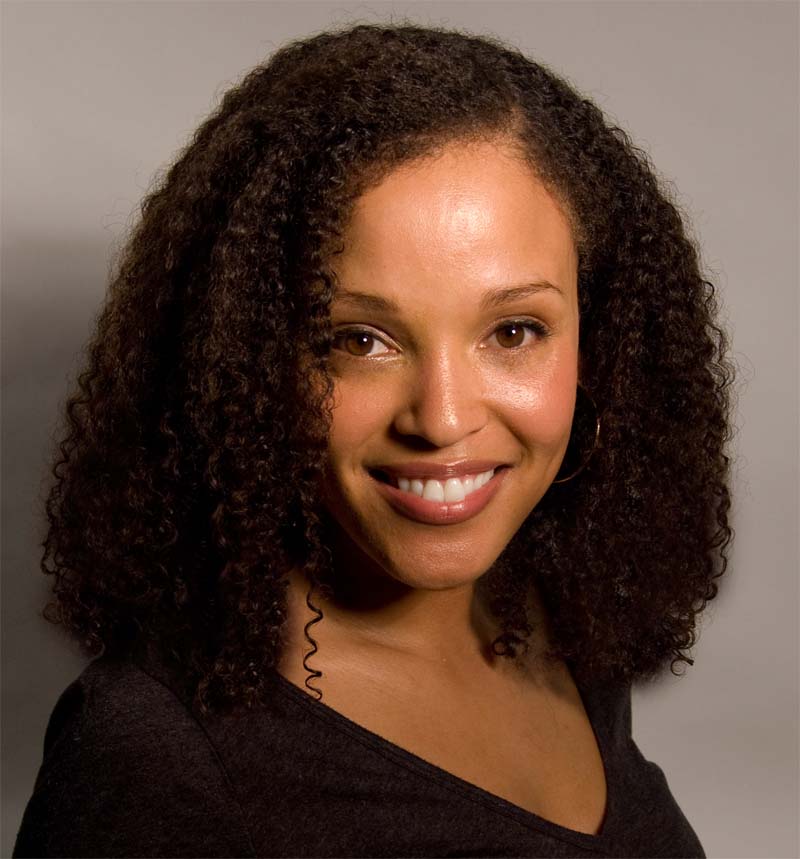
Jesmyn Ward (The Bat Segundo Show)

Jesmyn Ward appeared on The Bat Segundo Show #463. She is most recently the author of Salvage the Bones.

Condition of Mr. Segundo: Testing the limits of his fury towards the Bush family.

Author: Jesmyn Ward

Subjects Discussed: Smoothies, fruit, bad franchises, Edith Hamilton’s Mythology, what it means to be a mother and a woman, Medea, America’s lack of mythology vs. Greek mythology, life within a poor community, Katherine Boo’s Behind the Beautiful Forevers, an author’s responsibility to community, the regional limitations of contemporary American fiction, being made angry by comments relating to Katrina, Pat Robertson, Barbara Bush’s insensitive comments about Katrina, FEMA and Michael Brown, novels of ideas, the physicality of characters, sinewy muscles, stomachs in fiction, close third person vs. first-person perspective, bad models of womanhood in the natural world, language, China as an anagram of chain, words as tokens of physical identity, present stigmas against figurative language, collisional rhythm, Outkast and Deuteronomy, finding an incidental rhythm, when to resist feedback that gets in the way of a natural voice, violence in fiction, creating a ferocious and multidimensional dog in Salvage the Bones, being surprised by the middle, pit bulls, Manny as a conflict generator, the mysterious ghostly mother, Hemingway’s iceberg theory, sexuality and promiscuity, unstoppable emotional forces, not glossing over the truth, describing trees with limbs, paradisaical cesspools, keeping a natural environment alive, and finding the right details to depict impoverishment.

EXCERPT FROM SHOW:

Correspondent: You have Esch reading this Edith Hamilton book, especially Medea. And you also point out near the end that mythology won’t entirely help you out in a fix. Esch says that she is stuck in the middle of the book. And aside from Hamilton, I have to ask, did you draw on any other inspirational mythology when you were creating this book? Was there a point when you abandoned mythology at all like Esch? I wanted to start off here from the origin.

Ward: That’s an interesting question. I didn’t draw from any other mythology. I don’t think. Greek mythology, that was the thing in this book. I think in my first book I did — well, if you consider some of the older tales in the Bible mythology. I drew from some of those in my first book.

Correspondent: Do you consider them mythology?

Ward: Well, they are tales that explain how the world became what it is. So in ways, I think it is. But did I use any other sorts of mythologies in this, in Salvage the Bones? I don’t know. I don’t think that I abandoned it. I think that mythology’s important to her because it’s helping her understand what it means to be a mother and what it means to be a woman. So therefore, like even though she turns away from it, she still can’t help but go before the storm. To come back to that story and read more of Medea. Because see, she’s searching. And in there, she’s found something. She can’t figure out what it is. But she’s found something.

Correspondent: But it’s interesting that you would have her cleave to mythology in America, which is a nation that is constantly in search of its own great mythology. The Great American Novel. We’re Number One. You name it. I’m wondering if this mythological concern was in some sense related to, well, whatever American identity that Esch and her family had.

Ward: Well, I think she feels very much like an outsider. I think that the culture that she is from, that she lives in a small world — you know, a poor black community. I mean, I feel like they think they’re outside of that. They exist outside of that American dream. And so, in ways, they have to look elsewhere. And Esch, particularly, she finds that she is even more isolated than that community that her family is. Because she’s this only girl who grows up in a world full of men. So she really has to look outside what is easily available to her or in front of her in order to find some sort of kinship.

Correspondent: This leads me to wonder. Have you read Katherine Boo’s Behind the Beautiful ForeversWard: No.

Correspondent: Because your book, on a fiction level, reminded me of this great journalism book. Which I think you would love and I’m just in total admiration of. It basically deals with this inner life of the people who are poor, who are collecting trash on the edge of Mumbai. And your book reminded me very much of this response to typical First World guilt or what not. That instead of actually pitying or looking down upon these people, your book is very much about giving all of these characters a great inner life. They do live. And it’s important to remember that they live. And I’m wondering where this impulse came from. Whether this idea of allowing Esch and her family to live was in some sense a way for you to counter any accusations of “Well, I’m responding to politics” and so forth.

Ward: Well, I think that I write about the kind of people that I grew up with, and the kind of people that are in my family and about the place that I’m from. I mean, I’m from a poor rural Southern community that — at least in my part of the community, which is mostly black. And you know, our family’s been there for generations. And I have a very large extended family. I’m related to almost everyone in my town. And so, for me, it’s like writing about the people that I’m writing about — you know, I feel that it’s a responsibility. Because I’m writing about my people. Even though my path is very different from most of the people I grew up with, I still consider myself — you know, that’s still my place. And those are still my people. So for me, that’s what this is. I don’t feel like an outsider. I feel like an insider who’s speaking out for the rest of the people inside my group.

Correspondent: Sure. I totally understand that. Do you think that this is going to be how it’s going to be for your fiction career? That you have to respond to this responsibility of speaking for this group of people? Because nobody else will. Or, in fact, one might argue that maybe American fiction, or regional American fiction, isn’t actually hitting that particular territory. What do you think of this?

Ward: I mean, I think that for the foreseeable future, as far as my writing life is concerned, I intend to write about the place and the people that I come from. Because part of the reason that I do so — I mean, part of the reason that I wanted to write about Katrina is because I was uncomfortable and made angry by the way that I heard others speak about people who didn’t evacuate from the storm. About people who stayed. About poor people who were caught in the maw of that storm. And I wanted to write against that. And so in a way, I do think that the voices of the people that I write about, or even just the people that I write about, that they’ve been absent in the conversation, in the national conversation. And that’s part of what I’m trying to do by writing about them. Introduce their voices into the conversation so that people pay attention and people aren’t so quick to write them off as worthless or stupid or all the other crazy things that I heard after Hurricane Katrina.

Correspondent: Are there specific things that really pissed you off?

Ward: Well, I heard this one woman. She’s from Atlanta too, which is close enough. It’s six hours away from where I live. And she said that the reason that Hurricane Katrina had hit us and done so much damage is because we were sinful. That we were in a sinful place. Like, for her, it was very much about — you know, she was approaching it from a religious standpoint.

Correspondent: The Pat Robertson-like charge.

Ward: Yeah.

Correspondent: “Well, they brought it onto themselves.”

Ward: Yeah. So we deserved it because of our proclivity for gambling and drinking and all the rest. And then other people that I encountered said that, one, they couldn’t understand why people stayed. Why people would stay and try to survive a hurricane like that. And, two, that they didn’t understand why people would return and try to rebuild. Because what’s the point if global warming just means that there are going to be more storms, there are going to be just as powerful as Katrina and more of them are going to hit that part of the United States. And that comment really made me angry. Because that person was from L.A.

Correspondent: Yeah.

Ward: That person was from California, which has its own.

Correspondent: These bicoastal buffoons.

Ward: So I just heard commentary like that. And it just made me really angry. And I wanted to counter those. I really felt that our voices were absent from that. Especially that conversation. You had what’s her name. It’s Bush’s mother. Remember when she said that crazy stuff?

Correspondent: Barbara Bush.

Ward: Yeah. About the people from New Orleans. Like this was like a vacation for them. Because they got to go ahead and stay in the Astrodome. Like really? Are you serious? Just so far removed from the reality of these people’s lives and their struggles. Just so far removed. Comments like that just made me realize how, when people said them, it’s like they didn’t recognize our humanity at all. And that really made me angry, and made me want to address Hurricane Katrina in the book.

Correspondent: Well, this seems as good a time as any to confess to you, Jesmyn, that at the point where they are scrambling for their boiled eggs and their packages of ramen, and there is of course the depiction of the carton of bones in the fridge — and then they say, “Oh, well, FEMA and Red Cross will help us out.” At that point, I thought I had a maximum level of anger towards Bush and Brown. And then I read that. And I became even more furious towards them.

Ward: (laughs)

Correspondent: And you’re talking here about anger. And you’re talking about it in a very calm manner. And this book is extremely focused, I would say. So what did you do to not get so caught up in this understandably furious impulse and actually focus in on the book? Was it really the inner life of these characters that was enough for you to counter any socioeconomic, political responsive bullshit?

Ward: I think so. Because I feel that my book will fail if my characters are not alive on the page. There have been great novels of ideas, right? But, for me, the kind of writer that I am, I can’t write those novels. And I don’t think that they would be successful novels.

Correspondent: Why do you think you can’t write a novel of ideas? Or that the ideas are best represented in the environment that you set down?

Ward: I don’t know. It’s just not my style. What comes naturally to me is telling a story that’s invested in people and in the characters, and making them live on the page.

The Bat Segundo Show #463: Jesmyn Ward (Download MP3)

This text will be replaced

Emily St. John Mandel (The Bat Segundo Show)

Emily St. John Mandel appeared on The Bat Segundo Show #461. She is most recently the author of The Lola Quartet.

Condition of Mr. Segundo: Considering a new career as a sake mangler.

Author: Emily St. John Mandel

Subjects Discussed: Starting a novel from a comic place, Kafka, cornball jokes, never knowing how a book is going to end, Jayson Blair, trusting emotional instincts and finding a fun arena, starting off with a hook, money strapped to a baby carriage, numerous characters who shift their identity, the “mushy middle” problem, switching points of view to hold interest, E.M. Forster’s Aspects of the Novel, writing what you know, the risks of exquisite expertise, uncovering systems (real estate and trafficking), how a novel emerges from what Mandel happens to be reading, The Wire, straying from the path of curiosity, the inevitability of errors in fiction, car culture, A Clockwork Orange, how driving affects urban perception, Guy Debord, walking, finding a concrete narrative schedule out of chaos, disastrous offices, hard-core revision, the freedom of not knowing where you’re going, working out messy sentences, the difficulties of writing about sixteen-year-old girls, learning about people by reading their blogs, being an observer, trying to determine how to make a fake passport for research, not writing about people you know, compulsive behavior, seeking revenge and understanding in fiction, failed newspapermen, the diminished men throughout Mandel’s fiction, getting inside heads, Gina Frangello’s influence on The Lola Quartet, attempts to write characters with a singular identity, introspective writing, avoiding autobiography, memoir in the digital age, Cheryl Strayed’s Wild, Daniele Mastrogiacomo, being abducted by the Taliban vs. First World problems, confessing details to friends, how people forget that their digital details are shared with an audience, safe places to express emotions, Hari Kunzru’s Gods Without Men, Katherine Boo’s Behind the Beautiful Forevers, maintaining privacy and authenticity, Cory Arcangel’s “working on my novel” project, Foursquare, the burdens of party culture, time management, Freedom, characters whose hands shake, depicting behavior in fiction through shorthand description, metaphorical vampirism, heat strokes, intemperate climate, Dark Shadows, inventing a fashion style for an investigator, longing for an older age with more elegance, mutual efforts to introduce “dequirkify” into the English language, the Sasaki name and cultural names, beverage cues in intense social situations, physicality in fiction, trying not to repeat tropes, characters on the run, statute of limitations on mining from personal experience, dance, and what the Internet is for.

EXCERPT FROM SHOW:

Mandel: You know, I make a lot of stuff up. I don’t really feel like I’m an expert in any of these subjects. I’ll read the initial article. It will fascinate me. I’ll read some more online. I’ll follow some links. But I assume I’ve made enormous errors in all three books. Some of them I know about. I found out that there was a real Sebastian, Florida that was in a different part of the state. That was kind of embarrassing, but on the other hand…

Correspondent: It’s fiction!

Mandel: It’s fiction.

Correspondent: It’s fiction. Exactly.

Mandel: Yeah. And there’s a car that doesn’t exist in Last Night in Montreal.

Correspondent: Which car?

Mandel: You know, it’s funny. It shows why you should always Google everything. I had these vivid childhood memories of our family’s first car being in a blue Ford Valiant. And that memory was so strong that I didn’t bother to look it up. It turns out the Valiant is made by Chrysler.

Correspondent: I see.

Mandel: So, you know, eight or ten people have helpfully pointed that out.

Correspondent: On the other hand…

Mandel: It’s fiction. (laughs)

Correspondent: Look, I will always remember the Durango 95 from Anthony Burgess’s A Clockwork Orange. Or rather the cinematic version of it. It just, for whatever reason, leaves a huge thumb out. And it’s possibly more real than any car I’ve driven in my life.

Mandel: Right.

Correspondent: Well, that’s quite interesting. I mean, speaking of cars, I wanted to ask you about the one common metaphor I’ve seen in the last two books. The trail of red taillights. And it pops up in this one again!

Mandel: Oh, does it?

Correspondent: It does.

Mandel: Oh, you’re right. I had taillights disappearing down Park Avenue at the same exact time. I completely forgot about that.

Correspondent: I’m wondering. You know, I was going to ask you about this. Should any writer repeat an image that is fond to her over the course of several books? What do you think about this?

Mandel: I think they probably should. And I think I did that by accident.

Correspondent: Okay. Well, what is it about the taillights that draws you?

Mandel: You know, there’s something beautiful about them. It’s a little wistful. We’re all going away.

Correspondent: Do you own a car?

Mandel: I do not. No, I’ve never learned how to drive.

Correspondent: But cars clearly are an interest of yours, I would think.

Mandel: To some extent. Cars are more — it’s more that they’re a little bit inevitable when you’re writing books that are set outside major cities. You have to move your characters around somehow.

Correspondent: I totally skimmed over the most interesting part. You never learned how to drive.

Mandel: I never did.

Correspondent: Really?

Mandel: No. So in Canada. I’m not sure if it’s the same here. You get your driver’s license at 16.

Correspondent: Yeah. Same here.

Mandel: So when I was sixteen, I didn’t really have access to a car. Because my parents used their cars all the time for their work. And then when I was eighteen, I moved to Toronto. So at that point, I was 3,000 miles away in a major city with a transit system. And I’ve just lived in big cities ever since. So it’s never really been a desire or an opportunity.

Correspondent: It hasn’t been a desire?

Mandel: It hasn’t been a desire.

Correspondent: I mean, I only drive if I have to go from city to city. But going on that road trip and cranking up music and going 90 miles per hour down a highway is a wonderful sensation.

Mandel: Right.

Correspondent: You’re missing out, Emily!

Mandel: But I love being a passenger in those situations. My husband…

Correspondent: Yeah. But driving, you have control. (laughs)

Mandel: That’s an excellent point. Maybe for the next book tour, I should. (laughs)

Correspondent: Okay. Well, that’s interesting. So you have no desire to get behind the wheel. I mean, this must affect your view of cities and your view of places. Do you think?

Mandel: To some extent.

Correspondent: We can go all Guy Debord if you like.

Mandel: Right.

Correspondent: I know you’re a big walker and so forth.

Mandel: I am.

Correspondent: Do you feel that not driving or not having a desire to drive gives you a connection with a place that hard-core driving does not? Have you thought about this?

Mandel: That’s interesting. I haven’t thought about that. You know, I’m not crazy about car culture. I grew up in a very rural place. You needed a car to get anywhere. And I visited a few cities where you needed a car to get anywhere. And it makes your life so inactive in a way. You know, I know a lot of people whose only real activity is going from home to the car and then from the car into the office. And vice versa at the end of the day. And I just prefer to be more — I don’t want to imply that they’re not engaged people in the world. But my preferred form of engagement with the world is doing a lot of walking and being out among people.

Correspondent: And the reading time on the subway too.

Mandel: Yeah. Exactly.

The Bat Segundo Show #461: Emily St. John Mandel (Download MP3)

This text will be replaced

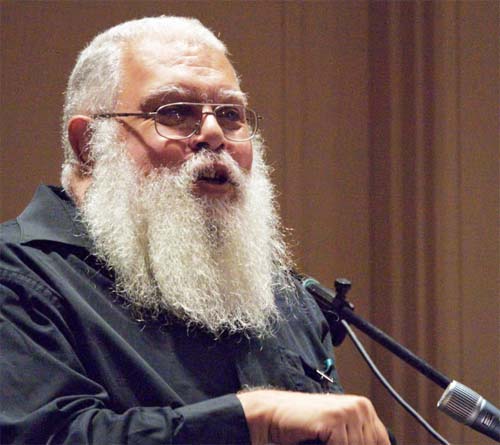
The Bat Segundo Show: Samuel R. Delany

Sameul R. Delany appeared on The Bat Segundo Show #459. He is most recently the author of Through the Valley of the Nest of Spiders.

Condition of Mr. Segundo: Growing a beard to make up for lost time.

Author: Samuel R. Delany

Subjects Discussed: Literary beards, spending the same amount of money on books as food, how many books Delany has read, developing a cataract, Jason Rohrer’s Passage, the structure of Spiders, time moving faster as you get older, Delany’s academic career, the amount of sex contained within Spiders, the male climacteric, how the body changes, About Writing, including a short story in a novel, the original version of Spiders in Black Clock, seven years contained within the first 400 pages, E.M. Forster’s Aspects of the Novel and fleshing out the idea of “writing what you know,” Lear and “runcible,” Times Square Red Times Square Blue, the Dump vs. the Deuce, the pre-1995 porn theaters in Times Square, transplanting New York subcultures to Georgia, the importance of institutional support to a community, gay conservatives, inventing the Kyle Foundation, Goethe’s Elective Affinities, Steven Shaviro’s thoughts on Delany’s intensities, transgressive behavior, connections between The Mad Man and Spiders, pornutopic fantasies, Hogg, when pornotopia sometimes happens in reality, Fifty Shades of Grey, balancing the real and the fantastical in sexual fiction, Delany’s usage of “ass” and “butt,” how dogs have orgasms, making a phone call in the middle of dinner to find out about sexual deviancy, why Shit does a lot of grinning, Freu and infantile sexuality, the paternal thrust to Shit and Eric’s relationship in Spiders, the difficulty of reading Spinoza’s Ethica, whether a philosophical volume can replace the Bible, living a life driven by one book, Hegel, Kant’s Critique of Pure Reason, movies vs. books, interclass conflict, Peter Jackson’s films, how mainstream culture relates to subcultures, Jackson’s original notion of the King Kong remake as Wagnerian ambition, Tristran and Isolde, turning up the idealism dial, whether art can live up to pure ambition, the myth of the wonder decade, living through the 50s and 60s, Freedom Rides, people who are diaphanous to the forces of history, the Beatles, peasant indifference during the Dreyfus affair, the impact of not knowing the cultural canon, nanotechnology, John Dos Passos, fiction which responds to present events, life within California, living in San Francisco, how Market Street has changed, assaults on the homeless in San Francisco, the Matrix I and II programs, the gentrification of the Tenderloin, novels of ideas, whether or not genre labels hold conceptual novels hostage, market conditions that hold ambitious fiction back, Delany’s nine apprentice novels, trunk novels, and editorial compromise.

EXCERPT FROM SHOW:

Correspondent: There’s this video game art project called Passage by Jason Rohrer. Have you heard of this?

Delany: No.

Correspondent: Okay. Because your book reminded me very much of this.

Delany: Really?

Correspondent: I’ll have to forward you the link. Basically, it’s this sidescroller. It’s in a 100 pixel by, I think, 13 pixel window. And you control this person who goes from left to right. From beginning to end of life. And you pick up a partner. In fact, you grow a beard.

Delany: (laughs)

Correspondent: And you die at the end. And it takes the 8-bit sidescroller and it turns it into this unexpectedly poignant moment. If you play it enough times, you can move the cursor down and actually have the figure go into this mire and collect stars, but maybe not have a partner or maybe meet an early demise there. And it absolutely reflects what life is. And I read your book, and I was extremely aware of the physicality. Not just because it was an 800 page book, but because the first 400 pages is basically these escapades of lots of sex, youthful brio, and so forth. And then, suddenly, decades flash by often when we read this. And I’m curious, just to start off here, where did the design of this structure come from? I know you’re very keen on structures. You’ve written about this many times. But how did this come about in Spiders?

Delany: Well, it came from being a person who’s gotten older. I just had my 70th birthday.

Correspondent: Yes. Happy birthday.

Delany: Thank you very much. And one of the things that does happen, and it’s a really interesting phenomena, is that time seems to go a lot faster as you get older. When you were young, time takes forever. You go to the doctor. You wait around for two hours in the doctor’s office. It seems like three months. Whereas I went to the doctor’s office this morning. I went in. And the next thing I knew, I was on my way here. And I’d been there about two and a half hours. And it didn’t seem that any time had passed at all. And I was at the University of Massachusetts between 1988 and 1999, for eleven years. And that seemed much longer than the last twelve years, thirteen years, that I’d been at Temple University, where I’ve been there from 1999 to this year, 2012. And that seems much shorter than the eleven years that I was at UMass. And there’s no way to avoid this. As you get older and older, time just begins to rush by. And I wanted to get this. So actually, the time goes faster and faster through the book. But at a certain point, you realize, “Oh wait a minute! It’s rushing along.” As one of the reviewers said, decades drop out between paragraphs. Well, that’s what happens. That’s how your life kind of goes. So in that sense, the structure of the book is based on the structure of my own experience.

Correspondent: What’s very strange though — I read the book and, actually, I started missing the sex after that 400 page mark. I mean, all of a sudden, wait a minute, they’re not having so much sex anymore. There isn’t all the snot stuff and the pissing and the corprophiia and, of course, the father-son stuff. All of a sudden, we don’t have a lot of that at all. And then you drop some, quite literally, serious bombs later on in the book. And this leads me to ask…

Delany: Well, the sex doesn’t vanish.

Correspondent: Well, of course. It’s there. It keeps going on.

Delany: I mean, the sex is there. But it’s the sex that someone older has. And one of the things that they have to deal with is the fact that your body changes as you get older. And somewhere between 50 and 60, you go through the equivalent of the male climacteric. Which is a very strange thing to go through. Quite as odd…

Correspondent: Oh god. Thanks for warning me.

Delany: Quite as odd as, what is the term for women?

Correspondent: Menopause.

Delany: Menopause, yes. It’s very much like the menopause. And somehow you’re not warned. You aren’t warned how it’s going to change. Everybody notices the body changing. From ten to twenty, there are going to be a lot of changes. But there are going to be just as many changes from twenty to thirty, from thirty to forty, forty to fifty, fifty to sixty. You konw, I’ve been with my partner now, Dennis, for almost twenty-four years. And we still have a sex life. And we’re very fond of one another and very close. But it’s different. Things do change. And that’s one of the things that it’s about. I wanted to explore what the relationship of two men who were notably older was. And so I tried to do that.

Correspondent: You have said also in About Writing, which I’m probably going to be cribbing a lot from for this conversation, that a short story’s not exactly the best thing to include in a novel. And yet this book arose out of a short story that was published in Black Clock. Which leads me back to the original query. How did this thing become structured? How did this take on a life of its own?

Delany: Well, I had to throw away the whole second half of the original short story and rewrite something that flowed into the novel. If you actually compared it, the opening couple of scenes are very similar, although not identical by any means. There were lots of changes all through it. From the very first paragraph. But I wanted to use that as a kind of jumping off point.

Correspondent: Well, that’s one hell of a jumping off point. 800 pages. I mean, why do you think that you were interested in exploring such an expansive format? Why did Eric and Shit demand this sort of attention?

Delany: Well, because I wanted to talk about a lasting relationship between two men. And a very committed relationship. They’re very close to each other. They’re absolutely fixated on one another. I mean, neither one of them could really make it without the other. Which is the tragedy that Eric is faced with at the end. So I just wanted to explore that and see what happened, and deal with all these things. The time speeds up in the first half of the book too. The first 400 pages basically take, what, about seven years. So that’s even years. That’s a good Dickens novel. (laughs) But this is a book that goes on for basically sixty or seventy years.

Correspondent: Yeah. I wanted to also talk about the location. Since my name is Ed, I have to bring up another Ed. E.M. Forster. You have often quoted the advice given in Aspects of the Novel.

Delany: “Write what you know.”

Correspondent: “Write what you know.” But your idea here is to build upon that and say, in addition to writing what you know, it’s very good to keep the writing alive and energetic if you write about something that you’ve only experienced a few times.

Delany: Right. Exactly.

Correspondent: And in this, it’s interesting because it should be evident by your Lear-like use — another Ed — of “runcible” that this Georgia is a fantasy of sorts.

Delany: Yes. It’s a fairytale. The whole book is an 800 page fairytale.

Correspondent: Exactly.

Delany: By which I mean things like Don Quixote. (laughs)

Correspondent: Of course. But my question is: You’re almost writing what you know and you’re writing what you don’t know, or only know a little bit of. Because we have to go to Times Square Red Times Square Blue, which I also read. You write about a man in that named Tommy. He wears a sleeveless denim jacket. Well, there’s a guy with a sleeveless shirt here. And he collected scrap metal. Not unlike this. You look at The Dump. It could also be The Deuce. The Opera House. It could also be the Metropolitan Opera House.

Delany: Easily. Well, it wouldn’t be the Metropolitan. But it could be one of the old porn theaters before ’95. Before New York closed them down.

Correspondent: I guess my question though is: by putting much of these viewpoints that you have raised both in your fiction and your nonfiction to Georgia, to the edge of the earth quite literally, I mean, what does this allow you to do as a fiction writer? How does this allow you to explore a subculture that, say, keeping everything in New York would not?

Delany: Well, one of the things that I wanted to show is that the kind of life that Eric and Morgan — his nickname is Shit.

Correspondent: You can say “Shit” here.

Delany: That Eric and Shit lead — as I said, besides being a fairytale, is also — well, I’m trying to figure out a good way to put this. In some ways, it’s kind of didactic. It’s almost like a Bildungsroman. They have to learn how to live their life. And it can’t be done — and this is, I really feel — and this is one of the reasons why it had to be a fairytale — it needs institutional support. Which is why there has to be the Kyle Foundation and why there has to be a certain support, a certain community support for what they’re doing. And at the same time, they’re very much on the margin of this community. They’re not in the center of this community. So that people like Mr. Potts, for instance. A very conservative man who just doesn’t want his nephew, who has come down to spend the winter with him, associating with these riffraff who use the gay-friendly restroom. Because he doesn’t like the idea of gay men using the restrooms at all.

Correspondent: Where did the Kyle Foundation come from?

Delany: It was purely out of my head.

Correspondent: Really. Because there’s a specific phrasing in their mantra: “an institution dedicated to the betterment of the lives of black gay men and of those of all races and creeds connected to them by elective and non-elective affinities.” And that phrasing recalls any number of Islamic foundations and the like.

Delany: And also the Goethe novel.

Correspondent: Yes!

Delany: Elective Affinities.

Correspondent: So that was really more where it came from?

Delany: It came more from Goethe than it did from Islam.

Correspondent: Sure. Steven Shaviro. He has pointed out that the intensities of your pornography are never presented as transgressive. Now in a disclaimer…

Delany: Although this is pretty transgressive.

Correspondent: Well, of course. I want to talk about this. Because in a disclaimer to The Mad Man, of which we see statues of something that crops up in there appearing in this, you called The Mad Man “a pornotopic fantasy: a set of people, incidents, places, and relations among them that never happened and could not happen for any number of surely self-evident reasons.” Well, there is no such disclaimer for Spiders and we see much of the same stuff, as I said. Piss-drinking, shit-eating, you name it. I’m wondering. How does a pornotopic fantasy — how does one of these, whether it be The Mad Man or Spiders or even the infamous Hogg, how does this help us to understand or come to terms with the realities of sex and what the present limits are? What some people might call deviancy today or perhaps yesterday.

Delany: Well, literature is divided into genres like that. You have the world of comedy, the world of tragedy. And you have the world of pornography. And each of them is a kind of subgenre. And sometimes they can be mixed. You can go from one to the other. And I think pornotopia is the place, as I’ve written about, where the major qualities — the major aspect of pornotopia, it’s a place where any relation, if you put enough pressure on it, can suddenly become sexual. You walk into the reception area of the office and you look at the secretary and the secretary looks at you and the next minute you’re screwing on the desk. That’s pornotopia. Which, every once in a while, actually happens. But it doesn’t happen at the density.

Correspondent: Frequency.

Delany: At the frequency that it happens in pornotopia. In pornotopia, it happens nonstop. And yet some people are able to write about that sort of thing relatively realistically. And some people aren’t. Something like Fifty Shades of Grey is not a very realistic account.

Correspondent: I’m sure you’ve read that by now.

Delany: I’ve read about five pages.

Correspondent: And it was enough for you to throw against the wall?

Delany: No. I didn’t throw it. I just thought it was hysterically funny. But because the writer doesn’t use it to make any real observations on the world that is the case, you know, it’s ho-hum.

Correspondent: How do we hook those moms who were so driven to Fifty Shades of Grey on, say, something like this?

Delany: I don’t think you’re going to. I think the realistic — and there’s a lot that’s relatively realistic about it and there’s also a lot that isn’t. Probably less so in this book than in, let’s say, The Mad Man, which probably has a higher proportion of realism to fantasy.

Correspondent: I also wanted to ask you — what’s interesting is that there is almost a limit to the level of pornography in this. There’s one funeral scene where something is going to happen and they say, “Nuh-uh. You’re not allowed to do that. Show some respect.” And roughly around the 300 page mark, I was very conscious of the fact that you didn’t actually use the word “ass.” And you were always using “butt.” (laughs)

Delany: I didn’t even notice.

Correspondent: And so when “ass” showed up, I was actually shocked by that. So I’m wondering. Does any exploration of sexual behavior, outlandish sexual behavior or sexual behavior that’s outside the norms of what could possibly happen, whether it be frequency or density or what not — does it require limits with which to look at it? With which to see it in purely fantastical terms?

Delany: Well, I think one of the things that you need to write a book, especially a book this long, is you need a certain amount of variety. And I think that this is perhaps a failing. There are only so many things that you can do. I think I give a good sampling of them. But every once in a while, I’m sure it probably gets somewhat repetitious.

Correspondent: Well, it’s a good variety pack. But it’s also: “Okay, reader, you have to get beyond these first 350 pages and then, by then, you are actually able to get into totally unanticipated territory and I’ve already locked you in.” How did you work that out?

Delany: One of the things is that you try and keep telling interesting things about the sex. I mean, things that can be observed about the world that is the case. I mean, I tried to talk about the sex in terms of — I don’t think most people know how a dog has an orgasm.

Correspondent: How do we find this out? (laughs)

Delany: Uh, there’s a wonderful website. (laughs)

Correspondent: (laughs)

(Image: Ed Gaillard)

The Bat Segundo Show #459: Samuel R. Delany (Download MP3)

This text will be replaced

The Bat Segundo Show: Timothy Noah

Timothy Noah appeared on The Bat Segundo Show #458. He is most recently the author of The Great Divergence.

Condition of Mr. Segundo: Holding onto the remains of his wallet.

Author: Timothy Noah

Subjects Discussed: The 1984 “Morning in America” ad, why the American public gets suckered into the American Dream panacea, the Kuznets curve, the decline of the bank teller, Obama’s 2012 State of the Union speech, closing the skills gap as the present Democratic position for increasing jobs, the WPA, high school graduation rate decline and skilled labor demand in the 1970s, universal early education, the high school movement, Richard Vedder’s notion of janitors with PhDs, college tuition being priced out of reach for the middle crisis, the 1% vs. the 99%, the American inability to grapple with income inequality, overseas jobs, Germany’s ability to hang onto its manufacturing sector, the decimation of the American labor movement, Alan Blinder’s ideas about an increase in skilled overseas jobs, the Lewis Powell memo, Bryce Harlow, Wal-Mart’s war upon unions, the dismal dregs of union culture in 2012, Occupy Wall Street and anti-activist regulations, Walter Reuther, the gender gap in higher education and with job income, decline of the male median income, closing the gender gap in income, sexism’s strange legacy, how women have exempted themselves from the great divergence, how immigration developments during the 20th century impacted 21st century labor, Paul Samuelson’s views on immigration, the benefits of unskilled labor, high school dropouts and declining wages, the recent Mexican immigration dropoff, checking up on Jim and Ann Marie Blentlinger, Bob Davis and David Wessel’s Prosperity, upward mobility and government jobs, the collapse of the US Postal Service, the brief benefits of computerization, being honest about the decline in upward mobility, and the expiration date of American exceptionalism.

EXCERPT FROM SHOW:

Correspondent: What about overseas jobs? I mean, two-thirds of all the people who made or sold iPods in 2006, as you point out in the book, were located overseas — most in production jobs. One of your solutions in the “What to Do” section at the end is to import more skilled labor. What of these Apple production jobs? I think I’m returning to what we were talking about earlier, about the difference between skilled labor and unskilled labor and moderately skilled labor. Surely, there needs to be some sort of infrastructure in place. Some patch till we actually get to this great skills gap solution which we seem to be talking about. I mean, it just seems to me that we’re trying to fight a very difficult problem with a form of idealism that is just incompatible with that reality.

Noah: Well, it’s very hard to compete globally for low skilled jobs. Because it’s a race to the bottom. You end up engaging in wage competition with some of the poorest countries in the world and that’s not going to make anybody prosper. If you look at a country like Germany, they’ve managed to hang onto their manufacturing sector. But the way they’ve done it is they have gone after the highly skilled manufacturing jobs. Of course, they also have a much more healthy labor movement. Here in the United States, we’ve had the labor movement been decimated or down and out. 7% of all employed workers. So another part of the solution is to rebuild the labor movement. I’m not saying that it’s going to be easy to address these problems. But in talking about ways to address them, I decided there was really very little point in pretending that tiny little solutions were going to do much. I think it’s time to start a discussion about some of the more ambitious things we can do.

Correspondent: But as you also note, “If you have a job that you can perform from home, it’s worth asking yourself whether an English speaker could perform the job tolerably well from halfway around the world at one thirtieth the pay.” Do you think that America has the obligation to give everybody a job? That that might actually be the solution in some way? Or do you think the labor force really needs to revert to its inherent skills? Or skills that they can actually acquire to get those jobs? I think I’m trying to get an answer from you in terms of whether it’s actually the corporations’ fault or whether it’s education’s fault or whether it’s the people who are unskilled — whether it’s their fault.

Noah: Well, I don’t know whose fault it is, per se. I mean, I think our workers need to acquire those skills one way or the other. And anything we can do to encourage that would be good. Because offshoring is a real problem. Although interestingly, the projections from here forward are that offshoring will have a bad impact on our economy. But it won’t continue probably to have a very bad impact on income inequality. And that’s because those other countries are now coming after the skilled jobs. And it will be very interesting politically to see how that plays out. There are a lot of affluent people who, when you talk about other countries eating our lunch in manufacturing, they say, “Well, we need free trade. You have to have capital flow across borders. Otherwise, we won’t have prosperity.” Well, I wonder if they’ll still be saying the same thing when suddenly you have, for example, American radiologists competing with radiologists overseas. You’ve already got a bit of that. And there are any number of very highly paid jobs that could be performed offsite. And Alan Blinder, an economist at Princeton, he says that he actually thinks that slightly more of the offshore jobs of the future will be skilled rather than unskilled.

Correspondent: Wow. Well, in 1971, Lewis Powell wrote a memo: “The American economic system was under attack from Communists, New Leftists, and other revolutionaries,” as well as “perfectly respectable elements of society.” So this memo results in this tremendous flurry of pro-business lobbying from organizations and so forth. Various consumer-oriented laws are killed through this effective lobbying. And that was forty years ago. Now pro-business lobbying today is arguably more pronounced than then. You point out in the book the figure — that the Chamber of Commerce spent $132 million in 2010. As you point out, not a single labor union could be found among the top twenty lobbyists. So how then can any pro-labor organization make a serious dent with these particular states? I mean, what hope is there for a modern day Walter Reuther in this post-Taft-Hartley age?

Noah: Well, it is true that the corporate power in Washington has vastly increased. And it increased not just because of the Powell memo, but really throughout the late ’60s and the 1970s, you had corporations absolutely flipping out at the rise of the regulatory state and counter-culture politics and Ralph Nader. And one person I write about in the book a great deal is Bryce Harlow, who is best known as a White House aide in the Nixon White House, where he was kind of a good guy. He was trying to keep Nixon honest. Failed at that, but he was considered one of the few honorable men in the Nixon White House. That’s all true. But he had a separate role where he spent most of his career post-1960. And that was as the Procter & Gamble representative in Washington DC. In 1961, when he came to work for Procter & Gamble, there were just a handful of corporate representatives in Washington DC. And Harlow looked around and thought, “We need troops here.” And he started going around the country and evangelizing and giving speeches saying, “We need to build up corporate power in Washington.” And one of the things I really like about Harlow is that he didn’t mince words. He identified the enemy as a movement towards greater equality. Sometimes people say, “Well, what does the rise of corporate influence in Washington have to do with equality?” Well, Harlow himself made the connection. And he succeeded. And Lewis Powell wrote that memo in ’71. Succeeded. Over time, corporations were bestirred to increase their presence in Washignton. Increase their lobbying. And they get a lot more done actually through lobbying than they do through campaign contributions. And as a result, you saw a change in our politics. It hurt the consumer movement. And it hurt the general movement towards greater equality. So, yes, that makes the task a lot more difficult. But I don’t think there is a bigger, more important challenge to liberalism right now than to find a way to rebuild the labor movements somehow.

Correspondent: Do you have any ideas on this? Because it’s pretty decimated and gutted. As you point out, the Walmart situation is terrible.

Noah: Yes. In part of the book, I have a narrative about the attempt to unionize a Wal-Mart in Colorado. And the extent to which the deck is stacked against labor is not to be believed. It is literally true that nobody has ever managed to unionize a Wal-Mart, except for once when the meat cutters in some place in Texas managed to get themselves declared a bargaining unit. And they voted to unionize. And what do you know? About a week later, Wal-Mart said, “We’re not going to be cutting meat anymore. We’re just going to be selling prepackaged meat.” So it is very, very difficult. But there’s an interesting idea that’s been put forward by Richard Kahlenberg of the Century Foundation. Part of the underlying problem is simply a matter of law. I mean, laws favor management over unions. And the ultimate source of this is the 1947 Taft-Hartley law. Which was passed right before the peak of the union movement. But it acted as a slow-acting poison on the labor movement. So you need to roll back Taft-Hartley. And you need to revitalize the National Labor Relations Board. And Kahlenberg’s idea is: he says, “Look, nobody seems to really — it’s been multiple generations since anybody got really excited about workers’ rights. So rather than frame this as labor rights, why don’t we frame it as a civil right? Why don’t we pass a law saying that it is a civil right protected by the Civil Rights Act to organize a union?” It is actually illegal for a boss to fire somebody for trying to form a union. But the law is so weak that, as Kahlenberg says, it’s actually economically irrational for bosses to obey that law. But if you were to extend protection of the Civil Rights Act, then workers would be able to take their bosses to court and sue them. And that might change the equation. That might help.

Correspondent: I agree with you. But unfortunately, as we saw with the healthcare debate, framing anything as a civil right creates a protracted battle and constant gridlock and endless concessions. And as you pointed out with the Wal-Mart example, businesses are pretty much free to do whatever they want. If someone’s going ahead and being an irksome worker, well, we’ll go ahead and whack that part of our operations out. So is there any hope for labor when you have legislation against them and you also have this anything goes, unfettered approach from Wal-Mart and the like?

Noah: Sure. There’s always hope. There’s always hope. There was a time. If you go back to 1932, things were looking pretty bleak then too. And we got a government that was pro-labor And really the growth of labor unions was largely a result of the New Deal. So government could make it happen again. It’s very difficult in this environment, I will grant you. There is a huge amount of demonization of labor. I was talking with a liberal economics writer the other day. And he was saying, “The problem with labor unions is that labor unions in America, they have this culture that’s so adversarial.” And I said, “Culture? Culture? They’re down to 7% of the private sector workforce. You can have any culture you want. Because they’re going to be starting from scratch.” So I think there needs to be — as I say, it is the most difficult challenge. But I don’t think you’re going to see any substantial improvement towards equality without empowering workers. There’s just no reason for bosses to pay workers a lot of money if they don’t have to.

Correspondent: Do you think any movement that would actually amend some of these problems is not being adversarial enough? I mean, even Occupy Wall Street has to be careful. Because you have the police issuing all of these crazy regulations, as we saw with Federal Hall. And now you have competing statutes of how they can protest. The world’s most exclusive club at 25, as we saw. So the question is, well, they have to remain calm. Which is totally unprecedented if you look at our history. If you look at bombs going off in Wall Street decades before. So maybe the economics writer who you were talking to might, in fact, be right. That the problem is also cultural as well. Do you think that?

Noah: Well, you just need to be strategic about the proper methods to use. I think there are certain situations where an adversarial approach is called for. There are other situations where a cooperative approach is called for. One thing that distinguishes European — Western European — labor unions from American ones is they are more cooperative. They have a part of a three-part partnership between industry and labor and the government. Walter Reuther, who was I think maybe the greatest labor leader who ever lived, was the president of the United Auto Workers in the 1940s, the 1950s, and the 1960s. And he tried very hard to establish something like that European model here. And it’s fascinating. He was a brilliant man. And he was constantly proposing things to management that would actually help the company. He would say — for example, after World War II, he said, “My workers will sacrifice some pay because we need to worry about postwar inflation. They will sacrifice some pay. But they have to see that management will show some restraint too by not raising the price of cars.” And this was a time when auto sales were oligopolistic in the United States. It didn’t have a lot to do with supply and demand. So you could knock the price down of the car and still have plenty of profit. Reuther would say — there’s actually one instance — I can’t remember if it was that instance or another one — where he was actually told, “You know, Walter, that’s a really good idea. But because it’s your idea, we’re not going to do it.”

The Bat Segundo Show #458: Timothy Noah (Download MP3)

This text will be replaced

The Bat Segundo Show: Florence Williams

Florence Williams appeared on The Bat Segundo Show #457. She is most recently the author of Breasts.

Condition of Mr. Segundo: Contemplating a new career in unique dairy products.

Author: Florence Williams

Subjects Discussed: The history of breastfeeding, formula ushered into the industrial age, artificial selection and breasts, 19th century mothers who raised infants on oatmeal, infant mortality, contaminants within breast milk, the recent Time breastfeeding cover controversy, finding flame retardants in breast milk, why formula isn’t a particularly pure product, public breastfeeding laws, lactating moms with pitchforks, phthalates, the difficulty of studying the effects of industrial chemicals on humans, chemicals untested on humans, California’s Proposition 65, being helpless in the wake of Beltway indifference to industrial chemicals, the increase in breast cancer, the Komen for the Cure controversy earlier in the year, breast cancer awareness, increased rates of breast cancer in China, Zena Werb’s molecular research, the Burke and Hare murders, murdering the poor and selling organs to anatomists, burking, John Landis films, the Anatomy Act of 1832, studying breasts at the cellular level, studying rat mammaries to understand humans, the Dr. Susan Love Research Foundation, ideas on implementing Google Maps for milk ducts, breast apps, knowing more about the cow diary industry than human milk, red wine, the human milk demographic, thought experiments on a human cheese market, making money from human milk, prebiotics, the human breast milk black market, how to confuse vegans with breast milk, imagining a world where one can pick up a gallon of human milk in a bodega, breast enlargement, Dr. Michael Ciaravino and his Houston breast augmentation factory, breasts and patriarchal associations, pornography being ratcheted up, boosting the self-esteem of girls, the virtues of small breasts, Timmie Jean Lindsey and the first breast implant, the problems with objectification from several angles, the problems with early silicone implants, the Dow Corning class action lawsuit, women with breast implants who lose nipple sensation, the marketing of breast implants, the inevitability of living with toxic dust and radiation, and the Stockholm Protocol (and the United States’s failure to sign it).

EXCERPT FROM SHOW:

Correspondent: I wouldn’t to actually get into the history of breastfeeding. Before the 20th century, of course, breastfeeding was the main method of feeding babies. Then we have postwar life ushering in formula and so forth. It has been pointed out, as you say in the book, by evolutionary biologists that 6,000 human genes relating to lactation are among our most stubbornly conserved ones and, if natural selection as even Darwin has pointed out is in favor of lactation, my question to you is: why is artificial selection through industry so very much against it? Just to get things started here.

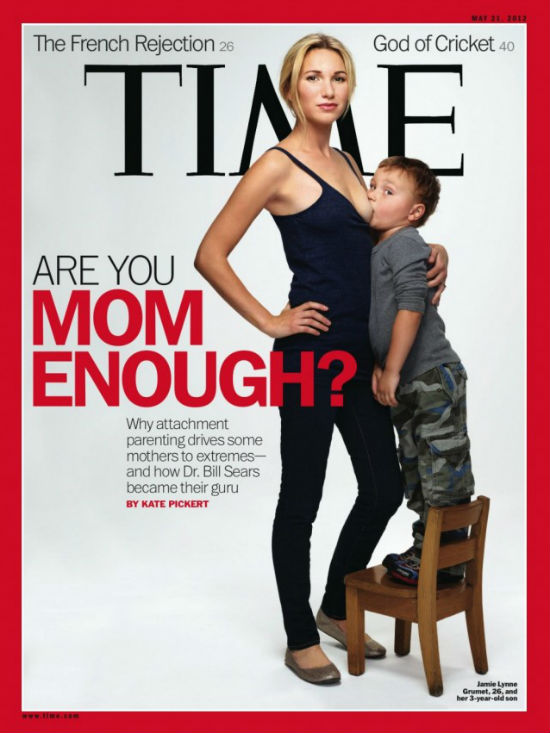
Williams: Oh, that’s a big question. Well, you know, there have always been women throughout history — even in our deep evolutionary past — who didn’t want to breastfeed or who couldn’t breastfeed. Of course, many women died in child birth. There were lots of breast infections, as well as other infections related to child birth. And so sometimes women couldn’t produce enough milk. And so as I point out in the book, actually wet nursing is one of the oldest professions known to humankind. You know, humans are very flexible and picky in their feeding habits. And some populations wouldn’t wean their infants for years. Three, four years. The recent cover of Time Magazine was so shocking because it had a three-year-old on the cover. But, in fact, the human race would not be here if it weren’t for toddlers breastfeeding in our deep evolutionary past. And then there have always been populations that wean their young earlier. So when formula came along, many, many women thought this was a great liberating phenomenon and invention. And, you know, they went for it with greater and lesser success, I would say. You know, in the 19th century, women sometimes tried to raise their infants on oatmeal, basically, and cow’s milk.

Correspondent: That was sort of the formula of its time.

Williams: That was the formula of its time. It was often a total disaster.

Correspondent: I would imagine oatmeal wouldn’t be exactly quite the same constituency.

Williams: It’s not really everything you need. And so infant mortality was really high among infants who were not breastfed. Fortunately, now, formula is pretty good at approximating the nutritional needs of the infant. But as we’re learning more and more all the time, breast milk isn’t just a food. It’s a medicine.

Correspondent: It’s a way of life.

Williams: It’s a way of life. (laughs)

Correspondent: Sorry. But it is actually a way of life — in all seriousness. As you point out in this book, there’s also a good deal of adulterated breast milk that is running around right now. We’ll get into the whole phthalates and plastic chemicals in just a bit. But I’m wondering. Why aren’t we considering this? I mean, I guess your book is a starting point. Or is this, in fact, one of the serious issues that scientists are presently looking into? Or is it?

Williams: Oh yes. It is. You know, breast milk now has been known to have contaminants in it from the industrial world. I tested my breast milk while I was breastfeeding my second child and I found out that I had flame retardants and jet fuel ingredient. Trace amounts of pesticide.

Correspondent: That’s what you get for having a pilot career.

Williams: (laughs)

Correspondent: Oh, you didn’t have a pilot career! I see.

Williams: Oops! I didn’t have a pilot career.

Correspondent: Wow.

Williams: We all have these substances coursing through our bodies. Unfortunately, some of them really collect in fatty tissue in the breast. And then the breast is really masterful at converting these substances into food. So it ends up in our breast milk. But I would point out that I did continue breastfeeding. I was convinced that the benefits still outweighed the risks. And, of course, formula is not a completely pure product either. It’s also contaminated with heavy metals and pesticides and whatever else is in the water that you’re mixing it with. And then, you know, of course there are sometimes these scares that come out of China where you find melamine and other weird additives in the formula. So unfortunately, I feel that we’ve taken this miraculous evolutionary substance and we’ve degraded it to the point where you can really now almost compare to formula.

Correspondent: So we can, in fact, compare sullied breast milk of the present industrial age with the formula of yesteryear that infants relied upon. Is it safe to say that we can determine which is the greater threat these days? Or what?

Williams: I still think the benefits of breast milk are incredibly profound and amazing. You know, we’re just learning more and more all the time about how breast milk boosts the immune system. And there’s some evidence that despite all the pollutants in breast milk, it still protects the infant possibly from the effects of other chemicals. You know, it boosts the IQ and it helps teach the human immune system what’s a good pathogen, what’s a bad pathogen. So there are all kinds of great reasons to still use it. Of course, unfortunately, in the United States anyway, we don’t really support breastfeeding. As you can tell from the reaction to that Time cover, we’re still deeply uncomfortable with it.

Correspondent: There are still public laws, however, that permit women to breastfeed their children that we’ve seen more and more of in the last decade or two. I think there’s — well, we’re in New York City. So we can be a little hubristic about this.

Williams: You can do anything. (laughs)

Correspondent: You’re coming from Colorado. So I think it’s a little more challenging there.

Williams: Well, there’s always these stories in the news of women who get kicked out of the shopping mall because they need to breastfeed their infant. And sometimes that creates this big reaction. And sometimes lactating moms will come and have protests.

Correspondent: Lactating moms with pitchforks. I love it! (laughs)

Williams: Stay away from them. They’re dangerous!

The Bat Segundo Show #457: Florence Williams (Download MP3)

This text will be replaced