Review: Special Treatment (2010)

Prostitution and psychiatry both cater to a privileged class, where a considerable sum of cash is handed over to a specialist for one hour of release. Over the course of numerous sessions, one’s mental health or sexual desire may be sufficiently restored to its former levels. But it takes time. And it takes the right specialist. The client understands that remedy isn’t going to happen overnight, but there remains the dependable oxytocin rush of each discrete session. The client can count on trusting the psychiatrist to unload emotional catharsis or trust the prostitute to fire his load into the appropriate orifice and with the appropriate satisfaction. Both professions involve finding a specialist who must remain objective. The psychiatrist or the prostitute may “care” for the client in a purely professional way, so long as the client understands that he is merely one of many. So there’s no need for the client to consider his quirks or his perversions and his hangups especially special. So although the client’s ego (and his wallet) may be tinkered with during release, it is suggested that the client check his hubris at the door. The specialist has seen it all. In both cases, there may be a certain shame when confessing to certain friends that the client is seeing someone to fix something vital. Sometimes, when you run into a client just before one of these sessions, the client will have a worried and somewhat nervous expression on his face, much like an inexperienced actor enlisted at the last minute to appear in a community theater production. He just wants to get it over with. So the only way for the client to cure his unsated need is to see the specialist again. It’s always best to call ahead, even though last-minute appointments are dicey.

Given these parallels, it’s a wonder that a film like Jeanne Labrune’s Special Treatment didn’t come earlier. We might look to Alan J. Pakula’s Klute as one of the first films depicting a prostitute confessing how much she wants to leave the business to a psychiatrist, and 1987’s Nuts, which features Barbra Streisand as a high-class callgirl who must prove her sanity. But both films involved murder, suggesting that the simultaneous moral investigation of psychiatry and prostitution inevitably led one into gripping pulp narrative. (It’s worth noting that Luis Bunuel’s Belle de Jour, which didn’t deal with psychiatrists but certainly looked into dormant bourgeois desires and prostitution, also involved murder.)

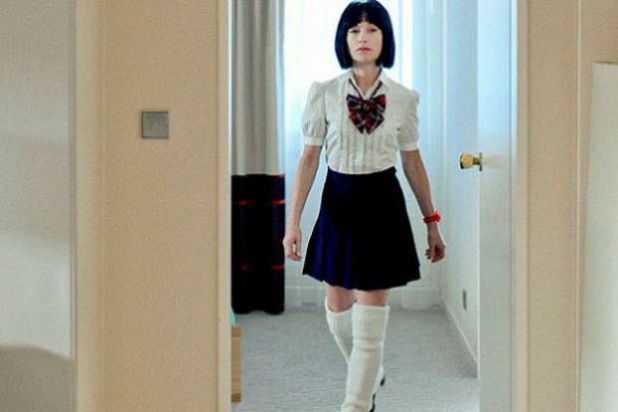
It was surprising to discover that nobody dies in Special Treatment, although someone does pull a knife. Labrune’s film isn’t especially interested in depicting the act of congress, suggesting a firm commitment to the more pivotal actions occurring just before release. This refreshingly adult (as opposed to, ahem, adult) approach gives Labrune liberty to depict the two practices as procedure rather than prescription, dutiful vocation rather than spiritual translocation. We see numerous scenes of 43-year-old, high-class prostitute Alice Bergerac (Isabelle Huppert), committed to schoolgirl fantasies with one client (even recommending somebody younger when his rocks prove less fluid than anticipated) and submissive housewife with another, with lengthy stretches of Alice setting up her room in advance or catching a cigarette between johns. This boredom of routine can’t be perceived by Alice’s clients. Likewise, as the camera cranes in close on his face, the psychiatrist Xavier Demestre (Bouli Lanners) couldn’t be more disinterested with the visceral confessions of his clients — even when they are men who dress up in women’s clothes and make efforts to flirt with him. So when the emotionally crippled Xavier expresses a desire to leave his wife, one can’t help but feel that he’s more than a little of a shit.

But since Alice shares some of these professional qualities, why then did I feel more sympathetic towards her? The film does stack the deck towards Alice by having a particularly creepy client pull some sleazy moves on her and by having a mentally disabled man follow her near the end of the film. But is Alice’s own indecision — her desire to seek help without much of a plan — any worse than Xavier’s failure to state any specific ideas about what he wants when he sets up a preliminary consultation appointment with her?

Part of me wished the film didn’t play into conventions and ask me to choose sides like this. If Alice’s character had been a little less wholesome and a little less victimized, then this perilous proximity to the “hooker with a heart of gold” trope might have been avoided. By giving Alice and Xavier too many eccentric clients, the film detracts from its exploration of midlife ennui. Special Treatment is better when the people who Alice and Xavier have affected stand up and respond to their actions. When one of Xavier’s clients calls him out on his lack of professionalism and announces that he’s not coming back, it’s fascinating to see how this client has his life together (and his ability to recover) more than Xavier.

The film is somewhat entertaining, but its slow spots had me wondering what might happen if Labrune had thrown in a murder. Sure, it would have cheapened the film. On the other hand, if Alice and Xavier had been presented as more emotionally complex individuals, Special Treatment might have been, well, more special.
Review: Mozart’s Sister (2011)

Classical music is an estimable topic that I feel disinclined to write about. This diffidence has little to do with any shortage of enthusiasm or background knowledge (you’ll find Saint-Saens, Telemann, Cage, and Mozart all in my music collection, often played in rhythmic counterpoint to activities both sinful and innocently quotidian). It may reflect a quiet desire to keep this joyful terrain unsullied by scabrous assaults of the overly examined. It may have something to do with certain upper-class exigencies which I identify as ridiculous – the requirement to dress up and spend a lot of money just to hear a thunderous orchestra play something you love, the paucity of robust alcoholic beverages, the prohibition on spontaneous enthusiasm within dull and often overpraised buildings designed almost exclusively for fuddy-duddies, and the unshakable vibe of being sized up by condescending assholes pegging you as some bumpkin who inexplicably sneaked past the velvet rope. Whenever I have the pleasure of attending a swank cultural affair for something I am genuinely excited about, there remains a small part of me that wonders if I’ll suffer a fate not unlike the poor couple losing the necklace in the Guy de Maupassant story. A decade of my life gone because of a misunderstanding.

That sounds like hyperbole. Maybe I can explain it another way. I can summon words to describe or connote how I feel about tangible experiences, specific people, books, movies, and even pop music –- perhaps because these all feel sufficiently democratic and translatable. But if I am to be truthful here, it’s also because I have little to lose. I don’t wish to suggest that these topics are less significant simply because I can relate them with greater ease and facility. I know that I can get worked up enough by the Dorian mode in Michael Jackson’s “Billie Jean” to write about it somewhere down the line, but I can’t see myself writing about well temperament or Pythagorean tuning anytime soon. I can approach Finnegans Wake and The Tree of Life, amalgamating my genuine enthusiasm for these works of art with some detailed theory. Yet for classical music, it’s the emotional experience which counts more than any theory. I leave such expatiations (or perhaps expiations?) to minds greater than mine.

This sharp contrast between privileged appreciation and mass entertainment, which I am admittedly identifying from a highly subjective vantage point, may be one reason why cinema’s offerings about classical music remain, to my mind, fairly lackluster. Perhaps I complain because the music itself is loaded with greater life than some slanderous biography, but this is not altogether the case. The sole exception (indeed, one of the few directors who went well out of his way to claim this turf) may be Ken Russell, the underrated auteur who worked his way from bizarre television docudramas (see this glorious opening for The Debussy Film, if you don’t believe me) to such fearlessly libertine flicks as The Music Lovers and Lisztomania. Whether depicting Tchaikovsky confronting his sexuality on a moving train or Richard Wagner as a reanimated Nazi Frankenstein with a machine gun/guitar, Ken Russell valued eye-popping entertainment over historical accuracy. And if one examines the best classical music biopics (Amadeus, Thirty Two Short Films About Glenn Gould, Hilary and Jackie), one discovers additional resistance to the dry facts of life. Let’s face it: the classical music biopic, perhaps more than any other biopic subgenre, is at its best when the slander runs deep.

* * *

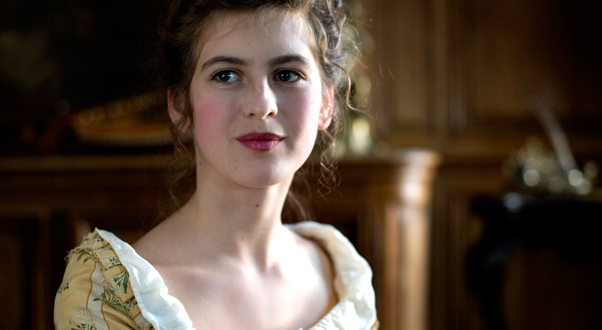
It wasn’t a surprise to see writer-director Rene Féret take silly liberties with Mozart’s Sister, suggesting not only that Maria Anna Mozart (played by Féret’s daughter, Marie) captured the romantic attentions of the kid who would grow up to be King Louis XVI (the monarch who eventually lost his head altogether), but that this Dauphin would ask young Maria Anna (disguised as a boy and singing quite high without skepticism from the heir apparent) for fresh compositions. The Dauphin was shy in real life. And at one point in the film, he remarks upon this shyness. Yet Féret has cast the somewhat vigorous Clovis Fouin in the role. Fouin doesn’t so much as quiver. He doesn’t so much as cower or blush. He’s some hipster plucked from the 20th Arrondissement, waiting for a ripe moment to languorously puff on his nonexistent Gauloise. I hope he was paid well.

Yes, it’s true that the Mozart Family traveled around Europe. But isn’t it convenient that the Mozarts break an axle a few miles from an abbey? And isn’t it convenient that the Dauphin’s sister is there (along with a few sisters more, who happen to be conveniently visiting)? And isn’t it also convenient that Maria Anna becomes an inadvertent messenger between clandestine lovers so as to kickstart a plot that isn’t in the history books and that isn’t even good enough for a trashy potboiler. If Féret had offered us something extremely preposterous along the lines of Russell, I might have gone along for the ride. But Féret has besmirched the Mozarts: not because he has offered us historical horseshit, but because it’s such ho-hum historical horseshit.

Féret’s mythical Maria Anna apparently plays the violin, but is confined to the clavichord by her father Leopold, who insists that women are unfit to be real musicians. Yet if Leopold was such a repressive patriarch, why did he give Maria Anna top billing in the advertisements he wrote for his family? It was Maria Anna reaching a marriageable age that felled her career. And that age was eighteen, not fifteen (as it is suggested here; or perhaps younger, given that we see Maria Anna have her first period and thus “become a woman”). It was also Maria Anna who surrendered control of her life to her father, including choice of suitors. While musical scholars have debated the question of what precisely Wolfgang owes Maria Anna, and it is clear from the documents that Mozart and his sister were very close, Féret’s film isn’t especially interested in using this preexisting information to build an enticing story. And if Maria Anna is such a thwarted feminist icon (so repressed that even her neighbors ask her to stop playing the clarichord when she’s on her own teaching piano later in the film), why doesn’t this film show her teaching young Wolfgang a few lessons (in anticipation of her own teaching) or picking up some of Leopold’s tricks? Well, it doesn’t really suit Féret’s convenient untruths, which establish Maria Anna as someone on backup vocals and clavichord to Wolfgang’s fiddling. In other words, if you’ll pardon my tacky yacht rock comparison, Maria Anna is Michael McDonald to Wolfgang’s Christopher Cross. And I’m pretty certain she was a bit more than this. We see Leopold teaching Wolfgang composition, with Maria Anna trying to listen in behind a closed door. But does this really represent the truth when one considers that, in 1764, it was Maria Anna who wrote down Wolfgang’s first symphony when Leopold fell ill?

Look, I’m hardly a Mozart expert. But when the historical record proves more compelling than the reductionist drama, one has to wonder why these prevarications were offered in the first place. If Féret wanted to make a film about a repressed woman composer, there were plenty of other stories to dwell from. Presumably, Féret settled upon Mozart’s Sister because it was the most dependable title for film financing. While I appreciated Féret’s punkass effrontery in offering Barry Lyndon-like slow zooms (although, to be clear, he is no Kubrick), I was not impressed by his middling efforts to sift and synthesize from the available record in a manner that mostly bores. Here was an opportunity to translate an elite interest for the hoi polloi, but Féret, in flattening the story and avoiding the juicy bits, only furthers the chasm.

The Bat Segundo Show: Miranda July

Miranda July appeared on The Bat Segundo Show #405. She is most recently the writer, director, and star of The Future, which opens in theaters on July 29, 2011.

Condition of Mr. Segundo: Seeking further bifurcations between art and commerce.

Guest: Miranda July

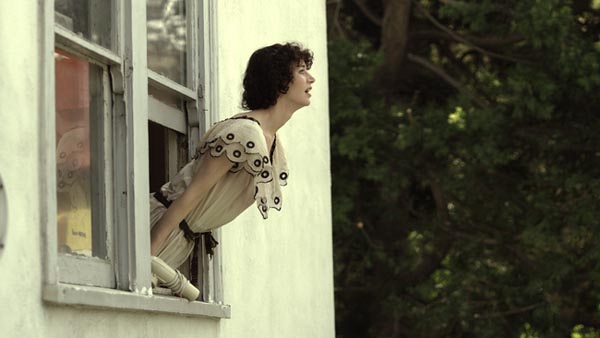
Subjects Discussed: People in their mid-thirties who are crippled by their own self-judgment, empathy and resentment, workaholicism, feeling paralyzed, kidults and grups, pursuing a project without seeking a larger sociological reach, hats and gloves, the number of characters in The Future that operate as failed artists, July’s theory that most artists are in a constant state of crisis, moments in life when you don’t know what to do with yourself, entering the space of not knowing, outside forces that compel artists, talking moons and crawling T-shirts, nudges from your own security blanket, the relationship between art and commerce, the dry-erase marketing campaign for No One Belongs Here More Than You, the Internet as a commercial medium, Google+, art springing from boredom, anger and addiction, T-shirt puppeteers, screaming out windows, Howard Beale in Network, yelling out windows in real life, girls who bury themselves in the ground, self-enforced endurance rituals, vital methods that emerge from voicing a talking cat, playing multiple roles, sticking with initial intentions, accidental slips, whether July feels any obligation to speak to her generation or a cultivated audience, and the liberation of writing, directing, and performing in your own sex scene.

EXCERPT FROM SHOW:

Correspondent: I want to discuss the fact that you have two characters in this movie who are in their mid-thirties. They are too lazy to leave the couch. They are unable to get their lives together to pursue their careers. When it comes to keeping track of the calendar, they prove negligent — I don’t want to give it away. And they are crippled so much by their judgment that Sophie is very diffident in the very beginning when she’s making these 30 dance videos and Jason keeps his hand permanently on Sophie’s head. So as a guy who is in his mid-thirties and who works very hard, I was interested in these characters. But I also felt somewhat resentful towards these characters. And I can only imagine, in concocting these characters, that you, who have worked quite hard also may have experienced perhaps some resentment towards your creation. And I was wondering if you could talk about this double-edged sword. What did you do to shake off potential resentment towards people who are really not going anywhere in their lives — at least for the large majority of the film?

July: Well, I didn’t — I felt more understanding of them than that. I mean, yeah, I’m really, really productive. Maybe even a workaholic. But I feel paralyzed a lot of the time. And just cause I work a lot doesn’t mean I feel like always deeply fulfilled or that I always know what to do next. Or who I am. So in a way, I took a lot of doubts and fears and put them into my characters and, in a way, to break out of the patterns of some of like, you know, using work in a kind of unexamined way. And yeah it’s embarrassing. It feels kind of awkward to play that role or to give these people time and space. But at the same time, I don’t really want to see a movie about these fantastic people doing everything right and knowing themselves completely. I don’t relate to that either.

Correspondent: Yeah. Well, were you trying to depict a current crisis among many mid-30s types? I mean, some people could make the comparison that it absolutely mimics both the Southern California layabout and also the Williamsburg hipster. That’s one of the virtues of this film. But on the other hand, I’ve been seeing a lot more artists — especially books and now increasingly films such as yours — which are really depicting this kind of kidult phenomenon that was written about in New York Magazine. Was this a concern of yours? Did you study any larger sociological reach along these lines to depict this type of feeling?

July: I never care about the larger sociological reach. I mean, I’m almost entirely concerned with, like, an internal world. And, you know, sometimes I kind of lament that I have to create characters in order to get inside of them. You know, like I just want to start out already in them. And then I hope, if their insides resonate and are through, that I’ll end up making characters that people connect to — whether they love them or hate them, they’ll seem relevant. But I never work from the outside in like that. Yeah.

Correspondent: How do you jump around from putting your hand into the glove versus, I suppose, creating the glove and stitching the sequins and all that? What’s the difference? I mean, do you have to put on two hats? Is it one continuous process?

July: That’s a lot of clothes flying around here.

Correspondent: Yes.

July: Hats and gloves.

Correspondent: Yeah. Well, there is a T-shirt in the movie.

July: And there’s a shirt in the movie. I mean, you’re talking about sort of being inside the movie and making it.

Correspondent: Yes. Acting, writing, directing. Especially some character who has this particular feeling.

July: Yeah, I mean, it seemed like if you were going to make a movie that had a lot to do with doubt and fear, like it might not be a bad thing to have a lot of doubt and fear making it? Apparently, I thought that was a good idea. Because I did. I did have lots of doubts. And when you’re in it, you know, that is part of your job. Is to feel all those things and to believe in them and to not judge them. And then when you’re outside of it, well, it’d be nice if you add some distance. But I don’t really. I pretty much am like method directing. Which isn’t that fun for everyone on the set. Especially when it’s a darker movie.

Correspondent: Why not? Why isn’t it fun?

July: Well, with like the first movie, it was more kinda hopeful and innocent in a way. And I think I embodied that as I was making it to some degree. And the second one, I also embodied. Which meant that I was fairly haunted the whole time and kind of a little bit wishing that I could flee it the same way. Very dedicated and yet still having fantasies about just walking away from the whole thing. The way that my character does. Yeah.

The Bat Segundo Show #405: Miranda July (Download MP3)

This text will be replaced

Review: Tabloid (2011)

The first thing I was drawn to in Errol Morris’s new movie, Tabloid were Joyce McKinney’s eyes. They darted to and fro, down at her hands, up towards the ceiling, left to right, side to side. But they never faced the camera — or Morris’s Interrotron — directly. Considering that McKinney had quite a story to tell, that of a former beauty queen so enraptured with a Mormon missionary who she flew to London to rescue (or, well, “rescue”) him from that life and convince him through violent means that they must be married, the immediate conclusion on my part was, well, she wasn’t to be trusted. Couldn’t be believed.

That was all well and good, since I knew the bare bones of the Joyce McKinney story. I knew how the FBI’s version contrasted sharply with hers, and how the official — or perhaps “official” — version created a tabloid sensation that, even after almost 35 years, exceeds hyperbole. The UK Fleet Streeters, their dirty laundry credentials aired to full putrid effect throughout the month of July thanks to the never-ending phone-hacking scandal, were well in their element with McKinney, who was arrested and accused of kidnapping her Mormon man Kirk Anderson at gunpoint, squirreling him away to a Yorkshire abode, and raping him repeatedly for three days straight.

But then the camera left McKinney, who is now sixtyish and still a narcissist, to fixate attention on a younger man — raised a Mormon but now removed from the religion — though somehow expert enough to provide color commentary on its supposed cultish activity. And once I realized the younger man, too, did not face the Interrotron and Morris directly, Tabloid lost me. It’s one thing to cast an eye on your supposed subject and make him or her look wholly unreliable. That’s what documentaries do. But when the same techniques for doing so fall down in the face of some outside expert, there’s a serious problem at work.

Unfortunately, once the illusion of narrative coherence broke apart, the reality of how Morris failed in his efforts set in. If tabloid culture and its lurid taste for new content was so important, why did he only speak to two such types? There’s the capable but culpable reporter from The Daily Express, whose claim to fame was being taken in by McKinney’s not-exactly-truthful tale of pious living on the run after she and her accomplice Keith May (who died in 2004) jumped bail and fled London for America. His descendant probably got axed along with News of the World last week. Then there was the more sleazy photographer tasked with finding past dirt on Joyce in the form of bondage photos, among other pictorial delights, his tongue almost involuntarily going to his lips as he recalled the whole exercise.

But what of the larger culture of tabloidism — just eight years removed from Rupert Murdoch’s acquisition of NotW and its sister daily paper The Sun? What prompted the relentless pressure for arid scoops like what McKinney seemed to offer with Sex ‘n Chains? Why were the UK public so riveted by the story? Tabloid certainly wasn’t about to tell us. There was also an easily missed note in the credits that McKinney’s old boyfriend — the not-quite-innocent provider of the photos that splashed across the Mirror‘s pages for days on end — “could not be located.” Well, why not? Based on the scant number of people Morris talked to — at least compared to his earlier, more masterful investigative documentaries — it’s hard to shake the idea he didn’t really try very hard, helped by the fact that many of the other principals were dead (like May) or clearly unavailable (like Anderson).

McKinney may be pathologically self-absorbed, or something more complicated, but Tabloid doesn’t really care about her, other than to subject her to the mockery of the audience. There is little in the way of empathy. Worse, there’s a rather nasty undercurrent of misogyny, aided by the fact that McKinney is the only representative of her sex. That’s a bitter pill to swallow when the current fallen Queen of UK tabloidism is Rebekah Brooks, and when the subject of female-to-male rape has only men to rebut it. I was also discomfited by the notion of all these men ganging up on Joyce in a manner not unlike the fictional Lisbeth Salander, whom Stieg Larsson depicts as the anti-beneficiary of a terrible tabloid campaign. Because hey — to be goth and bisexual and weird is to be splashed across the pages as a triple murder suspect and subjected to a punishing smear campaign that can only be resolved through the cathartic trial that brings the Millennium Trilogy to a close.

McKinney’s catharsis, on the other hand, never really arrived. She found refuge in her home state of North Carolina, still pining — or obsessing — over Kirk, but now so devoted to her dogs that the act of cloning them brought her back into the news cycle in 2008. Tabloid doesn’t really indicate what Joyce McKinney is like now, though it certainly judges her, mocks her, and paints her as a cartoon of ridicule. Morris, I suspect, would say that’s the point. Because tabloids do the same thing. But as we’re all finding out this month, there are limits to what behavior can be tolerated. Even sleaze has a ceiling. All Morris has done by engaging with this in the shoddy manner he has is to reveal uncomfortable truths about himself, most notably that he, too, counts among the man som hattar kvinnor.

The Bat Segundo Show: James Marsh

James Marsh appeared on The Bat Segundo Show #401. He is most recently the director of Project Nim, which opens in theaters on July 8, 2011.

Condition of Mr. Segundo: Pondering unethical experiments that might slide by today’s authorities.

Guest: James Marsh

Subjects Discussed: States of exhaustion, Project Nim’s purported origins of the 1970s hippie residue, scientific ethics and Columbia code of conduct, attempts to teach a chimpanzee to use sign language, Professor Herb Terrace, the transgressive aspects of ripping an animal from his mother, Skinner, Harry Harlow’s experiments, Terrace’s efforts to seek media coverage, Nim Chimpsky’s attacks on grad students, Terrace’s concerns for insurance issues over harm and suffering to students, Washoe, a filmmaker’s obligation to history, contending with demands from studio executives, when Marsh recreates moments in a documentary, dramatic reconstructions, murdering poodles, the inherent danger in cutting too much, audience imagination and the dangers of being too literal, balancing the needs of individual perspective and audience reaction, having ongoing debates while editing a documentary, some of the qualities that cause a documentary filmmaker to become prickly, the potential conflict of interest of obtaining film clips from the very subjects you’re interviewing, having sexual feelings for a chimp, being faithful to the honest confessions of documentary subjects, viewing documentary subjects as actors, earning trust as a filmmaker, Philippe Petit, whether discomfort is required in the questioning process, asking a question in ten different ways, trying to get a scientist to reveal he committed an affair, why people should trust James Marsh, the moral implications on Catfish, the possibilities that Catfish is a fake documentary, and phony indignation.

EXCERPT FROM SHOW:

Correspondent: You don’t bring up the Washoe project. Allen and Beatrix Gardner and Herb Terrace had a huge rivalry going on at the time. And it’s almost like East Coast/West Coast, Biggie/Tupac…

Marsh: Well, there’s another film to be made about all that stuff. There’s quite a few PBS type documentaries that get into the whole language experiments that Washoe, the Gardners, and that whole debate. That would be a film about science, a film about ideas. And our film is a drama about a chimpanzee and people. So I was aware of that context and many people spoke about it in the course of our interviews. But I thought it was going to be a blind alley for me as a filmmaker to get into that too much. It may be an oversight on my part. But that’s a different film. If you want to go see that film, someone else can make that. That’s not my film.

Correspondent: But don’t you think you have an obligation to present, to some degree, the history…

Marsh: No.

Correspondent: Of all of these animal language…

Marsh: Why?

Correspondent: Why? Because Washoe ended up having 350 words she “learned” of sign language. You can just do a brief mention.

Marsh: Well, you see, here’s my feeling about that. It’s that a brief mention is not good enough. That’s when you’re playing with it. If you’re just trying to flirt with something and say, “Well, I can mention Chomsky and I can mention Washoe and the Gardners.” You may know about that. But my brother watching the film won’t know anything about that. So I’m not trying to be — I’m being a little defensive here. But that wasn’t the film I wanted to make. That’s a different kind of film. And that film? Go online. Nova has done that film. Washoe, the fucking dolphins — you know, the Gardners, signs. But the bottom line is that the experiment failed. And that chimps do not learn language. So I can get caught up in this whole discussion about who was right and who was wrong, and who learned the most words. That’s not a story. That’s a discussion about the practice of science and the nature of these experiments. And so I wanted to focus on a dramatic story as opposed to the issues and the context. And, of course, someone like yourself, who is very….who is familiar with this stuff, probably feels a bit cheated. Because I don’t explain and give you the context you are sort of dimly aware of or know a little bit about. But that’s a very conscious choice on my part. Not to get caught up in things you can’t really fully explain and will, I think, be a sort of sideshow to what I think my interest in the story, which is my interest in the drama of it and the life story of this chimpanzee. Now if you’re a Nim, what does he fucking care about Washoe and dolphins and the Gardners? He isn’t going to know nothing about these things. So I’m trying to put you. You know, his life story is where I’m focused here. Not so much on this whole fascinating internexual climate that you’re aware of and the film doesn’t really get into.

Correspondent: To go ahead and correct your impression that I felt cheated, what I’m actually talking about here is how you as a documentary filmmaker make the choice to not include Washoe. Is it really a consideration of “Oh, well here’s a rabbit hole that will create a three hour film”?

Marsh: Yeah. Or where is my interest in this story? Where do I think the narrative is in this story? As opposed to — I think you could cram the film with reference points to other experiments and to other thinkers and linguists. And on and on. But that isn’t the film that I think would work for me as a filmmaker, or the one I’m interested in making. And so to distill my view into I want to tell you the story of this from the point of view of the chimpanzee, who would have no awareness of the other chimpanzee lab experiments and no interest in them either, I think.

Correspondent: So to some degree, it sounds to me that when you make a film — especially one that deals with science as opposed to, say, an event that numerous people see such as Man on Wire — your problem, I suppose, is that you’re enslaved to narrative to some degree. Is that safe to say?

Marsh: Well, that’s my interest in narrative. I guess I’m a little prickly about this. Because there’s quite a lot of pressure around the making of the film of this sort. Explaining to people. “Give me more context. Give me more science. Show me the scientific debate here.” And so I’m prickly about it because it caused me a lot of trouble as I was filming it, getting these comments from people — executives involved with the film — that they wanted more of this stuff. And they’re saying, “Well, I want a narrator for the film.” And I began to get quite pissed off about this. Because it wasn’t the kind of film that I was making, nor did I say that I was going to make this film. I was making the story of Nim the chimp. And films tend to not deal with ideas terribly well. It’s not what films are good at doing. I mean, some films do it extraordinarily well. But it’s not what they’re best for. I think film is best as a medium for storytelling. And so that’s where my interest is in this particular story again.

The Bat Segundo Show #401: James Marsh (Download MP3)

This text will be replaced