The Bat Segundo Show: Isabel Wilkerson

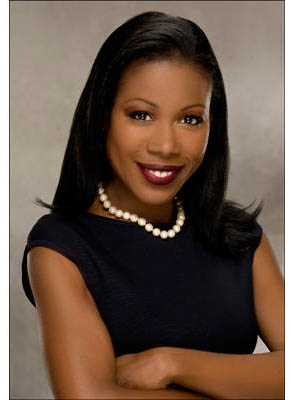
Isabel Wilkerson appeared on The Bat Segundo Show #366. Ms. Wilkerson is most recently the author of The Warmth of Other Suns.

Condition of Mr. Segundo: Warming up to fascinating history.

Author: Isabel Wilkerson

Subjects Discussed: [List forthcoming]

EXCERPT FROM SHOW:

Correspondent: I wanted to ask about one of the key pieces of conflict relating to the Great Migration that fascinated me. You pointed out that the old timers — meaning the African-Americans who had lived in the northern territory before the Great Migration — were harder on the influx of new African-American migrants moving into the northern areas than almost anybody else. The Chicago Defender has this list of dos and don’ts. The endless articles about what you’re supposed to do as a new migrant. I’m curious. Based on your research, to what degree did this conflict — what effect did this have on the progress that came later in the 1960s? Did this deter efforts at unity? You kind of get into it the book. But I wanted to see if your research led to other areas here.

Wilkerson: I think that it was generally a low-grade competition rivalry — and maybe resentment — that really grew out of fear. It grew out of an insecurity. Because the people who were already there in the North were small in number. They had been pioneers from way back. And they finally established themselves in these often hostile and alienating cities. And their rival of basically country cousins in huge waves to the big cities obviously raised questions for them about what was going to happen to them. What was going to happen to this perfectly balanced, well-honed alchemy that they created with the majority of the people in these big cities. And they felt embarrassed by them. They felt shame. They felt resentment. And they often didn’t want to be around them. I must point out though that, while they were most likely to be resentful of them, and to maybe be sneeringly judgmental of them, they were not the ones who were actually hurting them physically in the same way that others were. I mean, when they moved out into other neighborhoods, when they arrived in these big cities, that was when they might be firebombed. Because they were going into a neighborhood where they were not welcome. So the people who were there, there was more a sort of insider resentment and fear that’s very different. But actually, it’s just as painful to the people who were arriving. Because the people who were arriving were like people arriving from any far away place to a new land that they hoped would be better. And they felt very hurt by that. Very hurt. And it actually limited their ability to move about. They couldn’t join certain churches. So it was an in-group stratification that is kind of an inside baseball thing, but kind of human nature. It’s about survival.

Correspondent: It also seems to me to be about class divide. And that’s one aspect of 20th century black history that we really don’t discuss. Going back to the original question of whether an internal class struggle like this, I mean, did it really have a serious deterrent upon advancement?

Wilkerson: I think it did in the beginning stages. You know, while the people were new and untutored into the ways of the North, the people, they were pretty much rejected and not welcome. Over time, like any immigrant group that’s ever come in — and they were immigrants in the true sense of the word. Because they were born in the United States. They were American citizens. They went to another region in order to realize the rights that they were born to. They essentially acted as any immigrant would. And so they went to the people who were there. And they found that it was difficult to make that adjustment. But once they did make the adjustment, they in turn would become as sneeringly judgmental as the people coming behind them. That’s just the way human beings think.

Correspondent: The retrousse noses.

Wilkerson: Yeah, that’s right. Ultimately though, larger forces would intrude. And as a group, they found themselves all hemmed in by the larger economy that didn’t really want to have them. And I wouldn’t say that it impeded progress to that degree. There were rivalries in every group. I think that it certainly didn’t help. It was very disheartening for people who just arrived. It is. Because you’re rejected by your own people. It’s very painful.

Correspondent: Instead of having a polarization effect. To really fight a lot of the racism that was going down. The firebombing and the Cicero riots.

Wilkerson: Exactly.

Correspondent: Well, this is very interesting. Because you cite this 1965 census survey, in which it was revealed that a lot of the migrants moving in had more education — equal sometimes, but often more education — than the native white Northeners.

Wilkerson: Exactly. Which is astounding. I mean, when I saw that, it was just hard to believe. But part of this is remembering the era that we’re talking about. We’re talking about an era in which many of the people were children of the Depression. And many of them had had hard lives, no matter where they were. Many of them were the children or actual immigrants from other places. So the early part of the 20th century was not a time of great enlightenment overall, unfortunately. So life was hard for everybody. But how ironic, actually, that the people who came up in this Great Migration were actually slightly better educated when it came to the numbers. Now that doesn’t mean that we’re not getting the quality. Because the quality of education in the South was markedly unequal clearly. But they had put in the time. They had gone as far as they could. And then they left finally for hopefully a better life in the North and the West. But it’s interesting that the mythology and the misconceptions about these people. Once I began to discover them, I found that that became a big focus of the work that I hadn’t anticipated.

The Bat Segundo Show #366: Isabel Wilkerson (Download MP3)

This text will be replaced

The Bat Segundo Show: Daniel Okrent

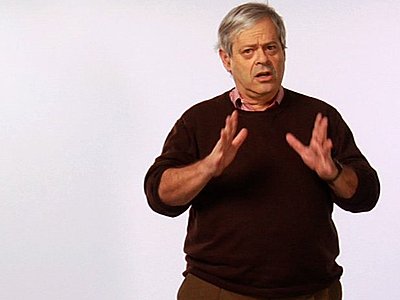
Daniel Okrent appeared on The Bat Segundo Show #337. Mr. Okrent is most recently the author of Last Call: The Rise and Fall of Prohibition.

Condition of Mr. Segundo: Bombarded by too much bathtub gin and too many over-the-top movie trailers.

Author: Daniel Okrent

Subjects Discussed: [List forthcoming]

EXCERPT FROM SHOW:

Correspondent: I wanted to ask you about Walgreen’s. You point out that it went from twenty locations in 1920 to 525 during the 1920s, pointing out that it wasn’t just milkshakes that were responsible for this expansion. Yet all you present in the book to support this possibility is an interview with Charles Walgreen, Jr., who said in an interview with John Bacon that his father didn’t want the fire department in his stores because he was losing cases of liquor. I’m wondering if you made any efforts to corroborate this claim from another source. Has Walgreen’s managed to hush this up?

Okrent: Well, I think — be careful. I don’t make a claim. I say —

Correspondent: Suggestion.

Okrent: I make a suggestion. And that’s all I can do — is make a suggestion. But we do know this to be true. We know from Charles Walgreen, Sr.’s testimony to his son that they had liquor in the stores and he was afraid of losing it to the thieves. Right? Number two. We know that he had twenty stores at the beginning of Prohibition and 525 at the end. And if you want to believe it’s milkshakes, believe that it’s milkshakes. But the fact — the medicinal liquor business was an enormous business. Not just for the Walgreen’s drugstores, but for pharmacists across the country. You know, I have a bottle at home on my shelf. It’s kind of an inspiration. It’s an empty bottle. It says JIM BEAN. BOTTLED AND BOND. FOR MEDICINAL PURPOSES ONLY. This was a pure racket. And druggists, unless they had some kind of scruple that few apparently had, made a fortune because of it.

Correspondent: But beyond the Bacon interview, did you make any efforts to….?

Okrent: Yeah. I made efforts. There’s nobody alive in the Walgreen family today that I tried to make contact with, that had any thoughts about it either way. Or not. I don’t think that there’s been a conscious effort to cover it up. I think that it’s just forgotten.

Correspondent: Al Capone cultivated an image of benevolence. And you also point to Seattle bootlegger Roy Olmstead, who was quite ethical by comparison. He didn’t dilute his liquor. He didn’t resort to mob tactics. I’m wondering what factors made Olmstead a more ethical bootlegger. Was it Olmstead the man? Or was it the makeup of Seattle in comparison to the competitive violent world of Chicago?

Okrent: Yeah, I think that the latter has a lot to do with it. By all evidence, Olmstead was a decent man. You know, he was the youngest police lieutenant in the history of the Seattle Department. He was looked on as a golden boy of sorts. But because of his honesty, because he didn’t dilute, because he didn’t raise prices, he had very happy customers in Seattle. And he also worked very well with anybody else who was in the business. He built a big coalition. Really kind of a market control coalition. He controlled all of the booze that was coming into the Pacific Northwest. Capone was in a very different circumstance. I think that he was a different kind of man to begin with. And secondarily, he was in an extremely competitive cutthroat murderous environment, in which other people were trying to get a piece of the action. Olmstead didn’t try to accrue power to himself. He liked to run a good business. Capone wanted to be in charge.

The thing to me about Capone that is most surprising, relative to the popular image that we have of Capone, is that when he took over Chicago, he was twenty-five years old. He was a kid. And he was gone before he was thirty.

Correspondent: And he was played by all these older actors too.

Okrent: Yeah. I ask people, “How old do you think Al Capone was when he ran Chicago?” They say, forty-eight, thirty-seven, fifty. But he was a baby.

Correspondent: But in Seattle, was there violence involved?

Okrent: There wasn’t much violence in Seattle. There was a nicely cooperative operation between those who enforced the law and those who were breaking the law. Including the fact that the justice of the peace who presided over hearings and trials, they got a piece of the fine. So they liked the idea of people being arrested, paying a fine, and then went about it again — so that they could be arrested again. So they could pay the fine again.

Correspondent: So Olmstead set the precedent of a peaceful, money-oriented coalition here.

Okrent: Yeah. I think that there were others like that were others like that also in the country. But Seattle was remarkably free of the violent crime that hit the Eastern and Midwestern cities.

Correspondent: What other cities were nonviolent in terms of bootlegging?

Okrent: Nonviolent. San Francisco. I think that San Francisco and, to some degree, New Orleans are the ones that come immediately to mind. San Francisco never really acknowledged that Prohibition existed. Even the judges in San Francisco. They threw cases out. The DA of San Francisco, which is both a city and a county — he was an official in the organization against the Prohibition Amendment. He campaigned against it. So violence wasn’t necessary. Because there was nobody trying to corner a market. It was an open market for everybody.

The Bat Segundo Show #337: Daniel Okrent (Download MP3)

This text will be replaced

The Bat Segundo Show: Nell Irvin Painter

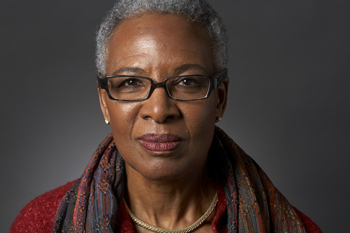
Nell Irvin Painter appeared on The Bat Segundo Show #329. Painter is most recently the author of The History of White People.

Condition of Mr. Segundo: Drowning in David Coverdale’s noxious imperialism.

Author: Nell Irvin Painter

Subjects Discussed: [List forthcoming]

Correspondent: You are careful to write, “Harvard’s importance in eugenics does not imply some nefarious scheme or even a mean-spirited ambiance. Rather, Harvard’s import in this story attests to the scholarly respectability of eugenic ideas at the time.”

Painter: And that could be said about Princeton or Yale or any of the other lofty institutions.

Correspondent: But it is curious to me. I mean, if we recognize today [Robert] Yerkes and [William] Ripley’s stuff as “junk science” essentially, why at the time were these ideas so respected? Why did some of these people get tenured at Harvard?

Painter: Indeed.

Correspondent: I mean, it couldn’t have just been Harvard’s prestige. It had to be something else, I suppose.

Painter: Well, we’re talking about what was considered good science at the time. That was the knowledge that our culture needed at the time. And, after all, Ripley consulted all sorts of authorities. European authorities, American authorities, and so forth. So he had a really big bibliography and he followed the rules.

Correspondent: If someone attempted something along those lines today, I guess the Internet would kill it, I suppose.

Painter: Not necessarily. If it were something that we all agreed upon. Like, for instance, we’re seeing in the medical field right now. Recently, I read a report in the New York Times by a doctor saying there’s just too many prostrate cancer screenings. But a year or so ago, that was considered good science to have everybody screened. So things change.

Correspondent: I wanted to talk about Emerson, who you really take to task in this book. You devote a whole chapter to English Traits.

Painter: Yes. There are three Emerson chapters.

Correspondent: Yes. There are three Emerson chapters. But English Traits seems to be the one key text with which the…

Painter: It is the key text for this reason.

Correspondent: Yeah. But I just wanted to ask you about this. You note later in the book that Henry Ford was an admirer of English Traits.

Painter: Yes.

Correspondent: But in the book that you cited from — because I was really curious about this – Neil Baldwin’s Henry Ford and the Jews. Baldwin notes that it was Emerson’s essay, “Compensation,” that Ford favored above all else. And he even handed that out as as gifts. And that essay doesn’t contain any reference to race. You also state that Theodore Roosevelt echoes the phrase “hideous brutality” in English Traits. But in English Traits, Emerson uses the word “hideous” only once, in reference to the injustice of pauperism. And granted, there are issues with pauperism related to the Saxon seed, which we had mentioned earlier. But I just want to ask. Because I don’t disagree with you that Emerson’s views on the Irish, his drawing upon Robert Knox — these are problematic.

Painter: Yeah. I’m not saying that Emerson is a bad man. But I’m saying that Emerson, because of his importance in American culture, by focusing on these themes and presenting them, orchestrating them in his impeccable prose, made it acceptable. So it’s not that I’m castigating Emerson. I’m trying to place him in an intellectual theme.

Correspondent: But in the case of Henry Ford drawing more upon “Compensation,” say, than English Traits, that’s where I was — my question mark went up.

Painter: But we’re doing Henry Ford — what? Sixty, seventy years after Emerson.

Correspondent: Yeah. Well, the other thing too is picking and choosing one’s values from Emerson. Like Ralph Ellison, for example. He was named after Ralph Waldo Emerson.

Painter: Right.

Correspondent: And actually took a lot from the transcendentalists.

Painter: Oh, there’s a lot of Emerson. Emerson’s an extraordinary figure. And one who his contemporaries said embodies the whole of American learning. And to a certain extent, he did.

Correspondent: But going back to the question or relativism. Can he be let off the hook somewhat simply because he was, in part, an abolitionist? Maybe he didn’t go all the way, but…

Painter: No. We’re talking about different things.

Correspondent: Hmmm.

Painter: We’re talking about different things. Because he had one set of views, this doesn’t change what we think about another set of views. You can still respect Emerson for his central role in the American Renaissance and still know about his Saxonism.

The Bat Segundo Show #329: Nell Irvin Painter (Download MP3)

This text will be replaced

The Bat Segundo Show: Peniel Joseph

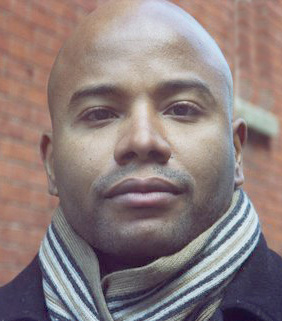
Peniel Joseph appeared on The Bat Segundo Show #318. Mr. Joseph is most recently the author of Dark Days, Bright Nights.

Condition of Mr. Segundo: Wondering if he lands on Plymouth Rock, or Plymouth Rock lands on him.

Author: Peniel Joseph

Subjects Discussed: Whether or not the bold declarations within Malcolm X’s “The Ballot or the Bullet” speech has been entirely heeded, the progress of African-American politics, revolutionaries vs. political pragmatists, Harold Washington, Jesse Jackson, Michael Eric Dyson’s critiques of Obama, Jeremiah Wright’s perception, Obama’s failure to confront race, the February 19, 2009 New York Post cartoon, race as portrayed in Obama’s speeches, the Henry Louis Gates arrest, whether the beer summit was more of a symbolic gesture rather than a practical confrontation, black revolutionaries being denied publication in prominent mainstream outlets vs. Stokely Carmichael getting published in The New Republic and The New York Review of Books, color-blind racism, the Nation of Islam’s bootrap and racial uplift strategies, Nixon seeing “black capitalism” as a promising prospect of Black Power, Fubu’s co-opting of Black Power slogans, black women and activism, misinterpretation of the Black Panther Party, the plasticity of ideology, Stokely Carmichael’s November 7, 1966 speech in Lowndes County, the fluidity of Black Power, Claiborne Carson’s In Struggle, Carmichael being wrongly accused of being the main influence on the SNCC Black Power position paper, misconceptions about Carmichael, Obama’s dismissal of Kwame Toure as a madman, the failure to celebrate Martin Luther King as a critic of American democracy, what Carmichael’s FBI file says about limited perspectives of black power figures, Carmichael’s antiwar stance, false government conclusions about Black Power, Tavis Smiley being taken to task for criticizing Obama, and prospects for new forms of Black Power radicalism.

EXCERPT FROM SHOW:

Correspondent: When Malcolm X delivered his famous “Ballot or the Bullet” speech, you point out that newspapers ignored his more tangible call for one million new black voters for a black nationalist political party. Now black voters, as we all know, were instrumental in getting Obama elected in November. I’m wondering though — because they were not necessarily black nationalists — whether Malcolm X’s call was entirely heeded.

Joseph: Well, I think his call is going to be heeded into the next generation at least. When we think about when Malcolm said that in 1964, there was no congressional black caucus. There were no black senators since Reconstruction. There were no black governors. There wasn’t the wave of black mayors that we started having — starting in 1967, with Richard Hatcher in Gary, Indiana; Carl Stokes in Cleveland; by 1970, Kenneth Gibson in Newark, New Jersey. In the early ’70s — ’73, ’74 — you’re going to have Coleman Young in Detroit, Maynard Jackson in Atlanta. By 1983, you have Harold Washington in Chicago. And that’s the Chicago that Barack Obama comes of political age in at least — even though he grows up in Hawaii, he’s born in Hawaii on August 4, 1961. So I think African-American voters in the 1970s, in the 1980s, take heed to these politics of racial solidarity, for the most part. There’s going to be exceptions. People like Edward Brooke, the first black Senator elected in a general election in 1966 from the state of Massachusetts. Tom Bradley becomes Mayor of Los Angeles after the 1973 election in a city that only has 10% African-Americans. But for the most part, there’s really a racial script, where you’re going to get black elected officials in places like New Orleans. Mississippi becomes the state that has the most black state representatives and officials. It doesn’t have a senator. It doesn’t have a governor. But it has the most elected officials out of any of the states decades after the segregation of Freedom Summer and the assassinations of those three civil rights workers — Schwerner, Cheney, and Goodman; two white and one black.

So when we think about Malcolm’s call, it is heeded during the ’70s and ’80s. But as we get into the ’90s and the 21st century, there’s going to be some real notable exceptions. People like L. Douglas Wilder, who becomes governor of Virginia in 1989. People like Deval Patrick, who becomes governor of Massachusetts in 2006. People like Barack Obama, who becomes a Senator out of Illinois in 2004. People like Carol Moseley Braun, who becomes a Senator in 1992. So when we think about racial politics, the politics of racial solidarity for elections is still there. When you think about Bobby Rush, who Obama ran against in 2000 for the South Side of Chicago Congressional District, that’s a black district. Most likely, you’re always going to have an African-American representative there. So the politics of racial solidarity are there. But at the same time, there’s a new class of African-American elected officials. People like Cory Booker in Newark, New Jersey, who are really doing a pan-racial appeal. There’s saying, “Look, I’m an elected official. I am also black, but I happen to be black.” They’re not coming out in a very robust way talking about black solidarity and that the reason why I should be Mayor of Newark is because I’m black. Michael Nutter in Philadelphia’s the same way. Deval Patrick, the same way. Where they’re saying, “I happen to be black, but I’m going to be an elected official for all people.”

Correspondent: I’m curious if it takes someone like a Harold Washington or an Obama to create that one particular figure who both revolutionaries and those who believe in the pragmatism — revolution can be pragmatism too in its own ways — but those who believe in elected politics. Because there’s always been a fractiousness going on between the two within the black power movement of the last four decades, in particular. So does it take some brand new figure to unite? Or is it possible to have someone who can leave a legacy beyond the elected moment?

Joseph: Well, I’d say that it depends upon the time period. Because when we look at the late ’60s and early ’70s, black militants and black elected officials had real coalitions and ties. I think the best example of that is Amiri Baraka and Kenneth Gibson in Newark, New Jersey — and also the Gary Convention in March of 1972. The Gary Convention was a national black political convention attended by 12,000 people. And the co-conveners were Congressman Charles Diggs from Michigan, Mayor Richard Hatcher from Gary, Indiana, and Amiri Baraka, who held no elected position and who was just a black nationalist poet and an organizer. So there was this coalition. But by the middle ’70s, that coalition is going to fracture — really amid mutual recriminations. Politicians are going to accuse militants of being wild-eyed dreamers who don’t understand the politics of governance and the pragmatism that governance really precipitates. I mean, to be an elected official is to be somebody who is pragmatic and to compromise. Militants are going to accuse black elected officials of being the worst kind of sellouts. People who really utilize the politics of racial solidarity to get into office. And as soon as they get into office, they use the power of municipal politics and City Hall to enrich themselves and their cronies. And I think you’re going to see that tension over the next forty years. But there’s going to be notable exceptions. One is Harold Washington, who has a coalition of pragmatists and militants and somehow, in four and a half years as mayor, manages to please them all. Because Washington is re-elected and dies of a heart attack right around Thanksgiving of 1987, but is very much well-regarded in Chicago. Another mayor is going to be, surprisingly, Marion Barry of the 1970s. At least the initial Barry. So Barry, before the huge controversies over crack cocaine and adultery and all this different stuff, had militants and moderates in his camp. And he managed to please both of them.

Correspondent: A very [Adam Clayton] Powell-like resurgence as well.

Joseph: Absolutely. Absolutely. And when we think about militants and moderates in the 2008 presidential election, you saw the social movement that surrounded Obama draw in pragmatists. And it also drew in revolutionaries. So sometimes you do see these transcendent figures. And, finally, the best example in the 1980s of that is Jesse Jackson. Jesse Jackson runs for President in ’84 and ’88 — really inspired by what Harold Washington was able to do. And Jesse gets three and a half million votes in the Democratic primaries in 1984. Seven million in 1988. And he really inspires both pragmatists and militants in that campaign.

Correspondent: But inevitably there still remains a fractiousness — possibly tied in, in Obama’s case, with the failure to discuss race, which you bring up in the book and which Michael Eric Dyson recently appeared on MSNBC in response to the Harry Read fiasco, pointing out that Obama was “a president who runs from race like a black man runs from a cop.” You point out, in your book, that Obama’s reluctance to embrace race is especially ironic in light of the fact that he has a public admiration for Lincoln. You note that “his appreciation remains a simplification in as much as it largely fails to deal with the sixteenth President’s extraordinarily complicated racial views.” So the question is whether that observation and Dyson’s remarks come from the same particular place. Does Obama’s many political compromises — which we were talking about earlier, the necessity of being a politician — essentially make his failure to confront race untenable?

Joseph: Well, it’s very interesting. I think that we’re living in a time period in which politicians can talk about race in a less open way than forty years ago. And I think that’s interesting. Because we usually think of progress as something that’s linear — it’s a linear narrative. So if it’s 2010, we should be able to talk about race better than we could in 1968. That’s not true in this case. We can talk about race in the late ’60’s in a much more candid way because of the civil rights act, because of the voting rights act, because of the race riots that we’re going on, because of the Kerner Comission. The New York Times used to be an organ in the late ’60s and early ’70s, where you had black militants who had a podium in the New York Times, were writing op-eds about black thinktanks and about the Gary Convention. The Washington Post was the same way. In a way that we would find — our generation — extraordinary. Because those august institutions won’t give black militants that kind of platform anymore. So the President of the United States, in terms of Barack Obama, one of the reasons why he won, race was a positive and a negative. It was a positive in the sense that, for a whole new generation of voters, especially those under 30, they found it quite refreshing that this man was running for President and took him very seriously. It was a negative, as we saw in the case of Jeremiah Wright, when critics of Obama, especially the right wing, could connect him to what was perceived as black extremism and anti-American sentiment. Including things like the Black Power movement. Because Jeremiah Wright is certainly coming out of a tradition of black liberation theology, which is rooted in that black power movement. People like James Cone. People like Reverend Albert Cleage out of Detroit. So I understand Dyson’s critique and, on some points, I actually agree with Dyson’s critique and others.

BSS #318: Peniel Joseph (Download MP3)

This text will be replaced

The History of Verizon, Part Four (November 2000 to December 2000)

[EDITOR’S NOTE: This post continues my comprehensive history about the expansion of Verizon. This most recent installment takes the story through the end of 2000. Part One, which concerns itself with April to August 2000, can be found here. Part Two, which concerns itself with August 2000, can be found here. Part Three, which concerns itself with September and October 2000, can be found here.]
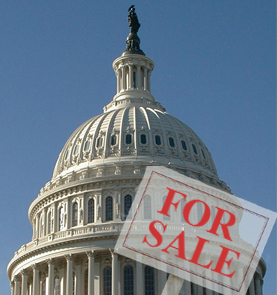
forsaledcLike any mushrooming company hoping to discharge its spores upon every square mile in a new field, Verizon had its lobbyists. In 1999 and 2000, Verizon, BellSouth, and SBC gave more than $7.1 million to political parties and federal campaigns, ensuring that they were among the top 25 donors. The funds were well-timed, arriving in Washington just as Congress was in the process of loosening restrictions.

AT&T perhaps had the most to lose from attempting to influence the reordering of the telecom guard. Faced with the October surprise of splitting itself up into four parts, AT&T alone had contributed $4.3 million during the 2000 election cycle. It was facing complaints from its investors.

Meanwhile, the telecommunications companies were beginning to enter more long-distance markets. Verizon, of course, knew when to steer clear of federal legislation or, more accurately, precisely when to time its actions in relation to governmental and competitive developments. Near the close of 2000, it withdrew its application for Massachusetts long-distance services. (Verizon was then under scrutiny from other telecom providers. In April 2001, it would receive federal approval in Massachusetts, where the competition would heat up.)

stockmarketdudeBy the end of October, Verizon may have been doing okay in the stock market. But its third-quarter profit was flat. The money that Verizon had spent to dominate DSL and long-distance markets with discount pricing had remained the same from the year earlier. Verizon profits in Q3 2000 were $1.99 billion, whereas Bell Atlantic profits had been $2 billion a year earlier. The m.o. involved spending and undercutting. But this seemed enough to assuage Wall Street.

Profits needed to come from somewhere. But there was also the matter of eager consumers trying to find the cheapest possible price on DSL. Local telephone service was the logical place to start jacking up prices. On November 1, 2000, while Verizon New Jersey proposed to double basic telephone rates from $8.19 a month to anywhere from $15-17 a month, regulators called a hearing. Elderly customers complained that they would be saddled with undesired expenses and undesired services. Verizon’s argument was that it cost them much more than $8.19 a month to provide basic telephone service to its customers, but Verizon spokeswoman Soraya Rodriguez did confess that there wasn’t much in the way of competition for local service

These sentiments were in sharp contrast to the Bell Atlantic days. In 1992, Bell Atlantic had brokered a deal with Trenton. They would rewire Jersey lines if the state loosened Bell Atlantic from a regulative loophole that forced it to lower rates if it made an unreasonable profit. In 1997, the New Jersey Board of Public Utilities had stood its ground. The result was that Trenton had managed to get its line rewired and New Jersey customers had experienced some of the cheapest local telephone service in the country. But Anthony Wright, the program director for New Jersey Citizen Action, would organize opposition to the plan and score a victory later in the year. This was, however, not the end of Verizon’s efforts to squeeze profits out of local telephone service, as subequent 2004 efforts in the Northwest would eventually reveal. (Indeed, in early 2008, Verizon would play this card again when telephone deregulation was on the table. Regulation was retained, but, by 2011, local Verizon telephone service in New Jersey will be set at $16.54 a month. Verizon, as it turned out, could fight just as hard as New Jersey Citizen Action could.)

Verizon had, by this time, seemingly escaped from the lingering smoke wafting from the August strike. In New York State, the backlog for new lines had been eliminated by October 23, 2000. Or so Verizon claimed. In November, there were still reports of new apartments waiting for service in a 33-story tower declared “The Ultimate in Brooklyn Heights Luxury.”

Verizon continued to expand. Verizon Communications owned 40% of Venezuela’s national telephone company. And there was the $1.5 billion acquisition of Price Communications Wireless, which served the Southeast, but also faced $550 million in debt that Verizon also took on. And, as previously documented, Verizon backed out of the NorthPoint deal.
vendorfinance

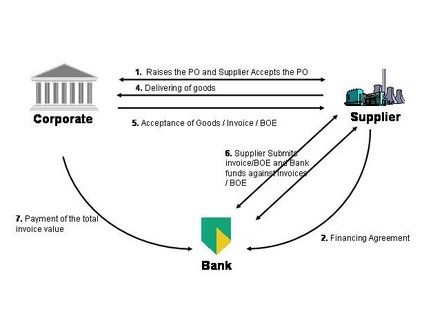
But what was particularly interesting was the amount of debt held by seven major telecommunications companies. In August 2000, Lehman Brothers analyst Ravi Suria wrote a report titled “The Other Side of Leverage,” which pointed to the weaknesses of vendor financing. Vendor financing was precisely what Verizon specialized in. It was a practice that permitted customers to buy their own equipment through unseen financial burdens managed by the company. Suria pointed out that the telecom companies had increased their share of the convertibles market from 5% in 1998 to 20% in 1999. (A convertible is a type of security that can be converted into another form of security — such as a share in a company.) Verizon had managed to pass off much of its debt through their convertibles, because there was no way to squeeze out significant profit from the networks at the time and there was no way to cover the interest payments on accumulating debt. Over the course of four years, the combined debt and convertible bonds of the seven telecoms that Suria was studying had dwarfed to $275 billion. As the New York Times‘s Gretchen Morgenson observed, this was a significant change from the $160 billion in junk bonds generated between 1983 and 1990.

And yet even Suria seemed convinced that there were promising possibilities in the telecom industry. Perhaps Verizon’s faith emerged from the possibilities of keeping customers on-board for life. After all, if you could wipe out the competition, eventually the customer would have no other choice but the Verizon network. And if you could lock a Verizon Wireless customer into a two-year contract, you could then tell your investors that convertibles were merely a “temporary” high-yield debt taken on while waiting for the almighty profits. Perhaps vendor financing represented a new method for Verizon to utilize Ricardo’s comparative advantage theory.

jamesluskThe equipment vendors buying into this infrastructure had to be somewhat concerned about this high-stakes gamble, but the possibilities of profit seemed to negate financial pragmatism. In Lisa Endlich’s Optical Illusions, Endlich reports that, in 1996, Lucent’s Controller was initially skeptical about expanding on such a significant lending risk. Jim Lusk, the Controller at the time, was an old-fashioned finance type who needed to see how the money was going to pay out and who believed that Lucent should stick to selling equipment rather than lending money, even he turned around for a contract that secured 60% of Sprint PCS’s contract. The cost? $1.8 billion, with payment of principal deferred for four years. Small wonder then when, four years later, Lucent was in bad shape, with the CEO replaced and investors demanding an overhaul. But then, by the end of 2000, the nine largest telecom equipment suppliers had a combined $25.6 billion in vendor financing loans to customers.

While such measures of financing may seem extraordinary from the perspective of 2009’s deep recession, keep in mind that such actions came shortly after the unprecedented economic boom of the 1990s. But, as we shall later see, Verizon’s investments in other properties were predicated on these companies, in turn, subsisting through additional vendor financing strategies. (By August 2001, Verizon was forced to write off half of its $5.9 billion investment portfolio.)
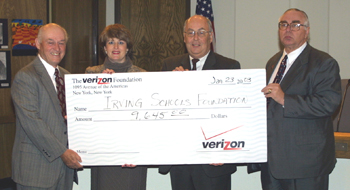
verizonfoundationVerizon also established the Verizon Foundation, with the intent to distribute 4,000 grants of $70 million, through an all-online process. This, of course, replicated the funds and the efforts of the Bell Atlantic Foundation. (Not counting for inflation, this figure would remain more or less consistent throughout the years. In 2008, the Verizon Foundation awarded $68 million in grants, roughly 6.4% of its profits from Q1 2008. The Verizon Foundation’s financial statements can be examined here.)

There were also advertising costs. The tab at Draft Worldwide and Zenith Media was $500 million.

The now ubiquitous practice of SMS text messaging was, near the end of 2000, not widely practiced in the United States. This was a bucolic and more innocent time in which people ate dinner with each other and actually had to wait several hours before telling other friends who they were hanging out with. You might say that before 9/11 “changed everything,” SMS “changed everything.”

While businessmen in Japan and Europe texted each other during meetings, it was not until the fourth quarter of 2000 that telecom communities began rolling out two-way SMS service, and cell phone customers could send text messages to each other of no more than 160 characters. The problem, in the United States, involved conflicting and competing standards.

It is necessary to begin at the beginning and briefly (but, by no means, sufficiently) explain these developments. In the early 1980s, emerging cellular telephone systems were creating numerous incompatibilities and frustrations. Enter a group of fussy European telecommunications administrators determined to solve the problem with a compatible system called Global System for Mobile, or GSM. At the risk of skipping over some vital SMS/GSM history and leaving out a good deal of important and interesting figures, let’s just say that they sorted everything out. (I hope to expand this section in the future.)

On December 3, 1992, in the United Kingdom, the first SMS message was sent by engineer Neil Papworth through the Vodafone network (before it was merged into Verizon Wireless). It read MERRY CHRISTMAS. But it would take seven years before the phrase, “Text me,” would enter into the lingua franca.

It took some time. But upon establishing a cost of about 10 cents per message, text messaging became popular in Europe, particularly in Scandinavia, where many of the GSM originators resided. In October 2000, 157 million European wireless customers were SMS-ready. 9 billion SMS messages were sent every month. The price point created a premium that seemed affordable to teenagers and doctors alike, but this was a lucrative markup that remains a source of controversy today. (Indeed, in October 2008, Verizon Wireless had plans to tack on an additional 3 cents per text message.)
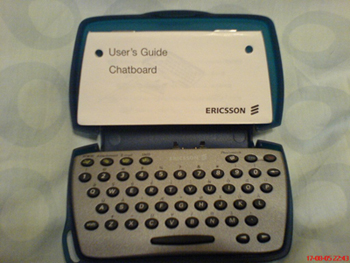
chatboardThe SMS standard used in Europe was GSM, but the US used three separate standards: TDMA (Time Division Multiple Access), CDMA (Code Division Multiple Access), and a GSM variation that, much like the American NTSC television standard abandoned in 2009, was incompatible with numerous global territories. A Verizon Wireless customer in 2000 could not send a text message to a AT&T Wireless customer. And this lack of global SMS compatibility, together with the then-awkward requirement of typing an email address before sending a text, didn’t exactly win customers over.

AT&T Wireless got many of its customers hooked on text messages by offering SMS for free through February 2001. (AT&T would initially charge $4.99 for 500 messages a month, a considerable bargain compared to Verizon’s text message rates today.)

One unexamined consideration is whether Verizon, which owned and maintained all the pay phones in the New York subway stations, deliberately let these pay phones fall into disrepair. After all, why not move these disgruntled pay phone customers onto cell phone plans? And why not work with the city to establish a cell phone network within the cavernous subway system? Verizon, as it turns out, was better at repairing pay phones in 2000 than the year before under Bell Atlantic. According to the Straphangers Campaign, 18% of subway station pay phones were broken in October and November of 2000 (compared to 25% in August 1999). Whether the drop came from reduced crime or reduced pay phone use, it is difficult to say. But as Farouk Abdallah of the Straphangers pointed out at the time, Verizon’s contract with the MTA called for 95% of the pay phones to be “fully operative and in service at all times.”
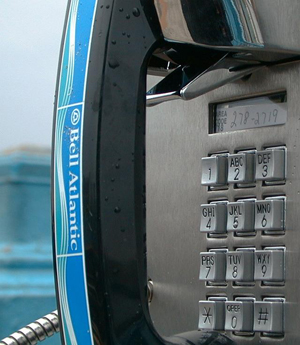
payphonebellPay phones, however, were on the wane. When the City of New York announced that it would construct 2,262 new public pay phones, a number of Upper East Side residents, who presumably possessed the expendable income needed to pay for a cell phone, complained about the 1,000 pay phones appearing in their neighborhood. Never mind that only half of New York residents had cell phones and 20% of residents in poorer neighborhoods didn’t even have regular phones. The pay phone kiosks would be an eyesore. Verizon, interestingly enough, did not apply to operate the new phones.

Three months before the United States would enter a nine-month recession in 2001, shares in Verizon fell $3.94 on December 20, 2000 to $51.88. Despite the 3,500 DSL lines that Verizon claimed it was installing daily, Verizon seemed more interested in promulgating financial projections for 2001 and 2002 rather than coughing up any data about the present. (Lucent, that seemingly dependable equipment vendor who had bet the farm on vendor financing, announced two days later that it would lose more than it had anticipated and that layoffs were forthcoming.)

And the customers wanted more. They wanted nationwide coverage that wasn’t lossy. Analysts suggested that the infrastructure wasn’t there and couldn’t support the dramatic uptick in customers. Could the customer understand that a cell phone was entirely different from a landline? Did they know the difference between an analog and a digital phone? Did they understand that using all those minutes in the package was a trap to get customers reliant upon cell phones? Did they consider that maybe it was the telecom companies who held all the cards in the relationship? Or perhaps increasing and often unreasonable demands were a way for the customer to feel that he had some power or confidence?