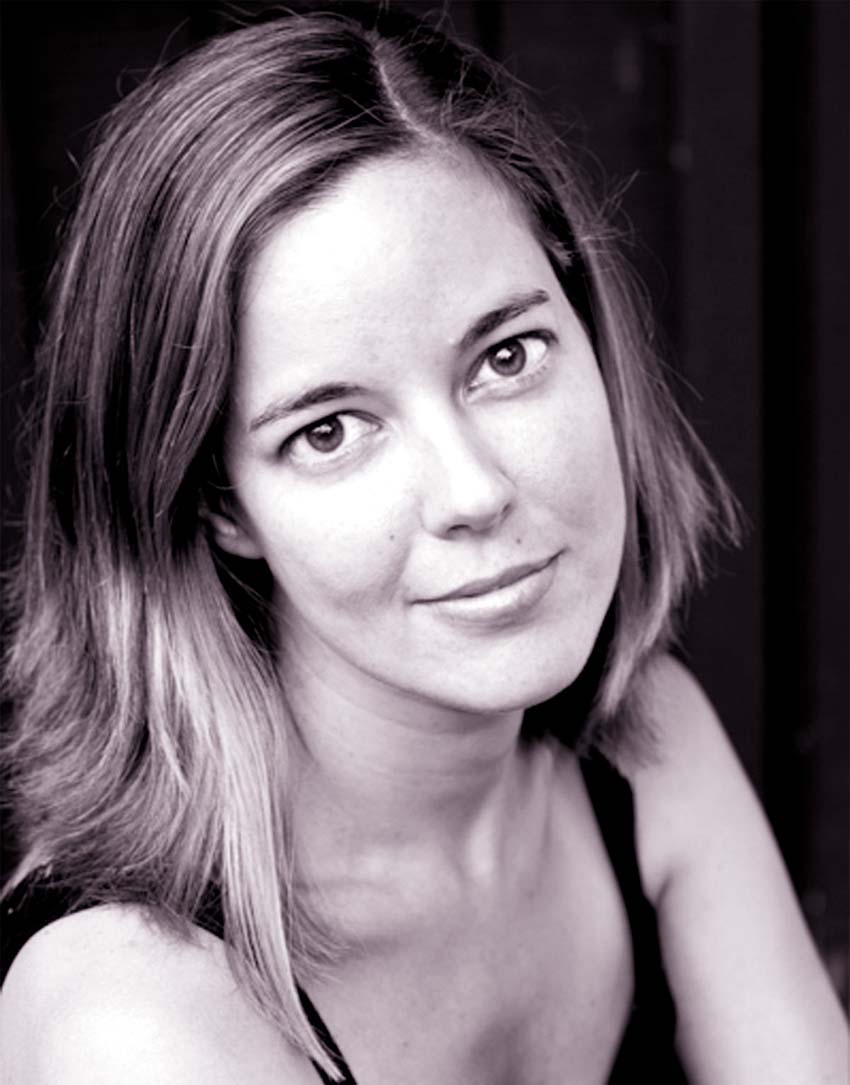
Alix Ohlin is most recently the author of Inside and Signs and Wonders.
Listen: Play in new window | Download (Running Time: 44:17 — 40.5MB)

 This episode of The Bat Segundo Show is brought to you by Audible.com. If you want to listen to Alix Ohlin’s Inside, and help keep this show going, sign up for a free audiobook and a 30 day trial. Use this handy link: http://www.audiblepodcast.com/bat
Condition of Mr. Segundo: Careful to distinguish between Uganda and Rwanda.
Author: Alix Ohlin
Subjects Discussed: Forster’s Aspects of the Novel, California weather, New York City as ideal place to consider the vocational experience, aspiring rock stars, working in the publishing industry before becoming a writer, slush pile people vs. literary giants, working in an atmosphere of rejection, maintaining a love of reading and writing while being employed as a publishing booster, the benefits of being familiar with canonical fiction, writing stories in secret, working in a bookstore, drinking an enormous amount of caffeine, Ohlin’s four year self-imposed apprenticeship, finding a voice, “The King of Kohlrabi” as Ohlin’s first breakout point, hiding in a cafe in Nex Mexico, being a reserved person, resisting a reserved voice, callousness and bad things in fiction, why Ohlin’s characters don’t seek revenge, when the human equation isn’t direct, being treated poorly in a relationship, whether or not revenge is true to life, parents and therapy, building dimensionality out of empathy, removing cautiousness from characters to explore human feelings, fragmented marriages and divorces, being not pro-war, Don Swaim, attempts to be a well-rounded person, Ohlin’s Harvard background, whether writing fiction can make you a more well-rounded person, doing scientific research, having Don DeLillo as a hero, being an information-based fiction writer in the early days, “Vigo Park” and Chekhov’s gun, “A Month of Sundays” vs. Updike’s A Month of Sundays, using explicit literary references in a story, being honest about the author/reader relationship, being too precious with titles and tropes, tactile elements of characters in Ohlin’s sentences, giving the reader sensory guideposts, Tug’s Rwandan backstory in Inside, moving empathy onto a greater canvas, playing around with time, David Mitchell’s Cloud Atlas, Virginia Woolf’s To the Lighthouse, structure and false starts, why Ohline’s stories never transform into novels, being a heavy planner, knowing the ending of a story, the pros and cons of revisiting a short story after it had been collected, short story culture in the digital age, uncollected short stories that aren’t available online, the fate of the short story, being freed of commercial restraints, instantaneous reactions to work, critics who misinterpret work, factual errors in fiction, being grateful for attention, hardcover vs. paperback, and the reduced output of short story collections.
EXCERPT FROM SHOW:
Correspondent: Now I may be misconstrued as the “nine types of weather” guy in E.M. Forster’s Aspects of the Novel, but, as a native Californian, I do feel compelled to ask you this question. There are two moments in these two books where you do remark on the California weather. One is the beginning of the story “The Only Child,” where Sophie calls California weather “sunny and childlike.” And in Inside, you have the situation where Anne is in Los Angeles. She’s running along the beach and she’s calling it this sort of fantastical dream. Now I don’t know why this actually stuck inside my head. But I feel that this is a very good jumping off point to describe what it is you do in terms of selecting those right details. Because I can see it from a California point of view. Because it is too good to be true. I can also see it as someone who has lived here in New York for five years and also say, “Well, yes, it is too good to be true. And it deserves to be mocked or ridiculed in some sense.” But at the same time, we’re also dealing with an author who is ascribing this through a character. And this becomes something that I obsess with. And I’m sure that some other reader is going to obsess over something along those lines. I ask you this about how you choose these details, such as the weather, because your prose is very sparse, very economic, very selective in its own criteria in terms of its syntax. So how does something like the California weather or, for example, Chinese food — also featuring in both books — how do these things make their way in a story? What is the filtering mechanism that causes this? A very bad, eccentric, possibly deranged way to start this, but I thought I would do that.
Ohlin: No, it’s always great to start with weather. I certainly think that everything in the books is filtered through the consciousness of the characters. And that’s always where I begin. It’s my entry point as a writer to start creating a narrative. And it’s certainly how I choose the details. Which is not really a conscious process. It’s more that I’m there in the moment with the character and imagining what might be the most conspicuous thing to them. So both of those descriptions of California, to respond to that, are absolutely moments of experience that are specific to characters who are from the East Coast and wintry climates, who come out and, of course, that’s what they remark upon. Of course it feels like a fantasy and an escape and something amazing and remarkable. Because to them, it is.
Correspondent: Did you get burned in California? Did you get burned by the weather or burned metaphorically?
Ohlin: I love the weather in California. And I do think it’s amazing. But, for me, I will always experience it as not home. Not the climate of home. And I will always be the person remarking upon the sunshine in January.
Correspondent: Okay. Well, aside from Anne struggling in New York in Inside, in Signs and Wonders you have a number of stories set in New York City. And “Who Do You Love?” made an impression upon me for a number of reasons. The notion of a band called Das Boot, which is actually noted around a German mode, or a mood, as opposed to the actual Teutonic experience full boar — that resonated with me because I’ve known people like the — well, rather interestingly, she doesn’t have a name, the woman who is smit with Adam, the aging rock star who is past his prime, doesn’t want to do any particular work and yet he has a draw in Williamsburg. That men like that are allowed to get away with such pathetic behavior, both in that and what we see with Inside and what we see in a number of the other stories in Signs and Wonders. I’m curious. Do you think that this particular fixation is common largely to New York? The vocational experience, is it rooted in your own personal experience? How do these fixations on, I suppose, vocational nightmares along these lines and the terrible influence on other people, how did these come about?
Ohlin: So by “vocational experiences,” do you mean the fact that he wants to be a rock star?
Correspondent: Aspirations. Is this common to New York? Why does this seem to be your idea of what New York is?
Ohlin: Well, it’s not my only idea of what New York is. But I do think that both New York and Los Angeles are places where a lot of young people move in their twenties to pursue artistic dreams that they thought were less available to them wherever they came from. So in that story, it’s the kind of story about someone who was on the cusp of being too old to be aspiring. At a certain point, you’re just sort of a person who never made it and that’s an extremely difficult moment to switch over in your own head. And then I think I have written about other characters in Inside, like Anne, who is an aspiring actress, who starts off first of all in the theater world in New York and then goes out to L.A. to try — or winds up being cast in a TV show in L.A. I just think that there’s something about both those cities that they are conduits to not just any kind of vocational experience, but artistic experiences. And then they don’t work out for people. And that’s incredibly difficult. And it’s part of your growing up to try and figure out how to come to terms with that.
Correspondent: Did New York work out for you? I mean, I know you worked in the publishing industry. And this leads me to ask you also if you had to get certain elements of how you viewed fiction and how you viewed books outside of your system in order to truly inhabit these stories as an artist.
Ohlin: Well, you know, that’s a really interesting question. I moved to New York straight out of college and I did work in publishing. And I loved it. I learned a lot and I was having a great time. But I also had this secretly harbored desire to write. And I would go to work all day and there were two things about it that were difficult. One was that a huge part of my job as an editorial assistant was to reject manuscripts. So I was right there at the forefront of rejection and understanding how difficult the odds were.
Correspondent: Did you reject anybody big?
Ohin: I don’t really want to say who I rejected. But a big part of what I rejected were slush pile people. The people who are just writing in cold without an agent. But there were so many of them and my entire cubicle would be full of these works of love — you know, 500 page novels that people were sending in that I would write a simple two-sentence letter rejecting. That was hard, when you think about, well, what’s going to become of my work. But then on the other side of the coin was that the books that were accepted, I mean, I was working at Knopf and we were publishing people like Cormac McCarthy and Tobias Wolff and Toni Morrison. And their work was so incredibly sophisticated and adept. And then I would go home and I would write these terrible, terrible, terrible stories. And the contrast between what I could do and what these published authors could do on the one hand and the rejection of the unsolicited manuscripts on the other hand really did not create an ideal context for artistic risk-taking. So I think it was really because of that, and not something about New York in particular. I love New York. But it was really about working in this atmosphere of rejection and impossible standards that I just thought, “Well, I really can’t do this.” I made the impetuous decision that you make when you’re in your early twenties and I thought, “I’m leaving New York! I’m starting over!” You know. “And it’s going to be an adventure!” I think, had I been a little older, I probably would have realized that there are ways that you can reconcile those two things. But at the time, it seemed like going away and writing in secret far away from New York publishing was the thing that I had to do.
Listen: Play in new window | Download (Running Time: 44:17 — 40.5MB)