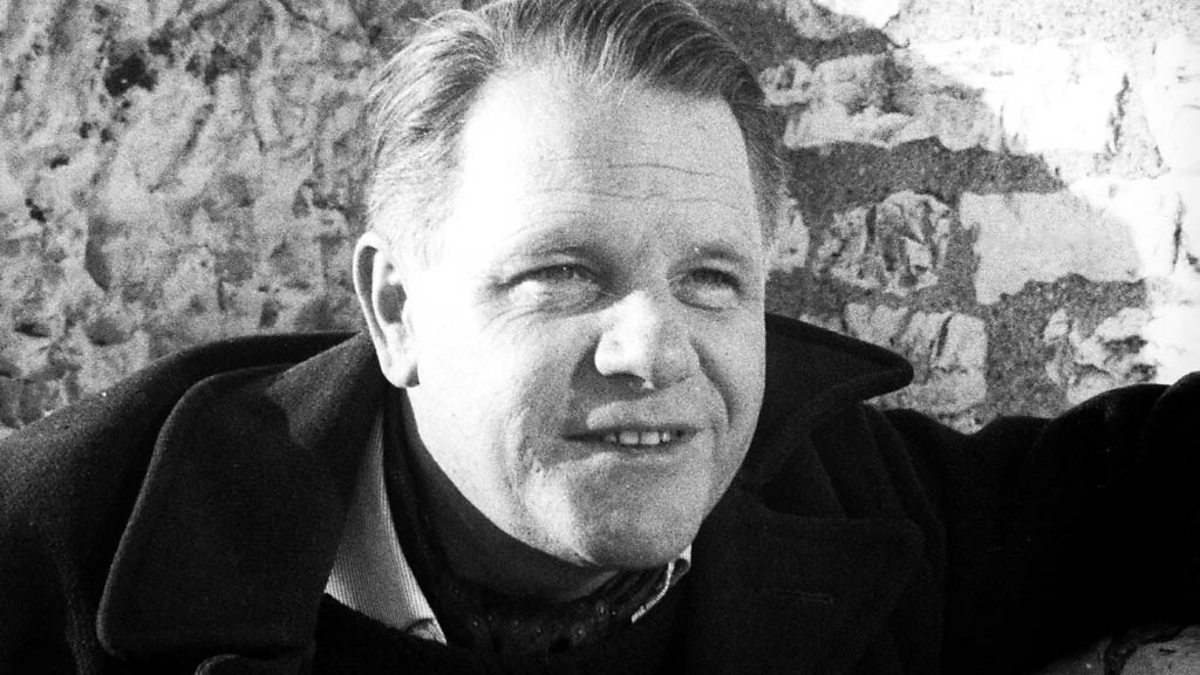
The Alexandria Quartet (Modern Library #70)

(This is the thirty-first entry in the The Modern Library Reading Challenge, an ambitious project to read the entire Modern Library from #100 to #1. Previous entry: A High Wind in Jamaica.)

In a previous life, when talent and bonhomie mattered more than sad resentful ciphers dedicating their wasteful energies to demolishing rivals on social media, I had the great privilege to interview authors. I once made a northeastern trek by train to talk with a literary titan — a formidable essayist, a first-rate fiction writer, and a mischievous wit with a bright high voice who is still blessedly alive and who remains quite undersung today. After I pressed the square STOP button on my bulky black recording unit, we got to gabbing for two more hours off-tape — an act of generosity that stunned my companion and me. The author surprised us by confessing that she had played the then-in-vogue Angry Birds and we discussed the literary classics that young people read (or, more frequently, neglect). She was very likely picking our unweaned and less wiser brains in that pre-Trumpian epoch when, even then, declining erudition was a growing pestilence, as it wasn’t all too often that she had the company of young strangers at her long refectory table, which was punctuated by a plate of store-bought cookies that no one touched. The first name that this author mentioned was Lawrence Durrell.

“Does anyone even read him anymore?” she asked.

Neither my companion nor I had read a single word of this almighty author at the time. As I was to learn only in the last few months, I missed the teenage ritual of diving into Durrell by about five to ten years. Justine, Balthazar, Mountolive, and Clea. These were the four volumes read by an impressionable generation just before me. My older literary friends describe soaking up Durrell’s words with wide and voracious eyes around seventeen — just before they joined the less exclusive liturgical practice of tossing their tasseled caps into the heavens preceding the uncertain foray into higher education and the newfound duty of negotiating injurious capitalism (clearly not redeemable by taxation these days, contrary to sentiments expressed by the novelist Pursewarden in Mountolive).

Now that I have finally read the mighty quartet — with its gorgeous sentences, its exotic vernacular (which caused even a rhapsodic word nut and undefeated Wordle regular like me to make repeat trips to the dictionary), its bold meditations on “modern love” (a term of art regrettably coarsened by the New York Times‘s often vapid essays and an even more vacuous television offshoot) and intertextuality (most notably, Balthazar‘s Interlineal), its vast tapestry of unreliable narrators and colorful characters (many marked by disease and disfigurement and, most tellingly, the absence of eyes; the number of one-eyed characters throughout the Quartet greatly overshadows the sum of spastic dancers you’ll find in any Brooklyn nightclub on a Saturday night), and the hypnotic and baleful city at the center of all these proceedings — I am frankly kicking myself for not getting around to it much earlier. My reading experience was a true coup de foudre.

This tetralogy is clearly one of the 20th century’s greatest literary achievements. I suspect, as I crest closer to the age of fifty and reckon with surprising strains of unsummoned maturity that have often bemused me, that this was the last possible moment of my life in which I could have supped upon Durrell with an eager appetite. There are only a handful of living writers whose command of the written word beckons you to slow down and imbibe the text ever so delicately — much like a pied crested cuckoo leisurely supping on drops of rain water. Of Alexandria itself, we learn of warm winds that strike against the cheek as “soft as the brush of a fox” from an enchanting near-phantom city “whose pearly skies are broken in spring only by the white stalks of the minarets and the flocks of pigeons turning in clouds of silver and amethyst; whose veridian and black marble habour-water reflects the snouts of foreign men-of-war turning through their slow arcs.” Even if one is blind and cannot see the Nile’s adjacent estuary, there is eldritch life within the “gloomy subterranean library with its pools of shadow and light,” where “fingers [move] like ants across the perforated surfaces of books engraved for them by a machine.”

Shallow word-wasters have abseiled down the other side of once robust parapets with evermore ubiquity these days, emboldened by the narcotic allure of likes and follows rather than the purer and more rewarding journey set by the instinctive tempo of their distinct voices. But Durrell (whose name rhymes with “squirrel” and not the inexact “laurel,” as I have unknowingly mispronounced for decades) is very much on the level. Given the astronomical prices of his non-Alexandria volumes online — despite a well-received four season television series on the Durrell family in recent years and an enthusiastic nonprofit society sustaining a cheery and active Twitter presence — it appears likely that Lawrence Durrell is fated to be forgotten. All writers, of course, have their time and eventually fade into the sunset. Very few of today’s readers speak of Naipaul, Ford Maddox Ford, John Dos Passos, or even Anthony Burgess anymore. For some of these plodding stampeders now collecting well-earned dust in used bookstores from here to Gehenna, there is sturdy raison that only a handful of graying hangers-on will dispute. (Besides, what kind of giddy and obsessive bastard reckons with ancient canons when one is regularly unsettled by the cannonades of apocalyptic headlines and the high probability of a third world war? An increasingly shrinking number these days, easily a hundredfold more minuscule than the combined tally of all who still collect vinyl and Beanie Babies.) But in Durrell’s case, this feels like a notable criminal oversight. Particularly since crossing the four book Rubicon was, not so long ago, a vital rite for any stripling with unquenchable curiosity.

It all starts with an unnamed Irishman (whose name is revealed to be Darley a few books later) in exile on an island with a child, recalling his passionate affair with a woman named Justine.  Justine is married to a distinguished Copt diplomat named Nessim.  Before that, Justine had been married to a tyrannical French national and that life has been captured in a book called Moeurs written by some guy named Jacob Arnauti. Intertexuality and the struggle to make sense of ineffable feelings through words (or even the words from another committed and capricious chronicler) is very much a Durrell motif.  Darley has abandoned a devoted and far too patient dancer named Melissa for the sake of this seemingly distinguished affair.  There is also a mysterious painter named Clea, who smartly tells Darley, “Love is horribly stable, and each of us is only allotted a certain portion of it, a ration. It is capable of appearing in an infinity of forms and attaching itself to an infinity of people.”

But what if the “love” that Darley feels has not been reciprocated in the way that he has believed? Durrell’s second volume, Balthazar, calls into question all the events of the first volume, with Balthazar himself (a mystical Jewish doctor who is involved with the Cabal) arriving by sea with an annotated version of Darley’s manuscript.  The third volume, Mountolive, not only expands these angsty escapades to the vaster canvas of surprising espionage developments that often crackle with the griping momentum of a John le Carre novel, but reveals the tableau from the third-person vantage point of the titular diplomat, where we not only learn that Nessim has an unhinged brother named Narouz, but that Mountolive himself is mad about their mother, Leila. Finally, in Clea, we return back to the narrator Darley, five years after the Rashomon-like events of the first three volumes. The Second World War now unsettles the city. And the characters we have been rapturously following are still trying to make sense of the events that have happened, but what living now encompasses. Which is not all that removed from today’s practice of doomscrolling, dodging new variants, and submitting one’s deltoid for yet anther booster shot. As Darley himself puts it:

I am hunting for metaphors which mighty convey something of the piercing happiness too seldom granted to those who love; but words, which were first invented against despair, are too crude to mirror the properties of something so profoundly at peace with itself, at one with itself.  Words are the mirrors of our discontents merely; they contain all the huge unhatched eggs of the world’s sorrows.

Amazingly, Durrell wrote Clea in four weeks.

It may seem from my description that Durrell was merely a relentless brooder, but he was often quite witty with his pen. Biographies from Ian MacNiven and Gordon Bowker both depict Durrell’s obsession with the great P.G. Wodehouse.  And Durrell fueled these comic energies in humorous stories about a diplomat named Antrobus.  While the tableau of Scobie cross-dressing as Dolly Varten in Balthazar possesses the dowdy feel of an entry in the Carry On film franchise, Sir Louis’s eccentricities in Mountolive could almost be interposed to an Evelyn Waugh novel:

Within the last year, and on the eve of retirement, the Ambassador had begun to drink rather too heavily — though never quite reaching the borders of incoherence. In the same period a new and somewhat surprising tic had developed. Enlivened by one cocktail too many he had formed the habit of uttering a low continuous humming noise at receptions which had earned him a rather questionable notoriety. But he himself had been unaware of this habit, and indeed at first indignantly denied its existence. He found to his surprise that he was in the habit of humming, over and over again, in basso profundo, a passage from the Dead March in Saul. It summed up, appropriately enough, a lifetime of acute boredom spent in the company of friendless officials and empty dignitaries.

One reason why Durrell’s voice is so distinct on the page — and why it has been so inimitable since (only Malcolm Bradbury and Roger Angell have attempted Durrell parodies, with unsustainable and ineffectual results) — is because he needed a fellow outlier (specifically, Henry Miller) and a commitment to impropriety and originality to get there. Indeed, as Durrell himself observed in a January 12, 1972 appearance at UCLA, his febrile dilettantism was his lodestar:

But it seems that every writer need a kind of placental relationship with another writer to approve of him and to help him. To reassure him. And it seems very curious how they come up in doubles in such very dissimilar people. I’m very frequently asked, “How could a writer like you admire Miller? And what on earth could he see in you?” The second question is difficult, I know. But a friendship is not qualified by the actual material one produces. And in our case, what we had in common was an unprofessional attitude to literature. In other words, neither of us were really interested in literature. Nor was Anais Nin. We were interested in other things. That is to say that we were not professional litterateurs. And we didn’t think professionally about writing. Writing, for us, was a kind of windscreen wiper which might help us to look ourselves in the eye a little more clearly. To liberate ourselves or to realize ourselves. In other words, our occupation was not literary, but philosophic really.

The journalist Peter Pomerantsev has suggested that Durrell only appeals to “the ‘cross-patriates,’ the hyphenated.” And he may very well be right. As a writer, audio producer, journalist, theatre producer, radio dramatist, sound designer, performer, voiceover man, TikTok microinfluencer (this still puzzles me),  and (just weeks ago) soundtrack composer, it’s becoming increasingly harder these days to find people who aren’t so singular and unadventurous in their passions and interests. As Cormac McCarthy has said, “Of all the subjects I’m interested in, it would be extremely difficult to find one I wasn’t. Writing is way, way down at the bottom of the list.” Those of us who find joie de vivre in living as widely and as fulsomely as we can are increasingly becoming exiles like Darley.

It’s also difficult to fathom the lion’s share of today’s emerging writers being driven by the same impetus. One’s individuality is now drowned out by the unceasing firth of social media’s brackish tide, its morass of groupthink. The urge to please, to install one’s self as some influential pinnacle who plays it safe, is diametrically opposed to the noble pairing of future artists who can provide mutual succor, possibly shaking the very foundations of an increasingly stodgy medium that rewards uninventive bougie hokum and shameless mimesis. Inimical idiocrats with such stultifying surnames as Athitakis, Ulin, Kellogg, Kachka, Kreizman, Miller, Grady, Romano, Freeman, and Schaub regularly stump for what Durrell identified (through his novelist character Pursehaven) as “the ancient tinned salad of the subsidised novel.” All of them, unlike Durrell, will scarcely be recalled by anyone fifteen years after they pass. They will live out their dull and unadventurous lives and take out their parasitic resentiment on true originals with pablumatic “hot takes” that are largely mercantile and self-serving. Having abdicated their sense of humor sometime in their thirties or forties, and expressing little more than a perfunctory interest in other things, these egregious weasels continue to wage war on any dazzling lights casting a lambent heat upon their cold and cozy conformity. And contemporary literature is lesser for it.

So it becomes increasingly urgent these days to not tuck true talents like Durrell into the granules of forgotten history. Literary achievement is consummated by puckish punks who stand against the boring norms, by young writers who pay close attention to the dazzling output of all the eclectic outliers who presaged them and who summon the instinctive effrontery to pick a crucial and principled fight in the mystifying battles against misfits.

Next Up: Edith Wharton, The House of Mirth!
The Great War and Modern Memory (Modern Library Nonfiction #75)

(This is the twenty-sixth entry in The Modern Library Nonfiction Challenge, an ambitious project to read and write about the Modern Library Nonfiction books from #100 to #1. There is also The Modern Library Reading Challenge, a fiction-based counterpart to this list. Previous entry: The City in History.)

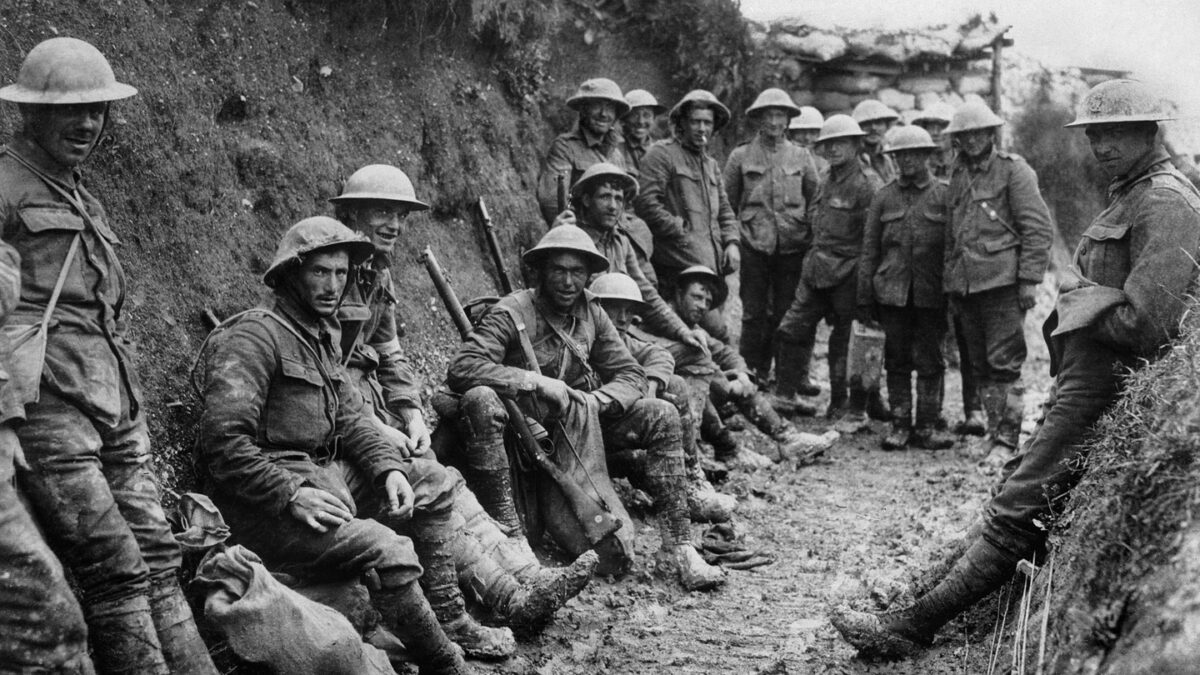
The men went to war. Their psyches were scarred and sotted by the sights and sounds of death and dreary dissolution — all doled out at a hellish and unprecedented new normal. Machine guns, mustard gas, the ear-piercing shrieks of shrapnel and shells, rats gnawing on nearby corpses. The lush fields of France anfracted into a dark flat wasteland.
The war was only supposed to last a few months, but it went on for more than four years. Twenty-two million lost their lives in the First World War. Many millions more — the ones who were lucky to live — were shattered by the experience. Their bodies were bent and their souls were broken. As Richard Aldington observed in his bleak comic novel, Death of a Hero, the trauma that the soldiers carried home became all too common, unworthy of commiseration and often received with scorn.

But, despite the scars and notwithstanding the cruel homeland rebuke, these men somehow sustained a culture during hard-won moments when they weren’t fighting in the trenches and when they weren’t watching their close friends mowed down by the newer and deadlier weapons. Their noble commitment, their fervent faith in some lambent hope plucked from the maws of a mottled landscape, forever changed the way we saw, heard, and expressed ourselves. As Paul Fussell nimbly argues in The Great War and Modern Memory, we are indebted to these soldiers in ways that most people today cannot appreciate.

* * *

While The Great War and Modern Memory doesn’t contain the intoxicating sweep and ambition of Frazer’s The Golden Bough in identifying the underlying rituals that have come to define the manner in which we reckon with disruptive and often inexplicable quagmires, it is nevertheless a remarkable volume, one quite essential in charting the trajectory of how humans expressed themselves through poetry, letters, fiction, and even postwar mediums. I first read this book in my early twenties — many years before I would stumble onto sound design as a method of communicating feelings often untranslatable through words — and, even then, I was startled by how Fussell identified early phonographic recordings as a liminal theatre sprinkled with sounds of attack. This was evidenced not only in the hit novelty records scooped up by supercilious aristocrats comfortably ensconced in cushy sacrosanct parlors without a care in the world, but further immortalized in such unlikely texts as Anthony Burgess’s underrated dystopian novel, The Wanting Seed.

There are so many bones baked into the silt of the Somme that human remains were still being exhumed in Fussell’s day. Forensic experts have continued to make efforts to identify skulls in more recent years. But beyond all these history-shattering casualties, there were also significantly influential linguistic precedents derived from these disfiguring events. The “us vs. them” vernacular that was to become a regular feature of all subsequent wars began with the Great War’s “we” and the xenophobia that was swiftly ascribed to the other side through epithets like “Boche,” as well as the cartoonish pastiches that no soldier in history has been immune from assigning to a mortal enemy. Germans were depicted as giants, memorialized in Robert Graves’s “David and Goliath.” Blunden’s Undertones of War described German barbed wire with “more barbs in it and foreign-looking.” Whether John Crowe Ransom explicitly derived his notion of the other from Blunden, as Fussell imputes, is anyone’s guess. But Fussell’s confidence and deep dive into phrases and terms of art is strangely persuasive. He has, unlike any other scholar since, made a vigorous and spellbinding examination of how language pertaining to division and the unshakeable sense that the war would go on forever influenced the Modernists (and even the postmodernists) as they rolled out their comparatively more peaceful masterpieces to the literary front lines in the 1920s.

Contrary to the cliches, life on the front wasn’t just about poetry and gardening. There was the unappetizing perdition of stale biscuits and Maconochie stew, a hideous tinned concoction (which at least one YouTuber has attempted to recreate!) involving bully beef that reminded the men of meals tendered to dogs. There were startlingly brave figures like Siegfried Sassoon, who not only took a bold stance against the war, but evoked the sordid memories of the trenches and a forgotten England in his Sherston trilogy (which dropped just as autofiction practiced by the likes of Dorothy Richardson and Proust was being quietly celebrated and, in turn, inspired Pat Barker to write her terrific Regeneration trilogy). The stertorous gunfire on the front was so loud that, as Fussell helpfully notes, even Pynchon was compelled to memorialize the idea of shells being heard hundreds of miles away in Gravity’s Rainbow. There was even a series of Illustrated Michelin Guides to the Battlefields that made the rounds after the Treaty of Versailles. Fussell repeatedly points to maps as shaky palimpsests staggered with thick wavy lines and often wry notations, but the lack of tangible geography had to spill over somewhere. Poetry was fated to account for the ambiguity.

Fussell makes a strong case for a tectonic shift in expression being practiced even before the war began. Indeed, the war gave E.M. Forster’s famous “Only connect” sentiment some completely unanticipated momentum as the landed gentry attempted to reckon with the period between the two world wars. If the Great War had not happened, what would be the trajectory of literature? Fussell doesn’t mention Rebecca West’s 1918 novel, The Return of the Soldier, but this was one of the first Great War novels to explicitly deal with shellshock and one can read this book today as a fascinating glimpse into a period between frivolous prewar innocence and the stark and gravid sentences that were to come with Eliot, Hemingway, Woolf, and Fitzgerald. Fussell suggests that the young Evelyn Waugh was emboldened in his poetic and often brutal satire by much of the lingering language that the war had extracted from the patina of once regular summer comforts. The charred scenery on the front lines caused soldiers and servicemen to look upward into the possibilities contained within the sky — itself a predominant fixation within Ruskin’s Modern Painters — and not only did Waugh mimic this in the opening pages of his later novel, Officers and Gentlemen, but one cannot read John McCrae’s “In Flanders Fields” without being acutely aware of the “sunset glow” or the sky serving as an anchor for the poppies blowing beneath the crosses or the singing larks still “bravely singing” amidst the destruction.

It’s possible that Fussell may not have arrived at his perspicacious observations had he not gone through wartime and its preceding ablutions himself. In his memoir Doing Battle, Fussell notes that he could not have unpacked Wilfred Owen’s veiled sensuality had he not been smitten himself with the looks of boys in his adolescent years. He also writes of identifying strongly with Robert Graves’s sentiment that one could not easily be alone in the thronged throes of battle. In The Great War and Modern Memory, Fussell sought to unpack irony and poetic elegy as it became increasingly expressed during the First World War. He claimed his study to be “an act of implicit autobiography” and “a refraction of current events.” In Fussell’s case, he had sickened of the Vietnam War’s overuse of “body count” and perceived perspicacious parallels between Owen’s “Insensibility,” a poem which suggests that expressing “sufferings” is simply not enough to understand real loss. One must have palpable experience of warfare’s devastation in order to reckon properly with it.

And perhaps The Great War and Modern Memory is more serious than Fussell’s “stunt books” (Class, which The Atlantic‘s Sandra Tsing Loh rightfully described as a “snide, martini-dry American classic,” and Bad) because Fussell could not find it within himself to betray his own personal connection to war.

Even so, Jay Winter, Daniel Swift, and Dan Todman have rightfully censured Fussell for leaving out or even demeaning the contributions of working stiffs. Make no mistake: Paul Fussell is an elitist snob and more than a bit of a sneering egomaniac. To cite but one of countless examples, Fussell overreaches and reveals his true colors when he suggests that all letters home from the soldiers adhered to what he calls “British Phelgm” (“The trick here is to affect to be entirely unflappable; one speaks as if the war were entirely normal and matter-of-fact.”). War censors certainly created a creative smorgasbord of workaround phrases, but, as someone who has reviewed World War I letters for research, this is an unequivocal load of bollocks — as a cursory plunge into the National Archives swiftly reveals. Fussell is much better tracking idioms like “in the pink” and using his mighty forensic chops to expose undeniable lexical influence.

As our present world moves ever closer to a potential third world war — with Ukraine standing in for a “trouble in the Balkans” — The Great War and Modern Memory reminds us that all the trauma on our shoulders — whether endured by soldiers or civilians — is destined to spill somewhere. We may not have five centuries of democracy and peace to give us the cuckoo clock that Orson Welles famously snarked up in The Third Man, but there are certainly plenty of unknown Michelangelos and da Vincis waiting in the wings to make sense of the ordeals of 2022 life. History, to paraphrase Stephen Dedalus’s famous sentiment, is a nightmare from which all of us are trying to awake.

Next Up: Cecil Woodham-Smith’s Florence Nightingale!

A High Wind in Jamaica (Modern Library #71)

(This is the thirtieth entry in the The Modern Library Reading Challenge, an ambitious project to read the entire Modern Library from #100 to #1. Previous entry: A House for Mr. Biswas.)

Richard Hughes’s A High Wind in Jamaica is the wild and bracing corrective to William Golding’s Lord of the Flies (forthcoming at ML #41) that I never knew I needed. Truth be told, the two books I am least looking forward to revisiting during the course of this ridiculously ambitious and time-consuming project are J.D. Salinger’s A Catcher in the Rye (forthcoming at ML #64) and Lord. Both novels meshed with me when I was an impressionable high school kid who didn’t know any better, but I have assiduously avoided rereading both volumes as an adult — much in the way that you hang down your wiser and more mature head over some of the dodgier cartoons you advocated as a child. (For the record, in my adulthood, I still abide by The Rocky & Bullwinkle Show, the decades-long catalog of Warner Brothers cartoons, and — if you get me on the right day — Robotech and Star Blazers.)

Thankfully, I had no such qualms with High Wind; in large part because, unlike Golding, Hughes isn’t so obsessed with plugging in values — the novel as a Sudoku puzzle? — to uphold his Great AllegoryTM (and thus literary posterity). The older you get as a reader, the more you welcome the fresh shock of the visceral: those exotic and sometimes unsettling voices you may not encounter in the real world.
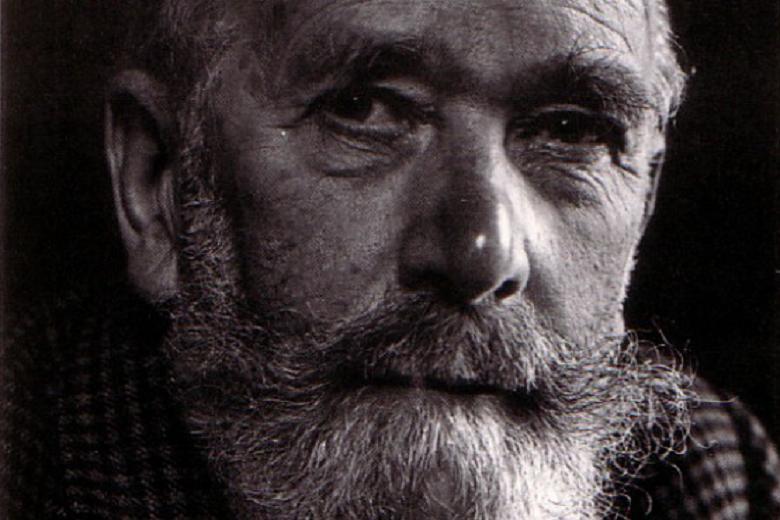
Hughes was twenty-five years ahead of Golding when it came to writing a novel about children losing their civilized patina as they travel deeper into the wild and aberrant vales of anarchism (in this case, by dint of a ragtag gang of pirates). But his exquisite command of atmosphere shows that he was arguably more subtler than Golding, permitting the transformation of his children to become something of a shock in part due to the great care he took with his prose. High Wind was one of only four novels that Hughes wrote. (And aside from High Wind, I especially recommend In Hazard.) He was more of a playwright, a poet, and a journalist than a fiction writer — in large part because the lapidary approach he took with his sentences significantly slowed him down. But despite his bradykinetic progress, High Wind proved to be such a literary sensation that it turned Hughes into a notable figure saddled with controversy, literary renown, and even a modestly burgeoning financial cushion.

The novel’s setup involves the Bas-Thornton children, who flirt with feral wonders in the Jamaican wild when not relishing their privileged comforts at a plantation named Ferndale. A storm devastates their idyllic paradise. And as they sail back home to England, the children are scooped up by pirates.

When the pirates do board the ill-fated Clorinda (complete with Captain Narpole sleeping through the whole imbroglio, saving face later with a devastatingly bleak letter of lies), Hughes is crisply fastidious about describing these interlopers against type:

With this second boatload came both the captain and the mate. The former was a clumsy great fellow, with a sad, silly face. He was bulky; yet so ill-proportioned one got no impression of power. He was modestly dressed in a drab shore-going suit: he was newly shaven, and his sparse was pomaded so that it lay in a few dark ribbons across his baldish head-top. But all this shore-decency of appearance only accentuated his big splodgy brown hands, stained and scarred and corned with his calling. Moreover, instead of boots he wore a pair of gigantic heel-less slippers in the Moorish manner, which he must have sliced with a knife out of some pair of dead sea-boots. Even his great spreading feet could hardly keep them on, so that he was obliged to walk at the slowest of shuffles, flop-flop along the deck. He stooped, as if always afraid of banging his head on something, and carried the backs of his hands forward, like an orangutan.

Much as Knut Hamsun seemed to anticipate the hardboiled existential feel of Jim Thompson and James M. Cain in 1890 (thank you also, late and great translator Sverre Lyngstad!), so too does Hughes depict the professional working-class criminal just before the gaudily garbed grunt became a staple of noir. These pirates do make a perfunctory effort to look presentable (the captain — later revealed to be a Danish German-speaking ruffian named Jonsen — has gone to the trouble of shaving and pomading what is left of his hair), but they are also makeshift in their sartorial choices. Hughes’s beautiful choice of “dead sea-boots” suggests something vitiated and unholy at work here. (Indeed, one of the buyers who unloads the booty is a vicar, described as “less well shaved than he would have been in England.” Later, a warped nativity play is performed to entertain the pirates. Even later, the song “Onward, Christian Soldiers” is evoked in creepy fashion.) And Jonsen’s desperate attempt to keep his fancy bespoke slippers on — coupled with the telltale pocks of his aloof hands, which resemble a spastic animal — is just one of many examples of the dry exacting comedy that Hughes doles out gently throughout this deranged adventure tale. There’s also a mysterious first-person narrator serving almost as a cosmic god offering mordant asides. Indeed, the standoff between Marpole and these thugs reminded me of the “civilized” exchange between Barry and the highwayman in Kubrick’s Barry Lyndon. (In Barry Lyndon, Kubrick also had a sardonic narrator in the form of Michael Hordern’s arch commentary, which also dished up bone-dry asides on how we are all barely disguised animals beneath the human sheen. Was Kubrick familiar with Hughes? We may never know, although it is worth noting that a young Martin Amis did appear as one of the kids in the 1965 film adaptation of Hughes’s novel.)

Yet the look of these pirates is enough to ignite a modest crush within Margaret, one of the children, who marvels at their beauty. In an age in which television shows like Euphoria and high school cinematic classics like Fast Times at Ridgemont High or Ferris Bueller’s Day Off are heralded for using transgressive behavior to depict teens as “adults” (one can likewise see this approach nimbly executed in Megan Abbott’s more recent novels, which have used this storytelling device by framing kids through the subcultures of ballet, cheerleading, and hockey), it’s impossible to overstate the big risk that Hughes took here in 1929. During the hurricane that plagues Jamaica, Hughes also foreshadows how living in a state of nature can inevitably subsume anyone — even a child — by having a domesticated pet named Tabby ruthlessly chased by wildcats.

You will, alas, have to contend with the novel’s appalling and off-putting racism (“there is, after all, a vast difference between a negro and a favorite cat,” writes Hughes when both die after a hurricane and there is a cruel treatment of a monkey on the high seas, which suggests an unsettling metaphor). But the sheer weirdness that forms the backbone of this sweeping story swiftly atones for these hoary and horrendous “cultural values.”

High Wind is also the first recorded instance of the Hangman’s Blood, a cocktail later favored by Anthony Burgess. Seventeen years ago, I persuaded a bartender in the Upper Haight to make me this famous libation. It was, I am sad to report, quite ghastly. I never tried it again. Hughes himself also understood what a hideous mix it was, describing it as possessing “the property of increasing rather than allaying thirst, and so, once it has made a breach, soon demolishes the whole fort.”

Subconsciously, too, every one recognizes they are animals — why else do people always laugh when a baby does some action resembling the human, as they would at a praying mantis?

The children adapt to their new life much like many of today’s bored kids stare into the vacuity of their digital screens for constant stimulation. When one of their number dies, Hughes eerily notes how quickly accustomed they become to an empty bed. When Jonsen withholds the “three Sovereign Rules of Life” on the basis of their youth, Edward replies, “Why not? When shall I be old enough?” Indeed, reading High Wind in 2022 is rather eldritch, particularly in the shock of recognizing such everyday behavior among children today. Hughes does not shy away from how boredom can turn kids unruly and mischievous quite fast. Margaret speaks “with an eagerness that even exceeded the necessities of politeness in its falsity.” When the first mate attempts to inveigle the kids by mentioning a famous pirate named Rector of Roseau, the children quickly see through the superficiality of the apocryphal origin story, puncturing the first mate’s plot holes faster than the Comic Book Guy on The Simpsons. And the children strike back, with Hughes even describing a corporeal awakening among Emily.

I certainly don’t want to spoil how the kids transform. But it is subtly disconcerting, with a clever nod to the Flying Dutchman. We are left to wonder whether this particular group of kids was fated to turn out this way, even if the pirates had never kidnapped them, or if feral circumstances shaped their transmutation. Hughes, to his credit, lets the reader off the hook somewhat with this aside, pointing to how children are regularly underestimated:

Grown-ups embark on a life of deception with considerable misgiving, and generally fail. But not so children. A child can hide the most appalling secret without the least effort, and is practically secure against detection. Parents, finding that they see through their child in so many places the child does not know of, seldom realize that, if there is some point the child really gives his mind to hiding, their chances nil.

Given how problem children have been a pain in the ass for so many parents over the years, it’s rather surprising that it took so long for literature to point this out. Hughes’s immaculately written masterpiece — complete with its alligators and earthquakes as odd forms of fierce incitement and its wry asides about our assumptions about children — was one of the first major works of fiction to interrogate this discomfiting truth. And, even today, A High Wind in Jamaica is a bold and welcome reminder that kids are not to be underestimated. In an epoch in which moronic milquetoasts ban Maus from classrooms for the most arbitrarily intransigent concerns (just read the meeting minutes), High Wind — complete with its chilling final sentence — is a swift kick in the ass to the cowardly and unadventurous sensibilities that prevent us from being honest about what anyone is capable of becoming and how so many of these disturbing possibilities hide in plain sight.

Next Up: Lawrence Durrell, The Alexandria Quartet!

A House for Mr. Biswas (Modern Library #72)

(This is the twenty-ninth entry in the The Modern Library Reading Challenge, an ambitious project to read the entire Modern Library from #100 to #1. Previous entry: The Day of the Locust.)

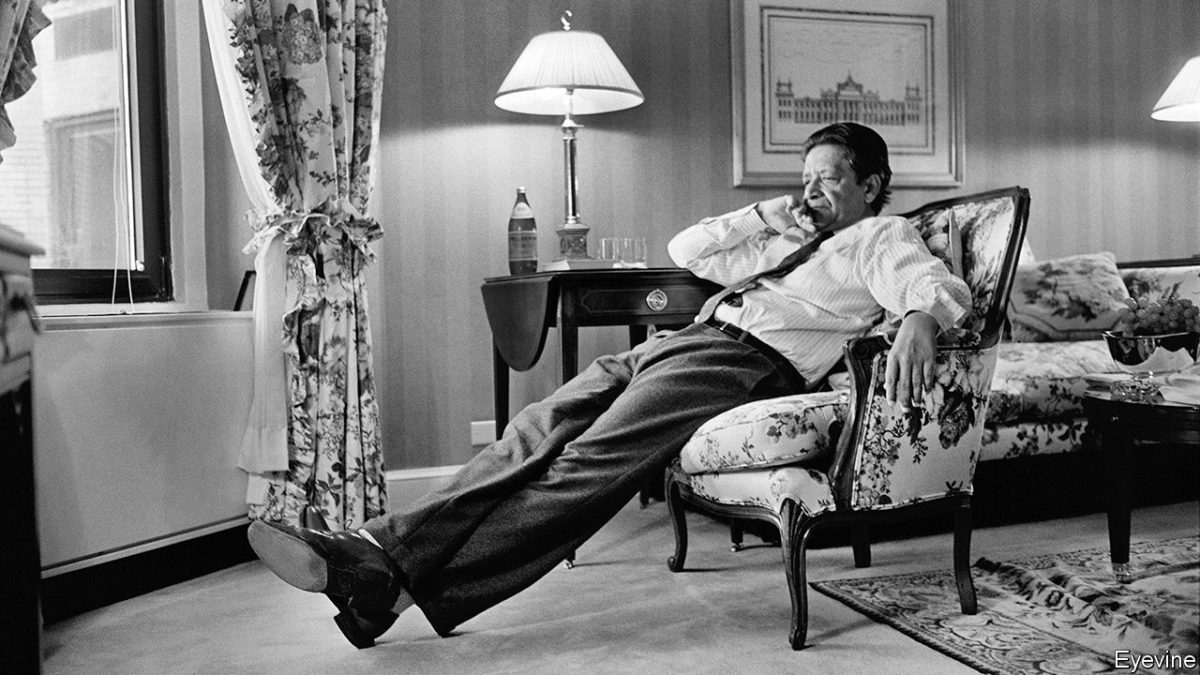
I have to be honest. V.S. Naipaul’s literary work is so abominably heartless that I would be greatly tempted to fire bottlerockets all night from my Brooklyn rooftop while wearing nothing more than a male monokini if his scabrous worldview and his pointless head games were permanently erased from the canon. He is surely the most overrated writer of the 20th century.

I’ve delivered variations of these sentiments over the phone to amused literary friends, who, when they weren’t laughing their asses off over my five minute anti-Naipaul soliloquies, were good enough to urge me to forgo the semi-scholarly format of this ridiculous years-long project and simply speak from the heart. I shall do my best to be as thoughtful as I can about my Naipaul bellicosity, which is, alas, the only way to move forward with this project. I can tell you this much. Not even Finnegans Wake, which took me five years to read and eventually write about, made me feel as frustrated as I was with A House for Mr. Biswas. Even the books on the list that I haven’t cared for all that much (The Old Wives’ Tale, the wildly overrated Ragtime, the failings of Kim) still contained something essential or interesting. You could see why a bunch of old white dudes decided to canonize the books even if they seemed to be speaking a hoary language — even accounting for the folkways and mores of 1998. But A House for Mr. Biswas was a joyless chore during the two times I read it. It is a reactionary monument to imperialistic ugliness that isn’t so much a thoughtful examination of colonialism as it is an author catching mice in a glue trap and watching them squirm their way into a slow and painful death instead of putting them out of their misery with a hammer.
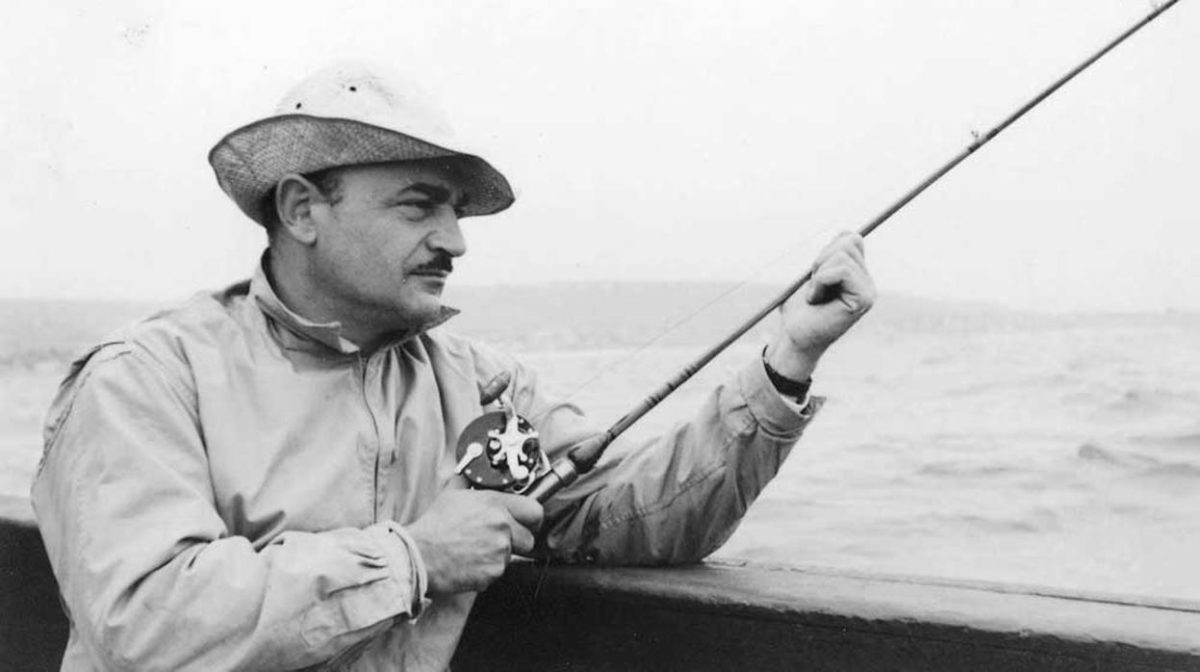
In his life and his work, Naipaul was a sadistic bully, a narcissistic tyrant, and a mean-spirited man who used his powers to punch down. The only quality that distinguishes Naipaul from Donald Trump is his descriptive acumen and his honed prose. There is a moment in A House for Mr. Biswas in which Naipaul has a mother snap off branches from a hibiscus bush to discipline her child and it represents that brilliant exactitude. But that’s pretty much it. There isn’t a single Nobel laureate who basks in repugnancy like this simply because he can. Knut Hamsun was a terrible person (who later turned Nazi), but his masterpiece Hunger actually made you feel something about the down-and-out impoverished wretch at the center of the novel. The late great Toni Morrison, inexplicably omitted from the Modern Library canon, used ugly imagery to reveal the deep humanity within victims of racism and oppression. But what does Naipaul offer other than pointless cruelty? James Wood offered the hamfisted theory that Naipaul adopted the dual role of the colonizer and the colonized to adopt “a cool, summary omniscience that he uses to provoke our rebellious compassion.” But I personally could not feel any compassion for Biswas, in large part because I was constantly aware of the manipulative way that Naipaul had rigged the game. Naipaul, in other words, is an old school bully lulling and gaslighting the reader into a phony empathy. Having no empathy to offer, Naipaul leaves such overanalytical and generous critics as Wood to mine the gelid prose and do the work that Naipaul himself couldn’t be bothered to do. That Naipaul was able to play this game of three-card monte on so many says a great deal about how the literary establishment has a knack for propping up bona-fide sociopaths. Even progressive-minded naifs like Teju Cole stumped for this novel, claiming House to be “a masterwork of realism,” but largely on the basis of its itemized lists and of the way that the book encumbers the reader with its turgid pace. Both Wood and Cole acknowledge that it falls upon the reader to provide the munificence that Naipaul himself cannot. But they refuse to acknowledge that the faults of House‘s thin characterizations very much fall on Naipaul’s shoulders. If a writer isn’t committed to depicting the human, then why even bother praising the writer?

For the Spainards, Mr. Biswas knew, had surrendered the island one hundred years before, and their descendants had disappeared; yet they left a memory of reckless valour, and this memory had passed to people who came from another continent and didn’t know what a Spainard was, people who, in their huts of mud and grass where time and distance were obliterated, still frightened their children with the name of Alexander, of whose greatness they knew nothing.

I don’t gainsay Naipaul’s command at the sentence level, such as the measured passage above. At times, Naipaul comes across as the holistic sage reminding us that all of our lives are mired in historical cycles in which we often forget the final festoons of the previous arc. But grifters often talk in cant that suggest a larger tapestry. If you speak in ways that suggest larger cosmic contours, many people are going to assume that there’s something more to your tale than a mean monodimensional character who treats his family badly and who spends most of the goddamned novel writhing in anger and resentment simply because he never has the guts to make a real decision. I suspect Naipaul has bamboozled so many otherwise cogent minds because this kind of pedestrian toxic masculinity, especially in an older book, can be easily excused as a “sign of the times.” But even with Wuthering Heights‘s Heathcliff, named by Bustle‘s Charlotte Ahlin as the “most toxic male character in all of literature,” we can still understand why he forces his son Linton to marry. Heathcliff grows nastier as the novel continues. But he’s still tormented by Catherine’s ghost and the dregs of being bullied and locked in an attic. Mr. Biswas, by contrast, loses his father Raghu early on in the book after Mr. Biswas, entrusted to take care of a neighbor’s calf, falls into a stream and drowns. Mr. Biswas hides beneath his bed in shame. Raghu dives in for the missing calf and his own son. Raghu dies. Emily Bronte had the smarts to connect Heathcliff’s psychology to the past, which makes him more than merely a “toxic male character.” We want to understand why he behaves as he does. But, with Naipaul, the drowning incident is rarely referenced again in the novel. So Mr. Biswas is a man flung into misfortunes in the present without really acknowledging his past. Does this make him as much of a dope as any other ostensible cipher living out a failed life on a former Spanish colony? Apparently.

But there’s something much seedier at work here. As I pointed out with A Bend in the River, Naipual’s bad faith portrayal of low-caste types has always felt supererogatory. He isn’t taking potshots in an interesting or bona-fide punk rock way that challenges the audience. He revels in filth and ugliness and he chooses targets who are just too easy to flambee. You may recall my love for Erskine Caldwell’s Tobacco Road, which featured some wild and outlandish depictions of degeneracy, but Caldwell used his broad caricatures to implicate his audience for their generalizations about the poor. It’s clear to me that Naipaul doesn’t have any such grand game afoot here, other than reveling in his hideous hubris. He’s happy to see his inventions rot. The man lived to hurl unpleasant observations about unpleasant people, both in his life and in his fiction. And I say this as a huge fan of unlikable characters. Naipaul’s ensemble isn’t terribly interesting or dimensional. For all my complaints about Evelyn Waugh, at least that reactionary clown was committed to some kind of beauty. A throwback beauty that came from a repressed Catholicism, but a beauty nonetheless. What do we get with Naipaul? Hari “humming from some hymn book in his cheerless way.”

While I commend Naiapul’s prose powers (his description of a box imprinted with the circles of condensed milk cans and his evocation of gods for the Tulsi house are two of many examples of what make him a commendable stylist), I really don’t see why Mr. Biswas deserves such an expansive volume. He is mean, arrogant, cowardly, and an altogether predictable specimen of 20th century masculinity. He possesses no empathy for the people who surround him, looking at his future wife Shama not with compassion as she is berated by a customer, but “as a child.” He expresses flights of wild behavior that might be characterized as bipolar. He throws fits, feels as if he is entitled to a job. Even in describing Mr. Biswas in the way I am here, I fear that I am making him more interesting he deserves to be portrayed. Naipaul doesn’t give us a real reason for Mr. Biswaa’s ego or his cruelty — despite the fact that we are constantly surrounded by his family, which include in-laws who are too numerous to track without notes. He would prefer to wallow in ugliness — both in the ramshackle aesthetic of rural Trinidad and the boorish behavior of his many side characters. There are unlikable characters and villains in literature who deserve our attention because we want to know how they came to be who they are. But with Mr. Biswas, I never felt any strong pull to know him any further. Mr. Biswas is an unremarkable reader, a mediocre sign-painter, and a ham-fisted writer who never has anything especially interesting to say, but always has an especially monstrous act to mete out to anyone in his surrounding orbit.

So I’m quite happy to be rid of Naipaul. I will never read him again. There are people who still swear by Naipaul. Robert McCrum once declared Naipaul to be “the greatest living writer of English prose.” But what’s the point of picking up the pen when you don’t have a pulse?

Next Up: Richard Hughes, A High Wind in Jamaica!

The Day of the Locust (Modern Library #73)

(This is the twenty-eighth entry in the The Modern Library Reading Challenge, an ambitious project to read the entire Modern Library from #100 to #1. Previous entry: A Farewell to Arms.)

December 22, 1940 may be literature’s answer to July 4, 1826, the day in which John Adams rasped his last words on his deathbed. “Thomas Jefferson still survives,” he gasped, not knowing that Jefferson himself had passed away only five hours before. One hundred and fourteen years later, two towering literary titans, far more obscure in their time than Adams and Jefferson had been in theirs, met their end at a needlessly early age. On December 21, 1940, F. Scott Fitzgerald collapsed inside a ground-floor apartment not far from the Sunset Strip at the age of 44. The alcohol had finally caught up with him. He believed himself a failure. He would never know that his tragically brief life and his coruscating work would be rediscovered only a handful of years later — not long after 155,000 copies of The Great Gatsby were distributed to World War II servicemen. The next day, about two hundred miles southwest of Fitzgerald’s home, Nathanael West and his wife Eileen McKenney (whose sprightly spirit would be immortalized by her sister Ruth in a series of light but amusing New Yorker pieces later turned into a wildly successful stage show called My Sister Eileen) would be killed instantly in a car collision on their way back from Mexico. West was, by all reports, a notoriously awful driver and he was even younger than Fitzgerald. Just thirty-seven.

Both men had turned to screenwriting to stay afloat during the Great Depression. Both men had much to say about the traps and illusions of American life. But it would take longer for West to be reassessed and appreciated — in large part because he was arguably fiercer than Fitz with his fiction. He had his finger firmly on the troubling pulse of feral American life and he wasn’t afraid to use it with the other nine at his typewriter. In a short essay called “Some Notes on Violence,” West pointed to the idiomatic violence that had permeated every corner of printed media: “We did not start with the ideas of printing tales of violence. We now believe that we would be doing violence by suppressing them.” His razor-sharp satire featured philandering dwarves, skewered the hideous contradictions of gaudy Hollywood spectacle, and, in just one of many enthralling flashes of his grimly hilarious invention, depicted a dead horse serving as au courant decor at the bottom of a swimming pool. (In an age in which urine-drinking is prescribed as a COVID remedy and reality star Stephanie Matto makes $200,000 selling her farts in a jar, one wonders why the present fictional landscape doesn’t reflect our scabrous realities and why 85% of today’s gatekeepers are so hostile to such a necessary dialogue between fiction and life. But then this is the same universe in which Hanya Yanagihara’s excellent, quite readable, and wildly ambitious new novel, To Paradise, is framed by The New York Times in belittingly racist and sexist terms, assuaging an increasingly unadventurous bourgeois readership: “Can an Asian American woman write a great American novel?” (Well, of course, she can. Why even summon the rhetoric?))

West’s high point as a novelist was arguably The Day of the Locust — just as compact as Gatsby in its length and sentences, but more wryly surreal than ethereal. And he had a genius for fusing this talent with a theatrically visceral and often bleakly comic strain revealing the FOMO and desperate collective belonging at any vicious cost that one sees prominently among numerous Instagram influencers today. Consider this scene at a funeral:

He knew their kind. While not torch-bearers themselves, they would run behind the fire and do a great deal of the shouting. They had come to see Harry buried, hoping for a dramatic incident of some sort, hoping at least for one of the mourners to be led weeping hysterically from the chapel. It seemed to Tod that they stared back at him with an expression of vicious, acrid boredom that trembled on the edge of violence.

This is followed not long after by an old woman who shows up with “a face pulled out of shape by badly-fitting store teeth” whispering to “a man sucking on the handle of a home-made walking stick.” This close attention to background characters making do with either the remaining scraps they could cobble together or the insufficient products on sale at a store obviously sprang from the Great Depression and West’s own experience working at a hotel, where he undoubtedly observed a motley array of eccentrics and strange outliers. (Jay Martin’s excellent biography, Nathanael West: The Art of His Life, covers quite a bit of these hotel days and reveals West to be an impeccable bullshit artist in his life, wheeling deals to help other writers land rooms and constantly reinventing the details of his life to negotiate a failing capitalist system.) But West’s panoramic description also feels unsettlingly close to our present time, in which inflation, the supply chain, and an inept framework increasingly leaving Americans out in the cold produces the same plausible character types. And in another eerie parallel to the present, The Day of the Locust also includes a dismal romantic rival named Homer Simpson. The only song Homer knows is the national anthem

The novel follows Tod Hackett, an artist who has moved to Hollywood to find inspiration for what he hopes will be his masterwork painting, “The Burning of Los Angeles.” (I casually wondered if Rage Against the Machine’s album The Battle of Los Angeles took titular inspiration from West. But sadly no interviewer appears to have asked Zack de la Rocha and company this.) He swoons for Faye Greener after seeing her in the hall at a dismal complex called San Berdoo. But Faye can “only love a handsome man and would only let a wealthy man love her.” Tod harbors disturbingly intense and violent fantasies towards Faye. Is Tod mentally unbalanced? Or is this the inevitable byproduct of trying to find inspiration in a landscape of contradictions? West smartly leaves these questions open for the reader to infer.

One reads this masterpiece in 2022 greatly saddened by the possibilities of what West could have become. Would he have floundered like Erskine Caldwell or soured into a bitter reactionary like Evelyn Waugh? I don’t think he would have. West was committed to grim playful truth right out of the gate — as his scatologically driven first work, The Dream Life of Balso Snell, made abundantly clear. It says quite a lot about the bleak tenor of the prewar Depression period that so many wild and dark comic novelists flourished. Much as one reads the fiction published just before World War I and marvels at the flowing frankness that just preceded Hemingway permanently altering the English language with his declarative sentences, so too does one approach Tobacco Road, Scoop, and The Day of the Locust with a sense of what might have been in literature if the Second World War had never happened. One then turns to our present pandemic age and wonders why most of today’s contemporary fiction writers remain so spineless, so dully vanilla and offensively weak-kneed and uninventive, so hostile to serving up appropriate pushback against our present devil’s bargain of late-stage capitalism and all of its concomitant horrors.

West would have been canceled quite swiftly if he were starting out today. Joe Woodward’s biography of Nathanael West, Alive Inside the Wreck, points to a fascinating review from Ben Abramson that appeared in Reading and Collecting in which he suggested that West’s books should be reviewed two or three years after publication so that they could be reviewed on “merits” rather than “merchandise.” Indeed, it is the mercantile thrust of vapid careerist “critics” on social media these days — the type epitomized by so many mediocre Twitter addicts who wouldn’t know, appreciate or stump for bona-fide punk rock even if they traveled back in time and became desecrated by excrement while standing in the front row of a GG Allin show — that motivates their own sham criteria and their head-in-the-sand approach to our societal ills. But eighty-three years after The Day of the Locust‘s publication — well past Abramson’s prescription for proper consideration — The Day of the Locust says more about the eternal and seemingly unfixable ailments of American life than most of today’s writers can summon over the course of a career. Despite being cut down in his prime, Nathanael West still survives.

Next Up: V.S. Naipaul’s A House for Mr. Biswas!