The Bat Segundo Show: Diana Abu-Jaber

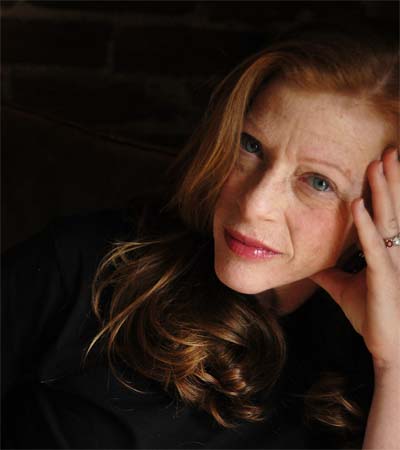
Diana Abu-Jaber appeared on The Bat Segundo Show #419. She is most recently the author of Birds of Paradise.

Condition of Mr. Segundo: Salivating in tandem with his diminishing wallet.

Author: Diana Abu-Jaber

Subjects Discussed: The dangers of French pastries, Abu-Jaber’s propensity for describing food in lurid terms, growing up with food-obsessed parents, wooing people and readers with food, Abu-Jaber’s former life as a restaurant critic, the atmosphere of revolving restaurants, getting irate letters from restauranters, early skirmishes with vegans, faux meat and tofurkey, the differences between foodies and egalitarian food lovers, Brillat-Savarian, MFK Fisher, needless food elitism, gourmet food trucks and gentrification, people who shy away from cooking, overpriced farmers markets, the dark side of sugar, writing without a routine, writing while cooking and while being stuck at a red light, Christos Tsiolkas’s The Slap, studying elements of craft, consumerism and literature, finding precision within a chaotic work environment, outlines, laborious revision, setting imaginary deadlines, working with artistically-minded editors, characters who play with their hair throughout Abu-Jaber’s novels, writing about hair loss in women, being bitten by a brown recluse spider, suppurating wounds, when writing about a subject leads you to people who are living with the subject, the difficulties of cutting curly hair, exploring the Florida gutterpunk culture, real estate and Glengarry Glen Ross, talking with street kids, predatory people in their thirties living with kids in abandoned shacks, income disparity in Miami Beach, the dregs of club kids culture, earning the trust of street kids, maintaining an optimistic sheen while writing about victims of capitalism, readers who have complained about Birds of Paradise being too dark, Last Exit to Brooklyn, whether fiction has the obligation to solve problems, Dickens, Cristina Garcia’s review, Cynthia Ozick, Amazon reviewers who demand uplifting stories, unlikable characters being stigmatized in contemporary fiction, Elizabeth Strout’s Olive Kitteridge, literary audiences and competing reader desires, Meghan Cox Gurdon’s uninformed YA stance, Sherman Alexie’s response, encouraging readers to take risks in fiction, commercial forces and offering novel samples, the origin of Origin, the pros and cons of having a genre-reading husband, the benefits of having a writing group (as well as having actual human beings in your life), character names names after notable American figures (Muir and Emerson), Idiocracy, autodidacts and American spirit, finding the good qualities within monstrous people, serial killers and the 1%, being very inspired by sunlight and water, cinematic imagery within Abu-Jaber’s prose, colons, Graham Greene, laziness and thwarted screenwriting ambitions, Elizabeth Taylor as a model for Felice, Richard Burton, Who’s Afraid of Virginia Woolf?, tinkering with the idea of beauty, steering readers away from flattened culture, the narcotic allure of cooking shows, how food can enlarge a story, European novelists and food, T.C. Boyle, Kate Christensen, and food memoirs.

EXCERPT FROM SHOW:

Abu-Jaber: Writing about a French pastry chef? All these venues are bringing in French pastries. People are bringing me pastries.

Correspondent: Oh no.

Abu-Jaber: People bring me cookies and croissants and Napoleons. I mean, it’s just fantastic. But it’s kind of like, oh my god! How am I going to fit into my airplane seat on the way home? Because it’s wild. And, of course, I have to eat them all.

Correspondent: So you have to eat them all? You can’t give them away to generous readers who have been standing in line?

Abu-Jaber: (laughs) Yeah, right. My excellent interviewers. Actually, I have given out some of my pastries. But I have to admit. I want to eat all of them, if possible.

Correspondent: I noticed that with Ron Charles, the first sentence of his review in the Washington Post was “Diana Abu-Jaber’s delicious new novel weighs less than two pounds, but you may gain more than that by reading it.” So this seems as good a time as any to talk about your propensity for describing food in very lurid terms. I mean, to offer an example, you even have those moments between dialogue. In Crescent, you have, “She starts splitting open heads of garlic and picking at the papery skin covering the cloves.” Now this is between lines. So it forces one to both be engaged with the text and it forces one’s saliva to start running. And so the question is how this business with food started.

Abu-Jaber: Oh! It’s not something I did deliberately. I didn’t choose this metaphor. It’s weird. I think that a lot of it came up because of being raised by a food-obsessed parent. My dad always wanted to have his own restaurant. As an immigrant from Jordan, he used food as a way of giving his children culture. And so I grew up with a sensibility just informing the very fabric of our days. And then my grandmother was a very serious Irish Catholic baker. And so my grandmother and my father waged this war over our souls — the children — to try and woo us through their separate crafts. And so I grew up between falafel and cream puffs. And between Dad’s wonderful Jordanian cuisine and my grandmother’s incredibly yummy cookies and cakes and pastries.

Correspondent: And no doubt, along with that, came a very imposing exercise regimen.

Abu-Jaber: (laughs)

Correspondent: I mean, that’s got to be terrible. Wooing people through food. You’re wooing your readers with food. Why was food the ultimate axe to wield here? As opposed to, say, fashion or conversation or what not?

Abu-Jaber: It’s something that kind of happened organically in this book. I saw this woman. I was thinking about the book. And I had this image in my head of a woman wearing a chef’s apron. And I could see her back. And I could see that she had these very strong arms and shoulders. So I knew that she was someone who worked with her hands. And it became very clear to me that she was a pastry chef. And I had worked in food journalism for a while. I used to have a restaurant column.

Correspondent: You were a restaurant critic?

Abu-Jaber: I was.

Correspondent: Did you ever tear a restaurant to shreds?

Abu-Jaber: I think…I’m a pretty nice person! I tried to offer constructive criticism.

Correspondent: (laughs)

Abu-Jaber: But you are aware that you’re doing a social service by being a food critic. So you have to help the consumer, as well as the purveyor. And I might have shredded a little bit.

Correspondent: Like…such as what? What kind of constructive criticism was the worst that you possibly endowed?

Abu-Jaber: Oh jeez! Well, you know what I would do? I would try to offer people little guidelines about what to avoid in general. And I remember one of my big ones was that, if a restaurant has a great view, beware of the food.

Correspondent: (laughs Yeah. That’s actually very true.

Abu-Jaber: Uh huh.

Correspondent: Especially in this city too.

Abu-Jaber: Yes. Exactly. Or if it’s in a railroad car. Or if there’s a gigantic playground in the middle. It’s probably not going to be the best.

Correspondent: Or the infamous revolving restaurants.

Abu-Jaber: Ah, yes! If it moves, don’t chew. (laughs)

Correspondent: Which is a shame! Because it’s such — I’m a big fan of revolving restaurants. Not for the food, but for the kitsch of the experience.

Abu-Jaber: Sure. Sure. Just remember that some people are going for experience.

Correspondent: Yeah.

Abu-Jaber: I am somebody who likes to eat for the food. But I know that for many, many people, atmosphere trumps all.

Correspondent: Did you ever get a restaurant wrong during these early days? Did you get irate readers sending you letters saying, “Diana! You are absolutely off! Who do you think you are?” Anything like that?

Abu-Jaber: I used to get irate letters from restauranters.

Correspondent: Yes.

Abu-Jaber: From the people who felt that I’d gotten them wrong. I remember that I did a vegetarian roundup once. The vegetarian restaurants of Portland. And one of the local restaurant owners wrote to me irate. Absolutely irate. Because he had some vegetarian dishes on his menu. And he just thought that I should have included him. And he just really wanted to let me know that I had disrespected him.

Correspondent: Be thankful that you didn’t get involved with the vegans. Because they weren’t around back then.

Abu-Jaber: Yikes! Oh, lord in heaven. I think at that time — now this was the late ’90s.

Correspondent: Yeah.

Abu-Jaber: So at that time, there was maybe one vegan restaurant. And what they tried to do was present faux meat. So you’d go and you’d have turkey sculpted out of soy bean.

Correspondent: Tofurkey.

Abu-Jaber: Yeah. Exactly. So that was a whole other can of beans, so to speak.

Correspondent: So just to be straight here on the food issue, I mean, you would not identify yourself as a foodie, but a more egalitarian food person?

Abu-Jaber: Yeah. I’m sympathetic to the whole foodie idea. But I think that foodieism — if that’s a word — tends to elevate food to this sacred thing. It’s like this exalted object on an alter place, basically. And I just have never felt that that was never the point of enjoyment of any kind of primary activity like eating. That food is something that adds enormously to our lives, but that it’s a simple thing. And that we’re animals and that animal enjoyment is just a natural easy part of our lives. Or it should be.

Correspondent: Well, it went from something that was fairly harmless. Like Brillat-Savarin and MFK Fisher, who offer the perfectly sensible advice, “Well, if we’re spending so much of our time eating, we should probably pay attention to it,” but who are also championing food culture during the Great Depression. And this is the thing. It went from this rather egalitarian place to something that was ridiculously elitist or Ortega y Gasset-like, you know?

Abu-Jaber: Yes. Yes. We have started rhapsodizing about food and nobody wants to make it. People go out and buy cookbooks because they love the images and they love the idea of it and reading the cookbook like literature. But really nobody tries the recipes.

Correspondent: Yeah! I know, that’s the fun part!

Abu-Jaber: Yeah.

Correspondent: Especially when you make it with other people, who are as clueless as you are.

Abu-Jaber: You’re all in it together. You know, as an individual and as a parent, I want to make good, easy, nutritious food. And as a writer, I like the metaphor of food. Because it’s so malleable. It casts light on all these different elements in our psyche. All the different ways that we look at relationships in general. I don’t write about food to stop in food. That’s not the point. It’s more a filter through which to look at experience.

Correspondent: Sure. Have you seen, while you’ve been here in New York, some of our ridiculous gourmet food trucks? It totally defeats the purpose. Where before you’d get a hot dog for a dollar.

Abu-Jaber: Right.

Correspondent: Or you’d get some shish kabob or some sort of falafel really cheap. Now they have gourmet food trucks here. You should check these out. Empanadas that are really overpriced. Like six bucks.

Abu-Jaber: Oh really.

Correspondent: It’s now become — they’ve taken our food trucks!

Abu-Jaber: (laughs)

Correspondent: The food trucks have gentrified!

Abu-Jaber: (laughs) Wow.

Correspondent: I mean, this leads me to wonder, just as a fiction writer, whether you may explore this in a future book. This issue of, well, we make our food, but now even the price of food goes up and the experience of eating food goes up.

Abu-Jaber: Right.

Correspondent: And even something like white trash cuisine, even the good parts of that, becomes taken away from us. So there is no affordable base. Like there used to be. The traditional kind of food.

Abu-Jaber: Right.

Correspondent: I guess I have some feelings on this issue, now that we’ve talked about this.

Abu-Jaber: Yeah. Absolutely. Well, because it’s an economic issue. It’s health and it’s relationships and family and economics, for sure. And that’s part of the problem with the foodie movement. Foodies indulge in a kind of extreme experience. They’re the top of the pyramid. The people who can afford to go into Williams-Sonoma and buy a special strawberry huller. Or just that experience of going into a glorious kitchen in which none of the instruments in the kitchen have been touched. You know, it’s s more like an operating room than it is a kitchen.

Correspondent: It’s almost like the Trail of Tears.

Abu-Jaber: (laughs)

Correspondent: Because you have to find the produce places that the middle-class people have not found yet.

Abu-Jaber: Right.

Correspondent: So I’m never going to name them on the air — the places where I get really kickass produce.

Abu-Jaber: Yeah. And you see that in the farmers markets.

Correspondent: Overpriced. Needlessly organic. God, don’t get me started on that.

Abu-Jaber: Absolutely.

Correspondent: We will discuss fiction. Don’t worry!

The Bat Segundo Show #419: Diana Abu-Jaber (Download MP3)
This text will be replaced

The Bat Segundo Show: Anne Enright

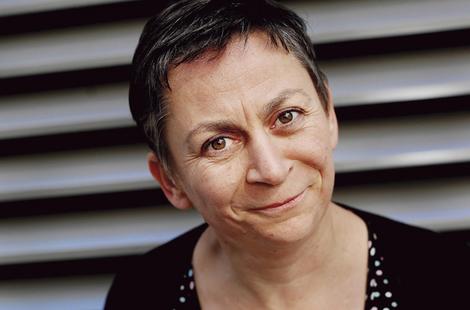
Anne Enright appeared on The Bat Segundo Show #417. She is most recently the author of The Forgotten Waltz.

Condition of Mr. Segundo: Troublesomely willing to sign on the dotted line.

Author: Anne Enright

Subjects Discussed: Writing a novel as a minute allegory of the Celtic Tiger, Gresham’s law, books with shifting moral alignment, marriage as a financial relationship, punctuation and subordinate clauses in prose, David Mamet, Caryl Churchill, people who interrupt each other, male and female dialogue, Enright being one of the great penis chroniclers in contemporary literature, the hydraulics of hard-ons, Yeats’s “Sailing to Byzantium,” The Gathering vs. The Forgotten Waltz, flesh and fat in fiction, how women think about anatomy, stigmas against women writers, how character names can be used to describe fraught relationships, unsuccessful attempts to find a sexy Irish name for a man, Australian men, material that Enright would not write about, Catholicism and blasphemy, the specific conditions it takes to earn an injury, the relationship between spirituality and sensuality, Leonard Cohen, reflections and looks within Enright’s fiction, interior and exterior description, whether the world would be better if it were run by 12-year-old girls, characters who cling to what remains of youth, candid moments, the repression of consciousness, being blatant through the spirit of omission, faux partitive noun phrases, “the luxury of the kiss,” the origins of the character name Fiarcha, bountiful character populations in a novel, and old-fashioned knowledge.

EXCERPT FROM SHOW:

Correspondent: I wanted to first of all ask you about the notion of this book possibly serving as a mini-allegory or a minute allegory. I noted that there was the Gresham Hotel, which nicely mimics Gresham’s law in this book. And there were a number of lines about the acquisition of things. Flirting with someone just to flirt with someone. So I have to ask how you honed the right amount of allegory for this. Or was that even important? Was it kind of a bonus that came to your interesting series of squabbles here?

Enright: Yeah. I think the thing about allegories is that they stay still. And what I wanted to do was to write a book that shifted morally. So it was more morally poised than an allegory might be. So it’s a book that can be read by the likes of the readers themselves. So whatever the reader thinks of Gina Moynihan, who is the central character and who is either a woman in love, wonderfully in love, or a homewrecker — depending on your point of view. So I wanted the readers to maybe even shift their points of view about what Gina’s up to. So it does parallel the boom in Ireland. So there is a kind of allegorical content there for adultery, that feeling of just getting what you want, of getting away with it, was very suitable to Ireland in the last ten years before the boom. When there was so much glee and a kind of fantasy and a kind of denial that was going on. Also a huge amount of belief. You had to believe. If you didn’t believe in the economic miracle, you were kind of heretic, you know? Because if you take belief out of the system, there’s nothing left. There’s only debt and not money anymore. It’s a confidence trick. So I thought all of that was brilliant for an adulterous affair. Because you’re living at two levels at the same time, which was pretty much what people were doing.

Correspondent: What’s interesting though is that it is money that has Gina and Conor marrying. Which I found to be an interesting choice. Gina’s view in terms of her relationships — whether it is Conor or Sean — is very much predicated upon, well, it happens to be there. And so this leads me to ask if this kind of moral concern predated the alignment with the Celtic Tiger and the like.

Enright: Money is both important and interesting. It’s also quite highly taboo. People don’t talk about their money. They think about money all the time. And they never or rarely articulate their relationship with money. Yeah. Gina and Conor get a mortgage almost before they get the wedding reception. But that was the reality. That is the reality in Ireland as it was. And I think in many places in the Western world, it was hard to find a place. And it was better to find a place if you were with somebody else. And I think marriage is also a financial relationship.

Correspondent: Yes.

Enright: Whether it’s primarily a financial relationship is — well, that varies from couple to couple. But I don’t think it was primarily here. I mean, Gina, she’s quite materialistic. But she’s not a greedy girl. I mean, she does think about money. But she’s not relentlessly acquisitive. It’s just that wanting is problematic when money is involved.

Correspondent: I also wanted to ask about the use of commas and dashes throughout the prose.

Enright: Oh! Nightmare!

Correspondent: A nightmare?

Enright: My nightmare! (laughs)

Correspondent: Well, it’s interesting because it does lend itself to a very conversational voice. But on the other hand, thinking of like The New York Times Book Review where you can always spot where they’ve edited it, where they have the dash and some sort of subordinate clause and then the dash, I’m curious as to how this worked for you. Whether some of these dashes and commas and various thoughts entered into the editing or were they there from the get go?

Enright: It was always a painful decision about punctuation. Gina is addicted to qualifications, subordinate clauses. A little bit more, a little on the side. The sentences don’t run really simply. It mirrors the way people think. I have a real problem, and I’m going to confess it to you now, with the run-on sentence and the semicolon. But I do like putting a clause in the middle of a sentence to disturb it a little.

Correspondent: The dashes, I suppose, are a more pure unit than say the colon.

Enright: Yes, they are. And they give a bit of space on the page. I like typing. Because I like the rhythm of typing. To me, it’s like dancing on a sprung floor. I like a bit of trip and a bit of rhythm in the prose. Because my narrators are often not omniscient. They don’t know exactly what the end of the sentence is. I like to surprise. I like to see their surprise as their thoughts leap along.

Correspondent: It would seem to me that this more free-form approach to prose will probably lend you to discover more about the characters.

Enright: For sure. But all the time, the content for me is a kind of given. And all the time, I’m trying to make the cadences and the rhythms somehow beautiful. And somehow to get the emotion and the poignancy into that rhythm. I mean, that to me is what it’s all about. And so I love the spoken voice on the page. I love the challenge of it. I mean, if you put a tape recorder on someone, they don’t speak in sentences.

Correspondent: Sure.

Enright: And the prose. Of course, even if you write in realistic type, first-person, it’s a mannered thing. David Mamet. There’s a guy who I love to read as well as…

Correspondent: The earlier Mamet. Not the more recent one. (laughs)

Enright: The earlier Mamet. And, you know, I worked in the theater very early on. And Caryl Churchill as well. Do you know Churchill puts a forward slash before interruptions?

Correspondent: Yes.

Enright: People interrupting each other on stage. Which is actually the way women talk. They rap off each other. It’s more improvisational. A kind of jazz thing that they do. So they’re always interrupting each other. Men are slightly more territorial about their speech. I’d love to be able to do that on the page. But, you know, it would wreck people’s head.

The Bat Segundo Show #417: Anne Enright (Download MP3)

This text will be replaced

The Bat Segundo Show: Susan Orlean

Susan Orlean appeared on The Bat Segundo Show #415. She is most recently the author of Rin Tin Tin: The Life and the Legend.

Condition of Mr. Segundo: Pondering an alternative timeline with the golden retriever rising as the heroic dog of choice.

Author: Susan Orlean

Subjects Discussed: Rin Tin Tin references in Finnegans Wake, Rinty’s indefinable charm, Jack London, dogs in World War I, the state of marketing in different time periods, flawed people and dog heroes in early animal films, soldiers reading poetry, mass cultural mediums and heroic animal images, emotional connections with animals, Burt Leonard’s desperate efforts to revive Rin Tin Tin, Paul Klein impersonating Lee Aaker at conventions, Rin Tin Tin as the blank slate for the American obsession, Strongheart, Rinty’s durability as an American icon, devotion to dogs, a tense 1955 photo shoot with Lassie and Rin Tin Tin appearing on the cover of TV Guide, fierce competition between Lassie and Rin Tin Tin, having “bitten exclusively” written into a contract, Daphne Hereford and Rinty’s obsessive defenders, sinking one’s savings into battling intellectual property law, the perils and nature of giving into passion, knowing Lee Duncan through records, going through a dead man’s ATM slips, respect and “intimate eavesdropping” into subjects, occupational hazards in quirky journalism, cultivating trust with subjects, the bigness of passion, avoiding Rin Tin Tin overload, the rising population of German Shepherds in the 20th century, whether Rinty was bad in any way for history, the rise of fascism, and contrary images that meet on the battlefield.

EXCERPT FROM SHOW:

Correspondent: I wanted to start off with something unusual. I had found this accidentally. Because I started to read Finnegans Wake a month ago. I’m now on Page 20. But on Page 12, I was very happy to find this. There is this passage: “She knows her knight’s duty while Luntum sleeps. Did ye save any tin? says he.” Now this comes after Joyce has laid down all sorts of Germanic references. And of course, While London Sleeps? Rin Tin Tin film.

Orlean: Right.

Correspondent: So this seems as good a pretext as any to ask, well, if Rin Tin Tin got the approval of James Joyce, what accounts for his appeal? What accounts for his enduring popularity? What is the ultimate quality of Mr. Rinty here?

Orlean: You know, I think, in a way, that you can’t quite answer that is the answer. There’s a kind of charisma that certainly the first Rin Tin Tin had, but also this symbol of a dog, which is a dog who is brave and true and loyal and heroic. That resonates with people. He embodied it — especially the first Rin Tin Tin — so well that I think it touched something that was already there. The desire to have a superhero who was credible and not some comic book figure, but actually something real.

Correspondent: Krypto before Krypto.

Orlean: Yeah.

Correspondent: A superdog to match a superman.

Orlean: Exactly. I also think that, if you could say what it is that makes something endure, you’ve ruined it in a way. That there is something mysterious and wonderful about something that connects something with so many people and that lasts for so long, that shouldn’t be something you could put in words. I think that it defines itself by being something emotional that you feel and that you respond to. That can’t quite be described.

Correspondent: Well, I want to point out something you mentioned in the book. You point out that in the 19th century, dogs had only been recently domesticated. They were considered to have deep feelings. They were capable of expressing their emotions more than humans. Now I should point out that Jack London’s The Call of the Wild and White Fang — well, this was only fifteen years before the Rin Tin Tin film. I’m wondering. How did World War I, I suppose, tilt this fixation from dogs as emotional beings to this heroic quality that we’re talking about? Was hero worship the next inevitable stage in the evolution of this man-dog perception situation?

Orlean: Well, for one thing, there were so many dogs in the war. People in World War I saw dogs performing heroically. When you think of a battlefield and dogs being brave and being companionable and working hard, which they did, and maybe not showing as much fear as a soldier might — because dogs don’t have the apprehension of death or the worry of mortality the way people do. So they have the chance to be brave in a way people can’t. So there’s no question that seeing dogs and being alongside dogs in the war had a very huge impact on their perception. I mean, there were tens of thousands of dogs in World War I. So I imagine this entire generation of soldiers coming back, filled with awe. It was also a time where dogs were working not as our servants — the way they might have on a farm or a ranch, but as equals pretty much. I mean, dogs were in the trenches with soldiers. So the feeling that they were our partners almost more than our possessions arose during that time.

Correspondent: Well, you mention this move toward the cities.

Orlean: Right.

Correspondent: That’s still ongoing even in our time. It’s interesting to me that we went from dogs being perceived as “Well, let’s figure out when they’re domesticated, when they come from the wild, and vice versa.” Those two Jack London novels. And then you have this situation when suddenly they’re fighting wars with us.

Orlean: Right.

Correspondent: I’m wondering what it is about that turns a dog into a hero as opposed to some emotional being or tapping into some sort of primordial instinct or what not. Do you think that the original folks — Lee Duncan and company — sort of knew that they had to push the dog thing further?

Orlean: I think what Lee did was totally instinctual. I don’t think he was somebody who did a lot of strategizing and projecting forward what would be good. And, in fact, I think that’s part of what’s so touching about him. He seemed to be somebody who was really responding entirely out of this feeling of “I have this wonderful dog and I want you to appreciate how wonderful he is” rather than “Hmmm, I can make some money off of this if we write scripts that make him such and so.” Remember too that people consumed entertainment in an entirely different way in the ’20s. It wasn’t the juggernaut that it is today. You come up with a good character. You can then merchandise it and turn it into a multi-platform marketing device. It wasn’t like that. I think it was a simpler thing. How the idea of the heroic character evolved? Well, first of all, animals very often appeared in early literature as having heroic qualities that were selfless. I think selflessness is something that an animal can have more easily than a person.

Correspondent: Or it’s easier to understand altruism when it’s placed within an animal as opposed to a man.

Orlean: Exactly. And I think that it may seem a little funny to us now. But when you look at an animal doing something heroic, you don’t project a million things onto it. You don’t think “Oooh, he reminds me of my Uncle Milton who I didn’t like that much” or “I’m sick of this type of person always being the hero” or “She isn’t my race or gender or color” or whatever. A dog is something else. So you can look at it and admire it and maybe be in awe of it without bringing a lot of your own baggage to it. It’s not a person. You don’t look at it with the critical eye that you might look at a person with. So there’s a way that it’s easier to be thrilled by them and not have that reserve of thinking, “Oh, I don’t know.” I mean, it’s funny in those films. The early Rin Tin Tin films. The people are all so flawed. Each one of them has some terrible character flaw. Even the heroes among the humans have some — they’re either naive or they’re — they all fail. And whether that’s some aftermath of the war, in which people saw what terrible things people could do to each other. That feeling that human beings were deeply flawed. Maybe that’s what made a dog a hero that could be admired more freely and with less reservation.

The Bat Segundo Show #415: Susan Orlean (Download MP3)

This text will be replaced

The Bat Segundo Show: Yannick Murphy III

Yannick Murphy recently appeared on The Bat Segundo Show #414. Her most recent novel is The Call. She has previously appeared on The Bat Segundo Show #158 and The Bat Segundo Show #41.

Condition of Mr. Segundo: Terrified of picking up the telephone.

Author: Yannick Murphy

Subjects Discussed: Chatty people named Ed, imagining the proper format for an illusory veterinary log, husbands who claim prodigious memory, how little bits of anecdotes help fiction, the virtues of limitations and structure, the candor in Here They Come vs. the candor in The Call, seasonal cycles, working with editor Maya Ziv, how fiction can be inspired by thinking about things in a car, the national economical environment, sensing possibilities without having a sense of time, publishing a book as a paperback original instead of a hardcover, crackpots who telephone you at home, earning the right to know the name of the character, the unanticipated origin of fictional spacemen, being asked by Dave Eggers to contribute a “sci-fi story,” Kirk Maxey and sperm donors, inventing thoughts of mice, flies, and other animals, judgment in contemporary fiction, avoiding cliches while pursuing earnestness, independent will and work, balancing ambiguous and precise description to relay the observational spirit, injecting life into side characters, and characters who read within a novel.

EXCERPT FROM SHOW:

Correspondent: I was really honored to identify with the Ed who likes to talk with people. I don’t know if I was possibly an inspiration. That might be presumptuous of me. But it was nice to see a very chatty Ed in your novel.

Murphy: Okay. Well, you might have been at the back of my mind, but…

Correspondent: The rearest. First off, I wanted to determine where the daily log format arose from. Call, Action, Results. This is what is the framework of the book. I’m wondering if you consulted specifically with log books — your husband is a veterinarian — and whether you scoured through that. Did you try varying formats before you found something that was just right? What of this?

Murphy: Well, I think the idea came from the fact that my husband doesn’t keep any call logs. And I’m always wondering why not. That would be something I would do. I would know who I visited on what date and what I did to actually treat that specific animal. And he says, “No. I don’t need that. I just remember this stuff. Or, if I don’t remember it, it really isn’t relative to the next case that the animal may have or that I’m treating the animal for.” So I think it arose out of my disbelief that he doesn’t have this kind of system.

Correspondent: How does he stay organized?

Murphy: He’s pretty organized.

Correspondent: Just no log.

Correspondent: He’s one of those people who remembers. And I always thought, “What if he had a call log? What would it look like?” Because it certainly wouldn’t look like what I think it should like. It probably would look more like the book, or how the book is written. Where it’s his ruminations on the world and ruminations on just driving around and who he meets. He loves to talk with people and he really has a knack with the New Englanders. Even though they tend to be stoic, he can draw out their life stories. So what I find really fascinating is when I go along with him on those visits and he engages people and gets them talking and it’s this kind of windfall for me. Because I get to hear their stories that I would never dare to ask. Because I’m more shy than he is.

Correspondent: Well, this leads me to ask two questions. But let’s talk about these stories. How many of these anecdotes did you make up? And how many of them came from your husband’s chronicles?

Murphy: Most of them came from his chronicles. Some were mixed up with others. I think very few I had to imagine completely. There was a little bit of inspiration behind all of them that was based on a real incident.

Correspondent: Yes. So having little bits of the story helped to have your imagination fire up and invent further?

Murphy: Right. Right.

Correspondent: Well, what about the actual log format itself? If you had no logs at home, did you consult any veterinarian associations? Other veterinarians?

Murphy: No. No. I just started writing. Okay, what is the reason the veterinarian is going out on the call? Well, I’ll call that THE CALL. And then, okay, ACTION. What did I do there? RESULT. How did that end up? And then when he would leave that particular farm, then it was what I saw on the drive home. WHAT THE WIFE COOKED FOR DINNER. So I was able to integrate his home life with his work life that way.

Correspondent: What’s interesting though is, as you read the book, you find that he isn’t able to compartmentalize as much as he thinks he can. I mean, we start to see that even though he starts to think of something, it then goes into describing the action. And what’s also interesting is that, when you have WHAT THE WIFE SAID, you often have him interjecting. It’s almost as if WHAT THE WIFE SAID is like an open quote with which to carry on here. And so I’m curious. To what degree were you conscious of this design? Or did this just happen through the course of a sentence in this book in the early draft?

Murphy: Well, I knew partway in — maybe a couple pages in — that the structure had to be a little more wieldy than what I had set up. I knew that I was going to run into trouble really fast and that I had to have as much fun with it as I could. So when you set up a structure like that, sometimes you can have a lot of freedom with it. Because you’re in the structure. So you can see where places are that you need to jump out of. It actually — for some reason having the imposition of a structure actually liberates my writing a lot more. So I know that as long as I stay within that framework, I can say anything I want to say. Which makes it a lot more fun.

The Bat Segundo Show #414: Yannick Murphy III (Download MP3)

This text will be replaced

The Bat Segundo Show: Megan Abbott

Megan Abbott appeared on The Bat Segundo Show #404. She is most recently the author of The End of Everything. For more on Megan Abbott, you can read Edward Champion’s essay “Megan Abbott: Literary Criminal” at The Millions,

Condition of Mr. Segundo: Pondering unanticipated carnal connections with peach cobbler.

Author: Megan Abbott

Subjects Discussed: The need for dramatic emphasis, basing novels on real life crimes, having a preexisting narrative framework when working on fiction, mysterious PBS documentaries about missing girls, blurring criminal details to create tangible fiction, writing in locations that you don’t live in, special corners of the brain, the advantages of maintaining a blinkered perspective, Raymond Chandler, the perils of critically assessing a writer you love, James Ellroy, Daniel Woodrell’s methods of shattering language, maintaining a rhythmic balance in sentences, writers who only have one story to tell, Paul Schrader, agonizing over repeat metaphors, fanned out objects, “doomy” vs. “do me,” deploying the words “fulsome” and “candescent,” James M. Cain, using similes after five novels, Chandler’s similes, being unafraid of influence, having a hyperbolic head, working with editors (Denise Roy vs. Reagan Arthur), severe line editing, Raymond Carver and Gordon Lish (Lish’s edit of “Beginners”), stylistic repetition within sentences, breaking out of certain ruts, the difficulties of including a drunken nightclub scene in a novel about a thirteen-year-old girl, fornication within novels, pinpointing the precise moment that the police show up in a Megan Abbott novel, contemplating a pre-Amber Alert era, shame and guilt, the phrase “the end of everything” contained in Die a Little, FLAME, MASH, and childhood folded paper games, girls who are “body-close,” building a foundation to find a bridge to the end, Bury Me Deep and William Kennedy’s Ironweed, reviving twenty pages from years before, psychoanalytical connections with the American novel, using Freud to balance judgmental behavior within a novel, Stewart O’Nan, Alice Sebold, when missing girl novels are pegged as crime fiction, struggling with the absence of plot, The Girl with the Dragon Tattoo, literary fiction cannibalizing from genre, Colson Whitehead’s Zone One, John Banville/Benjamin Black, dismissal of genre from literary practitioners and marketplace conditions, Donald E. Westlake/Richard Stark, Martin Amis’s Night Train, John Updike’s external sexual imagery, Lionel Shriver’s The Post-Birthday World, the relationship between sex and observational judgment in Abbott’s fiction, nonjudgmental sexual moments in life and in fiction, strangers who have sex in motel rooms, why peach is the best hue to describe porn, discovering body objectification as a kid, authenticity with real and fictitious places, David Lynch and rabbits, kimonos and forelocks as essential elements to a Megan Abbott novel, film imagery vs. tangible human experience, In a Lonely Place, fixing up a room to match the look of a room you’re writing about, nostalgia and site-specific memory, and direct transposition from reality.

EXCERPT FROM SHOW:

Correspondent: Missing girl novels are really interesting to me. Because you have people like Stewart O’Nan and Alice Sebold, who have written these missing girl novels and yet they don’t have to face the dilemma of being pegged a “crime novelist” or a “mystery novelist” or a “noir novelist.” Why do you think O’Nan and Sebold are able to get away with this and you aren’t? I mean, obviously you’ve written noir. But what of this? I was thinking to myself, “Well, can you really call her books ‘mystery novels’ or ‘crime novels?'” I was talking with people about this. And I said, “You know, really, it doesn’t matter. It’s fiction. And fiction should work.” So how do you deal with something like this?

Abbott: You know, I’m always so mystified by that too. Because I think — talking about The Lovely Bones and what people may call the “missing girl novel,” but they’re certainly not calling it a crime novel — it sort of stupefies me. And all those designations do. Because stories are stories. Especially missing people stories. They’re really about identity. They’re really about these big issues that, in many ways, all novels are really about. The missing or the gone, and how we attach these labels. On the other hand, as a lover of crime novels, I feel okay with that too. It doesn’t bother me. But I guess there’s this fear. The fear I always have in this case. People always say this about crime novels and they won’t say this about literary novels, but they should. Which is: “Oh no. Not another missing kid book.” Or “Oh no. Not another heist novel.” Or a PI novel. And that’s just because they’ve read some that don’t sing for them. But I think that with literary fiction, you can get away with that more. I mean, someone perhaps should say, “Not another novel about a crumbling East Side marriage.” But nobody seems to! No one would say that. Because they’ll say that’s the stuff of life. Well, you know, crime is the stuff of life too.

Correspondent: Or: “Not another novel about a middle-aged man going through a crisis.”

Abbott: That’s the one I was trying to think of. (laughs)

Correspondent: That’s the thing. I mean…

Abbott: Who’s going to fall for the younger woman. (laughs)

Correspondent: (laughs) Even worse. Yes, I know! Why don’t we peg those as genre and the crime novels, which have a little more variety…

Abbott: We’ll call it the Ralph genre. (laughs)

Correspondent: Maybe the solution here is to just win them over with prose. If you have original enough prose, do you think that you can escape the label? Or maybe there’s a certain advantage in being locked within that label. Because you don’t have to deal with the bullshit.

Abbott: You’d think that. You know what I mean/ I guess the sort of dream is that you’d have a book that would work in both ways. That’s one of the things. I struggle with plot. It’s not my natural thing. But I love plot as a reader. And I’m a big literary fiction reader. But often the struggle I have with them is the absence of plot. It just seems like the ideal situation are those books. And I think the Sebold is one of those, where you’re able to merge the strength of a genre book’s plot with all the originality and the innovation that you can get away with more in literary fiction than you could in a crime novel. Though I think you can. Most crime readers are totally open. Because they read so much. And obviously they don’t care that much about plot. Or they wouldn’t be reading The Girl with the Dragon Tattoo! (laughs)

Correspondent: Sure. But we’re also seeing literary fiction cannibalizing more from genre, I think, in the last five to ten years.

Abbott: Oh yeah.

Correspondent: I mean, Colson Whitehead. His new book is a zombie book.

Abbott: I hear that!

Correspondent: Why isn’t that categorized in the science fiction section?

Abbott: Richard Price. It’s somewhat puzzling. Who’s the new one who’s doing it? There’s another one. I keep hearing of all these literary authors writing their crime novels. And I’m sure they’re doing it for a variety of reasons. And I don’t blame them for doing it. But what frustrates me sometimes is the reception they get, which is…

Correspondent: They get a free pass because they’re the literary person dipping into genre.

Abbott: Yeah.

Correspondent: You, by way of being the experienced genre novelist, get more criticism.

Abbott: Right. Exactly.

Correspondent: Do you feel that this is what the situation is with you?

Abbott: I don’t know. I mean, I guess we’ll see. I feel that my books are part of the same world. And I think a lot of these turns are sort of imposed by outside…

Correspondent: Marketplace situation.

Abbott: Right. So I think that’s okay. My greatest frustration is the John Banville thing, where it takes him three days to write a paragraph under his name. But when he writes under Benjamin Black, it takes him five minutes to write. Like that kind of dismissal of genre.

Correspondent: Well, I don’t think he really means to dismiss genre.

Abbott: Right.

Correspondent: Because if you’re spending five mintues on what normally takes you three days to write, of course it’s going to seem “easy.” Of course, you’re going to sneer down on it. Even though he’s also having a lot of fun. Even though he’s also come out and said, “Oh, I love Donald Westlake, and Richard Stark novels you must read.”

Abbott: Yes. And I think that’s the place I’m excited about. When it comes from a love. When you can feel an author’s love. When they’re not being arch. A lot of people gave Martin Amis a hard time when he came out with Night Train. Which I thought was great! Because you could tell. He was not being pastiche or arch.

Correspondent: No ambitions whatsoever. He just wanted to write a mystery novel.

Abbott: Exactly. And it’s beautiful. He didn’t hold back on his prose. He did exactly what he wanted to do. And when books come from a place of love, they always work.

Correspondent: I also feel that Paul Auster has faced that problem too. Because he’s writing very ornate mystery novels to some degree.

Abbott: Right. You think of Ellroy and DeLillo. How are they that different?

Correspondent: Yeah. They’re both confronting the major events of the 20th century.

Abbott: Right. Exactly.

The Bat Segundo Show #404: Megan Abbott (Download MP3)

This text will be replaced