The Bat Segundo Show: Gail Godwin

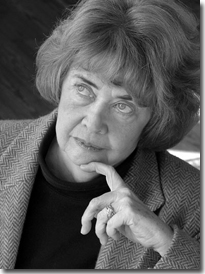
Gail Godwin recently appeared on The Bat Segundo Show #319. Godwin is most recently the author of Unfinished Desires.

Condition of Mr. Segundo: Combating an uncertain relationship with the faith.

Author: Gail Godwin

Subjects Discussed: A Mother and Two Daughters, allegorical personality change tied into a historical framework, characters who dictate into a tape recorder, sense of time and character motivation, saving up character place, three (maybe four) versions of The Red Nun, nuns who hit boys with rulers, unfinished statues, representations of representations, David Copperfield, Henry James, The Beast in the Jungle, researching the inner workings of a toilet as punishment, the downgrading of dreams, contriving a reasonable punishment, the visceral response of accepting people without judgment, third person paragraphs containing first person introspection, preferring to be inside, telling gestures, death by traffic accidents, bizarre deaths, repeating certain themes, Mount St. Gabriel, confronting stepfathers, disappearing maiden names, knowing the sources of all counties, revisionist memory, not giving details to the reader, original drafts of 900 pages, drawing pictures while writing a novel, keeping track of 15 students, Evensong, and unintentional sequels.

EXCERPT FROM SHOW:

Correspondent: I’m curious where the punishment that Ravenel ekes out in relation to a sanitary pad came from. The idea of having to research the inner workings of a modern toilet. Was this based off of any of the interviews you did?

Godwin: No, this was made up. I was in Ravenel’s head and her character. I was being the headmistress. And as headmistress with a lot of boarders, especially these boarders from Cuba. The fathers really want them to be young queens. This is back before Castro. And when this girl keeps flushing things down the toilet and stopping it up, Mother Ravenel first thinks, “Well, I’ll have her, as a punishment, clean the toilet stalls.” And then she realizes, as a canny headmistress, that would not do. Because these fathers just would not go for that, for their daughters to clean the toilets. So she had to think of something that would take a lot of work and be instructive. And so she thought, “Well, I’ll have her diagram the workings of a toilet.” And I looked in books to see what this poor girl would have to do. And it’s complex.

Correspondent: So just to be fair to the characters, you had to actually consider taking on the punishment yourself.

Godwin: Yes, and this girl would not have had these books that I have. You can get books now that give you pictures of anything. So you just look up “toilet” and there it is. In color, with all the parts and full-page labels.

Correspondent: But to take this conversation further down the toilet, I should point out that here we have a situation in which a biological budding occurs. And the answer, Ravenel’s answer, is to essentially deconstruct something that doesn’t even relate to it.

Godwin: Oh!

Correspondent: The suggestion here — apparently subconscious, based on your surprise — would seem to me to indicate, “Well, maybe you should just accept the fact that girls go through this and maybe should come to terms with this instead of having to deconstruct.” Going back to “The Downgrading of Dreams,” this relates to that. Because of Maud’s visceral reaction. She’s asked to emotionally explain her essay.

Godwin: Yes.

Correspondent: And then she’s asked to consistently dissect that emotional reaction. So we have a juxtaposition here. And I’m curious as to how that factored into the toilet incident and over the course of the book. Maybe you could talk about that.

Godwin: Well, tell me how. If you had been Mother Ravenel, what would you have thought of for the punishment — that would not have been deconstruction? What would it have been? Would it have been to talk about blossoming some more?

Correspondent: Yeah. Probably, I would have. Be honest about these kinds of things.

Godwin: Uh huh.

Correspondent: Get true to the heart, which would be my solution. But then I’m not really a religious man.

Godwin: And you’re not….

Correspondent: I’m a man too. So…

Godwin: Yeah, you’re not a headmistress or a nun.

Correspondent: Yes.

Godwin: In the 1950s.

BSS #319: Gail Godwin (Download MP3)

This text will be replaced

The Bat Segundo Show: Peniel Joseph

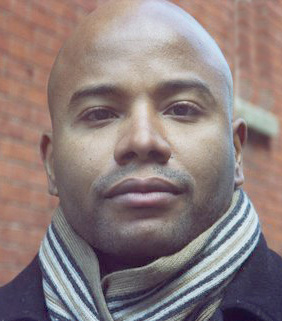
Peniel Joseph appeared on The Bat Segundo Show #318. Mr. Joseph is most recently the author of Dark Days, Bright Nights.

Condition of Mr. Segundo: Wondering if he lands on Plymouth Rock, or Plymouth Rock lands on him.

Author: Peniel Joseph

Subjects Discussed: Whether or not the bold declarations within Malcolm X’s “The Ballot or the Bullet” speech has been entirely heeded, the progress of African-American politics, revolutionaries vs. political pragmatists, Harold Washington, Jesse Jackson, Michael Eric Dyson’s critiques of Obama, Jeremiah Wright’s perception, Obama’s failure to confront race, the February 19, 2009 New York Post cartoon, race as portrayed in Obama’s speeches, the Henry Louis Gates arrest, whether the beer summit was more of a symbolic gesture rather than a practical confrontation, black revolutionaries being denied publication in prominent mainstream outlets vs. Stokely Carmichael getting published in The New Republic and The New York Review of Books, color-blind racism, the Nation of Islam’s bootrap and racial uplift strategies, Nixon seeing “black capitalism” as a promising prospect of Black Power, Fubu’s co-opting of Black Power slogans, black women and activism, misinterpretation of the Black Panther Party, the plasticity of ideology, Stokely Carmichael’s November 7, 1966 speech in Lowndes County, the fluidity of Black Power, Claiborne Carson’s In Struggle, Carmichael being wrongly accused of being the main influence on the SNCC Black Power position paper, misconceptions about Carmichael, Obama’s dismissal of Kwame Toure as a madman, the failure to celebrate Martin Luther King as a critic of American democracy, what Carmichael’s FBI file says about limited perspectives of black power figures, Carmichael’s antiwar stance, false government conclusions about Black Power, Tavis Smiley being taken to task for criticizing Obama, and prospects for new forms of Black Power radicalism.

EXCERPT FROM SHOW:
Correspondent: When Malcolm X delivered his famous “Ballot or the Bullet” speech, you point out that newspapers ignored his more tangible call for one million new black voters for a black nationalist political party. Now black voters, as we all know, were instrumental in getting Obama elected in November. I’m wondering though — because they were not necessarily black nationalists — whether Malcolm X’s call was entirely heeded.

Joseph: Well, I think his call is going to be heeded into the next generation at least. When we think about when Malcolm said that in 1964, there was no congressional black caucus. There were no black senators since Reconstruction. There were no black governors. There wasn’t the wave of black mayors that we started having — starting in 1967, with Richard Hatcher in Gary, Indiana; Carl Stokes in Cleveland; by 1970, Kenneth Gibson in Newark, New Jersey. In the early ’70s — ’73, ’74 — you’re going to have Coleman Young in Detroit, Maynard Jackson in Atlanta. By 1983, you have Harold Washington in Chicago. And that’s the Chicago that Barack Obama comes of political age in at least — even though he grows up in Hawaii, he’s born in Hawaii on August 4, 1961. So I think African-American voters in the 1970s, in the 1980s, take heed to these politics of racial solidarity, for the most part. There’s going to be exceptions. People like Edward Brooke, the first black Senator elected in a general election in 1966 from the state of Massachusetts. Tom Bradley becomes Mayor of Los Angeles after the 1973 election in a city that only has 10% African-Americans. But for the most part, there’s really a racial script, where you’re going to get black elected officials in places like New Orleans. Mississippi becomes the state that has the most black state representatives and officials. It doesn’t have a senator. It doesn’t have a governor. But it has the most elected officials out of any of the states decades after the segregation of Freedom Summer and the assassinations of those three civil rights workers — Schwerner, Cheney, and Goodman; two white and one black.

So when we think about Malcolm’s call, it is heeded during the ’70s and ’80s. But as we get into the ’90s and the 21st century, there’s going to be some real notable exceptions. People like L. Douglas Wilder, who becomes governor of Virginia in 1989. People like Deval Patrick, who becomes governor of Massachusetts in 2006. People like Barack Obama, who becomes a Senator out of Illinois in 2004. People like Carol Moseley Braun, who becomes a Senator in 1992. So when we think about racial politics, the politics of racial solidarity for elections is still there. When you think about Bobby Rush, who Obama ran against in 2000 for the South Side of Chicago Congressional District, that’s a black district. Most likely, you’re always going to have an African-American representative there. So the politics of racial solidarity are there. But at the same time, there’s a new class of African-American elected officials. People like Cory Booker in Newark, New Jersey, who are really doing a pan-racial appeal. There’s saying, “Look, I’m an elected official. I am also black, but I happen to be black.” They’re not coming out in a very robust way talking about black solidarity and that the reason why I should be Mayor of Newark is because I’m black. Michael Nutter in Philadelphia’s the same way. Deval Patrick, the same way. Where they’re saying, “I happen to be black, but I’m going to be an elected official for all people.”

Correspondent: I’m curious if it takes someone like a Harold Washington or an Obama to create that one particular figure who both revolutionaries and those who believe in the pragmatism — revolution can be pragmatism too in its own ways — but those who believe in elected politics. Because there’s always been a fractiousness going on between the two within the black power movement of the last four decades, in particular. So does it take some brand new figure to unite? Or is it possible to have someone who can leave a legacy beyond the elected moment?

Joseph: Well, I’d say that it depends upon the time period. Because when we look at the late ’60s and early ’70s, black militants and black elected officials had real coalitions and ties. I think the best example of that is Amiri Baraka and Kenneth Gibson in Newark, New Jersey — and also the Gary Convention in March of 1972. The Gary Convention was a national black political convention attended by 12,000 people. And the co-conveners were Congressman Charles Diggs from Michigan, Mayor Richard Hatcher from Gary, Indiana, and Amiri Baraka, who held no elected position and who was just a black nationalist poet and an organizer. So there was this coalition. But by the middle ’70s, that coalition is going to fracture — really amid mutual recriminations. Politicians are going to accuse militants of being wild-eyed dreamers who don’t understand the politics of governance and the pragmatism that governance really precipitates. I mean, to be an elected official is to be somebody who is pragmatic and to compromise. Militants are going to accuse black elected officials of being the worst kind of sellouts. People who really utilize the politics of racial solidarity to get into office. And as soon as they get into office, they use the power of municipal politics and City Hall to enrich themselves and their cronies. And I think you’re going to see that tension over the next forty years. But there’s going to be notable exceptions. One is Harold Washington, who has a coalition of pragmatists and militants and somehow, in four and a half years as mayor, manages to please them all. Because Washington is re-elected and dies of a heart attack right around Thanksgiving of 1987, but is very much well-regarded in Chicago. Another mayor is going to be, surprisingly, Marion Barry of the 1970s. At least the initial Barry. So Barry, before the huge controversies over crack cocaine and adultery and all this different stuff, had militants and moderates in his camp. And he managed to please both of them.

Correspondent: A very [Adam Clayton] Powell-like resurgence as well.

Joseph: Absolutely. Absolutely. And when we think about militants and moderates in the 2008 presidential election, you saw the social movement that surrounded Obama draw in pragmatists. And it also drew in revolutionaries. So sometimes you do see these transcendent figures. And, finally, the best example in the 1980s of that is Jesse Jackson. Jesse Jackson runs for President in ’84 and ’88 — really inspired by what Harold Washington was able to do. And Jesse gets three and a half million votes in the Democratic primaries in 1984. Seven million in 1988. And he really inspires both pragmatists and militants in that campaign.

Correspondent: But inevitably there still remains a fractiousness — possibly tied in, in Obama’s case, with the failure to discuss race, which you bring up in the book and which Michael Eric Dyson recently appeared on MSNBC in response to the Harry Read fiasco, pointing out that Obama was “a president who runs from race like a black man runs from a cop.” You point out, in your book, that Obama’s reluctance to embrace race is especially ironic in light of the fact that he has a public admiration for Lincoln. You note that “his appreciation remains a simplification in as much as it largely fails to deal with the sixteenth President’s extraordinarily complicated racial views.” So the question is whether that observation and Dyson’s remarks come from the same particular place. Does Obama’s many political compromises — which we were talking about earlier, the necessity of being a politician — essentially make his failure to confront race untenable?

Joseph: Well, it’s very interesting. I think that we’re living in a time period in which politicians can talk about race in a less open way than forty years ago. And I think that’s interesting. Because we usually think of progress as something that’s linear — it’s a linear narrative. So if it’s 2010, we should be able to talk about race better than we could in 1968. That’s not true in this case. We can talk about race in the late ’60’s in a much more candid way because of the civil rights act, because of the voting rights act, because of the race riots that we’re going on, because of the Kerner Comission. The New York Times used to be an organ in the late ’60s and early ’70s, where you had black militants who had a podium in the New York Times, were writing op-eds about black thinktanks and about the Gary Convention. The Washington Post was the same way. In a way that we would find — our generation — extraordinary. Because those august institutions won’t give black militants that kind of platform anymore. So the President of the United States, in terms of Barack Obama, one of the reasons why he won, race was a positive and a negative. It was a positive in the sense that, for a whole new generation of voters, especially those under 30, they found it quite refreshing that this man was running for President and took him very seriously. It was a negative, as we saw in the case of Jeremiah Wright, when critics of Obama, especially the right wing, could connect him to what was perceived as black extremism and anti-American sentiment. Including things like the Black Power movement. Because Jeremiah Wright is certainly coming out of a tradition of black liberation theology, which is rooted in that black power movement. People like James Cone. People like Reverend Albert Cleage out of Detroit. So I understand Dyson’s critique and, on some points, I actually agree with Dyson’s critique and others.

BSS #318: Peniel Joseph (Download MP3)

This text will be replaced

The Bat Segundo Show: Katharine Weber II

Katharine Weber appeared on The Bat Segundo Show #317. Ms. Weber is most recently the author of True Confections. She previously appeared on The Bat Segundo Show #130 with Levi Asher. Ms. Weber and Mr. Asher will be appearing at the Greenlight Bookstore on January 11, 2009 at 7:30 PM.

(Please note: The Bat Segundo Show has discovered a rare and rather alarming remix of the infamous Little Sammies television commercial by a rather untalented 27-year-old DJ, who goes by the name “DJ Danger Titmouse,” presently living in San Ramon, California with numerous unemployed members of his extended family. We have appended this remix to the beginning of this show for educational purposes and to aid wiser heads in taking any appropriate precautionary measures.)

Condition of Mr. Segundo: Hungover from dangerous activities.

Author: Katharine Weber II

Subjects Discussed: The relationship between authenticity and telling a divagating family tale, Alice’s concerns with childhood culture vs. being the guardian of childhood culture, lexical blending, Weber’s anticipation of Twitter, the origins of concepts based on words, Howdy’s relationship with George W. Bush, firstborn sons and leaders, fixed societal positions and family business, combining facts and invention to depict candy-making procedures, the problem with concentrating upon factories, the Madagascar Plan, Michael Chabon’s The Yiddish Policemen’s Union, chocolate, how predetermined facts can be twisted and made credible, perceptions buttressed by media presence, the science of white chocolate, the many strange real names of candy bars, the Chicken Dinner bar as a surrogate meal during the Great Depression, Staircase Writing, the many ways in which Weber never tired of candy, attending a candy convention, adjacent reading, “Sweet Old World,” terrified candy magnates who hide behind handlers, tight-lipped people at Hershey, Tootsie Roll’s Ellen Gordon vs. Lauren Bacall, Joyva Halvah, easily offended readers, the myth of writer’s block, and cheating on therapists.

EXCERPT FROM SHOW:

Correspondent: I wanted to ask about the many interesting aspects of candymaking that are throughout this book. Alice herself says that most candy factories have very tight security. You, I know, did some research. And I’m wondering how you managed to get many of these morsels into the actual book, and whether a lot of this is fabricated and a lot of this is speculation.


Weber: A lot of it is made up. A lot of it is YouTube. Candy companies have websites. There are incredible numbers of candy blogs, and I have certainly spent time reading them all. I’ve never set foot in a candy factory.

Correspondent: Aha!

Weber: But two of my favorite television shows are Unwrapped and How It’s Made. And you can sit me down in front of a TV where there’s a documentary on how they make Venetian blinds and I would probably watch it avidly. I love factories. I love manufacturing. And there’s something just utterly fantastic to me about how that truly American ingenuity, that kind of mid-century ingenuity, of making machines that made things — that made this country great. Seriously, it’s sort of an autistic side of myself. I remember my kids being born, but I was avidly glued to an episode of Mister Rogers, which was an episode to the Crayola factory. I just couldn’t get enough of it.

Correspondent: I remember those too.

Weber: Just loved it.

Correspondent: I’m wondering if you were reluctant to visit a factory. Whether this actually was a prohibition. Because if you stepped foot into the factory, some imaginative possibility would be sullied.

Weber: Absolutely. I also, on a very practical level, didn’t want to be writing about a factory. I wanted to be writing about Zip’s Candies. And if I were to visit any candy factory, then I would be writing about that candy factory. And I don’t want people thinking I’m writing about a known company, a known family. But also I indeed wanted to be able to just make it up in my head. The one factory that I have been in that did inspire this story was actually my husband’s family’s printing company, which is no longer in the family. Because my husband is the third generation who didn’t want to run the business. And so it was sold. But it was the classic case. His father was an employee who married the boss’s daughter and then grew the business. But Fox Press in Hartford was about the same scale as Zip’s Candies. About the same size number of employees. The same kind of factory setting in a certain way. And so, although it was a printing company and they’re not making candy in there, I think physically, in my head, the kinetic memories and the experience, the sounds, the machines, were a model in some ways.

Correspondent: There’s also an instance involving the Madagascar Plan, the famous Nazi effort to get the Jews…

Weber: Is it famous? Because most people I know that are perfectly educated, thoughtful people have never heard of the Madagascar Plan.

Correspondent: Wow. It’s there.

Weber: It’s fascinatingly unknown.

Correspondent: It’s there in…

Weber: It happened. It’s real. I did not make up the Madagascar Plan.

Correspondent: Well, the question I have is this notion of a Jewish bakery owner, who pretends to be German or who has managed to have his Jewishness ignored by the authorities,

Weber: He pretends to be a non-Jew. A safe Hungarian.

Correspondent: Yeah. The question is: Was this based off of the so-called Jewish specialists who Eichmann had round up in the efforts to determine how they would actually engage this plan, which they never actually did. They decided to go ahead with the Final Solution.

Weber: It wasn’t that organized in my thoughts. It was really kind of confabulated. Of course, it’s not my telling how Julius Kaplinsky got himself to Madagascar, thinking he was getting ahead early, ahead of the crowd, to get established before the other four million Jews of Europe showed up. It’s Alice’s telling of Julius Kaplinsky going to Madagascar.

Correspondent: With speculations too.

Weber: And she admits that she basically had no idea how he got there. But this is what she thinks. And then she goes back into telling the story very authoritatively. But it’s an utterly fascinating interlude. It’s very much what might have been. I mean, if I were writing a nonfiction book about the Madagascar Plan — and somebody should, by the way; there is no such book — I know what the title would be, which would be The First Solution. Because when the Madagascar Plan was a happening thing, the Third Reich stopped work on the Warsaw ghetto. They stopped transports into Poland. They were going to ship the Jews of Europe to Madagascar. But they needed to win the Battle of Britain to have the British naval fleet. Because that was the piece of this plan. They needed those boats to ship the Jews. And when it didn’t go their way, when the Battle of Britain just didn’t really work out so well with the Third Reich, they turned away from the Madagascar Plan, resumed transports, finished the Warsaw ghetto, and began working on the Final Solution.

So it’s an incredible alternate history. Michael Chabon’s The Frozen Chosen in The Yiddish Policemen’s Union. Or we could all be sitting under palm trees in Madagascar. Under baobab trees. And, of course, for me, Madagascar signifies hugely. Because chocolate — and this is a novel about chocolate, chocolate, chocolate — chocolate grows within twenty degrees of the equator all the way around the globe. And some of the finest chocolate on this planet comes from Madagascar. So it knits back into the story.

BSS #317: Katharine Weber II (Download MP3)

This text will be replaced

The Bat Segundo Show: Ken Auletta

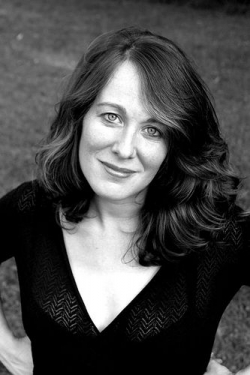
Ken Auletta appeared on The Bat Segundo Show #315. Auletta is most recently the author of Googled and writes the “Annals of Communication” column for The New Yorker.

segundo315

Condition of Mr. Segundo: Wondering if his Chinese food takeout history can be Googled.

Author: Ken Auletta

Subjects Discussed: Clarifying Auletta’s theory of Sergey Brin and Larry Page as “cold engineers,” responding to Nicholson Baker’s review, whether an engineer’s viewpoint is applicable to business, the efficiency of newspapers, Talking Points Memo, journalism that is translatable to the online medium, addressing the Gray Lady’s deficiencies, the McSweeney’s answer to the newspaper, Coach Bill Campbell, Eric Schmidt, Brin and Page’s apparent insensitivity to the book industry, Al Gore’s observations about Google’s eccentricities, the Google Chrome EULA controversy, user trust, the moral dilemma of Google Book Search, whether Google should be recused to some degree because the world has become increasingly privatized, the CIA and outsourcing, whether or not Google Book Search’s threat to an author’s livelihood has been overstated, Google’s obsession with 150, comparisons between Itek and Google, collapsing computers, Auletta’s affinity for control, Eric Schmidt’s views on promotional value, Rupert Murdoch’s recent dealings with Bing, CBS’s early involvement in YouTube, traditional media and online advertising, when Google is efficient, and investigating the semantics of Google’s “Don’t Be Evil” mantra.

EXCERPT FROM SHOW:

aulettaCorrespondent: There’s one question that is presented in the book, but never actually quite answered. It’s probably something I just observed. And that is Google’s fixation with the number 150. They have 150 projects. They have cafeterias and conference rooms that are max 150. Did you ever get an answer as to why they were obsessed with this number? Numerologists?

Auletta: (laughs) I don’t think they’re obsessed with the 150 products. In fact, now they’re probably below 150 projects. The 150 — Larry [Page] actually did a search. Larry’s fixated on 150. It’s the size of cafeterias. To have people collaborate and talk to each other and not pull back and engage. And he did a Google search and came up with that answer to confirm his instinct. Now have I done that search to check that he’s right? No, I have not. But he, in his scientific way, came up with that answer. And he goes around the cafeterias. And he’ll say, “This is too big. This is the right size.” You know, each of them have little fetishes that they’re passionate about. And they’re insistent on. And that’s one of Larry Page’s. And who’s to say he’s wrong? They’ve done pretty good.

Correspondent: Let’s go back to the three horses you were talking about earlier. Google is developing anywhere from 150 projects to less, as we’ve just established. Search revenue is starting to dwindle. I’m curious if some of the more recent products — like, for example, Chrome OS, which is an open-source scenario, and Google Wave — these are a little bit different from the norm. Because the learning curve is a little bit more. It’s something that’s more designed for geeks than for regular people. Do you see this as a way of them anticipating that more regular people, more lay people, will become power users? Or are they just essentially carrying on with the same instinct that drove their company in the first place? Which was, “Let’s go ahead and do this and the revenue will come later.”

Auletta: Everything’s a jump all. Everything is “Let’s experiment. Let’s try this.” And that’s part of the genius of Google and the genius of the two founders. Their willingness to try things. To basically ask uncomfortable questions. And the why question: “Why not?” They come into every meeting and they say, Why not? So why not do Chrome? Why not do Wave? Why not have cloud computing? We have this computer capacity? Why don’t we utilize it? And why do people have to spend three hundred some odd dollars for Microsoft packaged software? Why not have it in the cloud which will follow you wherever you go on any device you’re on? So they’re asking those questions and they’re trying those things. And I think it’s much more the latter point. It’s basically: Let’s take some risks. We have the resources to do it. And wouldn’t this really be cool?

Correspondent: Or maybe it’s just a natural expansion. For some reason, reading your book, I was struck very much by the history of Itek in the ’60s. You know, Itek, where they were the people behind Project CORONA. And they just gobbled up companies left and right. Similar to what Microsoft did two, three decades later. But Google is a little bit different in the sense that everything is essentially developed in-house. Does this ensure that they won’t implode like Itek and, to some degree, Microsoft?

Auletta: But Google buys. They bought Android.

Correspondent: Yeah.

Auletta: They didn’t invent that. They bought it and took the guy who invented it. And he’s there running Android for them. Mobile device business. One of the dangers they have — and, for instance, the argument is that they don’t have a social network engine. So they’ve been slower in that area. So you noticed yesterday, what they did, they announced that search would extend to social networks in real time. And it’s a weakness they have. And it’s a weakness that any company, if you rely just internally. It can be a weakness if you just go out and acquire, and outsource everything. They’re trying to do both. Will they succeed? I don’t know. No one knows. The game continues and there’s no end in sight. But at some point, we’ll find out. Other great companies failed and then came back. Apple failed and then came back. So I take a long view of this stuff. They are trying things, but they’re getting large. And as you get large, you start losing creative people.

(Image: JD Lasica)

BSS #315: Ken Auletta (Download MP3)

This text will be replaced

The Bat Segundo Show: Laurel Snyder

Laurel Snyder recently appeared on The Bat Segundo Show #313. Laurel Snyder is most recently the author of Any Which Wall.

segundo313

Condition of Mr. Segundo: Concerned about walls and their failed sentience throughout the years.

Author: Laurel Snyder

Subjects Discussed: The extraordinary conditions in which Any Which Wall was written, the flexibility that comes from being a small fish, a writing identity tied to poetry and waitressing, the tendency for books to come quicker in the children’s market, financial experiments that involve finishing novels, YA authors and creating a backlist, Norton Juster, Edward Eager’s Half Magic series, being too tied to homage, the virtues of sitting your ass in a chair, sexism in YA vs. patriarchal walls, patriarchy and gods, italicized passages, whether or not discussions with editors can prove violent, the degree of defensiveness within writers, the etymology of “bleckish,” debating the vital issue of whether or not rats actually dance in New York subways, Robert Sullivan’s Rats, old ladies on unicycles, godlike narrators, Don Quixote, sending books out without an agent, being scared of the first person, how rewriting changes books, Roald Dahl, believing in voice, reader reaction, an author’s inevitable pattern of repetition, the dangers of ambition, the element of control, the quest for authenticity, on not being satisfied by books that have been written, the joys of having written vs. the joys of writing, impatience, the unexpected work-related spontaneity that comes from children, J. Robert Lennon, dictating and driving, finding moments of silence, and balancing life and the creative exigencies of anarchy.

EXCERPT FROM SHOW:

laurelsnyderCorrespondent: Henry opines that all meals should be hand-holdable and that forks and spoons should be against the law. You, again as the narrator — and this is interesting. You as the narrator.

Snyder: I’m a little intrusive.

Correspondent: Yeah, you’re a little intrusive and you start to question what your characters are saying. And you object to this line of reasoning, writing, “How could you ever eat spaghetti without a fork? And how could you live without spaghetti?” I must object to your objection.

Snyder: You can live without spaghetti?

Correspondent: No. No, you can still eat spaghetti without a fork.

Snyder: Oh, that’s true.

Correspondent: You can always slurp up the noodles. Now that’s going to make a big deal of a mess and particularly….

Snyder: You don’t have a two-year-old, do you?

Correspondent: No, I don’t.

Snyder: I have a two-year-old, and have seen people eat spaghetti without a fork. And may I say, it’s not pleasant.

Correspondent: But Henry may very well just want to slurp his spaghetti. What’s so wrong about that? He’s going through a sort of slurping stage, as opposed to the more civilized fork and knife.

Snyder: I think that Henry’s mother would object. No, the intrusive narrator thing is an interesting thing. It’s coming out in the next book. The first two books both have this. [Up and Down the] Scratchy Mountains and Any Which Wall both have this intrusive narrator. And it’s a voice that I take from earlier books. And I really like those kinds of books myself. But I’ve begun to realize that there’s a degree to which, if you assert that much as a narrator, the characters never fully detach from me. And so with the next book, I’ve let that go. And in the book that I’m starting on right now — the book that I’m not going to have a deadline for, the book that I’m going to try and do differently — I’m actually going to first person. And it’s scary to me. But I’m letting go of not only of not only my intrusive narrator, but the third person altogether.

Correspondent: But I don’t know if I agree with the idea of a nagging narrator getting in the way of character. If anything, it actually causes certain…

Snyder: But it creates a kind of meta. It creates a kind of frame for the book. As long as the narrator is there. This is something I think about a lot actually. In a lot of children’s books, the kid is telling the story. Like it’s a first person story. But it’s not a diary. And this happens in adult books too. It’s the sort of opening of “This happened last October” kind of voice.

Correspondent: Yeah.

Snyder: It’s like, “Well, who the hell are you talking to?” Who is that person talking to? When the narrator is stepping forward and saying, “You the reader blah blah blah,” it creates a kind of stage, right?

Correspondent: Yeah.

Snyder: It creates a kind of stage for those characters to be performing on. And I think on some level — there’s a sort of theatrical. It’s a voiceover. And it’s like, you know how when you’re watching a movie and there’s a voiceover or like music starts in the background, and kids will joke, “Where’s that music coming from?”

Correspondent: Yeah.

Snyder: It’s that moment of “Where’s that voice coming from?” I actually have an idea for an adult novel that I’ll probably never write where the book begins with a third-person omniscient narrator. And then on page 150, that same voices says “you” or “me.” And you realize that it’s the voice of god. That third-person voice is essentially the voice of god. Letting that god then enter for the second half of the book to be a character. I can’t imagine writing that book, but I like the idea of that existing.

BSS #313: Laurel Snyder (Download MP3)

This text will be replaced