The Bat Segundo Show: Lawrence Block

Lawrence Block appeared on The Bat Segundo Show #308.

Lawrence Block is most recently the author of Step by Step.
segundo308

Condition of Mr. Segundo: Ruminating upon a life of exquisite indolence.

Author: Lawrence Block

Subjects Discussed: Step by Step as an anti-memoir, exploring childhood experience in print, randomness and finding connections, writing with a greater degree of freedom, Random Walk, concerns about a limited audience, earlier attempts at memoir, attempts by Block to write memoirs in the mid-1990s, the virtues of getting older, being less guarded with age, following up on Block’s remarks from Galut, avarice as the guiding principle, Evan Hunter, Charles Ardai and Hard Case Crime, growing less reticent about limited editions, the $479 Kindle, not carrying about work being preserved, genre fiction as a window to a specific world, Raymond Chandler, Agatha Christie never going out of print, Block and Judaism, being a creature of intense and transitory enthusiasms, not having a goal, the lack of commonality between writing and race walking, becoming increasingly drawn to pursuits that don’t involve leaving the house, writing screenplays, short stories vs. novels, and Alexander McCall Smith’s Wall Street Journal article and reader “ownership” of the characters.

EXCERPT FROM SHOW:
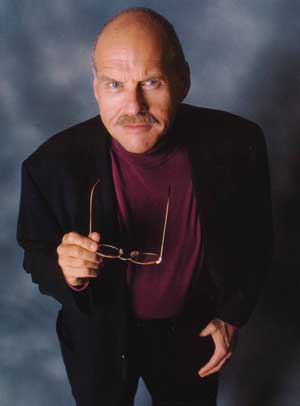
lawrence_blockCorrespondent: You mentioned that you had attempted memoir before.

Block: Right.

Correspondent: And that memoir, which I presume is still unfinished, that had more to do with the working life of a writer, I suppose?

Block: That memoir was about the early years. About the years writing pseudonymous books and getting started in the business. And I wrote about 50,000 words of it. And it still exists. And I went back to it. It was part of a multiple contract. It was submitted as part of that. And eventually the day came when I bought it back. It was a tiny portion of the advance. And I don’t think anybody at Morrow was that excited about it. My agent had just bundled things together. And because I didn’t seem inclined to resume it, oddly enough, now I find myself thinking maybe I ought to. That maybe that’s what I might want to do next.

Correspondent: Really?

Block: Yeah.

Correspondent: What brought this on? Was it just from…?

Block: The experience of Step by Step. It’s early days. I have no idea how it will sell. But people seem to like it and it seems to be getting a fair amount of attention. So we’ll see.

Correspondent: Well, I think just speaking as one person familiar with your work, the reason I was piqued when you talked about this unfinished memoir was because there’s almost like a surprising lack of amount of stuff written about that time period where you were writing pseudonymously. There was a book written by the guy who later went on to do Don’t Know Much About History, who wrote a book published about twenty-five years ago about the paperbacking of America [Kenneth C. Davis’s Two-Bit Culture] and went on about mass market paperbacks as a whole. But nothing much about the dawn of Gold Medal and Dell and all the other paperback houses. And the pseudonymous aspect. So I wonder could this interest also have to do with the fact that, with all due respect, you’re also one of the few people left who remember.

Block: Yeah. That might have something to do with it. Also, when I wrote — I think it was about ’95, ’94 or ‘5, that I wrote the memoir. And I hadn’t been planning to, as I may have mentioned in there. I was stuck on something else. I had time booked at Ragdale. And I had to write something. And at the time — that was what, fourteen years ago? — I was fifty-five, fifty-six years old. It felt early days to be writing a memoir to me.

Correspondent: Right.

Block: And before the memoir genre became something.

Correspondent: Now you have memoirs by twentysomethings.

Block: I know. I know it. “I remember the birth canal.” (laughs)

BSS #308: Lawrence Block (Download MP3)

This text will be replaced

The Bat Segundo Show: Maggie Estep

Maggie Estep appeared on The Bat Segundo Show #304.

Maggie Estep is most recently the author of Alice Fantastic.

segundo304

Condition of Mr. Segundo: Hoping to see Alice at the next opportunity.

Author: Maggie Estep

Subjects Discussed: Efforts to determine if it’s good to be happy, animals throughout Estep’s work, how love for animals is directly proportional to love for human beings, Of Mice and Men, literary allusions, “The Rocking Horse Winner,” women who are described as tiny, the reverse symmetry of characters being kicked out of bed, mother figures, manuscript revision and cleavers, the difficulties of writing something in 1872, being accused of deliberately being shocking, idioms that pop up in lines, “take a raincheck” as a generational cliche, fantastical survival systems, the ethics of plucking from real life, getting bogged down in the minutiae, living in the Lower East Side in the 1980s, characters with brown hair, being dismissive of blonde people, Uma Thurman, people carrying gingerbread houses, Rikers Island, getting procedures right, nothing but raw chicken necks in the fridge, the naming criteria for 17 dogs, Ira from Yo La Tengo, people who were mad at Estep’s first book, asking permission from lifting life experience, Estep’s horse racing experience, soundtracks that are more musical than fingers on a chalkboard, internal rhyme, Estep’s spoken word background, vomiting as a MacGuffin, being mildly clumsy, vacation, and quirky translation.

EXCERPT FROM SHOW:

maggieestepEstep: “Our love of animals is directly proportionate to our indifference to human beings.” It’s a little bit of an exaggeration. I grew up around all sorts of horses and cats and dogs. To this day, my mom — if I want to get her talking to me for more than two minutes — it has to be about the dogs. So it’s an off-the-nose dialogue where we’re talking about the dogs. But really we’re talking about something else.
Correspondent: Interesting. And in this, you are talking about something else with the dogs. Because from the very beginning, the big oaf with the puppy and all this reminded me very much of Lennie from Of Mice and Men, among many other literary allusions. First of all, I want to ask if some of these literary allusions that are there — “The Rocking Horse Winner,” for example — were these intentional or were these just part of the whole…?

Estep: It’s never, never deliberate. It’s all there swimming around in my little brain and comes out inadvertently sometimes.

Correspondent: Little brain. I wanted to ask you about littleness. Because one thing that is very curious is that many of the women in this book are described as tiny.

Estep: Oh.

Correspondent: You have the tiny goth girl waitress. And Eloise is described as tiny by her mother. And, of course, Kimberly is described as tiny. And then, of course, there’s Tina in this. Tiny. Tina.

Estep: (laughs)

Correspondent: I’m getting a little theme here that most of the women in this book are tiny. And I’m curious as to why this is. What is it with this modifier here?

Estep: I actually had not really thought of that. (laughs) I don’t know. But Alice, who is sort of the main one, is not tiny. She’s rangy. I don’t know. There’s something about small women who are very tough that’s really a beautiful prototype. And until you pointed it out, I didn’t realize that’s what was going on in the book.

Correspondent: There’s an inverse ratio between height and toughness in your mind?

Estep: (laughs)

Correspondent: Is that your theory?

Estep: Maybe. That might be something.

Correspondent: Okay. Did you develop this theory over the course of time? Or did it just apply to the particular universe of this novel?

Estep: It just came out at this very moment. (laughs)

BSS #304: Maggie Estep (Download MP3)

This text will be replaced

The Bat Segundo Show: Philip Alcabes

Philip Alcabes appeared on The Bat Segundo Show #303.

Philip Alcabes is most recently the author of Dread.

segundo303

Condition of Mr. Segundo: Attempting to understand the certainty of certain dread, and the dread of dreadful certainty.

Author: Philip Alcabes

Subjects Discussed: Overstating the three Ps (pandemic, pestilence, and plague), contending with a hypothetical situation involving a Norway rat eating your sandwich for lunch, the acceptable level of fear that is required in Western society, the media’s initial coverage in 1982 of AIDS as “the gay plague,” fear of social dissolution, epidemiology as a reasonable response to a disease outbreak, Jerry Falwell and Pat Buchanan, whether initial irrational fear is demagogic, germ theory, calls for healthy skepticism, the linguistic misuse of “tragedy,” being flexible with the word “epidemic,” swine flu and confirmed deaths, reconsidering hysterical value, recent cases of plague, the National Research Act of 1974, Harriet Washington’s Medical Apartheid, the Tuskegee syphilis study, the ethics of administering PolyHeme to unconscious patients in Chicago, contending with correlations between race and poverty, how a story about an epidemic becomes shaped around race, Nushawn Williams, parallels between painting Xs on houses infected with plague and prejudices in the 1980s against gay clubs (and calls to tattoo gay men), positive and negative liberty and how much the government is permitted to go in protecting us, the possibility of scientists being co-opted into political campaigns, the ethics of tweeting, and science at the behest of elasticity of terms.

EXCERPT FROM SHOW:

palcabesCorrespondent: Reading this book, I got the sense that the three Ps — pandemic, pestilence, and what’s the other one? plague! — that we’re essentially overstating them. But I want to start off by offering a hypothetical scenario. If I’m sitting at a restaurant, and a Norway rat jumps onto the table and starts nibbling at my sandwich, I’m going to have some understandable concerns. So I guess the question is, if we are in a culture of needless dread about the three Ps, what is the amount of fear that is acceptable for you? Some general terms.

Alcabes: So what is the amount of fear that is acceptable?

Correspondent: Yeah.

Alcabes: Well, I accept any amount of fear. People feel the fear that they fear. But to answer your question about the rat, would I eat the sandwich? No. Would I think I’m going to die because I saw the rat? No. Is that what you’re getting at?

Correspondent: It’s what I’m getting at.

Alcabes: Would I think that the black death is about to start again? Also, no. And do I think that we’re too worried about pandemics, pestilence, and plague? Well, we’re how worried we are. What’s odd is that we’re as worried as we are, given that we know so much. In the 14th century, which is when plague came to Europe and became what we now know as the Black Death, people didn’t know much about that illness. They didn’t actually know that it was connected to rats. They didn’t know that it was spread by fleas jumping from rats to humans. They didn’t know that it was caused by a bacterium. They didn’t know exactly how to prevent it. They didn’t know, as we do now, how we can cure it. It can be cured now by common antibiotics. But given that we know so much now, why do we get so panicky? Why do we still think that we’re about to be consumed by some new black death? And that’s the more puzzling question. It’s really the question that launched my book.

Correspondent: When the media initially covered AIDS in 1982, they referred to it as “the gay plague.” But one might argue that here we are twenty-seven years later and most people are not going to use the insensitive term “gay plague” to reference AIDS or HIV. And I’m wondering if you’re possibly being a little hard on people when some new development or some “epidemic” actually occurs. Because people are going to try and want to pinpoint it. They’re going to be frightened. They’re going to be scared. How do we transmute that initial impulse of fear that goes into atavistic territory into something that is more reasonable along the lines of what you’re suggesting? Since we have the knowledge, how do we deploy it among the general public so that they don’t freak out like this?

Alcabes: You know, it would be unreasonable for me to say, “Don’t be afraid.” People are afraid. And, in fact, I think that one of the premises of my book is that we carry with us innate, inchoate dreads. And the innate ones are about death, at least from what the psychologists tell us. And there are inchoate ones — I think this is what you meant by “atavistic territory” — that have to do with a kind of ineffable dark realm of randomness where anything can happen. And I think some people have called that a fear of social disarray, of the dissolution of society. And I think that’s a way to put it. We’re afraid of whatever’s out there. And it’s not unreasonable to think that we’re going to stop being so afraid. I do think that it’s quite reasonable to do epidemiology on it. I was trained as an epidemiologist. It’s a reasonable response to collect data and try and make sense of a disease outbreak. Where I think we let ourselves go wrong, where we let ourselves harm our own society, is when we let our fears shape narrative, if you will, of disease outbreaks, in which somebody’s to blame. Somebody has crossed a line, imperiled the rest of us. And I think your example of the early days of AIDS is really well taken. Because that’s a great example of some people looking at AIDS as a kind of ratification of suspicions they had about what some people were doing that was “bad,” right? That people were suspicious that the sexual revolution of the ’60s was going too far or who had a specific fear about homosexuality allowed themselves to see AIDS as a validation of those anxieties.

BSS #303: Philip Alcabes (Download MP3)

This text will be replaced

The Bat Segundo Show: Lizzie Skurnick II

Lizzie Skurnick appeared on The Bat Segundo Show #302.

Lizzie Skurnick is most recently the author of Shelf Discovery. She previously appeared on The Bat Segundo Show #13.

segundo302

Condition of Mr. Segundo: Sacrificing his manhood to fight the patriarchal overlords.

Author: Lizzie Skurnick

Subjects Discussed: [List forthcoming, but oh quite a strange potpourri! Everything from redheads, television rape, Jean Auel, whether patriarchy or elitism is responsible for YA/genre ghettoization, and whether or not Judy Blume’s Wifey involves punishing the heroine.]

EXCERPT FROM SHOW:

skurnick2Skurnick: You know, you make up a story for what you’re trying to do later, but who knows what you were trying to do?
Correspondent: Well, then I’m going to go ahead and put my own particular question of interest to you.

Skurnick: Go for it.

Correspondent: Okay. The concern for redheads in your review of The Moon by Night.

Skurnick: Oh.

Correspondent: The author who has the redheaded stepchild in A Gift of….A Gift of Magic. Yes. I’m sorry. My handwriting’s terrible. But I found out last night that there are, in fact, a streak of redheaded people in your family.

Skurnick: Yes.

Correspondent: And so, as a result, I must put forth the psychological question to you, Ms. Skurnick, over whether this preoccupation with redheads reflects this familial genetic scenario.

Skurnick: Okay. It’s hilarious. Because if you — I don’t know if you notice this at the party. Because not all of my friends were at the party. But my Grandma Dora was a redhead, my father is a redhead, my Aunt Francine is a redhead. Growing up, one of my good friends Becky was a redhead. I think I have another good friend who was a redhead. And throughout my life — it’s hilarious — two of my dearest friends — Casey and Jane — were redheads. I have dated many redheads. And my new nephew Asher is a redhead. So I think that certainly I have a huge streak of redheadedness in my life. And I could not tell you why. And it is actually funny. Because whenever I write about Meg’s boyfriend — Calvin is redhead — and there’s quite a few redheads in L’Engle, in general. You know, Polyhymnia is a redhead. Calvin’s daughter. And when you write about it, there’s always a few girls in the comments who will go, “Oh, Calvin, I love a ginger!” Like if you do it with Prince William and his brother, you’ll get that too. So there is — that is a theme in my life. But it is also a theme in YA.

Correspondent: Yeah.

Skurnick: It’s a huge theme in YA. And I don’t know. I guess it’s because — I’ve never understood this because, like I said, there’s zillions of redheads in my life. But redheadness in society does always — it’s like you are marked as a very different thing. Everybody looks at redheads. You know, when Asher, my nephew, was born, it was the first thing five people told me. And then when people looked at him, they would say, “He’s a redhead.” You know, that’s like the first thing. And so I guess it’s often a little bit of what the author is talking about. You know, the sense of being deliberately put outside. And then what do you do with that? What do you do with the fact that you are an individual. You know, redheads are forced from a very young age to be individuals in the way that we are not. And I think maybe that’s…

Correspondent: I was a redhead, you know.

Skurnick: Really?

Correspondent: Yeah, yeah. You’re drawing a generalization here. But I’ll let you continue. I am very curious to hear your answer.

Skurnick: Well, all of the redheads in my life are actually like fire red. You know, it doesn’t go away. Like I actually have some red in my hair, although you can’t tell right now. Because it’s wet.

(Image: Tayari Jones)

BSS #302: Lizzie Skurnick II (Download MP3)

This text will be replaced

The Bat Segundo Show: Richard Russo II

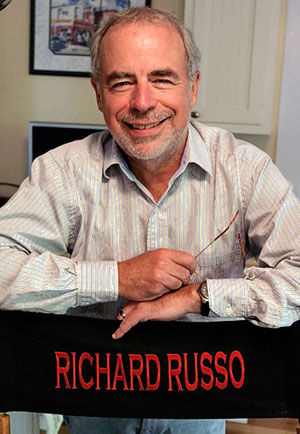
Richard Russo recently appeared on The Bat Segundo Show #301.

Richard Russo is most recently the author of That Old Cape Magic. He previously appeared on The Bat Segundo Show #152.

segundo301

Condition of Mr. Segundo: Shoving Cape Cod mackerel down his throat.

Author: Richard Russo

Subjects Discussed: [List forthcoming, but lots in the latter half of the show about the Newsweek piece and the perceptive problems with close third-person.]

EXCERPT FROM SHOW:

Books RICHARD RUSSOCorrespondent: Bon Jovi’s “Living on a Prayer.” Why “Living on a Prayer” over “You Give Love a Bad Name?”

Russo: (laughs)

Correspondent: Was “Living on a Prayer” the tune that was more applicable to weddings here?

Russo: Ed, Ed, you’re trying to make me feel regret now, aren’t you? Because that would have been perfect as well.

Correspondent: Was it more about living than love? With the emphasis in the book.

Russo: It was the result of my wife and I having gone recently to a number of weddings and being absolutely fascinated by the way young people my daugghters’ age react to the song. Because it is so much before their time. And for a lot of young people — 28, 29, 30 — it is a kind of anthem And the way they not only know the words, they have a kind of routine worked out on the dance floor. Those in the know have this routine on the dance floor that involves the fist-pumping, which they do in unison. Sometimes forty or fifty of them, young people out on the dance floor, to a song that is just so much before their time. But they’ve adopted it. So it was a wonderful way to show a bridge between those generations. And Laura, who does such a kind act in that redeems her father, at least temporarily. It just fit that slot so nicely. It also suggests that when Griffin begins this novel, he’s had a tiff with his wife. But it’s really just a tiff. I mean, he has a kind of tenure in his job. He loves his life. He loves his wife. He loves his daughter. Everything is right. And yet by the end of the first half of this book, he’s living on a prayer. And he knows it. Whereas he didn’t in the beginning.

Correspondent: But it’s interesting. Because your timing is absolutely perfect! Recently, on YouTube, there’s this video that’s been going around, that 18 million people have seen, of this elaborate dance at a wedding all set to music.

Russo: Oh really? I hadn’t seen it.

Correspondent: Well, I know. I don’t think you’re much of an online guy.

Russo: (laughs)

Correspondent: I wanted to talk about the notion of the home in this book. There’s a sentiment that is expressed: “You aren’t a real adult until you have a mortgage you can’t afford.”

Russo: Right.

Correspondent: Griffin is pressured into home ownership. And he and his wife often sift through the real estate catalogs, splitting up properties into Cannot Afford It and Wouldn’t Have It As a Gift.

Russo: Right.

Correspondent: And then also, 13-year-old Sunny Kim says, “You have a lovely home,” later on in the book. Home though is not necessarily where the heart is in this. This is a couple that is united by home as a piece of property, as opposed to a place where one can establish a family. This is a couple that settles on The Great Truro Accord and actually figures that this prearranged stratagem will aid them in deflecting every curveball of life thrown their way. So I wanted to just ask you why the home, of all things — or even just property in general — would be the central place for this couple’s failure to (1) deal with life and (2) come to the real terms that they are their parents and that they share a lot of family qualities. That’s a lot of points. I’ll stop there.

Russo: No, no, that’s — yes, I’m overwhelmed by the question. The other conflict, of course, is that Griffin’s parents, of course, are confirmed renters. So their notion of a home is something which recedes before them. Like the Cape itself. I mean, home for them is a place that you can only visit. And so, for Griffin, home is something that he is really reluctant to go to. Joy loves her parents’ home. She loves the vacation home. The same home that they rent every year. For her, home is a central place, as you said. It is the place where love resides most powerfully. And I think I would also expand that to say that home, like marriage, is not just a private thing. Just as marriage institutionalizes love in some way, home institutionalizes family. So when Sunny Kim — the outsider — comes in and says, “You have a lovely home.” He’s saying, “You have a lovely daughter with whom I’m in love. You have a lovely marriage to which I aspire. You have a lovely home that I would like to live in one day and you have a lovely nation that is now my adopted home.”

So just as your question is big, my answer is kind of big. In the sense that the notion of home, by the time we get to the end of this book — especially that final Sunny Kim scene — that notion of home has gone from something at the beginning — it was two people separating real estate property on a place they can’t afford into those two categories — Can’t Afford It and Wouldn’t Have It As a Gift. And by the time we get to the end of the novel, it’s almost something that you would expect to be taken over at some point by Department of Homeland Security. (laughs)

BSS #301: Richard Russo II (Download MP3)

This text will be replaced