The Bat Segundo Show: Anne Enright

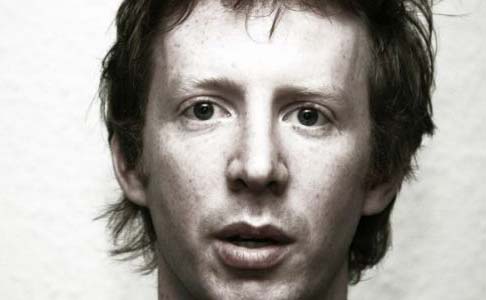
Anne Enright appeared on The Bat Segundo Show #417. She is most recently the author of The Forgotten Waltz.

Condition of Mr. Segundo: Troublesomely willing to sign on the dotted line.

Author: Anne Enright

Subjects Discussed: Writing a novel as a minute allegory of the Celtic Tiger, Gresham’s law, books with shifting moral alignment, marriage as a financial relationship, punctuation and subordinate clauses in prose, David Mamet, Caryl Churchill, people who interrupt each other, male and female dialogue, Enright being one of the great penis chroniclers in contemporary literature, the hydraulics of hard-ons, Yeats’s “Sailing to Byzantium,” The Gathering vs. The Forgotten Waltz, flesh and fat in fiction, how women think about anatomy, stigmas against women writers, how character names can be used to describe fraught relationships, unsuccessful attempts to find a sexy Irish name for a man, Australian men, material that Enright would not write about, Catholicism and blasphemy, the specific conditions it takes to earn an injury, the relationship between spirituality and sensuality, Leonard Cohen, reflections and looks within Enright’s fiction, interior and exterior description, whether the world would be better if it were run by 12-year-old girls, characters who cling to what remains of youth, candid moments, the repression of consciousness, being blatant through the spirit of omission, faux partitive noun phrases, “the luxury of the kiss,” the origins of the character name Fiarcha, bountiful character populations in a novel, and old-fashioned knowledge.

EXCERPT FROM SHOW:

Correspondent: I wanted to first of all ask you about the notion of this book possibly serving as a mini-allegory or a minute allegory. I noted that there was the Gresham Hotel, which nicely mimics Gresham’s law in this book. And there were a number of lines about the acquisition of things. Flirting with someone just to flirt with someone. So I have to ask how you honed the right amount of allegory for this. Or was that even important? Was it kind of a bonus that came to your interesting series of squabbles here?

Enright: Yeah. I think the thing about allegories is that they stay still. And what I wanted to do was to write a book that shifted morally. So it was more morally poised than an allegory might be. So it’s a book that can be read by the likes of the readers themselves. So whatever the reader thinks of Gina Moynihan, who is the central character and who is either a woman in love, wonderfully in love, or a homewrecker — depending on your point of view. So I wanted the readers to maybe even shift their points of view about what Gina’s up to. So it does parallel the boom in Ireland. So there is a kind of allegorical content there for adultery, that feeling of just getting what you want, of getting away with it, was very suitable to Ireland in the last ten years before the boom. When there was so much glee and a kind of fantasy and a kind of denial that was going on. Also a huge amount of belief. You had to believe. If you didn’t believe in the economic miracle, you were kind of heretic, you know? Because if you take belief out of the system, there’s nothing left. There’s only debt and not money anymore. It’s a confidence trick. So I thought all of that was brilliant for an adulterous affair. Because you’re living at two levels at the same time, which was pretty much what people were doing.

Correspondent: What’s interesting though is that it is money that has Gina and Conor marrying. Which I found to be an interesting choice. Gina’s view in terms of her relationships — whether it is Conor or Sean — is very much predicated upon, well, it happens to be there. And so this leads me to ask if this kind of moral concern predated the alignment with the Celtic Tiger and the like.

Enright: Money is both important and interesting. It’s also quite highly taboo. People don’t talk about their money. They think about money all the time. And they never or rarely articulate their relationship with money. Yeah. Gina and Conor get a mortgage almost before they get the wedding reception. But that was the reality. That is the reality in Ireland as it was. And I think in many places in the Western world, it was hard to find a place. And it was better to find a place if you were with somebody else. And I think marriage is also a financial relationship.

Correspondent: Yes.

Enright: Whether it’s primarily a financial relationship is — well, that varies from couple to couple. But I don’t think it was primarily here. I mean, Gina, she’s quite materialistic. But she’s not a greedy girl. I mean, she does think about money. But she’s not relentlessly acquisitive. It’s just that wanting is problematic when money is involved.

Correspondent: I also wanted to ask about the use of commas and dashes throughout the prose.

Enright: Oh! Nightmare!

Correspondent: A nightmare?

Enright: My nightmare! (laughs)

Correspondent: Well, it’s interesting because it does lend itself to a very conversational voice. But on the other hand, thinking of like The New York Times Book Review where you can always spot where they’ve edited it, where they have the dash and some sort of subordinate clause and then the dash, I’m curious as to how this worked for you. Whether some of these dashes and commas and various thoughts entered into the editing or were they there from the get go?

Enright: It was always a painful decision about punctuation. Gina is addicted to qualifications, subordinate clauses. A little bit more, a little on the side. The sentences don’t run really simply. It mirrors the way people think. I have a real problem, and I’m going to confess it to you now, with the run-on sentence and the semicolon. But I do like putting a clause in the middle of a sentence to disturb it a little.

Correspondent: The dashes, I suppose, are a more pure unit than say the colon.

Enright: Yes, they are. And they give a bit of space on the page. I like typing. Because I like the rhythm of typing. To me, it’s like dancing on a sprung floor. I like a bit of trip and a bit of rhythm in the prose. Because my narrators are often not omniscient. They don’t know exactly what the end of the sentence is. I like to surprise. I like to see their surprise as their thoughts leap along.

Correspondent: It would seem to me that this more free-form approach to prose will probably lend you to discover more about the characters.

Enright: For sure. But all the time, the content for me is a kind of given. And all the time, I’m trying to make the cadences and the rhythms somehow beautiful. And somehow to get the emotion and the poignancy into that rhythm. I mean, that to me is what it’s all about. And so I love the spoken voice on the page. I love the challenge of it. I mean, if you put a tape recorder on someone, they don’t speak in sentences.

Correspondent: Sure.

Enright: And the prose. Of course, even if you write in realistic type, first-person, it’s a mannered thing. David Mamet. There’s a guy who I love to read as well as…

Correspondent: The earlier Mamet. Not the more recent one. (laughs)

Enright: The earlier Mamet. And, you know, I worked in the theater very early on. And Caryl Churchill as well. Do you know Churchill puts a forward slash before interruptions?

Correspondent: Yes.

Enright: People interrupting each other on stage. Which is actually the way women talk. They rap off each other. It’s more improvisational. A kind of jazz thing that they do. So they’re always interrupting each other. Men are slightly more territorial about their speech. I’d love to be able to do that on the page. But, you know, it would wreck people’s head.

The Bat Segundo Show #417: Anne Enright (Download MP3)

This text will be replaced

The Bat Segundo Show: Mara Hvistendahl

Mara Hvistendahl appeared on The Bat Segundo Show #398. She is most recently the author of Unnatural Selection.

Condition of Mr. Segundo: Considering cold water solutions if he attempts to sire sons.

Author: Mara Hvistendahl

Subjects Discussed: Lyndon Johnson’s 1965 address on the occasion of the UN’s 20th anniversary, the relationship between birth rate, sex selection, and development, the history of amniocentesis in India, cultural relativism, U.S. efforts to push population policy in the 1960s, forced sterilization programs, Paul Erlich’s The Population Bomb, Bernard Berleson’s “Beyond Family Planning,” cheap ultrasound machines flooded into the East, fetal sex determination in India, China and South Korea, efforts to crack down on sex-selective abortion, the influence of GE ultrasound machines, where the pursuit of “market demand: creates skewered sex ratios, surplus men in China who won’t be able to find wives, the UN Population Fund using the term “prenatal sex selection” instead of “abortion,” the global gag rule, abortion clinics advertising on Chinese television, abortion perspectives in Asia, the effect of a 1990 South Korean crackdown on sex-selective abortion upon sex ratio and abortion rates, the ethical dilemma of controlling “unnatural” sex selection through “unnatural” methods, the effect on ideology and technology on sex ratios, marriage agencies in East Asia, despondent women who are dependent upon their husbands for immigration status, abuse of mail brides in Taiwan and Korea, the relationship between lonely men and violence, parallels between surplus men in China and the problems with too many males during the Wild West, prostitution, a thought experiment about transferring surplus Chinese men into surplus single women New York (and vice versa) to solve sex ratio problems, why Paul Erlich can’t remember the details of his over-the-top ideology decades later, whether Paul Erlich is a crackpot, contraceptive mists over other nations, and the effects of right-wing agitation on global population policies.

EXCERPT FROM SHOW:

Correspondent: In 1965, as you point out in the book, Lyndon Johnson delivers a speech on the occasion of the United Nations’s 20th anniversary. And he says before this crowd in San Francisco, “Less than five dollars invested in population control is worth a hundred dollars invested in economic growth.” Now development, as you point out, typically accompanies a plummeting birth rate. But that doesn’t necessarily mean that this issue of sex selection, which is in your book, goes away. You point to a Christophe Guilmoto study believing that the Middle East will be the next region to develop this gender imbalance. I have to ask. Are there any circumstances in which this plummeting birth rate or an increased development doesn’t create this gender imbalance? Is this something that we should look at nation by nation? Does one have to consider an individual nation’s cultural values? Let’s open up the ball of wax here.

Hvistendahl: Yeah. Sex selection imbalance is not something that’s automatically going to crop up in a country just because it’s developing. What we have seen in the countries where we have sex selection today, they are developing very rapidly. And the birth rate’s fallen dramatically. A woman who maybe had six kids in Korea in the 1960s. The average woman over her lifetime had six children. And today it’s just a little over one child per woman. There are other ingredients. Abortion needs to be legal and readily available. Because the method that many women use now is sex-selective abortion. New technology comes in. Ultrasound. But it doesn’t mean that every country that reaches a certain level of development will have this gender imbalance.

Correspondent: Well, we’ve got the predictions in the Middle East. What about other countries along these lines? I mean, how much of a correlation is there between birth rate, development, and sex selection?

Hvistendahl: For me, that’s kind of a triangle of trends. But obviously you need to have gender discrimination. Women need to want boys. Their husbands need to want boys. But gender discrimination alone doesn’t explain where sex selection occurs. In fact, in most countries around the world, women want at least one son. Either they tell researchers that. They say we want one son. Or demographers can look at where couples stop. This is actually called a stopping rule. So what was the sex of the last child? And it turns out, in most countries, women tend to stop when they have a son. That was even true of the U.S., until recently. So that’s the case in much of the world. And yet we only have sex selection in this area where you have a triangle of trends.

Correspondent: Well, let’s turn to a specific country: India. You describe the early days of amniocentesis there. Government hospitals, they serve the poor and the indigent. And they begin using this test, which is initially designed to detect fetal abnormalities. And, of course, word spreads among the middle and the upper classes. “Hey! We can also use this test to also look for gender.” As you describe, what’s astonishing here is that none of the doctors considered the ethical underpinnings of such a practice. And they viewed this as a way of making the world a better place. So what ultimately accounted for this attitude in India in the 1970s? It can’t just be tradition, as the Indian activists have said, or even cultural relativism. What causes something like this to happen?

Hvistendahl: Well, I told that story by way of explaining how the population control movement in the U.S. has played a role in shaping population policies in Asia. So the medical school where these tests happen is called the All India Institute of Medical Sciences. It’s the top medical school in India, basically. And in 1975, they were the first hospital in India to use amniocentesis. So that’s where you withdraw a small amount of amniotic fluid from a pregnant woman’s abdomen. And you can test fetal cells in that fluid for sex. It was an early way of determining sex. They were the first hospital to do that. They opened the test up to poor women, as you said. And there were close to a thousand women who aborted female fetuses by the time the test was over. So that story’s pretty well known in India, especially among people who are working on this issue. What I discovered was that this logic that sex selection is a good method of population control actually originates in the U.S. So the doctors in 1970s India were espousing this. “Isn’t this great? We’re doing something to control the population.” But that idea had been around in the U.S. since the 1960s.

Correspondent: Yes. Well, how do you contend with the issue of cultural relativism when you’re dealing with tradition in India versus contraceptive traditions in the United States?

Hvistendahl: Well, the United States in the 1960s, the population control movement was really looking at how to reduce population and birth rates around the world. They were not just looking at the United States.

Correspondent: Yes.

Hvistendahl: So there were projections from the United Nations showing that people were living longer than ever before. And then the projections showed populations kind of spiraling out of control. And there was a lot of concern about this issue on both the right and the left. It was a kind of bipartisan effort. Environmentalists were very involved. Also McCarthyists, who thought that a growing population would lead to Communism. And people were casting about for solutions. So organizations like the Rockefeller Foundation, the Ford Foundation, and International Planned Parenthood Foundation — they were working very actively in developing countries to look at the ways in which you might reduce the birth rate. And one of the things that came up is that women kept having children until they had a son. Again, it’s this stopping rule. So then this idea emerged, “Well, what if we can guarantee them a son on the first try or the second try?” I mean, you have to understand that, at the time, there were all these radical solutions being tried. Forced sterilizations were happening in some parts of the world.

Correspondent: And in the United States too. Among poor people.

Hvistendahl: Yeah. We flirted with eugenics in the United States. People were talking about unveiling birth permits. What is now the one-child policy in China. So all of these strategies were on the table. And sex selection was voluntary. It was something that researchers knew what parents would choose to do on their own. They wouldn’t have to be forced. I think also that the fact that women and people of color didn’t play a very big role in the population control movement, that was a factor too. But you remember this book, The Population Bomb?

Correspondent: Yes, Paul Erlich.

Hvistendahl: Paul Erlich.

Correspondent: Who we’ll get into in just a bit.

Hvistendahl: Okay. He mentions sex selection as a good population control method. The President of the Population Council [Bernard Berelson], which is a very active group, at the time wrote an article for Science in 1969 [“Beyond Family Planning” — PDF here], saying sex selection is a great method. If we can just find a way to guarantee couples the child that they want — and he knew that was basically a boy — then we can production population growth.

The Bat Segundo Show #398: Mara Hvistendahl (Download MP3)

This text will be replaced

The Bat Segundo Show: Paul Murray, Part Two

On December 5, 2010, the Irish novelist Paul Murray encountered one of Mr. Segundo’s many agents before a full audience at Word Brooklyn. The two gentlemen proceeded to talk, with smart audience interjection and Mr. Murray reading from the book, for a little under 90 minutes. Just as the tape ran out, the very patient Word Brooklyn staff wisely put an end to this gabfest. The two gentlemen had no idea they had rambled on for so long. From all reports, neither did the crowd.

The first part of this conversation is now available for your listening pleasure as The Bat Segundo Show #370 (also referred to as “Phyllis Presents,” for reasons known only to those possessing the appropriate handbook). It is about 41 minutes long and involves the initial Q&A between Mr. Murray and our most mysterious agent.

The second part of this conversation is now available for your listening pleasure as The Bat Segundo Show #371 (which does not possess any alternate name, we are sorry to report). It is about 38 minutes long and features Mr. Murray reading from his latest novel, Skippy Dies, along with further questions from our agent (and many from the crowd). If you listen carefully to this second part, you may be able to detect a broken haiku.

The producers wish to thank Brian Gittis, Stephanie Anderson, Jenn Northington, Sarah Weinman, and (of course) Paul Murray for their great assistance (much of it at the last minute) in making this special conversation happen. We hope to offer similar “live” conversations in the future.

Condition of Mr. Segundo: Recoiling from the pleasures of being applauded by a recorded audience.

Author: Paul Murray

Subjects Discussed: The origins of Bethani, the original length of Skippy Dies, storylines cut from Skippy Dies, the narrative need for an adult ballast, the importance of the school as a microcosm, Infinite Jest, open-ended narratives, tradeoffs, the impossibility of second-guessing an audience, Roland Barthes, cartoon sex, absurd editorial exchanges concerning the physicality of mermaids, balancing gender perspective, getting Lori’s emotions right, Catholic schoolboys, amoral characters and teenage beauty, authentic teen voices, requests for a “director’s cut” of Skippy Dies, trying to find uses for scrapped material, when descriptive “transplants” don’t work in revision, and the importance of listening to editors.

EXCERPT FROM SHOW:

Murray: I didn’t want it to be an Infinite Jest level narrative. I think that might have had its day, in fact. That sort of completely open-ended narrative structure. Because once you read Infinite Jest and you get to the end of 1,000 pages and realize he’s not going to tie it all up. Sorry to anyone who hasn’t read the book. The butler did it. That in itself is not quite a gimmick. But it’s a device. And it’s a device that people will get bored of. So you need to find new ways. Roland Barthes, who I read a lot unapologetically, he talks a lot about, “If you destroy something. If you try and destroy something, it just comes back.” Like you just sort of preserve the dialectic. So what you need to do is subvert it by making fun of it or just twisting things and tweaking things. I guess that’s what I was trying to do with the book. I really like — I watch tons of — far too many movies and TV programs and stuff. So I wasn’t coming at it with some kind of Puritanical urge to — like an Alain Robbe-Grillet sense of “I puke on the novel.” I wanted it to be a story that some of the people would enjoy. So yeah, it does look like a lot of elements. It’s got characters and it’s got jokes. It’s got plot twists and stuff. I would argue that it doesn’t work in a sort of three-part type of way. Because Skippy dies at the beginning. And then it tracks back. The first two parts are tracking back. What happened to him. And then the last part is just dealing with the effects of his death. So it is kind of chronological. Quite weird.

Correspondent: Well, what do you trade off when you are writing for the audience like this? Are there certain areas that you went into further? Because the book is very candid about the teenage lifestyle. And drugs and sex and things like that. Did you go further in this earlier draft? Were there things that were perhaps just too off-putting for the audience that you were seeking? I’m just curious.

Murray: I genuinely would try and avoid — I mean, if you start thinking of your audience, then it’s impossible to second-guess an audience. Because people react in ways that you can never imagine. So you’re on a losing streak with that. And also you’ll just freeze up if you start worrying about what people will think. So I tried to avoid doing that. That said, I did have more extreme things happening in earlier drafts. And I think it was because it was hard to gauge the right level of shockingness. And it wasn’t that I wanted to shock people. It was more that I was worried about censoring myself. I was worried that the editors won’t like this scene. So I’m going to leave it in there! Which is a very stupid way of writing a book. But that’s what I did.

For instance, the Bethani character, who writes a lot of these strange porno songs. There were more of those than there needed to be initially. And there’s a very disturbed character called Carl. His stuff was initially — there’s a bit where Carl is at home looking at porn on the Internet and he seems to be looking at this toon porn, which is characters from Disney — Pocahantas and the Little Mermaid, Snow White and so forth — having sense with various other toons. Smurfs having sex.

Correspondent: Imagination or research into this?

Murray: Uh, no comment. But there was a humorous exchange with the publishers. With Penguin. Because initially they were saying, “I think Disney may have copyright on these. So we’re going to have to write to them and say is it okay?”

Audience and Correspondent: (laughs)

Murray: Okay, I don’t know if they’ll go for that. But it turns out.

Correspondent: Did you get any yeses? Yes, it’s perfectly okay for a Snow White and a dwarf 69. Or something.

Murray: (laughs) You know that site!

Correspondent: No, I…no comment!

Murray: That’s one frisky dwarf.

Correspondent: (laughs)

Murray: No, but it turned out that it was legal. It was okay. The Penguin legal department checked this out. It was fine. You could use those references. But there was another bit. A Penguin editorial assistant, who is a very nice and lovely girl called Anna Kelly, said, “You have Pocahontas giving a lickout to the Little Mermaid.”

Correspondent: (laughs)

Murray: “Physiologically, that’s not actually possible.”

Audience and Correspondent: (laughs)

Correspondent: Your imagination then!

Murray: “Dear Anna: Thank you so much for that.” So if you know anything about the English publishing industry, then you know it’s run by these very sweet, very polite women. And so there’s this humungously embarrassing email conversation back and forth. “Maybe we should have the Little Mermaid giving a lickout to Pocahantas.”

Audience and Correspondent: (laughs)

Murray: “Oh! That seems like the best solution!”

Audience and Correspondent: (laughs)

Correspondent: Oh boy. Anybody have a question to follow that up with?

The Bat Segundo Show #371: Paul Murray, Part Two (Download MP3)

This text will be replaced

The Bat Segundo Show: Paul Murray, Part One

On December 5, 2010, the Irish novelist Paul Murray encountered one of Mr. Segundo’s many agents before a full audience at Word Brooklyn. The two gentlemen proceeded to talk, with smart audience interjection and Mr. Murray reading from the book, for a little under 90 minutes. Just as the tape ran out, the very patient Word Brooklyn staff wisely put an end to this gabfest. The two gentlemen had no idea they had rambled on for so long. From all reports, neither did the crowd.

The first part of this conversation is now available for your listening pleasure as The Bat Segundo Show #370 (also referred to as “Phyllis Presents,” for reasons known only to those possessing the appropriate handbook). It is about 41 minutes long and involves the initial Q&A between Mr. Murray and our most mysterious agent.

The second part of this conversation is now available for your listening pleasure as The Bat Segundo Show #371 (which does not possess any alternate name, we are sorry to report). It is about 38 minutes long and features Mr. Murray reading from his latest novel, Skippy Dies, along with further questions from our agent (and many from the crowd). If you listen carefully to this second part, you may be able to detect a broken haiku.

The producers wish to thank Brian Gittis, Stephanie Anderson, Jenn Northington, Sarah Weinman, and (of course) Paul Murray for their great assistance (much of it at the last minute) in making this special conversation happen. We hope to offer similar “live” conversations in the future.

Condition of Mr. Segundo: Recoiling from the pleasures of being applauded by a recorded audience.

Author: Paul Murray

Subjects Discussed: The influence of cinema, Gene Tierney, Glengarry Glenn Ross, the “Intelligent Eye” system, constructing a soundtrack for life, characters who flee reality, Anthony Lane and the Beijing Olympics, the camera increasingly pervading existence, Murray’s hero worship of David Lynch, balancing audience demand for traditional logic with shocking character revelation, Twin Peaks, not making sense as a bold aesthetic move, David Lipsky’s Although Of Course You End Up Becoming Yourself, Lynch vs. Pynchon, David Shields’s Reality Hunger, excavating the old in the quest for new fiction, Tristram Shandy, the importance of having a big nose, gutting from reality, Russell Hoban’s “feeling unreal is an essential part of reality,” mid-century Irish naturalistic writers, Irish fiction’s failure to interrogate modernity, video games as a teenage refuge, gamebooks of the 1980s, the Walkman as a shift in the way we perceive reality, The Legend of Zelda, Team Fortress 2, Shigeru Miyamoto, computer games and narcissism, Skippy Dies‘s slips into second person, the frustrations with maintaining a dimwit first-person perspective in An Evening of Long Goodbyes, the Celtic Tiger, writers and bank statements, the unexpected rise of phones in Ireland, lattes in Ireland, working in a cafe without comprehending focaccia, Dr. Seuss’s The Sneetches, ineffectual use of outdoor jacuzzis in Ireland, property fairs, Robert Graves and the Great War, Gallipoli, World War I Irish involvement erased from the history books, the Church and child abuse, Michael Durbin of The Irish Times, derivatives, and whether the novelist is guilty in ignoring certain narratives while coating reality within a fantasy.

EXCERPT FROM SHOW:

Murray: It needed to be structured in a way that wasn’t linear and that wasn’t naturalistic. Because I just don’t think like that. I wasn’t trying to be experimental. I just thought that, if you are a kid nowadays, your life is not very linear and it’s not very naturalistic. Because you’ll spend most of your time looking at your phone or looking at a screen. Or watching the TV. You’re very rarely actually where you are. Do you know what I mean? I guess maybe that’s part of the human condition. Never to be actually tuned into what’s around you. But it seems like the whole thrust of the 21st century is just to take us further and further and further away from where we are. And further away into strange digital fantasies.

Correspondent: And this probably explains why so much of Skippy is about this meshing between reality and fantasy. That, in your efforts possibly to examine life with these delimiting technological factors, you’re saying that it led inevitably to this blur between reality and fantasy?

Murray: Yeah, I think that’s what you do when you’re a kid. As I say, when I was a kid, there was no Internet. And computer games — I wasn’t quite Pong era.

Correspondent: Asteroids maybe.

Murray: Yeah. But I think the teenage — the way you kind of cope with the stresses of being a teenager is to take refuge in TV shows or films or computer games. Like I was really into those — well, I wasn’t into role playing. But there were these gamebook things.

Correspondent: Oh yeah.

Murray: Where you rolled the dice and fought orcs.

Correspondent: Yeah. Like the Lone Wolf books?

Murray: Yeah! Yeah! Totally!

Correspondent: I totally played those. They were great.

Murray: Don’t tell anyone.

Correspondent: It’s on tape, I’m afraid.

Murray: Ah! Again with the orcs! Oh no! When are the orcs going to get along?

Correspondent: I know.

Murray: That’s what you do. You’re constantly — like when I was growing up, the Walkman arrived, you know? And I’m going to argue that the Walkman is a major shift in the way we perceive reality. Because for the first time, you can carry music around you. And you start narrating your life. Like the self-narration just shifts gear. Shifts higher up. And that kind of process is — as I say, what technology gives us is more and more elaborate ways of doing that. So the kids in the book, because they’re young and they’re afraid and they’re lost, they take refuge. The big example is Skippy. Skippy’s this fourteen year old, quite reclusive boy who is addictively playing this computer game. Kind of a Legend of Zelda-like computer game. And have you ever played?

Correspondent: Zelda? Yeah, yeah. That thing sucked too many hours out of my life.

Murray: Yeah, it’s crazy.

Correspondent: Now it’s Team Fortress 2. If we’re going to be professional.

Murray: Yeah?

Correspondent: Oh yeah. Oh god.

Murray: Okay. We can talk about this later.

Correspondent: Yeah.

Murray: I mean, I’m not a huge computer games player. But my brother had a — whatever the machine was to play Zelda.

Correspondent: NES.

Murray: And it’s the same guy. The same game designer. The guy who invented Donkey Kong back in the ’70s has now done Legend of Zelda. And he creates these incredible worlds that are so powerful and are like art forms in some ways. In the richness of detail and in the beauty of them. But they’re not like art forms in the fact that they don’t challenge your perception. They don’t challenge you as a person at all. They make you like the master of this world that you find yourself in. Which is like a really narcissistic kind of fantasy. And the kids lose themselves in these fantasies of control and power. You know, like the same way if you walk down the street and you’re listening to Tupac, you kind of imagine that you’re Tupac. And even if you’re fourteen and very small, if motherfuckers come at you, look out. So that’s what you’re doing. I guess the really obvious conceit of the book is that that’s what everybody’s doing these days. That as an adult, being an adult or being mature is less and less part of the adult experience. Instead, being old and adult is someone with more spending power who can buy better enhancers or escapes from reality. Part of the reason the world is so — I’m trying to say fucked — is because we feel less and less responsibility for the world around us. Instead we’re just fleeing into whatever Apple has just produced and for a thousand dollars.

The Bat Segundo Show #370: Paul Murray, Part One (Download MP3)

This text will be replaced

The Bat Segundo Show: Andrew Ervin

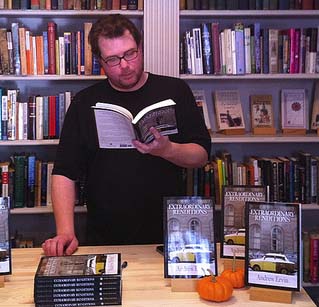
Andrew Ervin appeared on The Bat Segundo Show #361. He is most recently the author of Extraordinary Renditions.

Condition of Mr. Segundo: Contemplating alternative forms of freedom.

Author: Andrew Ervin

Subjects Discussed: [List forthcoming]

EXCERPT FROM SHOW:

Ervin: What else do we have but politics to write about? Ultimately. Whether it’s on a personal level or a cultural level or a national level, politics is going to play a part in every element of our lives, I would imagine. You were asking me about anger recently and I think that gets back to Brutus, who is a very angry character. And he’s the way that I found a voice from my intense anger about our political realm in America. I mean, what’s going on is disastrous to me. We’re still an incredibly racist nation. We’re still an incredibly sexist nation. And this character gave me an opportunity to voice that in some way. And it may be a bit over-the-top. It may push the radicalism a little too far in some regards. And perhaps I tried to mediate that with some of the other characters. But I’m not sure.

Correspondent: But with Brutus, you are very clear to point out that he has a good deal of materialistic hypocrisy.

Ervin: Absolutely.

Correspondent: Here’s a guy who goes ahead and he complains about blowing money. He complains about getting ripped off by the hotel and then he’s blowing money on fast food and Tom Clancy novels. And also that shopping trick he makes, where he’s totally fleeced. So for a guy who is in this really terrible and probably not very well-paying occupation of setting rat traps, and for a guy who is really anti-corporate and inflamed and into a possible post-Black Power situation, he is decidedly hypocritical. That his ultimate engagement with politics is actually a way of him getting lost further instead of finding that identity he wants.

Ervin: Is it still hypocritical if we’re aware that we’re participating? I mean, can we ever get completely outside of the system that we’re trying to critique. We can write the great environmentalist novel of our age, but it’s still going to be printed on bleached paper and packed into trucks and carried across the highway system. There’s always some participation in what we’re critiquing. No matter what. My hope is that I’m aware of the extent to which I’m working within a system to critique it to some extent. Not that I have a specific political agenda with this book. I don’t. I really don’t. Every critic that I speak to wants to ascribe one to it. And they tend to be different ones, depending upon whom I’m speaking to. Which is kind of nice. But there’s definitely an awareness both on my part and, I believe, on Brutus’s part — there’s no getting away from what we’re critiquing. We are also participating.

Correspondent: Yeah. So basically, the question I have now is why fiction is the best way to critique this problematic involvement with politics. Because…well, maybe I’m answering your question a bit. (laughs)

Ervin: (laughs) Yeah, would you please?

Correspondent: The thought I had here was maybe fiction serves as this container for you to examine our participation in the system we’re critiquing. Because it is, in itself, a container. And I did actually want to bring up some of the descriptive details about containment. You refer to “the ceiling of the sky.” There’s the Coca-Cola sign that is on the top of the apartment in the third novella. So this leads me to believe that this is indeed a preoccupation. But maybe we can tie in how you arrived at this walled in description with another query about whether fiction is the best way to create a dialogue about this issue. Do you think it is?

Ervin: I’m not sure that fiction is privileged in any way in speaking to those issues. If I could play piano, I would try that. If I could paint pictures, I would do that. I’d be willing to break out an interpretive dance for you.

Correspondent: Please do.

Ervin: If you think you can record that. I don’t know what fiction can do in relation to the other arts or any means of expression or nonfiction or poetry. They all play a part in whatever we’re trying to say. Fiction is just what works for me personally. And I don’t want to claim that it has some kind of privilege. It’s what I do.

Correspondent: Well, in terms of the description of characters walled in interiors, why do you think you’re so focused on this? I mean, you do use “the ceiling of the sky.” That is a very clear indicator that no matter where one goes, one is going to find one’s self in some kind of interior. Even walking outside.

Ervin: Are you telling me that you don’t feel that way?

Correspondent: Well, it depends.

Ervin: (laughs)

Correspondent: You’re asking me to confess perspective versus description perhaps. And maybe that’s the tension we’re describing here.

Ervin: I guess a large part of what this book is about are the restrictions that are placed on us by social organizations and political organizations. The barriers we put on ourselves. The limitations we’re wiling to put on our own imaginations very often without even knowing it. And this scares me. This frightens me a great deal. That we don’t know how free we are. And we participate in these polite little conversations in front of microphones. And we go out in public and follow the rules. And go where we’re supposed to go and buy what we’re supposed to buy. There’s some part of our humanity that we’ve lost touch with. We’ve lost something that is vitally important to who we are. We’re all so damn polite now.

Correspondent: Yes.

Ervin: And if my characters are constrained some way even by their natural environment, that may be the reason. Because I feel like we are constrained.

Correspondent: And yet you associate this freedom with violence. The end of the second novella has a very specific line about freedom. “This was something that he had not perceived for so long.” And to my mind, that is extremely interesting. Because on one level, what your freedom might be or what Brutus’s freedom might be — and then I think in my mind, Franzen’s idea of freedom, which from my standpoint is very much endorsing the exact system that you’re trying to critique. So since freedom is really a relative term, is it even a term to dwell on? Is it possibly too general a term? Does fiction, by way of ambiguity, allow one — either the author or the reader — to find not necessarily a solution, but at least an understanding of this dilemma that we’re describing?

Ervin: How are we going to know when we are free? I mean, that’s the question. Is it just opening up one more barrier and seeing a slightly bigger horizon? There’s no way for me to be able to answer that. The moment you’re talking about at the end of the second novella, with Brutus on the bridge over the Danube, I think references the [Frantz] Fanon book he’s reading. He’s carrying around The Wretched of the Earth. This great book in many ways about the curative power of violence. And to try and conflate my personal political agenda, if I have one, with that is a mistake, I think. That’s not me. That’s this one character who may have a more enlightened view of the world than I do or a more limited one in some way that I’m not sure. But freedom is not — I mean, what can you say? Who knows?

(Image: Dean Sabatino)

The Bat Segundo Show #361: Andrew Ervin (Download MP3)

This text will be replaced