
The Bat Segundo Show: Jennifer Weiner III

Jennifer Weiner appeared on The Bat Segundo Show #346. She is most recently the author of Fly Away Home. Ms. Weiner previously appeared on The Bat Segundo Show #198 and The Bat Segundo Show #14.

Condition of Mr. Segundo: Hoping to be frightened by The Motherland sometime soon.

Author: Jennifer Weiner

Subjects Discussed: [List forthcoming]

EXCERPT FROM SHOW:

Correspondent: It seems to me that you are really gravitating more towards this extremely dark expanse of human behavior. At least from my vantage point. And it seems that you really want to push further in this direction. And yet, to some degree, you almost stop short of really pushing yourself fully into something so dark. And I know you’ve got it in you. So I’m wondering: why ride the comic tone? Out of obligation to your readers? Or what here?

Weiner: Well, I think, for me, it always feels natural to have both. To have the darkness and the comedy. That’s just how I am as a person. And I think that my own family history has made me that way. There’s been horrible things that have happened, but me and my sister and my brothers always wind up laughing about it. Because what else can you do? But it’s interesting. That darkness. Because it’s a tough tension to maintain. And I don’t want… (pause) See, here’s the thing. I don’t think writers choose the books they’re trying to write. I don’t think writers choose the tone they’re going to take. I think that it’s a blood type. Like it’s what you’re born with. Stephen King gave the example. He and Louis L’Amour could be sitting at a pond. And Louis L’Amour would come up with this Western about water rights in a town that was having a drought, and what would happen? And Stephen King would write about something that comes slithering onto the banks, and first takes the dogs, and then takes the cattle, and then takes the kids. It’s just the way you’re wired. And I think that I’m wired, for good or for ill. I mean, there was a lot of sad stuff in Good in Bed too.

Correspondent: That’s true. But we’re talking about rape.

Weiner: Rape.

Correspondent: We’re talking about neglected children.

Weiner: Yes.

Correspondent: And during those sections in both of these last two books, it gets really, really serious.

Weiner: Right.

Correspondent: And then we go back to the laughs. But I’m wondering why not go ahead and spread this further? It’s not to say that you can’t explore light and dark. You can do a double plot thing. Like Crimes and Misdemeanors or something. I don’t know.

Weiner: (laughs) And then when you turn the book over…

Correspondent: (laughs) Yes.

Weiner: …they go shoe shopping!

Correspondent: Yeah, exactly.

Weiner: Well, who’s doing that well? Zoe Heller obviously.

Correspondent: Yes.

Weiner: Who else? Who do you like? Because Zoe Heller’s funny too.

Correspondent: I’ll bring up Richard Russo. Richard Russo does that very well too. And in fact, I….

Weiner: Mmmmm. My mother loves him.

Correspondent: I’m trying to go ahead — you and Russo are actually on the same team here. You know, that whole description of the development of the grocery store?

Weiner: Yes. Yes.

Correspondent: I could find that in a Richard Russo book, as I could in a Jennifer Weiner book. He writes about this kind of stuff too.

Weiner: Right.

Correspondent: You write about this too. And I’m telling you. What do we do to get some kind of diplomacy here?

Weiner: But I…

Correspondent: It’s not Russo’s fault that your mother was blabbing about him!

Weiner: Oh my god.

Correspondent: It wasn’t his fault.

Weiner: Okay, let me set the scene for you. The year is 2001.

Correspondent: (laughs)

Weiner: And my first book is out. And I’m in a bookstore with my mother. And I’m signing stock, as you do. And my mother, who is very friendly and chatty. This woman comes up to her and says, “Oh, I need a great book for the summer. Have you read anything?” And my mother says, “I just read the best book. It was funny and it was sad. And the characters felt so real.” And I’m like, “Wait for it. Wait for it.” And my mom’s like, “It’s called Empire Falls by Richard Russo.” And I’m like, “Mom!” Because do you think that Richard Russo’s mom is up in Maine pimping my books?

Correspondent: But your mother was probably pimping your book too!

Weiner: Uh uh.

Correspondent: No?

Weiner: Mmm mmm.

Correspondent: Not at all?

Weiner: Well, maybe a little bit.

Correspondent: Oh okay. Well, there you go.

Weiner: But I think the woman asked what she read that she loved. And I think that [my mother] read Good in Bed in galley months ago. But, no, I love Richard Russo. But I don’t know.

Correspondent: So wait. You have read him.

Weiner: Of course!

Correspondent: Okay. Okay. So this is…

Weiner: I’m not a philistine here!

Correspondent: (laughs) So what’s the issue here? It can’t just be your mom. There’s something else going on here.

Weiner: I like Richard Russo. Have I talked smack about him?

Correspondent: Yeah. You’ve been suggesting, “Oh. Richard Russo. I don’t talk about him because of this whole mother thing.”

Weiner: It’s a joke! It’s a joke!

Correspondent: Okay.

Weiner: I like him. I don’t like Jonathan Franzen.

Correspondent: Yeah.

Weiner: But I don’t think Jonathan Franzen likes anybody. So I think it’s all good. Like I don’t think he wants me — I don’t know? Does he want to be liked? Did you read the essay that his girlfriend wrote?

Correspondent: Yes.

Weiner: Where was it? The Paris Review?

Correspondent: Kathy Chetkovich. It was in Granta. [EDITORIAL NOTE: Issue 82, to be precise. Now behind a paywall, but an excerpt appeared in The Observer. See above link.]

Weiner: Granta.

Correspondent: Yes. Exactly.

Weiner: Weird guy. About birding.

Correspondent: Yeah, I know. But actually, since we’re talking about the literary world…

Weiner: Yes!

Correspondent: I should also bring this up. Why give so much credit to The New York Times Book Review? I mean, this whole thing with the full-page advertisement.

Weiner: I know.

Correspondent: And I read your Twitter feed. And I know that you’re there on a Friday afternoon. At 5:00. When they put up the new articles. And you are looking through those articles.

Weiner: Right.

Correspondent: Why? Why give these folks credence?

Weiner: Well, you know what it is? They’re kind of the only game left in town. The Philadelphia Inquirer, where I used to work, once had a free-standing books section. And there used to be — I think the Hartford Courant, where I grew up, had a books section once upon a time. But honest to god, the truth is that my dad read The New Yorker and read The New York Times Book Review, and would get all of his reading suggestions from those two places. So if you weren’t in there, you didn’t really matter. And I think that I internalized that to a very great extent. But honestly, I think that the die was cast when I went with Atria instead of Simon & Schuster. Like way back in the day. When I was choosing who was going to publish my first book. And it’s like, well, Atria is much more commercial. And I knew that I loved my editor. I love my editor still. I love my publisher. They got the book. Like on a really visceral level. They were going to a great job of promoting it. Do a great job with me. But I wasn’t going to get reviewed by the Times. But then again, if you call your book Good in Bed, are you ever going to get reviewed by the Times? I don’t think so.

Correspondent: Unless you name it The Surrender.

The Bat Segundo Show #346: Jennifer Weiner III (Download MP3)

This text will be replaced

(Image: pplflickr)

The Bat Segundo Show: Dan Chaon

Dan Chaon appeared on The Bat Segundo Show #345. Mr. Chaon is most recently the author of Await Your Reply.

[PROGRAM NOTES: This conversation, conducted in May, was almost lost when a Seagate drive bit the dust. Considerable gratitude to data recovery specialist Wayman Ng, who managed to resuscitate this conversation from the grave. My apologies also to the very kind and patient Dan Chaon for the unanticipated two month delay, which came after an aborted attempt to talk with the man during the book’s hardcover release. Additionally, during a moment in which the conversation shifts to Lost, narrative momentum, and concision, the Correspondent misidentifies Charles Beaumont’s “The Howling Man” as “The Wolf Man.” The short story, not to be confused with the Twilight Zone adaptation, can be found in Beaumont’s Night Ride and Other Journeys, along with several collections and is well worth reading (along with Dan’s books, for that matter).]

Condition of Mr. Segundo: Tired of waiting on dying hard drives.

Author: Dan Chaon

Subjects Discussed: [List forthcoming]

EXCERPT FROM SHOW:

Correspondent: I have to remark upon the frequency of auto accidents in your work. In Await Your Reply, Lucy Lattimore’s parents die in an automobile accident. There’s the car accident excuse offered by Jonah in You Remind Me of Me. The car accident identity similarly appropriated by George Orson. And all this reminded me of Charlotte Haze’s death in Lolita. Similarly, in You Remind Me of Me, Jonah kidnaps Loomis in a car. And this reminds me very much of Humbert Humbert taking away Lolita. And, of course, the epigraph for the second part in Await Your Reply is from The Real Life of Sebastian Knight: “Whatever his secret was, I have learnt one secret too, and namely: that the soul is a manner of being – not a constant state…” So I must ask you, first and foremost, about the Nabokov influence in these books and whether this preoccupation with cars is sort of a Lolita thing. I’m curious.

Chaon: The car thing is not a Lolita thing. It’s just that I spend a lot of time in cars. And when I was in my twenties, a psychic told me that I would die in a car accident.

Correspondent: (laughs) Really?

Chaon: I haven’t yet. But I have a fear of car accidents. Partially because I do a lot of driving, but I’m not known as the best driver. I’m a spacey driver. My sister has me listed as one of her top five worst drivers that she’s ever driven with. I’m only at five though.

Correspondent: This psychic premonition — were there any other premonitions? Did they have any effect on your stature as a writer? “Go write, young man?”

Chaon: No. It was one of those things where it was like this weird friend of my wife who fancied herself a medium type person and was always making pronouncements and things like that. But it did stick with me. So I guess car accidents are one of my fears, along with being in a house that’s burning down. Which is also something that I tend to write about a lot. Burning houses. The Nabokov stuff though — I mean, I do feel like it’s a big influence on me. I mean, both Lolita and Sebastian Knight. Despair as well. Which is also about identity theft. I don’t know if you’ve — have you read Despair?

Correspondent: I haven’t.

Chaon: It’s about someone who switches identities with a hobo. So, yeah, I definitely think about the big in quite a bit. In terms of people that I’ve read over and over, he’s one of the main ones.

Correspondent: Was Despair one of the guides for this particular book? Or the plot?

Chaon: I guess I had it in mind to some extent. I mean, I don’t feel like I have the same kind of intellectual or verbal chops that Nabokov does, of course. But I certainly admire his work and I think about him a lot as a writer.

Correspondent: I wanted to also ask, since we were on the topic of mediums and the like — I mean, there are a lot of aphorisms contained in this book. The Eleanor Roosevelt maxim “Nobody can make you feel inferior without your consent.” And these aphorisms are almost out there — little driftwood that the characters can clutch upon. But they don’t actually take heed or comprehend the aphorisms. And I’m curious how that came about.

Chaon: Well, I wanted the book to be full of a kind of webbing of different references and a level of gamesmanship that was thinking about the ways we put together ideas about the self and ideas about our lives through various quotations and mediums, and the way that that’s actually encouraged in our education, right? We’re being presented with various models about how to behave and how to think about ourselves, and so on and so forth. So I had a lot of these things that I was playing with. I mean, there’s self-help stuff. There’s the kind of quotes that you see in high schools to encourage kids to be good citizens or whatever. And there’s the kind of things that people try to pull out when they’re trying to make intellectual pronouncements — some of which are real and some of which are made up. And some of them — I found some interesting quotes that are misattributed. There’s a [Anais] Nin quote in there that is often attributed to her. But she never really said it. And that’s another fun thing. There are all these quotes out there that people get attached to, but they don’t really belong to those people.

Correspondent: This may be an obvious observation, but I wanted to compare You Remind Me of Me with Await Your Reply. You Remind Me of Me reveals, to my mind, how characters cannot fit into the world before them. And then in Await Your Reply, you have a situation in which, well, let’s go further. Now you have to invent an identity to fit within the world. And I’m wondering if the idea here with Await Your Reply was to approach the same idea of You Remind Me of Me in a manner that was (a) more representative of 21st century life and (b) represented a greater pigeonholing of possibility through this invention of identity.

Chaon: Yeah, I think to some extent. You Remind Me of Me is very much a regionalist novel in some ways. I mean, I think I was still thinking about myself in terms of the Midwest and in terms of what the possibilities of the Midwest are. And Await Your Reply, I think, comes out of having, for the first time in my life, traveled a lot. I mean, in some ways, it comes out of book touring.

Correspondent: (laughs) Free research. I know David Mitchell, he keeps meticulous notebooks when he is on tour.

Chaon: Yeah. But I guess I started to think about the way the characters — even in Await Your Reply — would, by this point, be in larger touch with the world. Whether they wanted to or not. In Await Your Reply, people are affected by the globalization of media and by all that stuff in a way that probably the people in You Remind Me of Me weren’t — only because of the time period that they were living in.

Correspondent: I’m curious about this Midwestern jumping point. I’m not sure if that was really a straitjacket for you. But I’m curious if it was difficult, when you’re starting to envelop a larger world with this book, to really keep those limitations which you set up in You Remind Me of Me — the bar and so forth. I’m curious to what degree this was a challenge with Await Your Reply.

Chaon: Well, I wouldn’t say that it’s a challenge. A lot of the energy that I get from the landscape of the Midwest is fed into my inspiration for writing. A lot of times I’ll start out with landscape. And a lot of times, I’ll start out with these isolated places that, for whatever reason, are emotional touchstones for me. That’s the place where I’m usually starting. It was fun to start to branch out and start writing about places that I never tried to write about before. Like the Arctic. Or like Ecuador. Or like Las Vegas. And it was also fun realizing that I didn’t necessarily have to have lived in those places to write about them. I think there was a part of me that always felt that you had to have this deep instinctive sense of a place before you could write about it. And I guess I feel, after writing this, less constrained by that sense.

The Bat Segundo Show #345: Dan Chaon (Download MP3)

This text will be replaced

(Image: ALA)

The Bat Segundo Show: John Waters

John Waters appeared on The Bat Segundo Show #342. Mr. Waters is most recently the author of Role Models.

(Considerable gratitude to Wayman Ng, who resuscitated this conversation from the data grave.)

Condition of Mr. Segundo: Comparing himself to unspecified reference groups in Mertonian social situations.

Author: John Waters

Subjects Discussed: [List forthcoming]

EXCERPT FROM SHOW:

Correspondent: You observe that listening to what Tennessee Williams has to say could save the reader’s life too. But how can Tennessee Williams save the life of, say, a humorless tax auditor?

Waters: They won’t read him. So I’m not saying he can save anybody’s life. But if the humorless tax auditor — and I actually know one tax auditor who does have a sense of humor.

Correspondent: Yeah.

Waters: If they read Tennessee Williams, maybe they could save their life. Maybe they would overlook one receipt that wasn’t exactly deductible for business if they thought the person was doing art.

Correspondent: Yeah. That’s true. In Role Models, you note that you drink every Friday night. Now in Crackpot, you observe that in your final year of smoking, you smoked only on Fridays.

Waters: Yeah.

Correspondent: Why would you confine vice to one day of the week?

Waters: Well, because the cigarette thing. Didn’t smoke. I used to. I haven’t smoked in — I write it down every day. I could tell you how many days. I’d have to look at my file card. But today — and even before then, I only smoked for three days. I fell off the wagon. But when I smoked every Friday night, it got to be — I couldn’t do that. Because at Thursday night at 11:59, I would light up and hotbox. Do you know what that means? Where you take one drag on a cigarette burn.

Correspondent: Oh yeah.

Waters: A carton! Like right in a row. So I learned that I can’t chip. I am an addict with cigarettes. So that’s why. Friday nights? Because I don’t work on Saturday. And every other ngiht’s a schoolnight to me. I write in the morning. I can’t write with a hangover. I can’t. And when I drank on Friday — I did smoking on Friday night because I knew that I didn’t have to work the next day. I was going to drink too. I might as well do it all.

Correspondent: This is your answer to Shabbos?

Waters: No. It’s just how I get through life really. That I’m very organized during the week. And as I said, I believe if you’re going to have a hangover, it should be planned on your calendar three weeks in advance.

Correspondent: But you can’t plan everything.

Waters: I do plan everything.

Correspondent: You do plan everything.

Waters: Everything! I never have a spontaneous moment. I don’t want a spontaneous moment.

Correspondent: Really.

Waters: Order is important to me. It brings me happiness. Which makes my assistants insane.

Correspondent: Really?

Waters: Yeah.

Correspondent: What do you do when a curveball shows up?

Waters: I plan. Well, a curveball? I deal with it. But I’m saying that I won’t not do something that’s going to be great fun because I didn’t plan it.

Correspondent: Yeah.

Waters: But I make sure that I have great fun planned so I don’t wait around for someone to knock on my door and give me great fun.

Correspondent: (laughs)

Waters: I go out to have great fun. And plan it.

Correspondent: Well, how rigidly do you plan your life?

Waters: Rigidly enough.

Correspondent: Are you like a senator?

Waters: Let’s just say…

Correspondent: Do you schedule when you shit? I mean…

Waters: No. But I usually do that around the same time too. And I get on an airplane. And I can adjust my watch to whatever time it is. Get off and be on that time. I’m organized, yes. But if something — you know, when I go out on Friday nights, something can happen. It’s not like I know what’s going to happen. But I have certain people I go with to different places. Because I don’t want to drink and drive. So I have a great pool that I go out with. And they’ll go to any weird bar. You’ve seen the bars I like to go to. There’s a whole chapter on that.

Correspondent: But I’m curious. Do you allot a two hour time to just go out and observe people? Or something along those lines?

Waters: Well, I’m always observing people. It doesn’t matter. On the subway, I’m observing people. I take the bus in San Francisco a lot to observe people. I watch people in airports get off the plane. I make up stories about every person. And if you look, the ugliest people get off first. They aren’t first class. The cuter they are, the worse seats they have on an airplane. It’s awful. It almost is foolproof. I know that sounds ridiculous. The poorest planners. The ones that lasted till the last minute and got the middle seat in the last row?

Correspondent: Yeah.

Waters: They’re cuter than the ones who are rich or smart enough to plan to use their frequent flyer miles to get one of the few seats available in first class. They’re never that good looking.

The Bat Segundo Show #342: John Waters (Download MP3)

This text will be replaced

The Bat Segundo Show: Kathryn Schulz

Kathryn Schulz appeared on The Bat Segundo Show #339. Ms. Schulz is most recently the author of Being Wrong: Adventures in the Margin of Error.

Condition of Mr. Segundo: Feeling wrong about whether or not he’s right.

Author: Kathryn Schulz

Subjects Discussed: [List forthcoming]

EXCERPT FROM SHOW:

Correspondent: I wanted to first of all start off with Thomas Kuhn, who you bring up a few times. You note his observation that the breakdown of one belief system and the dawning of another is always characterized by an explosion of competing hypotheses. But he also argued that it was impossible to conduct science in the absence of a preexisting theory. This brings to mind the F. Scott Fitzgerald maxim that the sign of a first-rate intellectual is to be able to hold two opposing notions in the brain at the same time. How can the two opposing viewpoints viewpoint be reconciled with the Kuhnian viewpoint? Do you have any thoughts on this? Or is it really a matter of cognitive dissonance taking care of this problem?
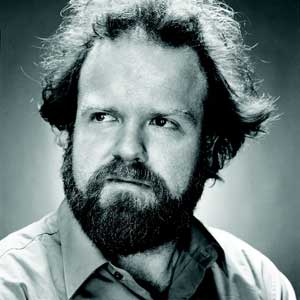
Schulz: I don’t know that those two things are at odds with each other. I suspect that Thomas Kuhn would have been very much in favor of Fitzgerald’s notion that really sophisticated thinking involves the capacity to hold a belief while also being willing to entertain its antithesis, or entertaining evidence that potentially undermines it. And, of course, that’s what practicing scientists — at least in theory — do all the time. Now in practice, is everyone always out there in their labs questioning their own theories? Probably not. But it is part of the ethos in science in general. And there’s a political scientist I quite like named Philip Tetlock, who I cite in the book, who describes this kind of thinking as self-subversive thinking. Which is a phrase I really love. It’s this notion that you can believe something and simultaneously have this undercurrent in your brain that’s saying “Well, what if it’s not true in this situation?” or “What if this part of it’s right or that part of it’s wrong?” or “What if the whole thing falls apart?” And to me, that is the sign. Fitzgerald got it right. That is the sign of sophisticated thinking. And unless I’m missing something, I think Kuhn would have supported that.

Correspondent: Yeah. Well, he believed in this kind of halfway house. Of having competing hypotheses. Or even just having some middle ground. Some transitional middle ground. That’s why I ask the question of whether that middle ground is really reflective of the same Fitzgeraldian viewpoint.

Schulz: Right. I think one distinction is whether you’re talking about an individual person or a system. And I think what Kuhn was getting at was that when you have a scientific paradigm collapse. Like let’s say that we think that the sun revolves around the earth. And suddenly there’s a lot of challenges to that. And we start seeing some counter-evidence. Then there’s this exciting, but also panicky air where everybody is generating new theories to account for this evidence that doesn’t seem to make sense under the old theory. And so you have a whole system that’s in crisis and is generating new theories. And then you’re exactly right. You shift the pedals down. And you arrive at one that new established theory. And I do think that that’s how systems work. Whether it’s science or, for that matter, book publishing. Book publishing is in the middle of a Kuhnian paradigm crisis right now. Where we have an old model. we don’t know what the new model is. And in the meantime, there’s a million competing hypotheses. But within any given individual, I still think that you can hold a belief. And if you are a sophisticated thinker, undermine it, question it, and challenge it in all these ways.

Correspondent: I want to shift tacks and bring up the case of Penny Beerntsen, who you bring up in the book. She was absolutely insistent that Steven Avery had raped and assaulted her. DNA testing demonstrated that Avery was innocent. Then Avery got out of jail and proceeded to murder Teresa Halbach in 2005, the first and only time in the history of the Innocence Project that an exoneree has gone on to commit a violent crime. Penny though, which is a very interesting case — despite the assault, the misidentification, the murder trifecta – she was able to accept the objective evidence of Avery being innocent in relation to her, but guilty in relation to this other woman. What do you think factors into account for that fixed belief? Of being able to look upon the scenario with some objective quality? Is it a matter of having gone through the act of denial? Do you have any particular speculation? Or does it go back to this Kuhnian idea? That once she had gone through the bridge, she was able to reconcile the truth, so to speak. She was not wrong.

Schulz: Well, a couple of things. I mean, first, I will say that having spent quite a lot of time with Penny Beerntsen to get this story out of her and hear all the details, she impressed me as someone who is exceptionally, exceptionally thoughtful about wrongness. And in that respect, could be, probably should be a role model for all of us. And then I think the underlying question is, the one that I assume you’re getting at, is that, well, why? What is it that makes her so able to be responsive in the face of shifting evidence? Because it’s very, very hard to do. Especially in a situation where the stakes are so high, so emotional, so personal. And I asked her that question straight up. You know, how is that when so many people around you were unable to face this evidence — and for that matter, when so many people are unable to face very trivial instances in coping with wrongness — what do you think it is about you that made you able to do this? And it was obviously something she’d thought about a lot, and didn’t have a completely clear answer. In part because personalities are so complicated. And at the bottom of what’s going on, it has something to do with her personality. But one thing she said that was very interesting was that she had spent many years between her assault and Steven Avery’s exoneration working in the prison system. She essentially decided to take the horrible experience that had happened to her and tried to heal herself and other people by working with violent criminals and try and help them understand the impact of their crimes on their victims and on their communities, and really work within a rehabilitation law of criminal justice. So she spent years and years and years talking to people about facing up to being wrong. And I think that she ultimately felt like her turn came. And she could not fail to practice what she had preached.

The Bat Segundo Show #339: Kathryn Schulz (Download MP3)

This text will be replaced

The Bat Segundo Show: Ander Monson II

Ander Monson appeared on The Bat Segundo Show #338. Mr. Monson is most recently the author of Vanishing Point, as well as a poetry collection called The Available World, which nobody had thought to send to Mr. Segundo’s motel room. Contrary to photographic evidence, Mr. Monson does not have a beard.

Mr. Monson previously appeared on The Bat Segundo Show #21, just before Mr. Segundo had finally switched over from Betamax to VHS.

Condition of Mr. Segundo: Pointing at the designated vanishing spot.

Author: Ander Monson

Subjects Discussed: [List forthcoming]

EXCERPT FROM SHOW:

Correspondent: The subtitle for this book is “Not a Memoir.”

Monson: Yes.

Correspondent: Is it safe to say that you’re not a writer and I’m not a journalist. Maybe we can establish some terms here.

Monson: I think so. Yeah, I think so. I mean, it’s a little tongue-in-cheek. But I don’t consider it to be a memoir. But at the same time, as soon as you call something “Not a Memoir,” it sets the tone of the conversation.

Correspondent: Yes.

Monson: So a number of the reviews have been suggesting the ways in which it is a memoir. But it’s also explicitly not a memoir, in the sense that the book is really not — is interested in taking apart the idea of memoir.

Correspondent: Yeah. But it’s also not a manifesto.

Monson: It’s also not that.

Correspondent: Yeah.

Monson: That’s true.

Correspondent: Maybe you need a subtitle to grab the reader’s attention for more conceptual stuff.

Monson: No, it’s true. The subtitle was actually suggested by one of the designers at Graywolf. I think they were looking for something besides “Essays.” And I actually liked it. I thought the subtitle worked quite well. Because it’s a little bit in your face.

Correspondent: In your face? Just by saying “Not a Memoir?”

Monson: I think so.

Correspondent: Really?

Monson: Yeah, I think so.

Correspondent: But then again, you can always…

Monson: I mean, “in your face” as far as nice Midwestern boys writing experimental literature.

Correspondent: I didn’t find it that way. I found it more of a playful thing.

Monson: Well, it is.

Correspondent: Yeah.

Monson: I think so too. But some of the reviews have taken it as a shot across the bow or whatever.

Correspondent: Really? I didn’t see thee reviews.

Monson: There was a review — I want to say one of the first reviews it got — Booklist maybe? Or Library Journal. One of the two did a review of it, with eighteen new memoirs.

Correspondent: Yeah.

Monson: But seemed to review it as a memoir. Which kind of pissed me off. Because it’s…

Correspondent: It’s very clearly on the title. “Not a Memoir.”

Monson: Yeah. It says very specifically. I don’t know. It’s hard to be pissy. Because it’s gotten really good reviews otherwise.

Correspondent: Yeah, but what if this thing gets categorized in the memoir section? Then what are you going to do?

Monson: Well, it kind of has to be. In a certain sense. Or else like what? Cultural criticism? They say it’s “Literature/Essays.” I mean, [John] D’Agata’s book is “Cultural Criticism.” Which I guess is apt, but…

Correspondent: I wanted to talk about this idea of the memoir. Because near the end of the book, you suggest that by reading memoir, we pretend to comprehend a life. I’m wondering if it’s more accurate that a reader, by way of seeing a life placed in narrative, might comprehend a pretense of some kind. That pretense is probably more truthful than any cold and clinical declarations of the truth.

Monson: I mean, I think so. I think that the thing that attracts readers to memoir is that you read memoir to understand your own life. In as much as you understand some semblance of a life. That whatever — simulation, which is kind of what the memoir genre offers. So I think in that sense, that’s right.

Correspondent: Well, on the subject of karaoke, I’m wondering how a song can be truly liberated from its original form. I mean, aren’t we talking about possibly some secondary or supplemental component that comes with the karaoke? Aren’t we talking more about performance than the actual song?

Monson: Well, you know, karaoke is a complicated thing. It’s partially because what it does. It allows readers or listeners to participate in the song in a way that I think people want to do now. With film, now people can remix. There’s a billion — like, homegrown — versions of Star Wars. And those kids who are doing the shot-by-shot remake of the Raiders of the Lost Ark film.

Correspondent: The Super 8 version.

Monson: Yeah. So there’s this real participatory instinct. But there hasn’t been ways to do that in books in a certain sense. Which is partially why the book is structured kind of the way that it is. You can type in some into the website and so on. But karaoke is trickier. There are songs that, by singing them, you liberate it from the original context of the crappy version, and how you felt about it, and who you were when you first heard that song. And how much you disliked it. And in some ways, it is sort of overlaying the one on the other. But it really does become a new thing by singing. If you’re doing it at all well. And there is certainly an element of performance, which is a big part of why people are successful at singing karaoke. You’ve got to deliver the rock if you’re going to sing a rock song. So there is that element. But it’s also interesting to see the way that people decide to do it. Because some people — do you choose to try and sing it like the original singer? Or it’s sort of like the ironic guy, who’s going to do the kind of William Shatnerization of things.

Correspondent: Sure.

Monson: Or are you even trying to do the voice? Which a lot of people try to do the voice. Which is also what keeps me doing AC/DC.

Correspondent: But if you’re talking also about camp, I mean, some people find a voice through an artificial delivery of a preexisting song.

Monson: They do. They do. And I think that’s in some ways that’s kind of an analogue for the ways in which a lot of writers — I mean, you learn by imitation. You love this thing. You sort of try to get it inside you and you do it. And even if you’re not doing that intentionally, trying to copy The Sun Also Rises — like type out every line. Which is not a bad exercise for a writer. You know, I read Underworld by DeLillo one summer. And I wrote a story, which is in Other Electricities, which is a very DeLilloesque story. And I still kind of recognize that in a weird way. I think the story works on its own. So there is a sense in which — I mean, you do get to a sense of your own personal voice by either opposing or working from other models. And some of those models are, just like the thousands of songs you’ve heard, the ways you’ve heard people sing, it’s pretty hard to do something really original.

The Bat Segundo Show #338: Ander Monson (Download MP3)

This text will be replaced