The Bat Segundo Show: Joseph Wallace

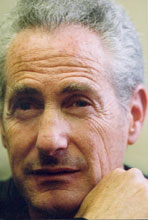
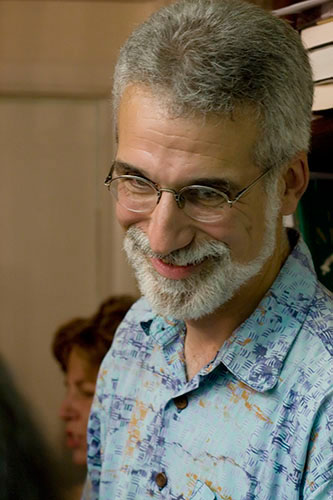
Joseph Wallace appeared on The Bat Segundo Show #336. Mr. Wallace is most recently the author of Diamond Ruby.

Condition of Mr. Segundo: Replacing his failed Atkins diet with three square squirrel meals each day.

Author: Joseph Wallace

Subjects Discussed: [List forthcoming]

EXCERPT FROM SHOW:

Correspondent: Radar guns were introduced in 1935 to measure a baseball’s speed. Before that, you had speed machines, which were increasingly rare. And as I understand it, there’s extremely little recorded information on pre-radar speed machines. In this book, Ruby looks at the machine in question, and you write, “To be honest, she couldn’t make head or tail of it.” This leads me to believe that there was some guesswork or confabulation upon your part.

Wallace: No. The only thing I didn’t know was exactly what — that’s a great question. In 1913, Baseball Magazine decided that they wanted to figure out how fast Walter Johnson and — I can’t remember, Matt. I can’t remember. Another pitcher. Walter Johnson pitched. But of course, that wasn’t so easy to do in 1913. So they went — in fact, as the book says, they went to the Remington Arms Company. And they said, “Help us out. We want to be able to do this.” The Remington Arms Company, in fact, has a device for measuring the speeds that bullets flew that was exactly the way I describe the speed machine here. Baseball Magazine — in fact, this is all completely accurate; it was one of those things that I found for a nonfiction book and loved and said, “Oh, I have to be able to use this somehow” — they ended up doing a fifteen page article that described and photographed the wire mesh that you had to throw the ball through. It was the simplest thing. You’d throw a baseball. It would brush through the mesh, which would register on the device. It would then hit a steel plate that was also wired to the device. They had the ability then to calculate the amount of time in between. And they knew the distance. And they could figure out how fast the ball was going. So they did this article. It was really, really hard for Walter Johnson, who was incredibly fast and incredibly accurate, to throw the ball through the wire mesh. So the only thing I changed from the original was that I made the mesh — the screen that Ruby and the people who are throwing the ball against her — bigger. Because if Walter Johnson had trouble getting it through, it would be really unfair to anybody other than Ruby.

It was a wonderful article. And my favorite thing about it was that, when I was researching the book, I went to the Remington Company and I said, “Tell me more.” And the Remington Company said, “We had never heard of this. We believe it exists. Here’s a historical forum where people talk about Remington’s history. Go to it.” And I went to it. And I posted. And I asked a bunch of questions about it. And people were so fascinated. And they’d seen the article. But none of them still exist. In other words, it’s a lost part of the Remington Arms Company’s history that they used to measure the speed of bullets.

Correspondent: They don’t keep very good records.

Wallace: They must not. I was very disappointed! So the answer is that it’s completely accurate. The only thing that wasn’t accurate, other than the size of the mesh, was the fact that the photographs of the machine itself don’t take you into the inner workings. So everything is accurate. Except I couldn’t describe how it worked inside. Because that wasn’t there. But I probably would not have been able to write the entire Coney Island part. This book — if there’s one article that’s the most important thing to this entire book, it’s the fact that in 1913, Baseball Magazine was smart enough. And, in fact, the same year, they decided to look into whether lengths of arms actually increased how fast you were. And there was a long article with all these shots — again, Walter Johnson, who had very long arms — standing there shirtless as they measured his wingspan versus other pitchers’ wingspans. So Baseball Magazine was this remarkably forward-thinking and clever magazine back in the 1910s.

Correspondent: Very conceptual, it sounds like.

Wallace: And extremely helpful to a writer like me! Who needed both long arms and the speed machine to make the book work.

(Image: Mary Reagan)

The Bat Segundo Show #336: Joseph Wallace (Download MP3)

This text will be replaced

The Bat Segundo Show: Barry Gifford

Barry Gifford appeared on The Bat Segundo Show #335. Mr. Gifford is most recently the author of Sailor & Lula: The Complete Novels.

Condition of Mr. Segundo: Wilder than his heartburn.

Author: Barry Gifford

Subjects Discussed: [List forthcoming]

EXCERPT FROM SHOW:

Gifford: Well, the point is “Don’t be a victim.” I mean, I think I have another chapter somewhere that’s called “Victims.” But that’s always been another kind of thing that I could never abide. People who see themselves as victims. You know, with a capital V. And I just don’t like to be around people like this. People who complain all the time or are a victim or who feel that they’re a victim of their environment, their parents, their husband, their wife, their boyfriend, their girlfriend, God. Whatever it is that they want to call it. It’s convenient, isn’t it? It’s an easy way out. And in the case of the kids in Perdita Durango, they’re just kids. They were like dumb college kids. And here they were kidnapped for the purpose of human sacrifice. I mean, what a terrible thing? And Romeo and Perdita are certainly colorful characters, but malevolent ones. So they’re the natural contrast to Sailor and Lula.

Correspondent: But these two college kids. Did you really feel a good deal of fury or hatred towards them?

Gifford: No! No, I don’t feel any fury or hatred towards any of these characters. I mean, in one sense, yes, we’re all subject to all of the things that have come before, to our upbringing, and to all these things that I mentioned. The key is: How do you deal with them? How do you assert yourself? How do you retain some semblance of control over your own life? Control has always been a big issue with me. I’m not an easily controlled person. In a way, I’m very faithful and loyal and all those things. But it has to be on my own terms. In the sense that if somebody is there purposefully and clearly and obviously attempting to manipulate me, that’s over. There’s no chance of my having any sort of friendship or relationship with that person. And that’s what Perdita Durango is mainly about. Now nobody had a worse childhood than Perdita Durango. She’s definitely — if anybody could be called a victimized person. It laid out her life for her. And what does she try to do? She’s trying to control her own existence. She’s fighting for her life. And that’s the theme that I always felt with Perdita. I love Perdita. I mean, she’s crazy and she’s dangerous. But I love her.

Correspondent: These issues of control are interesting. Because here you have worked in Hollywood, in which the writer is always considered last. For the most part. I know that you appeared on a panel recently in which you had no problem with your books being adapted and being transformed into something different. But there is, in dealing with Hollywood, a sense of capitulating control. And I’m curious as to how you find control in a situation in which you know the writer’s always going to get screwed.

Gifford: Well, as my friend Richard Price has mentioned before, and said the other night, he says, “I’m in it only for the money. I have my books.” And one thing that I said was, after the film Wild at Heart came out, people said to me, “Well, what do you think about what David Lynch did to your book?” I said, “I wasn’t aware that he did anything to my book.” I knew what they were asking. But the book is still there. Read the book. He didn’t change a sentence. He didn’t change a period or a comma. The book is there. The movie may endure the book. It may or may not endure whatever it happens to be. But it’s still there. It’s inviolable. The movie’s another animal. It’s a different form. It’s a different art form. You have other opportunities with movies. And I love the movies. And I learned a lot about how to write from the movies when I was a child. Just watching all-night movies all the time. That sort of thing. And I learned how to tell a story, and how to build character development, and all that kind of thing. That doesn’t mean that I sat down to write movies. I did not. And when I have the opportunity, or choose the opportunity, to write a screenplay, really the writer only has one shot at it. It’s that first draft. So when you write that first draft, you have to see that movie the way you want it to be seen. And so there are no excuses. Of course, there’s more or less manipulation. I mean, sometimes I work better in Europe. Because they change fewer things. But it isn’t the case with Lost Highway, which David Lynch and I wrote together. Everything that’s in that movie is written. It’s all there Nothing was changed. So what could be better than that?

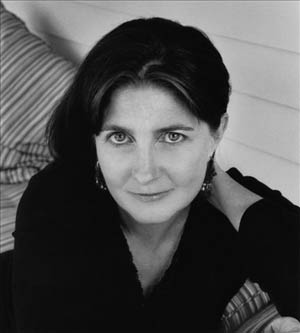
(Image: Robert Birnbaum)

The Bat Segundo Show #335: Barry Gifford (Download MP3)

This text will be replaced

The Bat Segundo Show: Robin Black

Robin Black appeared on The Bat Segundo Show #333. Ms. Black is most recently the author of If I Loved You, I Would Tell You This.

Condition of Mr. Segundo: If he could tell you, he’d have to love you.

Author: Robin Black

Subjects Discussed: Writing ten stories over eight years, rumination time and writing, Black discarding 75% of what she writes, the importance of being surprised while writing, writing while doing the dishes, avoiding explicit metaphor, the scarf in “Tableau Vivant,” how a real-life neighbor’s fence became a fictional neighbor’s fence, feeling exposed through stories vs. the control of memoir, Veterans Day transformed into Resolution Day, perceived strangeness in reality, negotiating the gray area between two extremes, the tension between how people perceive their lives are vs. what their lives really are, the clinical approach to birth and death, being careful about deploying sentiment, observing limitless forms of human behavior and trying to corral it into the neatness of narrative, seeing more gestures and facts about people being more relevant, a character’s relationship with another person’s face, early problems with human gesture, being conscious of the symbolic scheme within a story, sex that isn’t explicitly stated within the stories, the words “sexual encounter,” cybersex, carnal reticence, the defamiliarization of the familiar, a disproportionate focus on the physical act, car crashes and accidents used to galvanize the characters, stories anchored by older women, older women as an increasingly invisible presence in society, the fictional potential in leading an undercover life, explicit communicative disconnect in “Immortalizing John Parker,” characters who resist what the author is trying to get them to do, crutch words from characters, the phrase “So what,” revealing the surname of a character slightly later than expected after the initial introduction, learning from Virginia Woolf’s Mrs. Dalloway, first person vs. third person, twos and threes within the stories, avoiding the usual lists of threes, and playing with fairy tale images.

EXCERPT FROM SHOW:

Black: I also wrote a lot of bad stories. I went into writing ten that I thought were decent enough.

Correspondent: How many bad stories?

Black: I think that if you count just the ones I completed, there are probably twenty-five others. And if you count the others that I started, and got anywhere from two to twenty pages into, there are probably another two dozen of those. So a lot. I produce a lot of pages. I like a very low percentage of them.

Correspondent: This is interesting that you do all of your thinking at the keyboard. Because the character relationships in many of these stories are quite intricate and quite connected. Do you figure out these relationships over the course of writing? How does this work exactly? Expand upon the rumination.

Black: Where does it all come from? None of it’s autobiographical. I always have to start there. So I’m not one of these people who thinks, “Wow! This thing that just happened to me would make a great story.” And to the extent that I ever think that, I put that into memoir. So if I write about myself, then I’m really writing about myself. These things are all made up. I said that a lot of it happens at the keyboard. But I should more accurately say that I also do a lot of my writing while I’m doing the dishes. Though my husband may laugh at the idea that I ever do the dishes. While I’m walking. I’m not somebody who thinks that everyone needs a regiment of sitting down and writing. A certain amount of time. Because a lot of my writing happens away. I’ll just be thinking about the people in the stories. Really as though they were friends of mine, and I was trying to figure out just what the heck they would do with their lives. And so it’s a lot of just thinking through human psychology that goes into it.

Correspondent: You mention not wanting to lift from reality. And this is interesting to me. Because I noted that in these stories, you really go out of your way to avoid extremely explicit metaphors, save in two stories. In “Tableau Vivant,” you of course have the scarf. And “If I Loved You” has the fence. I’m wondering if the scarf and the fence came about as a way of knowing the characters. Or a way of moving the characters on the chessboard while you were doing the dishes. What happened here?

Black: The scarf in “Tableau Vivant” is complete invention. The fence is not. We actually have a neighbor who built a fence in our driveway. And in pondering how to write about it — because it was one of those events that struck me as so peculiar. That somebody would just move into a neighborhood and start tromping on their neighbors. It seemed like such an odd character defect, I guess, in a human being. I thought, “Well, I’ll write an essay about it.” What’s it like to have a horrible human being move in next to you. And then I thought, “Well, I don’t really want to write an essay about it. I’ll write a story about it.” But, again, I don’t write about myself. So the only thing in there that’s true is that there was a fence. And the other piece of truth was my impulse in the story to say to this man, “How can you just be this mean to people when you have no idea what the meaning of this is to them?” And there’s actually a funny story about that. When that story was published in the Southern Review — and in the story, the woman whose fence it is, is dying a very sad, terrible death; and when Bret Lott, who was then editing the Review called me up to say they had taken it — I was all excited. And I said — the first words out of my mouth were “Oh, I can’t wait to throw a copy of it over that damn fence.” And there was this terrible pause. And I realized that he was trying to figure out how much of it was true. And I said, “Oh! I’m not dying. There just is a fence.” So often my stories will have tiny real elements among them, and I’ll kind of build a universe around that.

The Bat Segundo Show #333: Robin Black (Download MP3)

This text will be replaced

The Bat Segundo Show: Adam Thirlwell

Adam Thirlwell appeared on The Bat Segundo Show #332. Mr. Thirlwell is most recently the author of The Escape.

Condition of Mr. Segundo: Wondering if a piña colada might serve as literary escape.

Author: Adam Thirlwell

Subjects Discussed: The narrator device in Politics and The Escape, not understanding an early attempt to write a Henry James novel, the S&M of a writer being both eager to please and eager to annoy, Lautréamont and the bifurcation of voice, self-indulgence, the ethical concerns of Politics and The Escape, total selfishness and hurting others in the pursuit of pleasure, Western society and the hedonistic ideal, Goldwagen and Yiddish opera, character names lifted from cultural references, Walter Benjamin’s “The Work of Art in the Age of Mechanical Reproduction,” Lubitsch’s To Be or Not To Be, defending immaturity from the prism of not being able to tell the difference between the past and the future, Velimir Khlebnikov’s imagery transformed into narrative structure, “plucking” and collage, defining magic in The Delighted States, anticipating what people on television are going to say, the uncommon joys of predictability in pop culture, trying to write a novel that felt like a coda, Gertrude Stein’s idea of methods of the 20th century being used to advance the 19th, attempting to pinpoint the artistic methods of the 21st century, Geoff Dyer, Reality Hunger and appropriation, singularity, Barbara Wright and translation, the difficulties of finding “Beckettian style” in untranslated Beckett, the problems with the chronology of a style, being obsessed with the present moment, the Tea Party, great artists and plagiarism, creative theft, reading a phrase containing “blowjob” before an audience of 500 people, the unanticipated boundaries between private amusement and the public dissemination of literature, degrees of literary intimacy, the 1925 crash as “the Universal Crash,” elegant style and originality, style and unseen neurotic drama, short sentences and rhythm, the evils of passive construction, originality as fluke, unplanned sex scenes, Edmund White, Bohemian as a way of being the “absolute insider,” pithy maxims, blasphemy and belief, the classical equaling the decadent, Lives of the Caesars, Caligula, salacious gossip, and reader motivation.

EXCERPT FROM SHOW:

Thirlwell: I think there are similarities between Politics and The Escape in their ethical concerns. In both cases, weirdly, but through different routes. They’re about saying, “Well, what if you were to be totally selfish? Why is it so wrong to not follow your appetites or hurt people? Is it genuinely bad to hurt someone in the pursuit of your own pleasure?” And whereas in Politics, it’s because there are these cute kids who are incapable of hurting someone else, and thus create a nightmare scenario for themselves, which they think iis a kind of utopia, here you get the kind of old guy who is an entirely selfish person. Or seems so. And so I suppose it’s true that I definitely thought that one of the problems for the reader was going to be that what I wanted to do was present this character who would at first seem mildly repellent. This voyeur in a wardrobe staring at two strangers having sex. But by the end of the novel, if it worked, you were going to actually feel both that he did have a coherent moral structure and also is rather likable. And I suppose, yeah, the game of Politics was that they were like words. So all of the exhibitionists who are going to like these people was because there was a sense that this was . Politics was set in a likable world. It was set in a Coetzee, hipsterish world. Whereas this is much more slightly. There are things about Haffner that, I suppose, I myself don’t like. And I wanted to create a character where I wasn’t as sold on the character myself. Though I wanted to create a little machine where you would have to actually change your moral values, or examine your own moral values as a reader.

Correspondent: So this is your worldview. With decades of experience comes decades of a capacity to hurt other people? (laughs)

Thirlwell: (laughs) I’m only thirty-one!

Correspondent: Okay. (laughs) All right.

Thirlwell: No, I have no conclusion. I am interested in hedonism, I think, and why there seems to be two levels of it. On the one hand, it seems that our society — that English/American society, in particular; Western society — is deeply devoted to some ideals of pleasure. But I think there’s a real Puritanical core actually to a lot of the ways in which we still value the couple, the family. There is something that is very much about: that you should be altruistic and you shouldn’t hurt. And in one way, I suppose, I think that’s slightly immature as a moral system. There are going to be conflicts. And where Politics, I think I was interested in showing some kind of self-destruction in that, here you have someone who seems to be outside those moral values. So, no, it’s not like I’m saying, “Everybody should now go out and be horribly unfaithful to everybody.”

Correspondent: It was a bit of a joke, you know.

Thirlwell: But on the other hand. (laughs) It’s maybe not such a terrible thing.

Correspondent: I wanted to ask about the names. Goldfaden, of course, is the guy who came up with the first Yiddish opera.

Thirlwell: Yeah.

Correspondent: You have, of course, Haffner. Which is close to Hugh Hefner. And which is in fact mentioned in this book — that particular association. And I don’t think it’s an accident that Benji might, in fact, be construed with Walter Benjamin. “The Work of Art in the Age of Mechanical Reproduction,” of which this book does considerable reproduction. I’m curious why you were interested in using character names that were essentially lifted from popular and cultural references. And also this note at the end of the book, in which you say that you quote all these various people. Digging through it, it seemed to me as if you didn’t so much quote them, as take stories and shift them around. At least, it didn’t feel like this. Either you pulled one on me. I don’t think it was absolutely paraphrased or even remotely paraphrased. So I was curious about why recycling of this nature occurred, both with the names and also with the so-called quotes.

Thirlwell: Wow, that’s huge. On the names, I think names are really odd. Because there’s something, I think, almost Freudian about it. You’re not always aware about why a name feels right to you, I think. And Haffner, I actually chose — I’d always wanted to write an ambivalent character called Haffner. After a boy who bullied me at school, who’s called Haffner.

Correspondent: Named close to Haffner?

Thirlwell: No, he was actually called Haffner. It was his second name. So that was when I was nine. But I also actually rather liked it as a name. And then, it was actually only halfway through writing the book that I thought, “Oh fuck. Everyone is going to think that this is a joke on Hefner.” So that’s why I put the joke in. To defuse it.

Correspondent: Nullify it.

Thirlwell: To nullify that one. Goldfaden was deliberately the Yiddish dramatist. And Benji, it wasn’t so much from Walter Benjamin. Although I’m sure that was at the back of my mind. That wasn’t deliberate. But I’m sure it was there unconsciously. But certainly the idea of the Biblical younger son. And I think that with the names — with the very Jewish names like “Goldfaden” — that was because I was very interested in almost doing a caricature of Jewishness. Or a particular type of East European Jewishness. Of immigrant Jewishness. Because one of the things that this novel is in dialogue with, and what Haffner the character is in dialogue with, is a particular version of Jewishness. So I think the Jewish names, they were there as deliberately East European. There was an air of competition. I mean, the other source of the names that I’d completely forgotten about, but only remembered recently when I saw this film again. To Be or Not to Be. Ernst Lubitsch’s To Be or Not to Be. And for some reason, I’d seen it early on when I was writing this book. I mean, just before I started the book. And I had a kind of cast list. Some handout that I’d got. And so a lot of the names were actually from that. Like Tummel — Frau Tummel — is taken from someone who’s like the production manager on To Be or Not to Be. But then the names come from this locus of Central Europe. And it’s true. And I suppose that leads to the quotations. Because there was a way in which I was definitely interested in doing a miniature recapitulation in this book of my entire literary past. I think, slightly to then move away from it. To finish with it. So that hopefully, what I’d then write would be freer or something completely different.

The Bat Segundo Show #332: Adam Thirlwell (Download MP3)

This text will be replaced
The Bat Segundo Show: Julie Klausner

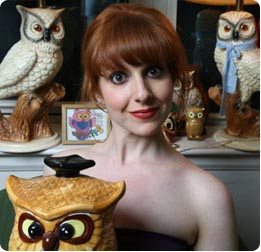
Julie Klausner most recently appeared on The Bat Segundo Show #330. Ms. Klausner is most recently the author of I Don’t Care About Your Band

Condition of Mr. Segundo: Dodging dubious-minded vegans.

Author: Julie Klausner

Subjects Discussed: [List forthcoming]

EXCERPT FROM SHOW:

Correspondent: I actually wanted to ask you of your keen interest in the Muppets.

Klausner: Yes.

Correspondent: You know, I was very interested in this. You have a great affinity for Miss Piggy.

Klausner: Yes.

Correspondent: But you have a problem with the Miss Piggy-Kermit wedding — particularly the line, “What better way could anything end. Hand in hand with a friend.” You insist that this represents Kermit’s preference for guys, or going out with the guys, instead of having a commitment.

Klausner: Sort of. Or that he, in other words, how he feels about her deep in his heart is almost like how he feels about Fozzy.

Correspondent: Yeah, but…

Klausner: That she’s a friend of his more than anything else. And that she’s not special, I guess.

Correspondent: But you’ve developed an entire theory about your life based off of this. And this caused me some confusion.

Klausner: It’s normal, right?

Correspondent: Well, well, I mean, I want to just poke holes in this.

Klausner: Sure. Poke away.

Correspondent: First of all, you have Miss Piggy voiced in a high-pitched tenor by Frank Oz.

Klausner: Frank Oz. The great, the great Frank Oz.

Correspondent: Yes. And Kermit the Frog by Jim Henson.

Klausner: M’hmm. Rest in peace.

Correspondent: Depending upon how obsessive a Muppets fan you talk to, it’s kind of a bromance thing more than a romance thing.

Klausner: Interesting. Interesting.

Correspondent: So therefore your whole childhood theory may very well be….

Klausner: About a man in drag.

Correspondent: …despoiled by what was going on underneath the Muppets.

Klausner: That’s interesting. So let me ask you this. Do you think of Miss Piggy as a man in drag? Or do you think of her as a lady?

Correspondent: I think of her as a wonderfully poly-gender, polysexual queen.

Klausner: That’s a beautiful answer!

Correspondent: But I’m just wondering if this had occurred to you. Because you’ve seen The Muppet Movie so many times.

Klausner: Oh my god. I love the Muppets. And I’m a huge fan of the Muppets. And my interpretation of the relationship between Kermit and Miss Piggy is — I mean, it’s obviously cheeky. I’m not going to go around and be like, “Children shouldn’t watch this filth! It’s going to give them bad ideas!” But I remember identifying with their relationship as being very — it resembled a lot of the dating experiences that I had. Which is that I was always chasing this sort of skinny guy that was more interested in his friends and his projects and his band or his show than me. And it’s interesting this way to think of Miss Piggy as a drag queen. As Frank Oz. Because drag queens are sort of hyperfeminine in that glamorous jewelry and perfume. And fabulous performers. And all of it.

Correspondent: I’ve seen that karate chop deployed in the Castro.

Klausner: I’m sure you have. And you know what? I don’t even know where the target was. But it was probably well deserved.

The Bat Segundo Show #330: Julie Klausner (Download MP3)

This text will be replaced