
The Bat Segundo Show: Chang-Rae Lee

Chang-Rae Lee appeared on The Bat Segundo Show #327. Mr. Lee is most recently the author of The Surrendered

Condition of Mr. Segundo: Searching for the middle-ground between “beat” and “sweet.”

Author: Chang-Rae Lee

Subjects Discussed: The similarities and differences between writing in first-person vs. third-person, the advantages of sitting in the god’s seat, infinite choices within sentences, the difficulties in pursuing the “inner life” on the page, becoming imbued by character consciousness, feeling obliterated when writing about the ravages of war, Brian Evenson, Lee’s ongoing fascination with violence, pursuing time and space within sentences, contending with false starts, agonizing over sentences, Lee’s perfectionism in relation to revision and line editing, the reasons behind the two year publishing delay for The Surrendered, the problems with possessing a hard work ethic and producing slow, writing the first chapter in a swift period of time, distrusting prose results, the difficulty of final chapters, writing as a medium for thinking and character development, character names and historical references, the Battle of Solferino, Hector as a Jean-Henri Dunant type, Hector’s creative origins as a guy from Southwest Texas, the town of Iliad, New York, Hector’s design as an immortal, the double-edged sword of persistence, the influence of Cheever and Updike, and the need to mature (as a writer and as a person) before tackling a serious story.

EXCERPT FROM SHOW:

Lee: I’ve always been very conscious of language. It might seem silly of me to say, given all of the things that have happened in my books. I’m not terribly interested in plot. (laughs) I mean, I enjoy it. But I find, for me, the real action in drama is in the play of the sentences and in the play of the words. That’s what draws me through the story too. I mean, in some ways, unless I hear the sentence, I don’t understand what it really means. And even back in school, when I was writing a lot more essays, I would always try to craft it so that it felt like something and it sounded like something to me, rather than just said something. And particularly vis-Ć -vis the scenes of violence, I wanted — I think in this book and in A Gesture Life — I tried to think to myself, “What was the most, in some ways, unlikely way to describe this?” With perhaps spare and beautiful language that would add a layer of a different kind of horror to the moment. Just the contrast between how not lovely, but how handsome everything seemed and normal, given what was happening.

Correspondent: Well, that’s interesting. It also makes me ask whether you could ever possibly stop work in the middle of a sentence or whether this would actually drive you insane over the course of a day.

Lee: No, no. I can never do that. That’s my problem as a writer. I work the sentences so long. And even the very plain ones that probably don’t seem to anyone to be worth it. (laughs)

Correspondent: A five-word sentence? (laughs)

Lee: (laughs) I work them and work them until each one satisfies certain requirements and follows up the last sentence, and fulfills and promises something about the next one. You know, it’s not a great way to write in some ways. Because at the end of a paragraph, I often feel, “Okay, this is a pretty good paragraph.” But sometimes that paragraph is completely useless. Because it’s irrelevant or it’s not quite looking at the right thing.

Correspondent: Well, let’s expand this to chapter units. These are rather lengthy chapters. And so this also makes me wonder when you knew the chapter was done, if you’re constantly working and crafting these sentences.

Lee: Well, let me tell you. I threw away chapters. I threw away many chapters. They do get done. But often they’re just irrelevant. And this has been my mode in all my novels. (laughs) And it’s a maddening, frustrating mode. Because I do tend to write chapters that are a little bit longer. It just appeals to me somehow. The rhythm that I get in having a little full narrative in each chapter. A fully detailed scene. And again, for me, they’re all like little tiny books.

Correspondent: Well, this also leads me to ask quite naturally, there has to be an advantage in tossing away a chapter. Because you didn’t get it this time. But you may have had a rough idea of what worked. And you know that you can possibly recapture those particular elements and try again and get it right. Or does the process work like that for you?

Lee: No, no. It definitely helps. I mean, the second time around, you’re much more aware. You have to get over the excruciating pain of having thrown away that chapter and feeling as if there were good parts of it, but that I probably can’t use anymore. Because the whole thing for me is — again, the whole chapter has to feel that it has a certain kind of rhetorical orchestration. And even a musical orchestration, for me at least, that I hear. And maybe it’s because I grew up writing poetry first. And, in some ways, I was raised by poets as I was learning the craft. And I’m still learning. But I’ve always been attuned to meter and a certain kind of stressing and a certain kind of musicality.

Correspondent: So you cannibalize essentially with the subconscious. With these second attempts. Is that how you might put it? You throw it away. You don’t look at it again. The false starts.

Lee: I’ll sometimes look at them. But again, it’s painful to look at them. Because in and of themselves, they seem okay. And that’s what I tell my writing students. It’s not a matter of writing well ultimately. I mean, that’s not the only matter, right? It has to fulfill all the things that you’ve been writing to up to that moment and connect up in a mysterious way, in an ineffable way, with what you’ve laid down and what you might lay down. So I don’t know. Sometimes I feel as if maybe that’s the way I have to do it. I have to write every novel four times. Not four different novels. But in the process of it. Just kind of work it and work it and work it. And I’m a slow writer too. I’m pretty methodical. I’m not the sort of writer who can jam out 2,000 words and then go back and fix them and be happy with it. So it’s coalmining. (laughs)

(Image: Daniel Hulshizer)

The Bat Segundo Show #327: Chang-Raee Lee (Download MP3)
This text will be replaced

The Bat Segundo Show: Justin Taylor

Justin Taylor recently appeared on The Bat Segundo Show #323. Mr. Taylor is most recently the author of Everything Here is the Best Thing Ever.

Condition of Mr. Segundo: Fearful of sanguine book titles.

Guest: Justin Taylor

Subjects Discussed: Not naming protagonists until well into the stories, dissatisfaction with formality, how characters reveal themselves, gender confusion within “Weekend Away,” Taylor’s aversion to “bright neon signs” within narrative, the dangers of being too specific, similes, concluding lines and addressing the reader, the final line of “Jewels Flashing in the Night of Time,” Donald Barthelme and Taylor’s veer from the phantasmagorical, Sleeping Fish and 5_Trope, Shelley Jackson, the Gordon Lish school of writers, Gary Lutz’s “experimental” nature, Taylor’s concern for hair, describing Florida primarily through the weather, the helpfulness of knowing a place before writing a story, boundaries and possibilities within limitations, age declarations at the beginnings of stories, the difficulties of getting all the numbers worked out within “The New Life,” the important of precise age, research that comes after writing a story, eliding the coordinates of a Planned Parenthood, 1960s counterculture, the Grateful Dead, distrust of pithy maxims and prescriptive text, and believing in aspects of a story.

EXCERPT FROM SHOW:

Correspondent: I wanted to go back to the hair. I had alluded to that earlier. It could just be me, but you do have a concern for hair. It’s often quite specific, as I suggested. You begin “Amber at the Window in Hurricane Seasonā€ by describing her pushing ā€œa blond lock behind her ear, stray hairs glancing off a steel row of studs.ā€ In ā€œIn My Heart I Am Already Gone,ā€ you describe how Vicky ā€œcuts her own bangs, a ragged diagonal like the torn hem of a nightgown.ā€ In ā€œWeekend Away,ā€ the hitchhiker has ā€œblack, messy hair mostly covering his ears.ā€ In ā€œWhat Was Once All Yours,ā€ Cass has hairy forearms. I’m curious about this hair. And also we haven’t alluded to the cat as well. Is it more of a protective element? You know, these characters are often barren against the elements, so to speak. And I’m curious about this. You are a hair man, I have to say.
Taylor: (laughs)

Correspondent: Or are you the President of the Hair Club for Men? I don’t know.

Taylor: I can’t really answer for that. I mean, every writer has certain concerns or tics that they might not even be aware of. I asked a similar question to David Berman once. I got to interview him for The Brooklyn Rail. And I was asking him this question about water. I said, “You know, American Water.” And there’s this line in Actual Air. “All water is classic water.” I had, I don’t know, two or three other examples. And I finally just asked myself, “So what’s the deal with all the water?” And he said, “You know, nobody’s ever asked me that before.” And he really didn’t have an answer. And then he told this story about mowing his lawn on a hot day. Which I think was supposed to exemplify that water is — water’s nice. And, you know, I don’t know. Hair is nice, I guess. I don’t know why. Because it’s mostly haircuts, hairstyles. I don’t know why I notice. Those are like what I’m visualizing with a character that appears or seems to be worth mentioning rather than eye color or height or anything else. I don’t know.

When I was a kid, I never liked getting haircuts. I still don’t like getting haircuts actually. I always feel like I don’t have a good haircut. Like everybody else has the style that they’re supposed to have. And mine always feels a little off. I feel like I’m impersonating.

Correspondent: Not one satisfactory haircut in your life?

Taylor: I’ve had some decent haircuts. But it was like a very early — it was when I was a really little kid. It would get long and I would be worried that I would look like a girl. And they would take me to get my hair cut. And then after it was cut, I would see myself in the mirror and I wouldn’t even recognize myself. And I would really lose it. And that doesn’t happen so much anymore. I’ve learned to recognize myself.

Correspondent: With more confidence, more confidence in hair and haircuts.

Taylor: There’s only so old you can be crying at a barbershop.

Correspondent: I’ve seen very older men cry at barbershops.

Taylor: (laughs) In any case, the answer is “I don’t know.”

The Bat Segundo Show #323: Justin Taylor (Download MP3)

This text will be replaced

The Bat Segundo Show: Brian Evenson

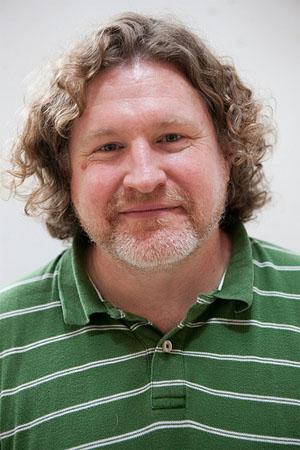
Brian Evenson appeared on The Bat Segundo Show #309.

Brian Evenson is most recently the author of Fugue State and Last Days.

segundo309

Condition of Mr. Segundo: Latching onto toccata.

Author: Brian Evenson

Subjects Discussed: Knowing when a story concept has legs, ideas that never come to anything, the origins of “A Pursuit,” The Open Curtain, maintaining surprise, text sources vs. personal experience, writing fiction moments that hit two simultaneous emotions, grisly moments and descriptive detail, the reader’s imagination, revision and rhythm, not showing work to people, the surprise of audience responses, Bjorn Verenson, certain similarities with characters in “Ninety Over Ninety” and publishing people, Morgan Entreiken, determining the precise moment in which a story ends, open endings and critical theory, story concepts as building blocks for novels, similarities between “An Accounting” and Last Days, conversations between stories, bureaucratic language, investigating religious communities, solitary figures being pursued by men vs. the recurrent theme of community, expanding on conclusions from Ryan Call’s Collagist essay, literalisms and tributes to pulp, challenging the assumptions of “human,” translating, Antoine Volodine, how a line from The Savage Detectives inspired a short story, dwelling upon consciousness, intertextual aspects, absurdity and violence, characters who plunge into dark chambers to experience horror, being the dungeonmaster at 12, knowing the environment, Evenson’s concern for numbers and scales, Flann O’Brien’s The Third Policeman, postmodernism and theft, and the satisfaction of genre literature.

EXCERPT FROM SHOW:

evensonCorrespondent: Do you need to have a source text more than, I suppose, a personal experience? I mean, I could inquire as to whether you had sex with a mime. I don’t know whether you have or not.

Evenson: No, no, I didn’t. I did meet someone, after I read that story aloud, who had had sex with a mime. It made me think that maybe I could have gone even farther in that story than I did. But not a lot of it is from personal experience. I mean, I think the things that are from personal experience are not the things that you would expect. So in “Younger” and in “Girls in Tents,” you know, when I was a kid, I used to make tents out of blankets. Which I think a lot of kids did.

Correspondent: I did myself.

Evenson: Yeah. But my daughters never did. So there is a kind of personal thing there. There’s a moment in one of my stories — I think actually that it’s in The Wavering Knife, in that collection — in which someone is taking bread and squishing it until it makes a ball of bread. And that’s something that’s incredibly vivid to me from my childhood. But the main thrusts of the plot and those sorts of things are not personal experience so much. But they do respond to a lot of other things.

Correspondent: But then you’re also dealing with a lot of mutilation and violence.

Evenson:Correspondent: Like, in particular, Last Days. I mean clearly, I see that you are a zero according to that particular scale.

Evenson: Right, right, right.

Correspondent: Unless there’s something you’re not showing me.

Evenson: No, no, no.

Correspondent: How do you get into that particular mind set to make a narrative along those lines real when you have not personally experienced it?

Evenson: (laughs)

Correspondent: There’s the old famous story. Well, Stephen Crane never experienced or witnessed any kind of war. So how does reality come about for you? When do you know it’s real when you haven’t experienced it? Or are we underestimating verisimilitude and not always capitulating to that wonderful imagination?

Evenson: Well, I really do think a lot about how things would feel. Even if I haven’t experienced them. I really see myself as partly a — I don’t know quite how to describe it, but I want to create a world that the reader experiences as if they’re living through it more than something that they can see as a representation on the page. And to do that, I spend a lot of time thinking how things would feel, how things would occur. What would happen to a limb if you did something to it in Last Days. And I read a fair amount and try and figure things out that way. But mostly it’s just trying. What you say. The primacy of the imagination. Trying to imagine yourself into a space where you really are experiencing something on the page in a very visceral way. One of things that people say about my stories, both for better and for worse, is that there are stories that you don’t forget and there are stories that you feel like you’re suffering through them in some ways. While the character suffers. And as a writer, I think that’s very much what I do. I try to put myself very much in the position of the characters in the story. So in Last Days, there’s all these moments in the hospital bed. And trying to figure out how you see around the curtain if you have one kind of mirror and another kind of mirror. If you can’t move this bar to your body, then what do you do? And I took a lot of time thinking very seriously about that and trying to figure out what would I do.

(Image: Beowulf Sheehan)

BSS #309: Brian Evenson (Download MP3)

This text will be replaced

David Ulin: A Books Editor to Be Deactivated

If you are a humorless books editor packing mundanities (while also resorting to the groundless Sven Birkerts-style grumbling about online interlopers who express more enthusiasm about books in 140 characters than you can in 800 words) into a badly written piece about just how gosh darn hard it is for you to sit down and read, then you have no business keeping your job. David Ulin’s piece is not so much an essay, as it is a confession from an out-of-touch and calcified man who clearly does not love books and who lacks the courage to take any chances. He may as well have written an open letter of resignation — not just from his editorial position, but from the rustling possibilities of books. (If you don’t have the ability to “still [your] mind long enough to inhabit someone else’s world, and to let that someone else inhabit [yours],” then you may as well sell overpriced stereo systems to unthinking schmucks.)

It has been disheartening to watch the Los Angeles Times‘s books coverage burn into mediocrity in the past year. While Sam Zell did indeed unleash any number of unsuspecting Santa Anas to fan this conflagration, the brigade trying to extinguish the fire are more content to let the foundation burn. Carolyn Kellogg’s once exuberant voice on the Los Angeles Times‘s book blog, Jacket Copy, has transformed from its early promise into soulless corporate boilerplate. Here is a recent opening paragraph from a post titled “Hello, cutie! New Sony e-reader scores on style”:

Yesterday Sony announced a new bargain e-reader: Just $199, it’ll be among the cheapest e-book readers around when it hits stores later this month. But it doesn’t look cheap — in fact, it’s really cute!

Beyond the troubling sense that one is intercepting a note handed from one bubble gum-chewing teenager to another, how is this any different from a recycled catalog description insulting the audience’s intelligence? Kellogg’s approach is vituperative in its own way, disingenuous in its abuse. Kellogg’s post isn’t so much a piece of journalism, as it is an unpaid Sony advertisement. (Kellogg, incidentally, was observed sheepishly trailing Ulin at BookExpo America and resembled not so much an independent-minded journalist, but Ulin’s executive assistant for a hopelessly institutionalized outlet. At what price an latimes.com email address?)

I have already explored at length Louisa Thomas’s unconscionably bumbling review from April. But I must ask how such pieces as Amy Wallen’s snarky assault on misfits make it into this seemingly esteemed newspaper? Much as Newsweek‘s Jennie Yabroff recently declared Richard Russo a “misogynist” because of her own inability to understand human behavior, so too does Wallen misinterpret humanity in attempting to “take down” Jennifer Weiner. Wallen cannot understand why a bank teller working at a low hourly wage might indeed find the financial lucre and an adventure of a bank robbery enticing. (When was the last time she worked a minimum wage job?) Wallen cannot comprehend how another character is attempting to corral the present with the past by revisiting place. (The fact that such snark appeared during the same week as Erin O’Brien’s moving essay about her brother makes Wallen’s piece particularly egregious.)

And at the end of last year, there were a number of surprisingly humorless pieces written by the overrated but occasionally enjoyable Brooklyn writer Edward Champion, an apparent legend in his own mind who was inexplicably assigned morose dead authors instead of the giddy subjects that serve this writer’s admittedly limited strengths.

But back to Ulin’s essay. If Ulin actually cared about anybody other than himself, then he might indeed devote his bumbling mind to another’s point of view. If Ulin truly sought contemplation in books, he would have a more tangible memory of Malcolm Lowry’s book rather than the beach he lived at. He also misreads Frank Conroy’s Stop-Time (indeed, in the very manner that Conroy warned about). Here is the complete Conroy passage that Ulin quotes from:

It was the winter of my seventeenth birthday, presumably my last year of high school. I made a half-hearted attempt to pass my courses, knowing that in any event I’d have to go to summer school to make up for previous failures. I wanted the diploma that year. I wanted to get it over with so I could leave the country, go to Denmark and meet my grandparents, see Paris, but mostly just to get away from home. I withdrew into myself and let the long months go by, spending my time reading, playing the piano, and watching television. Jean too had retreated into himself. He’d watch the screen silently for hours on end, wrapped up in a blanket Indian fashion, never moving his head. Night after night I’d lie in bed, with a glass of milk and a package of oatmeal cookies beside me, and read one paperback after another until two or three in the morning. I read everything, without selection, buying all the fiction ont he racks of the local drugstore — D.H. Lawrence, Moravia, Stuart Engstrand, Aldous Huxley, Frank Yerby, Mailer, Twain, Gide, Dickens, Philip Wylie, Tolstoi, Hemingway, Zola, Dreiser, Vardis Fisher, Dostoievsky, G.B. Shaw, Thomas Wolfe, Theodore Pratt, Scott Fitzgerald, Joyce, Frederick Wakeman, Orwell, McCullers, Remarque, James T. Farrell, Steinbeck, de Maupassant, James Jones, John O’Hara, Kipling, Mann, Saki, Sinclair Lewis, Maugham, Dumas, and dozens more. I borrowed from the public library ten blocks away and from the rental library at Womrath’s on Madison Avenue. I read very fast, uncritically, and without retention, seeking only to escape my own life through the imaginative plunge into another. Safe in my room with milk and cookies I disappeared into inner space. The real world dissolved and I was free to drift in fantasy, living a thousand lives, each one more powerful, more accessible, and more real than my own. (Needless to say, emphasis added)

Conroy read so many great writers “very fast, uncritically, and without retention!” And this is the virtue Ulin calls for! This is the method of reading that Ulin cops to — an endless and uncomprehending cacophony that is less predicated upon understanding others and more predicated upon the accomplishment-centric egos of those “who have written” rather than those who “are writing,” or those “who have read,” rather than those who “are reading.” (Shortly after this passage, Conroy confesses that this milk and cookies ritual encouraged him to be a writer.) This is the apparent “state that is increasingly elusive in our over-networked culture.” But it seems to me that if you are reading without thinking, without masticating, without having your heart and your humility and your dedication to others soar, while various internal angels and demons sing earnest hymns and ribald rockers to humanity and these are shared with others, then this is hardly a state to strive for. Ulin has confused Conroy’s ephemeral approach for contemplation. This has nothing to do with the digital age, but everything to do with personal choice, the rejection of smartphone trinkets, and one’s self-discipline.

These are disheartening statements to hear from the self-absorbed Bernaysian automaton who edits books coverage for The Los Angeles Times.

For my own part, I spend long hours disconnecting entirely from all forms of technology, applying the discipline required to understand another person’s perspective, which often humbles my own. Who cares if the perspectives are old or new? (Certainly, William T. Vollmann does not in his mammoth book, Imperial, which I continue to peck away at.) Indeed, knowing past perspectives and folkways recently erected permit one to discover how humanity regularly dupes itself. And reading Ulin’s essay allows us to understand his perspective, which comes across as that of a prejudicial and undisciplined narcissist. Or perhaps he’s just a permanently anxious man who might better love the world if he realized that his thoughts and feelings weren’t nearly as significant as he believes them to be. Or if he wasn’t busy firing people and striking “eccentric” freelancers of his list (save Tod Golberg) because he desperately wants to keep his salaried position.

The Bat Segundo Show: China Mieville II

China Mieville recently appeared on The Bat Segundo Show #298.

China Mieville is most recently the author of The City & The City. He previously appeared on The Bat Segundo Show #105.

segundo298

Condition of Mr. Segundo: Searching for the Mieville and the Mieville.

Author: China Mieville

Subjects Discussed: When The City & The City was written, speculating on the novel’s setting, ratty technology and shambolic modern cities, passenger policy, comparisons between The City & The City and “Reports of Certain Events in London,” subconscious intent and conceptual framework, police procedural dialogue vs. melodramatic dialogue, whether an author’s voice is “reigned in” because of genre, the myths of genre constraints, steps taken in advance to alter voice, the dangers of reading while writing, maintaining two sets of momentum while writing two different books, the enabling qualities of thematics, multiculturalism in Canada, satire and political engagement within fiction, resisting critical labels within a cultural framework, Jacques Lacan, metaphors in fiction, Mieville’s frustrations with perceived author endorsements, readers who cling to rigid interpretation, disappointing mystery novels, designing endings as moral dilemmas, circumstances in which you can exonerate the author, Mary Doria Russell’s The Sparrow, uneasy books, the dangers of unease as an abstract concept, not distinguishing between aesthetic and emotive qualities within text, resisting post-structuralism, seeing text as part of social totality, and keeping people turning pages.

VIDEO EXCERPT:

EXCERPT FROM SHOW:

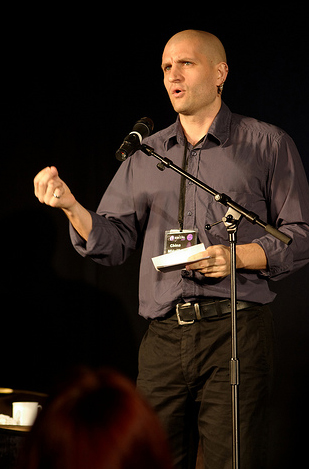
mievilleMieville: Fundamentally, what this is about is taking the logic of everyday borders — the logic of political boundaries — and extrapolating them just a little tiny bit. But the logic is the same. It’s an exaggeration, but it’s not a radical break. So in terms of the rules of physics and all that sort of stuff, it is at least 96% sure that they are the same as in this world here. This is not a magical realm in that sense. That’s not how this works. And that’s quite a big difference. Because that short story [“Reports of Certain Events in London”] was very much about the kind of implicit dream logic of the psychogeography of London, and literalizing that metaphor and the city as an uneasy beast. This is slightly different. In some ways, this is much more to do with a genuine juridical legal reality of the world. As I said, it’s extrapolated. But to that extent, it’s very realistic. The logic of the strangeness is actually a logic that exists in the real world. It’s a little bit exaggerated, but that’s all. So to me, they feel quite different. But that’s not to invalidate your point. Because like I say, it has much to do with reception and subconscious stuff. But at a conscious level, they felt different to me.

Correspondent: Yeah. But you’re also dealing with a conceptual framework here with the two cities. And this leads me to wonder — since, of course, the last time we talked, you talked repeatedly about your notion of monsters and the way your imagination works — if this is very much extending into creating this giant world. Here you have a situation in which on a dialogue standpoint — just on that alone — you are now dealing with procedural dialogue, as opposed to what we have seen in your previous books, in which you have dialogue that is very intense and dramatic. Because, of course, there are giant monsters that are terrorizing the landscape and ripping things up. And, of course, people are going to want to get other people’s attention in this. But I’m curious if going to this procedural dialogue was a bit of a challenge — because you had to possibly restrain the natural inventiveness that definitely crops up in the dialogue as well as the narrative — or if the conceptual framework was just enough to even things out. Or if there any difficulties in the procedural dialogue whatsoever.

Mieville: Well, it didn’t feel difficult. Now that’s not to say it’s done well. I mean, I’m not the right person to judge. It’s up to readers. They might be saying, “Well, of course, it didn’t feel difficult. Because you totally fucked it up.” You know, I don’t know. I mean, for me — can I swear? Sorry.

Correspondent: Oh yeah. You can say whatever the hell you want here.

Mieville: Alright. Okay. But, no, in the writing, it didn’t feel difficult. Because for me, it’s always a question of trying to get into the voice at the start. So it wasn’t a question. Like I don’t think I have a default voice as people possibly think. Because the Bas-Lag books have a baroque meandering voice. So that’s obviously what I’m known for. And I understand that. But I think it’s more that each of the voices was got into as part of the project. So, for this, because this was always a book that was conceived of as a noir — as a noir set in what is, brackets, very, very nearly, close brackets, the real world, it felt completely different from the word go. And so people ask the same question of Un Lun Dun. Did it feel difficult to get into a slightly more playful child-friendly voice? No. Because that’s the mode you’re in when you’re starting the writing. I was reading a lot of noir. I was reading a lot of crime. I was thinking in terms of telling a story to my mum, who read a lot of books like that. So that was the voice that that demanded. So, no, it wasn’t a question of reigning yourself in. It was a question of indulging the voice that you had got into for this job. If that makes sense.

Correspondent: But still, you are dealing with limitations here in a way that you’re not in any of your other books. Because you don’t have those giant monsters. Literal monsters. Metaphorically speaking, we can go into that too. But you have to reign yourself in. Because even though, as you argued in your Scalzi piece, you don’t believe mystery novels to represent any kind of realism, there is nevertheless a verisimilitudinous plane that you have to meet with this. It’s a little bit different.

Mieville: They pretend to be realist.

Correspondent: Yeah, exactly. Exactly.

Mieville: Yeah, that’s true. There is a limitation. But there’s a limitation in all forms. Genres are both constraining and enabling. Now one of the things I wanted to do when I was writing this book — it was very important to me that this was a book that was faithful to crime. That somebody who was interested in crime, who read a crime novel, would not feel that this is some outsider who doesn’t get the rules, who doesn’t play fair. I wanted to be completely respectful and have total fidelity to that paradigm. So you’re quite right. I can’t magic them out of a difficult situation. You don’t have the recourse to that sort of thing. But at the same time, you have other things that are potentialities. Like I know a lot of readers with the best will in the world, without any snobbery, who simply cannot proceed with a book once they’ve had too much of a strong eruption of the fantastic.

(Photo: Mattia V)

BSS #298: China Mieville II (Download MP3)

This text will be replaced