Brian Evenson appeared on The Bat Segundo Show #309.
Brian Evenson is most recently the author of Fugue State and Last Days.
Condition of Mr. Segundo: Latching onto toccata.
Author: Brian Evenson
Subjects Discussed: Knowing when a story concept has legs, ideas that never come to anything, the origins of “A Pursuit,” The Open Curtain, maintaining surprise, text sources vs. personal experience, writing fiction moments that hit two simultaneous emotions, grisly moments and descriptive detail, the reader’s imagination, revision and rhythm, not showing work to people, the surprise of audience responses, Bjorn Verenson, certain similarities with characters in “Ninety Over Ninety” and publishing people, Morgan Entreiken, determining the precise moment in which a story ends, open endings and critical theory, story concepts as building blocks for novels, similarities between “An Accounting” and Last Days, conversations between stories, bureaucratic language, investigating religious communities, solitary figures being pursued by men vs. the recurrent theme of community, expanding on conclusions from Ryan Call’s Collagist essay, literalisms and tributes to pulp, challenging the assumptions of “human,” translating, Antoine Volodine, how a line from The Savage Detectives inspired a short story, dwelling upon consciousness, intertextual aspects, absurdity and violence, characters who plunge into dark chambers to experience horror, being the dungeonmaster at 12, knowing the environment, Evenson’s concern for numbers and scales, Flann O’Brien’s The Third Policeman, postmodernism and theft, and the satisfaction of genre literature.
EXCERPT FROM SHOW:
 Correspondent: Do you need to have a source text more than, I suppose, a personal experience? I mean, I could inquire as to whether you had sex with a mime. I don’t know whether you have or not.
Evenson: No, no, I didn’t. I did meet someone, after I read that story aloud, who had had sex with a mime. It made me think that maybe I could have gone even farther in that story than I did. But not a lot of it is from personal experience. I mean, I think the things that are from personal experience are not the things that you would expect. So in “Younger” and in “Girls in Tents,” you know, when I was a kid, I used to make tents out of blankets. Which I think a lot of kids did.
Correspondent: I did myself.
Evenson: Yeah. But my daughters never did. So there is a kind of personal thing there. There’s a moment in one of my stories — I think actually that it’s in The Wavering Knife, in that collection — in which someone is taking bread and squishing it until it makes a ball of bread. And that’s something that’s incredibly vivid to me from my childhood. But the main thrusts of the plot and those sorts of things are not personal experience so much. But they do respond to a lot of other things.
Correspondent: But then you’re also dealing with a lot of mutilation and violence.
Evenson:Correspondent: Like, in particular, Last Days. I mean clearly, I see that you are a zero according to that particular scale.
Evenson: Right, right, right.
Correspondent: Unless there’s something you’re not showing me.
Evenson: No, no, no.
Correspondent: How do you get into that particular mind set to make a narrative along those lines real when you have not personally experienced it?
Evenson: (laughs)
Correspondent: There’s the old famous story. Well, Stephen Crane never experienced or witnessed any kind of war. So how does reality come about for you? When do you know it’s real when you haven’t experienced it? Or are we underestimating verisimilitude and not always capitulating to that wonderful imagination?
Evenson: Well, I really do think a lot about how things would feel. Even if I haven’t experienced them. I really see myself as partly a — I don’t know quite how to describe it, but I want to create a world that the reader experiences as if they’re living through it more than something that they can see as a representation on the page. And to do that, I spend a lot of time thinking how things would feel, how things would occur. What would happen to a limb if you did something to it in Last Days. And I read a fair amount and try and figure things out that way. But mostly it’s just trying. What you say. The primacy of the imagination. Trying to imagine yourself into a space where you really are experiencing something on the page in a very visceral way. One of things that people say about my stories, both for better and for worse, is that there are stories that you don’t forget and there are stories that you feel like you’re suffering through them in some ways. While the character suffers. And as a writer, I think that’s very much what I do. I try to put myself very much in the position of the characters in the story. So in Last Days, there’s all these moments in the hospital bed. And trying to figure out how you see around the curtain if you have one kind of mirror and another kind of mirror. If you can’t move this bar to your body, then what do you do? And I took a lot of time thinking very seriously about that and trying to figure out what would I do.
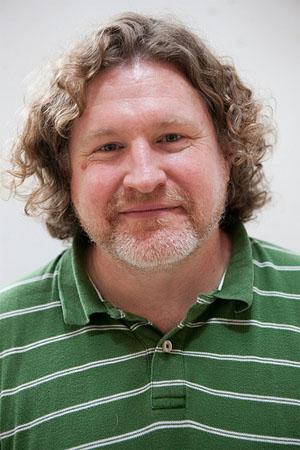
(Image: Beowulf Sheehan)
BSS #309: Brian Evenson (Download MP3)
Listen: Play in new window | Download

 Mieville: Fundamentally, what this is about is taking the logic of everyday borders — the logic of political boundaries — and extrapolating them just a little tiny bit. But the logic is the same. It’s an exaggeration, but it’s not a radical break. So in terms of the rules of physics and all that sort of stuff, it is at least 96% sure that they are the same as in this world here. This is not a magical realm in that sense. That’s not how this works. And that’s quite a big difference. Because that short story [“Reports of Certain Events in London”] was very much about the kind of implicit dream logic of the psychogeography of London, and literalizing that metaphor and the city as an uneasy beast. This is slightly different. In some ways, this is much more to do with a genuine juridical legal reality of the world. As I said, it’s extrapolated. But to that extent, it’s very realistic. The logic of the strangeness is actually a logic that exists in the real world. It’s a little bit exaggerated, but that’s all. So to me, they feel quite different. But that’s not to invalidate your point. Because like I say, it has much to do with reception and subconscious stuff. But at a conscious level, they felt different to me.
 Correspondent: I must ask then, Mara Faye, if you had read any other books to get the idiom right in English for this. Because both your translation of this book [Wonderful World] and your translation of Pandora in the Congo strike me as far more specific. It’s almost as if the translation itself can be placed within a neat, genre-specific feel in the prose. And I’m curious if you do it more intuitively or if you actually do, in fact, try and read books surrounding a particular genre or a particular place it might end up. So that it might be more palatable to the English ear.
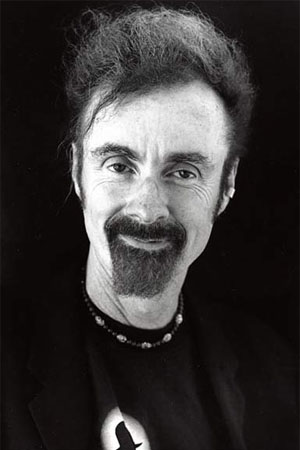 Boyle: I try to get it both ways. I try to involve you in something in a satiric way. And yet it should also move you. And of course, in this book, I had to do that because of the tragedy of Mamah, which will conclude the book. So you have to set the reader up for that throughout. And I think there is tragedy throughout the book. Tadashi’s life is incredibly tragic in many, many regards. So again, I’m playing one element against the other throughout. And there is commentary upon commentary upon commentary. And, for me, it opened up the structure and it made it fun. It made it invigorating. A lot of the footnotes exist to give you information that I would like you to know about Frank Lloyd Wright and his buildings and where he was at any given time. But a lot of them also, I just express surprise on the part of Tadashi. And I find the hilarious.