Dave Itzkoff and Translated Literature: Mad as Hell (The Bat Segundo Show #536)

This program contains two segments. The first segment is an investigation into the realities of publishing translated literature, following up on frustrations expressed by Open Letter’s Chad Post, after agent Oscar van Gelderen retracted Arnon Grunberg’s book because of “poor sales.” The segment features Post, The Complete Review‘s Michael Orthofer, and critic Scott Esposito. (Oscar van Gelderen did not return our phone calls, emails, and tweets for comment on this story.)

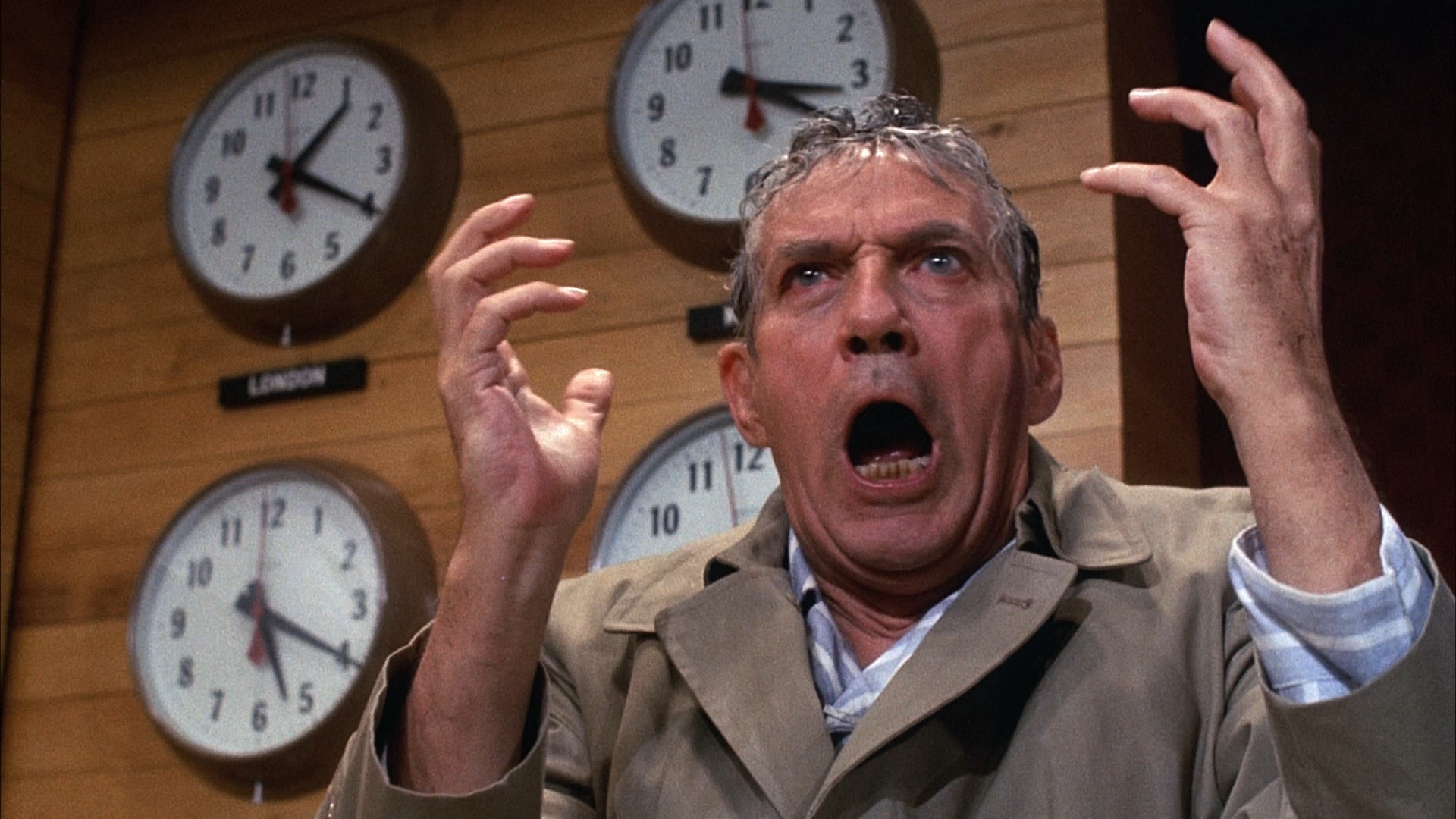
The second segment features Dave Itzkoff, who is most recently the author of Mad as Hell, a book that chronicles the making of Network.

Guests: Dave Itzkoff, Chad Post, Scott Esposito, and Michael Orthofer.

Subjects Discussed: The Howard Beale of translated literature, Open Letter Books, Oscar van Gelderen, Arnon Grunberg, why success in other countries can’t be easily repeated in the United States, relative success of translated literature, Nordic noir, Pauline Kael decrying Paddy Chayefsky’s righteousness, the New York Times Book Review, whether or not Itzkoff is angry, the emotional qualities of buildings, Paddy Chayefsky’s early dramaturgical assaults on television, the comforts of cynicism, The Hospital, the possibility of Network becoming a more earnest movie in earlier drafts, Chayefsky attending television boardroom meetings in sweatpants, what Chayefsky could get away with because of his esteemed reputation, Walter Cronkite, the tendency for people to believe that television was an infallible medium in the 1970s, Chayefsky’s extraordinary creative control, Shaun Considine’s Mad as Hell, Chayefsky’s ability to work the system, Chayefsky exploiting a clause during The Bachelor Party to live in extraordinary affluence, Chayefsky’s demands for ultimate authority, Arthur Penn, the problems that emerge when firing too many directors in a short period of time, Chayefsky’s meticulous scripts, intransigent self-editing, Chayefsky’s self-flagellation, resisting studio notes, Chayefsky’s notes to himself, how the tight deadlines of television contributed to the hastily devised third act of Marty, Chayefsky’s presence on the set and during the casting process, the Paddy light on Network, Chayefsky’s intense stare, whether or not Chayefsky needed actor-friendly directors like Sidney Lumet, Lumet’s rehearsal process, getting access to Kay Chapin’s diary, calling around vs. looking through papers, Chayefsky’s letters of apology, Faye Dunaway’s difficulty, Itzkoff’s inability to get access to Dunaway, finding Peter Finch’s daughter, Delbert Mann, Chayefsky’s relationships with directors, the battle between Chayefsky and Ken Russell on Altered States, the ultimatum that Sidney Lumet gave to Faye Dunaway to ensure her casting as Diana Christensen, the appeal of an unlikable character to Dunaway, the role of women in the workplace in the 1970s, the flack that Barbara Walters got for a $1 million salary, Ned Beatty lying like a snake to get the role of Arthur Jensen, Jimmy Stewart considered as Howard Beale (with accompanying impression), actors snapped up on the basis of a single audition, why New York locations were hard to find in 1976, stairwells that link two different cities, the New York Stock Exchange’s diffidence in allowing Chayefsky’s anti-corporate speeches to be filmed there, recreating a functioning television studio in Toronto, unions, romanticizing decrepit 1970s New York, filming second-unit shots of people shouting “I’m as mad as hell!” in abandoned buildings, the difficulty of Peter Finch delivering the “mad as hell” speech, Lumet’s desire to work as rapidly as possible, Woody Van Dyke, Al Pacino (with accompanying impression), extraordinary claims of Robert Duvall shouting at random strangers and mooning people from a tall building, whether character is enough to serve as a second source, behind-the-scenes controversy on the William Holden/Faye Dunaway love scene, getting quotes from Bill O’Reilly and Keith Olbermann, Olbermann’s obsession with Network, O’Reilly’s co-opting aspects of Howard Beale for his show, how Network‘s language was changed for television, why Chayefsky was allowed three “bullshits” on network TV, ruminating over the regrettable idea of Aaron Sorkin as Chayefsky’s heir, and whether there can be a Chayefsky today.

EXCERPT FROM SHOW:

Correspondent: Dave, you’re not looking terribly indignant, but how are you doing?

Itzkoff: I have nothing to be angry about.

Correspondent: Really?

Itzkoff: But the day is young.

Correspondent: The day is young?

Itzkoff: I mean, it’s only 11 AM. It’s a Tuesday.

Correspondent: How much rage do you typically go through in a 24 hour period?

Itzkoff: Actually, it can be a lot. It really depends on my morning commute. I take the subway. That is definitely a source of a lot of ire and provocation, depending upon how crowded or empty my train.

Correspondent: Yes. But for now, ensconced within the New York Times Building, you are calm and sanguine.

Itzkoff: Exactly. As the building tends to do to one, yes.

Correspondent: Really? This building has an outside power? A karma? You can levitate it like the Pentagon? The Pentagon like Abbie Hoffman?

Itzkoff: (laughs) It seems to have a calming influence.

Correspondent: Well, let’s get into Paddy Chayefsky and Network, the film that this book, Mad as Hell — not the only book, as I have pointed out. There’s another book here called Mad as Hell that also deals with Paddy Chayefsky on the table.

Itzkoff: That’s right.

Correspondent: So it’s not just you. Anyway, Network was actually not Paddy Chayefsky’s first dramaturgical assault upon television. In 1955, and you did not note this in your book, Chayefsky wrote a script called “The Man Who Beat Ed Sullivan.” And this is about an Ohio TV host. He was going to match the length of a three-hour talent show in this script that he wrote. You do mention The Imposters, this pilot that Chayefsky wrote in 1969 about a fictional television executive who had the wry name of Eddie Gresham, which I thought was funny. And it was not until Chayefsky started hanging out with Richard Wald and attending various television boardroom meetings that he came upon Network. I’m curious about this. I mean, he drew from his life experience for The Bachelor Party and for Marty. Is it safe to say that he needed experience for Network before he could actually really take on television in this indelible move that we continue to quote and continue to reference today?

Itzkoff: Right. Well, you know, in some ways the book is trying to make the point — I mean, I hate stating the thesis so bluntly like this, but his whole life’s work, in a sense, is bound up in Network. And, yes, it is nominally and very much a story about television and people who inhabit television. But it is also a story about everything that ever upset him or irked him or bothered him in his life. And to some extent, a story that he was rewriting and rewriting not only in works that had to do or were set in the world of television. But if you look at some of the other early television plays, going all the way back to Marty and even works that predate Marty, you will see there is a recurring idea or a theme about characters who have a kind of simmering rage. People who are unfulfilled or can’t express themselves and then are often not always given an opportunity to cut loose or say what they really think and it is explosive. So that is an idea that he refines and revisits. It comes up not only in obviously his drama, but in his own life. That he’s somebody who often feels that the ideas that he is trying to communicate to his audience are not being received or they’re not getting in the way that he meant them. And that frustrates and annoys him. And that makes him an angry person. Not unfulfilled, but he often feels that he’s falling short of whatever goal he set for himself. And so Network becomes the vehicle for all of this, compounded by a feeling that media itself and a medium that he came up with was at a real crossroads. Something could potentially happen, at least in his lifetime or in the era that he was writing. Something might happen that could send it in a very different direction. And that kind of corruption was representative of a lot of other things that were happening in life in that moment.

Correspondent: Based off of your research, is it safe to say that perhaps the cynicism that is attached to Network came from having to silently observe all of these boardroom meetings and these people moving money around? Going ahead and gutting any kind of credible programming, the kind of wonderful drama, the news that Chayefsky himself championed?

Itzkoff: I think that that was something that was even refined over time during the writing of this script. I mean, you reference a situation that happens in the book where he does visit both NBC and CBS just to do research for a movie about television. When he met with Richard Wald, who was then the President of NBC News, he told Wald he didn’t know yet whether he was going to write something that was maybe more a kind of “day in the life” piece that would have lots of moving parts and characters. Almost in the way that The Hospital was. Except in just a slightly different setting. Or maybe he would write something that was a little more satirical. And Wald says now that he had a pretty strong sense that that’s the direction Chayefsky was going to go in. But if you want to call it cynicism.

Correspondent: A refreshing cynicism, I would say.

Itzkoff: (laughs)

Correspondent: I mean, I watched the movie twice. I had to see it a second time and I hadn’t seen it in years. And it just bathed me in such a wonderful, exuberant cynicism. Maybe skepticism perhaps is the better term.

Itzkoff: Sure. And it’s fascinating. You can look at earlier incarnations of the script and see that there were moments where it might have gone in more earnest directions. I’m sure we’ll get into some of the nitty-gritty later, but characters who we now think of as having mean streaks or really were just going for it all, they could have been much nicer people. It could have had a happier ending. Something about him told Chayefsky this was not really how life worked.

(Loops for this program provided by danke, JoeFunktastic, smpulse, supertex, DJLikwid2013, and chanho17. Also Kevin MacLeod’s “Call to Adventure” through Free Music Archive.)

The Bat Segundo Show #536: Dave Itzkoff and Translated Literature: Mad as Hell (Download MP3)

This text will be replaced

Jenny Offill (The Bat Segundo Show #534)

Jenny Offill is most recently the author of Dept. of Speculation.

Author: Jenny Offill

Subjects Discussed: Words dropped from ellipses, Thomas Edison quotes, digital binaries, John Keats, fabricated quotes, fact-checking fiction, David Markson, spreading false literary rumors, a writer’s obligation to resist the literary canon, destroying forms that came before, motherhood as a stigma war, merging the domestic novel with the novel of ideas, the mommy wars, “being pecked to death by little birds,” falling into the world of the body, motherhood erroneously framed as ambivalence, secular spirituality, Richard Powers, views of Jesus outside apartment windows, fake Buddhism, the tension between exploring vs. leaving material out in Dept. of Speculation, seeking emotional velocity in a novel, outrunning your precocity, the attempted novel before Dept. of Speculation, creating a compendium of consciousness, Samantha Hunt’s The Invention of Everything Else, the vaguely criminal impulse of secretly depositing meat you can’t eat from a massive plate into a napkin, extreme self-consciousness, the imitative fallacy, how deadpan humor allows the reader to confront despair, Jesus’ Son, John Berryman’s The Dream Songs, Renata Adler’s Speedboat, Janet Malcolm, how facts line up to a narrative, Freud’s Civilization and Its Discontents, the mutability of facts in the Ann Druyan/Carl Sagan marriage, Mary Ruefle, Ann Parson, the freedom to move essayistic in fiction, the brief “lyrical essay” movement, John D’Agata, the problem of novelists being asked about literal parallels to autobiographical details, author and character temperament, “doctor” and “daughter,” the risk of getting stuck in the wrong regions of the book, gaffes as creative possibilities, James Joyce, Gilbert Sorrentino and generative devices, having a permanent sense of loneliness, being awake to the world around you and porousness, a world populated by people with dead eyes, brightness as a qualifier for a worldview, the fun of listening, Kummerspeck, physical space defined more by how it is infested as opposed to its layout, proverbs about insects, words as insects, Voyager’s Golden Record, and making fiction more emotionally charged.

EXCERPT FROM SHOW:

Correspondent: One of the first things I noticed in this book — and it’s there from the opening epigraph — is the ellipses. This is definitely one of those books where close reading is greatly rewarded and I was fascinated by how you used ellipses to leave out very pivotal parts of quotes. Just to offer one example, you have the epigraph from Socrates. “Speculators on the universe…are no better than madmen.” But the words between the dots that you leave out are “and on the laws of the heavenly bodies.” Which is interesting. Because that’s cosmological and you also explore that later in the book. I also noticed later in the book that you have this Edison quote, which I believe you plucked from Gaby Wood’s Living Dolls: A Magical History of the Quest for Mechanical Life. Because the ellipses actually match the exact same citation that Wood did.

Offill: That is where it’s from.

Correspondent: Okay. Fantastic! So anyway, just to start off here, we are pressed in our life right now to confine our instant thoughts to 140 characters, to submit to the dreadful binary of +1 and Facebook liking and all that nonsense. So I’m wondering how you arrived at the ellipses as a way of reckoning with what we leave out and how what we leave out actually tells a story. How do you think these dropped phrases can possibly combat the digital reductionist age that we have to suffer in right now?

Offill: Oh my gosh. What an amazing question. I think that I’ve always been, as a writer, in compression and in how much you can distill in a small space. And so an ellipses is one of those ways to create either a pause — like you might have a breath in a poetry line — or also that trailing off feeling.

Correspondent: Sure.

Offill: Like there’s a moment in the book where the character says, “I was expecting to have the crackup with the head scarf and the people speaking kindly at my funeral.” And then it says, “Oh wait. Might still get that one.” And it trails off. And it’s because it’s meant to capture that feeling of thought where you get halfway through a thought and then you kind of stop. And I feel like instead of what we think of as the kind of digital version of compression, which is about pithiness and sound bites and more of that kind of thing, something that was more about when our thoughts hesitate and our words follow. That’s what I was trying to capture.

Correspondent: In a weird way, it almost responds to the subtweet, where you are talking about someone without really talking about someone. Except that actually ends up becoming more vulgar and not as interesting as, say, just leaving something out. Which is the ultimate way of responding to the world. Anyway, so the wife — I’m going to call her “the wife” because she’s the unnamed protagonist of this novel — she has this very unusual relationship with John Keats.

Offill: (laughs)

Correspondent: Keats, he informs her concern for death and dread, I think. I mean, her insistence that she is a part of a minority that experiences permanent anguish as opposed to the majority that experiences temporary anguish. There’s that distinction. But I caught the Keats thing. Because we first see this when she cites the words on Keats’s tombstone — “Here lies One whose Name was writ in Water” — without actually naming Keats! And then she claims later on — and this was amazing — she claims that Keats said, “No such thing as the world becoming an easy place to save your soul in.” I have done a thorough search. I have not found that quote from Keats. I did start to catch on. Hmmm, anytime that Jenny actually says, “What X said,” it’s not true for a large chunk of the book! And I wanted to ask you about this. Keats emboldens the wife to invent these further quotes, including one from Simone Weil. which Meg Wolitzer on NPR actually thought was true. But it was not. So I’m wondering what was it about Keats that triggered this particular impulse to invent quotes for this character?

Offill: I think that he’s always been a sort of Romantic ideal for most writers — or, at least, a certain type of writer. And that line about your gravestone being writ in water, I think for anyone who’s thinking, “Why am I doing this? This isn’t going to last. This isn’t anything,” it seems to have some kind of resonance. As for the other one, I do believe that I had a citation for it. But I also meant for the ones that say “What so-and-so said” to be filtered through her mind and slightly changed.

Correspondent: Yes.

Offill: So that may be why it was hard to Google. We did sort of extensively fact-check the quotes. I had to go through and give citations for all of them.

Correspondent: Really?

Offill: Yeah. So I could probably pull that out somewhere. But I noticed that even people who are far more eloquent than I am, I somehow had managed to take a word out or add a word. It was always that controlling writer impulse where you want to change rhythms and change everything to sound right to your ear.

Correspondent: Well, on the other hand, there’s a certain kind of fluidity in taking quotes and putting them into other people’s mouths. And changing one word, then actually frustrating the obsessive reader type like me…

Offill: Right. Right.

Correspondent: Because I can’t quite find the exactness. I mean, maybe this is also part of the problem, of having to scavenge from the guts of what has gone before in order to find new forms of expression, in order to come to terms with what we leave out of our stories.

Offill: Right. Well, I like writers like David Markson. And I like the way that he brings in those small literary anecdotes. And you also find, if you go through his books…

Correspondent: A lot of them are not true.

Offill: Yeah. A lot of them are not true. In fact, someone — I think it was Blake Butler — did a kind of hilarious thing recently that was “Literary Rumors.”

Correspondent: Yes.

Offill: They were all just like really absurd. And so I think that kind of — I want to call it the pattern-making part of our brain. It makes over even something that seems like it should be complete and puts it into the pattern of the world as that character sees it.

Correspondent: Do you think we have a certain obligation to resist the canon? Or to resist the cultural conditioning that we are inevitably going to take in when we read all sorts of books and we memorize quotes and memorize poems and we use that as a kind of reference for our lives? I mean, inevitably, we’re going to have to resist that, I think, to find some original form of expression. What are your thoughts on this? And is this book in some sense a solution to that?

Offill: I thought a lot about that. Because I was wondering if I should include quotes at all. And I certainly thought about not having any of them in there. Not least of which because it’s hard to put your writing next to some of the people I was quoting. But I also felt like I was trying — and whether I succeeded is really more for the reader to say — but I was trying to make a form that felt modern and new to me. And so the feeling of having those quotes as springboards into other thoughts — I do think you always have to go against and have a contrarian impulse to what’s been made before. And that’s how you make new things. And that’s how you startle and surprise yourself as a writer.

Correspondent: Maybe another way to approach this question is to ask you how you, as the author, and you, as the character, work together to mangle quotes in a very interesting way. Did you find that the vicarious…

Offill: You’re starting to worry me. How many did I mangle? You must have it worked out. (laughs)

Correspondent: No, no! I actually love the fact that some are mangled and some are unfindable. But I’m wondering — especially since you had mentioned the fact-checking earlier. I think writers have a duty to bust shit up. So the question I have is: how much of the tossing rocks through windows came from the character and came from you? And how did you work together to ensure there was a certain kind of nihilism that was healthy for this?

Offill: Right. Well, I definitely wanted to create in the character of the wife someone who was bolder and a little more “Fuck you” and “Fuck things up” than I am in my life. I’m a much more timid creature.

Correspondent: Which is why you’re holding the knife right now.

Offill: That’s why I’m holding the knife to your throat and making sure that you start to praise the book really soon. But I do think…

Correspondent: Can’t I just give you twenty dollars instead? Maybe a hundred?

Offill: Are you kidding? Yeah, when I’m done. I’ll take twenty dollars.

(Loops for this program provided by kraweic, mingote, 40a, and ebaby8119.)

The Bat Segundo Show #534: Jenny Offill (Download MP3)

This text will be replaced

Okey Ndibe (The Bat Segundo Show #532)

Okey Ndibe is most recently the author of Foreign Gods, Inc.

Author: Okey Ndibe

Subjects Discussed: The tendency of authors to gravitate to specific locations to find a city’s identity, Ndibe’s fictitious village of Utonki, Barclay Center’s encroachment upon Brooklyn, how eating fish can help you to better understand Nigeria, whether or not people who live close to water are more equipped to deal with life, conjuring up a novel from a 1,000 page draft, writing “the Great Nigerian Novel,” the Nigerian census problem, Festus Odiemegwu’s controversial remarks about Nigeria not having a reliable census since 1816, Nigeria as the third most populous nation in the world by the end of the 21st century, what the inability to track a population does to a national identity and a fictional identity, Nigeria as a country where absurdity makes sense, the disastrous Yar-Adua-Goodluck government, Nigeria ascribing honesty to criminals and criminal enterprises that masquerade as governments, Nigeria’s “honest criminals,” Gov. James Ibori’s 13 year sentence, bribery, American vs. Nigerian corruption, why it’s so difficult to end corrupt Nigerian politicians to jail, Ndibe’s arrest at the Lagos Airport, Nigeria’s Enemies of the State list vs. America’s No Fly list, Umaru Musa Yar’Adua and the do-or-die affair, Yar’Adua’s attempts to reach Ndibe after Ndibe refused to address him as President, anonymous messages sent to Ndibe in 2009 threatening arrest, decrying corruption and crime, the state of dissident writing in Nigeria, public and private media distinctions in Nigeria, the influence of journalism upon fiction, the lengthy italicized chapter in Foreign Gods, Inc., the impact of colonialism and religiosity on Nigeria, how certain events can encroach upon a reader’s experience comparable to imperialism, how past relationships between Europe and Nigeria affects current relationships, African artifacts, fuel and oil prices, spiritual implication, religious origins for a fictitious war god, settling on the right types of allegorical men to represent Nigeria, gourmands, poetic talkers, reformed Marxists, religion and performance artists, Igbo religious innovations compared against Christianity, the human qualities of gods in Igbo culture, why orthodoxy is incompatible with Igbo sensibilities, sectarian extremism in Nigeria, jihads against western values, rogue pastors, Nigeria’s 400 to 500 languages, Chinua Achebe’s No Longer at Ease, The Complete Review‘s pedantic review of Foreign Gods, Inc., Africans with considerable educational credentials who can’t get jobs in the United States, the common experience of educated immigrants shut out of the American job market (and trying to pinpoint why contemporary narratives don’t always consider Africans), American exclusion, the role of taste and experience in the editing process, the current renaissance of African fiction, how market conditions affect translated fiction, names and cultural differences, why Nigerian immigrants do better in the States than in England, Ndibe’s debt to Chinua Achebe and Wole Soyinka, Ngugi wa Thiong’o, how Soyinka saved Ndibe’s Christmas, malfunctioning tape recorders, how Achebe brought Ndibe to the United States,

EXCERPT FROM SHOW:

Correspondent: I wanted to start off from a very odd angle. James Joyce had Eccles Street. James Baldwin had, of course, areas of Paris and southern France. I couldn’t help but notice that in Foreign Gods, Inc., in concentrating on both Nigeria and Brooklyn, you look to very specific regions. In the case of southeastern Nigeria — that’s where you’re looking at — you have this fictitious village named Utonki.

Ndibe: Yes.

Correspondent: Which was also featured in Arrows of Rain, your previous book. And then for the Brooklyn stretch, you have 99 Flatbush Avenue, this second-story flat that Ike — I hope I don’t have the ass pronunciation.

Ndibe: It’s actually Eekeh. Ike [correct] is strength. ị́kẹ̀ [incorrect] is the buttocks.

Correspondent: Okay. I’ve got that right. So Ike, he lives in this second-story flat at 99 Flatbush Avenue. And I know that because my book drop is actually not far from there. What’s interesting about that is that if you go there now, you’ve got Barclay Center there. And it’s completely different from whatever regional inspiration you had when you first decided upon it. So I wanted to talk about Utonki and 99 Flatbush Ave as the representative area for which to draw a larger idea about what Nigeria is and what Brooklyn is, and why these particular places were draws for you and why it needed to start there.

Ndibe: Well, for Utonki, I wanted to set a location in Nigeria that is close to my hometown, which is Adamawa. Now in writing my first novel, I am drawn to water, to rivers and so on. And my hometown doesn’t have much by way of the river. We have a few streams. So there is a stream called Benue, which figures in this novel. So Utonki is actually based on a part of Nigeria that I had visited to see a friend of mine from years ago. And I was drawn there because this friend told me that the village is surrounded by this river and they ate a lot of fish. And I’ve always been a sucker for fish. So I went to his village and spent a whole week eating a lot of fish. So this becomes my hommage to this village where I ate fish and which is surrounded by water.

Correspondent: Where did you eat fish in Brooklyn then? (laughs) There’s a fish market downtown.

Ndibe: So in Brooklyn, I actually happened to have a cousin who lives in Brooklyn. And so the apartment and my description of it is my cousin’s apartment. But the address is different. My cousin lives on Lafayette, but I decided to name it a different address in the novel. So again, aware of having something, an image in my mind, but also inventing, as it were.

Correspondent: I’m still drawn to this idea of you in this Nigerian village eating fish and using this to zero in on what the country is about. What does fish eating allow you — and fish eating, of course, is a euphemism for something else as well (laughs) — but what does that do to get you to fixate your geographical energies in fiction? Or your sense of place on what it is to be a Nigerian?

Ndibe: Yes. Well, again, I’m intrigued by bodies of water. I’m intrigued by the ocean, by rivers, by lakes and so on. And so Utonki was, if you like — my mother in Nigeria is from Jimeta, which is on the banks of the river Niger, which is the grand river of Nigeria. And so I’ve always been intrigued by bodies of water, partly because I don’t swim a lake. I can’t swim to save my life. My wife actually was going to represent Nigeria in swimming at the Olympic Games. But I tell people that our winning record is for the fastest to sink to the bottom to any body of water. So in a lot of ways when I see water, or when I see a community with water, there is a part of me that wants to pay hommage to it. And so Utonki, which has a river but also brings me to that fish that I’ve always loved all my life. So if I have an ideal community, if I was going to make myself come from someplace, it would be a place like Utonki. So I invented it. So I would inhabit it, as it were.

Correspondent: This may seem a bizarre question, but it comes to mind in hearing you talk about being near bodies of water. Do you think that people who have a tendency to live near water tend to be more interesting than the people who live inland or who are landlocked?

Ndibe: I believe so. At least those who live close to water. Just like, for me, anybody who can swim becomes exceedingly interesting for me. Which is part of why perhaps I found my wife, Sheri, extraordinarily interesting. Just the fact that she can move with such ease, with such comfort, and with such gusto in water. So, yes, I do believe that those who inhabit the river, who live near bodies of water, are more resourceful. I don’t know if this can hold up to scientific scrutiny.

Correspondent: No.

Ndibe: But in my imaginative world, I think that this is true. Very much so.

Correspondent: It totally makes sense. I mean, I’ve lived pretty much near water in my adult life. I was in San Francisco, then New York. So I think we’re on the same level — even though I also recognize that this is a completely bizarre, tendentious principle. (laughs)

Ndibe: Yes. (laughs)

Correspondent: Speaking of location, I wanted to get into the contrast between Ike’s apartment at 99 Flatbush Ave, which you describe often very specifically. And near the end, we really know the geography of that place. Because some things happen, which I won’t give away, involving furniture. But after Ike’s first trip through the Lagos Airport, you almost avoid describing the look of Nigeria. I mean, we have a better sense also, for example, of the art dealer’s layout than the house late in the book where there’s all this basketball boasting. All these guys saying, “Hey, if you pay me that kind of money, I can go ahead and play like Michael Jordan.” I wanted to ask why that was. Do you think that Nigeria is marked more by this kind of general approach to existence? That, whether consciously or subconsciously, you’re going to just describe the country that way because there just are no specifics. I have a followup in relation to this, but I wanted to get your thoughts as to the level of self-awareness here and what it is to live and describe something that is often abstract.

Ndibe: Yes. Well, first of all, when I finished this novel, it actually came to more than a thousand pages.

Correspondent: Wow!

Ndibe: So there was a lot of editing. A lot of sloughing off huge swaths of the novel. And so when Ike’s plane is hovering over Lagos, there’s a long scene in the original draft of the novel where I describe how he sees Nigeria.

Correspondent: That’s fascinating.

Ndibe: In the original draft, he actually spends a week in Lagos with a friend of his who’s become very wealthy from doing all kinds of underhanded deals with the politicians and so on. And so we get to see Lagos, through Ike’s eyes, as his friend takes him to various parties of the rich and famous in Nigeria. All of those scenes became a casualty, if you like, of this huge cutting process. But that’s going to be worked into a different novel. Because I actually cut about 300 pages from the middle of the novel. And so I had Ike stay that night in a stop-off motel when, in the original draft of the novel, he spends a week in Lagos with this classmate of his who has a lot of money. So that’s one. But once he goes to his village, I guess there’s the sense of familiarity, the sense that he’s returning to a place where he was born. And so I allowed the novel to achieve, if you like, a sense of the unstated. So again, because this is filtered constantly through Ike’s consciousness, the village changes a lot when he returns to it. And there’s this classmate of his, Tony Iba, who has become a very wealthy, local politician and who has a sense that he’s giving back to poor people by building a small room where they can watch television and daydream about American life and so forth. So that kind of absence, if you like, of this particularity in the way that Nigeria is described owes to the process of editing that entailed a lot of cutting of details. And also the fact that Ike wants this in his village, the descriptions become physical locations muted, except in areas where he notes the dramatic changes in that landscape.

The Bat Segundo Show #532: Okey Ndibe (Download MP3)

This text will be replaced

Victoria Wilson (The Bat Segundo Show #531)

Victoria Wilson is most recently the author of A Life of Barbara Stanwyck: Steel-True, 1907-1940.

Author: Victoria Wilson

Subjects Discussed: Stanwyck shifting from being known as “Frank Fay’s husband” to being the dominant breadwinner in a matter of years, when Frank Fay was a washed-up actor spending Stanwyck’s money, Jimmy Cagney taking his inspiration from Frank Fay, Stanwyck learning how to simplify her acting, Fay’s alcoholism, Stanwyck’s initial hatred for Hollywood, Fay being ahead of his time, Frank Fay as the origin point of standup comedy, Stanwyck’s early fractious relationship with Frank Capra, the frustration of endless screen tests, Meet John Doe, Ladies of Leisure, Stanwyck’s defiance and resentment, how Fay helped Stanwyck get her big break, Stanwyck’s near-affair with Capra, difficult actors, Stanwyck’s aversion to parties, Stanwyck and class distinctions, how Stanwyck closed the iron door on a lot of people, Stanwyck shutting out Mae Clarke, Clarke and Cagney’s grapefruit, Stanwyck’s conservative politics, anti-Roosevelt actors, Republicanism vs. modern conservatism, the gold standard, Stanwyck becoming more discerning with her politics with Robert Taylor, Stanwyck’s acts of generosity, unemployment during the Depression, Stanwcyk’s literacy, being an autodidact, Stanwyck and Katharine Hepburn, how Stanwyck cultivated her modernity, how Stanwyck networked, reading a book at a party, Stanwyck’s shyness, Frank Fay’s attempts to kidnap his adopted son, how Wilson tracked down Dion Anthony Fay (Stanwyck’s son) in the pre-Internet age, mysterious investigators, sinister methods of finding sources, Stanwyck’s clothes, motherly love, when Stanwyck accidentally wore a dress backwards, the moral assaults on unmarried Hollywood couples living together, Clark Gable’s forced marriage to Carol Lombard, how Stanwyck and Robert Taylor were encouraged to marry, the Hays Production Code’s hold on the private life of actors, Stonewall, Olivia de Havilland’s resistance, Stanwyck teaching younger men how to act, Stanwyck’s relationship with Robert Wagner, Joel McCrea, Stanwyck identifying herself as the masculine presence in relationships, what contributed to the dying years of the Stanwyck/Taylor marriage, Stanwyck’s monogamy and possible affairs late in the Taylor marriage, Harry Hay, a secret anecdote from Anthony Quinn, Stanwyck’s involvement with Gary Cooper, Stanwyck’s unexpected nude appearance before a crowd at a surprise birthday party, what conditions cause a biographer to trust a source, Stanwyck and Joan Crawford, Al Jolson’s assault on Stanwyck, editorial forensics, determining authenticity, how Wilson used her editorial background to determine the accuracy of a fanzine report on Stanwyck, the balance between facts and imagination, Wilson’s set of rules, avoiding movie star biography tropes, the difficulty of getting Richard Chamberlain to talk, the differences between today’s media-trained actors and yesterday’s more open actors, Robert Stack, when actors once drove to their own screenings, building trust with sources, Wilson’s formidable fanzine collection and her efforts to preserve it, some details about the second Stanwyck volume, the end of the studio system, Stanwyck’s willingness to work in television, and how talent makes you larger than the time.

EXCERPT FROM SHOW:

Correspondent: So let’s talk about Ruby Stevens, aka Barbara Stanwyck. She had one of the most formidable work ethics I think I have ever read about of any Hollywood actress of that time. I mean, she worked after she fell down the stairs, her right leg shorter than the left during Ten Cents a Dance. She toiled through that. She toiled through a painful leg injury that she had in Ever in My Heart. She would run lines with other actors when she was completely exhausted, after a long shift.

Wilson: Ed, I’m happy to say that I can see you’ve read the book.

Correspondent: I have read the book. Yes. She kept her costume and her makeup on, even when she was asked to go home for the day because she figured that a director would ask her to work. So my question — and this is a good way of getting into her origins here in Brooklyn. How did this work ethic originate? I mean, I’m wondering if she had some sort of incident in her early showgirl days or her early Broadway days where she may have flubbed a line and she figured that committing everything to memory and also always being there was going to be the absolute advantage that she would have over everyone else. So I was hoping you could talk about this and unpack this incredible ethic that she had.

Wilson: Well, let me see if I can unravel this mystery. To begin with, Stanwyck knew — what she did learn — you’re right in that she did learn in being in shows on Broadway and being in other kinds of shows. Revues. Which she said. She could always be replaced. And she understood that. But what she got, well, it wasn’t really one specific incident. I think, given the childhood that she had, the most important thing to her, speaking of Baby Face, was for her to be able to get out. She wanted to get out and she didn’t want to go back to that. And her sister brought her into her world — the sister who was an actress and who was a dancer, etcetera etcetera. She loved her sister. And she loved that world because it allowed her to escape in her head what the circumstances were of her life. And that world, that theater world, that world of working actors was her way out. It was her road out. And combining that with a need to understand that she could be fired or replaced at any time, over time she and the people who she admired were serious workers. And I think it all combined to give her that work ethic.

Correspondent: Well, I’m wondering. Obviously this book only goes up to 1940. Did this particular work ethic ever dissipate in her later years?

Wilson: Never.

Correspondent: Never. Wow.

Wilson: And at a certain point in the early ’50s, when she absolutely could not get a job, it was a torment to her. Because it was an honest day’s pay for an honest day’s work. And that was what you did. And it didn’t matter if it was 90 degrees and she had on all this makeup. At one point, Mitchell Leisen said, “For god’s sake, loosen that corset.” “No, you may need me.” And when she had to do a scene over again because another actor — there’s a story, again, in Volume 2, when she’s making Clash by Night and Marilyn Monroe keeps screwing up the line. And she has to pack that suitcase. She unpacked that suitcase in exactly the way that it had to be packed before the prop men could get there. But it was all perfect. And that was another thing that interested her about radio. Because the voice had to be perfect. And it had to be so modulated to express everything that had to be expressed. But she had that discipline.

Correspondent: I alluded in this question to the fact that she would memorize the entire script, transcribing it out multiple times, and she would know not only her lines, but everybody else’s lines. And this Marilyn Monroe story you mentioned, which is in the next volume, has me curious about the level of tolerance she had for other actors. I mean, she was pretty brutal on Joel McCrea, which I’ll get into later on. But I’m wondering how this method originated and why knowing every single angle like this was essential to her. And also, in light of the fact that she did a lot of improvisation, how that worked into this steel memory. This almost military-like work ethic which we’ve been discussing here.

Wilson: Well, actually, she didn’t do improvisation in terms of veering away from the script. She was absolutely disciplined about that. But I think that there’s one word to describe why she did what she did and that word is fear. Not something that people associate with Barbara Stanwyck, but there was a lot of fear around her and, over that, there was the overlay that drove her. And I think that she thought she needed to get it perfect. I mean, at the beginning, she was thrown by the way these movies were made. And she wanted to be in command, in control, so that she could be able to pick it up at any point and also I think she got something out of the fact that she knew everybody else’s part. But I do think, at the heart of it, it was fear.

Correspondent: Fear. This is interesting. Because I was kind of curious about these early Broadway days. She has great success with The Noose. But I’m wondering, given that it took probably another decade or two for her comedic instincts to really come out in, of course, The Lady Eve and Ball of Fire, I’m wondering how that particular play reinforced certain acting tics or certain acting methods. Were you able to find out anything through your very meticulous research about what that play did to get her going and to get her adjusting?

Wilson: Well, now that’s a very interesting story. Because what she has always done — and the thing about working with Barbara Stanwyck for fifteen years is that she was not a liar. She was honest. I’ve caught her in a couple of inventions, which were self-protective. I suppose most lies are.

Correspondent: Such as what? What were those particular lies?

Wilson: Well, she said that she could not have children because she was a bleeder. Okay, let’s put it this way. If you’re a bleeder, you’re not doing your own stunts. You’re not riding horses the way she rode horses. You’re not taking falls the way she took falls. You’re just not doing that. She had an abortion at a certain age and it was a terrible abortion. And she couldn’t have children.

Correspondent: At twelve?

Wilson: (pause, unanswered) So there’s that. I mean, but other than that, in another few instances, she was somebody who basically was straight up honest. Steel true and blade straight. And so what I started to say was in The Noose, she always reported that it was Willard Mack who taught her everything she needed to know for that play. But it wasn’t just Willard Mack. It was Mrs. Harris. Mrs. Renee Harris, who was the widow, the last surviving person, which I write about, to get off the Titanic as it was sinking, who was the person who spotted her and who gave her the larger part and who worked with her until Willard Mack came back from New York, where he was looking for another actress and had sent up Francine Larrimore, who was going to take the part. Once Willard Mack came back to work with her to join the show, and said, “Alright, you can do it out-of-town until we get to New York,” he was the one who worked with her and really just taught her everything. And, you know, I write about what happened to theater after the First World War, where it became much more naturalistic. The Noose itself, written by Willard Mack, was an attempt to be more naturalistic in terms of showing the realities of how people talked and how people in nightclubs talked and how lowdowns would talk. It was like this was supposed to be the real thing. And that’s what he was interested in capturing. It wasn’t artifice anymore. Or melodrama. I mean, the play is somewhat melodramatic. It is still of its time. But I do think that it was a combination of Willard Mack and then, when she goes to make burlesque, unless I’m getting ahead of you.

Correspondent: No. I’m hearing you.

Wilson: When she goes to make burlesque, she’s working with Arthur Hopkins, one of the great directors and producers, who also was very involved in naturalism. And again, he helped her strip herself down and simplify her work. And then, of course, who does she end up with and who was she in awe of? Long before she met him? That was Frank Fay, who was as simple and unadorned as a performer as you could possibly be.

Correspondent: Yeah. Well, I’m wondering. She is operating off of fear, as you say. The book regrettably does not get as far as Double Indemnity, where Billy Wilder basically cajoles her into the role by saying, “Are you a mouse or are you an actress?” So it seems to me that she was still driven by fear in terms of what her range was likely to be. Is that safe to say?

Wilson: Well, I don’t think — look, when you’re asking me that one question, I say she wrote it down because of fear. She did this because of fear. I mean, yes, in a way, it was fear. But it was fear coupled with a whole range of other emotions. And one of them was determination to get the hell out from where she came, to make sure she never had to go back there. So I think that it wasn’t just fear.

Correspondent: Well, in terms of developing a range, when do you think she became aware that she could more than either cry on stage or be a very physical performer? I mean, did she know this fairly early on? Based off of what I mentioned about Billy Wilder, it seems that even after being nominated for Stella Dallas, she still didn’t realize what she could do. Or did she?

Wilson: No, she did. Because it was earlier, before Stella Dallas. I mean, people didn’t know this, but what I discovered and what I put together is that it was Zeppo Marx, who basically said, “You can do comedy,” and who pushed her roles in those minor movies where it was Breakfast for Two or The Mad Miss Manton, which was later. But it was those. The Runaway Bride, which was supposed to be a kind of Frank Capraesque, It Happened One Night, which, believe me, it wasn’t. But it’s an interesting movie for a lot of other reasons. Where she tries to do a kind of screwball comedy. And she was terrified of that. But she tried it. And the one thing she understood was, if you’re going to do just one thing and you’re just going to play it, you’re screwed.

Correspondent: It’s also interesting, this period where she’s at Columbia, where she’s about to jump to another studio. But, of course, she has to fulfill her contract. And she is quite adamant, even during the Great Depression, about sticking for that $50,000 figure. And I was curious about that. I mean, money was certainly a drive for her to act in the pictures. But how did that interplay with this range that you say she knew she had and that was actually urged on later by Zeppo Marx, who was her manager.

Wilson: Well, I don’t know at that point, when she was fighting for that contract at Colubmia Pictures, for that raise, that it was about her range. It was about her…

Correspondent: Respect?

Wilson: Well, I think it was about her looking at Constance Bennett and Ann Harding and seeing what they were making and saying, “I can damn well do that too.” I mean, the thing about her is that she didn’t have — from a very early age, there was nobody who was really fighting her battles, except for Ruby Stevens. And even after she married Frank Fay, he says to her — one days, she’s upset — he says, “You can tell me. I’m here for you.” It wasn’t a natural impulse for her. It wasn’t the kind of thing that she could rely upon a mommy or daddy. She had no mommy or daddy. And so when you do that, which is the perfect training for her in terms of the choices she made in Hollywood, which was living outside of that studio system as much as she could. And then, by that point, she could rely on Frank Fay. And she could see what she was doing. She could see the response. She could see how her career was building. And I think she just said, “Screw this. This is what I’m going to do.” And I also think that there’s something to be said about the bond that she had with Frank Fay, which basically was a bond that brought them together and excluded the rest of Hollywood. Because they were excluded and they became isolated and more isolated and this reproduced itself. So I think her attitude was “Screw this. I don’t need you. We’re onto ourselves and we’re going to be just fine.”

The Bat Segundo Show #531: Victoria Wilson (Download MP3)

This text will be replaced

The Best Books of 2013

It is quite possible that I sacrificed some of my best reading hours in 2013 wading through anything written by or having to do with James Joyce: all part of my slow yet methodical efforts to advance behind #77 in the Modern Library Reading Challenge.* I’ve been working on Joyce since November 20, 2012. It’s a healthy relationship. He cooks dinner. I wash the dishes. On pleasant days, we go for long walks together. Sometimes, we even cuddle. Reading Finnegans Wake at a near glacial pace has forced me to revisit Dubliners, Portrait, and Ulysses, which has summoned Richard Ellmann, Gordon Bowker, and Homer from the stacks and Frank Delaney through the earbuds. I have looked up endless esoteric references. I have met with Joyce acolytes in secret dens. I have spent many late nights contemplating everything from Vico’s New Science to back issues of Tit-Bits published around 1904. All this will be written about in depth — hopefully sometime in 2014, when I reach the mighty “A way a lone a last a loved a long the” wending its cyclical posterior back to “riverrun.”

Despite all this, I did manage to read 125 books in 2013. The fifteen titles below all popped out like scandalous performers exploding from a giant birthday cake. I also started Karl Ove Knausgaard’s My Struggle, a wise and breathtaking autobiographical novel that chronicles the pains and pleasures of existence. I didn’t include My Struggle on my list because, as marvelous as it is, I really need to see how it ends. (There are six volumes in total. Only the first two have been translated into English, with the third due in May.) But I am fairly certain that Knausgaard will make the cut in the future, once the extraordinarily capable Don Bartlett concludes his fine translation work on this quite important contribution to literature.

Here are my fifteen favorite books from 2013, in alphabetical order. I was able to interview many of these writers for The Bat Segundo Show and Follow Your Ears and have provided links to the shows.

mattbellMatt Bell, In the House Upon the Dirt Between the Lake and the Woods: It remains my belief that bears are among the most underrated animals in fiction. Not enough novelists use them. When bears do show up in narratives, they are often found in trite poems written by addled hipsters who are more concerned with courting shallow attention than writing real literature. Bell’s debut novel not only contains a bear. It includes a whole universe of squids and “fingerlings” that could be fabulist creations or could originate from intricate grief. It uses minimalist designators (“the husband,” “the wife,” “the fingerling,” a fixed location seemingly in the middle of nowhere) to grow a maximalist universe, with endless rooms in the titular house propagating in direct proportion with complicated feelings. Language itself obscures and deepens seemingly simplistic sentiments. (It wasn’t a surprise to see the unadventurous reactionaries at the New York Times Book Review willfully misunderstand that last flourish, not kenning how Bell’s repetition and emphasis on physicality could be part of the puzzle.) After one too many wretched novels written by loathsome subjects of vapid Thought Catalog essays, it turned out that Bell’s book was the surreal corrective we needed all along. (Bat Segundo interview, 62 minutes)

Eleanor CattonEleanor Catton, The Luminaries: What if you designed a 900 page novel around the dichotomy paradox, where each section was half the length of the previous section? What if you also attempted to work in the golden ratio? And just for the hell of it, what if you decided to set the action in 1865 and 1866, aligning the temperament of twelve characters to astrology? But let’s not stop there. What if you also injected this novel with slyly accurate historical detail and a shifting relationship between what is articulated to the reader and what is not? You’d have Eleanor Catton’s extraordinary second novel, which has been wrongfully trivialized in America as a mere Dickens pastiche. I’m sure that if you’re a joyless illiterate dope like Janet Maslin, this probably is a “critic’s nightmare.” But here’s the truth: I have not read a contemporary novel that has so adroitly manipulated massive strands of storytelling with an ambitious thematic structure since David Mitchell’s Cloud Atlas. There is much in this great book to chew on: what we know about people through facts and gossip, how wealth becomes fluid through avarice and want. Even the way in which narrative information is conveyed and reader assumptions is skillfully challenged, forming almost an alternative astrology beneath the apparent astrological structure. Catton is a novelist of the first rank. She absolutely deserved the Booker for this. And I urge all interested parties to read this massive novel when they have the chance. (Bat Segundo interview, 71 minutes)

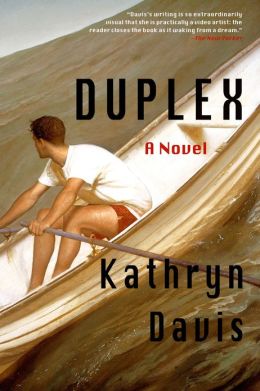
duplexcoverKathryn Davis, Duplex: I must confess that I have a slight prejudice against novels that go out of their way to destroy the underlying structure every other chapter. Yet it is to Davis’s tremendous credit that I was not only won over by her remarkably inventive and deeply emotional novel, but that I found myself urging strangers in bookstores to buy it. This novel, with its robots, dogs, sorcerers, outlandish suburbs, tsunamis, and rabbits, is almost impossible to describe. But it offers its own unusual argument for the promising anarchism of life. When we stick to our conclusive guns, what do we give up in knowing people? Are there indeed duplexes we will discover when we’re not looking? I found myself greatly enjoying the fluidity of Davis’s universe, in part because of the novel’s descriptive precision (“The Woodard Estate used to be a brilliant jewel on the brow of the third of the three little green hills you come to upon leaving the schoolyard, after passing the water tower and crossing the old railroad bridge.”). You may very well enjoy meticulous geography as you experience it, but Davis’s provocative question involves knowing how to survive when it disappears tomorrow. (Bat Segundo interview, 62 minutes)

elliottholtElliott Holt, You Are One of Them: It’s fascinating to me that two coruscating works of art in 2013 — Elliott Holt’s debut novel and the wonderful television series, The Americans — have involved revisiting the end of the Cold War. There’s a part of me that would like to think that the artists in question were preparing themselves for Edward Snowden’s extremely disturbing revelations about our surveillance state. But exploring defection, in both cases, reveals that pivotal tie between loyalty and memory. You Are One of Them starts with the most seemingly innocuous of premises: idealistic letters sent by two schoolgirls to Premier Andropov beseeching peace. One of the sisters gets an answer and a Samantha Smith-style invitation to visit the Soviet Union. Fame follows. So does death. Or does it? Years later, Sarah Zuckerman (the other schoolgirl) takes a trip to Russia. And her journey, intermingled with such exacting details expat nightclubs in Moscow, the Russian advertising world, and American cleanliness, is a painful unveiling of how to contend with the lies and deceits of other people as an adult while holding onto your dignity. (Bat Segundo interview, 65 minutes)

kieselaymonKiese Laymon, Long Division: While other writers squandered the sad scraps of their waning talent with inane books about zombies and poker, beckoning empty nostalgic calories to fulfill a book contract, Kiese Laymon — much like James McBride and Mitchell S. Jackson — had the vivacity and the stones to explore the uncomfortable truths about what it means to live in America, specifically Mississippi, through genre’s empowering possibilities. Long Division is a bold time-traveling saga unafraid to take risks, recalling the biting ire of a young Percival Everett. It includes daring comparisons between slavery and the Holocaust. It’s one of the few novels I read this year exploring how a community survives on throwaway book culture (“the Bible was better than those other spinach-colored Classic books that spent most of their time flossing with long sentences about pastures and fake sunsets and white dudes named Spence”), even as it stares down the influence of viral videos, teenage sex, and celebrity. In offering two versions of a 14-year-old boy named City Coldson, one in 1985 and one in 2013, Laymon confronts how black identity remains rooted in fragmentation, what he has identified in a separate essay as “the worst of white folks.” Long Division‘s original corporate publisher was too afraid to put out this book. Fortunately, the good folks at Agate Publishing allowed Kiese to be Kiese. Let us hope that more important voices like Laymons’s are allowed to storm the gates in 2014. (Bat Segundo interview, 54 minutes)

mailerJ. Michael Lennon, Norman Mailer: A Double Life: It’s easy to dog on Norman Mailer. He stabbed his second wife Adele and didn’t suffer any consequences. He helped to get Jack Henry Abbott released from prison, only to see Abbott stab a waiter to death as he was loose on the streets. He stood against women’s liberation. There is an undeniably savage quality to Mailer as a writer and Mailer as a man. Indeed, I penned a vituperative obituary not long after Mailer kicked the bucket. (I had not read The Armies of the Night, arguably a Mailer masterpiece, at the time.) Lennon’s biography does a remarkable job at getting 21st century readers to understand that there was more to Mailer than his sins would lead us to believe. Lennon doesn’t flinch from many of Mailer’s indiscretions, nor is he diffident in pointing out just how crazy some of his arguments were. This biography makes such a persuasive case for Mailer that it actually compelled me to read all of Mind of an Outlaw (a big, carefully edited essay collection released by Random House this year), as well as other Mailer books. It turns out that Mailer’s spirit is strangely inspiring amid the turmoil of today. And one comes away from this book wondering whether any talent close to Mailer could flourish in today’s atmosphere of instant digital gratification. Perhaps within Mailer’s double life are some kernels of tomorrow’s possibilities. (Bat Segundo interview, 63 minutes)

messudClaire Messud, The Woman Upstairs: “How angry am I? You don’t want to know. Nobody wants to know about that.” So begins The Woman Upstairs. Nora Eldridge, the self-proclaimed “good girl” who narrates Messud’s latest novel, has the kind of anger that seethes just underneath the surface of American life, but that is rarely voiced in fiction and in public debate: in part because Nora is a woman and in part because she thinks and feels in ways we’re not expected to express anymore. Of course, none of these prohibitions stops Nora. As Nora tells us more about her life, we begin to wonder just how responsible she is for the place she’s in. Does cruelty from others beget more cruelty? Or are we all the victims of, quite literally, naked opportunism? Many literary tastemakers leaned toward Rachel Kushner’s The Flamethrowers, which was a laudable portrait of 1970s radicalism. But, for me, Messud’s was the more slyly political and visceral novel. In an age where people are more determined to hide how they really feel, what’s more subversive than telling someone what’s really on your mind? (Bat Segundo interview, 51 minutes)

alissanuttingAlissa Nutting, Tampa: So Nutting’s controversial novel about a Florida middle-school teacher named Celeste Price who seduces and sexually abuses her students makes you uncomfortable? Cry me a fucking river. Life is uncomfortable. Like all great art, Tampa enters into dangerous territory. But it is brave, vivacious, and it has the courage to pursue its subject with a sense of humor. The people who have condemned this book have done so without actually engaging with the text. Earlier this year, at the Strand Bookstore, I observed an obnoxious and humorless freelance book critic, someone who has been published in several outlets, speak very loudly about how she couldn’t be bothered to make it past Page 50 because she was so offended by the book. She derided Tampa in the strongest possible terms, even though she had never finished it. I also got into an online argument with some illiterate nitwit who writes for Book Riot because she too had condemned the book as “unbelievable” even though she couldn’t cite a specific example when I challenged her. If you feel the need to condemn a book and you can cannot be bothered to read it or cite it, then you don’t have the right to venture an opinion. You are lazy, ignorant, and uninformed. No better than some Tea Party type holding the government hostage. More importantly, you’re missing out on one of the best books of 2013. (Bat Segundo interview, 75 minutes)

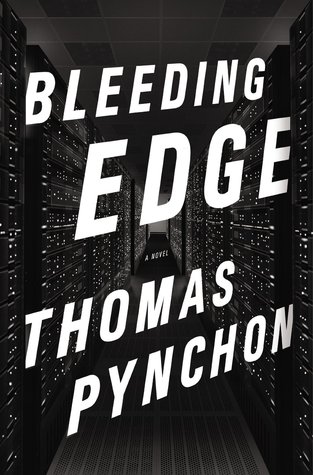
bleedingedgeThomas Pynchon, Bleeding Edge: Several reviewers were needlessly hostile to Pynchon’s latest volume, blaming the famous recluse for not delivering another Gravity’s Rainbow. But Bleeding Edge is not only a very funny book stacked to the nines with references (meticulously documented by the good folks at Pynchon Wiki). It’s a loving and sometimes irreverent portrait of the end of the 20th century and perhaps the end of America’s soul, reading at times like a call and response to William Gibson’s Pattern Recognition with its many simulacra, its worlds within worlds, and its fraud investigator Maxine Tarnow, much like Cayce Pollard, trying to make sense of some digital plot tied in with organized crime as the very real factor of family comes increasingly closer into the picture.

roxanaorbinsonRoxana Robinson, Sparta: It’s absolutely criminal that Roxana Robinson’s carefully observed study of an Iraq War veteran returning home hasn’t received wider recognition. Perhaps some readers were too busy wasting their time blasting Jonathan Franzen over his latest grumbling or writing another installment in the meaningless snark vs. smarm war. Whatever the reason, it’s a poor excuse to ignore this honed, gut-wrenching novel revealing just what happens when you cannot return to the life you gave up, along with the psychological costs of being left for dead even after you escape a mortal fate on the battlefield. Like Messud, Robinson probes with wisdom and sensitivity into every anger-inducing quality of her protagonist, Conrad Farrell, who cannot even be solaced by his classics education. As we come to realize that not even a stable family is panacea for PTSD or returning home without a clearly defined role, we begin to understand how callous this nation has been to the men we asked to do the dirty work. And if the “hard, burnished carapace” of spent men hollowed out Sparta, what is it doing to our nation today? This is a vital and needlessly ignored work of fiction. (Bat Segundo interview, 55 minutes)

nucleartestEric Schlosser, Command and Control: Thirty-three years ago, the United States came very close to a nuclear holocaust in Damascus, Arkansas. In a Titan II silo, an overworked airman dropped a socket wrench, which pierced the skin on the missile’s fuel tank, causing poisonous oxidizer to permeate through the air. The W-53 nuclear warhead mounted at the top of the missile came very close to exploding. This is all documented in Command and Control, which also covers our reckless history of avoiding safety and taking shortcuts to maintain missiles. It’s a sobering and necessary reminder on how unsafe we have been in the past and how reckless we may be operating today, as other nations develop the same nuclear capabilities (and concomitant measures) that we once had. (Bat Segundo interview, 56 minutes)

sloukacloseMark Slouka, Brewster: I’m going to confess that when I first read Mark Slouka’s novel, I was a little suspicious of its narrative swagger. Here was a book told from the story of a teenager named Jon Mosher who seemed to talk just a little too tough. But as I read on, I realized that this was the point. If you’re not part of the panorama that other people insist is the one to watch, then aren’t you going to speak a little louder? Brewster describes life in the more blue-collar area of upstate New York, portraying teenagers who didn’t have the bread to attend Woodstock and who need friendship to make it past the hidden brutality of daily life. Slouka is smart enough to reveal Brewster as a town where nearly everyone comes from somewhere else. Jon Mosher, the book’s narrator, portrays Ray Cappicciano is a sleek bad boy who can skim his finger across any metal surface. But as the reader gets to know Ray Cap, we come to understand how not being known reveals hidden torrents of other people’s cruelty. (Bat Segundo interview, 61 minutes)

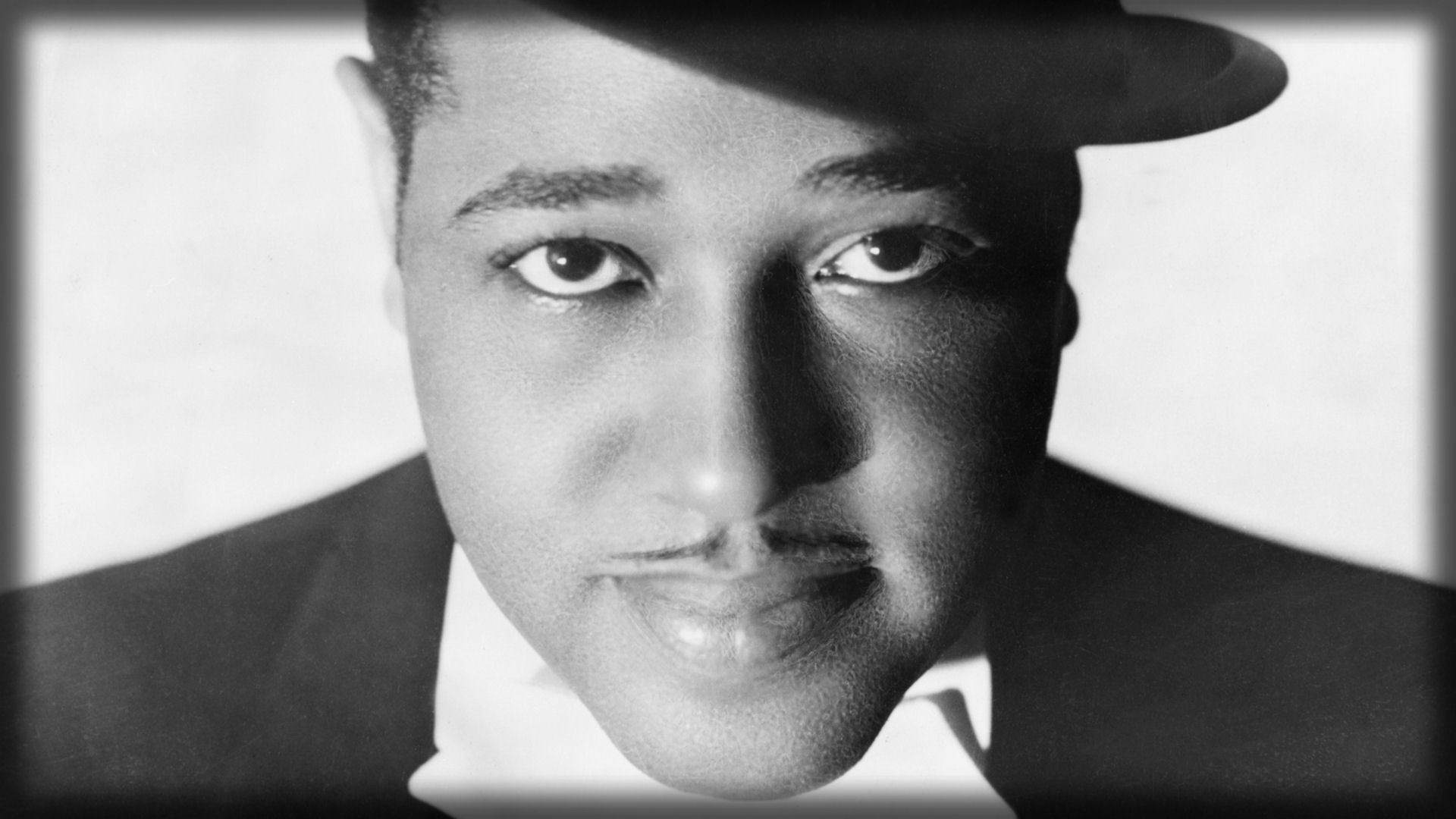
dukeellingtonTerry Teachout, Duke: Teachout’s biography of Duke Ellington is arguably his smoothest and best-researched book. Longlisted for the National Book Awards, Duke demonstrates, like the best of arts-related biographies, that it is as much about chronicling the culture that allowed Ellington to flourish as it is about revealing the niceties of this titanic jazz figure. Thanks to Teachout, I spent large chunks of a weekend listening to all sorts of music, tracing, for example, Bubber Miley’s solo on “East St. Louis Toodle-oo” to Jimi Hendrix’s wah-wah work on “All Along the Watchtower” after Teachout found a fascinating connection. I was happy to fall down this YouTube rabbit hole and follow the eventful ups and downs of a man who could be found dazzling audiences at the Newport Jazz Festival one minute and appearing with Herman’s Hermits on The Ed Sullivan Show the next. (Bat Segundo interview, 50 minutes)

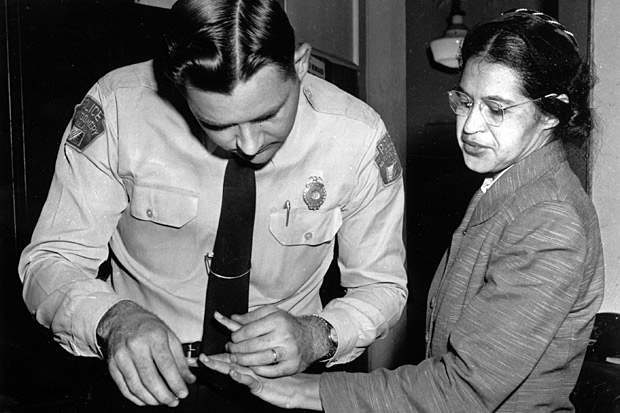
rosaparksJeanne Theoharis, The Rebellious Life of Mrs. Rosa Parks: Released at the beginning of the year, Theoharis’s meticulously researched volume of the woman who refused to give up her seat reveals a far more sophisticated and politically active figure than the one in the history books. This is a much needed replacement for such cheap hagiographies as David Brinkley’s Rosa Parks: A Life that reveals everything that happened after the famous day in Montgomery. It exposes the sexism of Black Power, shows how numerous statesmen attempted to co-opt Parks to gain extra footing during their careers, and illustrates the costs and personal hardships of being a revolutionary. (Follow Your Ears #5, “Rosa Parks: Not Just a Meek Seamstress” radio segment at 47:16)

jesmynward3Jesmyn Ward, Men We Reaped: Jesmyn Ward remains one of our most vital chroniclers of American life. This searing yet understated memoir examines why racism continues to flourish and why so many young black men continue to die. It looks into how five needless deaths, including West’s own brother, affected and informed her own life. It’s a deeply affecting book which points out how the deck is stacked against you if you’re a young African-American living in Mississippi. But it also reveals how stories allow us to live and understand and possibly break out of some of these vicious cycles. Maybe if we focus our attention into how other people live, we may just come up with a new way of storytelling that allows us to lob some stones at the incompetent political forces that would prefer to shut down our government than address our deepest needs and our greatest ills. (Bat Segundo interview, 42 minutes)

* I also started another reading project, The Modern Library Nonfiction Challenge. I am presently reading Ian Hacking’s The Taming of Chance and will be writing about the volumes before this in the next few weeks.