Ignored and Overlooked Books in 2013

(A version of this post originally appeared at Our Man in Boston. This piece was copyedited — with all book titles and author spellings corrected — before being published on Reluctant Habits.)

[EDITOR’S NOTE: Prolific literary journalist Robert Birnbaum, whose conversations have adorned The Morning News, Identity Theory, and The Los Angeles Review of Books, decided to combat year-end list fatigue by contacting several esteemed authors. He asked them to remark upon books they felt were ignored or overlooked. Some of the authors named titles published in 2013. Others expanded the possibilities to the entire history of published literature. What follows is the result of Birnbaum’s grand experiment, along with some sentiments from Birnbaum himself.]
* * *

b13aAdult onset solipsism can be distinguished from the youth version of self-centeredness by the admission that, as Van Morrison croons in “The Meaning of Loneliness,” “it takes a lifetime just to know yourself.” Thus, one is beset with constant instances of self-doubt and self-interrogation. One coping mechanism or technique I have employed to gain a foothold on serenity and enlightenment is to regulate or gate-keep my intake of information, allowing my intuition to guide me. For example, I am prepared to make decisions on what to investigate further past a snappy headline or synopsis. As in my immediate disinterest for going any further in the text when I encountered this fatuous mandate at Arts and Letters Daily: “‘Undergraduates should be kept away from theory at all costs,’ says _____ __________. ‘They should read Kael, not Derrida…'” Immediately sensing its syllogistic unsoundness, I saw this bit of grandiloquence as the kind of Tourette’s outburst one might encounter at a faculty meeting or a party. Of course, one of the joys of engaging this form of short form journalism (web journalizing) is the opportunity to engage in such orotund pronouncements.
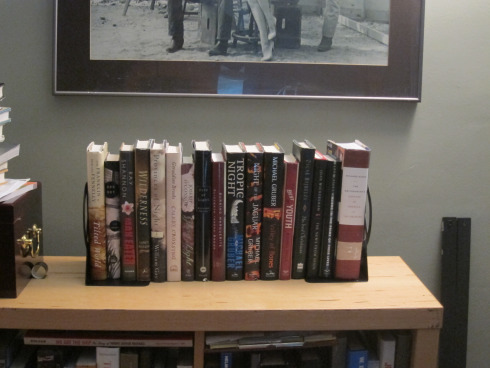
(Photo: Robert Birnbaum)

Some Ignored Titles (Photo: Robert Birnbaum)

Okay. For the longest time, I had an aversion to lists, viewing them as a lazy journalistic ploy to contribute to the ongoing dumbing down of everything (uh, I still think I am correct about that). On the other hand, I can see some creative usefulness in lists. Umberto Eco creates some that interesting. And then there is Paul Zimmer’s poem, “Zimmer Imagines Heaven,” where in his recording of it introduces it as a “list” and encourages people to make their own lists:

I sit with Joseph Conrad in Monet’s garden,
We are listening to Yeats chant his poems,
A breeze stirs through Thomas Hardy’s moustache,
John Skelton has gone to the house for beer,
Wanda Landowska lightly fingers a clavichord,
Along the spruce tree walk Roberto Clemente and
Thurman Munson whistle a baseball back and forth.
Mozart chats with Ellington in the roses.

Monet smokes and dabs his canvas in the sun,
Brueghel and Turner set easels behind the wisteria.
the band is warming up in the Big Studio:
Bean, Brute, Bird and Serge on saxes,
Kai, Bill Harris, Lawrence Brown, trombones,
Klook plays drums, Mingus bass, Bud the piano.
Later Madam Schumann-Heink will sing Schubert,
The monks of bendictine Abbey will chant.
There will be more poems from Emily Dickinson,
James Wright, John Clare, Walt Whitman.
Shakespeare rehearses players for King Lear.

At dusk Alice Toklas brings out platters
Of Sweetbreads à la Napolitaine, Salad Livonière,
And a tureen of Gaspacho of Malaga.
After the meal Brahms passes fine cigars.
God comes then, radiant with a bottle of cognac,
She pours generously into the snifters,
I tell Her I have begun to learn what
Heaven is about. She wants to hear.
It is, I say, being thankful for eternity.
Her smile is the best part of the day.

So, here’s a list (of sorts) that I created. I considered offering reasons for my choices, but I decided to rely on your good opinion of me and your curiosity:
b13c

Additionally, I asked some bookish acquaintances for their recommendations of overlooked books that come to mind. (These are pretty much reprinted as I received them.)
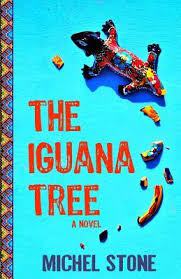
b13dElizabeth Cox, novelist, Night Talk (Random House):

One overlooked novel I would like to add to the list is The Iguana Tree by Michel Stone. My husband (Mike Curtis) edited that novel and it is a good story.

* * *

David Rieff, author, Swimming in a Sea of Death: A Son’s Memoir (Simon & Schuster):

Randall Jarrell’s Pictures from an Institution
* * *

b13fRobert Stone, novelist, Death of the Black-Haired Girl (Houghton Mifflin Harcourt):

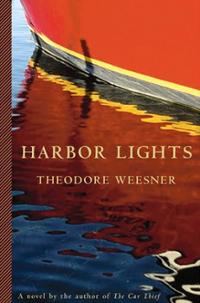
Off the top of my head, I recall only one, and I’ve forgotten the author’s name. There was a novel about a man in Maine published some years ago, called Harbor Lights. It was reviewed “In Brief” at the New York Times Book Review. A short, excellent novel.
* * *

b13gKatherine Powers, literary personage, author, Suitable Accommodations: An Autobiographical Story of Family Life (FSG):

So, I don’t know about “tragically.” By “overlooked,” I would mean that most people haven’t heard of the following titles. They are all A+:

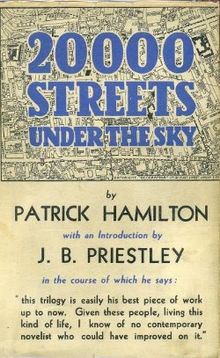
20,000 Streets Under the Sky by Patrick Hamilton
The Armstrong Trilogy by Roy Heath
In Hazard by Richard Hughes
The Golovlyov Family by Mikhail Saltykov-Shchedrin

* * *

Richard Russo, award winning novelist, author of Elsewhere, (Knopf), screenwriter (The Ice Harvest):

But for my bookseller daughter Emily’s recommendation, I doubt I’d have come across A Marker to Measure Drift. You might want to check to see if it did better than I imagine, but my sense is that it slipped into oblivion, and the last scene in the novel is as brutal and breathtaking as anything I’ve read in a long time.
* * *

b13hRon Rash, novelist, The Cove (ECCO):

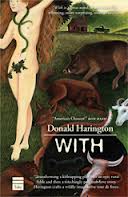
With by Donald Harington. Harington is America’s Chaucer.
* * *

b13iEdwidge Danticat, novelist, Claire of the Sea Light (Knopf), humanitarian:

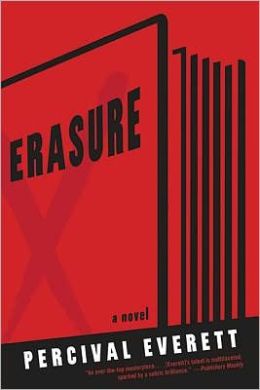
I’d say many of Percival Everett‘s novels including Erasure. Everett is as a brilliant at creating narratives as he is at bending genres. He has one of the least classifiable careers, but one of the most brilliant, in American letters. Everett’s 2001 masterpiece, Erasure — a parody of the African-American urban novel — offers a lyrical critique of a publishing establishment which continues to pigeonhole writers, particular African-American writers. Everett is also a respected poet and painter. His previous honors include: The PEN Center USA Award for Fiction, the Hurston/Wright Legacy Award for Fiction and the Dos Passos Prize.
* * *

b13jJoseph O’Connor, overlooked Irish novelist, Where Have You Been? (Harvill Secker):

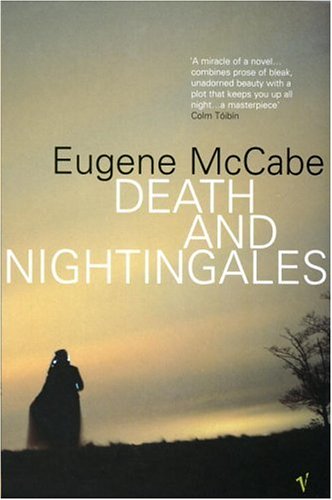
Tragically overlooked novels? Well, all of mine, for a start. But do you mean tragically overlooked novels from 2013 or in general? In my view, Death and Nightingales by Eugene McCabe is one of the great novels of the late 20th Century. It’s a story of thwarted love set in 1883 in rural County Fermanagh, on the border of Ulster and what is now as the Republic of Ireland. The events of a single day in the life of Elizabeth Winters provide the plot, which is so utterly gripping that you can’t stop reading. But McCabe smuggles in all sorts of darkness and depth. This is a truly brilliant book about racism, gender politics, and political rage, but the subtle (and supple) language weaves you into the story with such fierce and clever grace that you never feel you’re attending a lecture. It’s got touches of Coetzee and Faulkner, but it’s a mesmerizing smolder all on its own. If you’ve ever doubted the novel’s power to express realities that politics can’t reach, you need to read this magnificent thing.
* * *

b13kStuart Dybek, author, Northwestern University mentor, Paper Lantern: Love Stories (FSG, forthcoming):

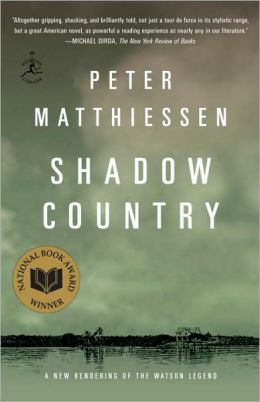
I don’t know how “overlooked” Peter Matthiessen’s Far Tortuga is, but I saw it on no lists whatsoever when the millennium nonsense was going on and I don’t think there’s been a change since.

* * *

David Thomson, cultural encyclopedia, author Moments That Made the Movies (Thames & Hudson):

Troubles by J.G Farrell. If you don’t think it’s overlooked, then try The Purchase by Linda Spalding.
* * *

b13lDarin Strauss, author, Half a Life: A Memoir (McSweeney’s), NYU mentor:

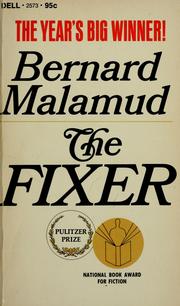
I don’t know what counts as forgotten anymore. The Fixer, which is tough and beautiful and unsentimental in its treatment of something awful? Perhaps Memento Mori, which I just read and which taught me about the consoling half-thoughts and cruelties, the passing cruelties of stupid people. (In other words, most dumbasses will act dumb and assy and never feel bad about it, will come up with reasons, in fact, to feel good about the immoral way they act.) Or maybe The Statement by Brian Moore, which is a perfect thriller, a smart philosophical treatment of evil and racism, a fun read, and about an afternoon’s read?

All of the above?
* * *

b13mBrian Doyle, novelist, Mink River (University of Oregon Press), editor of Portland:

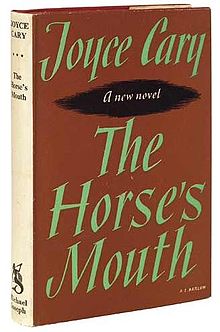
Hmmm. Maybe The Horse’s Mouth by Joyce Cary. Best novel I ever read, period, but not one that many people have on their shelves. Also made into a terrific movie, which is a rare case of a glorious novel being made into a glorious movie. The few others I know: Little Big Man, To Kill a Mockingbird, A River Runs Through It, Lord of the Rings, The Year of Living Dangerously, maybe The English Patient, maybe Master and Commander.
* * *

b13nDaniel Olivas, novelist, The Book of Want (University of Arizona Press):

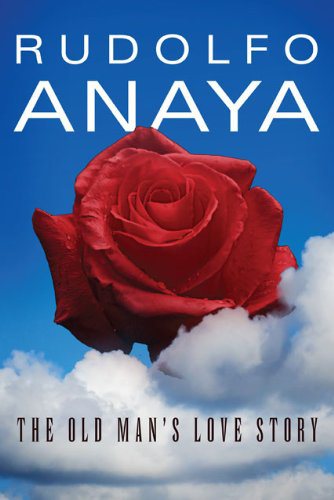
The Old Man’s Love Story by Rudolfo Anaya

I interviewed him for the first print. Enjoy the list-making edition of the Los Angeles Review of Books regarding this novel. It’s quite beautiful, but did not receive the kind of coverage it should have.

* * *

Michael A. Orthofer, editor, éminence grise, editor of The Complete Review:

Way too much gets way too overlooked, but I guess I’d suggest: Where Tigers Are at Home by Jean-Marie Blas de Roblès (which seems to have gotten almost no review — and little reader-attention). Runner-up: Tirza by Arnon Grunberg, which got a bit more attention but nowhere what it deserves (it’s a best-of-year contender) —- perhaps overshadowed by Herman Koch’s somewhat similar (and considerably inferior) The Dinner. Still: that’s just the tip of the overlooked iceberg.

* * *

Ben Fountain, award-winning author, Billy Lynn’s Long Halftime Walk (Ecco):

Several come to mind:

Little Big Man by Thomas Berger. I don’t know if it could be called “tragically overlooked,” given that it was made into a blockbuster movie in the late ’60s, but nobody talks about it much these days. I think it’s one of the Great American Novels. Top ten for sure, maybe top five.

We Agreed to Meet Just Here by Scott Blackwood. A lovely, short novel that came out about seven to eight years ago. It won the AWP award, and Scott subsequently got a Whiting Award on the strength of it. It’s just about perfect. His forthcoming novel from Knopf is even better.

The Gay Place by Billy Lee Brammer. A novel of Texas politics, published 1961 or ’62.

* * *

Robert McCrum, author, Globish: How English Became the World’s Language (W.W. Norton):

Hadrian the Seventh by Frederick Rolfe.
* * *

b13oAllan Gurganus, novella-ist, Local Souls:

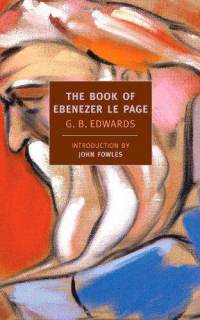
The Book of Ebenezer Le Page by G.B. Edwards: This is the single novel by a bureaucrat who spent his life on the Isle of Guernsey. G.B. Edwards imagined a trilogy of such works but he died in a mainland boarding house with this manuscript under his bed. The landlady got it published in 1981. The work is erotic, tumultuous and heroic as a Beethoven symphony. We get the twisted history of incestuous island families. We get the German occupation of the island during World War II. Love stories are offset by men battling the ocean and its creatures. This novel, a rare instance of folk art in narrative, deserves a larger readership, a secure place in our literature.
* * *

b13pGary Fisketjon, veteran editor at Knopf:

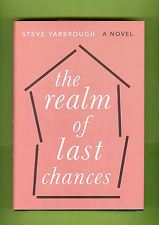
Indeed, I could fill a volume in that category with many new additions every fucking year. But given that we’re in 2013, I’d say that Steve Yarbrough’s The Realm of Last Chances has been overlooked most tragically. That’s one reason my only lingering resolution -– to quit smoking -– always fails to get any real traction.

* * *

Billy Giraldi, novelist, Busy Monsters (WW Norton), critic, essayist, long-form journalist editor, Agni:

Indeed. Caleb Williams by William Godwin and The Woman in White by Wilkie Collins. Neglected masterworks of suspense, both of them. Divinely written.
* * *

b13q
Hari Kunzru, novelist, Gods without Men (Knopf):

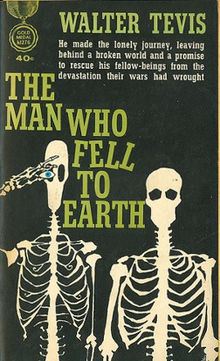
I’ll nominate Walter Tevis’s The Man Who Fell To Earth. Bowie fans have seen the movie, but the book is beautiful and poised. As if Richard Yates wrote speculative fiction.
* * *

b13rJoseph Epstein, short fiction writer, The Love Song of A. Jerome Minkoff: And Other Stories (HMH):

1. Giuseppe Di Lampedusa’s The Leopard.
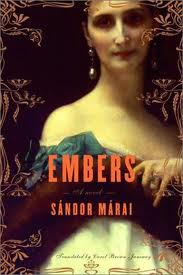
2. Sándor Márai’s Embers.

I’m not sure if these are tragically overlooked or merely insufficiently well-known, but both are swell novels.
* * *

b13sSven Birkerts, Literary Man for All Seasons, editor, Agni, memoirist, writing program administrator (Bennington):

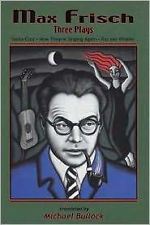
I’m Not Stiller by Max Frisch
The German Lesson by Siegfried Lenz
The Death of a Beekeeper by Lars Gustafsson
* * *

b13tTom Piazza, novelist, City of Refuge (Ecco), screenwriter (Treme), musical connoisseur:

I’d have to vote for Buddenbrooks by Thomas Mann, in the H.T. Lowe-Porter translation. Mann is underread in general these days, but Buddenbrooks was a masterpiece. People tend to think it’s just a 19th century family saga, but it’s really a book that combines 19th century techniques and sonorities with startlingly modern technical strategies that get missed because they work wholly in the service of the narrative. It’s almost like a Mahler symphony — one foot in the 19th century and one stepping off the cliff into the unspooling chaos of the 20th. Very important to get the old Lowe-Porter translation. Random House made the mistake of letting somebody “update” the translation and they ruined it, sort of the way Pevear and Volokhonsky ruin the Russians.

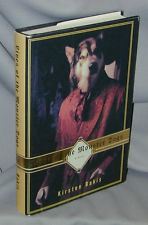
Among contemporary books, Lives of the Monster Dogs should have made Kirsten Bakis a big literary star.

* * *

Susan Bergholz, nonpareil and sage literary agent (Eduardo Galeano, et al):

Here you go. Can’t do just one! Log of the S.S. The Mrs. Unguentine by Stanley Crawford, simply the best book about marriage ever written in the US by a living treasure. The Power of the Dog by Thomas Savage: dead now, extraordinary work. An Imaginary Life by David Malouf: a pitch-perfect novel, except for the Afterword. The Time of Our Singing by Richard Powers, our most brilliant and amazing male novelist; makes Franzen and company sound as though they are writing soap operas. Prepare for his novel out in January, Orfeo: stunning!

I forgot one very important novel: Caramelo by Sandra Cisneros
And another one: In the Palm of Darkness by Mayra Montero
And: Their Dogs Came with Them by Helena Maria Viramontes.
Okay. I’ll stop now!
* * *

b13u
Blake Bailey, literary biographer, Farther & Wilder: The Lost Weekends and Literary Dreams of Charles Jackson (Knopf):

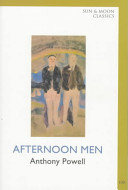
The Lost Weekend, of course. And Anthony Powell’s first novel, Afternoon Men.

* * *

Alissa Nutting (The Bat Segundo Show #529)

Alissa Nutting is most recently the author of Tampa.

Author: Alissa Nutting

Subjects Discussed: Unclean Jobs for Women and Girls as preparation for Tampa, how to build up immunization against narcissism and sociopathy, people who have called for Nutting’s demise, becoming enslaved to a character, contending with a protagonist who has no moral compass, incorporating hate mail into your daily routine, writers who are able to manage intense emotional characters, writers as mediums, Sylvia Browne, avoiding novels that are sunshine and teddy bears, pleasant weather in Tampa, PTSD moments that novelists experience, how Celeste encouraged the propagation of mean jokes inside Nutting’s head, attempts to be a positive person, why horror writers are so nice, literary novelists as passive-aggressive dicks, parallels between acting and teaching, teachers who can’t remember students, a porous memory as an occupational advantage, the state of being 400% bubbly, parents and memory vacations, Celeste’s sexuality defined almost exclusively in power, the inability of America to consider that women in power can abuse it, the evils of Slate articles, people who get riled up by The Cuckoo Clock of Doom, the advantages of not having a safe place, the scourge of happy movies, being angered by The Sound of Music, obnoxious musicals, the benefits of gloomy art, Kiese Laymon, the problems with cultural engagement, A.M. Homes’s early fiction, violence within David Foster Wallace’s short stories, why America is growing more reactionary in its fiction tastes, side characters within Tampa, Celeste pinpointing upon the corporeal form of people she isn’t attracted to, operating within a world of physical perfection, assumptions made by TV pundits, how Celeste doesn’t talk about her parents, examining extraordinary behavior without explanation, the best male monsters in fiction, how being a daughter can be a powerless role, Samuel R. Delany and poronotopia, Through the Valley of the Nest of Spiders, Fatal Attraction, Dhalgren, teachers at the mercy of No Child Left Behind, students who are bound by an anti-PDA contract, martyrs who live on the poverty line, reduced freedom of expression for teachers, the teacher surveillance state, trading in your classics degree for an educational one, why today’s kids are still interested in engaging with literature, Lord of the Flies as a Christmas story, teaching “The Pit and the Pendulum” without understanding it, when kids are smarter and more curious than adults, shock collar fantasies, teachers who go crazy, education as a dating service, Celeste’s metaphysical ideas about the soul and the body, language and metaphor, impoverished bands who refuse to write pop songs, how similes can kick you in the brain, Nutting’s love for the first-person, the contrast between thought and action, the inspiration that emerges from a boring childhood, Nutting’s Catholicism, John Waters, giving characters “thought vacations,” America’s indebtedness to religious language and principles, having family conversations about how we pretend, the extraordinary conditions it takes to miss church, taking off the Catholicism glasses to get inside the head of a pedophile, hedging your bets against intense obsession, when teachers teach behavior more than knowledge, Celeste being dictated by her smells, the Jack-Celeste relationship defined by food, insouciant perversity, why comedy is the scariest thing in the world, obsession and objectivity, the presentation of moral behavior and problems with neutrality, the desire to write a book with a soulless protagonist, soulless characters conveyed through language rooted in soul, men with monosyllabic names who transform into steak-eating, cigar-chomping, bear-swilling Visigoths, exhibition and parental duties, the terror of returning to the womb, notions of the dream woman, and being oblivious when everybody is watching.

EXCERPT FROM SHOW:

Correspondent: I wanted to start with some of the stories in Unclean Jobs for Women and Girls. Because I read this collection, and it seems to me that this was unknowing preparation for developing Celeste’s character in Tampa. We see in “Teenager” that it depicts much of the familiarity with school-related procedures, adults who determine what behavior is appropriate, the counselor who says, “I’m here to tell you all about your choices.” But then you have these — and I’m out of breath because I was running around cleaning up a beer mess.

Nutting: That is true.

Correspondent: So if I sound like I’m hehuhhehuh, suitably like some of the male characters in Tampa

Nutting: (laughs)

Correspondent: Anyway…but then you have these surrealistic stories like “Ant Colony” and “Porn Star,” where you’re examining behavior related to intimacy in this kind of phantasmagorical context. So I’m wondering. How did writing these stories force you to get at the truths of Celeste’s aberrant behavior or deviant behavior in general? How did a fantastical tilt towards perversity aid you in becoming braver and truer as a writer?

Nutting: Yeah. That’s a great question. I mean, I’ve always been really attracted to female characters that are on the margins. And I think that this was. I can kind of relate it to immunizations, where you get a tiny bit of a virus and then you build up more and more immunity.

Correspondent: A virus? (laughs)

Nutting: Yes. I think these stories were my first experience with a virus. And after I was done with all of them, I could just withstand such a walloping dose or narcissism and sociopathy. Celeste was a pretty natural progression.

Correspondent: So you joined the Peace Corps, went to faraway countries, inoculated yourself from all hypothetical problems.

Nutting: (laughs) Right, right.

Correspondent: Do you think you developed empathy for this type of scoundrel?

Nutting: You know, what I did develop is this ease to see the humor in extremity and in perversity. That’s one of the questions that I get most often about Celeste. To what extent do you empathize with her or not? And it’s funny. Because I don’t think Celeste cares if someone empathizes with her. I feel a little proud that I made a character that is that much beyond my judgment. I mean, she just would not give a shit what I think about her. Or anyone else. I think that that’s kind of great. Because one of the things that I’ve explored so much in Unclean Jobs is different social pressures for women. And a lot of the characters really experienced and felt those social pressures as a form of pain. Because they didn’t live up to them or they didn’t resonate with them or they were not that individual’s experience of being in the world. It did not match what they saw. The behaviors they were asked to do and emulate. So I think in that way too, it was a fine marriage to pair myself with someone that just was further past anyone I’d written about before.

Correspondent: Well, what you just said there about how Celeste just really wouldn’t care if you empathized with her — if the writer, if her god, empathized with her — that is interesting to me. Because she is very clearly an emotional character. So if you have an emotional relationship with the character, how do you do it without empathy? How do you summon it like that? Or do you feel that such moral definitions are just outside the scope of what you should be doing as a fiction writer?

Nutting: Yeah. And that’s another huge aspect of the discussion.

Correspondent: The Discussion? (laughs)

Nutting: Yes, The Discussion.

Correspondent: The people with pitchforks calling for your demise. (laughs)

Nutting: (laughs) Yeah, and the pitchforks are on fire. And there’s all kinds of pyrotechnics when people are talking about you.

Correspondent: Burning crosses on various literary websites.

Nutting: Oh definitely.

Correspondent: What should be done with you? Have you been getting serious…

Nutting: Oh yes. Yes. I get hate mail. Like I wake up getting hate mail.

Correspondent: Like how much do you get generally?

Nutting: Well, it’s tapered a bit since the fall. In the summer, I was getting five or six a day.

Correspondent: Oh okay. I’ve gotten about that much when I write something inflammatory. So you and I are buds here. (laughs)

Nutting: Nice! And it was weird. Because it actually became integrated into my day.

Correspondent: (laughs) The routine of responding to hate mail!

Nutting: Yeah. It was like make my coffee, see who wants to kill me.

Correspondent: (laughs)

Nutting: Move my bowels and go to Pilates.

Correspondent: Maybe the best way is to check your mail when you’re moving your bowels.

Nutting: Yeah.

Correspondent: On the phone? It’s the best way to deal with it in that position.

Nutting: It’s funny.

Correspondent: If you’re going to get shit, you may as well expel it.

Nutting: Right! Right. I never respond to it.

Correspondent: Well, we got scatological pretty quick. (laughs)

Nutting: Sorry. That’s the hazard of having a conversation with me.

Correspondent: Or me.

Nutting: I mean, it’s interesting. Because partially, once I really got into her voice. Once that template was melded into my brain, I mean, I really feel like she just rode me around like a horse. And I was just crawling on my knees in a dog collar. “Yes, Celeste. Okay, Celeste. I will, Celeste.” Like it wasn’t…

Correspondent: You couldn’t just manage the character and say, “No. You know what? Celeste, you can do whatever you want. But you ain’t going to get me!”

Nutting: (laughs) No.

Correspondent: Really?

Nutting: I mean, I just felt like I had to submit to her truly. But one of the conversation aspects that the book has sparked is that, on one count, it’s literature must be redemptive. And if it is not redemptive, it shouldn’t be written about. Or it’s a worthless book. And then on the other side, it’s people who can see worth in a book that is not redemptive.

Correspondent: That has no moral compass whatsoever.

Nutting: That has zero moral compass. That is what I felt I had to do, particularly with the subject, with a female protagonist. Particularly as a female writer. I just felt that the expected trajectory to write about the situation would be to do it dramatically and with sympathy and have some kind of level of rationalization that would be easily digestible for readers. Which is exactly why I felt that I can’t do any of that. I have to do the opposite. Because I don’t think people would blink. That conversation’s already out there. We’re already taking that line to its thus far unproductive end. And I wanted to do something that would shake up the patterns that we seem to have fallen into in talking about this behavior.

Correspondent: At the risk of possibly objectifying you, I still have this image of you on all fours answering to Celeste’s orders.

Nutting: (laughs)

Correspondent: I’m curious to know more about what this was like. You’re the author. You say what goes. You can push back against a character’s whims or you can go ahead and say, “Yeah! Do it! It’s not going to affect me.” I’m wondering why you felt you were basically the bottom here. (laughs)

Nutting: Yeah, yeah. I mean, intellectually, what you’re saying makes perfect sense. But that was not how it felt to me. Like that was not how she felt to me. And I mean, I really was a wreck. It was not uncommon for me to just work on the manuscript eight or nine hours a day, not leave the house, not eat except for coffee. It was just manic. And my partner would come home and we’d be talking. He was like, “Where are you?” And it would take me a while to get out from under. I mean, she likes slipped me roofies on the regular.

Correspondent: Wow.

Nutting: I mean, that’s how it felt. I’m like, “What happened? Where am I?” I have these hazy, disturbing images in my head.

Correspondent: Did she cause you to wake up on a park bench somewhere in Cleveland?

Nutting: (laughs) Luckily it didn’t go that far.

Correspondent: So you do have some control against Celeste!

Nutting: I think that if I had resisted her, she would have shown me zero mercy. And, yeah, I would have woken up on a Greyhound bus having urinated all over myself.

Correspondent: You would have knocked on this door and we would have had to check you in somewhere.

(Loops for this program provided by 40a, bdenney, striddy2, and hennasee.)

The Bat Segundo Show #529: Alissa Nutting (Download MP3)

This text will be replaced

Terry Teachout (The Bat Segundo Show #525)

Terry Teachout is most recently the author of Duke. He previously appeared on The Bat Segundo Show #314.

[PROGRAM NOTE: There are a few modest errors in this program, all of them spoken by Our Correspondent. Our Correspondent referred to the “National Front,” when he meant the “Popular Front.” He misstated the year of Duke Ellington’s comeback concert at the Newport Jazz Festival. It was 1956, not 1959. There are also a number of moments where Our Correspondent refers to Duke Ellington as “the Duke.” We strive to keep this show as accurate as possible and apologize for these errors.]

Author: Terry Teachout

Subjects Discussed: Guther Schuller’s Early Jazz, vertical harmony vs. horizontal melody, the way Ellington used his musicians, David Hajdu’s Lush Life, Ellington’s exploitation of Billy Strayhorn, Ellington’s ability to attract women close to his death, attempts to track Strayhorn’s true contributions, what pop songs reveal about Ellington’s composition skills, transformative art vs. plagiarism, the Cotton Club, playing racially segregated venues, broadcasting on CBS Radio, William Paley, Irving Mills as publicist and manager, Ellington’s terrible management skills, his tolerance of drunken and drugged up musicians, Paul Gonslaves, Ellington’s comeback at the 1956 Newport Jazz Festival, appearing on The Ed Sullivan Show with Herman’s Hermits, the decline of jazz and the rise of R&B, the ribald songs of the 1920s written by Jimmy McHugh, Bessie Smith’s “Kitchen Man”, Dorothy Fields’s lyrics, high-class talents writing smutty songs, Ellington’s emulation of pop, why Duke Ellington is sexy, the suggestive qualities of “Warm Valley,” Ellington’s remarkable promiscuity (and his adroit skills in using as many as four hotel rooms at once in one city), the influence of Bubber Miley’s solo on “East St. Louis Toodle-oo” on Jimi Hendrix’s wah-wah, how Ellington surrounded himself with master musicians, viewing Ellington as the auteur of the band, Johnny Hodges, Harry Carney, why Ellington’s band members kept coming back, Cootie Williams leaving Ellington’s band for Benny Goodman, Raymond Scott’s “When Cootie Left the Duke,” Clark Terry, why Ellington’s best soloists didn’t function as well when they tried to make a break on their own, Billy Strayhorn’s body of work, the one interview that Edna Ellington gave to Ebony, the circumstances that caused Duke’s scar on his left cheek, why Duke and Edna stayed married, Duke’s philandering, Ellington’s fear and distrust of women, the value of Betty McGettigan’s oral history, networks of Ellington gossip, plausible vs. usable material, the mysterious Countess Fernanda de Castro Monte, fakes who contain multitudes, women who are prepared to lick the feet of geniuses, Ellington’s contradictory politics, Ellington’s idea of fighting segregation through paying people, his views on the 1963 March on Washington, Ellington winning the NAACP’s Spingarn Medal, Ellington’s Popular Front activities, Jump for Joy, Ellington’s pecuniary political commitment, fame and money as the road to equality, being a member of the black bourgeoisie, Ellington’s devastation over not getting the Pulitzer Prize, the tight-lipped Teachout moment, John Hammond’s inept evisceration of “Reminiscing in Tempo,” the difficulties of synthesizing one man’s life, Mercer Ellington, quintessential connections between geniuses and their talented sons, the 1941 ASCAP strike, Herb Jeffries, John Garfield’s questionable suggestions about makeup, lighter skinned performers asked to darken their skin, Ellington’s sensitivity to questions of intra-prejudice, clueless white audiences and Duke, Ellington playing country clubs, the working life of a musician, Duke taking care of his fellow musicians, being beholden to marketing demands, a spontaneous 1940 recording in Fargo, North Dakota, the convergence of popular and sophisticated tastes.

EXCERPT FROM SHOW:

Correspondent: I want to start with a very geeky musical technical question. You point out that Duke Ellington thought almost exclusively in terms of vertical harmony rather than horizontal melody, that his best-known tunes were little more than elaborations on the top notes of chord progressions. You quote Gunther Schuller in Early Jazz about him noticing, “The parallel blocks of sound he favors so predominantly are handled with such variety that we as listeners never notice the lack of occasional contrapuntal relief.” You suggest that this compositional liability, which Duke was, in fact, able to work around led him to rely on other composers, other musicians, other band members. And, of course, he didn’t always share credit. So I’m wondering. To what degree was Duke himself aware of this creative liability? How was he able to keep so many of his collaborators, and even the audience who was listening to him, in the dark about this for so long?

Teachout: Well, a lot of it has to do with the fact that Ellington was the biggest public personality in his band. I mean, his great soloists, except for Ben Webster, who was known to beat up people, tended not to have that kind of flashy personality. So even though, if you look at the credits of a song like “I’m Beginning to See the Light.” You see Johnny Hodges’s name on there. You’re not going to think Hodges. You’re going to think of Ellington. Because Ellington is the trademark of the Ellington Band. And this is even true in the case of Billy Strayhorn, a composer of equal quality and I think equal genius to Ellington. But Strayhorn is completely in the background, doesn’t appear with the band. Maybe a half dozen times in the band’s whole life. I’ve only seen one bit of film with Strayhorn playing with the Ellington Band at a gig. So even though for the last fifteen years or so of their working together their albums were jointly credited to Ellington and Strayhorn, and that’s to be taken very seriously, the fact is that if you don’t know the score, if you don’t know how important Strayhorn is, you’re going to assume that Ellington is the senior partner.

Correspondent: Yeah. And actually there’s also a wonderful book by David Hajdu, Lush Life, as well. Let’s talk about Strayhorn. He’s one of the tragic figures in this book.

Teachout: Yes.

Correspondent: He’s a man who has composed and arranged many of Duke’s finest moments. Duke, as we are implying here and establishing here, was an incessant credit hog. And he strung Strayhorn along for decades. So I’m wondering. What was it about Duke’s charisma? It was so formidable that he even attracted women when he came close to death, when he was ill. Which was really impressive, I gotta say! (laughs)

Teachout: (laughs) I was pretty amazed by that myself. Yes.

Correspondent: What caused people like Strayhorn and other people who were robbed of their credit — what kept them coming back to Duke?

Teachout: He was what he was. He was a genius. I mean, Strayhorn became what he became because Ellington was his model. And also we have to talk about the specific nature of Strayhorn’s life and personality and why it worked for him to work for Ellington. Billy Strayhorn was a homosexual. You were not a homosexual who was out and a public figure. Least of all if you were black in the world of jazz in the ’30s and ’40s. This was not an option for Strayhorn. And Strayhorn, who was completely at ease with his sexuality, wished to live his life the way he wanted to live it. So he made a kind of bargain — with himself, with the world, and with Ellington — that he would remain on the sidelines. Ellington would pay him — quite generously as a matter of fact. Strayhorn essentially had the equivalent of a drawing account and could pretty much do whatever he wanted. And in return for this, in supplying this music and writing hundreds of uncredited arrangements for Ellington, he just steps back into the shadows and lets Edward, as he always called him — “We’ll let Edward do that” would be Strayhorn’s line. And Ellington, unlike Strayhorn, was not only a creative personality, but a kind of theatrical figure. Now one of Duke Ellington’s greatest creations was Duke Ellington, the man who goes out on stage with the fabulous outfits and the baggy eyes and the gorgeous bass baritone voice and the catchphrases. And he charms your socks off. Now even if he couldn’t have done all this, he would have still been Duke Ellington the great composer. But because he served it up with all that frosting, people whom might not otherwise have been drawn to him and especially, when we talk about race again, drawn to a black man in the ’20s and ’30s, this is a different kind of black man. This is the elegant presentable fellow. And that is an important part of what Ellington was. And Strayhorn knew, consciously or not, that he needed this kind of front man to lead the kind of life he wanted to lead and be able to have that great Ellington Band play his music the way it played Ellington’s music.

Correspondent: Do we really know in 2013 the full extent of Strayhorn’s contributions to Ellington? Because it’s come out over and over in the last several decades. We have suddenly understood, “Well, he did this. He did this.”

Teachout: It’s completely knowable now. Because the manuscripts have survived. And a lot of people in Ellington’s life and in Strayhorn’s life, and for many years after it, speculated about who wrote what. Now it’s not a matter of speculation. We know right down to the fact that Billy Strayhorn wrote the last ten bars of Ellington’s Harlem, for example. That’s the level of specificity that we’re talking about. So there is a debunking line that’s gotten about, that Strayhorn was the power behind the throne. And that’s just not true. In the suites that they wrote together, Strayhorn would normally compose maybe between a third and a quarter of the numbers. They were not written jointly. The movements are separate. There’s a Strayhorn movement. There’s an Ellington movement.

Correspondent: You describe that moment in the hotel room where they’re trading off. One’s asleep. The other composing.

Teachout: It’s a wonderful story.

Correspondent: There’s a monster movie playing in the background.

Teachout: It’s an unusual thing to have happen. So Strayhorn’s contribution is immensely important. And he didn’t get, for these complicated reasons we’ve talked about, complete credit for it. But most of the music that we believe is written by Duke Ellington is written by Duke Ellington, including virtually all of his major instrumental works. The real problem of attribution with Ellington is the pop songs. For me, that was the big surprise. When I started to go systematically into the Ellington output, I heard stories about this. I heard stories about that. But suddenly, as I looked at the work as a totality, the light went on. And I realized, “Well, of course! It’s the pop songs. Because he’s not a natural melody writer.” It stands to reason that that would be where he went. To those natural melody improvisers like Johnny Hodges.

Correspondent: Pop songs not only reveal Duke’s limitations. It also reveals how much he plundered from other people.

Teachout: Yes. That’s right. But there’s another side of it. It also reveals what his essential contribution is. In a song like “Sophisticated Lady” — that’s the most striking example of this — the main strain is by Lawrence Brown, the trombone player. The bridge, the release is by Otto Hardwick, the alto saxophone player. But it was Duke Ellington’s idea to take these two bar fragments and put them together in a 32 bar pop song and harmonize them and orchestrate it and create the total composition that we know as “Sophisticated Lady.” So who wrote what? The question is, and the answer is, Ellington didn’t write the melody. But it is his composer’s mind that took these two found objects, if you want to put it that way, and transformed them into the song “Sophisticated Lady.” So it’s a complex attribution problem. You can’t just sum it up by saying, “Oh yes. Duke Ellington was a plagiarist.” Duke Ellington was never — in the sense that a literary person normally uses the term — a plagiarist. He didn’t steal without telling you and then you looked up six months later and your work was in print under his name.

Correspondent: He was not the Jonah Lehrer of… (laughs)

Teachout: No, sir. Not in the slightest. Was he scrupulous? Not always. And sometimes he was entirely unscrupulous. And sometimes unscrupulous things were done in his name. A fair number of Strayhorn pieces — the royalties were copyrighted in Ellington’s name. But there’s no reason to assume that Ellington himself was responsible for that. It may, in some cases, just have been sloppy bookkeeping. But when Strayhorn finally did look into this, he was horrified and it led to a temporary break between the two men and ultimately to the renegotiation of billing that created the later Ellington/Strayhorn compositions where they always get equal billing.

Correspondent: I’m abashed almost to say this. But I have not once mentioned the Cotton Club in more than 500 shows of Bat Segundo.

Teachout: (laughs)

Correspondent: So thank goodness you wrote about it, Terry!

Teachout: Now’s the time.

Correspondent: Now is the time. And I wanted to get into this. You know, here was a segregated venue. A place that paid its performers quite handsomely.

Teachout: And mobbed up to the eyebrows.

Correspondent: That’s right. Langston Hughes railed against how most whites who attended the Cotton Club saw the cabarets rather than the houses of Harlem. Duke played there. But he didn’t really mention this other aspect of the Cotton Club in his memoir, Music is My Mistress.

Teachout: Right.

Correspondent: But he also broadcast on CBS Radio from the Cotton Club. This risk taken by William Paley. And he got the attention of the press simultaneously by playing midtown clubs. So he has these broadcasts through CBS that give him that national attention while simultaneously it had me wondering. Was there any other way for Duke to make his way to CBS without the Cotton Club? Was he going to face racial segregation no matter what path he took?

Teachout: Oh sure. Remember. We’re talking about 1927, 1928. Black bands get paid less. They get inferior gigs. So suddenly Ellington gets this break. And it’s an extraordinary break. The price he pays for it is he’s coming into a segregated club in the middle of Harlem, where the only way that a black person can get in is if he is very famous and then they put him in a table in a corner. Preferably in the shadows. But in return for that, the Cotton Club’s got a national radio wire on CBS. Every rich person in New York is going to hear him. The word gets around. And that radio wire suddenly puts Duke Ellington in your living room, no matter where you live. So I think the biggest break that ever happened to Duke Ellington was meeting Irving Mills. The second biggest — and it’s related to this — is going into the Cotton Club. That and Mills’s publicity campaign, presenting Ellington as a different kind of black man — you fuse those together and you get the root to the great success that Ellington had by the ’30s.

Correspondent: But when Mills was no longer around, Ellington seems to collapse. Did he really take any hard lessons? Did any of the hard lessons he learned from Mills get taken to heart in later years? Because I was reading this book and my mouth was agog at what a terrible organizer he was. He tolerated his band coming at odd hours. Any hour. Even not showing up to the actual gig. He tolerated musicians who were hopped up on heroin, who were alcoholic.

Teachout: His was the most irresponsible band maybe in jazz. But you have to remember that Duke Ellington had a very clear sense of priorities. He knew what he wanted. He wanted a band that would play his music every night. He was willing to put up with an enormous amount of nonsense from extraordinarily gifted players. Because they were the particular guys that he wanted on the stand at the time. He was never a businessman. And when he worked with organized businessmen after Mills — well, Mills really ran the show. But after that, they had to do things within the parameters of the way Ellington wanted them to be done. You know, if you’d brought in a hardass manager in 1956 to transform the situation with the Ellington Band, probably the first thing you would have done would have been to fire Paul Gonsalves, this man who was simultaneously an alcoholic and a heroin addict, who would nod off on the bandstand. But if you made that smart business decision, then you wouldn’t have had Paul Gonsalves on the bandstand for the 1956 Newport Jazz Festival, where he plays a million choruses and “Diminuendo and Crescendo in Blue” and the crowd explodes and Ellington is on the cover of Time Magazine. So I think in the long run, Ellington wasn’t interested in money. He wanted an operation that would allow him to lead the life he wanted, which was a life on the road, a life where a lot of women were passing through his life, a life lived in hotel rooms, and a life where his music gets played every night. He didn’t want to be a millionaire. He wouldn’t have known what to do with it.

Correspondent: But before that 1956 Newport appearance, he is really on the skids. I mean, it seems as if he is not going to come back. But even with that Newport appearance that is a huge sensation, he’s going onto Ed Sullivan and he’s sharing the bill with Herman’s Hermits.

Teachout: Well, yes, the world has changed. Ellington predates the Big Band era. But it was the booster rocket that made him the culture celebrity that he was in the ’40s. But he outlived it. After World War II, first big bands themselves become financially dicey. And then the whole flavor of pop music changes. You have rhythm and blues, which soaks up the black audience that was formerly in jazz. You have rock and roll becoming the lingua franca of modern music. And so by ’56, Ellington was perceived pretty widely as yesterday’s news. And it wasn’t just him. It was everybody who was playing that kind of music. This incredible good fortune that he had, of coming into the Newport Jazz Festival and getting on the cover of Time Magazine, which pretty much insured that for the rest of his life people who didn’t necessarily know much about jazz would know who he was. And you mentioned Ed Sullivan. Television exposure generally, but Sullivan in particular, is enormously important to Ellington in those last twenty years of his life. Because he is, as we said earlier, this personality. I looked through thousands of photographs to choose the ones for the book and they’re all good. You can’t take a bad picture of Duke Ellington. So you put a guy like that on television. And television was made for him. Just like it was made for Louis Armstrong. So even if Ellington went on Ed Sullivan — maybe he wasn’t playing particularly what you wanted to hear or the bill was an odd mixed one — the fact was that it was going out to the largest audience in television.

Correspondent: But I think we’re straying away from the point I’m trying to get from you. We were talking about how Ellington was a terrible organizer while simultaneously he’s facing the reality of rock and roll becoming a dominant part of the culture and rhythm and blues taking away the audience. I mean, he faced Frank Sinatra before. If he was yesterday’s news, could any amount of mad organization revive his career? I mean, he had so many shots there with the Newport thing and all that.

Teachout: If he’d lived another fifteen years, I don’t know what his life would have been like. He and Louis Armstrong, who died around the same time. Early to mid ’70s. Remember that Armstrong made the last number one pop single, “Hello Dolly,” which was jazz. After that, never again. So they may have died at a particularly fortuitous moment. It would have gotten harder for Ellington. The bookings, they weren’t drying up. But they were becoming more difficult in the ’70s. You know, part of genius is having good timing. And maybe he knew when to make the exit.

The Bat Segundo Show #525: Terry Teachout II (Download MP3)

This text will be replaced

Eleanor Catton (The Bat Segundo Show #524)

Eleanor Catton is most recently the author of The Luminaries, the winner of this year’s Booker Prize.

Author: Eleanor Catton

Subjects Discussed: The rumor of John Barth writing Giles Goat-Boy from a chart with ideas taken from Joseph Campbell’s The Hero with a Thousand Faces, the tasks of a hero, the benefits of an overly planned structure, astrological charts, the creative possibilities from the pressure of adhering to a pattern, characters and temperaments that align to the Zodiac and the planets, tonal restrictions vs. hard plot restrictions, deliberate choice, the planned 1865 trackback option in The Luminaries, the tension between the chapters and the chapter descriptions, whether description is enough to get inside the heads of characters, fictional characters who bash in heads, deciding what to reveal to the reader, controlling the reader’s intelligence, manipulating the reader’s desire to know, literary writers who flock to genre to attract more readers without respecting it, children as the ideal readers, Catton’s affinity for children’s literature, avoiding self-indulgent prose, style within The Rehearsal, style vs. voice, the proper ways to address social injustice through fiction, fiction as a way of animating questions in an affectionate theater, working with hard antecedents, writing a novel that is open with reader expectations, the many disgraces foisted upon Crosbie Wells’s corpse, Francis Carver’s monstrous nature, character expectations, when the reader doesn’t know how to feel about a character, fretting over structural inevitability, dastardly duos in adventure stories, the menace inside the law as reflected through Shepard, Wilkie Collins’s The Woman in White, Gilbert Osmond in The Portrait of a Lady as inspiration for Catton, being curious about the seed of corruption within an enemy, the need for a human quality within a villain, the relative nature of happy endings, sympathizing with all characters, why much of the digging in The Luminaries is offstage, Gabriel Read and Gabriel’s Gully, avoiding historical cliches and the “greatest hits,” why reading historical newspapers may be the best form of research for a fiction writer, not respecting the Forrest Gump approach to memorializing past events, how human lives are really shaped, the real role of history upon everyday life, Rob Ford’s crack cocaine use, the New York mayoral race, dashing out “damned,” how the novel’s structure allowed Catton to postpone Anna Wetherell’s fate, mid-1860s newspapers as the Internet of their day, learning how 19th century courtroom systems work exclusively from newspapers, the fluidity of money as a way to drive story, concealing gold in women’s clothing as a tax dodge, the influence of 20th century crime writing on The Luminaries, James M. Cain, Dashiell Hammett, being very particular about characters speak, omniscient third person as a way of telling a story falling out of fashion in contemporary literature, the limitations of present tense, Catton’s fascination with adverbs, Henry James’s sentences, how adverbs expose the tension between the objective and the subjective, creative writing workshops and adverbs, Catton’s correspondence with Joan Fleming, confronting cowardice, multicultural characters in the 19th century, The Walking Dead‘s terrible use of African-American characters, Maori culture in New Zealand, New Zealand’s idea of political correctness, the Cantonese immigration during the Otago Gold Rush, the difficulties of mimicking life 150 years later, the Chinese Exclusion Act, comparing the racist histories of the U.S. and New Zealand, the relationship between capitalism and astrology, the lowest form of swindle as the only way to survive, profit vs. luck and associated assumptions about each, the strange notion of the self-made man, the seductive promise of total reinvention, mantras that belong in the civil world, Douglas Hofstadter’s Gödel, Escher, Bach, how ideas and objects call attention to themselves in the liminal space of fiction, strange loops, Shakespeare and Joyce as the fourth horseman in Hofstadter’s equation, the beauty of closed loop systems, the golden ratio and its associations with beauty, astrology and the circle of fifths, Martin Buber’s I and Thou, philosophical efforts to understand being in love, selfhood tangled up with feelings for others and the golden ratio, the golden spiral within The Luminaries, writing chapters that are half the size as the preceding ones, and being jolted into a creative space by getting painted into a corner.

EXCERPT FROM SHOW:

Catton: The way that it works in The Luminaries is that all of the characters are each representative of one of the figures in the Zodiac. So you’ve got twelve signs of the Zodiac, first of all. Twelve constellations. And then you’ve got seven planets. Put quote marks around planets because that includes the Sun and the Moon. It’s really the bodies that are visible to the naked eye in the sky. And the ways in which these characters — they are characters in the book — move and interact with one another and influence one another is all patterned on actual star charts. So the book begins, for example, the Sun and Capricorn. And the character who is at this point playing the archetype of the Sun is interacting in this part of the book with the character whose temperament conforms loosely to a Capricorn temperament. And so in a way I was restricted by the twelve days on which the book appears. The planetary placements were fixed for those twelve days. And I had to make the plot be interesting and meaningful around those positions.

Correspondent: You had tonal restrictions as opposed to hard plot restrictions.

Catton: Right. Oh yeah, I like that! But on the other hand, of course, I chose those days quite deliberately. And long before I’d even written anything, I’d been studying the movement of the planets across the twelve signs of the Zodiac over the course of a few years. So I kind of knew which year was going to be suitable for narrative purposes.

Correspondent: Okay. So you knew you could backtrack to 1865 if you needed to.

Catton: Right.

Correspondent: Or did you plan on that in advance?

Catton: I think that that was there from quite early on, that movement back. Yeah. Just because the book’s a murder mystery. It begins just after a potential murder. A possible murder. And as most murder mysteries do, it ends up going forward in order to track back to return the reader to what they really have been wanting to see from the very beginning.

Correspondent: Well, there’s also this fascinating tension near the end of the book where it flits between 1866 and 1865 and back again. And then you have this tension between the chapter descriptions and the chapters themselves. I mean, I was reading the descriptions and I was thinking, “Well, this could be pulled from some astrological newspaper column or something.” But while there are numerous questions that you answer, some such as the identity of a murderer — I’m going to do my best not to give anything away — remain very murky. There’s this sense that no amount of description at this point in the book can be adequate enough to get inside the heads of these characters. So I’m wondering, first of all, do you actually know everything that happened? And, second, did you set any priorities on what you wanted to reveal to the reader and what you didn’t out of curiosity? I mean, how much of this did you map?

Catton: That’s interesting. I’m pretty sure I know everything that happening.

Correspondent: Including the head bashing.

Catton: Yes. I think we probably couldn’t talk about that on air.

Correspondent: (laughs)

Catton: For fear of spoilers.

Correspondent: How did you decide what to reveal to the reader?

Catton: Well, I think that in writing mystery, my experience of it was almost like being the conductor of an orchestra when you’ve got everybody’s stave in front of you on this big master sheet. And I realized in the writing of the book that I needed to control the reader’s intelligence in quite a different way than as usual, I suppose.

Correspondent: Control the reader’s intelligence. How so? I mean, what are we talking here?

Catton: I suppose I’m using the word “intelligence” in the 19th century sense. In terms of just knowledge.

Correspondent: That would be quite a feat. And what do you do besides pulling rabbits out of your hat?

Catton: (laughs) If you imagine these parallel tracks of music going along, on the one hand, you’ve got what the reader knows. On the next line down, you’ve got what the reader wants to know, which you can manipulate by feeding them various teasers and coaxings and so on and so forth. Then you’ve got obviously what you know, but what the reader doesn’t yet know. And that’s shaping your narrative quite a bit as well. Because you’re putting into the narrative various foreshadowings and clues that then will be exciting on a second reading for the reader, but probably not meaningful on a first reading. And last of all, you’ve got the most exciting track, which is all of the things that the reader doesn’t yet know that they want to know, but you’re going to try to make them want to know it.

Correspondent: So how do you know what the reader wants to know? I mean, even if you are the most fluid and variegated reader on this planet, what you think the reader’s going to want to know, what is going to be of interest to you is not necessarily going to be of interest to another reader. Is there any reliable way to zero the needle for the average reader here at all? Do you have a considerable army of readers who can help you pinpoint that particular desire?

Catton: I think that mystery is actually a genre that is pretty fundamental. We all want to know solutions to things. We all want closure. We all want the answer. And what a mystery novel does is open up a whole bunch of mysteries at the very beginning in a way that is seductive, hopefully, if the book’s engaging, and then solves those mysteries in a way that comes maybe a little bit before or a little bit after what the reader is going to be guessing ahead to. So when I talk about what the reader wants to know, it has to do with engaging with the mystery. In The Luminaries, for example, when the book begins, a prostitute in the town is discovered lying drugged in the middle of the….

Correspondent: Anna Wetherell, yeah.

Catton: Right. When she wakes up in jail, she’s arrested for public insentience. And when she wakes up in jail, she discovers that an enormous fortune has been stitched into the…the…

Correspondent: The insides of her gown.

Catton: Into her clothing. Into her gown. And so that’s a mystery. And I’m just trusting as a writer that the reader will think, “Well, that’s a bit curious. That hasn’t happened to me. I wonder what the reason for that is.”

Correspondent: Well, this is interesting. Because there has been this interesting critical tension among literary types where a lot of them have gravitated towards genre in an effort to get readers. And some genre readers get understandably huffy. Because a lot of these authors don’t have the understanding of genre. And yet at the same time, you have interesting books such as Hari Kunzru’s Gods Without Men and your book that toy with the notion of genre while simultaneously respecting it. And I’m wondering. Is genre for you the best way to contend with what a reader covets in terms of mystery? In terms of how you can even advance the literary form? If you have a massive framework, as you do with the astrological charts, is that enough to transcend genre and produce a completely new form of literature?

Catton: Ah! That’s an interesting thought. Well, I would really like to see a breakdown between the categories of genre and literary fiction. I think that genre fiction is nearly always lively and literary fiction at its worst is not lively at all. I mean, at its best, it’s many things that genre fiction is not or tends not to be. But I take a lot of my inspiration actually from children’s literature. I see every work of literature for children as a mystery. I think that they have much in common with all kinds of genre fiction actually, but engaging with very, very weighty philosophical issues. The problem of growing up. The problem of feeling betrayed in growing up.

Correspondent: Which children are quite receptive to as well.

Catton: Right.

Correspondent: In many senses, they are the best readers.

Catton: Right. Well, I agree. And that’s the other thing that I really like about children’s literature. There’s no room for showboating or for self-indulgence on the writer’s part. Because the children will just see it coming a mile away and they won’t read the book.

Correspondent: Aha. So you are trying to get away from anything you see as self-indulgence. That any kind of “self-indulgent” impulse would be in the framework itself, in the structure. That’s where you get it out and you are able to use that to woo the reader while simultaneously avoiding the pretentious card. Is that safe to say?

Catton: Yeah, I think so. I mean, I think a book should be for the reader’s pleasure and pain, for the reader’s experience. And it’s not a self-aggrandizing exercise. When I read, the most powerful responses I have to works of literature are always to the characters and to the dramas that are happening within the story. I don’t think I’ve ever had a fictional experience where I’ve read a novel and thought, “Gosh, this novelist. I really want to be like this novelist.” (laughs)

Correspondent: So you don’t really see voice, at least from the author’s standpoint, as a qualifier for quality fiction? Or what? How do you respond to a voice-y writer like Will Self or Anthony Burgess or someone who you just know that it’s definitely going to be this book? Or do you feel that style needs to be shaken up with each new project? David Mitchell certainly feels that way.

Catton: I would answer differently to the style question. I’m frequently a little bit befuddled by the distinction between voice and style actually, as it’s frequently made. I don’t know. There’s something about the ventriloquism or the supposed ventriloquism of voice that bothers me in a way. I don’t know. I think there’s probably a lot of voice-driven novels that I can think of that I adore.

Correspondent: Is it parody that you find to be a cheap trick? I mean, how do you transcend that? I mean, you’re also, in this case, mimicking a Victorian novel to a large degree. Even in The Rehearsal, you’re employing stage directions to convey this very strange tension between the two schools. So style is definitely something for you. I don’t think it’s ventriloquism. But I’m wondering how is it new. How do you make it new? How do you make it new enough to satisfy not falling for the ventriloquist racket that you are identifying here?

Catton: Right. Well, I think what originality is is the bringing together of two elements that don’t belong together at the most atomic level. It’s just putting things — it’s making connections that don’t yet exist. Between words, between ideas, between approaches. And so I think that individual styles always come out of some fusion of two or more unlikely elements. Bringing things into a context where they’re not germane.

Correspondent: Conceptual blending. Endless association. I mean, what would you describe as an acceptable minimum form of association for you that would satisfy you? That would say, “Well, okay, I am doing something different. I’m venturing out into the fields and I am going to find a different caribou.”

Catton: (laughs) I don’t really know what I want to do next. It’s really important to me not to repeat myself. And so I’ve kind of sworn…

Correspondent: I’ve counted the number of “the”s you’ve used in this entire conversation. I’m keeping a running tab in my head right now.

Catton: (laughs) I’ve made myself two pacts. One is that I never want to write two books that are similar over the course of my career in the future. And the second thing is that I never want to write a novel about a writer.

Correspondent: (laughs) Or an artist. Or a musician. Or that kind of thing. The stand-in writer.

Catton: Right.

Correspondent: Well, you know, you came kind of close there with The Rehearsal. Because you do have a number of students who are studying acting and studying music.

Catton: That’s true.

Correspondent: I think of the sax teacher in that. And I think of some of the weird instructions. “You must go ahead and go out into the world and live and have rampant sex with people in order to actually physically understand your body.” And that notion is almost weirdly didactic. Do you think you got a lot of the explicit morality stated by characters out with that novel? And how have you avoided it since?

Catton: Well, I think yes. Because so much of The Rehearsal takes place in a stage environment or a theatrical space, I had no access to their inner lives really. Because I was wanting to play with the idea of performance and what could be seen and assumed and put on. And so what that meant was that the characters would have to speak very declaratively. They had to conjure the reality that they were going to inhabit as actors in the same way as all theater that is not reliant on a realistic looking set always does that and has done that from the very beginning. And so I think, partly for that reason, the book has a very didactic tie-in. And I think the other thing that partly explains that thread in the book is that I was much younger when I wrote it and much more agonistic, I think, in the way that I was thinking. And the injustices of the world, particularly around feminist performance theory and lesbian feminist performance theory, that was really driving my thinking at that time — the injustices were just, I was feeling them and being enraged by them in quite a different way than I feel now. I’ve matured a bit, I suppose. My thinking’s a little more meditative and a little less reactionary.

Correspondent: How do you deal with the dawning sense — especially in our present world as it continues to go interestingly into the toilet, frighteningly so — how do you deal with having to take on, I suppose, a partial responsibility to reflect the social and the political world around us? I mean, we’re trying to make sense of truth and reality through fiction. So if you got a lot of this out with the first one, as I suspect that you did, how does this trick of trying to find an original style by vivid association, multifarious association, allow you to grapple with the world? I mean, is it safe to say right now that you’re going to take this on as an additional responsibility at all? Or you’re going to try to reconcile this? Or is this just not what you think a novelist should do? I’m just curious.

Catton: Well, I think that it’s absolutely vital that a novelist believes what her novel believes. I think that fiction is curiously revealing. I’ve learned this many times over as a creative writing teacher. It’s like reading somebody’s dreams essentially. You’re really getting a window, a very clear window into all sorts of values and prejudices and biases that the writer has. Even if they’re not aware of the fact that they’re displaying them, they’re usually there to be reared. And so I think that you have to be able to stand behind the consciousness of your work and have to have grappled in some meaningful way with the ideas that are driving the work’s project, I suppose. But as to what those questions might be and what those ideas might be, I think that that’s up to anybody. There are mysteries that have defined the human condition since we were humans. And we haven’t figured out the answers to them. There’s no reason why somebody can’t today write a novel which asks the question, “What’s going to happen when we die?” Because nobody knows the answer to that question. And asking that question in the modern world is going to yield quite a different struggle than asking it thirty or forty years ago. I think that it’s really important to be an idealist as a fiction writer and to know what those ideals are and to be able to see how they are transmitted into the work. Not necessarily at all in a didactic way. Quite the opposite of that. But in an animated way, I suppose.

Correspondent: If you are an idealist, if a novel is an assay so to speak, the ideas and the consciousness that you have thought about, that you have put into place, will be strong enough to evolve to a point where it will possibly be able to inhabit some of the concerns that I have just mentioned in my last question and to simultaneously avoid the great curse of didacticism. Is that safe to say?

Catton: Yeah. I think so, if you’re really truly struggling with something. Because you won’t be content with an answer. You’ll only be content with a question.

(Loops for this program provided by ancoral, proecliptix, deciBel, LoonyGoon1, and ebaby8119.)

(Photo: Robert Catto)

The Bat Segundo Show #524: Eleanor Catton (Download MP3)

This text will be replaced

J. Michael Lennon (The Bat Segundo Show #523)

J. Michael Lennon is most recently the author of Norman Mailer: A Double Life. This conversation also references essays contained in the new Mailer collection, Mind of an Outlaw.

Author: J. Michael Lennon

Subjects Discussed: Mind of an Outlaw, Jonathan Lethem’s thoughts on Mailer, why Mailer couldn’t control his expressive impulses, “Superman Comes to the Supermarket,” Gary Gilmore, addressing thoughts raised by Richard Brody concerning why Mailer didn’t mine from his boyhood, Mailer’s relationship with Brooklyn, the difficulty of finding out about Mailer’s high school days, Mailer vs. Bellow, Mailer’s mayoral results vs. Anthony Weiner’s mayoral results, the formation of Mailer’s politics, how Mailer was manipulated by the Kennedys, Mailer’s bizarre filmmaking career, the “Oh god! Oh man!” moment from Tough Guys Don’t Dance, the Rip Torn/Norman Mailer brawl during the filming of Maidstone, D.A. Pennebaker, the spirit of assassination summer, Mailer as Norman T. Kingsley, when Method acting goes too far, Rip Torn’s Mailer-like qualities, Mailer taking out ads where he quoted from his bad reviews, William Buckley’s joke on Mailer, how Mailer was played as a fool by the literary community before The Armies of the Night, writing An American Dream as a serial novel, Mailer’s hot streak during the late 1960s, Mailer’s battle to write during The Deer Park, prolificity and deadlines, Mailer’s convoluted form of writing discipline, Thomas Mann, The Magic Mountain as model, sprint writing, Mailer’s inability to fulfill his ambitious multi-novel project in the 1970s, setting crazed ambitions, the sporadic quality of Mailer’s fiction, Lethem’s “Mailer is parts” assessment, Mailer’s sense of humiliation, Jack Henry Abbott, why Mailer’s efforts to spring Abbott weren’t as influential as people thought, how Mailer left Abbott to be cared for by Norris, why people believed in Mailer, the belief culture of the 1970s, Abbot’s murder of Richard Adan, Mailer’s famous “culture is worth a little risk” remark, Mailer’s belief that there was a morsel of good within very evil people, literature as a way to save your soul, Mailer’s willingness to appear foolish at a press conference after Abbott vs. Dave Eggers’s silence in response to Abdulrahman Zeitoun, Cynthia Ozick’s famous response to Mailer in Town Bloody Hall, Germaine Greer’s desire to sleep with Mailer, Mailer’s disastrous positions on feminism and women writers, Mailer’s simultaneous fury and chivalry, Mailer’s forthcoming letter collection, the stabbing of Adele Morales, why Lennon didn’t reveal details about his telephone conversation with Adele, responding to Louis Menand’s criticisms, The Last Party, how Adele has lived in recent years, other first-hand accounts of the party, Mailer’s diary, why the literary community forgave Mailer easily and ganged up on Adele Mailer (and blamed her for the stabbing!), what men were able to get away with in the pre-feminism days, Mailer’s bizarre pattern recognition schemes, his interest and Reich and the orgone box, the Kakutani file, Mailer’s attempt to connect biorhythms to a football team’s success, why Mailer was receptive to charlatans, how Mailer detected bad omens in rooms, transcendentalism, Mailer’s numerous accents, Dwight Macdonald, Brendan Behan, Mailer’s love for The Sopranos, Mailer’s attempts to escape his identity, why people kept coming back to Mailer, Mailer’s desire to know other people’s stories, Mailer’s sensitivity to interruptions, serving as Mailer’s bartenders, Mailer’s relationship with Gore Vidal, Mailer referring to himself in the third person in his nonfiction, Occupy Wall Street, how The Armies of the Night came about, Picasso’s influence, Henry Adams, early stylistic versions of The Armies of the Night, the difficulties of putting yourself in a story, Mailer’s formidable memory during The Armies of the Night, Robert Lowell, the 1967 March on the Pentagon, Noam Chomsky’s influence on Armies, how Alfred Kazin and Joan Didion’s reviews saved Mailer’s reputation, the contemporary decline of culture, cultural engagement, and contemplating whether today’s conditions could allow for a Mailer type today.

EXCERPT FROM SHOW:

Correspondent: I want to get into this book by tying it into this recently published collection, Mind of an Outlaw, which I also have right here and I have also been reading. Jonathan Lethem’s introduction contends with thoughts he had previously voiced in an essay that was collected in The Ecstasy of Influence. He points out that he “buried the man before I even began to try to figure out how to praise him.” Part of accepting Mailer, I have found in both reading the biography and in reading the essays and in reading various other work, is that you have to put up with the fact that he will say something utterly brilliant one minute and then he’ll say something utterly foolish the next. He will trash Waiting for Godot without actually bothering to see it. He will dig himself out of a hole of his own making. So why do you think Mailer could not really control these expressive impulses? Why did he need to court disaster?

Lennon: Well, you know, some questions answer themselves by being asked. He couldn’t control his impetuous nature. He was — I’ve said it many times — the most impetuous person I’ve ever met in my life. If he felt the instinct, he followed the instinct. And that’s part of it. His notion of the existential life was “Listen to what’s going on inside you. Don’t preplan everything. Don’t have guidelines and rules and restrictions and guide ropes. Jump into life.” And what did he say? He said, “It’s better to expire as a devil in a fire than an angel in the wings.” So it was part of his nature to be that way. And so he got himself in a lot of trouble. With the feminists, with literary critics, with his friends. By being impetuous, outrageous. In his literary criticism, I felt that it was sitting next to him in a little bar in Provincetown, drinking bourbon with him, and listening to tell stories about Gore Vidal and James Jones. Because his literary criticism can’t be separated from his intimate personal knowledge of them.

Correspondent: This is the rare case where you actually have to know his life to know his work.

Lennon: Yes, I think you do. I really do.

Correspondent: Well, the title of this book comes from a famous passage in Mailer’s essay, “Superman Comes to the Supermarket,” where he points to how American history was moving along two rivers: one visible, the other underground. Mailer also spent much of his life trying to wrestle with this saint and the psychopath duality, which he was later to apply to Gary Gilmore. You’ve traced the origins of this to Mailer reading Kierkegaard’s Fear and Trembling and I’m wondering to what degree Mailer’s dualities come from concepts that he read and he wished to hold onto in his mind and he wished to play around with in this elastic, impetuous nature of expression.

Lennon: I think that the reading came a little bit later, but it was a confirmation. He was forever finding confirmations for what he sensed were the two people living inside him. And where did that come from? Well, I think initially it came from the fact that, when he was a young boy growing up in New Jersey and in Brooklyn, he was the center of attention. Everything was focused on him. And yet when he went out into the Brooklyn streets, he was a skinny little kid. There were a lot of Irish tough guys around. He was fearful. He was timid. He was small. And he realized that there was this gap between the two sides of his life. He was no one on the streets and he was everyone at home. I think that was the beginning of it. And then he looked for confirmation of that in places. And when he read Kierkegaard, seeing that there were a lot of connections between the saint and the psychopath and in their passionate way of living their lives, he realized there’s the clue. That was one of the clinchers for him. Absolutely.

Correspondent: What’s interesting though is that you point out that there really isn’t a lot of information about his high school days.

Lennon: Right.

Correspondent: And I’m wondering. What searches did you do to try to find something out? I mean, was it just that everybody was dead? Or nobody wanted to talk? What happened here?

Lennon: My chief sources for his high school years were some of the other biographies where people interviewed some of his friends, but also his sister. His sister and her best friend Rhoda: two young women who were a couple of years younger than Norman, but who watched him. They knew his girlfriends. They knew what was going on. They found him to be an utterly charming person. But Mailer said that his life was kind of quiet. He’d go to high school. Everybody thought he was studious, quiet, boring. And when he went home, he had to do homework. He had to go to Hebrew class, religious classes which he loathed, but he went anyway for a long time. And there wasn’t really that much time. I mean, the friends that he had said Norman didn’t get out much. They kept him on a close leash. I know that somebody just wrote a piece on the New Yorker blog.

Correspondent: Richard Brody, yeah.

Lennon: Richard Brody. Wonderful piece. But he said Mailer never wrote a Brooklyn novel. He did. He wrote a novel called No Percentage and it’s set in Brooklyn. He also wrote thirty short stories about Brooklyn when he was in college. So, you know, writing thirty short stories, writing an unpublished and unpublishable novel which is set in Brooklyn, and then, of course, The Naked and the Dead has a couple of real Brooklyn characters in it. Writes Barbary Shore, which is also a Brooklyn novel. I think he was sick of Brooklyn by the middle ’50s and he didn’t want to write about it anymore and he felt that not much happened to him in high school. There wasn’t an awful lot to write about. He was a good student, but good students were boring. I mean, athletes were the heroes.

Correspondent: But it was rather curious. I thought Brody’s essay was extremely interesting.

Lennon: It was.

Correspondent: Because he seemed to think that, because Mailer couldn’t actually look backward in adulthood, this crippled his ability to write fiction. And he had a lot of trouble writing fiction between the years of The Naked and the Dead and The Armies of the Night.

Lennon: Yes, he did.

Correspondent: So is there any kind of biographical information to sort of back that up? Did he make any kind of plunges into his boyhood after these stories you mentioned in later years? Or anything like that?

Lennon: No. Brooklyn was always a touchstone. When he wrote Miami and the Siege of Chicago, he compared Chicago to Brooklyn. He said that they were very similar, that there was a lot of life, that there was a lot of reality, that there were authentic people. He liked that about both Brooklyn and Chicago. Of course, he wrote An American Dream in 1964 and 1965. That was a Manhattan novel. But it was still a quintessential novel. And you got the feeling that Rojack was a guy who had escaped from Brooklyn and made it in Manhattan. And, of course, in those days, that’s what everyone wanted to do if you came from Brooklyn. They wanted to make it in Manhattan. So I think that Brody makes some wonderful points, but I feel that Mailer didn’t want to get bogged down in Brooklyn. Oh, there’s another point too. I was talking with Mailer’s sister about it this morning. And she said, “I can tell you another reason he didn’t want to write another novel about Brooklyn.” She said he read Meyer Levin’s novel, The Old Bunch. And while it’s set in Chicago, he read it and he goes, “This is it! He’s caught the middle-class Jewish family. I can’t ever improve on this!” And he loved that book. So there were multiple reasons for it. But also I think the fundamental reason was that Mailer wanted to play on a bigger stage. He wanted the New York stage and that wasn’t big enough for him. He wanted America to be his stage. He didn’t want to be seen as merely a Brooklyn writer.

Correspondent: It’s interesting how he really admired Meyer Levin, but actually dissed Augie March, which to my mind is the quintessential American novel.

Lennon: I couldn’t agree with you more. But I think Mailer was so competitive with Bellow. He rarely had a good word to say about Bellow until the ’80s. Everything he said about Bellow: Bellow was basically a professor who was spewing out his old ideas from his classes on the Committee on Social Thought at the University of Chicago and he wasn’t really getting out and experiencing life. Which Mailer felt he was doing. Did he have a good word? You know, in his literary criticism, he finally admitted when he read Henderson and the Rain King, he said, “Alright. I’m going to eat crow. This is a hell of a character worthy of Huckleberry Finn.” So he had that generous streak, but it vied with the competitive steak.

Correspondent: I wanted to actually get into Mailer’s politics. I’m sure you’re familiar with this, but I noted this. It’s worth pointing out that when Mailer ran for Mayor of New York in 1969, he received 41,000 votes in the primary. 5% of the vote. That is actually a good deal more than Anthony Weiner, who received a mere 34,192 votes in the recent primary. Times have changed. But you point out in your biography that Mailer came to politics late. You have Jean Malaquais. He prepares this political tutorial for Mailer that he engages in between October ’48 and March 1950. And before this, he’s relying very much on Spengler as his guide.

Lennon: Yes.

Correspondent: He was spurred on to run for Mayor because of the success of “Superman Comes to the Supermarket,” which has actually large sections that don’t have anything to do with politics and is more almost a continuation of “The White Negro.” So I’m wondering about this. Why didn’t politics factor into the Mailer psyche earlier than this? Did he need to actually be ushered in with the attention and the adulation? Is that how this worked with him?

Lennon: Yes, it is. You’ve put your finger on it. He found out that he could be a player. Remember in 1948, he campaigned hard for George Wallace. Made thirty speeches.

Correspondent: That’s right.

Lennon: In Hollywood and mainly in New York City. He put his heart into it. He thought that the progressive elements were going to win. Wallace got slaughtered. He got a couple million votes in the entire country. Mailer was completely alienated. And that’s, of course, when he began to go underground. The Village Voice and all the years moving into the country. Trying that out. Moving to Perry Street in the Village and trying that out. Flirting with the Beats and so forth. And then when Clay Felker said, “You know, Mailer’s got huge ambitions. He says he wants to be President of the United States. Maybe he’d be a good guy to cover the 1960 campaign and so forth.” There was no plan to write an essay about Jack Kennedy. It was supposed to be about the Convention. Well, Mailer was just blown away by Kennedy’s good looks, his charm, his war record, and all that. And he wrote the piece. And then he gets a letter in the mail from Jackie Kennedy telling him it’s the best political writing she’s ever read in her life and it’s fantastic and why can’t anybody write like that. And Kennedy wins. And Mailer immediately says, “Well, you know, I helped win this election for Kennedy. I might have shifted some votes.” And it’s possible that he did. Because Esquire was a hot magazine then. People were reading it. Based on that, he decided on the spur of the moment, within a week or two after that article had appeared, he decided to run for Mayor of New York City and jumped in two feet. His sister told me, “You know, we thought he was crazy. You know, we’re a middle-class family. He has no political connections. No ties. We thought he was nuts.” Everybody thought he was nuts. But this was in the period where he had Napoleonic aspirations. He was right on the edge of going really nuts.

Correspondent: Well, the other interesting thing about Kennedy, which is actually quite funny, is that Mailer is very insistent in that essay, “I highly doubt that Kennedy would have planned to say that he had read The Deer Park before The Naked and the Dead.” But we learn. Au contraire. He was advised, “Hey, Jack, if you really want to impress him, why don’t you mention that you read The Deer Park rather than The Naked and the Dead.” So he was so willing to believe that he was the king.

Lennon: That’s right.

Correspondent: And I’m wondering if just having those blinders on is what propelled him. It’s really fascinating that a figure like that could last. I mean, it’s inconceivable today that a figure like that, operating off of pure impetuous blinders, could still be fairly revered. Even in this wandering period where he’s writing all these crazy columns for the Voice and all that.

Lennon: Well, you know, the question of whether Kennedy read The Deer Park is a very vexed question. On the one hand, Kennedy says it. But we know he was briefed to say it. Mailer said, “Well, even if he was briefed, that shows that his advisers had good instincts. And Kennedy hired them. So I like him for that.” But then he got the letter from Jackie Kennedy. And she said in the letter, “I remember Jack reading it on the second floor of the house in Hyannis Port. And he did read it.” I mean, I don’t know whether someone prompted her to say that or whatever. She said, “And then I read it. I read it when I was out on the campaign with Jack.” So whether he actually read it or not, I don’t know. But it doesn’t strike me as the kind of thing Jackie Kennedy would make up. I mean, how important would it be to do that? But maybe she did. The Kennedys were notorious for attention to detail.

Correspondent: My theory is that Jackie actually read it and Jack did not. She’s covering his ass basically, saying, “Well, I happened to read it too!”

Lennon: (laughs) That’s right.

Correspondent: And then she can talk about it with Norman. Because guess what? He’s not going to talk with Kennedy again.

Lennon: That’s a good appraisal. It’s very possible it worked out that way.

The Bat Segundo Show #523: J. Michael Lennon (Download MP3)

This text will be replaced