Review: Bran Nue Dae (2009)

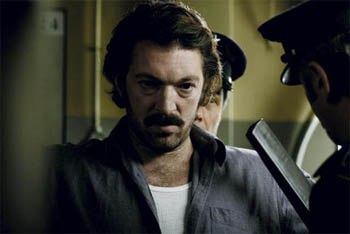
Bran Nue Dae ain’t quite the Aussie answer to Tommy – even if Jimmy Chi’s bouncing baby has discarded similar placentae in its nearly three decades of development. Chi, one of several Aborigines sowing his wild oats in Broome and asked to insulate his roots with Catholicism’s electrical inflexibility (see any number of texts for historical confirmation), wrote several fun and punchy tunes about living and resisting these conditions in the early 1980s. He performed the songs with his band, Knuckles. (Regrettably, VH1 still lacks the creative vision, much less the fist, to push beyond their white bread nostalgia and commission a Behind the Music segment on Knuckles. In considering Bran Nue Dae‘s roseate production history, one wonders if there was some behind-the-scenes, bottle-smashing fracas swept beneath the rug.) By decade’s end, Chi had constructed a musical around these songs, which opened in the 1990 Perth Festival and became such a national success that Chi was given the “State Living Treasure” honor by the West Australian Government in 2006. (Why my dim nation – the You Ess of Ay, perfervid in its belief that it remains numero uno – lacks the decency to afford similar titles to its cultural wunderkinds is a topic that another rabblerouser may wish to address at length.)

Thirtysomething years ago, I did not pop out of a uterus in Australia. I have yet to set foot in that magnificent continent (and, assuming anyone is foolhardy enough to give me a boatload of cash, I certainly hope to before my inevitable arm wrestling match — nay, a knuckle-twisting contest! — with the Grim Reaper!). So I feel compelled to report that, up until now, I was entirely ignorant about Jimmy Chi and Bran Nue Dae. Indeed, had you merely given me the first word, I may very well have confused you with a General Mills representative. And had not someone had the decency to send me a press invite to Rachel Perkins’s film adaptation of Chi’s musical, I may never have known about it. Clearly, there is some ancillary kismet in getting laureled State Living Treasure. (NEA, are you listening?) I must likewise confess that, having not experienced the musical, I am probably ill equipped to deliver an appropriately comparative summation of this “film by Rachel Perkins” to its native material. (It must be noted that Perkins has co-written the screenplay with Chi and the playwright Reg Cribb.)

With that disclosure out of the way, I can report that Perkins’s film is a pleasant, if somewhat clumsy adaptation. It feels like a fey Frankenstein monster composed of random components that have been cluttering up the laboratory closet a bit too long: part musical, part road movie, part coming-of-age drama, and part social satire. To some degree, watching this film is the cinematic equivalent of a yard sale where you end up unexpectedly buying a good deal of disused goods without feeling terribly guilty. (Guilt? The reverse here is true! You’re left wondering why these dusty little bibelots have been ignored for so long and you’re grateful to know that the abandoned items are now traveling to good homes. Hell, if you’re anything like me, you’re probably buying a lot of this stuff for friends and acquaintances, volunteering to varnish or paint the rattled or pockmarked after an evening of steady scotch.)

Perhaps I felt this way because the movie is set in 1969. Perhaps I was simply in the mood for a homespun movie put together by people who obviously had a lot of fun making this movie. Perhaps my recent move from one apartment to another led me to be in close kinship to the film’s peripatetic characters. A modest rundown then of things I grooved to: I very much enjoyed Perkins’s blocking tic of having actors joyously spiraling their way around reedy support beams during musical numbers. I was astonished to learn that Jessica Mauboy, who appears here as a very pleasant romantic interest, had not acted before and I was further alarmed to discover that she was a runner-up in Australian Idol. So whoever adeptly plucked the moonfaced Mauboy from an amateur pool deserves a great pat on the back, as her girl-next-door demeanor does help to atone for Rocky McKenzie’s modest limitations.

Yes, the film rests heavily on McKenzie’s shoulders. He is not quite up to the task, but he is, after all, playing an adolescent. McKenzie plays Willie, who is diffidently attracted to Rosie (the aforepraised Mauboy). He lives in Broome. He attends Catholic boarding school and contends with Father Benedictus (Geoffrey Rush), who has terrible plans to civilize his students. (The word “civilize” is not mentioned, but it may as well be. Rush delivers as usual, his performance reminiscent of a man who has spent several weeks rereading Kipling.) Willie stands up to this domineering docent (“Thou Shalt Not Starve Either” is Willie’s rejoinder to the prohibition placed upon Benedictus’s arsenal of Coke and Cherry Ripe bars; said snack munitions used to woo stray strangers into doing Benedictus’s bidding) through the medium of an amusing song. Soon he escapes and is on the road, and on the lam from Benedictus. Willie meets up with his Uncle Tadpole in the streets. (Yes, it’s one of those problematic coincidental run-ins. But this movie is based on a musical.) Tadpole takes the rest of Willie’s money and spends it on booze. Vaguely guilt-ridden about this, he agrees to take Willie back to Broome.

The film’s early efforts to establish Tadpole as a paternal figure (the experienced older man guiding the shy stripling) aren’t terribly successful – in part because of the contrived run-in that I mildly kvetched about in a parenthetical statement, with some understanding of the developmental Cuisinart this movie no doubt girded through. But when this dynamic duo encounters two hippies traveling through the outback in a VW bus, the film likewise hits the gas. For the two manage to take advantage of their starry-eyed sentiments to hitch a ride back home. Conflict ensues, along with the unanticipated run-ins one expects from a road movie. Aboriginal football teams, bad Chinese restaurants, an older woman fond of drink who tries to make it with Willie under a tree with inflated condoms and is chased away by her jealous man just before consummation. All photographed with splashy bright hues and directed with a sanguine disposition.

Of course, with so many characters and subplots thrown into this madcap gumbo, the film’s final moments are as cluttered as the fifth act of Cymbeline (of course, if George Bernard Shaw were to rise from the grave to rewrite Bran Nue Dae, he would be rightly labeled an imperialist). But if I’m going to nitpick a film that mostly works a pleasant diversion, I may as well spend my time condemning a bowl of jellybeans.

The Bat Segundo Show: Daniele Thompson

Daniele Thompson appeared on The Bat Segundo Show #353. Ms. Thompson is most recently the co-writer and director of Change of Plans — a movie that opens in theaters on August 27, 2010.

Condition of Mr. Segundo: Confusing his code with his plans.

Guest: Daniele Thopmson

Subjects Discussed: [List forthcoming]

EXCERPT FROM SHOW:

Correspondent: I wanted to start off about confinement and physical space. In Jet Lag, you have two characters who are predominantly occupying a hotel room. In Avenue Montaigne, you have a broader physical space with the cultural world. And in this [Change of Plans], you have, of course, the dinner party. Eleven characters. It’s the ultimate locked room mystery of life. So my question to you is whether you pursue this confinement as a way to generate dramatic conflict. Or whether this reflects more a concern with the home truths that come out with this human relationship with physical space.

Thompson: Well, we’re dealing with the question of time and space in all fiction!

Correspondent: Yes!

Thompson: It’s true that it’s a challenge to have eleven people in the same place one night, and then again one night a year after not in the same place. I don’t want to give out all the…(laughs)

Correspondent: Sure. But we’re talking predominantly the first dinner party.

Thompson: Right. It seemed that it was the ideal frame for the original idea for the film. The original idea for the film — my original ideas are usually very tiny. They’re like little seeds. And then we have to work on it for weeks, and sometimes months, to find out whether that seed is going to give out some kind of flower or tree or whatever.

Correspondent: Or transform in this case to a baroque redwood.

Thompson: Exactly. So the original idea was fascinating by the fact that when we meet friends in the evening, our friends and ourselves are not the same people in the afternoon. The afternoon or the day or whatever. Because I thought we all have few choices in life. Waking up in the morning and going to work is not a choice. It’s an obligation. 7:00, 6:00, 8:00 in France is later than in America. You can make a decision of not going out to dinner. You have that choice. You can call in sick. I have a headache. I have a problem. So if you do go out, the politeness — the least thing you can do is bring something of yourself. The more sunny side of yourself. And that’s what people do. And therefore people lie. People pretend. And the lovely thing about it, and this is why it’s kind of an apology. It’s an aspect of life that I think is very important in social life. You believe it in yourself. It makes you feel better. You have a sort of entr’acte. An intermission in your own life where you have laughed and told funny jokes, and pretended that everything is going well with your couple and your children and your work. And I thought it was a very funny idea to make the audience aware of what these people’s lives were really going on in the afternoon and then see what happens at night.

The Bat Segundo Show #353: Daniele Thompson (Download MP3)

This text will be replaced

The Bat Segundo Show: Vincent Cassel & Rachel Shukert II

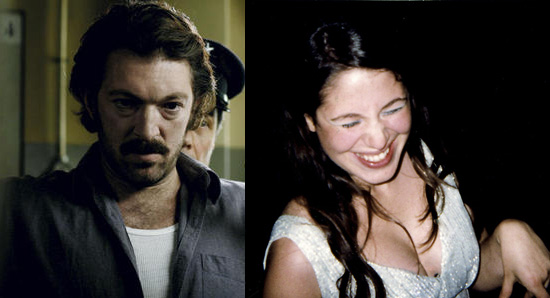
Vincent Cassel and Rachel Shukert both appeared on The Bat Segundo Show #351. Mr. Cassel stars in Mesrine: Killer Instinct, which opens in limited release on August 27, 2010, followed by Mesrine: Public Enemy No. 1 on September 3, 2010. Ms. Shukert is most recently the author of Everything is Going to Be Just Great and previously appeared on Show #217. (The true Shukert completist can also listen to Ms. Shukert on Show #173, where she appears in a group discussion on sex writing.)

Condition of Mr. Segundo: Dodging persuasive serial killers and angry Swiss listeners.

Guests: Vincent Cassel and Rachel Shukert

Subjects Discussed: [List forthcoming]

EXCERPTS FROM SHOW:

Correspodnent: Does movement offer a more creative place to establish a character? More so than the backstory, research, or anything?

Cassel: Of course it does. I mean, look, you walk down the street. You see somebody that you’ve never met. And you see him walking. You just see his back. And you already can say a lot of things about him. Is he drunk? Is he somebody sad? Happy? What kind of energy he has. You know, all that.

Correspondent: I’m glad you mentioned that you use different movement. Because I have noticed that about your performances. I mean, Mesrine and your role in Irreversible are two completely different movements. What do you do to prevent yourself from repeating a particular gait? Or a particular walk? Or a particular way of entering a room? Or a way of inhabiting an atmosphere or what not? Do you worry about this? Repeating yourself for each character?

Cassel: No, of course. I mean, I think it’s important that you not do twice the same. But the main reason is that otherwise I get bored. So what I do is that — I’m very instinctive, I have to say. It’s not really something I think of in a very precise way. But I can feel if it’s something — actually sometimes, I start a scene and I have this feeling of deja vu. And sometimes I don’t really understand where it comes from. But that’s enough for me to just [snap] switch to something else and try something else on the moment, and then think about it. Afterwards, I understand. “Oh yeah. I did this on that scene from that movie.” But at the time, on the moment, I don’t really analyze. It’s just a question of feeling. Like most of acting is really.

Correspondent: Have you ever had a situation where an entire scene needed to be altered because you were physically adopting some cliche that you couldn’t quite identify? But it just didn’t feel right.

Cassel: Very much so. Especially in a movie like Mesrine. Because I’m so close to Jean-François Richet, the director. We were literally: get on the set in the morning. We would try. And suddenly something is wrong. Let’s change everything. Because I think acting and moviemaking in general — maybe more for an actor than for a director — it has to be organic. Whatever that word means. You don’t have too much time to think on a movie. It’s very much about the acting and being involved physically in what you do. That’s the only way to see if it’s real or not really. So, yes, you try things. It’s about trying and finding solutions.

* * *

Correspondent: You note of [your future husband] Ben that, as you watched him calmly rub soap into his hands by the communal sink, you realized that you had known all along that you would see him again. I’m wondering what it is about hand hygiene that serves as your personal madeleine.
Shukert: (laughs) I don’t know. I remember that moment. It was very calm. And he didn’t seem surprised to see me. And I had been thinking about him and having this sense that we would bump into each other again. I think it was seeing him doing something that was very mundane. We were at home together. Even like moments now. It felt almost as if we had skipped in time and we were standing in our own bathroom while he was brushing his teeth and I was trying to put my makeup on. Do you know what I mean? It felt very familiar in that sense. It’s sort of an instance of fact seeing somebody washing themselves in some way or grooming.

Correspondent: So really any guy could have come along, if they had done any remotely regular gesture at that point. They could have swept you off your feet!

Shukert: I don’t know. I was definitely in a different place. (laughs)

Correspondent: The title Everything is Going to Be Great comes from a sentiment expressed by Pete — a guy with a girlfriend who you got involved with and who had a problem of hitting on other women in restaurants. Including you. You became involved with him, justified your involvement by noting a Dutch study where a woman’s neural activity at the moment of climax is equal to that of someone in a vegetative state. I must go ahead and ask. Surely hindsight offers the basis of 20/20. Lust may indeed make us do stupid things. But there’s often another reason why we’re driven to the irrational. So I’m wondering why you’re content to throw away this particular introspection.

Shukert: But I feel that it’s really describing that moment more. I feel like later, in the exploration of that relationship, other reasons come to light. The fact that we were both — and I feel that this is there in the book — that sort of explains why I couldn’t slap him across the face in that moment. Do you know what I mean? But as far as getting involved with him later, we were both kind of lost. We were both adrift. I was, at the time, really lonely. And things were not working out the way that they were supposed to. I think I mentioned how he suddenly gauged escape to this adventure that he was supposed to be having. He made it feel like there was a point, that I was here to fall in love and have this incredible adventure. And it turned it into a narrative. It turned it into a story, as opposed to this aimless time-waster. And I feel that if I had been here, if I had been on my home turf, I don’t think that we would have gotten involved. I feel that being abroad, you are off your center of balance. Away from the practical things that you really think about. You’re removed from all of that. And there were so many things I didn’t have to deal with.

The Bat Segundo Show #351: Vincent Cassel & Rachel Shukert II (Download MP3)

This text will be replaced

Review: Lebanon (2009)

Back in March, The New York Times published a Michael Kamber essay in which Kamber took The Hurt Locker to task for its “realistic depiction.” While the film went on to garner numerous awards, including the Best Picture Oscar, its apparent inaccuracies were enough to unsettle Kamber and others who had served in combat. Despite The Hurt Locker feeling “realistic” to those who had never set foot into a war zone, the film was a sham for Baghdad vets.

The criticisms against The Hurt Locker are hardly a new development for the war movie. Full Metal Jacket, Flags of Our Fathers, Michael Bay’s Pearl Harbor (no surprise), We Were Soldiers, Glory, 300, and Apocalypse Now — just to name a few — have all been saddled with the “inaccurate” charge, leaving one to wonder the war movie’s purpose. Just how accurate does the narrative experience have to be? We accept the subjective nature of a documentary. Why can’t we do so in a cinematic narrative?

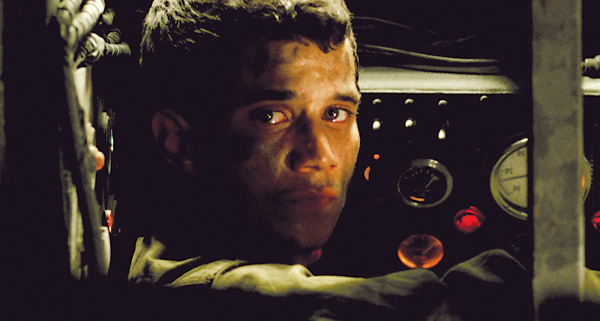
It’s possible that Lebanon, which is photographed primarily from a tank’s viewpoint, works as well as it does primarily because it has the audacity to be subjective from the get-go. Aside from an image of flowers that bookends the film’s beginning and end, Lebanon remains quite resolutely within the interior. I have no idea how accurate writer-director Samuel Maoz’s film is in relation to the 1982 Lebanon War, and I don’t very much care. What matters here most is that Maoz has established a horrific simulacrum from personal combat experience. We feel as confined as he once did. His frequent shots of dripping black fluid, the terrible blur of dead bodies thrown into the interior with cold alacrity, the squeals of men being chained up and tortured in multiple languages, and the tank’s terrifying whines as it attempts to tread across a battlefield while both severely damaged and under attack unsettled my senses. But then I have never served in combat. Is Lebanon meant for people like me? Or must I recuse myself from the question of accuracy because of my inexperience? If so, I would happily join the company of Stephen Crane, who wrote The Red Badge of Courage despite never having observed a battle.

Whether one insists upon accuracy or not, Samuel Maoz’s movie has rather bravely taken on the same perspective that we’re used to “seeing” or “perceiving” a military environment from a first-person shooter’s detached comfort zone. Iis the video game’s detached alternative more faithful or “accurate” to the combat experience? If you’ve ever played Call of Duty or Day of Defeat: Source online, you’ll inevitably encounter a server populated by former or active servicemen. One rarely hears these men complaining about the “accuracy” of a first-person shooter, perhaps because the video game is more participatory (and therefore perceived as less agenda-driven) than the war movie.

Some critics have called Lebanon an “anti-war movie,” but I don’t think this simplistic label does Maoz’s film justice. Yes, it does feature moments that discourages damn near anybody from wishing to participate in war. A gunner is ordered to fire upon a building and hesitates when he realizes that people will die. His pause causes a soldier on his side to die. Every action — the decision to fire or the decision to freeze up — has a mortal consequence. But is that anti-war? Or is that reflective of human behavior?

I would argue that it better fulfills the second question. A war movie works not so much for its “accuracy,” but for its willingness to explore uncomfortable or conflicted feelings. I’ve described Lebanon to some friends as “Das Boot in a tank,” but, in hindsight, this is probably too formulaic a description. For Lebanon is courteous enough to remind us that these flawed soldiers are caught within a mobile prison, and that the jail cell extends to curtailed interaction. One young man asks if a message can be sent to his parents and is denied. Another man thinks he speaks another language, but remains unfamiliar with the dialect of the man he needs to talk with. These crushing moments of isolation offer us some idea of the fortitude it takes to stick through a neverending war stint. Perhaps there will be ferocious discussions among about whether Lebanon does such communication among soldiers justice. Maoz has stated that he wishes to open up a dialogue with this movie and get people talking about vital issues. And if a film (or a filmmaker) is open to such dialogue, the question of “accuracy” is largely irrelevant.

Review: The Other Guys (2010)

For the record, I enjoyed Anchorman. I was lukewarm on Talladega Nights. I skipped Step Brothers. But now that I have seen Adam McKay’s disastrous cop-buddy comedy, The Other Guys, I think that I can safely conclude that McKay is turning into a gutless fauxteur more on the level of Dennis Dugan rather than Judd Apatow. He’s a man who might improve his floundering artistry, were he to live by a more literal mantra of the comedy website he co-created with Will Ferrell. Had there been some creep screaming “Funny or Die!” into McKay’s tinnital ears every five minutes or a psychotic aiming a gun at McKay and his co-writer Chris Henchy as they were banging out their flaccid script, it is quite possible that The Other Guys would not be such a stunning sack of shit. At least I’d like to think so. And I’d like very much to believe that McKay is more than Anchorman. I am, after all, an optimist at heart. But the truth here is that McKay has turned out a film that is worse than Kevin Smith’s Cop Out, a movie that is not even worth folding your laundry by. That alone takes a stunning paucity of talent. McKay’s mind is a Costco storehouse of discount humor. He’ll point his mass audience in the right direction. But when it comes time to make a purchasing decision, you’re limited to the stock at hand. You’re then forced to stand in line a very long time for only a few saved bucks. And your only real consolation is the cheap hot dog on the way out.

The cheap hot dog in question is a series of helpful infographics playing during the closing credits, featuring such left-leaning stats as the plummeting value of an average American’s 401K account, the uptick in the average executive’s salary, and the growing disparity between the rich and the poor. There was a part of me very tempted to give McKay more of a pass for having the audacity to pull an unexpected progressive parlor trick at the end of a multiplex film. But then I remembered that I had just endured a particularly unfunny film, sitting next to two annoying ringers who laughed at every dud, that had contained abundant misogynist jokes and several strange potshots at the eco-friendly Toyota Prius. And if McKay wanted to make a statement about corporate greed within a mainstream comedy, then why didn’t he have the balls to do it during the preceding 90 minutes?

I’ve called McKay “gutless.” I’ve called him a “fauxteur.” Let me explain. McKay is gutless because he features a potentially funny scene in which two cops address an elementary school classroom, pointing out that African-Americans and Hispanics are more likely to get involved in crime. These are, of course, racially insensitive remarks. The camera cuts to a reaction shot. And the true horror of what these two cops are saying might have been funny and disturbing if the kids had been composed entirely of African-Americans and Hispanics, an ironic twist that would have improved the joke. But in the reaction shot, it’s a largely Caucasian crowd. McKay is a fauxteur because he doesn’t understand that repeating a gag several times over a movie doesn’t necessarily make it funny — particularly if it’s a tired cultural reference. Case in point: Will Ferrell’s character, Allen Gamble, likes to play Little River Band to rev up his masculinity. It’s somewhat funny to hear “Reminiscing” once, groan-inducing the second time, and nauseating the third time. (Also, if Gamble really was into “River Band,” would his taste not extend into tunes beyond the popular hits?)

Just as McKay disguised his Talladega inadequacies by casting Sacha Baron Cohen as a very funny Frenchman, he resorts to casting a British comedic legend (Steve Coogan this time) to quickly paint over the cracks in the wall. Alas, the astute McKay viewer will recognize quite rapidly just how much the man is slumming it. The criminally underused Michael Keaton fares better than Coogan and even finds some ways of improving the material with his performance, offering a spontaneous wink just after a so-so line to get a big laugh. But these living legends are merely the supporting players.

So it falls upon Mark Wahlberg and Will Ferrell to anchor the comedy. Both fail spectacularly. In Wahlberg’s case, it’s not his fault. He previously demonstrated that he had comic timing as a stiff sergeant in Martin Scorsese’s The Departed. But in The Other Guys, McKay has directed him to be a one-note caricature of that role. And his presence becomes needlessly tedious. Wahlberg’s character, Terry Hoitz, is stuck to his desk because he accidentally shot Derek Jeter. (Because of this, he is partnered with Ferrell’s Gamble, which I’ll get to in a mite.) Hoitz has an estranged relationship with a ballet teacher and even shows up at her studio to demonstrate his dance moves. But Wahlberg just doesn’t have the material to sell his character. He rants and complains about his failure to get some action on the streets, about Gamble’s reluctance to take a radio call. He makes goo goo eyes at Gamble’s wife. But none of these qualities offer us enough to care.

As for Ferrell, one must now ask the perfectly reasonable question of whether the man is still funny. I’m becoming increasingly convinced that he’s blown his wad and will end up starring in lackluster family films like Eddie Murphy: a withered husk of whatever jones he had in the first place. Allen Gamble falls into the same one-note Ferrell archetype. Suburban middle-aged dork has a crazy past and a wild streak that comes out from time to time. Which we saw before with Old School‘s Frank Ricard and on countless Saturday Night Live sketches more than a decade ago. In this case, before he became a police accountant, Gamble was a pimp in college. Aside from the fact that a police background check would make it utterly impossible for Gamble to be employed, the flashback that reveals this backstory relies not so much on wit or character detail, but on Ferrell increasingly resembling a pimp. Chains appear around his neck. He starts to talk in ghetto cliches. In short, it’s the kind of humor one can easily discover in a high school drama class, not what one expects of comedy professionals.

Hoitz and Gamble are paired together, but they never get any action on the streets (thus motivating the movie’s raison d’etre: “comedy” fused with noisy car chases and constant shoe pilfering). These guys are NYPD office drones. Gamble sifts through paperwork and finds the buildings erected without construction permits. And all this is, in Hoitz’s eyes, rather boring. The movie could have had a stronger premise if it had played this idea up. What if Hoitz and Gamble, these ostensible bureaucratic stiffs, actually uncovered greater danger than the assaults, robbery, and mayhem on the streets? Certainly, the end credits suggest that this angle may have been a stronger priority in an earlier screenplay draft. But had the film maintained this emphasis — similar to Ron Burgundy’s sexist values being challenged by the 21st century or the clash between Ricky Bobby and Jean Girard in Talladega Nights — it would have played more to McKay’s comedic strengths: namely, finding the comedy within ideological conflict.

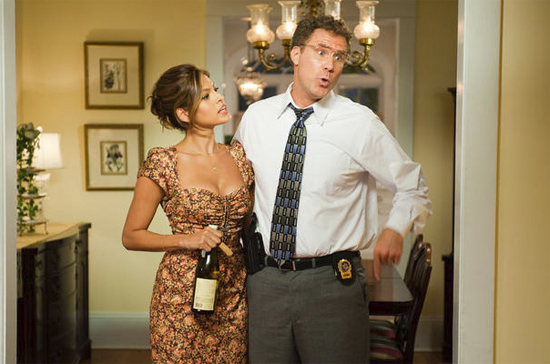
But McKay and company appear more interested in wallowing in misogyny. Gamble is ridiculed for having a man purse. “I feel like we’re literally driving around in a vagina,” says Hoitz upon driving in Gamble’s Prius. Gamble gives Hoitz a gift: an FBI mug that spells out the acronym FEMALE BODY INSPECTOR. But McKay reveals just how much of a women-hating frat boy he is by having Eva Mendes show up as Gamble’s wife. The joke here is that Will Ferrell can’t possibly have married such an attractive woman. But despite Mendes’s character being a resident doctor, we never really see Dr. Sheila Gamble at work. We see her constantly cooking, constantly encouraging, and being told by Ferrell that her dinner tastes like dog testicles. And what’s the draw here in the relationship? That the Gambles have wild sex. It apparently hasn’t occurred to McKay that Mendes’s character may possess a professional life that supersedes such throwback I Love Lucy duties. Contrary to McKay’s fantasies, women are interested in more things than fucking and supporting their men. So it turns out that Ron Burgundy’s misogyny isn’t terribly removed frmo McKay’s. And if that isn’t enough, McKay thinks it’s funny that the homeless here like to engage in circlejerks (“It’s called a soup kitchen!”) within any abandoned Prius.

Much like a loutish neighbor who believes that skimming an issue of The Economist makes him a responsible citizen, The Other Guys would like its audience to think that its a liberal bomb trapped within a mainstream comedy. Hardly. The comedy here is a bit like watching a white supremacist group attempt to make sense of Brown vs. Board of Education. You really hope that the participants will become enlightened, but the atavism won’t go away.