
Emma Forrest recently appeared on The Bat Segundo Show #403. She is most recently the author of Your Voice in My Head.
Listen: Play in new window | Download
Condition of Mr. Segundo: Fearing the arrival of kneeling supplicants.
Author: Emma Forrest
Subjects Discussed: Occupying the insides of planes, positive mania, Ben Yagoda’s Memoir: A History, novels as a dress rehearsal for a memoir, troublesome aspects of being a young female novelist, Zadie Smith, Jennifer Belle’s Going Down, the freedom of writing memoir, misery memoirs, male addiction memoirs, double standards with gender, baring one’s soul while contending with marketing labels, psychiatrists who attend readings, the personal vs. the professional, the benefits of non-prescriptive therapists, Monica Lewinsky and Chandra Levy, victimhood and celebrity culture, the miniscule Jewish community in England, newspaper articles as a solution to longing and misery, Colin Farrell’s fan community harassing Forrest, cutting, the relationship between self-disgust and self-obsession, Internet addiction, the keyboard as a surrogate knife, writing the book through osmosis, unusual General Zod metaphors, why Forrest referred to Colin Farrell as the Gypsy Husband, not being able to write other people’s names down, contending with the imprecision of memory, remembering incidents completely wrong, the difficulties of writing and speaking about rape, being susceptible to labels, breaking down before an audio book producer, being judged by others through one’s body, body image, the relationship between work and self-concern, whether the act of writing is capable of full exorcism, the English class system, Forrest’s father “learning to become British,” Jewish identity in Britain, Howard Jacobson, Superman as an inherently Jewish story, distinguishing between the serious and the trivial, the 31 flavors of pain, dissociation, rabbi sermons, whether words can change one’s life, Blur’s “Tender,” and songs vs. novels.
EXCERPT FROM SHOW:
 Correspondent: You said in an interview with The Awl that much of this book ended up on your screen by osmosis, that there was material here that you don’t even remember typing.
Forrest: Yeah.
Correspondent: If you’re caught in a fugue state when you’re writing something like this, at what point do the words mean something? At some point, you’re going to have to look at these words and come to terms with them and iron them out. So I’m curious how you became more aware of yourself and your life experience and the world if you weren’t aware of it initially?
Forrest: Well, you may have also read that I had this whole deal with myself that I didn’t have to publish it. Just because I was writing it, it didn’t mean I had to publish it. And when it was done, I did think it was good enough to publish. And, you know, I read it all the times I had to edit it. But actually — so I handed it in a year and a half ago. It takes a while for a book to come out. Now that it’s out and I’ve been touring — this sounds awful, but I’m going to admit it — I’ve been rereading the book quite often and actually enjoying it and, I think, getting out of it what you’re talking about for the first time. It’s taken a year and a half to get into it and say, “Oh! That’s what you’re about and that’s what you’re doing wrong.” And now I get it. And now I get the lessons. Because it is trapped within the pages, it’s safe for me to explore almost with an eagle eye from above. You know what I mean? Like looking down on myself.
Correspondent: On the other hand, most writers — even writers of memoirs — get sick of looking at their own work. Why is it such a great…?
Forrest: Well, I didn’t. Because I looked at it in the bare minimum. When I was editing. And we did a very light edit, actually. I find it fascinating now because I feel so removed from it. It’s like I’m intrigued and empathetic towards this girl that isn’t me anymore. It’s harder on the reader because it reads so viscerally. I’m comforting readers all the time, saying, “I’m not her. I really am not that person anymore. Don’t worry about me.”
Correspondent: Well, we are all some part of our past lives.
Forrest: But do you remember the part in the book? The rabbi’s sermon.
Correspondent: Yeah.
Forrest: About transformation. And you don’t have to be Jacob anymore. You are now Israel. And part of Jacob will cling to you for the rest of your life. But that isn’t the entirety of who you are. That’s where I feel I am.
Correspondent: But you’re saying transformation. Describe this more specifically. How do you deal with these parts of you who you inevitably are? Is it really just a matter of rereading? Is that your reminder? Why isn’t your memory of it enough? You know what I mean?
Forrest: Memory’s dangerous. It’s hard to have volume control on memory. Writing it down is my volume control. And that’s what made it safe. And that’s what — I’m going to use the cheapest pop cultural allegory. It’s really in my head. Like the villains in Superman II — is it II that they’re trapped in glass and flying through space and time?
Correspondent: Technically, I and II.
Forrest: I and II.
Correspondent: But II is where they broke out.
Forrest: Flying through space and time through all eternity, my memoir is Terence Stamp beneath the glass, trapped. And so that’s why it’s all safe for me now. And done.
Correspondent: Well, I don’t know if General Zod is the best…
Forrest: And it flies through space and time. Because it’s a book that hopefully will stay in publication.
Correspondent: You’re using General Zod as a metaphor.
Forrest: Totally.
Correspondent: Now this is dangerous. Because, of course, he wanted to be the ruler of the planet.
Forrest: Right.
Correspondent: He asked people to kneel before Zod.
Forrest: Yeah.
Correspondent: I’m certainly not going to kneel before Emma.
Forrest: Right.
Correspondent: And I don’t know if the reader is going to do that. But the reader may empathize.
Forrest: Some of them are!
Correspondent: Some of them are?
Forrest: (laughs) I didn’t ask them to!
Correspondent: Wow. So you’re seriously — why not someone humbler than General Zod?
Forrest: Because there are things in there that are evil and upsetting. Like General Zod. Come on! We have to get off this.
The Bat Segundo Show #403: Emma Forrest (Download MP3)

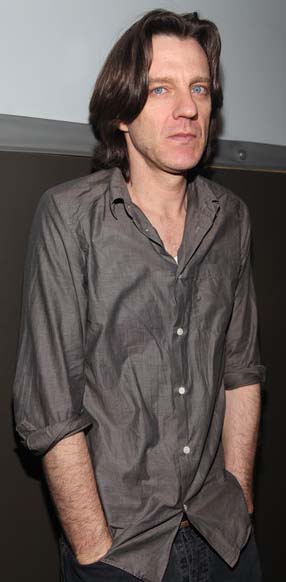


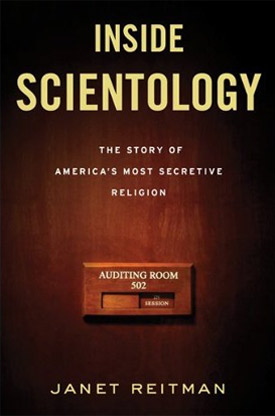 Correspondent: You write that Scientology “was not a ‘cult’ insofar as it did not require separation from mainstream society — though it encouraged its acolytes to ‘disconnect’ from those who were critical of Scientology.” Now sociologist Howard Becker’s idea of a cult generally emphasizes the private nature of personal beliefs or a group of people that isn’t especially organized. Given how private and sequestered Scientologists are about their beliefs, I’m wondering. If you took away the organization, could you call them a cult? How is Scientology not a cult?
 Reitman: I don’t think any of it was designed as “a matter of practical business” originally. I mean, I think that L. Ron Hubbard grew up in the ’20s. He was born in 1911. He essentially grew up, so to speak, into the ’20s and the ’30s during the Depression. He was a young man in the Depression. And he found himself in Los Angeles after World War II. And Los Angeles, during that period of the mid to late ’30s and the ’40s (and also the ’20s), was this booming religious ground, where all kinds of weird offshoot faiths, new faiths and offshoots of Christianity as well, were then really popular. And one of those areas was the Western esoteric tradition that he found himself getting to know very well through this association he had with Jack Parsons, who was a famous astrophysicist and secret wizard. Follower of Aleister Crowley. It’s one of everybody’s favorite stories: L. Ron Hubbard’s association with Jack Parsons. But I think that he took those aspects of esoteric thought, which were things like secret knowledge, ascending the ranks to gain more and more knowledge. And that was very common in L.A. It wasn’t just through Crowley. The Rosicrucians had a big church. There were lots of societies that were based on that kind of tradition. The sort of alternative, new-agey stuff that was really popular in the early 20th century and then became popular again towards the end of the 20th century. And I think that Hubbard was a guy who was really interested in philosophy and was interested in power. And he took probably some of the best parts, as well as some of the dysfunctional parts in terms of Freudian thoughts that Freud had discarded years earlier. But he took a wide variety of ideas. He manufactured them in a way that made them palatable to people who were not well-educated. That’s very important to know. People who did Scientology were very middle-class. They weren’t uneducated people. Some of them were extremely well-educated. But they were, for the most part, very average, mainstream in that this was religion or this was self-help or psychiatry, or an alternative to psychiatry for the masses. And at the time, these things were very exclusive. You couldn’t do psychiatry for example. You couldn’t go to a psychiatrist unless you had a tremendous amount of money to pay for a psychiatrist. There were only a few psychiatrists even in the United States practicing.