The Bat Segundo Show: Emma Forrest

Emma Forrest recently appeared on The Bat Segundo Show #403. She is most recently the author of Your Voice in My Head.

Condition of Mr. Segundo: Fearing the arrival of kneeling supplicants.

Author: Emma Forrest

Subjects Discussed: Occupying the insides of planes, positive mania, Ben Yagoda’s Memoir: A History, novels as a dress rehearsal for a memoir, troublesome aspects of being a young female novelist, Zadie Smith, Jennifer Belle’s Going Down, the freedom of writing memoir, misery memoirs, male addiction memoirs, double standards with gender, baring one’s soul while contending with marketing labels, psychiatrists who attend readings, the personal vs. the professional, the benefits of non-prescriptive therapists, Monica Lewinsky and Chandra Levy, victimhood and celebrity culture, the miniscule Jewish community in England, newspaper articles as a solution to longing and misery, Colin Farrell’s fan community harassing Forrest, cutting, the relationship between self-disgust and self-obsession, Internet addiction, the keyboard as a surrogate knife, writing the book through osmosis, unusual General Zod metaphors, why Forrest referred to Colin Farrell as the Gypsy Husband, not being able to write other people’s names down, contending with the imprecision of memory, remembering incidents completely wrong, the difficulties of writing and speaking about rape, being susceptible to labels, breaking down before an audio book producer, being judged by others through one’s body, body image, the relationship between work and self-concern, whether the act of writing is capable of full exorcism, the English class system, Forrest’s father “learning to become British,” Jewish identity in Britain, Howard Jacobson, Superman as an inherently Jewish story, distinguishing between the serious and the trivial, the 31 flavors of pain, dissociation, rabbi sermons, whether words can change one’s life, Blur’s “Tender,” and songs vs. novels.

EXCERPT FROM SHOW:
Correspondent: You said in an interview with The Awl that much of this book ended up on your screen by osmosis, that there was material here that you don’t even remember typing.

Forrest: Yeah.

Correspondent: If you’re caught in a fugue state when you’re writing something like this, at what point do the words mean something? At some point, you’re going to have to look at these words and come to terms with them and iron them out. So I’m curious how you became more aware of yourself and your life experience and the world if you weren’t aware of it initially?

Forrest: Well, you may have also read that I had this whole deal with myself that I didn’t have to publish it. Just because I was writing it, it didn’t mean I had to publish it. And when it was done, I did think it was good enough to publish. And, you know, I read it all the times I had to edit it. But actually — so I handed it in a year and a half ago. It takes a while for a book to come out. Now that it’s out and I’ve been touring — this sounds awful, but I’m going to admit it — I’ve been rereading the book quite often and actually enjoying it and, I think, getting out of it what you’re talking about for the first time. It’s taken a year and a half to get into it and say, “Oh! That’s what you’re about and that’s what you’re doing wrong.” And now I get it. And now I get the lessons. Because it is trapped within the pages, it’s safe for me to explore almost with an eagle eye from above. You know what I mean? Like looking down on myself.

Correspondent: On the other hand, most writers — even writers of memoirs — get sick of looking at their own work. Why is it such a great…?

Forrest: Well, I didn’t. Because I looked at it in the bare minimum. When I was editing. And we did a very light edit, actually. I find it fascinating now because I feel so removed from it. It’s like I’m intrigued and empathetic towards this girl that isn’t me anymore. It’s harder on the reader because it reads so viscerally. I’m comforting readers all the time, saying, “I’m not her. I really am not that person anymore. Don’t worry about me.”

Correspondent: Well, we are all some part of our past lives.

Forrest: But do you remember the part in the book? The rabbi’s sermon.

Correspondent: Yeah.

Forrest: About transformation. And you don’t have to be Jacob anymore. You are now Israel. And part of Jacob will cling to you for the rest of your life. But that isn’t the entirety of who you are. That’s where I feel I am.

Correspondent: But you’re saying transformation. Describe this more specifically. How do you deal with these parts of you who you inevitably are? Is it really just a matter of rereading? Is that your reminder? Why isn’t your memory of it enough? You know what I mean?

Forrest: Memory’s dangerous. It’s hard to have volume control on memory. Writing it down is my volume control. And that’s what made it safe. And that’s what — I’m going to use the cheapest pop cultural allegory. It’s really in my head. Like the villains in Superman II — is it II that they’re trapped in glass and flying through space and time?

Correspondent: Technically, I and II.

Forrest: I and II.

Correspondent: But II is where they broke out.

Forrest: Flying through space and time through all eternity, my memoir is Terence Stamp beneath the glass, trapped. And so that’s why it’s all safe for me now. And done.

Correspondent: Well, I don’t know if General Zod is the best…

Forrest: And it flies through space and time. Because it’s a book that hopefully will stay in publication.

Correspondent: You’re using General Zod as a metaphor.

Forrest: Totally.

Correspondent: Now this is dangerous. Because, of course, he wanted to be the ruler of the planet.

Forrest: Right.

Correspondent: He asked people to kneel before Zod.

Forrest: Yeah.

Correspondent: I’m certainly not going to kneel before Emma.

Forrest: Right.

Correspondent: And I don’t know if the reader is going to do that. But the reader may empathize.

Forrest: Some of them are!

Correspondent: Some of them are?

Forrest: (laughs) I didn’t ask them to!

Correspondent: Wow. So you’re seriously — why not someone humbler than General Zod?

Forrest: Because there are things in there that are evil and upsetting. Like General Zod. Come on! We have to get off this.

The Bat Segundo Show #403: Emma Forrest (Download MP3)

This text will be replaced

The Bat Segundo Show: Edie Meidav II

Edie Meidav appeared on The Bat Segundo Show #402. She previously appeared on The Bat Segundo Show #51 in a tag-team interview with Scott Esposito. She is most recently the author of Lola, California.

Condition of Mr. Segundo: Been all around this great big world.

Author: Edie Meidav

Subjects Discussed: Returning to old neighborhoods, whether or not the first-person perspective as the most authentic method to get the reader to believe in the account, carryover between Emile in Crawl Space and Vic Mahler in Lola, California, how a third-person novel is like a panopticon, the immensity of motherhood, the chasm in American fiction between the female perspective and male-dominated, idea-centric fiction, postgender fiction, narrative stripteases, fiction as the act of omission, Freud’s dream categories, being aware of the reader’s patience, writing the equivalent of three books for every book, rewarding the reader, short chapters, failed attempts at a 250 page novel, putting the essential into a novel, Peter Orner’s The Second Coming of Mavala Shikongo, Laura Mulvey’s “Visual Pleasure and Narrative Cinema” (PDF), Eros and Thanatos driving a novel, people who read Dan Brown during a commercial break, 21st century reader expectations, Hemingway’s A Moveable Feast, writing about a place when you’re not in it, views of California within and without, Jerry Brown’s assault on California parks, living writers capable of writing a “California novel,” Aimee Bender, TC Boyle, Dana Spiotta, identities in California, “Daughter of California,” needlessly psychoanalytical readings, whether a prison cell can be written as a “uniquely Californian” one, overcrowded prisons, writers who are fascinated by twins, considering robots, the secret language of boys, tactile forms of enlightenment, enlightenment found by embracing one’s origins, false ideals and physical healing, burrito metaphors, using “she lied” instead of “she said,” readers who expect the truth, the courtroom trial as a dramatic device, whether it’s inevitable for an author to repeat herself, and overly modular attempts to explain the novel.

EXCERPT FROM SHOW:

Correspondent: I want to ask about the dramatic appeal of the trial. There was a trial in the last book [Crawl Space]. And there’s a trial in this book. Sort of. What of the trial? It’s the ultimate way to force a character to become contrite with what he has done in ultimate sin. But I don’t know. I look at you now and I see a possible courtroom junkie quality. What of courtroom trials? Do you think that today’s novels and dramatizations seem to have moved away from this basic justice? Why trials?

Meidav: Well, that’s interesting. I mean, in a way, I hear what you’re saying. You’re saying, “Am I kind of creating a hysterical version of what is actually occurring?” It could be an ethical confrontation rather than something that confronts one of the institutions of society. Not being somebody who has spent a lot of time in any way linked to the law, I think I like playing — and maybe I’ll try and tone it down in the next book — but I like playing with society’s institutions. The prisons, the courtroom; in this book, there’s also a sanitarium.

Correspondent: Yes, of course.

Meidav: You know the spa? I think it interests me especially when you have such an ectoplasmic subject as California. It’s interesting to have a hard-edged setting in which somebody comes into a dark mirror moment. That said, one of my favorite scenes in literature is in Madame Bovary — to go back to Flaubert. I love this scene — and this is kind of a societal institution too — where you have a kind of village marketplace like a pig contest. A very agricultural contest taking place. And up above, you have the two lovers having this intimate scene. And it’s interspersed with this judging of the pigs. And I love that interweaving of the very small personal against the bigger habitual unseen eye of society. So maybe that’s an answer.

Correspondent: Or maybe it’s a way of turning something that is seemingly individual or personal into something that has the resonance of history. If you align a personal strength or failing with an institution, suddenly, yes, there is the societal impression! There is this sense that everything we do will matter more if it’s being judged by a jury. (laughs)

Meidav: That said, I also do deeply believe in this Wordsworth idea that in the meanest flower, a universal wind blows. So I’m hearing it. I’m thinking, “Okay, maybe in the next book, I’m going to avoid all big scenes.”

Correspondent: No!

Meidav: I’m going to keep it smaller.

Correspondent: No.

Meidav: More personal. But, you know, maybe I’m starting to lean on that as a crutch.

Correspondent: I don’t know though. I mean, you’re going to inherently repeat certain elements over several books.

Meidav: True.

Correspondent: But approaching it from a different angle, it’s going to become fresh. There’s one really great early moment where the girls are stealing slices of pizza from a parlor that, if you think about it and if you want to reduce it down to its basic essence, well, it’s common shoplifting. It’s a common theft. But because of the way you describe it, it actually means something and it resonates. And I don’t know if avoiding, say, a trial or avoiding a specific element in a future book is really an honest approach if you’re writing fiction.

Meidav: That’s true.

Correspondent: Do you think?

Meidav: Yeah, right. Because when you said that, I suddenly had this view of fiction like the mosquito eye with all its little parts. You rotate it. The element needs something different. So perhaps.

Correspondent: On the other hand, you have to be extremely reliant upon the subconscious in order to write fiction. You have to completely capitulate to the muse, so to speak, and not be aware of conscious repetition. Conscious things you may have been employing in previous books and the like. What do you do to deal with this? Do you think that the whole enormous operation of honing a book pretty much negates any concern for “Oh, I’ve done this before” or “Oh my god, Ed has noticed this from a previous book” or something like this? I mean, to what degree should it even matter?

Meidav: Do you think it’s a truism that most writes essentially write and rewrite the same book over and over and just get better at it? Until they are not better?

Correspondent: To some degree, I believe that. And it all depends on the voice. And it all depends on the ambition. I mean, some writers write the same book if you boil it down to its basic elements — even though every book will be different. I think once you strive to not do that, and I think the best way to counter that is to simply approach something perhaps as you have. An enormous mosaic of institutions with which to splay the typical into something that is a little more distinct. You think?

Meidav: You know, it’s possible. I was just thinking. You know, there are certain writers I admire. I’m thinking of Saul Bellow or others who work against this societal backdrop. Or J.M. Coetzee. But there’s a way that, even if their elements are identifiably repeated, each book they are really in a different timbre. And this is also true in a way of Alice Munro! Even though her turf is a different turf. We’re sitting in this restaurant maybe two blocks away from where, years ago, I interviewed this woman who each year — her name was Linda Montano, she was a performance artist. Each year, she would wear a different color. And that was her art. And she would have someone see her to bring out different energies. And it’s probably a question of focus. One probably brings the same understanding to what literature is meant to do to each novel. But I was trying to use Linda Montano’s words — a different shock — for this book.

Correspondent: Or maybe it’s that ambition that causes difference. I mean, okay, I love PG Wodehouse like you wouldn’t believe. But he does have a tendency to repeat some of his basic elements. But you know what? At the same time, I don’t care. Because it’s just very delightful. His sentences are so rhythmic. There’s a great sense of fun. There’s a great sense of quirkiness. Same thing goes for a lot of comic novelists. John P. Marquand, the great undersung guy who won the Pulitzer and now nobody reads. Or Donleavy, for example, who I read for the first time this year — The Ginger Man was incredible. And then I read his next book and said, “Wait, this is the same thing as the last one.”

Meidav: You know what I’m thinking as you’re talking? Maybe each author over his or her lifetime is creating rules of counterpoint. And within that, there’s greater potential tension. In other words, if you know the furniture is there, maybe you can create different kind of energy, a heightened energy, once you’ve established this is the furniture of my craft.

Correspondent: So do you think it’s a matter of every author creating as many furniture options as possible so there’s the illusion that the author is not repeating herself?

Meidav: Yeah, possibly. Possibly. I mean, that sounds so modular.

Correspondent: (laughs) Yeah, I know. It doesn’t work that way.

Meidav: (laughs) Right.

Correspondent: It’s not like a desktop theme or anything.

The Bat Segundo Show #402: Edie Meidav II (Download MP3)

This text will be replaced

The Bat Segundo: Aimee Bender II

Aimee Bender appeared on The Bat Segundo Show #400. She Bender is most recently the author of The Particular Sadness of Lemon Cake and previously appeared on The Bat Segundo Show #16.

Condition of Mr. Segundo: Feeling his inner cake and eating it too.

Author: Aimee Bender

Subjects Discussed: Fantasy and magical realism being contingent upon reader belief, domestic realism and fantasy, The Particular Sadness of Lemon Cake as a Los Angeles novel, foodies, apartment complexes in Southern California, high school reunions, sustaining fairytale magic in a longer work, how a shift in an author’s temperament affects a writing project over several years, positive pessimism, parallels between writing process and psychotherapy, Adam Phillips and boredom, the fine line between attention and concentration, staying put, believing in the details, Ursula K. Le Guin’s “Plausibility in Fantasy,” Murakami’s Kafka on the Shore, writers whose complete works you can’t read all at once, author doubt and faulty fiction premises, Kafka, early attempts and restarts on Particular Sadness, the dangers of ranting, the relationship between empathy and fantasy, reverse engineering the human relationship with food, Rose’s early form as an older man on the make for soup, MFK Fisher, the materialistic impulses of Rose’s parents, bottom-feeding consumerism and garage sales, the consumer as an eater of another kind, qualitative precision vs. quantitative precision, mathematics and fantasy, people who love making food, Cafe Gratitude, feeling simultaneously appreciative and cynical about hippie ideologies, grandmothers who send strange packages, Edward Hopper, fatalistic determinism, Hemingway’s iceberg theory, the visual advantages of not using quotes, Bender’s experience with chairs, the McSweeney’s logo, whether Hopper’s paintings are truly lonely, “The Lighthouse at Two Lights,” artists who don’t enjoy being photographed, whether movies are destroying imagination, shorter attention spans, memorizing poetry, Wallace Stevens, Don Marquis’s Archy and Mehitabel, Kay Ryan, students who can’t remember the questions they are about to ask, and whether or not the United States is presently suffering from a short attention span epidemic.

EXCERPT FROM SHOW:

Correspondent: We were just joking about this being a few years since we last talked. This leads me to ask: I know you to be an optimist, both in your previous books and in our previous conversation, which was quite jocular. But with this book, I almost get the sense that you’re exploring this positive pessimism with the Rose perspective. And I’m curious how much that may play into this. The idea of exploring a perspective that’s just a little different from your own. Or perhaps I have misjudged you and you have been a closet pessimist the entire time!

Bender: Well, both! I think I’m both. So it’s both exploring a point of view that’s different from my own. But of course, for any of it to ring true, it has to ring true to me in some way as well. So I think that there’s something of that balance of seeing things cynically and seeing things hopefully. Depending on the day. Will it end in a different spot? But I guess I did feel really focused in this book maybe, in particular, about what would be burdensome for that character. And also what would be burdensome for the brother. And maybe the tone again of the magical quality about her and her brother feeling different. Like hers feeling dark and his feeling darker. I somehow think of them as triangles feeding into each other. Hers is the smaller shape and his is the darker shape in some way.

Correspondent: But what do you do if you’re trying to channel this positive pessimism and you’re in an absolutely peppy mood that day? Because I think that of all your books, this is tonally very, very specific. And so what do you do to maintain that tone? Especially since it’s several years of trying to get this right.

Bender: Exactly. Well, I have this kind of system that has worked for me so far, which is to write a couple hours in the morning. And the rule — a friend of mine from grad school named Phil Hayes said if you write what you’re interested in writing each day, writing will have life in it. Which is great. It seemed simple on the surface advice, but I think it’s pretty deep. Because the idea that each day, you can generate whatever is happening on that day — it means that on the optimistic days, I probably wasn’t working on that book. But the thing is getting a good work day in feels very optimistic and hopeful, even if the work itself is kind of dour and sad and bleak. A good work day feels so good no matter what. So there’s kind of a contrast there already. But let’s say I’m in a really upbeat mood and I just can’t get into the sadness of the book. Then I would work on a short story. So it was all very mood governed. But I think once there was enough material to work with, it didn’t feel sad to work on. It felt like explorative.

Correspondent: Well, that’s interesting. Because I’ve always wanted to talk with you about the two hour session.

Bender: Right.

Correspondent: Which sounds almost like expansive psychotherapy.

Bender: I’ve wondered about that. I think that’s a bit of a model. Yeah. (laughs)

Correspondent: But I understand, and I just want to get this totally clarified, you sit on the couch.

Bender: Chair.

Correspondent: You want to channel your mind into boredom.

Bender: Right.

Correspondent: And I’m curious about this. It seems to me a more reasonable answer to, say, Jonathan Franzen blocking all sunlight from the room, which I think is really quite intense. I mean, I understand the need.

Bender: And I think he has headphones.

Correspondent: Exactly. Earplugs.

Bender: Yeah.

Correspondent: There are bats that fly in his cave. I don’t know.

Bender: Right. (laughs)

Correspondent: But the point is that your level of trying to remove yourself from distraction seems infinitely more reasonable. You’re in this fixed location. How do you will yourself into filtering these ideas? Or if you’re in a situation where you have so many ideas, so much information, so many emotions that you’re writing, that you just need to sit still in order to just access it during that two hour period?

Bender: Yeah. I think you said it in an interesting way. “Channeling myself into boredom.” But it’s not. The boredom happens.

Correspondent: (laughs) Oh come on.

Bender: The boredom does not need to be channeled. You know, there are those people who say, “I never feel bored.” I’m definitely not one of those people. So in some way, for me, it feels like a dance between boredom and concentration. And I think my concentration can feel thin. So the idea is blocking out the amount of time so that I’m going to try to concentrate. But I don’t know that I will. And inevitably I get bored. And then hopefully on the other side of boredom is something. There’s this great quote by Adam Phillips, who is a British psychoanalyst. He talks about boredom as a waiting space and as this interim place for a kid where it’s not something to be filled or plugged in. It’s something actually to sit through. And that’s often where a kid will get really creative. And they’ll be like, “Okay, I’m bored. Now I’ve created this land under the kitchen sink.” Whatever.

Correspondent: I use the term “channeling” or “willing yourself” into this concentrated focus. Is it a variation of the Flaubert maxim “Be calm and orderly in your life so you can be violent and original in your work”?

Bender: There is something to that. I do believe very strongly that structure helps creativity and boundaries in that it is like a therapy hour. The boundaries of a time, a creative space where I can go to someplace that is potentially revolting to me and leave. And knowing that I will leave. There’s something very helpful about that. But still, it’s not even that I can focus myself into concentration. It’s just that the only rule I really have is that I have to stay put. And then they’ll be many, many bad days.

Correspondent: So if you stay put, you can confront any emotion. It’s like running the gauntlet here.

Bender: I think that if you stay put, stuff comes up. I think eventually stuff will bubble up and there will be things to write about. But it’s not as if I bravely have the sword in hand and I’m rushing forward into the forest.

Correspondent: (laughs)

Bender: I’m sitting there feeling like I want to get up. I want to get up. I want to get up. And the only weapon I have is stay put.

Correspondent: Got it. Is it a matter of ADD or distraction? Or what?

Bender: It’s not ADD. But I just do feel easily distracted. There are other writers who will say, “I need time to relax. And then get into it. And then I take eight hours. And then I get lost in the world. And I feel all my characters.” And I don’t have that at all. Maybe I’ll get lost into it for ten minutes. And that’s thrilling. But I get a lot done.

Correspondent: Oh, I see.

Bender: So it will be ten minutes. Boom. Productive. And then space out.

Correspondent: Ninety minutes of thinking, thirty minutes of writing. Something like that?

Bender: Yeah. And looking at old files. And rereading, rereading.

The Bat Segundo Show #400: Aimee Bender II (Download MP3)

This text will be replaced

The Bat Segundo Show: Mara Hvistendahl

Mara Hvistendahl appeared on The Bat Segundo Show #398. She is most recently the author of Unnatural Selection.

Condition of Mr. Segundo: Considering cold water solutions if he attempts to sire sons.

Author: Mara Hvistendahl

Subjects Discussed: Lyndon Johnson’s 1965 address on the occasion of the UN’s 20th anniversary, the relationship between birth rate, sex selection, and development, the history of amniocentesis in India, cultural relativism, U.S. efforts to push population policy in the 1960s, forced sterilization programs, Paul Erlich’s The Population Bomb, Bernard Berleson’s “Beyond Family Planning,” cheap ultrasound machines flooded into the East, fetal sex determination in India, China and South Korea, efforts to crack down on sex-selective abortion, the influence of GE ultrasound machines, where the pursuit of “market demand: creates skewered sex ratios, surplus men in China who won’t be able to find wives, the UN Population Fund using the term “prenatal sex selection” instead of “abortion,” the global gag rule, abortion clinics advertising on Chinese television, abortion perspectives in Asia, the effect of a 1990 South Korean crackdown on sex-selective abortion upon sex ratio and abortion rates, the ethical dilemma of controlling “unnatural” sex selection through “unnatural” methods, the effect on ideology and technology on sex ratios, marriage agencies in East Asia, despondent women who are dependent upon their husbands for immigration status, abuse of mail brides in Taiwan and Korea, the relationship between lonely men and violence, parallels between surplus men in China and the problems with too many males during the Wild West, prostitution, a thought experiment about transferring surplus Chinese men into surplus single women New York (and vice versa) to solve sex ratio problems, why Paul Erlich can’t remember the details of his over-the-top ideology decades later, whether Paul Erlich is a crackpot, contraceptive mists over other nations, and the effects of right-wing agitation on global population policies.

EXCERPT FROM SHOW:

Correspondent: In 1965, as you point out in the book, Lyndon Johnson delivers a speech on the occasion of the United Nations’s 20th anniversary. And he says before this crowd in San Francisco, “Less than five dollars invested in population control is worth a hundred dollars invested in economic growth.” Now development, as you point out, typically accompanies a plummeting birth rate. But that doesn’t necessarily mean that this issue of sex selection, which is in your book, goes away. You point to a Christophe Guilmoto study believing that the Middle East will be the next region to develop this gender imbalance. I have to ask. Are there any circumstances in which this plummeting birth rate or an increased development doesn’t create this gender imbalance? Is this something that we should look at nation by nation? Does one have to consider an individual nation’s cultural values? Let’s open up the ball of wax here.

Hvistendahl: Yeah. Sex selection imbalance is not something that’s automatically going to crop up in a country just because it’s developing. What we have seen in the countries where we have sex selection today, they are developing very rapidly. And the birth rate’s fallen dramatically. A woman who maybe had six kids in Korea in the 1960s. The average woman over her lifetime had six children. And today it’s just a little over one child per woman. There are other ingredients. Abortion needs to be legal and readily available. Because the method that many women use now is sex-selective abortion. New technology comes in. Ultrasound. But it doesn’t mean that every country that reaches a certain level of development will have this gender imbalance.

Correspondent: Well, we’ve got the predictions in the Middle East. What about other countries along these lines? I mean, how much of a correlation is there between birth rate, development, and sex selection?

Hvistendahl: For me, that’s kind of a triangle of trends. But obviously you need to have gender discrimination. Women need to want boys. Their husbands need to want boys. But gender discrimination alone doesn’t explain where sex selection occurs. In fact, in most countries around the world, women want at least one son. Either they tell researchers that. They say we want one son. Or demographers can look at where couples stop. This is actually called a stopping rule. So what was the sex of the last child? And it turns out, in most countries, women tend to stop when they have a son. That was even true of the U.S., until recently. So that’s the case in much of the world. And yet we only have sex selection in this area where you have a triangle of trends.

Correspondent: Well, let’s turn to a specific country: India. You describe the early days of amniocentesis there. Government hospitals, they serve the poor and the indigent. And they begin using this test, which is initially designed to detect fetal abnormalities. And, of course, word spreads among the middle and the upper classes. “Hey! We can also use this test to also look for gender.” As you describe, what’s astonishing here is that none of the doctors considered the ethical underpinnings of such a practice. And they viewed this as a way of making the world a better place. So what ultimately accounted for this attitude in India in the 1970s? It can’t just be tradition, as the Indian activists have said, or even cultural relativism. What causes something like this to happen?

Hvistendahl: Well, I told that story by way of explaining how the population control movement in the U.S. has played a role in shaping population policies in Asia. So the medical school where these tests happen is called the All India Institute of Medical Sciences. It’s the top medical school in India, basically. And in 1975, they were the first hospital in India to use amniocentesis. So that’s where you withdraw a small amount of amniotic fluid from a pregnant woman’s abdomen. And you can test fetal cells in that fluid for sex. It was an early way of determining sex. They were the first hospital to do that. They opened the test up to poor women, as you said. And there were close to a thousand women who aborted female fetuses by the time the test was over. So that story’s pretty well known in India, especially among people who are working on this issue. What I discovered was that this logic that sex selection is a good method of population control actually originates in the U.S. So the doctors in 1970s India were espousing this. “Isn’t this great? We’re doing something to control the population.” But that idea had been around in the U.S. since the 1960s.

Correspondent: Yes. Well, how do you contend with the issue of cultural relativism when you’re dealing with tradition in India versus contraceptive traditions in the United States?

Hvistendahl: Well, the United States in the 1960s, the population control movement was really looking at how to reduce population and birth rates around the world. They were not just looking at the United States.

Correspondent: Yes.

Hvistendahl: So there were projections from the United Nations showing that people were living longer than ever before. And then the projections showed populations kind of spiraling out of control. And there was a lot of concern about this issue on both the right and the left. It was a kind of bipartisan effort. Environmentalists were very involved. Also McCarthyists, who thought that a growing population would lead to Communism. And people were casting about for solutions. So organizations like the Rockefeller Foundation, the Ford Foundation, and International Planned Parenthood Foundation — they were working very actively in developing countries to look at the ways in which you might reduce the birth rate. And one of the things that came up is that women kept having children until they had a son. Again, it’s this stopping rule. So then this idea emerged, “Well, what if we can guarantee them a son on the first try or the second try?” I mean, you have to understand that, at the time, there were all these radical solutions being tried. Forced sterilizations were happening in some parts of the world.

Correspondent: And in the United States too. Among poor people.

Hvistendahl: Yeah. We flirted with eugenics in the United States. People were talking about unveiling birth permits. What is now the one-child policy in China. So all of these strategies were on the table. And sex selection was voluntary. It was something that researchers knew what parents would choose to do on their own. They wouldn’t have to be forced. I think also that the fact that women and people of color didn’t play a very big role in the population control movement, that was a factor too. But you remember this book, The Population Bomb?

Correspondent: Yes, Paul Erlich.

Hvistendahl: Paul Erlich.

Correspondent: Who we’ll get into in just a bit.

Hvistendahl: Okay. He mentions sex selection as a good population control method. The President of the Population Council [Bernard Berelson], which is a very active group, at the time wrote an article for Science in 1969 [“Beyond Family Planning” — PDF here], saying sex selection is a great method. If we can just find a way to guarantee couples the child that they want — and he knew that was basically a boy — then we can production population growth.

The Bat Segundo Show #398: Mara Hvistendahl (Download MP3)

This text will be replaced

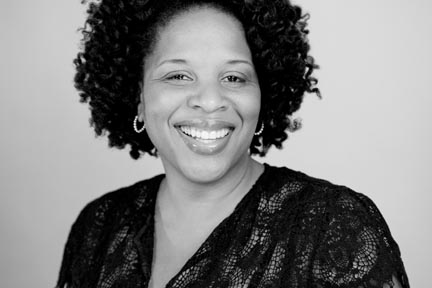
The Bat Segundo Show: Tayari Jones II

Tayari Jones appeared on The Bat Segundo Show #395. She is most recently the author of Silver Sparrow. She previously appeared on The Bat Segundo Show #99.

Condition of Mr. Segundo: Resisting the creative death knell kickstarted by marketing forces.

Author: Tayari Jones

Subjects Discussed: The limitless stories contained within any one city, writing about Atlanta, not living in a place you’re writing about, unanticipated shifts in character perspective midway through a massive project, numerous tips from Ron Carlson, tapping out a voice, writing a last chapter from every character, the origins of Raleigh, Hemingway’s iceberg theory, inventing an extended family and ambiguity, the two types of writers, working things out on the page, finding the story from a large bundle of pages, James’s stammering, being attracted to characters who are autonomous entrepreneurs, American fiction’s failings in depicting work, bigamists, how fathers are evaluated, whether bigamy is a pack of lies, taking lines from ridiculous ex-boyfriends, perspectives guided by time and situation, [12]

EXCERPT FROM SHOW:

Correspondent: I also wanted to ask you about James’s stuttering. This was a very interesting character quality. Because here’s a man who has two wives and it seems almost as if he’s stuttering wives. And so I’m curious about when the stuttering entered into the equation of his character. Was it there all along? Or did it come as you were writing the dialogue?

Jones: James always had a stammer. I knew that I didn’t want him to be like a smooth operator. Two wives, two kids. I wanted him to be kind of an awkward person and, in a way, with his two wives an embarrassment of riches. He can’t believe he had one wife. Now he has two wives. So his stammer just came as this kind of awkwardness for him. I don’t remember coming up with it. It’s always been a part of him. I mean, one of the things that came later for him was his profession as a driver. And that came later. He needed something to do. And he needed something to do that would allow him to have these two wives. And I was thinking, “Oh, he’s a driver.” And I liked the idea of him being an entrepreneur. I think I’m attracted in stories — because I have one in Leaving Atlanta — of these men who are their own bosses. They’re not rich. But they’re their own bosses. This kind of autonomous man.

Correspondent: The self-made man. Exactly.

Jones: And they get written up in their local paper in small articles. Like they have lives to be proud of. But they’re not rich. And I like my characters to work. I like my characters to have jobs. I hate the way that in so much of American fiction you have no idea how these people are supporting themselves. Every person in this story has a job.

Correspondent: Or worse yet, you have the protagonist as a writer or an artist or some sort of stand-in for the actual writer who’s writing.

Jones: Or you give them some crazy inheritance.

Correspondent: (laughs)

Jones: So that the story can happen. You need your character to take a nine year trip. But you have to give them an inheritance to take the trip. Which makes them in a different class. I think that real stories happen as people work. I know my life is happening. And I work every day. So I like to write characters as well.

Correspondent: This also leads me to ask. Did you contact any bigamists? Whether past or present practitioners?

Jones: No, no. I don’t know any bigamists. But you know, the thing about people having these half-siblings who share a father, I know a lot of people who have called them silver sparrows. I know a lot of silver sparrows. And I have talked to a number of them. Everywhere I go, I meet one. Since this book has not even been out, since it’s been in the world and people know it exists, I get emails from people that say, “I’m a silver sparrow. My father had another family.” And I’m interested in this idea of how do you evaluate a father. Because there are a lot of men with more than one set of children. And the different children have a different relationship. Just the other day at the Florida festival, a woman said to me that she had written on Facebook her status on Father’s Day. You know, “Happy Father’s Day to my amazing dad. La la la la.” And she saw her sister, who has the same father and a different mother. And for her status, she wrote, “I never had a father because the coward wasn’t there.” And it’s the same man. Is he a good man or not? How do you judge him? Do you judge him the way that he treats his best child? The way he behaves best? The way he behaves worst? Do you come up with an arithmetic mean? What do you do? So many people have this issue.

Correspondent: You approach bigamy from the vantage point of “This is a pack of lies.” On the other hand, what is a novelist but someone who also promulgates a pack of lies? Who is worse? A novelist or a bigamist?

Jones: I did not say that this bigamy is a pack of lies! I think I approach this bigamy as practical. He’s not lying to everybody. He’s not lying to his second wife. So it’s not a pack of lies. It’s a pack that involves lies.

The Bat Segundo Show #395: Tayari Jones II (Download MP3)

This text will be replaced