The Bat Segundo Show: Steve Erickson II

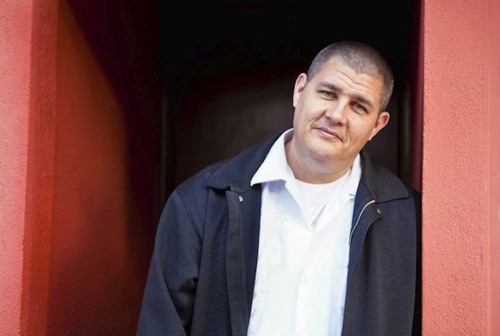
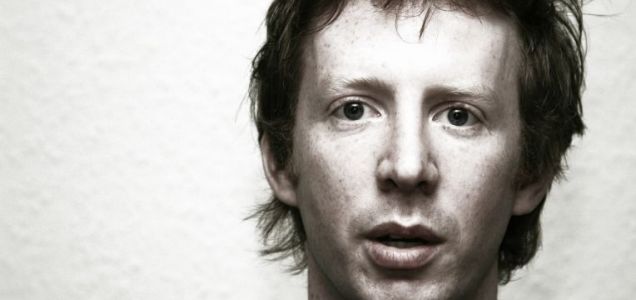
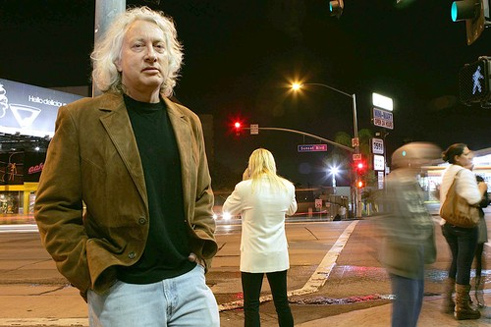
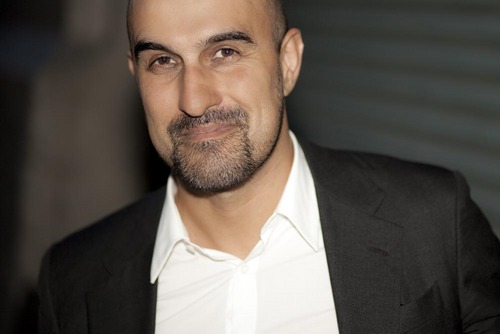
Steve Erickson appeared on The Bat Segundo Show #447. He is most recently the author of These Dreams of You. He previously appeared on The Bat Segundo Show #180.

Condition of Mr. Segundo: Contriving plans to join a community of one half.

Author: Steve Erickson)

Subjects Discussed: Writing a novel around short bursts, plagiarizing the future, The Sea Came In at Midnight, the novel as kaleidoscope, rationale that emerges midway through writing a novel, losing 50 pages in These Dreams of You, not writing from notes, Zan’s tendency to hear profane words from telephone conversations, the considerable downside and formality of being dunned, fake politeness and underlying tones of contempt, not naming Obama, Kennedy, or David Bowie, Molly Bloom in Ulysses and Molly in These Dreams of You, Erickson’s commitment to the ineffable, letting a reader find her own meaning, defining a character in terms of story instead of public and historical terms, listening to David Bowie to get a sense of Berlin, Erickson’s cherrypicked version of Bowie’s Berlin Trilogy, not capitalizing American and European throughout Dreams, using autobiographical details for fiction, Jeanette Winterson’s Why Be Happy When You Could Be Normal?, “part fact part fiction is what life is,” dating a Stalinist, why fiction is more informed by real life, how invented details encourage a conspiracy, the dissipating honor of being true to what is true, the last refuge of a bad writer, what a four-year-old can and cannot say, bending the truth when it sounds too fictional, Kony and Mike Daisey, combating the needs for believability and readers who feel defrauded, authenticity within lies, kids and photos who disappear in Dreams, striking a balance between the believable and the phantasmagorical, fiction which confounds public marketeers from the outset, postmodernism’s shift to something not cool, limitations and literary possibilities, the burdens of taxonomy, living in a culture that wishes to pigeonhole, why Zeroville and These Dreams of You gravitate more toward traditional narrative, reviewers who are hostile to anything remotely unconventional, writing a novel from the collective national moment, the relationship between history and fiction, being a man “out of time,” thoughts on how a private and antisocial reading culture is increasingly socialized, having an antisocial temperament, writers who cannot remember the passages that they write, the pros and cons of book conventions, and being “a community of one.”

EXCERPT FROM SHOW:

Erickson: We do live in a culture that wants to pigeonhole things. I don’t know whether that’s a function of late 20th century/early 21st century culture or is a function of American culture, or some combination of the two. In Japan, for instance, they don’t seem to worry about that when it comes to my novels.

Correspondent: But with Zeroville and with Dreams, we have moved a little bit more toward traditional narrative. I mean, maybe the impulse was always there. But do you think this has just been symptomatic of what you’ve been more occupied with of late? Fusing that traditional narrative with, say, some of these additional ideas of disappearance, of inserting words into sentences, and so forth?

Erickson: Right. Well, it’s hard for me to know. There are still a lot of people out there who would read this novel, These Dreams of You, and think it’s a pretty damn unconventional novel. They may not have read Our Ecstatic Days and thereby see this novel as whatever you want to call it: more accessible. But I can tell from the reviews I’ve gotten on this novel, which have largely been somewhere between good and better than good, nonetheless there are reviewers out there who really don’t quite know what to make of even this particular novel, which I think you’ve rightly said steers a little bit toward the conventional than earlier novels. And in the case of Zeroville, again, I had a strategy from the beginning, having thought about this novel for a while. I had started the novel at one point and I was writing it differently. And I was writing it — I don’t mean differently in terms of my earlier books. It was written more like my earlier books. And I stopped. I threw it out. Because I felt that this novel is about loving the movies, being obsessed with movies. It should have some of the energy of a movie. It should follow some of the narrative laws of a movie. So you had a lot of dialogue and a lot of the story being told in external terms. Being told in dialogue. Being told in action. Not a lot of motivational stuff. The main character in that novel, we never quite know where he’s coming from. We never know if he’s some kind of savant, or socially and mentally challenged. We never know.

In the case of this novel, I was aware at some point that, first of all, I was writing a story about a family, which I had never done. And, secondly, I was writing a story that it became clear to me, really from the first scene, that addressed the national moment and a moment that any reader could recognize in a way that none of my other novels quite had. Los Angeles was not submerged in a lake or covered by a sandstorm. It was out of that opening scene of the novel, which was the real-life scene that led to writing the novel. I merged a story that I thought would be recognizable to most readers. And I didn’t want to completely lose that. There are a lot of times in the novel that I think that is challenged. That recognizability. Or that recognition rather of the contemporary moment. Halfway through the book, the story suddenly changes track. But even as I was taking the reader, even as three quarters of the way through the book I knew the reader was going to be saying “Where is this thing going?” I didn’t want to lose that connection between the book and a moment of national history. It’s a history that’s still going on. It’s not a history of the past, but of the present. I didn’t want to lose that connection.

Correspondent: But why did you feel at this point, with this novel, that you needed to respond to the national moment? I mean, history is something, especially as it is unfolding, that one doesn’t necessarily feel obliged to respond to. So now you’re getting into questions of, well, is it possible that you are giving into the reader somewhat? In light of the conditions that we were describing earlier. Where did this need to respond to the 2008 climate come from?

Erickson: Well, I think it was completely personal. I was sitting on the sofa watching the election in November 2008 — Election Night — with my black daughter. And I knew this was a singular moment for me. And I knew this was a singular moment for her. And it was a singular moment for the country. And it was one of those cases where the story made itself manifest to the point of screaming at me. Here’s a story that not many other people are in a position to tell, given the circumstances of their lives as those circumstances were coinciding with the circumstances of the country.

Correspondent: Sure. I wanted to actually go back into the intertextuality within the novel. You have this character — J. Willkie Brown, the Brit who invites Zan over to give the lecture on “The Novel as a Literary Form Facing Obsolescence in the Twenty-First Century, Or the Evolution of Pure History to Fiction.” Now if we call journalism the first draft of history, it’s interesting that you also describe that “Zan’s single triumph over Brown is that, in time-honored journalistic tradition, the world-famous journalist always longed to write a novel.” It’s also interesting that Zan must return to his American roots: the original British origin point, right? To collect his thoughts on how he has dealt with words. And I’m wondering how much this relationship between history and pure fiction is predicated on Anglo-American relations. Can any novel or any life entirely deflect “the crusade against gray” that you mention?

Erickson: The crusade against what?

Correspondent: The crusade against gray. It’s when you’re describing Ronnie Jack Flowers and the specific content of his views. I wanted to talk about him, if it’s possible too.

Erickson: Yeah. That’s a big question. Early on, Zan wonders — or actually an omniscient narrator wonders by way of Zan — if this is the sort of history that puts novelists out of business. And I’m not sure I’ve got a sweeping cultural answer for all this. At some point early on in my life, well before the 21st century, I knew that I was a man out of time. I knew that the great art form of the 20th century was film. And I still believe that. And at the same time, popular music was rendering other media obsolete or, in terms of relevance, was usurping all of these other forms. But my talent and my temperament is to write novels. You know, and I should probably have been born fifty years earlier. And so as much as I would love to convince myself that I am operating in the central cultural arena of the time, I know I’m not. I know that fiction becomes not a fringe form, because too many people still read. And not even a secondary form. But a form that becomes more private. That is not shared with the culture at large. I mean, people read novels in private. Whereas they still tend to watch movies in public. Even as we watch more and more movies by ourselves at home. Even as they tend to respond still to music in public, whether they’re in the car with their sound system. So it’s just…it’s what I do. And it’s what I’m stuck doing. And the relevance or significance of fiction in relationship to history or journalism is almost beside the point for someone like me.

Correspondent: So working in a cultural medium that is below the mass culture omnipresence is the best way for you to negotiate these issues of history and fact?

Erickson: Well, I think…

Correspondent: A more dignified way?

Erickson: No, I think, Ed, it’s the only way I know. That’s all. I don’t know that it’s the best way or the more dignified way. I mean, I can’t rationalize it in those terms. In a way, I would like to be able to. You know, at some point early on, I thought a lot about filmmaking. When I was in college, I was actually a film student.

Correspondent: Yes.

Erickson: But I recognized at some point that, for better or worse, whatever talent I had — I felt I had some talent writing fiction. I had no idea whether I’d have any talent making movies. But perhaps even more importantly, temperamentally fiction is the province of a loner. Fiction is about locking yourself up in a room and having as little social interaction with other people as possible, and living in this world that you’ve created. There is nothing collaborative about it in the way that film is, or even making music is. So the answer to your question is entirely personal. It’s entirely personal. It’s what I was just meant to do.

Correspondent: You just have an anti-collaborative temperament.

Erickson: Absolutely I do. I mean, it’s more than that. I have an antisocial temperament. I teach in a writing program back in California and I have a lot of problems, actually, with writing programs and writing workshops. And I tell my students this. I say, the thing is, the paradox is that a writing program socializes what is really an antisocial endeavor. There’s something very strange about shutting yourself off from the rest of society to create this world or reality that’s completely yours and that you don’t share with anybody until it’s done, and even then you share it on a very private basis. If someone’s sitting across the room, and they’re reading one of my novels, I’m going to leave. You know, I don’t want to be there. Because even though I know that the public has complete access, what I did still remains so private to me, I don’t want to be around when somebody’s reading my work. Except for cases like this, I don’t especially want to have casual conversations about it. Perhaps strangest of all, and I’ve heard a number of other writers say this — I heard Jonathan Lethem say it a few weeks ago — people will come up to me, for instance, and ask me about a section of a book and I have no recollection of what they’re talking about. I have no recollection of writing it. I have no recollection of what I was thinking when I wrote it. I often have to ask them to show me what it is. Because I was utterly immersed in that, and then it’s done, and I need to leave it behind.

Correspondent: Running away from people who are reading your books. I mean, does this create any problems for you to go about your life? If you’re interested in the types of things that Steve Erickson readers are likely to be interested in, this could create some intriguing social problems.

Erickson: Well, as uncomfortable as it may make me to be in the same room, I would love to tell you that my life is littered with scenes of people reading my books everywhere I go. But that’s not the case. So it doesn’t happen that often. But I don’t have a lot of conversations with people who are casual friends about my work. And I don’t want to. So in that sense, the antisociability — is that the right word for it? The antisociability of the writing and the work, it does go on. It bleeds outside the lines of the life of that work, and it bleeds into areas of my other life, where I don’t, even though I’m always a writer, I don’t want to be interacting with people as a writer.

Correspondent: So is there any place for community? An increasing term used, I find, in writing. We have a “literary community” and so forth. Is this a logical extension of what some people find in, say, AWP or MFA workshops? Is there any possible place for community for you? Or that you find of value?

Erickson: For me, not especially. For other writers, perhaps. And I’ve been to AWP. And I’ve been to book conventions. The LA Times Festival of Books. And I can even drive a certain amount of pleasure for 24 hours to meet other writers. But the only community that gets any writing done is a community of one. And at the point that it becomes too much a salon, then I check out of it.

Correspondent: So for you, being antisocial is the truest temperament for an artistic writer.

Erickson: Well, I don’t know how you can be anything else. Certainly at the moment that when you’re doing the work. For me, that’s true, yeah. I can’t speak for other writers.

(Photo: Stefano Paltera)

The Bat Segundo Show #447: Steve Erickson (Download MP3)
This text will be replaced

The Bat Segundo Show: Hari Kunzru, Part One

Hari Kunzru recently appeared on The Bat Segundo Show #440. He is most recently the author of Gods Without Men. This is the first of a two part conversation. The second part can be listened to on The Bat Segundo Show #441.

Condition of Mr. Segundo: Wrestling with issues of conversational faith.

Author: Hari Kunzru

Subjects Discussed: Variants of faith in the author/reader covenant, Kunzru’s background, Kierkegaard’s Fear and Trembling, absence and unknowability, F. Scott Fitzgerald, The Celestine Prophecy, liberals who distrust science, how the media portrays women, when New Yorkers are confused with Englishmen, owning a motel in a desert town, attempting to escape the narrow possibilities of life, the appeal of cults, the desire for community, coercive situations in group living, Dawn’s tendency to accuse men of molesting a child, pedophilia, when people are faced with the offensive and the unspeakable, public discussions of children, organizing a book around echoes rather than plot, absent children and spirituality, simulacra within Gods Without Men, STRATFOR, Tom McCarthy’s Remainder, housing compartmentalized illusions within the giant illusion of a novel, the gaps within storytelling, breaking the contract between author and reader, refusing to tie up all ends, growing up in a period of postmodernism, being in a period of overlays, Augmented Reality, war simulations, being trapped in the imagination of the United States, the financial model as mystical tool, complex systems that are only understood through models, high-speed trading engines, machines that disguise their positions in the marketplace, the 2010 Flash Crash, comparisons between a day trader and a novelist, the predatory nature of collecting stories from other people, Theron Wayne Johnson, hearing a grisly story from a man in a bar, the ethics of making a story sufficiently transformative from its original source, conducting research for My Revolutions, people who use violence in support of their politics, the moral difficulties of formal interviews used for fiction, recent anti-gentrification movements in London, John Barker and The Angry Brigade, Bill Ayers, the Barker/Ayers ICA discussion, the inevitability of copying and pasting in 21st century art, using living people for fiction, impinging on public personae, Robert Coover’s The Public Burning, Adam Johnson, fictional projections of Nixon, James Frey and Oprah, the authenticity of memoir, the entanglement of novels and nonfiction, living in a Googleable age, the novel as a link dump, Kunzru’s Twitter presence, and hyperlink fiction.

EXCERPT FROM SHOW:

Correspondent: I wanted to first of all start off on a question of faith — predictably enough. A writer has a lot of faith when he is putting together a novel. A reader places her hard-earned shekels over the counter and has faith in the writer to tell a story. The characters in this novel, Gods Without Men — they are both faithful and faithless to ideologies, to their families, to their relationships. So faith is a very loaded concept. And I’m curious why any novelist would tackle something that is so tricky, so duplicitous, so hypocritical, so difficult to pin down. I mean, how do you deal with this? Because even though this novel does not always answer all questions, you are dealing with something that you have to fit into narrative. So maybe we can start here.

Kunzru: Yeah. I suppose my own relationship to faith is a complex one. I’ve got an Indian father from a Hindu background. Many people on both sides of my family are actively practicing religious. My mother’s background is Protestant English. My parents decided quite sensibly to bring me up without any religious — not to bring me up with either of those two traditions. So I was left to find my own way. And I’ve always had for many reasons a kind of inclination to see things one way and then see things another way. But over the years, I’ve developed a sense that I don’t believe in god. I’m an atheist. However, I don’t think that position — the idea that you don’t believe in some kind of personalized creator to whom you owe an ethical duty not to sleep with the wrong people. That doesn’t take any of the big questions off the table about human agency, about ethics, about meaning and value. And I’ve always been very fascinated by people of faith. Because in some ways, I find them very scary. People with a very strong faith have stopped asking questions at a certain point. There’s a certain point where they have made this leap. This extraordinary leap into the world of faith. And it’s something I felt that I understood poorly as well. The only book that’s ever really made me really kind of feel what it must be like to have a powerful religious faith is Fear and Trembling, the Kierkegaard book where he talks about the extraordinary moment where Abraham has sacrificed Isaac and he’s prepared to do this because his faith in God’s word is true. And that kind of encapsulates it. It’s a terrifying act. It’s a horrific act. And it, in a way, echoes with all these incredibly violent things that have happened in the name of religion. But at the same time, there’s a kind of horror to it. There’s a sublimity to it. There’s an absolute abandonment of the human.

And this novel is a way, is my attempt to talk about our relationship with the unknowable and with the unknown. And it’s about all sorts of people who have many different ways of conceptualizing this and many different sorts of solutions that they’ve come up with. But the essential question is the question of absence and unknowability. At a certain point, human comprehension ends. And whether you believe that everything is essentially knowable — like Jaz, the husband in this. The husband and the wife who are at the center of the book. Jaz is a rational man. He is trained as a scientist. His sense of the world is if you think hard enough and you have the right concept and you test and you hypothesize, then the world will open up its secrets. And his wife goes absolutely in the other way. She withdraws into a kind of mysticism. And other characters in the novel range from various people who have profound faith — like a Franciscan friar and a lapsed Mormon coalminer to people who have a much more complicated relationship with it and a skeptical relationship with it.

Correspondent: But I would argue that this concern for faith — both sides of the fence — almost mimicks Fitzgerald’s idea of the first-class intellectual being able to hold two opposing ideas in his mind. I mean, with Jaz and Lisa, it’s very interesting, those sections in particular. Because the prose itself is both general but specific enough for us to get an idea. It’s almost as if the prose needs to mimic their especial judgment towards the world, towards each other, and the like. And I’m curious how you developed this at the prose level. Because that was one of the things that really impressed me about your book. What struggles were there to get that balance? I’m just curious.

Kunzru: You mean, in terms of the voice for the different characters?

Correspondent: Yes. Exactly. Especially for Jaz and Lisa.

Kunzru: You know, it’s one of these things that emerges through the doing. I don’t think it was a very programmatic thing. I mean, those characters emerged as quite defined opposites to each other in their reaction to what happens to their missing child. I mean, I’m interested in the business of faith in the financial markets, faith in credit and the extraordinary kind of high wire act that is the global financial system, which depends on everybody believing that this money exists. And yet placing a kind of Mr. Science in this world of high finance was an interesting one. Out of those decisions, his way of talking and his way of understanding the world emerged quite naturally. Once you know that somebody has a higher degree in physics, you know that they’re unlikely to be basic in their worldview on The Celestine Prophecy. And Lisa’s character comes out of something I’ve observed from a lot of liberals with humanities backgrounds. Here, in London, everywhere. That actually, people aren’t very scientifically educated very often and actually have a kind of gut hostility to the procedures of science. Because they feel that it’s kind of closing down the space of wonder in the world. And that leads quite a lot of people — I’m always quite surprised by people who are very skeptical and argumentative will often have this blind spot where it comes to — especially things to do with health, in particular. Like people get into homeopathy and various other things that I would personally consider quackery. Because partly they wish to believe certain things about the world that have to do with wonder and ineffability and unknowability and often beauty and a kind of non-utiliatarian way of seeing the world. It’s all kind of very valid reasons to want to protect a sacred space from an intrusion by the methodology of science. But it can lead people into some very strange, anti-rational positions. And often those two ways of being can be very buried in people. Because we don’t tend to have these conversations. It’s off the list of what’s polite in a party chat.

Correspondent: Well, be as impolite as you like here. (laughs)

Kunzru: (laughs) Well, we can talk about it. But having a couple who basically have a great deal in common, who love each other — they genuinely love each other, these two. The kind of gradual exposure of the real contours of their ways of dealing with the unknown is what causes this terrible tension in their relationship. And that seemed to me to speak to quite an interesting fault line that runs across a lot of contemporary culture.

Correspondent: I’m wondering if Lisa, at least in relation to the question of faith, was almost sort of a spillover character for what you could not do with Dawn, who I’m also really curious about. I mean, it’s interesting that the women tend to gravitate towards issues of blind faith, often destructive faith. I mean, with Lisa, it’s interesting too because you have all these media incursions into her life. So it’s almost like some part of the world wishes to punish her for her beliefs.

Kunzru: I’m very interested in the way that media presents women. Especially mothers. The censoriousness that attaches itself to women’s choices around motherhood and around the work. I mean, in this novel, their child disappears. They become the object of this media witch hunt. And everybody zeroes in on “Is this a bad mother?” — especially “Is this a cold mother?” She fails to emote in a way that the media folk think is appropriate. And hence she’s immediately suspect. Because it’s a novel and you can get inside somebody’s inner life, we know very well that she’s absolutely destroyed by this and she’s an emotional person. She’s not some kind of psychopath who fails to have correct emotion or a response. However, the appearance sort of drifts further and further from reality. Of course, they’re also New Yorkers lost out West. Everyone hates New Yorkers in the rest of the country, as far as I can see. I now get outed as a New Yorker by other Americans in other parts. The English accent gets bracketed into some sort of New Yorker thing. So I get the prejudice as well. (laughs)

Correspondent: Those wild and crazy liberals with their British accents.

Kunzru: Yeah. Exactly.

Correspondent: You’re drinking a cappuccino right now! So there you go.

Kunzru: Drinking a cappuccino with a British accents. That’s exactly what everyone thinks happens in Chelsea.

Correspondent: You are America’s nightmare! (laughs)

Kunzru: I am. Rick Santorum, right now, is burning an effigy of me in a basement somewhere in Idaho.

The Bat Segundo Show #440: Hari Kunzru, Part One (Download MP3)

This text will be replaced

The Bat Segundo Show: Adam Johnson

Adam Johnson appeared on The Bat Segundo Show #438. He is most recently the author of The Orphan Master’s Son.

Condition of Mr. Segundo: Revising his own narrative.

Author: Adam Johnson

Subjects Discussed: Growing up in Arizona, reading a novel as an act of faith and how style reflects that, narrative which mimics Casablanca, storytelling as the North Korean identity, being the center of your own story, state-sponsored storytelling, DPRK aptittude tests, being trapped in a world of North Koreaness, the American idea of taking on new personae, populating a book with secondary characters from limited information, getting a sufficient Tolstoyian cross-section, knowing very little about Pyongyang, defecting to South Korea, Hanawon, underground societies in Pyongyang, North Korean testimonials, Stephen Crane’s The Red Badge of Courage, how fiction fills in missing factual gaps, the kwan-li-so labor camps, The Aquariums of Pyongyang, how to eat a newt, being unable to verify Yodok, Kenji Fujimoto, whether imagination is truthful enough to fill in the gaps, mining the Stanford libraries for North Korean books, Rikidozan and North Korean wrestling, approaching North Korea from the comic mode, interrogators who give prisoners “alone time,” playing a guitar for Kim Jong-Il, finding propaganda funny, feeling a responsibility to gulag prisoners, balancing absurdity and believability, Kim Jong-Il and the state cinema agency, Pulgasari (the North Korean answer to Godzilla), kidnapping cast and crew to make Pulgasari, the pros and cons of being an American outsider, moral responsibility in narrative, South Park, Madeleine Albright’s visit to North Korea, referring to the dead Kim Jong-Il in the present tense, getting bested by the human heart, North Korea’s attempt at an air defense system, Johnson being unable to find photographic evidence of apartment loudspeakers, the Japanese obsession with the KCNA, reading the Rodong Sinmun daily for eight years, Pork Chop Hill, trying to get a sense of how North Koreans live, North Korean humor, actresses kidnapped from South Korea, Bill Clinton’s efforts with Euna Lee and Laura Ling, Casablanca, resistance to black-and-white movies, Titanic, how the advent of DVD affected how North Koreans watched movies, relying on a stunted version of North Korea from four years, what Johnson saw in North Korea, whether photography can atone for the lack of the written word, the alleged nutritious value of dubious seaweed, scavenging extra calories, the legality of harvesting chestnuts, memory as a conduit between photography and the written word, how writing nonfiction gets in the way of advancing fiction, maintaining hundreds of pages of notes, forming unexpected narratives, being a journalism major and fabricating perfect quotes, capturing the essence of nuts, Robert Coover’s The Public Burning, Kim Jong-Il vs. Nixon, Kim Jong-Il Looking at Things, humanizing a dictator, being drawn to survivor narratives, how physicality and geographic location allowed Johnson’s North Korea to evolve, Soviet refrigerator factories in North Korea, goats on the building roof, turning on the power for the foreigners, how North Korea decides which floor you live on, avoiding exposition while writing The Orphan Master’s Son, Blaine Harden’s Escape from Camp 14, Shin Dong-hyuk’s expense, making a choice at the expense of something else, how Texas served as a narrative mechanism to see North Korea from several vantage points, being one of the first American novels about North Korea out of the gate, Hyejin Kim’s Jia, James Church’s police procedurals, and how facets of the thriller genre helps get at the truth.

EXCERPT FROM SHOW:

Correspondent: Stylistically, the first part of this book requires a great leap of faith for the reader. I mean, we’re asked to believe that Jun Do, despite the fact that his story does not check out, gets released by the interrogator. That he would also go to Texas with Dr. Sung. I don’t think I’m giving anything away.

Johnson: Sure.

Correspondent: But then you have this twist at the end of the first part. Then we are given this surprise and we say, “Oh ho! Maybe the narrative itself doesn’t exactly match up.” Then you have the second part. And the last part almost mimics Casablanca, which of course is a DVD of the world’s best movie that is circulated as well through the text. You have all these references to storytelling. You have Sarge saying, “You think the guys at top don’t know the real story?” You have Commander Ga wondering “if he couldn’t tell a story that seemed natural enough to them now, but upon later consideration might contain the message he was looking for.” So we’re led to believe that storytelling, or perhaps this dim awareness of narrative, is very much the North Korean identity. And I’m curious how you arrived at this involuted solution to North Korea. In terms of why this, of all things, would be their identity.

Johnson: Well, storytelling is my obsession. I love stories. I love to write them and to read them. And I’m really fascinated with how they come out. Especially troubling stories. You know, happy, funny stories are very easy to tell. Stories of success and achievement. And they’re a little boring. But, you know, I’ve studied for some time now how people tell traumatic or painful stories. And the different shapes that they take. And when I started studying North Korea, it made me reconsider how I tell my own stories, the stories I tell myself to feel good. In America, I think, in our literature and in our real lives, everyone is the center of her own story. And our job as humans and as characters is to follow our motivations toward what we want and need to overcome obstacles by looking inward and growing and changing and making discovery towards becoming our best possible selves. But, you know, as I studied the stories about North Korea, because the story there is state-sponsored, I realized that it was a national narrative written by a regime, enforced by a regime, controlled by censors, without another version. And in that, the very few people at top were the central characters. Really, the main character was Kim Il-Sung, Kim-Jong Il, and Kim Jong-un now.

And everyone else in that country was like a secondary character. And this is really borne out by my research and by the testimonials of defectors that, when you’re a child in the DPRK, early on you’re assessed for your aptitudes or certain qualities for the needs of the state. And you’re sent down paths that lead toward becoming a fisherman or a sailor or an accordionist. And in that world, having your own desires and yearnings could run counter to the role that you might fulfill to survive. So I think I started with a character who’s more trapped in a world of North Koreaness, where he must do what he’s told, go where he’s told. He does grim things. And it doesn’t really matter who he is or what he does. It’s just that the role will be fulfilled. Whereas in America, you know, we change our stories all the time. They grow and evolve. And when you go off to a new school or a new job, you just take on a new persona. You change. And I think over the course of the book, because the character meets Americans — he listens to foreign transmissions because he has some encounters; even though he doesn’t defect; even though he keeps maintaining his role — a growing sense of possibility rises in him that he could finally write his own story rather than being conscripted into the state. And in the second part of the book, he does this daring act to try and become his own person. Though there he has to impersonate somebody else even.

Correspondent: Well, secondary characters. I mean, this book is filled with them. And I’m wondering if, from the limited resources you had at your disposal — I mean, you did in fact go to North Korea; we can talk about that in a little bit; I suppose it’s an ineluctable subject — but I’m curious if you could truly, from your vantage point, get a suitable Tolstoyian cross-section when the information you had at your disposal is so thin. I mean, do you feel that there were certain secondary characters you didn’t quite include in the book? That may have actually been included in the previous draft and you would have liked to flesh out further? How do you go about creating a fictive population when the information at your disposal is so thin?

Johnson: Well, I did kind of revel in the secondary characters in my book. I’m glad you point that out. Because I had a lot of fun with them. You know, just in terms of North Korea, what we know and what we don’t know. We know very little about what happens in the secret power in Pyongyang. That the people who are ruling and who are inflicting the power upon others — we don’t know that much. For the lives of normal citizens and the rest of the country — in Wonsan, Nampho, Chongjin, etcetera, we know a great deal actually. Over 6,000 people defected last year. When they make it to South Korea, and that’s a whole journey in itself, they go to a facility called Hanawon, where they’re debriefed. And a real narrative is written about each one of them. And then they go through a kind of school that helps them reintegrate into a vastly different society. But from the information that’s gathered about normal citizens, we know how much they eat. How many hours they work. How their families live. About their housing blocks. About their group criticism sessions. We know how much volunteer labor they have to give to the squads. Etcetera. The mysterious people are in Pyongyang. They don’t tend to defect. They’re all underground. When you go to there, there’s no White House or Blue House. There’s no residence with Kim Jong-Il. He lives in an unseen place in the city. A lot of the big structures are underground. Probably because we bombed them so mercilessly during the Korean War. And there’s an underground society that exists. And we don’t know much about them at all. I saw cell phone towers when I was there, but not a single person on a phone. We have to assume they have the Internet, that they understand about the world, that they watch movies. They probably make international calls, even travel internationally. But because they don’t leave, because they don’t leave any trail, we just don’t know who they are. And what I tried to do in my book was maybe fulfill the human dimension of the normal people outside the city. And, by that I mean, in a place with such self-censorship, in a place where even being perceived to do something against your role in the state could cost you dearly, I wondered how normal people chose to share their inner thoughts. This was the imaginative part. A lot of the factual basis of the book is really accurate. But would a parent tell a child that he thought it was all a lie? Would he transmit that essential knowledge that he accumulated over a life?

The Bat Segundo Show #438: Adam Johnson (Download MP3)

This text will be replaced

The Bat Segundo Show: Andrew O’Hagan

Andrew O’Hagan appeared on The Bat Segundo Show #372. He is most recently the author of The Life and Opinions of Maf the Dog, and of His Friend Marilyn Monroe.

Condition of Mr. Segundo: Feeling sartorially inadequate and unwilling to beg for his dinner from the table.

Author: Andrew O’Hagan

Subjects Discussed: [List forthcoming]

EXCERPT FROM SHOW:

Correspondent: It is interesting. You want to have the dog smarter than everybody else in the book. And this leads me to ask you about the footnotes in this. I mean, from a formalistic standpoint, well, we view dogs at our feet. And the footnotes, of course, reflect that particular —

O’Hagan: And the dog’s always going to love footnotes because they can identify the position.

Correspondent: Exactly. But initially many of these footnotes are there to clarify little cultural tidbits. Almost gossip. Like: What is Douglas Sirk’s real name? But as we read the footnotes more, they then become very concerned with clarifying specific facts. Almost in a hectoring tone towards the reader. I’m curious about how the footnotes came to be from just this tonal shift that goes throughout the book, and also if you were tempted to allow the footnotes to go maybe further than eight lines at some point. What did you do to keep that down?

O’Hagan: Well, it’s interesting that. If I had my own way, if I lived in a world of pure O’Haganism, then the footnotes would have gone on for volumes and have a Shandy-ian or Borgesian nightmare where the footnotes were longer than the book. I like the comic potential with that sort of thing. And I like the idea that this was a work of bricolage, as the French would say. That it was an attempt to build up phenomenon in the reader’s mind. Which could increase their confidence about what consciousness was. Cause after all, this was really a book about inventing the notion of consciousness for an animal. I built it up from the ground up. And he does say early in that process of life for him — quite early in the book when he’s still in England — he says, “Dogs love digression.” So it made it natural to me that at some point he would start to deploy the footnote. Which is nothing if not a little contained digressionette. I liked the idea that he would occasionally stop the narrative in order to point something out to the reader. To wag a finger or a paw and give a notion of other worlds of knowledge which might be available. Maybe while pointing towards. He’s a friendly little scholar as much as anything else. He’s a pedant too. And all these things are exciting character traits of his to me. So I had to make him stay in character. And it would be in his character to offer footnotes. Even ones that were hectoring or were strictly unnecessary. They add to the entertainment value overall, I feel.

Correspondent: But to go back to what we were discussing earlier about the comedy vs. the tragedy, and how this reflects human life, early on in the book Maf says in one of these footnotes, “Unlike humans, we can hear what people are saying from themselves. And we can sniff illusion.” Later you have Maf finding “the real difference between humans is that some care about authenticity and some don’t care at all.” Why must the humans in this book be so tied or interconnected with authenticity and illusion?

O’Hagan: Because I think it’s an utterly 20th century obsession. The mid-20th century obsession particularly. Hollywood having held such a position in cultural life the world over. American moviemaking created a sensibility in the 20th century. It didn’t just reflect sensibilities. It actually created a mind set. A notion of natural human behavior and democracy, which I often think was illusory too. But then it was very attractive to the world. Very viable. And I knew that this dog was going to be having its life at the center of that. So I wanted these questions — illusion and reality, illusion dipping into delusion, our condition of being overwhelmed by fakery almost — to be something that the dog had an inside view on. An inside view for a number of reasons: (1) Which is that he’s a novelist at heart. And novelists really know what illusion is all about. We are a conjuring artist as a novelist. You’re playing god with lives and experiences and parts of history and vocality and patterns of speech. You know, you are a trickster. And I think that I’ve always been interested in that fact. And I wanted this little avatar of mine. This little novelist manqué, of Maf the Dog, to be somebody who could look at not only the world of Hollywood and psychoanalysis and politics and the early 60s from an insider’s view — which Maf certainly had. The real dog was in all of those worlds with Marilyn at the time. She was a real figure who had very deep experience of illusion. And I wanted to manipulate that for the reader to present an opportunity to look at the relationship between reality and imagination in a fresh way.

The Bat Segundo Show #372: Andrew O’Hagan (Download MP3)

This text will be replaced

The Bat Segundo Show: Paul Murray, Part Two

On December 5, 2010, the Irish novelist Paul Murray encountered one of Mr. Segundo’s many agents before a full audience at Word Brooklyn. The two gentlemen proceeded to talk, with smart audience interjection and Mr. Murray reading from the book, for a little under 90 minutes. Just as the tape ran out, the very patient Word Brooklyn staff wisely put an end to this gabfest. The two gentlemen had no idea they had rambled on for so long. From all reports, neither did the crowd.

The first part of this conversation is now available for your listening pleasure as The Bat Segundo Show #370 (also referred to as “Phyllis Presents,” for reasons known only to those possessing the appropriate handbook). It is about 41 minutes long and involves the initial Q&A between Mr. Murray and our most mysterious agent.

The second part of this conversation is now available for your listening pleasure as The Bat Segundo Show #371 (which does not possess any alternate name, we are sorry to report). It is about 38 minutes long and features Mr. Murray reading from his latest novel, Skippy Dies, along with further questions from our agent (and many from the crowd). If you listen carefully to this second part, you may be able to detect a broken haiku.

The producers wish to thank Brian Gittis, Stephanie Anderson, Jenn Northington, Sarah Weinman, and (of course) Paul Murray for their great assistance (much of it at the last minute) in making this special conversation happen. We hope to offer similar “live” conversations in the future.

Condition of Mr. Segundo: Recoiling from the pleasures of being applauded by a recorded audience.

Author: Paul Murray

Subjects Discussed: The origins of Bethani, the original length of Skippy Dies, storylines cut from Skippy Dies, the narrative need for an adult ballast, the importance of the school as a microcosm, Infinite Jest, open-ended narratives, tradeoffs, the impossibility of second-guessing an audience, Roland Barthes, cartoon sex, absurd editorial exchanges concerning the physicality of mermaids, balancing gender perspective, getting Lori’s emotions right, Catholic schoolboys, amoral characters and teenage beauty, authentic teen voices, requests for a “director’s cut” of Skippy Dies, trying to find uses for scrapped material, when descriptive “transplants” don’t work in revision, and the importance of listening to editors.

EXCERPT FROM SHOW:

Murray: I didn’t want it to be an Infinite Jest level narrative. I think that might have had its day, in fact. That sort of completely open-ended narrative structure. Because once you read Infinite Jest and you get to the end of 1,000 pages and realize he’s not going to tie it all up. Sorry to anyone who hasn’t read the book. The butler did it. That in itself is not quite a gimmick. But it’s a device. And it’s a device that people will get bored of. So you need to find new ways. Roland Barthes, who I read a lot unapologetically, he talks a lot about, “If you destroy something. If you try and destroy something, it just comes back.” Like you just sort of preserve the dialectic. So what you need to do is subvert it by making fun of it or just twisting things and tweaking things. I guess that’s what I was trying to do with the book. I really like — I watch tons of — far too many movies and TV programs and stuff. So I wasn’t coming at it with some kind of Puritanical urge to — like an Alain Robbe-Grillet sense of “I puke on the novel.” I wanted it to be a story that some of the people would enjoy. So yeah, it does look like a lot of elements. It’s got characters and it’s got jokes. It’s got plot twists and stuff. I would argue that it doesn’t work in a sort of three-part type of way. Because Skippy dies at the beginning. And then it tracks back. The first two parts are tracking back. What happened to him. And then the last part is just dealing with the effects of his death. So it is kind of chronological. Quite weird.

Correspondent: Well, what do you trade off when you are writing for the audience like this? Are there certain areas that you went into further? Because the book is very candid about the teenage lifestyle. And drugs and sex and things like that. Did you go further in this earlier draft? Were there things that were perhaps just too off-putting for the audience that you were seeking? I’m just curious.

Murray: I genuinely would try and avoid — I mean, if you start thinking of your audience, then it’s impossible to second-guess an audience. Because people react in ways that you can never imagine. So you’re on a losing streak with that. And also you’ll just freeze up if you start worrying about what people will think. So I tried to avoid doing that. That said, I did have more extreme things happening in earlier drafts. And I think it was because it was hard to gauge the right level of shockingness. And it wasn’t that I wanted to shock people. It was more that I was worried about censoring myself. I was worried that the editors won’t like this scene. So I’m going to leave it in there! Which is a very stupid way of writing a book. But that’s what I did.

For instance, the Bethani character, who writes a lot of these strange porno songs. There were more of those than there needed to be initially. And there’s a very disturbed character called Carl. His stuff was initially — there’s a bit where Carl is at home looking at porn on the Internet and he seems to be looking at this toon porn, which is characters from Disney — Pocahantas and the Little Mermaid, Snow White and so forth — having sense with various other toons. Smurfs having sex.

Correspondent: Imagination or research into this?

Murray: Uh, no comment. But there was a humorous exchange with the publishers. With Penguin. Because initially they were saying, “I think Disney may have copyright on these. So we’re going to have to write to them and say is it okay?”

Audience and Correspondent: (laughs)

Murray: Okay, I don’t know if they’ll go for that. But it turns out.

Correspondent: Did you get any yeses? Yes, it’s perfectly okay for a Snow White and a dwarf 69. Or something.

Murray: (laughs) You know that site!

Correspondent: No, I…no comment!

Murray: That’s one frisky dwarf.

Correspondent: (laughs)

Murray: No, but it turned out that it was legal. It was okay. The Penguin legal department checked this out. It was fine. You could use those references. But there was another bit. A Penguin editorial assistant, who is a very nice and lovely girl called Anna Kelly, said, “You have Pocahontas giving a lickout to the Little Mermaid.”

Correspondent: (laughs)

Murray: “Physiologically, that’s not actually possible.”

Audience and Correspondent: (laughs)

Correspondent: Your imagination then!

Murray: “Dear Anna: Thank you so much for that.” So if you know anything about the English publishing industry, then you know it’s run by these very sweet, very polite women. And so there’s this humungously embarrassing email conversation back and forth. “Maybe we should have the Little Mermaid giving a lickout to Pocahantas.”

Audience and Correspondent: (laughs)

Murray: “Oh! That seems like the best solution!”

Audience and Correspondent: (laughs)

Correspondent: Oh boy. Anybody have a question to follow that up with?

The Bat Segundo Show #371: Paul Murray, Part Two (Download MP3)

This text will be replaced