The Bat Segundo Show: Gary Shteyngart II

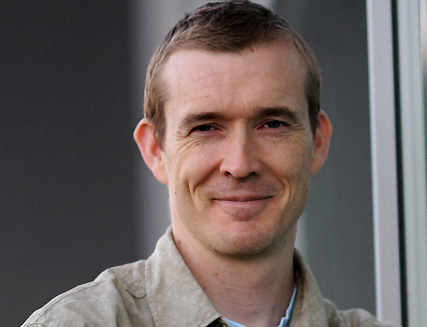
Gary Shteyngart appeared on The Bat Segundo Show #352. Mr. Shteyngart is most recently the author of Super Sad True Love Story. He previously appeared on The Bat Segundo Show #121 and was ambushed by a Noah Weinberg type earlier in the year.

Condition of Mr. Segundo: Too old and too much of a hack for Conde Nast’s cryogenic chambers.

Author: Gary Shteyngart

Subjects Discussed: [List forthcoming]
EXCERPT FROM SHOW:

Correspondent: You’ve probably seen this video of this 11-year-old who’s being cyberbullied by 4chan. Did you hear about this? She’s going by the name of Slaughter. And there’s a video where her dad is shouting in the background. And it’s truly horrifying. Surely, I think people would still value their privacy to some degree. Or they would say, “This is going way over the line.” Harassing people. Providing every bit of personal information. I mean, that’s got to trump any seduction by technology.

Shtyengart: Who knows? Things happen so quickly. Our values are changing so quickly. I mean, one of the things that this book doesn’t state, but maybe believes, is that change is okay. Change is going to happen. The end of slavery was good. Racism, anti-Semitism, homophobia — the dilution of all these things in states outside of Arizona. That’s good. But change happens quicker than we’re able to accommodate it. Because we are really flesh and bone and certain whatevers going on in our heads. But there’s only so much we can do. And when we’re addicted to constant change that’s changing at a breakneck speed, what happens when the change overruns us and begins to condition this group mind that we have brought together? It begins to condition us more than we condition the group mind. That can be very depressing. I mean, going back to the television people — when television was revealed — there was a similar worry. But what this does is a little more insidious. It takes away our privacy, for one thing. But it also deputizes all of us to be writers, filmmakers, musicians. Which sounds lovely and democratic. But when a book ceases to become a book, when a book becomes a Kindle application, when it become a file — how different is it in the mind of somebody from any other file that you get? Sitting there at your workstation — if you’re a white-collar worker — all you do all day long is receive bits and bits of information. And in some ways, you begin to privilege these bits of information. But in another way, one email is as good as another. It’s all just coming at you. Streaming at you. You go home. What’s the last thing you want to do? The last thing you want to do is pick up a hard brick like the one I’m holding right now, open it, and begin to read linear text for 330 pages. It’s the last thing you want to do. Who the hell would want to do it? And I think that because America is such a market economy, there’s still a real love of storytelling. That’s why you look at something like The Wire, The Sopranos, Mad Men. You know, what they’ve done is they’ve very cleverly — and they’ve talked about this — they’ve repurposed fiction — the way it used to exist between covers — in a way that can be transmitted inside an eyeball, in a way that satisfies our craving for storytelling. But without all the added benefits that you get from a book.

Correspondent: Hmmm. Well, I don’t know about that. I mean, to some degree, by having jokes and by writing an entertaining book — which I think this is an entertaining book…

Shteyngart: Thank you.

Correspondent: …you are kind of contributing towards this entertainment-oriented storytelling.

Shteyngart: That’s right.

Correspondent: What makes you different, eh?

Shteyngart: Well, you hit the nail on the head with your big hammer. I still believe that fiction is a form of entertainment. In my crazy world, which may not exist, I’m still hearing about a book that I have to read. And I’m getting out of bed. And I’m running to the bookstore. And I’m buying it. In the way that people run to the cineplex. I’m excited. And that’s what I want fiction to do. If it doesn’t entertain me, then it’s work. When I was researching parts of this book, I had to read a lot of books that were not entertaining. And they were work. What worries me is the academization of literature. When it becomes just an academic pursuit, where we sit around, we create serious works that are then discussed by serious people in serious settings, and the entertainment value is nil. And we become a small tiny society that’s obsessed with things. In other words, we become where poetry is today. Utterly irrelevant. Beyond a certain beautiful wonderful circle of people. And the poetry hasn’t gotten any worse. The poetry’s great. And the fiction hasn’t gotten any worse. Some of it is amazing. But the way we approach these things has become too serious.

Correspondent: Well, to what degree should books be work? I mean, I’d hate to live in a world in which Ulysses was banned simply because it was considered to be too much work. I find it a very marvelous journey to just sift into all those crazy phrases and all that language. But it doesn’t feel like work to me. And I don’t think it feels like work to everybody. And we still have Bloomsday and all that.

Shteyngart: I’m not talking about Ulysses. I’m talking about self-important crap.

Correspondent: Like what?

Shteyngart: Well, I’m not going to say.

Correspondent: Ha ha! Very convenient.

Shteyngart: Very convenient. I’m not going to say. Madame Bovary. Talk about a page-turner. I can’t put that thing down. I read it all the time. Jesus Christ, and there’s still part of me that thinks, “Don’t do it. Don’t do it, Madame B. Stay away from that schmuck.” Because it’s so damn involving. It’s brilliant. It’s funny as hell. You know, the apothecary. There’s so many elements in it that are working. It’s perfectly researched. The language is just right. It doesn’t — I suppose it could be considered work. But it’s not any more work than one needs to do in order to gain the maximum enjoyment and understanding of these characters.

Correspondent: Yeah. But isn’t there some sort of compromise? Aren’t you trading something away for this happy medium? Are we talking essentially to some degree about approaching books and literature as if it’s a middlebrow medium?

Shteyngart: Oh what does it mean? Middlebrow, lowbrow, highbrow. These brows. I raise my brow at those brows.

Correspondent: Very bromidic

Shteyngart: The whole bromidic stuff is nonsense. What makes Jeffrey Eugenides or Franzen’s works — what makes them stay in our minds? They use whatever language they want. If they need to deploy highfalutin language, they’ll do it. If they need to use street slang, they’ll do that. The range is always there. And you try to capture a world. A place and time you try and capture as best as you can with the best people who you can deploy. The best characters you can deploy doing them. And to do that, you need to care about these people. Maybe I failed. But I certainly have tried with Lenny and Eunice more so than with anyone else. I’ve tried to live inside their skin. I’ve tried to make myself feel the love that they both have toward each other in this very difficult world. And you know, that doesn’t sound highbrow. But to me, it’s the most important thing I can do with my art.

(Image: Morbinear)

The Bat Segundo Show #352: Gary Shteyngart II (Download MP3)

This text will be replaced

The Bat Segundo Show: David Mitchell III

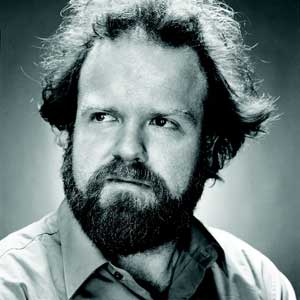
David Mitchell appeared on The Bat Segundo Show #350. He is most recently the author of The Thousand Autumns of Jacob de Zoet. He previously appeared on The Bat Segundo Show #1 — the very program that started it all — along with a two-part podcast from 2006 (Show #54 and Show #55).

Condition of Mr. Segundo: Annoyed by hotel security.

Author: David Mitchell

Subjects Discussed: [List forthcoming]

EXCERPT FROM SHOW:

Mitchell: I think of words as vehicles that convey what is in my imagination into someone else’s. And we’re sort of in a dialogue. Because they don’t just replicate what’s in the imagination. They can alter it. You can mistype and you get a word that actually can be better than the one you meant. Words can feed back and suggest to the imagination, “Well, would it be neater if you imagine this instead?” Language itself is a kind of a writing partner, separate to the writer, who is deploying the language. I think. I think this is true. Has that answered your question?


Correspondent: It sort of does. Actually, there’s one thing I wanted to ask you and that is with Orito. You investigate the flashback of her sexual assault. Yet in the shrine, we don’t really see the true horror of what’s going on. I mean, granted it’s from Orito’s perspective. But I’m wondering why you didn’t really go into what was happening. I mean, she could have observed the engifting. I mean, it sounds horrific in terms of a “what is not seen” standpoint. To use a cinematic idea. But I’m wondering why you didn’t go full-borne. Or if there was a draft where you did in fact go into that dark territory and it proved just too disturbing? I don’t know.

Mitchell: I didn’t know how to do a sex scene that involved engiftment for it to not stink of misogyny. And as a male writer, that’s even worse. You know, in blunt terms, if you can ever hear a writer jerking off as he’s writing, then that’s it. Then the book’s dead. That’s a crude thing to have said.

Correspondent: You can say whatever crude things you like here.

Mitchell: But it’s what I meant. And you kind of know what I mean.

Correspondent: Yeah, I do. But on the other hand, you are dealing with an age from centuries ago where it was in fact a very misogynistic atmosphere.

Mitchell: Oh certainly. Certainly!

Correspondent: You certainly get a lot of that in the book. But I’m just curious why. I mean, don’t we have to really look at these terrible dark feelings squarely in the face in order to really get at the truth?

Mitchell: If it’s happening now — at a place about a quarter of a mile from the Helmsley Hotel that we’ve just been kicked out of in downtown New York, and it’s a social wrong, and women have been trafficked from godforsaken parts of the world and are being exploited like this — dead right. Shine cold hard truth or truth of light onto it. Please. It’s got to be stopped.

This is fiction. Two hundred years ago. And it hasn’t got that same imperative. That wrong, in this day and age, does not exist to be righted. If there’s an echo of Dejima, which is also a place that no longer exists, it’s a novelist’s requisite. That’s what the shrine on Mount Shiranui is. And for me to be offering the scenes — sort of on camera as opposed to off stage, where such physical exploitation is taking place — I think would have gone over a kind of writerly ethical mark in the sand. Which I chose not to go over.

Correspondent: What would that ethical mark in the sand be for you? I mean, it seems to me that other people — like Brian Evenson, who comes to mind — will go across that mark. And by doing so, really risk the idea of being impugned as a misogynist. Even though there is no misogyny in their particular intent. I’m wondering if it’s an overstated concern perhaps on your part. Or whether this is just one of those lines in the sand that you will possibly cross in the future or some capacity. Staring some really terrible truth in the face like that. I mean, you do. Don’t get me wrong. But this is an interesting question.

Mitchell: If it’s a real terrible truth, it has to be stared at the face. If it’s an unreal, made up, quasi-historical fictitious terrible truth, then to be describing institutionalized rape on the page in hard porn vocabulary terms, I feel that it sounds like me jerking off into my laptop. And all of a sudden, 98% of my readers have left the building. And I probably have gone with them, had I been a reader of the book.

Correspondent: Would you call something like Bret Easton Ellis’s American Psycho jerking off?

Mitchell: Firstly, I can’t say what I’ll be writing in the future. I don’t know. Secondly, to go back to the question that you’ve — well, two questions ago and actually one question ago as well. I don’t begin to sit in judgment on other writers who handle this, who make this call in a different way. And I’ve read that book. And it works very well. It’s distressing and awful and upsetting. And it works very well. And good luck to him really. But here in my book, in The Thousand Autumns of Jacob de Zoet, it felt wrong. And I’ve had a really blessed life. But I’ve also had enough hurt and pain to know it’s real stuff. And it’s not to be toyed around with just because, “Hey, I’m going somewhere no one else has gone before.” No. You have to treat your own female characters with respect as a male writer. Why I’ll stop being afraid to show the moral hypocrisies going on and the way that these things are justified quite plausibly, quite kindly, by the men who are conducting this kind of farm — that I’m not afraid of at all. Why would I be? But the language that they use. Just like a term like “ethnic cleansing.” These soft little euphemisms when reality is too horrific to be true. What gives? What bends? There’s actually language used to describe it. And these euphemisms. Rendering. Waterboarding. They sound quite pleasant. They sound quite Beach Boy-esque, don’t they? Always watch out when you hear words like that. Because it means reality is too horrific for that spade to be called a spade. Now this kind of thing, I really have to explore in the book. And I do it. And that’s great. But the thing itself that is being euphemized about — this farming of newborn children for purposes I’m not going to talk about, because I don’t want to spoil the book for anyone who hasn’t read it — it’s crucial that I don’t wobble my fingers in that gore in a sort of gratifying, self-regarding, “Look how brave I’m being” kind of a way.

Correspondent: I bring that up because it does resemble the farm that’s in the midsection of Cloud Atlas.

Mitchell: Yeah, it does. Doesn’t it? I hadn’t thought of that. So it does.

Correspondent: And you seem to be really concerned with the idea of slavery. Particularly in the first two parts of the book. And this is why I’m convinced that what we’re talking about here is an interesting fusion between these moral hypocrisies and, of course, the narrative steam engine. At the end, we’ve got the clearly influenced Patrick O’Brian. Which is great and all. But what I’m wondering is: Can you really pursue these dark and dangerous and really heavy topics that involve serious exploitation? I mean, I haven’t even brought up the slave chapter that was from the perspective of Weh. The only time the book slips into the first person. This is also interesting to this question. Can you really explore dark terrain like this and stop short of the mark? That’s the question. Is this something you’re still figuring out?

Mitchell: It is. And it’s an ongoing debate I have with myself. If you feel the book works, then I can and one can. If you feel the book doesn’t work, then perhaps one of the reasons it doesn’t work is because it can’t be done. You do have to slip into — not sexual porn, but a kind of pornography of violence. Maybe you do. I can’t judge my own books. I’ve no idea if they work or not. I never do. Never do.

The Bat Segundo Show #350: David Mitchell III (Download MP3)

This text will be replaced

The Bat Segundo Show: Jennifer Weiner III

Jennifer Weiner appeared on The Bat Segundo Show #346. She is most recently the author of Fly Away Home. Ms. Weiner previously appeared on The Bat Segundo Show #198 and The Bat Segundo Show #14.

Condition of Mr. Segundo: Hoping to be frightened by The Motherland sometime soon.

Author: Jennifer Weiner

Subjects Discussed: [List forthcoming]

EXCERPT FROM SHOW:

Correspondent: It seems to me that you are really gravitating more towards this extremely dark expanse of human behavior. At least from my vantage point. And it seems that you really want to push further in this direction. And yet, to some degree, you almost stop short of really pushing yourself fully into something so dark. And I know you’ve got it in you. So I’m wondering: why ride the comic tone? Out of obligation to your readers? Or what here?

Weiner: Well, I think, for me, it always feels natural to have both. To have the darkness and the comedy. That’s just how I am as a person. And I think that my own family history has made me that way. There’s been horrible things that have happened, but me and my sister and my brothers always wind up laughing about it. Because what else can you do? But it’s interesting. That darkness. Because it’s a tough tension to maintain. And I don’t want… (pause) See, here’s the thing. I don’t think writers choose the books they’re trying to write. I don’t think writers choose the tone they’re going to take. I think that it’s a blood type. Like it’s what you’re born with. Stephen King gave the example. He and Louis L’Amour could be sitting at a pond. And Louis L’Amour would come up with this Western about water rights in a town that was having a drought, and what would happen? And Stephen King would write about something that comes slithering onto the banks, and first takes the dogs, and then takes the cattle, and then takes the kids. It’s just the way you’re wired. And I think that I’m wired, for good or for ill. I mean, there was a lot of sad stuff in Good in Bed too.

Correspondent: That’s true. But we’re talking about rape.

Weiner: Rape.

Correspondent: We’re talking about neglected children.

Weiner: Yes.

Correspondent: And during those sections in both of these last two books, it gets really, really serious.

Weiner: Right.

Correspondent: And then we go back to the laughs. But I’m wondering why not go ahead and spread this further? It’s not to say that you can’t explore light and dark. You can do a double plot thing. Like Crimes and Misdemeanors or something. I don’t know.

Weiner: (laughs) And then when you turn the book over…

Correspondent: (laughs) Yes.

Weiner: …they go shoe shopping!

Correspondent: Yeah, exactly.

Weiner: Well, who’s doing that well? Zoe Heller obviously.

Correspondent: Yes.

Weiner: Who else? Who do you like? Because Zoe Heller’s funny too.

Correspondent: I’ll bring up Richard Russo. Richard Russo does that very well too. And in fact, I….

Weiner: Mmmmm. My mother loves him.

Correspondent: I’m trying to go ahead — you and Russo are actually on the same team here. You know, that whole description of the development of the grocery store?

Weiner: Yes. Yes.

Correspondent: I could find that in a Richard Russo book, as I could in a Jennifer Weiner book. He writes about this kind of stuff too.

Weiner: Right.

Correspondent: You write about this too. And I’m telling you. What do we do to get some kind of diplomacy here?

Weiner: But I…

Correspondent: It’s not Russo’s fault that your mother was blabbing about him!

Weiner: Oh my god.

Correspondent: It wasn’t his fault.

Weiner: Okay, let me set the scene for you. The year is 2001.

Correspondent: (laughs)

Weiner: And my first book is out. And I’m in a bookstore with my mother. And I’m signing stock, as you do. And my mother, who is very friendly and chatty. This woman comes up to her and says, “Oh, I need a great book for the summer. Have you read anything?” And my mother says, “I just read the best book. It was funny and it was sad. And the characters felt so real.” And I’m like, “Wait for it. Wait for it.” And my mom’s like, “It’s called Empire Falls by Richard Russo.” And I’m like, “Mom!” Because do you think that Richard Russo’s mom is up in Maine pimping my books?

Correspondent: But your mother was probably pimping your book too!

Weiner: Uh uh.

Correspondent: No?

Weiner: Mmm mmm.

Correspondent: Not at all?

Weiner: Well, maybe a little bit.

Correspondent: Oh okay. Well, there you go.

Weiner: But I think the woman asked what she read that she loved. And I think that [my mother] read Good in Bed in galley months ago. But, no, I love Richard Russo. But I don’t know.

Correspondent: So wait. You have read him.

Weiner: Of course!

Correspondent: Okay. Okay. So this is…

Weiner: I’m not a philistine here!

Correspondent: (laughs) So what’s the issue here? It can’t just be your mom. There’s something else going on here.

Weiner: I like Richard Russo. Have I talked smack about him?

Correspondent: Yeah. You’ve been suggesting, “Oh. Richard Russo. I don’t talk about him because of this whole mother thing.”

Weiner: It’s a joke! It’s a joke!

Correspondent: Okay.

Weiner: I like him. I don’t like Jonathan Franzen.

Correspondent: Yeah.

Weiner: But I don’t think Jonathan Franzen likes anybody. So I think it’s all good. Like I don’t think he wants me — I don’t know? Does he want to be liked? Did you read the essay that his girlfriend wrote?

Correspondent: Yes.

Weiner: Where was it? The Paris Review?

Correspondent: Kathy Chetkovich. It was in Granta. [EDITORIAL NOTE: Issue 82, to be precise. Now behind a paywall, but an excerpt appeared in The Observer. See above link.]

Weiner: Granta.

Correspondent: Yes. Exactly.

Weiner: Weird guy. About birding.

Correspondent: Yeah, I know. But actually, since we’re talking about the literary world…

Weiner: Yes!

Correspondent: I should also bring this up. Why give so much credit to The New York Times Book Review? I mean, this whole thing with the full-page advertisement.

Weiner: I know.

Correspondent: And I read your Twitter feed. And I know that you’re there on a Friday afternoon. At 5:00. When they put up the new articles. And you are looking through those articles.

Weiner: Right.

Correspondent: Why? Why give these folks credence?

Weiner: Well, you know what it is? They’re kind of the only game left in town. The Philadelphia Inquirer, where I used to work, once had a free-standing books section. And there used to be — I think the Hartford Courant, where I grew up, had a books section once upon a time. But honest to god, the truth is that my dad read The New Yorker and read The New York Times Book Review, and would get all of his reading suggestions from those two places. So if you weren’t in there, you didn’t really matter. And I think that I internalized that to a very great extent. But honestly, I think that the die was cast when I went with Atria instead of Simon & Schuster. Like way back in the day. When I was choosing who was going to publish my first book. And it’s like, well, Atria is much more commercial. And I knew that I loved my editor. I love my editor still. I love my publisher. They got the book. Like on a really visceral level. They were going to a great job of promoting it. Do a great job with me. But I wasn’t going to get reviewed by the Times. But then again, if you call your book Good in Bed, are you ever going to get reviewed by the Times? I don’t think so.

Correspondent: Unless you name it The Surrender.

The Bat Segundo Show #346: Jennifer Weiner III (Download MP3)

This text will be replaced

(Image: pplflickr)

The Bat Segundo Show: Dan Chaon

Dan Chaon appeared on The Bat Segundo Show #345. Mr. Chaon is most recently the author of Await Your Reply.

[PROGRAM NOTES: This conversation, conducted in May, was almost lost when a Seagate drive bit the dust. Considerable gratitude to data recovery specialist Wayman Ng, who managed to resuscitate this conversation from the grave. My apologies also to the very kind and patient Dan Chaon for the unanticipated two month delay, which came after an aborted attempt to talk with the man during the book’s hardcover release. Additionally, during a moment in which the conversation shifts to Lost, narrative momentum, and concision, the Correspondent misidentifies Charles Beaumont’s “The Howling Man” as “The Wolf Man.” The short story, not to be confused with the Twilight Zone adaptation, can be found in Beaumont’s Night Ride and Other Journeys, along with several collections and is well worth reading (along with Dan’s books, for that matter).]

Condition of Mr. Segundo: Tired of waiting on dying hard drives.

Author: Dan Chaon

Subjects Discussed: [List forthcoming]

EXCERPT FROM SHOW:

Correspondent: I have to remark upon the frequency of auto accidents in your work. In Await Your Reply, Lucy Lattimore’s parents die in an automobile accident. There’s the car accident excuse offered by Jonah in You Remind Me of Me. The car accident identity similarly appropriated by George Orson. And all this reminded me of Charlotte Haze’s death in Lolita. Similarly, in You Remind Me of Me, Jonah kidnaps Loomis in a car. And this reminds me very much of Humbert Humbert taking away Lolita. And, of course, the epigraph for the second part in Await Your Reply is from The Real Life of Sebastian Knight: “Whatever his secret was, I have learnt one secret too, and namely: that the soul is a manner of being – not a constant state…” So I must ask you, first and foremost, about the Nabokov influence in these books and whether this preoccupation with cars is sort of a Lolita thing. I’m curious.

Chaon: The car thing is not a Lolita thing. It’s just that I spend a lot of time in cars. And when I was in my twenties, a psychic told me that I would die in a car accident.

Correspondent: (laughs) Really?

Chaon: I haven’t yet. But I have a fear of car accidents. Partially because I do a lot of driving, but I’m not known as the best driver. I’m a spacey driver. My sister has me listed as one of her top five worst drivers that she’s ever driven with. I’m only at five though.

Correspondent: This psychic premonition — were there any other premonitions? Did they have any effect on your stature as a writer? “Go write, young man?”

Chaon: No. It was one of those things where it was like this weird friend of my wife who fancied herself a medium type person and was always making pronouncements and things like that. But it did stick with me. So I guess car accidents are one of my fears, along with being in a house that’s burning down. Which is also something that I tend to write about a lot. Burning houses. The Nabokov stuff though — I mean, I do feel like it’s a big influence on me. I mean, both Lolita and Sebastian Knight. Despair as well. Which is also about identity theft. I don’t know if you’ve — have you read Despair?

Correspondent: I haven’t.

Chaon: It’s about someone who switches identities with a hobo. So, yeah, I definitely think about the big in quite a bit. In terms of people that I’ve read over and over, he’s one of the main ones.

Correspondent: Was Despair one of the guides for this particular book? Or the plot?

Chaon: I guess I had it in mind to some extent. I mean, I don’t feel like I have the same kind of intellectual or verbal chops that Nabokov does, of course. But I certainly admire his work and I think about him a lot as a writer.

Correspondent: I wanted to also ask, since we were on the topic of mediums and the like — I mean, there are a lot of aphorisms contained in this book. The Eleanor Roosevelt maxim “Nobody can make you feel inferior without your consent.” And these aphorisms are almost out there — little driftwood that the characters can clutch upon. But they don’t actually take heed or comprehend the aphorisms. And I’m curious how that came about.

Chaon: Well, I wanted the book to be full of a kind of webbing of different references and a level of gamesmanship that was thinking about the ways we put together ideas about the self and ideas about our lives through various quotations and mediums, and the way that that’s actually encouraged in our education, right? We’re being presented with various models about how to behave and how to think about ourselves, and so on and so forth. So I had a lot of these things that I was playing with. I mean, there’s self-help stuff. There’s the kind of quotes that you see in high schools to encourage kids to be good citizens or whatever. And there’s the kind of things that people try to pull out when they’re trying to make intellectual pronouncements — some of which are real and some of which are made up. And some of them — I found some interesting quotes that are misattributed. There’s a [Anais] Nin quote in there that is often attributed to her. But she never really said it. And that’s another fun thing. There are all these quotes out there that people get attached to, but they don’t really belong to those people.

Correspondent: This may be an obvious observation, but I wanted to compare You Remind Me of Me with Await Your Reply. You Remind Me of Me reveals, to my mind, how characters cannot fit into the world before them. And then in Await Your Reply, you have a situation in which, well, let’s go further. Now you have to invent an identity to fit within the world. And I’m wondering if the idea here with Await Your Reply was to approach the same idea of You Remind Me of Me in a manner that was (a) more representative of 21st century life and (b) represented a greater pigeonholing of possibility through this invention of identity.

Chaon: Yeah, I think to some extent. You Remind Me of Me is very much a regionalist novel in some ways. I mean, I think I was still thinking about myself in terms of the Midwest and in terms of what the possibilities of the Midwest are. And Await Your Reply, I think, comes out of having, for the first time in my life, traveled a lot. I mean, in some ways, it comes out of book touring.

Correspondent: (laughs) Free research. I know David Mitchell, he keeps meticulous notebooks when he is on tour.

Chaon: Yeah. But I guess I started to think about the way the characters — even in Await Your Reply — would, by this point, be in larger touch with the world. Whether they wanted to or not. In Await Your Reply, people are affected by the globalization of media and by all that stuff in a way that probably the people in You Remind Me of Me weren’t — only because of the time period that they were living in.

Correspondent: I’m curious about this Midwestern jumping point. I’m not sure if that was really a straitjacket for you. But I’m curious if it was difficult, when you’re starting to envelop a larger world with this book, to really keep those limitations which you set up in You Remind Me of Me — the bar and so forth. I’m curious to what degree this was a challenge with Await Your Reply.

Chaon: Well, I wouldn’t say that it’s a challenge. A lot of the energy that I get from the landscape of the Midwest is fed into my inspiration for writing. A lot of times I’ll start out with landscape. And a lot of times, I’ll start out with these isolated places that, for whatever reason, are emotional touchstones for me. That’s the place where I’m usually starting. It was fun to start to branch out and start writing about places that I never tried to write about before. Like the Arctic. Or like Ecuador. Or like Las Vegas. And it was also fun realizing that I didn’t necessarily have to have lived in those places to write about them. I think there was a part of me that always felt that you had to have this deep instinctive sense of a place before you could write about it. And I guess I feel, after writing this, less constrained by that sense.

The Bat Segundo Show #345: Dan Chaon (Download MP3)

This text will be replaced

(Image: ALA)

The Bat Segundo Show: Ander Monson II

Ander Monson appeared on The Bat Segundo Show #338. Mr. Monson is most recently the author of Vanishing Point, as well as a poetry collection called The Available World, which nobody had thought to send to Mr. Segundo’s motel room. Contrary to photographic evidence, Mr. Monson does not have a beard.

Mr. Monson previously appeared on The Bat Segundo Show #21, just before Mr. Segundo had finally switched over from Betamax to VHS.

Condition of Mr. Segundo: Pointing at the designated vanishing spot.

Author: Ander Monson

Subjects Discussed: [List forthcoming]

EXCERPT FROM SHOW:

Correspondent: The subtitle for this book is “Not a Memoir.”

Monson: Yes.

Correspondent: Is it safe to say that you’re not a writer and I’m not a journalist. Maybe we can establish some terms here.

Monson: I think so. Yeah, I think so. I mean, it’s a little tongue-in-cheek. But I don’t consider it to be a memoir. But at the same time, as soon as you call something “Not a Memoir,” it sets the tone of the conversation.

Correspondent: Yes.

Monson: So a number of the reviews have been suggesting the ways in which it is a memoir. But it’s also explicitly not a memoir, in the sense that the book is really not — is interested in taking apart the idea of memoir.

Correspondent: Yeah. But it’s also not a manifesto.

Monson: It’s also not that.

Correspondent: Yeah.

Monson: That’s true.

Correspondent: Maybe you need a subtitle to grab the reader’s attention for more conceptual stuff.

Monson: No, it’s true. The subtitle was actually suggested by one of the designers at Graywolf. I think they were looking for something besides “Essays.” And I actually liked it. I thought the subtitle worked quite well. Because it’s a little bit in your face.

Correspondent: In your face? Just by saying “Not a Memoir?”

Monson: I think so.

Correspondent: Really?

Monson: Yeah, I think so.

Correspondent: But then again, you can always…

Monson: I mean, “in your face” as far as nice Midwestern boys writing experimental literature.

Correspondent: I didn’t find it that way. I found it more of a playful thing.

Monson: Well, it is.

Correspondent: Yeah.

Monson: I think so too. But some of the reviews have taken it as a shot across the bow or whatever.

Correspondent: Really? I didn’t see thee reviews.

Monson: There was a review — I want to say one of the first reviews it got — Booklist maybe? Or Library Journal. One of the two did a review of it, with eighteen new memoirs.

Correspondent: Yeah.

Monson: But seemed to review it as a memoir. Which kind of pissed me off. Because it’s…

Correspondent: It’s very clearly on the title. “Not a Memoir.”

Monson: Yeah. It says very specifically. I don’t know. It’s hard to be pissy. Because it’s gotten really good reviews otherwise.

Correspondent: Yeah, but what if this thing gets categorized in the memoir section? Then what are you going to do?

Monson: Well, it kind of has to be. In a certain sense. Or else like what? Cultural criticism? They say it’s “Literature/Essays.” I mean, [John] D’Agata’s book is “Cultural Criticism.” Which I guess is apt, but…

Correspondent: I wanted to talk about this idea of the memoir. Because near the end of the book, you suggest that by reading memoir, we pretend to comprehend a life. I’m wondering if it’s more accurate that a reader, by way of seeing a life placed in narrative, might comprehend a pretense of some kind. That pretense is probably more truthful than any cold and clinical declarations of the truth.

Monson: I mean, I think so. I think that the thing that attracts readers to memoir is that you read memoir to understand your own life. In as much as you understand some semblance of a life. That whatever — simulation, which is kind of what the memoir genre offers. So I think in that sense, that’s right.

Correspondent: Well, on the subject of karaoke, I’m wondering how a song can be truly liberated from its original form. I mean, aren’t we talking about possibly some secondary or supplemental component that comes with the karaoke? Aren’t we talking more about performance than the actual song?

Monson: Well, you know, karaoke is a complicated thing. It’s partially because what it does. It allows readers or listeners to participate in the song in a way that I think people want to do now. With film, now people can remix. There’s a billion — like, homegrown — versions of Star Wars. And those kids who are doing the shot-by-shot remake of the Raiders of the Lost Ark film.

Correspondent: The Super 8 version.

Monson: Yeah. So there’s this real participatory instinct. But there hasn’t been ways to do that in books in a certain sense. Which is partially why the book is structured kind of the way that it is. You can type in some into the website and so on. But karaoke is trickier. There are songs that, by singing them, you liberate it from the original context of the crappy version, and how you felt about it, and who you were when you first heard that song. And how much you disliked it. And in some ways, it is sort of overlaying the one on the other. But it really does become a new thing by singing. If you’re doing it at all well. And there is certainly an element of performance, which is a big part of why people are successful at singing karaoke. You’ve got to deliver the rock if you’re going to sing a rock song. So there is that element. But it’s also interesting to see the way that people decide to do it. Because some people — do you choose to try and sing it like the original singer? Or it’s sort of like the ironic guy, who’s going to do the kind of William Shatnerization of things.

Correspondent: Sure.

Monson: Or are you even trying to do the voice? Which a lot of people try to do the voice. Which is also what keeps me doing AC/DC.

Correspondent: But if you’re talking also about camp, I mean, some people find a voice through an artificial delivery of a preexisting song.

Monson: They do. They do. And I think that’s in some ways that’s kind of an analogue for the ways in which a lot of writers — I mean, you learn by imitation. You love this thing. You sort of try to get it inside you and you do it. And even if you’re not doing that intentionally, trying to copy The Sun Also Rises — like type out every line. Which is not a bad exercise for a writer. You know, I read Underworld by DeLillo one summer. And I wrote a story, which is in Other Electricities, which is a very DeLilloesque story. And I still kind of recognize that in a weird way. I think the story works on its own. So there is a sense in which — I mean, you do get to a sense of your own personal voice by either opposing or working from other models. And some of those models are, just like the thousands of songs you’ve heard, the ways you’ve heard people sing, it’s pretty hard to do something really original.

The Bat Segundo Show #338: Ander Monson (Download MP3)

This text will be replaced