Salman Rushdie Gives Up Writing, Joins Cast of “Entourage”

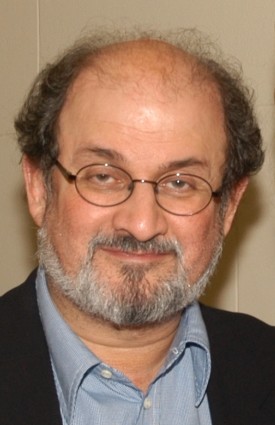
rushdie4Salman Rushdie has turned in his last novel and resigned from PEN America to pursue a full-time acting career. He will be joining the cast of Entourage midway through its sixth season as a regular character named “Sal,” a burned out writer in his sixties who desperately tags along with Vince and his young cohorts in an effort to discover a new vitality.

“This came together at the last minute,” said executive producer Doug Ellin. “Salman was telephoning me six times a day, telling me that he had run out of twentysomething honeys who would talk with him. And we were looking for a way to breathe new life into the show. We’re very happy to have him. But we’re still figuring out our working relationship.”

That professional relationship so far has been fraught with hubris. As part of the negotiations, Rushdie demanded four trailers, a 24-hour unlimited buffet only accessible through voice recognition software, and a football stadium-sized vanity mirror to be constructed near San Bernardino, where Rushdie will be permitted to look at himself for long periods of time in an effort to understand the torment of growing older and, in Rushdie’s words, “the difficulties of being Salman.” Sources at several designer clinics have also revealed that Rushdie will be undergoing penile enlargement surgery.

“We didn’t ask for that,” said Ellin. “But apparently he has this idea that ‘Sal’ needs to have a twelve-inch penis. Despite his apparent smarts, he hasn’t heard of Stainslavsky. We’re trying to talk Salman off the ledge and introduce him to the wonders of Viagra. As you can imagine, it isn’t easy because the man does have a bit of a chip on his shoulder.”

Rushdie declined to be interviewed for this story. But he was recently seen at Perez Hilton’s thirtieth birthday party ogling a number of women, referring to several large-sized breasts as Padmas. At least two women threw drinks in Rushdie’s face. One shouted quite loudly, “Grow up!” “Do you know who I am?” replied Rushdie. “Do you know it’s the 21st century?” replied the woman.

“The Worst Book I Have Read in the Past Three Years”

In today’s edition of the Chicago Sun-Times, you will find my review of Jonathan Littell’s The Kindly Ones. Let it be known that I did not arrive at my assessment lightly. I am an ardent lover of ambitious literature, and I realize when taking on any review assignment that an author has probably sweated for years on a project. As such, I do everything in my power to attempt to understand a book on its own terms.

But this novel was so atrocious that I was forced to record a video presenting just how this atrocious book left me vitiated. If you haven’t yet seen the video and you’re on the fence about Littell, I strongly urge you to see what it might do to you. For if you have any decent literary standards, you may very well find yourself incapacitated in a similar manner when you reach the end. (I still don’t know how Orthofer got to the end, but his review is also worthy of your attention.)

One other side effect of reading Littell: I was forced to spend half a day staring into space in order to recover from the book’s sheer awfulness. You can find out the specific reasons why in the review. But I must stress that, even if I didn’t possess some modest spirit of decency, I could not possibly recommend this book to my worst enemy. The Kindly Ones still rests in the stacks of spent tomes, sullying the fine offerings of other skilled voices. I have strongly considered burning it.

The Bat Segundo Show: Heather Armstrong

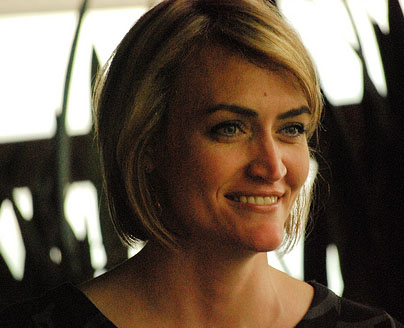
Heather Armstrong appeared on The Bat Segundo Show #276.

Heather Armstrong is most recently the author of It Sucked and Then I Cried.

segundo276

[This is the first show in which a guest’s Twitter feed emerges during the course of the conversation! This historical moment can be found at the 13:05 mark.]

Condition of Mr. Segundo: Pondering his deficient parental duties.

Author: Heather Armstrong

Subjects Discussed: Kurt Vonnegut’s Timequake, checking with other people on stories and blog posts, the fairness of sharing, the private medium of the letter being publicly aired, drawing the distinction between work and fun in personal writing, dealing with negativity and hate mail, public scrutiny, factoring the audience into business decisions, the oddness of an audience as a focus group, writing in all caps and emphatic house style, Armstrong’s affinity for Chili’s, imagining vs. comparing Leta at sixteen, whether or not Bob Costas is insipid, parent writing and the “special” nature of children, Janet Jackson’s nipple, fixating on particular points to keep a narrative going, the two-book deal with Kensington, “having a baby is pretty much a book of commentary,” filtering daily events, following up on investigations by the Pioneer Press, and the concern for “normalcy.”
heatherarmstrong

EXCERPT FROM SHOW:

Correspondent: I wanted to ask about your affinity for Chili’s, which you bring up. I don’t think it can be entirely predicated on a love for the chips and salsa, or the fact that the server brings two Diet Cokes at the same time. This can’t merely be the exclusive reason! So I’m curious if you can elaborate on this particular concern and love and joy you have for Chili’s.

Armstrong: Well, I actually worked at Chili’s for three days back when I was a freshman in college. And I lasted three days. I couldn’t wait tables. I am not a table waiter. And there’s just something about the Americanness of the experience, and having that much food brought to you that makes me very connected to the flyover states — that normally I’m not very connected to politically. You know, I don’t see eye to eye with them. Except when they’re bringing me those two Diet Cokes. And when they’re refilling the basket and basket and basket of chips. I feel very American.

Correspondent: I’m wondering if it’s the specific glasses they use.

Armstrong: Oh yeah.

Correspondent: The specific way in which they bring to your table. Because this is a chain restaurant. There are plenty of restaurants that will bring you two Diet Cokes.

Armstrong: Well, consistently though. I mean, I have never had to ask for the second Diet Coke. They will always bring it. And I wasn’t taught this rule when I worked there. I just think that there’s something about the culture there. They know. They know you need it.

Correspondent: Wow. Maybe there’s some divisions of Chili’s in which they bring you that Diet Coke immediately. Or maybe it’s a Utah scenario?

Armstrong: No, it happened in Tennessee too.

Correspondent: It happened in Tennessee too.

Armstrong: It did. It did.

Correspondent: This is an investigative journalistic report.

Armstrong: It really is. (laughs)

Correspondent: Really. You should pursue this further. I want to talk about when Leta is taken in for an MRI and is given some Nembutal. You write that she was “as drunk as a sixteen-year-old on prom night who has had a Long Island Iced Tea on an empty stomach and is in total denial about how drunk she is.” Now this was very interesting to me. Because I must observe that sixteen is right between your age and Leta’s age.

Armstrong: (laughs)

Correspondent: I must also point out that this is not imagining Leta at sixteen. It’s comparing her to a sixteen-year-old. Does the notion of thinking of Leta at sixteen mortify you? And is this why you need this comparative point to someone who is sixteen? Who couldn’t possibly be Leta? Or what?

Armstrong: I’m probably comparing her to the sixteen-year-old I wasn’t actually. And the possibility that she will be very different than I was. I’m raising her ideologically very differently than I was raised. And I don’t want it to seem that it would be okay with me if my sixteen-year-old got drunk. But there’s a part of me that probably needed to when I was sixteen. And the thought of her in her teens, actually, does absolutely terrify me. Yes, it does.

Correspondent: How far in the future can you think about Leta?

Armstrong: Oh, not very far. No, no, no. You can’t do that with her. I mean, it’s a new lesson. You wake up and you think you’ve got it mastered. And then she will just knock you on your ass immediately the next day.

(Photo credit: Carol Browne)

BSS #276: Heather Armstrong (Download MP3)

This text will be replaced

The Bat Segundo Show: Tatia Rosenthal

Tatia Rosenthal appeared on The Bat Segundo Show #275.

Tatia Rosenthal is is most recently the director of $9.99. The film is presently playing at the New Directors/New Films series, which is running between March 25 and April 5 at MOMA and the Film Society of Lincoln Center. It is also scheduled for limited release on June 17, 2009.

segundo275

Condition of Mr. Segundo: Ushering in an economic revolution.

Guest: Tatia Rosenthal

Subjects Discussed: Unintentionally defying the “good things come in threes” maxim, animating at two frames per movement, Bill Plympton, the aesthetic advantages of budget limitations, character proportions in relation to the sets, camera placement, a shared affinity for short lenses, immersing puppets in shadow, dealing with sweat in animation, animating natural elements, “A Buck’s Worth” as template for $9.99 (YouTube link), compositing vs. in-camera stop-motion animation, shrinking the Lilliputian puppets down in post, sticking to scale parameters, the look of the piggy bank, human mouths and animating Os, the problems of animating dialogue, whether animation must have fantastical elements to be “animation,” magical realism, animating eyes and blinking, breaking away from stereotypical body movement and defying cliches in animation, animating multiple characters in the Show and Tell scene, Anthony Elworthy, ambition, tracking shots, color coordination, self-help books, and graphical elements.

trosenthal

EXCERPT FROM SHOW:

Correspondent: The other thing I wanted to note is sweat in this film, and bodily fluids in general. Now we see sweat in a love scene late in the film and also in the elevator. However, going back to this question of lighting, I should point out that you lit this in such a way so it appears that the texture is sweating, even though it isn’t. So I’m wondering about how you dealt with this idea of actually having to put some sort of moisture on the puppets in order to get that sense of seat. And not only that. You also have to animate that as well. So I’m curious how this came about.

Rosenthal: I think you’re going to be surprised by the answer. Did you like it?

Correspondent: Yeah, I did.

Rosenthal: Interesting. Because it was an accident. And we were doing our best to conceal the sweaty look. Because the silicone actually appears shiny and looks like sweat. The material that we used. And we were doing our damnedest to erase it with powders and stuff like that. And then some of it would get revealed. Because the animators were touching the puppets. And they looked like they gradually were sweating. And then when we got to post, what we did, when it was really distracting, we deleted it frame-by-frame.

Correspondent: Really?

Rosenthal: Painstakingly. And the places where it stayed were the places where it felt appropriate to the scene. Like you’re remarking. So it was really sweating in reverse.

Correspondent: Oh, but I like sweat! Characters should sweat. Puppets should sweat.

Rosenthal: I like it now.

(Photo: Quentin Jones)

BSS #275: Tatia Rosenthal (Download MP3)

This text will be replaced

The Bat Segundo Show: Adam Del Deo

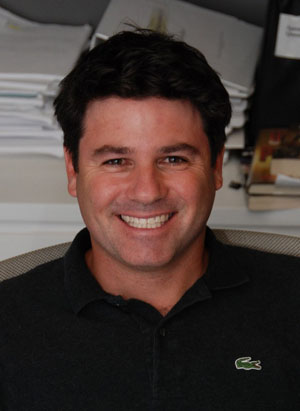
Adam Del Deo appeared on The Bat Segundo Show #274.

Adam Del Deo is most recently the co-director of Every Little Step. The film is presently playing at the New Directors/New Films series, which is running between March 25 and April 5 at MOMA and the Film Society of Lincoln Center. It is also scheduled for limited release on April 17, 2009. You can also read our related review.

segundo274

Condition of Mr. Segundo: Walking a thin line between the need to perform and employment.

Guest: Adam Del Deo

Subjects Discussed: How an outsider’s experience assists in the making of a Broadway documentary, working with James Stern, filming the audition process for the A Chorus Line revival, behind-the-scenes access, hesitation from prospective cast members being filmed, capturing uncomfortable truths in a documentary, documenting the compulsive need to perform, keeping tabs on the many documentary subjects, whether being liked is an artistic liability, casting discrimination, Baayork Lee, Bob Avian’s directorial temperament, Jacques d’Ambrose blowing out his knees in his forties, what a dancer does when he can’t dance anymore, Michael Bennett profiting incommensurately from the dancers, the original A Chorus Line dancers not receiving royalties for the revival, not talking with Wayne Cilento, and whether a documentary filmmaker has the moral obligation to show all sides of the story.

EXCERPT FROM SHOW:

adamdeldeoCorrespondent: I also wanted to offer an observation. One moment in which Yuka, who is up for Connie, reveals that she was born in Japan. And the production team expresses some concerns because she can’t, in their view, possibly nail the right dialect because she wasn’t born in the States. In fact, Baayork Lee says, “There’s something about being born in America and fighting for a seat on the F train.” Seeing as how Yuka did, in fact, get the part, this is interesting to me. Because if you were to take such a judgment and put it into another occupation, it would be discrimination. So I am curious. If an actor has the chops, should they not be able to essentially get the part irrespective of the background? This is one of the interesting things, I think, about the film, in which you see such a blunt judgment — despite the fact that it’s done in all love — laid down on the table like that. So what of this dilemma?

Del Deo: I think it’s an interesting observation. I think you’re right. Whoever’s right for the role and best for the role should get the role. But casting roles is very, very subjective. There’s not a specific set of standards and information. I mean, what Baayork is seeing and what Bob Avian is seeing, they’re seeing that differently. That part of the film is, to me, one of the most fascinating parts of the film. Because Baayork is looking at Yuka. She created that role. Baayork Lee was taped by Michael Bennett. And that narrative created the role of Connie. She also happens to be the choreographer for the revival. Now over thirty years later, she’s casting the character of Connie. Which is her. And so she says to Bob Avian, “You know, I don’t see myself that cute.” And Bob’s saying, “Well, she’s very likable.” And she’s like, “Well, it’s me.” And so that was very interesting. But it’s so subjective. And there’s a good healthy debate that happened between the creative team as to who was going to play what role. And I think it’s part of the process.

Correspondent: But do you think though that such a judgment almost crosses the line to some degree? Because she does — like I say, she gets cast in the part. She does a great job. And so it could be one of those things that Baayork just let off. Because they’re all excited about casting the right role. Nevertheless, I say to myself, “Well, this is very interesting. Because if this is a judgment. And these people are true professionals. Imagine what all the other shows are like.” And so I’m not sure if it’s entirely fair if the actor has the chops.

Del Deo: I mean, she got the role.

Correspondent: Yeah.

Del Deo: Baayork, she had questions about that. They ultimately all decided she was best for it. Correct? But she maybe wasn’t on board right away with that decision. She wanted to express her desire possibly to cast someone else. I think she talks about J. Elaine [Marcos]. That was her opinion. But it wasn’t her call. I don’t believe it was a racial issue.

BSS #274: Adam Del Deo (Download MP3)

This text will be replaced