ADD Test?

This is one sadistic Flash game.

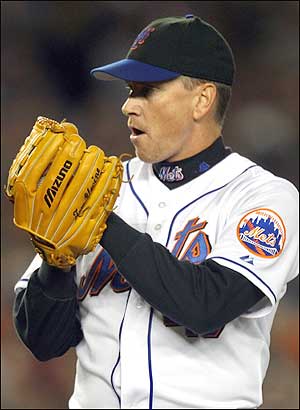
The Man Who Blew It for Us

glavine.jpg

So What Just Happened Here?

franzenfacebook.JPG

One can only assume that Franzen decided against friending me after nearly choking on his lunch.

Shea Swaps Book Pick

Two days ago, Mr. Bryant thought to mock the good Mets fans within the litblogosphere. Oh, but what a difference a few days make! In light of the 13-0 win over the Marlins and the — *ahem* — LOSS of the Phillies against the Nationals yesterday, I’d say we have ourselves an interesting situation here. A very interesting situation indeed. As a result, Flushing Meadows has changed its book club selection:
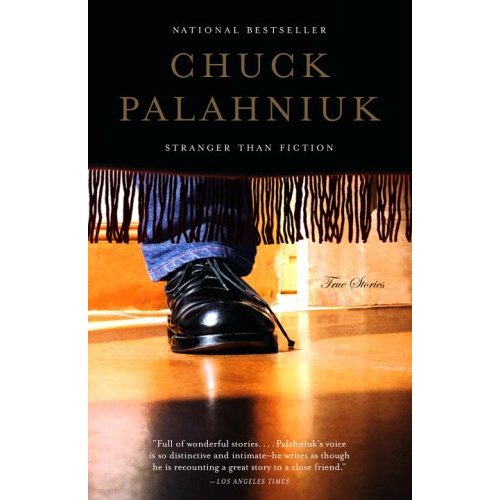
truestories.jpg

[UPDATE: As of 2:00 PM on Sunday, things aren't looking very well. The Marlins are leading 7-1 against the Mets. The Nationals are losing 0-1 to the Phillies.]

Hell Hath Frozen Over!

Jonathan Franzen has accepted my Facebook friend request!

My work here is done.

I shall now direct my attentions to Dwight Garner, who has yet to accept my Facebook friend request.

[UPDATE: Correction. Franzen is not my Facebook friend. It appears that he added me and then, moments later, he removed me. I had thought that there was some kernel of bonhomie within Franzen's disposition. But apparently, this is not the case.]

Who Needs an Independent Mind When There’s Google?

If one must have an “opinion on Ed Champion,” a phrase that places me in an extremely bizarre position of importance, I’d hope that one would go to the trouble of forming an original opinion about me, yay or nay, rather than consulting Google.

Is There Any Purpose?

The Guardian’s James Buchan has asked the question, in all seriousness, “Is there any purpose in translating poetry?” Which is akin to asking the following questions:

(In case it wasn’t clear, the answer to all these questions is a resounding YES!)

(via Bookninja)

I’m Too Easily Amused

Dark Shadows reenacted by dolls.

Roundup

Over the Hump

Okay, after considerable coffee, a crazed ten-hour reading session, and several additional hours of research for one of two crazy deadlines, I’ve managed to grab four hours of sleep. And I’m now over the hump. Bear with me while I recalibrate to human time in the next day or so. If my emails have been terse or hallucinogenic of late, you now have your reason why.

Well, It Certainly Cuts Down on Travel Expenses to Venice & Rome

The Map of Humanity. (via MeFi)

Wouldn’t She Have Learned About Joints in the Joint?

I don’t know what’s funnier: the mad genius who teamed up Amy Sedaris with Martha Stewart in the kitchen or the fact that Stewart doesn’t know what bongwater is. (via Quiddity)

Roundup

A Most Formidable Intellectual Organization

I received a mysterious text message earlier in the week from a British phone number. I was confused. I thought they all hated me in the United Kingdom. The message involved an event at The Drawing Center, a venue that I knew nothing about. Presumably, it was a safe place for lonely people to sketch on their pads or for reenactments of Shirley Jackson’s famous story. No drawing, not even of the lottery variety, was to be had on Tuesday night. (Honestly, if one must be stoned by a crowd, I can’t think of a better evening than Tuesday.)

Instead, about seventy-five artsy people were treated to a formal lecture, styled “Inauthenticity: The International Necronautical Society Reveals the Comic Secret of Literature, Art and Philosophy,” delivered by INS General Secretary Tom McCarthy and INS Chief Philosopher Simon Critchley — two men who were quite serious about their topic. No sherry was served. After inquiring about this with a few trusted sources, I was assured that the INS was a bona-fide credentialed world organization — of what authority, none of them could say. When I later asked the two INS representatives for appropriate accreditation, they ran away, suggesting that I was bifurcating the Hegelian ideal of dichotomous discourse. They may have had a point. I should have taken better notes.

ins.gifAfter persuading the person in front that I was “a friend of the INS,” I was then greeted by a gentleman in a crisp dark suit and sunglasses who asked me if I was a member of the press.

“That depends upon how you define press,” I replied.

There weren’t many literary people in the crowd, except some guy I knew who was obsessed with Mr. Critchley’s furrows. And what impressive furrows they were. Mr. Critchley, it should be noted, was quite bald and very serious. Perhaps more serious than Mr. McCarthy. In fact, if I had to trust one of the two INS representatives to kill someone, it would probably be Mr. Critchley. I was not close enough to see if Mr. Critchley had assassin hands, but it seemed pretty clear he was a carnivore in some sense.

The two men sat at a table, covered with the finest white tablecloth that a desperate run to Costco could get you if you were a particularly careless philosopher with a spending habit you were trying to control. Behind them were six framed photos of the Earth, as seen from space.

The crowd then settled down and McCarthy announced that this was “the first beachhead in the Americas.” Agents, sleepers, and moles, along with agencies, subcommittees and transmission centers were prepared to be unfurled in the United States, presumably under the employ of the INS.

“We’re in your house,” said McCarthy. And the gist I got was that this was some sort of intellectual terrorist organization to be feared or reckoned with.

Critchley promised a history of the beginning, a declaration about the INS, and a summation of what the INS could do.

McCarthy mentioned Queequeg’s tattoos and how Melville’s character represented a layout of the heavens which imputed a mystical treatise that Melville had openly pondered. I wondered how far we were from Melville’s place of employment.

Captain Ahab, Critchley noted, was, by contrast, a narcissist. Queequeg and Ahab were locked in a struggle representing “that of Western man in general.”

It didn’t seem evident to me at the time, perhaps because I was getting lost in the references to Aristotle and Baudelaire. But I started to get the sense that McCarthy and Critchley were switching off, perhaps because neither of them could speak about these important precepts for more than five minutes. The crowd stared in intellectual rapture, stunned by the almighty ideas and inauthentic import.

As I said, I took poor notes, in large part because my writing implement was inauthentic, parched of ink, and otherwise pining for the rubbish bin. But here is a quick overview of some of the thirty-nine points laid down by the two gentlemen:

As I said, my notes were wholly insufficient and perhaps, to some degree, inauthentic. One night later, I am left with the definitive empty vessel, sometimes a mug and sometimes a stein, scooping from a salty sea of ambiguity where the trauma is large, inconsolable, and predicated upon the blood, sweat, and tears of an undeniable bedrock of precepts.

To Mr. Franzen and Others Who Have Denied Facebook Friend Requests

Coming Soon to The Bat Segundo Show

Correspondent: In this title essay, you write, “Observation is my weakness.” And in the second essay, while you openly confess to stalking many of the…

Pollitt: Oh, you know! I’m sorry.

Correspondent: Oh, well…

pollitt2.jpgPollitt: I didn’t mean to interrupt you.

Correspondent: Well, go for it. Go for it. I’ll jump in.

Pollitt: I was just going to say, I was wondering, if I had called that story, instead of calling it “Webstalker,” if I had called it “Googling my Ex-Boyfriend,” would people have been so horrified by it? I really don’t understand this. Maybe you can explain this.

Correspondent: Well…

Pollitt: This is something everybody does. And yet somehow, it’s, you know, I have been called in reviews — maybe she’s insane, why would she reveal such a terrible thing about herself, maybe she needed the money. I mean, I can’t believe it! I thought I was sort of like, well, here we all are and, in fact, in the story — in the story, I have a young friend who introduces me to this word, which I had never heard before. And she was surprised I didn’t have a whole file on my boyfriend, which she had on hers, with a social security number and everything like this. I get the feeling that there are a lot of people that are very suspicious of their mates.

Correspondent: Yeah?

Pollitt: Which I never was. All I did was I sat at my computer and I Googled. And for this, I am being pilloried as if I was a crazy person. I just don’t understand it.

Correspondent: I would think that people are possibly objecting to the fact — they seem to pinpoint precisely, like you guessing the password and wondering what it might be. And hacking someone’s email. Maybe it comes from doing casual Googling, which everybody sort of accepts. But even your friend having the social security number, well there, we get into invasion of privacy issues. So maybe that’s probably the touchy thorn that’s caused…

Pollitt: Well, you know, I hope that that story and the other ones are written in a humorous way. I not only did not manage to get into my boyfriend’s email system. It was really basically a joke. I would be the last person in the world to be figure out how to do that.

[RELATED: In today's Salon, Rebecca Traister offers a lengthy article about the hostile reception that has greeted Katha Pollitt's Learning to Drive. (via Bookslut)]

Maybe It Was the Overwhelming Red-Orange Motif That Infuriated Him More Than the Newspaper

You know, Coach Gundy, from my angle, you look very much like a kid.

Roundup

But Petty Opportunism is the Bedrock of Politics!

BBC: “Republican presidential hopeful Rudy Giuliani has been criticised over a fundraising party at which participants are being urged to donate $9.11. The International Association of Fire Fighters accuses him of exploiting the 11 September 2001 terrorist attacks.”

Reason #426 Why Jonathan Franzen is No Fun

Jonathan Franzen does not want to be my Facebook friend. He is, however, Howard Junker’s Facebook friend. This is understandable, because Howard Junker is Howard Junker. Nevertheless.

Many of my former and current nemeses are my Facebook friends. For crying out loud, even Rick Moody is my Facebook friend. If Jonathan Franzen wishes to keep up this virtual Bartleby business, well then that is certainly his right as a human being. But I think Facebook may very well be a good judge of character. After all, if someone won’t be your Facebook friend, what does this say about the person’s ability to connect with the world at large?

I’ve taken to simply saying yes to anybody. I figure that most people in the world are pretty decent. I figure that anybody who seeks me out on Facebook probably has a good reason. And life’s really too short to deny someone their pleasure. It takes a fussy bastard indeed to say no to someone on this thing.

BSS #140: Naomi Klein

segundo140.jpg

PROGRAM NOTES: (1) Our Young, Roving Correspondent claimed that Milton Friedman supported the New Deal. Naomi Klein claimed that he did not. As it turns out, both Our Young, Roving Correspondent and Klein were wrong. In an October 2000 interview, Friedman professed his support for the parts of the New Deal that involved providing jobs and relief for the unemployed. This was the “very exceptional circumstance” that Our Young, Roving Correspondent referred to. Apologies on our end for failing to clarify. (2) For more information on United States suicide rates, here is a solid overview. If suicide is, as Klein suggests, linked explicitly to an economic downturn, what explains the slow rise in suicide during the Roaring Twenties — a then unprecedented period of prosperity? While it is certainly true that the suicide rate rose during the Great Depression, the point worth considering is that suicide is not completely linked to economics. (3) While Klein did not provide a supportive endnote in her book for the post-Solidarity Polish journalistic label “shock therapy,” here is a helpful reference point for those looking for more information: No less an authority than Jeffrey Sachs, who Klein identifies as one of the chief instigators of the “shock doctrine,” observed how “shock therapy” came to be in a 1994 lecture delivered at the University of Utah. Sachs believed that the journalistic label “shock therapy” played into the Eastern European belief that a drastic alteration of the economic system would produce results. While Klein is right to point out that this was a term in use, it remains our belief that it would have been more helpful to outline the specific points of causation.

Condition of Mr. Segundo: Abdicating to journalists.

Author: Naomi Klein

Subjects Discussed: Milton Friedman and the University of Chicago school of shock economics, polarization of the superwealthy, consumer boycotts and “market democracy,” the New Deal, Augusto Pinochet, the good things about Friedman, Edwin Black’s IBM and the Holocaust, the damage from economic ideology vs. innate business corruption, writing an “alternative history,” relying too much on the “shock” label, Samantha Power’s A Problem from Hell, post-Solidarity Poland and “shock therapy,” quibbling with Klein’s footnotes, whether suicide rates can be exclusively linked to economic factors, Israel’s defense export economy, Margaret Thatcher’s England, and whether reduced inflation or the Falklands War boosted Thatcher’s approval rating.

EXCERPT FROM SHOW:

Klein: I’m not sort of just projecting Chicago school ideals onto a country. I’m talking about specific places where key graduates of the program…

Correspondent: Well, I’m not disputing that.

Klein: …came to positions of power.

Correspondent: I am not disputing that there…

Klein: I’m just not quite sure where IBM fits in.

Correspondent: Well, what I’m saying is is that it’s not exclusively this Friedmanesque ideology that is causing these particular factors. I mean, what I’m wondering is — is I present the IBM scenario as, well, here’s a case of, in my view anyway, clear unethical business practice and yet it has nothing to do with Friedman economics. Just as, I mean, yeah, there are plenty of examples you give. The various leaders who are listening to lectures on tape and, of course, all the Chicago Boys, and all that stuff. I’ve definitely read the book. I’m just asking, where does Friedman depart from some of the unfortunate shock treatment that you describe to various…?

Klein: Well, I think the key thing to understand is that I am not arguing that this group of people, that they are the first people to employ these tactics to advance their political goals. And I, you know, I piss off people on the left by quoting Mao and Pol Pot and all these, you know, Communist figures of the past who shared a similar desire to use shock and crisis to push through their agenda, dreamed of societies being a blank slate on which they could build their ideals. I also draw…I also talk about fascism and Nazism and you know, I think that, the reason why I’m focusing on this group of people of the past thirty-five years, as opposed to the book just being a history of everybody who’s ever used shock is that I’m trying to present an alternative history of how we got to where we are. I’m trying to present an alternative history of the ideology that is the dominant ideology of our time, so dominant that we don’t see it. It’s the air we breathe. And I think that we have been living with a fairy tale version of history.

BSS #139: George Saunders

segundo139.jpg

Condition of Mr. Segundo: Feeling a little dead down there.

Author: George Saunders

Subjects Discussed: Writing fragmentary travelogue pieces, trying not to pre-process experiences, observational criteria, Dubai, responding to Ben Ehrenreich’s claim of “pulled punches,” journalistic integrity, on taking people to task, writing comprehensive journalistic accounts vs. one-week accounts, Saunders’s “limited talent,” on “liking to be liked,” the difference between fiction and nonfiction, Minutemen on the US/Mexico border, on taking on a persona, Bob Dylan, the response that came from “‘Borat’: The Memo,” on being called a “tool” and a “young fogey,” cheap edits, mean satire, political labels and satire, generalizations about everything between Los Angeles and New York, not going beyond the first impression, Donald Barthelme, Freitag’s triangle and rising action, why Saunders is savage in fiction, and writing rules vs. writing voice.

EXCERPT FROM SHOW:

Saunders: Each one of the GQ trips was an eight to ten day thing. So really, in a certain way, the form would follow the experience. You know, you go to a place and you’re taking notes like crazy for eight days. And you don’t really know what’s good or what’s interesting and then you come home and start writing them up. And as certain things — you know how it is when you’re writing — sometimes, a certain thing would just lurch forward and it’s writable in some way you didn’t anticipate when you were there. So in a way, it was kind of like taking X number of those things, the ones that would sort of step forward and allow themselves to be polished, and then kind of trust that that was happening for a reason.

Bobby-B In Da House!

Robert Birnbaum talks with Susanna Moore.

Roundup (With Frequent Lyrical Interludes)

Come Out to D-Block. We’ll Get Together, Have a Few Laughs

Associated Press: “A federal judge sentenced Hollywood director John McTiernan to four months in prison Monday after refusing to allow him to withdraw his guilty plea to charges of lying to the FBI about his association with disgraced private eye Anthony Pellicano.”

A Helpful Shortcut If You’re Pressed for Time on a Friday Night

Self-Pity’s a Great Justification for Passive Behavior

Rachel Kramer Bussel: “Garnering publicity for your book should not be the ‘wait and see’ situation Sacks seems to paint it as. There is always something you can do to raise your profile, and connect with readers. Search for blogs and sites related to your subject matter, and offer to send a review copy of the book. Create a contest, give away an excerpt, run a serial. Keep talking and trying new things; the beauty of the Internet is that you can keep trying and finessing your promotional efforts for free. Amazon lets authors blog directly on their site, so Sacks could be posting about issues in the news and follow-up research into the topic he explores in his book, the class divide in education, so anyone reading about him on Amazon would see this information as well.”

Roundup

RIP Marcel Marceau

For Tyra Banks, “Experts” Are Plastic, Unreal & Non-Threatening People

Violet Blue: “As I told the producer (who I saw quite quickly), I will not lie about my appearance or who I am, for anyone or anything. It does my readers, my listeners, my viewers, my friends and the sex-positive, non-judgmental message I bring and represent a disservice to lie. And, I told her, I have to look at myself in the mirror when I wake up the next day and look at myself. Would she have me change my appearance to look ‘less Asian’ to seem more of an expert?”

Next Page →