Junkets

It’s a drizzly Tuesday afternoon in the Meatpacking District. I’m waiting outside a hotel suite. It’s just before a junket interview that will be my last. A film publicist wanders in the hallway, jitters in her stride. She’s gabbing into her cell, calmly trying to placate a difficult client who doesn’t realize how difficult he’s being.
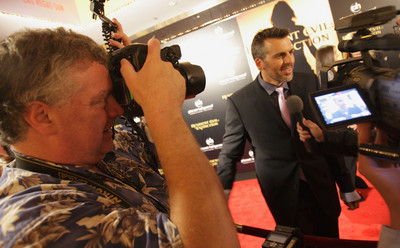
Being a journalist, I’m invisible. I’m the barista or bartender of the media system. I’m considered too dimwitted to pay attention to the dismal and terrible things that actors and filmmakers sometimes say. The expectation is that I won’t write about it. The idea here is that I can’t inquire, lest this prevent future interview opportunities from surfacing upon my shoals. I truly don’t care who I talk with, so long as there’s a fun and somewhat enlightening conversation. But this modest goal is incompatible with what is expected. I’m expected to offer softball questions along the lines of “Where do you get your ideas?” or “What’s next?” But I can’t. Just can’t. Don’t have it in me to dumb things down. This simply isn’t what journalists do. I feel compelled to present a film person with a goofy or thoughtful inquiry into his craft. Perhaps it’s naivete. But it worked back in the day for Mike Wallace. But if I do inquire, and I’m just about to, it’s considered “inappropriate.” No explanation or specific solecism given.

I’m expected to be dazzled by the limitless canapes, the endless stream of sandwiches, the food and drink that publicists are expected to provide, the tab paid by a studio with money to burn. But I don’t care about any of this. Because I’m a journalist. Not a freeloader. And I want to do my job.

I don’t know who the client on the phone is, but this publicist has a difficult task on her hands. I learn that the client has had press. Regis, a profile in the Los Angeles Times, and numerous other places. Not bad. But it’s simply not enough. This client wants more.

“I understand,” says the publicist, “but it’s been difficult to get in touch with you. You don’t return my calls. And it would help…”

The publicist is interrupted.

I learn that the publicist has been leaving several voicemails a day. The publicist has been trying to book this client — who could be an egotistical filmmaker or a self-important actor — on several shows. But without that pivotal communication on the client’s end, the all-encompassing media tsunami he demands can’t happen. And even if it can happen, it simply isn’t enough. The publicist is expected to make this happen regardless of the client’s recalcitrance. And in this way, the publicist isn’t all that different from the junket journalist. If an actor detects even the faintest slight, then it’s the journalist who takes the fall and the publicist is chewed out by another publicist just higher up the ladder, but all publicists are equal and just as expendable. The assumption is that the journalist will continue to dun his nose because he needs the high-profile interviews. I, however, don’t need or care to dun my nose. Thanks to a spectacularly bitchy publicist named Betsy Rudnick, a senior account executive at Falco Ink who I haven’t yet met, but who I learn later doesn’t like me but can’t tell me why, I’m about to commit unanticipated hari-kari and I don’t know it.

A film person wants to be on every radio and television show, wants to grace every newspaper. But the film person abdicates all control to the publicist. The film person is expected to be placated, taken care of, have his ego massaged, and who knows what else.
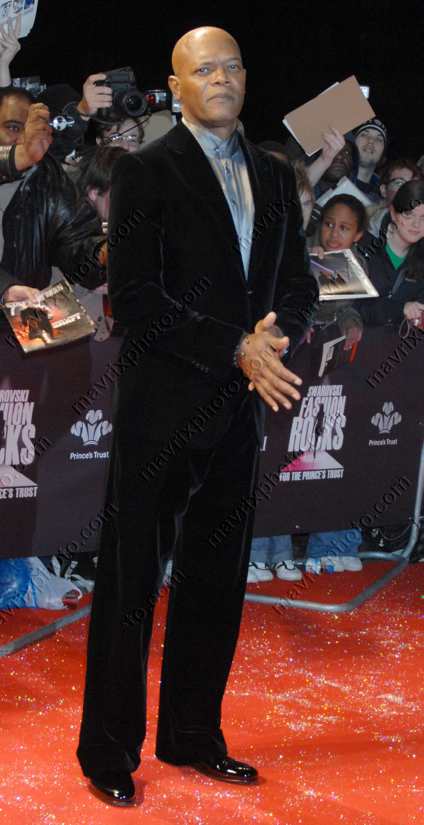
Some New York junket veterans — like a man named Brad Balfour who I have run into at press screenings and interviews and who has eyed my audio equipment not so out of bonhomie or curiosity, but with the hope of discerning some way that he can use me — boast about having ten minutes with Samuel L. Jackson. I heard Balfour shrieking at the top of his lungs about a Jackson chat at a screening a few months ago. He had bagged Jackson. But what kind of sustained inquiry can you have in ten minutes? In the case of Balfour, the inquiry involves such insipid questions like “What inspired you to do In Country?” and “How did you prepare for this role?” Questions that nearly any junket journalist is going to ask.

This take-no-chances approach goes much further. There’s something called a roundtable interview, in which multiple junket journalists band together to offer the same questions with the same answers for the same outlets, where they can then take the same credit for being the “exclusive” interlocutor.

As a result, quotes from the same conversation have a magical way of popping up everywhere. You may think that Balfour got the scoop on Javier Bardem. But wouldn’t you know it? The same quotes — in particular, observe the “How am I with women?” answer and the specific references to Woody Allen and Milos Forman — show up in interviews with Coming Soon’s Edward Douglas, the Boston Globe’s Michelle Kung, Collider’s Frosty (a nom de plume for a double-dipping journalist?), and the Sunday Mirror. (And if you want to have some real fun, Google a quote. You may be surprised by how frequently a specific phrase appears in interviews. If it doesn’t come from the same conversation, then it’s likely to be a phrase that a film person latches onto. An actor, after all, must know his lines. Boilerplate is an amazing thing.)

This fiction of a perceived exclusive allows readers to think that they’re getting something unique. But when an actor hits New York, “friendly” interviewers are selected to obtain quotes, and the results are nothing less than a mass dissemination of the same material. Junket journalists often team up to collect their work. One group interviews the actor, another a director. The film person maintains the practice of repeating the same quotes, ad nauseum, to these “journalists.” It all becomes a journalistic circlejerk.

The junket has been around longer than you might expect. One of Hollywood’s earliest moments of junket excess came in 1963, when a then whopping $250,000 was spent promoting Stanley Kramer’s It’s a Mad, Mad, Mad, Mad World. Kramer was summoned to defend the crazed financial excess. It set a precedent. Now nearly every film released by a studio spends a remarkable sum of money on junkets.

And if you think junket journalists are bad, there are other hacks who go much further. The Hollywood Foreign Press Association’s ignoble relationship with Hollywood has the studios picking up the airfare and hotel bill for journalists. There are sometimes gift bags. Bribery. (For what it’s worth, the HFPA also oversees the Golden Globes, in the event you actually believed that there was some integrity.) And then there’s Ain’t It Cool News’s Harry Knowles, an online “journalist” regularly flown out by studios to premieres. In 2006, Eric D. Snider revealed more, writing a candid column entitled “I Was a Junket Whore,” in which he chronicled further indiscretions. Snider remains banned from Paramount screenings for telling the truth.

* * *

I was at Soho House to talk with film people behind Santosh Sivan’s film, Before the Rains. I set up the interview because I had admired Sivan’s 1999 film, The Terrorist, championing it when it had played during the San Francisco Film Festival that year. I had intended to talk with Sivan about his stunning visuals. But the deal was this. I could talk with Sivan, but only if I likewise talked with actors Linus Roache, Jennifer Ehle, Nandita Das, and Rahul Bose. No problem. I set up a roundtable conversation. I figured that questions could be bounced off Sivan and the actors. And all of us would have a fun time. I had set up the interview with an amicable and adept publicist named Caitlin Speed, a lively woman whom I had booked previous interviews with, and who simply got the inquisitive intent and nature of The Bat Segundo Show. But when I showed up, another publicist asked me who I was and who I had set up the interview with. I told her. And eventually, Caitlin and I found each other.

The atmosphere was chaotic. Das was on her way out. Sivan hadn’t arrived. No reason was given. No problem. I’d carry forth an impromptu discussion with the remaining actors. And if Sivan showed up later, he could nudge his way in. This was, after all, the natural flow of conversation.
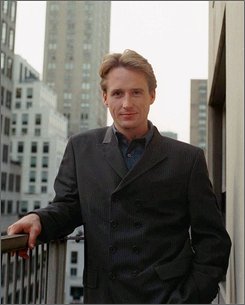
Actors are, on the whole, very friendly. They are, after all, people. But there are some who have chips on their shoulders the size of Montana. And it is these prima donnas who tarnish the profession. I began my conversation with Bose — easily the best actor in Before the Rains and, as it turned out, the smartest guy at the table — and Ehle, given a relatively thankless role as the wife to Roache’s adulterer. Things started off okay, with Bose claiming to be Ehle and “very sexy.” But when Roache, the film’s leading man, arrived, flashing his pearly whites, I was expected to break off my conversation with Bose to acknowledge his presence. (You can hear this awkward pause in the podcast. I’m presenting the audio file below unedited. I leave others to make up their minds over whether I went over the line with my questions or whether the actors I talked with were incapable of working without a script.) The problem was that I was in the middle of a query with Bose on how Sivan had placed his character at the top of a cliff, and I was curious to know how landscape and position affected his performance. And I thought it very rude to break off this conversation in media res. When Bose was finished with his answer, I then introduced Roache. Roache was getting fidgety, presumably because he was not the center of attention.

Me: I should point out that Linus Roache has just joined us. How are you doing?

Roache: I’m very good. How are you?

Me: Doing fantastic. I alluded to — I was talking with Jennifer about the scene with you and Jennifer in the bedroom, where both of you are positioned in a manner in which — you’re both diagonal to the bed frame. We were talking about this notion of performance in relation to landscape. And I was wondering if you had any particular thoughts on how landscape or the environment in this film — because this is a very environment-specific film — pertains to your performance. Or working within these limitations.

Roache: Wow! What a question.

Ehle: I didn’t talk about that at all. Ed was talking about that. I said I had no idea about the landscape or anything.

Roache: I don’t know how to answer that. Uh….

Bose: I did the mountains. Landscape and the mountains were mine. She said she did the tea gardens.

Ehle: Yeah.

There was nervous laughter. And at this point, Roache then shifted into boilerplate.

Roache: I don’t know. I just loved being there. I was just out of my mind being there. It was just such an incredible environment to make a movie in. I literally like — I had tears in my eyes when I left. Because I had never been in such beauty for so long. So I understand why my character didn’t want to leave there. The way he fell in love with it. So.

Okay. So he wasn’t getting it. So I thought I’d try a goofier approach to loosen Roache up. Something predicated upon an observation I had of the film, something I was curious about, and something he might have some fun with.

Me: There was one aspect to your character that actually disturbed me. And that was the fact that your hair does not move — with an exception near the end. There’s a stray follicle that actually sticks out. But for the most part, your hair is completely slicked back.

There was a confused look on Roache’s face. Bose tried to bail him out.

Bose: He was very particular about it. Linus, you know, I won’t say he’s vain. But there’s definitely a hair thing going on there. And he just — if his hair would move, he would call for a cut and take the shot again. He said, “Let me know if my hair ever moves.”

Me: No, but I mean was this an actual plan on your part? Because not even the wind can knock your hair out of place.

Ehle: Did you enjoy the movie?

Me: No, serious! It was like a Steven Seagal motif or something.

Roache: I never noticed that. I’ve got scenes where I’m covered in water. And I’ve got scenes where my hair’s all over the place.

Me: Even…really? Because every single time, your hair is like completely pomaded.

Roache: Well, they did use pomade in 1939. But yeah.

Me: Well was there any particular Brylcreem thing?

Roache: Yeah, we used hair pomade that they used in 1937.

Me: What research did you do to get the exact nature of Brylcreem right?

Roache remained baffled. He glared at Bose, annoyed that Bose, a mere supporting actor, was the better wit.

The hair angle seemed right at the time. Knowing of the mothballs that Marlon Brando had placed into his mouth for Don Corleone, I was genuinely curious about the question of how slicking back one’s hair affected an actor’s performance. But I also wanted to have fun with this. And I can now see how an oversensitive “Serious Actor” might take the Steven Seagal comparison the wrong way. It is worth observing that Roache’s Gaia Community profile page has “to help define human relationship beyond ego” listed as his singular Goal.

I then asked a question to the group about how Sivan’s color schemes — green devoted to the colonialists, brown devoted to the tribes, and red foreshadowing a tragic event — might have affected performance. I wanted these three actors to understand that this was an inquiry. Roache then burst in with an answer.

Roache: This movie was more about a kind of creative, you know, rock and roll, jazz fusion situation. Because you had a creative genius like Santosh Sivan. I mean, there weren’t a lot of huge decisions being made in this kind of arty level like that. It was more like a creative process that was unfolding. And some of it was crazy and chaotic. And some of it was just like following what was there and making the most of it. And that’s what a genius like Santosh does. So…

Me: Yeah, but I…

Ehle: If there was anything intellectual about the film, it was streaming out of Santosh. I don’t think anybody ever sat down. It was a very unconstipated process.

In other words, any interview was a matter of parroting the press notes. Any remotely intellectual query was “constipated” and verboten.

Roache: Yeah, yeah. The script though was well thought through and multi-layered. In terms of taking a domestic story, extrapolating that out into something epic. So that’s why you had structure. That’s where you had structure. But within that, you had this guy who was like, “No no no, that shot isn’t about you. It’s about an insect.”

Me: Yeah. Well, landscape is very important. In your house, in your character’s house, there is this particular color scheme going on. So as a result, this has to affect your performance on some level. There’s the red carpet. The red that’s kind of a foreshadowing of what’s going to happen later on in the particular film. And so when you are dealing with colors that are this dominant on the set, and in your particular environment, this has to have some effect upon your performance.

Roache was having none of this. And so I brought up the way in which his eyebrows had moved up and down as the events unfolded in the film. Roache mentioned something about training at the “eyebrow school” and was then ushered away from the table.

The conversation continued with Bose and Ehle, and there were a few interesting thoughts exchanged about acting with gesture limitations. But the mood had permanently altered. I had committed the unpardonable crime of “going after” the leading man. When the actors left the table, they used a common status exercise to turn their backs to me and not offer me any kind of eye contact. Ironically enough, I had brought up the question of eye contact during the course of the interview.

My friend, serving as a technical assistant, and I left the room to ponder what had just happened. She had helped me out with a few other multiple person interviews. And she had observed another actor run away after I had asked a question about the relationship between backstory and performance. This interview, she told me, had outdone that.

We then returned to the white room for my turn to talk with Sivan. I had been told by Caitlin that I would get five minutes. Another woman — the aforementioned bitchy publicist, Betsy Rudnick, as it turned out — then told me that there was “no time in his schedule.” I told her that I only needed five minutes and that I had prepared specific questions, that one of the reasons I had come was to talk with Sivan. But talking with Sivan was impossible. A phoner was offered. My friend, who was utterly appalled by the way I was being treated, then said, “We don’t do phoners….ever.” I then tried to smooth things over by asking how long Sivan was in town for, suggesting that I could come back the next day to conduct the interview. Perhaps we could make more of this and have a serious conversation about the film. Rudnick retreated away.

We waited some more. I observed Rudnick laying into Caitlin, who stood shell-shocked by the window. I approached Caitlin and asked what the problem was. She said, “I don’t understand. The guys from The Signal loved you. So did the Hennegan brothers.”

I then approached Rudnick and asked again what the deal was with Sivan.

Rudnick snapped at me, telling me that there would now be no interview with Sivan. The reasons and conditions were changing by the minute. She told me that I had made the actors uncomfortable. That my questions were “inappropriate.”

“What specific questions?” I asked.

She would not say. So we left without causing a stink.

Out in the streets, I was overcome with rage. Not for the unprofessional manner in which Rudnick had handled the Sivan interview, but because I then fully understood how the junket system was a sham. I was upset by the manner in which Rudnick had said something terrible to Caitlin, who is a good person, and how all this had presumably originated from a minor affront to Linus Roache’s ego. He seriously believed that he could coast by on his generic answers. He seriously expected to be the center of attention.

I felt compelled to smoke a rare cigarette.

I resolved then and there never to do a junket interview again. And, at least for the time being, I do not want to talk with actors. I will have nothing to do with Falco Ink or any agency that Betsy Rudnick is a part of. I am not interested in being a marketing tool. I’m interested in inquiry. I’m interested in maintaining the mix of goofy and intellectual questions that have long been at the center of The Bat Segundo Show.

Again, I leave the listeners to judge whether my questions were “inappropriate.” The audio can be listened to at the end of this post. Yes, there were some tangents involving Roache’s hair and the way that he used his eyebrows. I suppose that what makes my conversation different from, say, David Letterman interviewing Gwyneth Paltrow about her knee is that I opted not to stare in awe at Roache’s middle-aged mien or worship his almighty presence, whereas Letterman’s intent involved soothing Paltrow. And it says something that James Lipton, the man considered by many to be the finest actor-oriented interviewer, often has actors spill their guts out to him on personal matters — most notably, Jack Lemmon confessing his alcoholism. Curtis White has identified this tendency to prioritize the personal over the intellectual as symptomatic of the Middle Mind, represented by interviewers like Terry Gross. Citing an author whose real-life husband had dropped dead shortly before this author’s book was published, White observed that “[t]his was the point at which the book became interesting for Terry. If her poor husband hadn’t dropped dead, Terry would never have been interested in her or her book for this ’show of shows.’ ‘What did it feel like to suspect you’d killed your own husband with your art?’ Fresh Air? How about Lurid Speculations? It’s like Dr. Laura for people with bachelor’s degrees. Car Talk has more intellectual content.”

The “inappropriateness” was the idea that aspects of an actor’s performance were open to playful or even quasi-intellectual questioning, and that this served in sharp contrast to the lurid soothing and constant ego-stroking that today’s celebrity interviews require. It wasn’t as if I had asked Roache what his favorite sexual position was. Although I suppose that this question would have been more “appropriate” than trying to query Roache about his acting process.

But if a film journalist does not play the fool, if he asks an actor to use his brain, or if does not spend his time assuaging the actor in some way, it is a contumely to the control that the film industry wishes to maintain. Any trade secrets or insights for the public are reserved for the DVD commentaries, which generate more money for both the studios and the paid participants. And the Betsy Rudnicks of our world demand a climate in which journalists are supplicant sycophants, but the perception of inquiry is sustained because the interview is framed in a Q&A format predetermined by unreasonable conditions and unvoiced demands. The film journalism world is as phony and fabricated as the film world. And from these execrable conditions, self-serving hacks like Brad Balfour boast and profit.

These people believe that you are stupid. They believe that you will buy anything they tell you to. And as the film industry has extended its control over the types of questions and the types of journalists that actors and directors will talk with, the only spirit of resistance comes from celebrity gossip reporters determined to dig up any bit of nastiness. And the public, hoping for one small shred of the truth, laps this up. But despite this, the pursuit for intellectual truth is abandoned.

Because of this, I have decided to abandon my brief flirtation with film journalism. I’m sticking with books, comics, and a few other things. When I wrote about movies in the late ’90’s, there was still the possibility of conducting interviews with inquiry in mind. But that time has now passed. Conversation has been replaced by kissing an actor’s ass. Current film coverage, given what I have described above, is not in any true sense journalistic. It also isn’t much fun. The true sign that it’s over is that opportunist typists like Brad Balfour seriously believe that they are journalists, and they do not recognize the sad solipsistic leeches staring back in the mirror.

 
icon for podpress  Interview with Roache, Ehle, and Bose [17:51m]: Play Now | Play in Popup | Download

Sven Birkerts and the Frightening Fitzroya

Being wrong is wonderful! It’s a bit like accidentally walking into a fitzroya and suddenly realizing that there’s this large evergreen that you didn’t know about. Suddenly, you’re forced to alter your existence to account for the fitzroya. And when you ponder the fitzroya a bit — as Darwin did, dutifully naming it in honor of the HMS Beagle’s captain — you begin asking a few questions. How did the tree get there? Why does it have such a mammoth diameter? And how can all this be used in tandem with other shards of understanding?

I suspect that Sven Birkerts is a man terrified of the fitzroya.

On Friday afternoon, I entered a Columbia University classroom. Birkerts had come into town for a debate with Jenny Davidson, moderated by Andrew Delbanco, styled Blogging: Good or Bad for Literary Culture? “I can’t tell if we’re positioned at odds,” whispered Birkerts to Davidson before the proceedings started, a foreshadowing of the stalemate to come.

The audience was composed of approximately twenty-five nimble-minded students, many of whom offered interesting inquiries. I felt a tad displaced wearing my The Brain That Wouldn’t Die t-shirt, but sitting in the front row with this sartorial choice seemed the right thing to do. As one of the “reputedly intelligent” figures mentioned in Birkerts’s 2007 Boston Globe article, I thought I’d see what this reputedly intelligent man had to say. After all, our man Sven had called the litblogosphere “too fluid in its nature ever to focus on widely diverging cultural energies” and railed against us being “predatory on print.” (Never mind that Birkerts, as a literary critic, is likewise predatory on print whenever he writes an essay concerning books.)

It should be self-evident by now that I find the idea of one form of writing deemed inferior solely on the basis of appearing in a different medium — whether it be a blog, a hypertext novel, or what not — to be an utterly ridiculous tautology. Sven Birkerts, I’m afraid to report, is a man who specializes in tautologies. This is not to suggest that he isn’t a smart man. Nor is he entirely against blogs. But he is certainly a weary man, a self-described “gradually graying book reviewer with several decades in the trenches.”

He opened his remarks by reading thoughts from a slightly crumpled piece of paper, hoping that in tossing around cerebral softballs, he could perform some off-the-cuff binomial expansion. Here were some of his phrases:

“A whole new paradigm of transmission.”

“We bring forward a technology. It begins to fashion and inform us.”

“Like the car, it has conditioned us and bent us to its shape.”

“The size an scope of an idea. Within the book, ideas formed in certain ways. Exigencies on the thinking life.”

“Notions of authority and gatekeeping and accountability.”

“The technology intricately bound to our mentality. All of the premises associated that will change.”

“One specific development within a very large, vastly distributed tendency fueled by the possibilities of the Internet.”

“Eroding the notion of the single subjective author as the locus of authority.”

“Organization now lateral and associative based on the link.”

“Loss of centralized top-down structure.”

And so on. Birkerts was much better speaking off the cuff. But one sees within this shaky torrent of phrases the main problem with Birkerts’s position. His complaints are centered exclusively around his own perceptive hang-ups. He did not cite any specific examples to justify his line of thinking. I pointed out to him that his gripes were primarily perceptive and conceptual, and he seemed to agree. Birkerts’s position was further parroted by Delbanco, who expressed a mild sense of terror at participating in a Slate roundtable because this involved sending his thoughts off into the ether. He was, however, slightly more open-minded than Birkerts. Slightly. Delbanco’s terror also equated to being unfamiliar with the form. It struck me that writers over a century ago must have had the same fear of the Remington typewriter that these guys have of the Internet today.

By far, the most reasonable participant was Davidson, who advocated blogging, but pointed out that blogging could not directly replace newspaper criticism. She pointed to both the constraints of word count within newspapers, and simultaneously observed that there were certain advantages of concision within the short-format blog post. She pointed to Caleb Crain’s behind-the-scenes approach to blogging, Colleen Mondor’s well-rounded perspective, and numerous other blogs. She pointed to certain advantages to the blog form, including the ability to quote more of a textual example — something that newspapers were increasingly not in the habit of doing. I did hope that Davidson would be a little more contrarian about blogging. But unlike Birkerts, she had solid examples for her position. Birkerts, by contrast, essentially parroted the same stolid points over and over again, sounding very much like a broken 78.

I do not believe Birkerts to be an entirely inflexible intellect. He did address my line of questioning, which, in Birkerts’s defense, involved excessively effusive delivery on my part. But he did appear quite bored to be sitting in a Columbia classroom. When I came up to him afterwards, he wanted to get the hell away from me as quickly as possible. But I gave him my card.

It has become evident that the biggest problem with this “debate” is the surfeit of stubborn souls unwilling to consider the alternative form, whether it’s the blogger who refuses to consider the virtues of editing or thinking through his post a bit or the print advocate so terrified of anarchic fun that he cannot find it within himself to trust his instinct from time to time. I’d like to think that this can be bridged. But in the meantime, where does this leave the wondrous fitzroya?

(For another take on the talk, go here.)

Standard Operating Procedure

It seems particularly fitting to remark upon Errol Morris’s latest film, Standard Operating Procedure, as Armond White offers yet another hysterical fulmination about how online culture is apparently destroying exegesis, ranting in particular about “the shame of middle-class and middlebrow conformity that critics follow each other when praising movies that disrespect religion, rail about the current administration or feed into a sense of nihilism that only people privileged with condos and professional can tenure.”

This colorful sentiment is, to say the least, a disingenuous generalization. For Morris’s documentary (and the accompanying book written by Philip Gourevitch) would seem to suggest that one cannot approach an important subject like Abu Ghraib without a sense of outrage. That no matter how rational one is in investigating the events behind this nightmarish aperçu into America’s dark underbelly, journalist, filmmaker, and audience member alike must shout to the high ethical heavens. But is it really an act of conformity — class-driven, no less — to be appalled by what is revealed in the photographs? Is it conformist to speculate upon why Sabrina Harman offered a thumbs-up signal or whether or not Lynndie England was coerced by Charles Graner into holding a dog leash?

An innate sense of inquiry cannot be called conformist if it involves an independent series of perceptions that involve grasping some aspect of the truth, subject to change upon additional thought and information. And yet the main problem with Morris’s fascinating new film is that, with the ancillary and rather fixed reenactments photographed by Robert Richardson, it is possible that Morris may be holding the viewer’s hand too much, urging her to care when the interviews alone offer enough unknowns and the horrific glimpses into a soldier’s dead eyes four years later are enough to make one uncomfortable.

In watching these soldiers, I couldn’t help but consider the scene in Claude Lanzmann’s Shoah in which barber Abraham Bomba works in his shop, reproducing the precise grooming moves he employed while cutting the hair of victims about to be gassed in Treblinka. It is an eerie echo from the past that cannot altogether be shaken off in the present. And in my painful determination to understand, however limited, why these soldiers had done what they did and how the Abu Ghraib experience had shaken them, I wanted to know more about how the idea of getting used to anything — even the rough interrogation and humiliation of prisoners — was carried back to the homeland. This may not be an entirely fair request of Morris. His film is, as he contends in the press notes, an investigation into the Abu Ghraib photographs. But if, as Susan Sontag observed, “the photographs are us,” is it entirely unreasonable to ask the investigator to venture further?

It isn’t mentioned in the film, but Javal Davis, who comes across as a smooth, free-wheeling raconteur, is revealed, in Gourevitch’s book, to be “in sales. The career path that I have now, you know — comfortable. I deal with people on the regular basis. I’m not handling anybody’s problems. I’m not dealing with anything violent. So I’m business to business, all personal, ‘How you doing? I’m Javal Davis. Nice to meet you.’ Everybody’s happy. I like that. Sales. I’m a salesman.” And because Morris has flown out Davis, along with all the other soldiers, to his Cambridge headquarters to conduct these interviews, we do not see these soldiers in their current habitat. For all we know, Davis could have viewed his trip to Cambridge as a business trip. Business to business. And he could have adjusted accordingly.

It’s possible that Richardson’s visuals serve as a device similar to Comte de Lautréamont’s unusual narrator. In Maldoror, Lautréamont offered a unique device in which the narrator often parodies feelings by willfully distorting or rethinking the sordid events that are presented. Likewise, by illustrating what his interviews are telling us through these visual reenactments, this may be Morris’s heavy-handed help to us that we must rethink our own thoughts and feelings concerning these photographs. Or perhaps it’s more visceral. As I learned in an interview I conducted with Morris this week, outrage was also involved in these reenactments.

The outrage is conveyed as a prisoner is described having his eyebrows shaved off, with Morris including a close-up of a razor deracinating a tuft of hair. Morris likewise dramatizes a dog that terrorizes another prisoner. But Morris has the dog menacing the prisoner in slow-motion, with a melodramatic sound mix depicting the dog’s bottom jaw snapping shut like a steel trap.

Given the intriguing ambiguities unearthed during the interviews, this seemed to me to spoon-feed the audience too much. And I wasn’t alone. In an essay for Artforum, Paul Arthur took umbrage with these visuals, observing:

Their style, however, belongs to a film genre that provides titillation through horror. To employ this rhetoric in a documentary about actual horror is obscene, yielding familiar aesthetic thrills as a substitute for specificity of meaning. We aren’t prompted to contemplate the Iraq occupation’s signature scandal as the product of a mercenary chain of executive decisions, cultural attitudes, venalities, and personal pathologies; we are, as it were, let off the hook. It’s only a movie.

If a generic sense of horror is what is required to get through to the average moviegoer, then I cannot quibble as strenuously as Arthur does (and perhaps White will). But if a complex issue requires complex consideration, then any reenactment that will help a viewer construct a “map of reality” must not dictate too much. It is reasonable to accept the shaved eyebrow, but the dog goes over the top.

Likewise, in the book, Gourevitch maintains a level-headed, mostly objective tone for almost 160 pages before writing:

There is a constant temptation, when rendering an account of history, to distort reality by making too much sense of it. This temptation is greatest when the history is fresh and deals with crises that are ongoing — crises that mold our understanding of our world and ourselves. Surely, if you have come this far in this sordid tale, you must crave some relief, some release, from the relentless, claustrophobic annihilation of the dungeon: a clear and cleansing note of sanity, an interlude of avenging justice or an eruption of decency, the entry of a hero. But surely you don’t want to be deceived. There is no such solace or sanctuary in this story.

Gourevitch then launches into a grand attack on what the Abu Ghraib atrocities say about America, pointing to the famous precedent of treating enemy prisoners well set by George Washington and fulminating against the Bush Administration. Not even a journalist as dutiful as Gourevitch can look at the photos and the complicit involvement of these bad apples without exploding.

Others will likely perceive this film to be mostly about the visuals atop the visuals, the analysis atop the analysis, the meta within the meta. But the real “standard operating procedure” explored in this film isn’t so much the pedestrian issue of how war caused the lines of basic human decency to become fuzzy, but the manner in which a great filmmaker has partially abandoned his subtleties to get Americans hopping mad. The faults lie not in the filmmakers and not, as White suggests, the critics. They’re doing their best to continue the dialogue, but their efforts have increasingly fallen upon deaf ears. For Abu Ghraib does not entertain. And neither does moral outrage.

(To listen to my podcast interview with Errol Morris, go here.)

Open Source Sodomy

“This should be a better world,” a science fiction convention attendee said. “A more honest one, where sex isn’t shameful or degrading. I wish this were the kind of world where you could say, ‘Wow, I’d like to sodomize you with my nightstick,’ and people would understand that it’s not a way of reducing you to an asshole and ignoring the rest of you, even though the request inherently objectifies the person you ask, but rather a way of saying that I may not know your mind, but your body is beautiful.”

We were standing in the hallway of ConStipation, about nine of us, three hadn’t had sex since the Twin Towers fell, and we all nodded. Then another friend spoke up.

“You can penetrate me,” he said to all of us in the hallway. “It’s no big deal.”

Now, you have to understand the way he said that, because it’s the key to the whole project. It was an Ayn Rand novel come to life. When dealing with a request along these lines, you have to completely ignore the meaning of the sentence in order to rationalize the manner in which you objectify someone. Consent is the important part of avoiding a sexual harassment lawsuit. You can tell your lawyer that you didn’t objectify the other person because they said yes. The spirit of everything was formed within those eight words. The Open Source Sodomy Project would have died had we not insisted that there was always a way to rationalize a request, to take the fun of seduction away, to simply pump my friend’s asshole right there in the hallway and ejaculate inside him.

Yet it wasn’t a come-on, either. There wasn’t that undertow of desperation because someone had said the sentence. When you skip out on hindsight, it’s always a marvelous thing. There was no promise of anything but a simple fuck.

We all dropped our pants in the hallway, our cocks erect and our friend quite willing to be part of our impromptu experiment. And lo, we all fucked our friend in the ass — taking turns to thrust, all of us coming. These were awesome asscheeks, plump but serviceable. And the sounds of all of us coming were beautiful. I understand that someone recorded all this and a podcast will be released soon.

And life seemed so much simpler.

It could have been base lechery. But in order for the Open Source Sodomy Project to work, we needed to flaunt our intellectual superiority, this quintessentially American way of justifying everything from looking at a complex moral dilemma with solipsistic naivete to stacking naked prisoners into a human pyramid and snapping pictures. There was always a reason. Always some excuse you could make to evade culpability. Now this wasn’t a case of only following orders, but of only following our desires. Innocence. We knew we couldn’t go further, but being allowed inside this area of somewhat restricted access with nothing more than a question was simply amazing.

We stood there afterwards, a little shocked, wondering if we should take some showers to get the smell of sex off of our bodies. Then someone else spoke in the same tone of voice.

“You can penetrate me, too!”

And my God! Many of us became hard and some of us exploded again! We weren’t degenerating into an orgy, but rather exploring the amazement of how beautiful the body was and how wonderful it was to have access to it. I should point out that those who requested sodomy only dropped their pants. They kept their tops on the whole time. Therefore, there was no objectification.

And every person in that hallway was then asked the question: “Can I penetrate you?” A few took offense and some of us were kicked in the nads. But some said yes. And the unfettered sex continued.

And my Lord, I’ve experienced sodomy in my time, but having so many sodomy opportunities in front of me was beautiful. We hadn’t even rented out a hotel suite! Who needed that when we could fuck anybody we wanted? And who needed to bother with getting to know a person? These were ripe assholes. Wondrous and mindless orifices to ejaculate into! We’d never consider sex with emotions again. We’d look at every person walking down the street and say to ourselves, “I wonder what it’s like to explode into his asshole! If he refuses, is he an asshole?”

We did not wish to offend. But one person we asked took offense when we asked to penetrate him. He was a large, muscular man who proceeded to beat the shit out of one of my friends after my friend posed the question. Something about assuming he was queer. We didn’t understand. Our friend’s in the hospital now. But, of course, he won’t be pressing charges. You simply don’t do that in an idealistic world. It’s like Esperanto. You believe in it no matter how problematic it is. Even though my friend was served with court papers and his attorney said that he’d require a five thousand dollar retainer. A small price to pay for the beauties of utopia!

By the end of the evening, others were coming up to us! Pretty soon, we were dropping our pants and there was more fucking.

I’ve left off the names, because frankly, people should reveal for themselves whether they’re Open Sourcers or not. People should speak out so that the natural spirit of evading the complexity of another person’s feelings can be sidestepped through this carnal simplicity. Who cares what the larger ramifications are? And who cares if an asshole is full of shit?

(Hat tip: Bookslut)

Simple as Pie

Ladies and gentlemen, you may have observed the relative silence around these parts of late. This is because I am very angry — furious about Hillary Clinton’s willingness to say anything to get elected, indignant about the White House’s denial about torture, prepared to apply a baseball bat to newspaper racks because the international food crisis and war casualties aren’t appearing in 42 point type on the front page, etcetera. I have been trying to figure out the precise way in which I can articulate my outrage, in which I can respond with something constructive. Why Americans aren’t storming the streets right now and why they continue to accept our slow slide into a Mad Max dystopic sideshow are mysteries I’m still trying to unravel.

But then my spirits were lifted by this YouTube video.

These kids may not know how to aim their pies properly. But it seems to me that throwing more pies at more figures is part of the solution.

And speaking of double standards, I wonder why we begrudge these merry pranksters, while we have no problem propping up a 75-year-old woman who took a hammer to Comcast. Casual dissent, it seems, is the new dissent.

New York ComicCon — Podcast

Over the course of the weekend, a number of people were interviewed by Our Young, Roving Correspondents on the floor of New York ComicCon. Thankfully, we have managed to assemble a rather strange collection of interviews into a podcast. We had no idea that we had recorded so much material. Many thanks to Eric Rosenfield for interview assistance and his laconic pal Phil for moral support and a shoulder to cry on. Scroll to the bottom to listen or download the 78 minute MP3!

1. Mike Pellerito — In this somewhat naughty conversation, Archie Comic Publications, Inc. Managing Editor Mike Pellerito offers his candid views on maintaining the purity of the Archie universe.

2. Joe Gonzalez — We venture into Podcast Arena to discuss the appropriate way of covering New York ComicCon with a fellow podcaster.

3. Aaron Goold — One of the folks behind Yo Yo Nation explains why he is a spokesman for Duncan. There is also some speculation on secret yo-yo societies in New York.

4. Jack Ringca — I am unsure what pernicious position Mr. Ringca holds within Duncan, but he seemed to have a few diabolical ideas involving Mr. Goold and conquering the universe with a yo-yo army.

5. Joseph Semling — The purchasing manager of Brian’s Toys offers a helpful explanation of the economics behind lightsabers.

6. David Williams — The co-founder of Fanlib insists that he’s flying fan fiction writers out to Hollywood. But we learn that this isn’t the case at all. He seemed especially convinced that all fans are protected from lawyers.

7. Dan Piraro — The man behind Bizarro explains the precise circumstances that help him generate ideas and reveals how some of his more daring strips end up in Scandinavia.

8. Ross Milhako — Attracted by the risque title, Our Young, Roving Correspondent questions the creator of Dead Dick — Zombie Detective upon the filthy and salacious qualities of his comic’s name.

9. Tim Fish — The Boston-based comic book writer behind Cavalcade of Boys explains precisely what he means by “cavalcade” and offers some insights on gay romance comics.

10. Patch — A gentleman who only referred to himself as “Patch” explains how Teddy Scares inverts the nature of the cute and cuddly teddy bear. There is also an ethical debate over whether zombie teddy bears can appeal to an UglyDoll audience. We dutifully pledge, per this interview, to investigate Teddy Scares in five years and determine, per Patch’s assured declarations, whether or not Teddy Scares retain their edge.

11. Kim Caltagrione, Mike McLaughlin & Steve Vincent — We talk with the New Jersey underground comics operation, Angry Drunk Grahics, about the fine line between angry and drunk and how Ms. Caltagrione ties this ontological spectrum together. Includes discussion of Mike Diana, the first artist to receive a criminal conviction for obscenity in the United States and who is published by Angry Drunk Graphics, and the Diana-drawn illustration of Jesus with a penis.

12. Brian Phillipson — The co-creator of God the Dyslexic Dog insinuates a forthcoming jihad involving canines. Or at least that’s what we’re left to conclude from this conversation that somehow manages to include nonoverlapping magisteria and dyslexic fundamentalists.

13. Chris Wozniak — Chris Wozniak insists, despite developments involving Kathy Griffin, that he is the Woz. But even though he has created bitter midgets, the Woz doesn’t have any explanation as to why his midgets are bitter.

14. Jeffrey Brown — A mention of Brown’s appearance on a Canadian sex program leads into an unexpected delineation between the real Brown vs. the invented Brown. (Partial transcript here.)

15. Kyle Baker — A conversation between Baker and McCloud is unexpectedly interrupted, but segues into issues of artistic control, television, people who don’t read comics, thwarted animation deals, families coming back in style, Special Forces, Nat Turner, the Haitian Revolution, mainstream publishers getting into graphic novels, and other assorted topics.

16. Scott McCloud — Scott McCloud reveals a future deal involving a graphic novel in New York, the present state of advocating graphic novels, the Creator’s Bill of Rights, and the failure of micropayment systems.

 
icon for podpress  ComicCon 2008 Podcast [77:55m]: Play Now | Play in Popup | Download

On the Exchange of Moments

Dude, like, there’s this whole web conservation moment going down. The same bullshit about how there’s all this bullshit on the Web and how it’s up to us to be responsible and all for our content. I hereby abdicate editing on this post. Because I want to tell you about why I’m up right now and, hell, maybe I’ll go into the the mistake I made of imbibing two cups of coffee and a rather large bottle of Coca-Cola to meet two deadlines and to get through a rather long day. The thought of pressing the backspace key and giving into this prim and proper nonsense might appall me if I didn’t view it as so laughable. Ha ha! How trivial it is to type those five characters and a space! I just watched the first episode of the fourth season of Doctor Who and HOLY SHIT! Rose Tyler has returned! She looks utterly gloomy and it’s very clear that Russell T. Davies is trying to go for a big finish here before he hands over his car keys from the producer who’s going to take over. Within long paragraphs, there may be meaning or there may not be. In gushing about Doctor Who, which I railed against not long ago because of its campy qualities, am I confessing to readers that I am going back on my original promise, which involved something about boycotting the show and suggesting in some language or some such that Russell T. Davies should be stopped? I’m too indolent and otherwise worn out to drag up the post. I don’t think it’s particularly important. In dwelling upon that important moment, am I perhaps finding another important moment? Or am I discounting the importance of that moment by describing that moment as important? Well, all I have to say is that I found a YouTube clip and I watched the surprise disappearance of Rose Tyler FOUR times! In a row. Just to be sure. Now that particular process of watching Rose Tyler reappear with a melodramatic sad glimmer on her face was, for some strange reason, important. But it is not important by the new rules of the game. Queen Victoria has suggested that because that moment is not thought out, because I am simply gushing on about a YouTube clip replaying a moment that I watched on an illicitly downloaded torrent, it is therefore invalidated by the new criteria of selecting precisely what it is I need to write about. But since I have spent a good portion of the day — deadlines, yo — selecting text and moving it around, why then should I bother to do it again? Am I not allowed one moment of expressing this moment? Or is meaning exonerated here? If I am not permitted to write about a moment about a moment about a moment, then I am somehow a lesser life form by these new rules. If I am fumbling around in the dark for the keys to that moment, producing much noise and less signal, but otherwise removing myself viscerally into this great realm of Deep Thought and Substance, then I am doing the Lord’s Work. How one chooses to express themselves is their own concern, really. How one chooses to publicly embarrass themselves about, say, Rose Tyler returning in Doctor Who is really that one person’s moment. Who is anyone to take that moment away from this person? If I hear an annoying conversation, I ignore it. Or better yet, I participate it and see if I can raise some hell. I am my own filter. You are your own filters too. Together the common filters come together and we all boogie and bust out the bourbon and otherwise figure out what that moment might have meant. Perhaps we all shared some shred of that moment and wanted to come to terms with it. Perhaps all of us are fumbling in the dark and perhaps all of us can find moments atop those moments. And then just as we experience another seemingly inconsequential moment in the real world — by feeling a gust of air, by hearing the clink of a quarter atop the counter at a bodega, by examining the slide of a window going up so that it’s not so hot in the apartment — we can then find additional stimuli to respond to. And you know what? Even though the little scroll bar on the right side of this window within a browser window is advancing, I’m not going to go back and check what I just wrote. Perhaps there’s some purpose in simply rattling on like this. Perhaps not. But once it is out there, it’s up to others to make sense of it or ignore it. I think it’s a colossally arrogant thing for this Publishing 2.0 guy to say. And I say this as someone who does value the editing and massaging of content. You wouldn’t tell some person spinning a hula hoop to stop spinning the hula hoop because it’s purposeless. Because it doesn’t add anything to the universe. Because it’s utterly trivial and without intelligence. The point is that the person spinning the hula hoop is having a good deal of fun and perhaps others who are watching this person with the hula hoop are also having fun, and maybe they are thinking that they should go out and get a hula hoop and have a bit of fun themselves. And they in turn might inspire other people to spin hula hoops around their hips. And then perhaps the sensation of the hula hoop might inspire another thought, another feeling, that could lead to something important. The Archimedes principle in action. People often blog or produce content because it leads to other things, other thoughts, other feelings. And to wave a schoolmarmish finger at those who produce blather is to be a humorless asshole. When you can just ignore it and move on to others who are spinning the hula hoops that keep things grooving.

ComicCon podcast forthcoming!

NYCC: An Impromptu Interview with Jeffrey Brown

On Friday afternoon, I began walking the floors of New York ComicCon, collecting strange snippets that will be glued together for a future installment of Segundo. I counted thirty-seven Jedi Knights (some of them portly, making me wonder why Jedi discipline doesn’t seem to involve physical fitness), two Stormtroopers (both in good shape), and two Princess Leias (both in remarkably gaunt shape and dressed to show this). If one must choose a side in the Star Wars/Star Trek dichotomy, I’m more of a Trek man myself, even though I recognize that the franchise is dead and hasn’t produced anything of quality since Deep Space Nine. Nevertheless, if costumes are anything to go by, there is a distinct sign that Trek is on the wane with the true believers.

I’m not quite sure what Roman centurions and Jedi knights have in common, aside from the fact Asimov’s Foundation series serves as the missing link between the two. But I must confess that, of all the costumes I espied, I was the most impressed with the Centurions (pictured above).

Speaking of Star Wars, I learned about the economics of lightsabers. A good lightsaber will cost you around $100. More if you want it customized. Joseph Semling, purchasing manager of Brian’s Toys, told me that he has anywhere from 20 to 100 lightsabers of any particular type in his warehouse. And if you’re wondering what a lightsaber dealer is likely to net, a lightsaber goes wholesale for about $75 and is then sold from anywhere from $25 to $50 more at retail. And if you’re wondering how Semling makes his money, he informed me that he raises the price of his lightsabers when the supply goes down. Like anything, the lightsaber is subject to a supply and demand curve. But even if the supply remains relatively stagnant, I suspect if Semling moved six lightsabers a day, discounting overhead, he could probably pay for his New York hotel room.

But the most intriguing conversation I had was with Jeffrey Brown, whose work I was apparently more interested in than I realized and whom I may have profoundly confused with my line of questioning. I’ll let the following partial transcript speak for itself. But Brown, I suspect, has more going on in his personal chronicles than most people realize. And I’m hoping that one day, I’ll be able to sit down with him and give him the full-length treatment he deserves.

Brown: I don’t really write about my personal sex anymore.

Correspondent: I know. But I’m saying that people are still interested in the past.

Brown: Yeah.

Correspondent: So this might be a conundrum. Many people are expecting more of that in the present and the future.

Brown: Well, um, I just keep dangling it in front of them. Well, that sounds bad.

Correspondent: (laughs)

Brown: What I mean to say is that maybe I can just make it seem like I might write more. But I’ll really just write whatever I want.

Correspondent: Okay, I propose something for you. What if you were to fictionalize the personal and therefore it’s not personal sex. But it’s fictional sex. I mean, you did that with the robots. But to have a story that doesn’t involve you as the chief protagonist.

Brown: I have lots of ideas and I’ve got a couple more autobiographical things that I want to cover. Including writing about religion. Growing up with my dad being a minister. And I want to write a book about pregnancy. And the book I’m working on right now is about becoming a cartoonist. And then once those are out of the way, I have some ideas about fiction-like stories that I want to get into. Although the first one, at least, there’s no sex. Well, there could be. I don’t know. I haven’t written it yet.

Correspondent: Well, it’s not all sex. I’m just trying to point out the first-person vs. third person vs. fictive vs. real and all that.

Brown: Well, if you don’t know me, I guess it’s all fiction writing.

Correspondent: I don’t actually. I don’t know you.

Brown: Well, you kinda do.

Correspondent: Well, not entirely. Because this is entirely true. That’s the question.

Brown: But to people listening to this, they don’t know.

Correspondent: Well, now they know. Now that we’re talking about it. We’re clarifying.

Brown: But to them. To them, this could be fiction.

Correspondent: Oh, you may not even be Jeffrey Brown.

Brown: That’s true.

Correspondent: Okay, so let’s talk about this reality vs. what you put in your books.

Brown: Well, it’s something. And I haven’t entirely figured out why. I mean, there’s something about when you know it’s true. There’s something about that honesty, that authenticity, that kind of heightens the impact of things sometimes. Which is why I’ve avoided doing more fictionalized autobiography. And sometimes I’ve thought about moving in that direction. And then it just doesn’t feel right for what I’ve done so far. But on the other hand, books — like some of the Bighead stuff — there are some very personal autobiographical elements sort of in there. So in a way, I kinda do it occasionally. In various half-assed ways.

Correspondent: I’m wondering what boundaries you’re placing on yourself as you’re getting older. As you have a family. And all that.

Brown: I definitely. Well, not writing about personal sex anymore. There’s boundaries there that I’m much more aware of. You can see that in the new book, Little Things, where everything’s approached from a slightly different direction. Where I’m much more careful about what I’m revealing and how I’m revealing it.

Correspondent: But this issue of authenticity that you were talking about earlier, I mean, this causes a bit of a problem if you have boundaries like this.

Brown: Unless you just ignore it. Fuck it. I’m going to do — oh wait, can I say that?

Correspondent: No, you can say whatever you want.

Brown: This is going on the Internet? Oh, Internet. Then I just leave those questions up to people analyzing the work. Then I just ignore the problems.

Correspondent: Now wait a sec. Wait a sec. That was a very great way of evading the question.

Brown: I know. I tried earlier.

Correspondent: Yeah, I know. Well, I’m going to have to put it — just try to get an answer on this notion of how you retain truth despite having these boundaries.

Brown: (laughs) I mean, certainly there’s a theory that some people have. That fictionalizing — that by lying, you can get at a more real truth. So in that sense, whatever boundaries I have, I’m walking some sort of line between those boundaries forcing me to reveal some kind of more pure truth in that sense. But then we can go into how reliable is my memory. I think people who know me would generally say that I’m pretty honest. But it’s also possible that it could all be a big act. And I’m a really good actor. Totally. But –

Correspondent: The issue I have is here you are putting some kind of identity. It doesn’t really matter how true it is.

Brown: Right.

Correspondent: Nevertheless, it is true in some sense. And then there are these boundaries on top of that. So as a result, you’re painting yourself into these interesting limitations. Possibly to be more creative.

Brown: And I think the other thing to is that I tend to think of all the autobiographical works as a bigger picture when you put them together. So one book, for example, might have a lot of boundaries in some way that limit what you’re seeing from that book. It’s a very limited view of me as a person or as a character. Or however you want to put it. But when you read the other books, they all kind of inform each other. And so it’s like a tapestry of information that combines. It’s almost like it gets around those boundaries. Maybe.

Correspondent: Well, I also ask this because, in Little Things, you’re very clear about when things happen in that. You actually date the stories. If I’m thinking of the right collection. This happened during this particular time. I drew this during this particular time. And so as a result, it seems to me that there is an effort on your part to be truthful here.

Brown: No, I was just ripping off John Porcellino with that. No, I actually was ripping off John Porcellino. Well, I do that. And if you look in Unlikely, where there’s the drawings from photographs. Or AEIOU, where there’s the receipt from the dinner. And that stuff’s kind of just an additional way of telling people that, despite those boundaries, I’m trying to be as honest as possible and as forthright. Obviously, there’s probably some weird subconscious thing going on. There’s things that I’m not saying. Or things that I’m in denial about maybe. But what I’m trying to do is be honest.

[UPDATE: Our NYCC podcast, featuring this interview and others, including chats with Kyle Baker and Scott McCloud, should go up soon. But alas, I'm now on deadline. But I'm hoping to get the podcast up once I beat these deadlines.]

NYCC: The New York Comics Legend Award

Eric Rosenfield reports:

The first annual New York Comics Legend Award was held at the Virgin Megastore in Times Square where a number of die-hards ponied up $350 each to see the award given to Stan Lee, co-creator of Spider Man, The Hulk, The Fantastic Four, The X-Men, etc. etc. He’s something close to the PT Barnum of comics, fond of such catchphrases as “True Believer” and “Excelsior!” I had come with this guy. At first, we milled around and ate the excellent canapés. We were upset because the luminaries—including Stan Lee, Marvel editor-in-chief Joe Quesada, his DC counterpart Paul Levitz, and long-time comics writer Peter David—were all sequestered away in their own area, separate from the people who had paid so much money to be there. Then the show began. Peter David got up and told a number of amusing stories about Stan, including the way that Stan saved his family. (Basically, when Peter was getting a divorce, both he and his wife wanted custody of the children. Peter got a character reference from Stan, which had apparently astonished the court-appointed psychiatrist and made the judge awestruck. His wife said that, during the whole time she was with the psychiatrist, all he wanted to to was talk about was how Peter knew Stan Lee.) Next up was Sharad Devarajan, the CEO of Virgin Comics, who didn’t actually know Stan and seemed to be there only because we were all in the Virgin Megastore. At least he seemed to understand his irrelevance and got off quickly. Then Joe Quesada came up to the dais and talked about how Stan always liked to rip into him. Joe: “Every once in a while I’ll get a call from Stan and he’ll say, [doing Stan Lee impression] ‘This is Stan Lee. I’ve just read the last few months of Marvel Comics. [Dramatic beat] What’s wrong with you?’”

Then there was Stan himself. He apologized for not having a speech prepared. He hadn’t known he was supposed to give one. He made fun of Joe Quesada a little and then talked for a bit about comics and his new book, Election Daze, where he wrote captions, speech bubbles and thought balloons on photographs of political figures. Finally he threw his hands up and said “Excelsior!” The crowd erupted in applause.

Afterward, the comics luminaries did come out and mingle with the crowd. I managed to corner Joe Quesada for an interview, though, being the professional that I am, I didn’t bring an audio recorder. I asked him about whether he thought that the big crossover events that Marvel has been doing (Civil War last year and Secret Invasion this year) might be intimidating to new readers who maybe don’t want to buy all these different books in order to keep up with the storyline. He acknowledged that this had been a problem in the past (I mentioned some cross-overs from the nineties, Captain Universe and The Evolutionary War, which were particularly hard to follow without buying an enormous number of comics), but he said that the way they had built these series was by making them contained within the few issues of their own comic. You only had to read the other comics if you wanted to delve deeper into the story. You could get a complete comics experience just in the seven issues of Civil War, for example. This method has been successful: “I think Civil War has gotten more new readers into comics,” he said, “then anything else in the past ten years.” I asked him if having two Marvel Universes, the original and the “Ultimates” might confuse new readers or dilute the characters, and he said that both the original and Ultimate comics were selling very, very well, and he’s heard of a lot of people getting into comics through the Ultimates. “A lot of people told me that a long time ago the first comics they ever bought were GI Joe, back when they did these TV/comics crossovers. Nowadays people tell me that Ultimate Spider-Man was the first comic they ever bought.”

There’s a scene at the end of the first issue of Secret Invasion in which duplicates of many Marvel characters dressed as they appeared in the seventies show up. I asked Quesada if there was any worry about cognitive dissonance with all the characters in seventies’ clothing. Because in the Marvel Universe continuity, none of them are old enough to have been around in the seventies. The extreme example of this is Luke Cage—Power Man—walking around with a giant afro and a tiara on his head. He said, “Yeah, Power Man had that tiara and it was six years ago [in Marvel continuity], he was just having a real fashion problem then. You know, that’s the least of the problems with the Marvel Universe. Every story practically contradicts other stories because we’re coming out with so many of them all the time. That’s what a lot of people don’t understand. You can’t get caught up in these things.” And then he leaned in conspiratorially, “I’ll tell you something about comics. We just make this shit up. Every day we go in there and just make this shit up.”

I found Quesada’s attitude refreshing when compared against sticklers in the comics world — the type so ably parodied by Comic Book Guy on The Simpsons — who get upset when any little thing seems out of place. Some might not understand why these issues of details and crossovers and parallel universes are so important and why Marvel’s attitude toward them is so interesting. You see, since the eighties, Marvel’s big rival, DC Comics, has been fanatical about updating their characters for new generations, constantly rewriting the histories of Superman, Batman, Wonder-Woman and so on to make them more “relevant.” Like Marvel’s current situation with the Ultimates and the main universe, DC once had two universes, one which took place in the contemporary DC Universe and one which was about the characters from the “Golden Age” of the thirties and forties, a universe where Superman grew old and married Lois Lane and Batman had a child with Catwoman. DC eventually decided that these two universes were too confusing and basically destroyed them both in Crisis on Infinite Earths, creating a new, “Post-Crises” DC, resulting in mixed reactions from the fans. My conversation with Quesada tells you a lot about Marvel Comics’s attitude and why it’s been more successful than DC for decades now; at DC, everyone seems very concerned about making everything just right, where as at Marvel they just seem to be having a good time.

Finally I managed to squeeze into the crowd and get a moment with Stan the Man himself. “Stan!” I said, “I’m Eric Rosenfield!” He looked at me for a moment before quipping, “THE Eric Rosenfield?” “Yes,” I said. Knowing I was only going to have a few more seconds with him before he was whisked away, I shot out the one burning question I had of the old Jewish comics maven, “I wanted to see you on Saturday [at the New York ComicCon] but I can’t because it’s on Passover! Why are you speaking on Passover?” I didn’t mention that it was particularly galling for the ComicCon to be taking place on Passover when New York is the epicenter of Jewish comic creators. “I don’t know what to tell you,” said Stan sweetly. “I may not be getting into Heaven, but at least we got to meet here.”

As Ed and I shuffled out, we were given a gift bag full of Virgin Comics. [ED: I politely declined the bag.] It didn’t matter that these comics are awful. It didn’t matter that we had to muscle out through the crowds in the Virgin Megastore into the crowds in Times Square. I was skipping with joy. After all, I’d just met Stan Lee.

Edward Champion reports:

Thursday night’s event had the feel of a corporate retreat initiated on a casual Friday. Crammed throngs transformed the basement into a semi-sweltering exposition. Caterers, dressed in red Spider-Man shirts and wearing false smiles, were casually ignored. Guests extended their anonymous tendrils onto trays and gulped down the food without thanks. Black plastic spiders were placed delicately in martini glasses. I observed one apparent reporter who wore a prominent button for Stan Lee’s book, Political Daze, and I had to wonder if the reporter was there to cover the event or serve as a Marvel advertisement. As Peter David observed during his remarks, “Ten people came up to me with business cards, wanting to give me more.” Did many misconstrue this brush with the greats as a networking session?

Nevertheless, I couldn’t help but remain somewhat impressed by the madness of it all. Stan Lee had an entourage that, as Eric remarked later, resembled a Latin American potentate. Here was a man whose greatest creation was, as Joe Quesada observed, Stan Lee himself. During the ten minutes he sauntered through the crowd, flashing a politician’s smile. He’d place an arm around a fanboy’s shoulder for a quick camera snap, only to spin around and toss out a quip to another. He never spent more than thirty seconds with any one person. The crowd, of course, ate this up with the same zeal in which they scarfed down the canapés.

“Truth, above all, is his major contribution,” said Peter David. But I wondered what kind of truth was on display here. Being relatively clueless, I had no idea that people had shelled out $350 for this event until Eric pointed this out to me. Lee proudly boasted to the crowd that he was a tightwad. And I had to wonder whether some magical Marvel accountant had figured out a way to pull off this awards ceremony to ensure that Marvel made a sizable profit.

As Eric talked with Joe Quesada, I couldn’t help but observe a short man protectively clutching a plastic bag containing original Marvel artwork. Another comics fan began talking with this man, asking him how much he had paid for it. “Too much,” said the man. When the fan begin to open the top folds of the bag, the man shrieked and waved the fan’s arm away. He told the fan that the artwork was very personal to him because he knew many people. But if he knew many people, why then was he spending much of the party alone?

The comics industry is built on hardcore fans like the man with the plastic bag. And these fans were willing to pay considerable money to spend only a few seconds with the men they considered masters, hoping to feel important by proximity. But what made me feel truly sad was the way they had been casually sequestered away from their heroes, while their heroes saw no ethical conundrum in profiting at their expense.

[UPDATE: Comic Foundry senior editor Laura Hudson reports that because she has written critically about Virgin that she would be banned from future Virgin events. Meanwhile, Lance Fensterman reports that there were many unhappy fans because Stan Lee wasn't signing anything.]

200

Today, there are two notable pieces of news: The Bat Segundo Show has now crossed the 200 episode mark, with shocking developments involving Mr. Segundo, and Mark Sarvas’s Harry, Revised hits bookstores. In an effort to tie both pieces of news together, one of the podcasts released today involves an interview with Sarvas himself. But if you’re thinking this is squeaky-clean literary stuff, an excerpt from the show should rectify this impression.

Correspondent: Anna is actually a palindrome. Is that intentional?

Sarvas: No. And the thing that really troubled me with Anna was that I was, I think, a year and a half into writing this book when John Banville’s novel, The Sea, came out. And in The Sea, the main character Max is mourning the death of his wife Anna. And I thought, “Oh my God. Everybody’s going to think that this is my Banville homage.” And this was really not. I was looking for a simple and an elegant name. And Anna floated into my mind. That was a more instinctive choice than anything else.

Correspondent: And yet there’s inarguably an elegant variation in this. I have to ask you about “a dancing St. Elmo’s fire of the groin.”

Sarvas: Okay, you…

Correspondent: This was really — all you had to say was that it was an erection.

Sarvas: Well, see, you mentioned that. You sent me a text message, and…

Correspondent: I asked five people about this and they said, “What the fuck?” (laughs)

Sarvas: But, and look. First of all, this is a book of nearly 300 pages. Not every single metaphor’s going to sail. There will be those that don’t.

Correspondent: Well, it’s definitely memorable. That’s for sure.

Sarvas: But to my mind, I was not describing an erection. I didn’t intend to. And the fact that you thought that that was what I meant argues that I didn’t do my job well. Because what I was really hoping to describe. And this is perhaps not the stuff of a normal Segundo podcast and I hope my wife isn’t listening to this….

Correspondent: (laughs)

Sarvas: …is that weird sort of tingling, pre-erotic moment that announces the onset of an erection. Where you’re beginning to feel that surge, that electricity in that way. But you haven’t actually flown the flag up the pole yet. And that’s what I meant. If I wanted to say erection or boner or some other, I would have said that.

Correspondent: But the fact that it’s ambiguous is very interesting. Because then it leaves — I mean, this could be discussed endlessly in book clubs across the country.

Sarvas: And I think it’s actually better that way.

Correspondent: It’s the phrase that definitely I can’t get out of my mind and makes me look at you in a sort of cockeyed way.

Damon Lindelof and Carlton Cuse Plan Season Five

INT. LOST PRODUCTION OFFICE — DAY

DAMON runs ALL THE WAY THE FUCK INTO THE OFFICE, passing SIX FUCKING WRITERS. He carries a latte — A FUCKING VENTI LATTE, MOTHERFUCKERS! Teach that FUCKING BARISTA a lesson!

CARLTON holds up his hand. Holy. Fucking. Shit. It’s the BIG FUCKING HAND of a FUCKING BIGSHOT TV WRITER!

CARLTON
Emphasis is important.

DAMON
We need more fucking.

CARLTON
More fucking Flann O’Brien.

DAMON
Jack fucks the dead fucking skull of Flann
Fucking O’Brien?

Damon spills his latte onto the boardroom table. Holy. Fuck!

CARLTON
Fuck. Where’s Brian when you need him?

The writers cower underneath the table. BENT and BROKEN! This is a REALLY INTERESTING standoff and suddenly —

BRIAN
Christ, do I need to straighten out another fucking
mess from Season 3?

ON CARLTON. Yeah. Oh yeah. Fucking camera tight on FUCKING Carlton! GET AS CLOSE AS YOU CAN ON HIS FACE OR I’LL CANCEL YOUR LUCRATIVE SENFUCKINSATIONAL CONTRACT, YOU DIRECTOR CUNT!

What? The? Fuck? Writer!

CARLTON
(seriously fucking backpedaling)
Have the intern look up Faraday on Wikipedia again.
Maybe there’s some bullshit science we can throw
in. Keep the fucking websites guessing.


But oh no! YOU FUCKING DIDN’T BRIAN!

And then Damon’s got this like BIG FUCKING LOOK OF HATRED — like he’s going to FUCK Brian. Up. The. Ass.

DAMON
Hey, comic boy. You want to pull some Bryan Fuller shit
on me?

BRIAN
No, man. I was only —

DAMON
Because I’ll write a script with more fucks than
a callgirl’s monthly ledger.

CARLTON
Fuck you.

DAMON
No, fuck you!

And the other writers are like totally RUNNING THE FUCK AWAY as Carlton and Damon are TOTALLY FUCKING BEATING THE SHIT OUT OF EACH OTHER!

- BLAM! BLAM! BLAM! Oh yeah baby! That FUCKING sound. Instantly recognizable as a fucking emphasis. We’re IN THE SHIT here, folks. Make up some kickass camera moves, MOTHERFUCKERS.

And if Brian has some FUCKING IDEAS on where to go from here, well then YOU KNOW HIS FUCKING PHONE NUMBER!

Fuck YOU!

(Tip: Bookshelves of Doom)

Interview with Tobias Wolff

This week, The Bat Segundo Show will cross the 200 episode barrier. A future program will feature a conversation with the writer Tobias Wolff, whose most recent book, Our Story Begins, is a short story collection containing previously collected tales — including the classics “Bullet in the Brain” and “Hunters in the Snow” — and more recent offerings like “A White Bible,” a gripping narrative that takes the notion of entitlement to task, but leaves judgment to the reader. In the New York Times Book Review*, Liesl Schillinger wrote, “To read a story is to sink into the soft seat of your grandfather’s strong, modest old Buick and let yourself be carried through an America of small towns, small joys, small struggles and small despairs — a landscape so familiar as to be invisible, the landscape of homeland.” Wolff’s stories are certainly a place to recognize readily identifiable qualities, but what makes him a fabulous writer is the way in which these quotidian moments are charged with import without coming across as overtly portentous.

I got the chance to talk with Wolff last week when he was in New York. He was a confident figure beating a bad cold. And while he was interested in how readers interpreted his stories, he had no desire to offer explanations. But I did pry further. And I was able to unfurl some of the science Wolff brings to his tales. What follows is a partial transcript of our conversation.

Correspondent: This idea of first-person narration that is somewhat removed — maybe this is more of a classical sense of the short story, in the sense that today, contemporary short stories are, as you point out, more of a gushing therapy session. Maybe that’s what we’re talking about.

Wolff: Well, I don’t know. Again, when I think, for example, of Philip Roth’s first-person narrators, they are interested in the world at least as much as they are interested in themselves and interested in other people. And that shows up in the narration. It would be a pretty boring story that was so — if I could put it this way — narcissistically defined if you didn’t get a sense of the world beyond the narrator or of other people beyond it. I would think that, unless it was deliberately taking on the pathology of narcissism, it would be a deficiency of the story. Some stories, of course — some first-person stories — rely on a very heavy colloquial. And that may be something that you’re noticing with some of the stories. Like the one I just quoted from, “Next Door,” is quite colloquial. In other stories, you get the sense that the narrator is telling the story not in the immediate moment of the story, but perhaps from a distance. Which also would give you a wider vision of the circumstances and the people involved. And also perhaps a more articulate voice. A more capacious voice. So it isn’t just a Catcher in the Rye, moment-by-moment narration, but something that would open up a little more in the way of Philip Roth or William Trevor. The way their first person stories work.

Correspondent: I’m wondering if it’s something similar to Nabokov’s idea — that he had to know the lay of the land before he could write any particular novel or short story or what not. Maybe this is your concern.

Wolff: Well, by the time I write the last draft of a story, which — well, when Nabokov wrote his first drafts, they were like the last drafts of anybody else’s. By the time I write the last draft of the story, I certainly do know more than I can ever tell about my characters’ situations. So you’re just seeing a part of it.

Correspondent: I wanted to ask about the very subtle use of symbols throughout these stories. They are essentially straightforward realism. But you have, for example, in “A White Bible,” the attention to Frontage Road. You have the light shutting off at the end of “Say Yes.” And also, I really love the tule fog at the end of “The Rich Brother.” So these are really symbolic. But also, at the same time, they come from this realism. And I should also observe that, particularly with these endings, these symbols pop up often when you have a concise story.

Wolff: Well, they’re not symbols in the way that a high school English teacher teaches symbols. They are features of the story that a reader can probably sense some consequence without being able to define it. Yeah, at the end of “A Rich Brother,” Pete’s in a bit of a fog. But it’s also a very real fog. If you drive through that valley in California — the Central Valley, that time of night — you’re going to be in a fog. So what symbolism there is simply what life itself gives us. I mean, we actually navigate our lives by symbols. That is, by the outward signs that lead us in one direction or the other. Nature is filled with these things. And, of course, writers make use of them.

Correspondent: Well, in terms of endings, I think also of “Powder” and “Say Yes,” which have endings before the endings. In the sense that we think it’s going to end at a particular point, but, in fact, it ends before that point. And we are then forced to speculate upon where these characters are going. I mean, again, this supports the theory I’m throwing out at you that these concise stories have more going on or the action needs to be stopped at intervals.

Wolff: Well, the ending of a story, I think, contains all that the reader needs to have an intuition of how the story might continue. And they shouldn’t necessarily spell those things out, as some readers do. Tolstoy, for example, writes short stories as if they were novels. But to make a contrast, Chekhov draws enough of an arc that you imaginatively complete the circle yourself. You’re given all you need to do that. And my own practice as a short story writer has tended to gravitate toward that. One of the things I like about the story form is how much it can imply. Not as a kind of guessing game or some cute riddle you’re playing on the reader, but in the way that situations in life imply other situations. I mean, we actually, in our daily lives, become quite adept at intuition, at teasing out implications of present situations in order to get a sense of how the future might unfold. When we go out with a girl on the first time, we’re doing that. We have our first week at a new job, we’re doing that. We meet a new friend. We’re just constantly in these. It’s a very natural and emotional exercise that we do. And I try to find a way of expressing that in the forms of my stories. I don’t close things down because they aren’t closed down in life. The way that Tolstoy closes things down is that he has his characters die at the end. And that is a pretty neat way to do it. But they’re not going anywhere then. I love his stories, but they aren’t the kind of stories that I write.

* — One must point to good fiction coverage in Tanenhaus’s rag from time to time, with the unrealistic hope that such plaudits will correct unpardonable oversights elsewhere.

Anders in the Flesh

Tobias Wolff’s short story, “Bullet to the Brain” concerns Anders, a critic so removed from the joys and pleasures of life that he is reduced to niggling over every ontological detail. Because of this, reality trumps his existence. The story is unspeakably tragic in its final paragraphs, as we learn that there are pleasures that Anders is incapable of remembering. I don’t know if Lee Siegel has ever read this tale, but his embarrassing appearance at the New York Public Library on Thursday night revealed a sad sack so detached from life that I could not help but empathize, even as he tried to bait me by declaring to the crowd that I wasn’t a writer.

Siegel was there to talk about Against the Machine, a book so ineptly argued that the Washington Monthly’s Kevin Drum was forced to abandon his review, but not without offering his notes. He was joined by Nicholson Baker and Heidi Julavits. But Siegel dominated the conversation, refusing to let even the moderator Paul Holdengraber, who tried to be as gracious and as patient as he could, finish his questions. Seigel’s entitlement was evident in one petulant exchange late in the talk.

“It’s my goddam book,” pouted Siegel.

“It’s my goddam conversation,” retorted Holdengraber.

It should be observed that Siegel is 50 years old.

When the talk was done, I congratulated Julavits for being “part of the supporting cast.”

Another anti-Internet crusader, Andrew Keen, is at least aware that his tirades are something of an act. But Siegel really seems to believe that the Internet is worse than cancer, poverty, and war combined. A true thinker actually considers an adverse viewpoint or is willing to consider that he might be wrong. Siegel, by contrast, refused to accept Nicholson Baker’s examples of items from the Web that depicted art and beauty. “How can I respond to that?” he barked. When the remarkably patient Holdengraber, casually tossing around references to philosophers, attempted to ask Siegel if there was anything good about the Internet, Siegel merely said that he liked email and Amazon, and that everything else was the morass. (There is a certain hypocrisy here in Siegel’s affinity for Amazon, considering that he rails against the Internet as a commerce-driven medium.) Holdengraber tried to frame this question many times and Siegel grew agitated, insisting that he had already addressed the issue. But I must ask: what kind of human being could not find one shred of joy within billions of offerings?

Only a person thoroughly removed from linguistic pleasures would quibble with the semantics of “assclown.” It was a surprise to me to see Siegel taking umbrage with the term. “Assclown is a really funny word, though,” grinned Nicholson Baker, who did his best to try and get through to the pigheaded Siegel. But it quickly became apparent that Siegel would not be moved and I watched with some sadness as the cheery, ruddy-faced Baker shifted to profound and silent empathy for this lost soul.

Lee Siegel belongs to that miserable genus of people who defecate upon any pleasure, tear up any moment of beauty, and who cannot locate the capacity to understand another person’s thoughts or feelings. You’ve probably met a few in your time. And like them, Siegel’s a lesson on how not to live. During the Q&A session, the good Levi Asher tried to engage Siegel in a gracious manner, pointing out that the New Republic hostilities might have been troubling because they at long last revealed what his readers really thought of him. A woman attempted to respond to his points in a fair-minded manner. But Siegel would have none of this. Unable to argue competently, he proceeded to dismiss specific terms and thoughtful angles that others presented. Siegel seemed unaware that such an attitude often causes setbacks.

Spiegel spewed out more straw men than a scarecrow population on a three hundred acre pumpkin patch. At one point, Baker suggested that Siegel once had a fascination with the Internet, pointing out that he had written many articles for Slate.

“That’s a fine conceit,” responded Siegel. “That’s one of the things that makes you a great novelist. Your negative capability.”

“Negative capability? What does that mean?” asked a baffled Holdengraber.

Where Baker hinted at the fun of all of us becoming filterers because of the Internet, Siegel snapped, “I don’t need more filtering.” Ever the hypocrite, Siegel said that the Internet was laden with false personas, but bristled when asked about the sprezzatura incident. He bemoaned being called “asshole,” “douchebag,” “fucktard,” and “shithole” on the New Republic. Being called a pedophile was the last straw. (Never mind that Siegel once called James Kincaid a pedophile.) “They all had it in for me,” cried Siegel. He wanted to give them a taste of their own medicine.

“No,” said Baker, “you cannot overlap.” Baker pointed out that Siegel using the third person while pretending not to be himself went beyond the boundaries of acceptability.

Unable to offer anything of substance, Siegel then began employing inept humor. “My BlackBerry is hooked up to my heart with wires, and to my testicles. I’m on Amazon all the time, and when my numbers go up, I get an erection.”

Siegel had a few supporters in the crowd, but there was, for the most part, an uncomfortable silence after this witless barb, as if they had just observed David Brent dancing.

I now find myself staring at my many notes and feeling extremely sad. Should I tell you about Siegel’s casual racism directed at Indian call centers? Should I tell you about the way that Siegel dismissed Baker’s praise for notpretty.com, a now defunct blog written by an overweight woman trying to make sense of her place in the world, by wondering why anyone would trouble with such pedantic thoughts? Should I trouble you with Siegel’s condemnation of 2 Girls 1 Cup, which he declared the ultimate reductio ad absurdum of the Internet? (And what makes Siegel the final arbiter of what people find interesting? What gives him the right to judge?)

All this nastiness from Siegel overshadowed Baker’s sense of wonder at the photos taken by a tethered camera or Heidi Julavits’s giddy confession of looking up diseases on the Internet to abate her hypochondria. Spiegel’s spite spoiled what should have been an evening of meaningful discussion.

Siegel frequently suggested that criticism of the Internet is a good thing. I think it is too. But when you openly rail against the Web using only a few bad examples without offering a single example of anything that’s good, it’s a fallacy of insufficient statistics. It isn’t a logical position.

I’m tempted to damn Siegel on these pages. But that would involve feeding the very bitterness that Siegel thrives on. So instead, I’ll simply declare Siegel a sad and incurable Anders. A man who might one day find his assumptive illogic greeted by a far less forgiving thug and who will never remember the joys that made him a writer in the first place.

[4/16 UPDATE: In a related story, Portfolio's Jeff Bercovici reports that Lee Siegel is terrified of talking to anybody who even remotely criticizes him. Furthermore, the Bookscan number for Against the Machine, as of yesterday, is a mere 3,038 copies.]

Interim

Reports on the Mailer tribute at Carnegie Hall, the Baker/Julavits/Siegel talk* at the New York Public Library, and a review of the documentary Young@Heart are forthcoming. In the meantime, there are interviews to conduct, panels to attend, deadlines to meet, and taxes to finalize. But there will also be more Segundo podcasts as well. So bear with me while I catch up on the backlog.

In the meantime, as others have noted, please support Tayari Jones’s efforts to provide funds for the Dunbar Village rape victims.

I’ll have more later. A lot more later.

* — To give you a small taste, in one of many of his straw man arguments, Lee Siegel informed the crowd that I wasn’t a writer because I had written the line “Edmund Wilson is a douchebag.” To be clear on this, I wrote “the man was a bit of a douchebag” and offered an argument supporting why I felt this to be the case. Nevertheless, I will inform the editors who hire me on a professional basis that Lee Siegel has insisted that I am not a writer and that they should begin calling me something else. Perhaps something along the lines of “intellectual nigger” because I also happen to write for the blogging medium.

David Kipen: A True American

In 2007, the French Ministry of Culture had an annual budget of €3.18 billion. (To give you some sense of how this fits into the grand scheme of things, France’s national budget in 2005 was €288.8 billion. So that’s roughly around 1% of the national budget.) While the National Endowment of the Arts budget is at its highest mark since 1995, the NEA budget as a whole amounts to $144.7 million. A mere €91.94 million to France’s €3.18 billion.

A few more things to consider: Irish writers live tax free. In Cuba, art school is free and artists often earn a better living than many other professions. The German public arts funding model permits the nation to have 23 times more full-time symphonies per capita and 28 times more full-time opera houses than America. Last year, Italy raised its annual arts funding to $573 million — an annual budget more than three times that of the NEA. Japan’s Agency for Cultural Affairs, unlike the NEA’s site, explains why it’s important to build a society that values culture on its front page and had an annual budget of 100.6 billion yen for 2006. (For those playing at home, that’s a little under a billion in American dollars.)

As an American, this embarrasses me. It’s bad enough that we’re the only industrialized nation without socialized medicine. It’s terrible that this nation, when stacked against others, is especially shameful on parental leave. But one would think that the “richest country in the world” would be somewhat capable of doling out a few dollars more to artists. Because, as anybody who works full-time in the arts knows, this is hardly a lucrative occupation.

Of course, there are grants. But the ones that the NEA does mete out must fall under “general standards of decency” — a coded phrase for “play it safe if you want to work full-time as a subsidized artist.”