Peter Cherches: Downtown Made Him

Another one of “The Young Writers I Admire” from my 1979 essay was Peter Cherches. Over 30 years ago I was in the first class of MFA students at Brooklyn College and Pete was in an undergrad fiction writing class with my teacher and mentor, Jonathan Baumbach, who introduced us. But I’d already read and liked Pete’s work; like me, he’d published a story he wrote as an undergrad in the London-based Transatlantic Review. Pete is one of the smartest, funniest, nicest writers I know. He uses language with a sense of play that ranks him among the best “experimental” writers. But I’ll let Pete tell his own story:

Long before I reinvented myself as a food and travel blogger, long before there were blogs, I was a “downtown” writer and performance artist.

The recent publication of the anthology Up Is Up, But So Is Down: New York’s Downtown Literary Scene, 1974-1992 (NYU Press) has inspired this reminiscence.

Over the years I’ve published fiction and other short prose pieces (which some choose to call prose poems) in many literary magazines, most with pretty small circulations. Anthologies have exposed my work to wider and quite different audiences. In The Big Book of New American Humor I shared pages with Woody Allen, Seinfeld, Peter DeVries, Garrison Keillor and Philip Roth, among others, a fact that led me to proclaim that I was the only writer in the book I had never heard of. Poetry 180, Billy Collins’ website and anthology originally aimed at exposing high school students to contemporary American poets, surely garnered me my largest audience yet. My entry in Guys Write for Guys Read, Jon Scieszka’s adolescent boys’ literacy project, surely garnered me my youngest audience.

This new anthology represents my work within the sociocultural context in which it came to maturity, the downtown scene of the 1980s. A large, sprawling compendium of texts and documents, Up Is Up, But So Is Down is a scrapbook of an era. The interesting thing about that time in that place is that while there were surely many individual “scenes,” one could also truly speak in terms of an overarching downtown scene.

Of course, downtown New York was always the hotbed of Bohemianism and experimentation. By the time of my downtown, however, Greenwich Village no longer had any real significance in the equation. I’d say that the downtown scene I worked within was born largely of the convergence of the sixties East Village counter-culture and the genre-crossing SoHo scene of the seventies (even if that was really just a heating up of things that had started brewing in the sixties). While collaborations among artists, writers and musicians had a long history in New York, in my downtown the distinctions between who was what had blurred. My downtown was a stew.

I moved to the East Village from Brooklyn in 1979. I had found the perfect apartment to be a downtown writer in. It was a dark, gloomy first-floor tenement apartment on East 10th Street, just west of Tomkins Square Park, on the block with the Russian Baths, a Ukrainian Church, and the Boys Club, not to mention Carlo Pittore’s Galleria dell’Occhio, the mail artist’s window gallery. My apartment had a bathtub in the kitchen, a tiny water closet, crumbling walls and a ceiling that once ended up on my floor. At least I had my own toilet. Some buildings still had shared toilets down the hall.

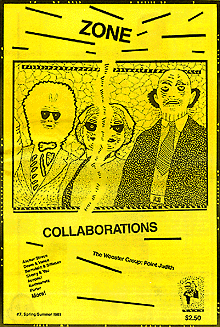
zone7lg.png

By this time I had been publishing my work in literary magazines for a couple of years and was also editor of my own magazine, Zone. I had moved to the East Village because all sorts of interesting things were happening there, and at age 23 I needed to be in the thick of it. Over the next eight years, which I’ll nostalgically declare the chronological heart of the downtown scene, things got out of control in all the best ways. New magazines and performance venues seemed to be launched every week. Writers and painters formed rock bands. Painters made performance pieces, writers made performance pieces, writers, painters and musicians collaborated on performance pieces. I started performing.

To read the rest, go here
Who is Erin?

pic#2
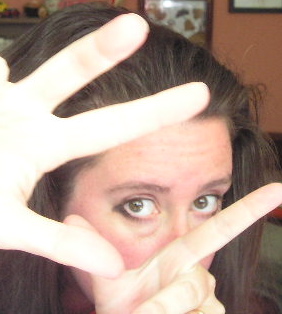
Erin O’Brien is a Cleveland writer with a massive head of hair who sometimes answers to the name Jenna Jameson. Her work has appeared in The Cleveland Plain Dealer and The Cleveland Free Times, as well as more disreputable publications. She is a member of a neighborhood Bunco group, a housewife of questionable repute, a Playmate and director (Wrestling with the Laundry, the Cleveland Cringe Festival) and a fiction writer (novel: Harvey & Eck). She has decided not to employ a brassiere during the writing of this bio and apologizes to anyone who is inadvertently injured because of it. Se can cook up a pretty good SLT but she cannot make a decent pan of Hamburger Helper to save her life. She also feels very entitled when writing bios about her myriad accomplishments.

Erin O’Brien will contribute something funny or bawdy or irritating or sad more or less once a day on these pages until Our Fearless Leader returns.

what is this

I’m not sure what this place is or what I’m doing here. I got an email with a login URL, a username, and a password. I forgot about it for half a day then emailed back asking what I should be doing with this. Then I remembered a few days earlier, someone asked me if I wanted to guest blog somewhere. But I didn’t know when. Now I realize that when is now. The reason Ed didn’t return my email is because he’s away; that’s why he needs guest bloggers.

I’m a stranger here, I think.

Here’s an interview with me that was posted on Michelle Lin’s blog today.

In the interview I talk about my book and about how my dog attacked me when I was five. We put the dog “to sleep.” That’s a phrase I like.

Here’s my book, which is called Fires.

Another novel you might like is The Magus by John Fowles. It’s very good.

I’m tired. I ate many oysters tonight, as well as some mango sorbet.

Here’s the beginning of a new novel, which I may never finish:

passing through

Strangelets pass through the planet at 900,000 miles per hour. Space is a great river, the earth is a porous cloth, and in the water are strangelets. (Or you might say they’re a part of it, actually.) Other things in, or of, the water: neutrinos on their way from the sun in the trillions of trillions, muons careening out of deep space, and perhaps even the ghostly and sluggish Weakly Interacting Massive Particle, which no one is sure exists. Those things are all passing through the planet—easily, in numbers beyond comprehension. They are passing through your face now—your eyes and teeth and hair.

Here’s a post on my blog about accidentally going to a gay pool party this weekend.

bored

THE MOOSE AND THE GERBIL

I was going to blog about this Marco Roth, n+1, Benjamin Kunkel thing (which happened after this Marco Roth thing) and type some things about censorship, different kinds of people, and concrete reality vs. the world of abstractions but stared at the computer screen for a long time with a concerned facial expression then bought and ate a salad then came back and typed this post called “THE MOOSE AND THE GERBIL.”

THE MOOSE

The moose is forthcoming in The New Yorker but feels conflicted because its short story was edited a lot, to the point that the moose believes it is a “completely different story.” Sometimes at night the moose goes outside into the woods and headbutts trees while interminably thinking, “What is the function of art?” The moose’s life partner tells the moose it’s okay because “look at the art, not the artist,” but the moose stopped taking its life partner’s advice seriously over half a year ago during an epiphany where he distinctly thought the following sentence, including punctuation, “This moose is not someone I would be with if I were not as lonely and irritable as I am; actually I would talk shit about almost everything this moose says and thinks if I were less lonely and more attractive and less irritable than I am.” The moose lives in a studio apartment in mid-town Manhattan and is a senior editor at Riverhead.

THE GERBIL

The gerbil is an aspiring writer who has just discovered the online writing community called Zoetrope. It has completed three short stories but is unsure which to post for feedback. All three of the stories are very autobiographical and the gerbil has read many disaparaging remarks about autobiographical stories. The gerbil has brown hair and often feels alienated from its peers, despite that it has almost always received only praise for its “kind-hearted nature,” “intelligent-looking, beautiful blue eyes,” and “quirky sense of humor.” Its only friend, who it talks with almost every day through email and gmail chat, lives 4000 miles away, in Norway. The gerbil itself lives in a four-person apartment in Greenpoint, Brooklyn, which it found on Craigslist.

I’d appreciate if anyone could give me their [sic] opinion

Dave’s post on grammar made me think. (Dave, I’ll get you for that. It hurts.) I’d been a law school administrator in recent years before going back this year to teaching college writing (supposedly I’m retired, but I’ve been working part-time at four different schools) and I’ve begun to wonder if I should just stop correcting certain grammar errors that still drive me crazy.

When I first taught, in the ’70s, I used to correct “who” and “whom” all the time. I stopped. Now I correct only when students use “whom” when they mean “who,” not the other way around. I still use it sometimes because I’m old, but basically I favor whom‘s doom.

But I’ve still been correcting the pronoun shift in the title of this post: a writer will start with the singular anyone, everyone, someone, anybody, or the ubiquitous a person and then she will invariably use the plural personal pronoun they, them, their later in the sentence.

Should I just leave it alone?

How about the use of you in a sentence like this:

In my high school you had to work very hard to get good grades.

I always write something like, “I didn’t go to your high school. Use you only when addressing the reader.”

(I also would like to have a quarter for every time I correct the placement of the close quotation mark and the period or the incorrect use of its, it’s, its’ [sic] and i’ts [really sic].)

We’re talking about formal expository essays, business letters, argumentative writing, not narratives. Am I being an old fart to correct a person/their and the general you?