Posts by Edward Champion

Edward Champion is the Managing Editor of Reluctant Habits.

Music Review: John Bolton’s “Time, War and Tendinitis”

Shortly before being confirmed as United Nations Ambassador, John Bolton once again embraced his musical side with his sixth album, Time, War & Tendinitis, which continues the flatline yet soothing sound that Bolton established on his previous album, Soul Destroyer. Without even bothering to shave his ridiculous moustache, Bolton has somehow created an album that has gone on to sell six million copies, mostly to aging, BMW-driving accountants who have finally come to terms with the fact that they have no real taste in music.

his new albumHis chief collaborator this time around is former Republican Justice Earl Warren, whose death in 1974 did not preclude Bolton from sifting through Justice Warren’s treasure trove of bad poetry and hastily written lyrics. Warren penned half of the songs on this album and his passion for that old-time war hawk feeling can be heard on the album’s highlight track, “When a Man Loves a Weapon,” a loving paean to both the cold war and unilateralism.

But while Bolton’s album cannot be played when you’re making out in the back seat with your girlfriend, Track No. 5, “Now That I Found God” is a melodious little romp to play if you’re ever feeling alone or isolated after you’ve told everybody in the world that you and only you are right. Bolton’s bark is indeed as bad as his bite, as he croons during the second verse, “I could’ve screamed forever/And never realized/The terrorists of our lifetime/Were anyone else inside your eyes.” Never mind the fact that “realized” and “eyes” don’t actually rhyme. This song is more concerned with the advantages of corruption and abrasive authority. As another odious solo from Kenny G plays in the background, Bolton then barks at several unidentified underlings in the studio, expertly berating them while tying this into a fundamenalist jangle that reaches a crushing crescendo of hate and inflexibility. (One leaves this particular track wondering if Bolton is truly suffering from tendenitis or if the pain in question is psychosomatic.)

Alas, such a hate-filled mainstream sound cannot last for an entire album. Near the album’s end, Bolton sounds as if he’s had the wind knocked out of him. On “Save Me,” Bolton sings this chorous: “Warrior you’ve gotta save me, oh warrior don’t you drive me crazy.” Shortly after each round, we hear the distinct sound of something being unzipped and other things that cannot be mentioned in a family newspaper.

Still, this is a solid record for priapic neocons, with nary an olive branch offered for anyone outside Bolton’s obdurate and controversial political ideology.

Reading Habits, Technology and the Hypothetical Rise of the Short

It was worth ruining my eyes
To know I could still keep cool,
And deal out the old right hook
To dirty dogs twice my size.
— Philip Larkin, “A Study of Reading Habits

Each person has a different approach to reading. Some folks read in ten minute chunks. Others read in three hour clusters. Some read daily. Others read every week. Some read only nonfiction. Others read only fiction. Some read only on the toilet. Others need to be sitting nude on a mat, preferably in a yoga position for maximum meditation. Make up your own dichotomy and throw it into the pile like a pair of used cufflinks.

The very real question I have, inspired by this anecdotal post at the Shifted Librarian on how game culture has shifted productivity patterns, is whether any approach to reading is wrong, or whether the act of reading itself should even be concerned with something that smacks of schoolmarm etiquette. (These guidelines, for example, suggest that vocalizing or moving lips while one reads is bad. I must therefore conclude that every so often, particularly when I am perusing something that begs to be vocalized, I am a very bad reader indeed.) After all, since we’re talking about an act that is largely solitary, my gut feeling is that the only person who should be concerned with the question of the right way to read and the wrong way to read is the reader herself.

Greogry Lamb has suggested that computers have changed the way that people read, but his article dwells more on how people are learning to increase their WPM reading rate (or using reading supplements like highlighting tools, including a site being devised by the Palo Alto Research Center to annotate Hamlet with endless scholarly commentaries). It says little about, say, the nauseating sensation of reading a 100,000 word novel on a computer screen (as opposed to a 2,000 word essay, which is more managable for the eyes and head) — a prospect that is likely to change as displays come closer to resembling paper (both in feel and resolution). (Many of these developments are being chronicled at the excellent Future of the Book blog.)

Since magazines and newspapers are seeing their subscriptions slowly plummet (with even such one-time staples as TV Guide resorting to drastic overhauls), there is the additional question of whether reading, at least as it pertains to magazines and newspapers, has adopted a time-shifting quality that we have been more willing to attribute to TiVo and podcasting, but that we aren’t willing to apply to articles. This strange stigma may have something to do with the fact that much of this reading is done on company time, whether through the reader sitting at her work desktop reading an article in its entirety or disguising this malingering through effective one-browser window aggregators such as Bloglines or printing it off using company paper to read it on the subway home. Who wants to mention this when it’s legitimate grounds for a grievance?

In other words, technology has enabled a remarkable workforce cluster to read by subterfuge (possibly for short-length articles). Perhaps they read because it’s a revolutionary act that, outside of web tracking software, can’t be completely gauged — sort of like jerking off on the clock.

Despite these clear advantages, there still remains a remarkable faith in technology which might be out of step with the tactile advantages of reading books, to the point where undergraduate university libraries have pared down their books to a mere 1,000 volumes and it is now inconceivable for today’s college students to leave home without an arsenal of technology.

But if libraries and educational institutions become based almost solely around technology, where lies the future of reading? While there are plenty of studies indicating that reading is dropping and there remains some debate over whether this is a “sky is falling” alarmism (which Kevin Smokler and Paul Collins challenge in Bookmark Now) or a problem that needs to be addressed, none of these studies seem to indicate, to me, a much more telling trend: what type of reading are people doing precisely? Do they prefer shorter content such as a 2,000 word essay or a short story? Is there a correllation between a proclivity to read things on the Internet and the drop in “reading literature” announced within NEA’s “Reading at Risk” report? Certainly, the ascent in chapbooks such as Harry G. Frankfurt’s On Bullshit to the bestsellers list cannot be entirely overlooked.

If shorter reading experiences are the future (in part or in whole), then I would suggest that the short story has a fantastic new life ahead and that The Atlantic Monthly, in dropping short fiction entirely from its pages (and in failing to allow non-subscribers to access their content), is ass-backwards. Big time. Unless of course they see a new market in chapbooks or content siphoned directly to today’s tech-savvy reading base.

About Schmidt

about schmidt So according to CNET:

Google representatives have instituted a policy of not talking with CNET News.com reporters until July 2006 in response to privacy issues raised by a previous story.

The story in question revealed a variety of personal information about Google CEO Eric Schmidt (all findable through Google) and made a point about Google collecting detailed personal information about its users that it doesn’t make public.

It seems that Google has a double standard here.

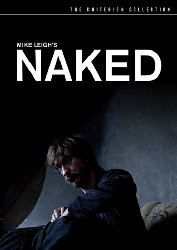
Mike Leigh’s Naked on DVD

Years ago, when I was a gaunt student, I had the opportunity to pick up the Criterion laserdisc edition of Mike Leigh’s Naked (one of my favorite films from the 1990s and one that you should watch immediately) for what was then a colossal sum: thirty dollars. Never mind that I didn’t own a laserdisc player. But I did conjure up some cockamamie idea about duping a VHS copy from a friend’s laserdisc. I demurred on my purchase, only to learn months later that the disc had gone out of print.

mike leigh\'s masterpiece A decade has now passed since that fateful day. Never did get a laserdisc player, but I did get me a DVD player well before it was fashionable. And even though I later got the opportunity to interview Mike Leigh (who, go figure, was a major hardass in person), many tears were shed over the fact that this film, an unapologetic masterpiece, a brutally honest and almost Doestoevskyian depiction of a drifter (played brilliantly by David Thewlis) and the lives he seems to alter and disrupt (when in fact it may be other lives and class trappings that alter and disrupt him), never made the jump to DVD.

Until now. Come September 20, Criterion will finally release this brilliant film to disc. I’m not certain if the commentaries are going to be reflective of the laserdisc ones or freshly cooked up for the DVD. Either way, this film’s ballsy magnificence, multilayered characters and deceptively fragmented narrative cannot be overpraised. And if you have any cinematic awareness whatsoever and still have not seen this film, then I urge you to fill in this cultural gap immediately. Hell, if I run into you at Ameoba come September, I will put this disc into your hands and persuade you to buy it.

The film is one of those rare Rorschach tests that presents oodles of multilayered human behavior for viewers to parse. You’ll constantly question how characters relate to each other, why they relate to each other, and how they can even stand each other. And then you’ll find out more details about them and understand why. Maybe. Because in Mike Leigh’s universe, there are a lot of gray areas and certainly no clear-cut explanations. The reason the film’s characters are so vivid is that Naked is perhaps the summation of Mike Leigh’s filmmaking technique, which involves improvising and developing characters with actors over the course of six months and only then working out what the film is about.