Posts by Edward Champion

Edward Champion is the Managing Editor of Reluctant Habits.

Elegy for a Fiend

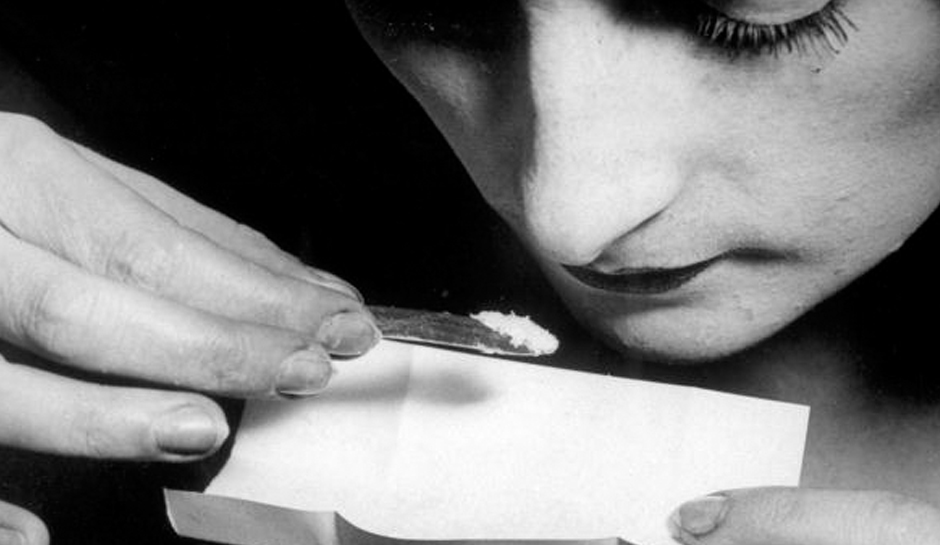
The thin man looked up and down Second Avenue for the fuzz and raised the snuff spoon to her nostril and she scooped it up with her beak in less than a second. Then the man said he wouldn’t leave because she had sampled the merch and he insisted she had an obligation to buy. She said that fifty dollars was too much and that thirty was the going price in her hood. Then he muttered something about this being Manhattan and she grew truculent.

I stood there, frozen, even as he got in my space aggressively with the spoon from the start when I said no I would not be partaking. And I tightened my knuckles and wondered if I was going to have to get into a fight. Just how in the hell had I managed to get to this place? I was standing outside an underpopulated dive with sky priced drinks and the worst DJ mix I had probably heard in five years and I wasn’t having any fun at all. The man wouldn’t leave and, given his showy scrutiny, it was clear that he was a small time type trying to unload some supply. I had lost a friend to coke many years before. My mother had snorted blow. I had never actually seen her do this, but I did sometimes see the white dusty residue on the mirror some Saturday mornings, along with the whir of the tumbleweed she’d picked up the night before, blowing out the door without even stopping for a newly brewed cup of MJB.

After five minutes, the dealer left. She had a satisfied smile on her face. And the scene gave me new context for someone who I had pegged before all this as merely exuberant.

It was not long after this that I realized $100 was missing.

I had come to her because I had had a wild night and I thought she was the knowing soul who could help me make sense of it. An evening that started with a date that never showed, continued with a happy hour among old men sitting by themselves and sipping their old man drinks as I nursed a pint while staring at nautical symbols, and that concluded in a feral surprise with three young ladies at a karaoke bar who really liked my singing voice and had rather bold ways of expressing their appreciation that thoroughly confused me. It was a story too unbelievable, the kind of tale that a man my age would invent to make himself feel better, yet it actually happened. And I needed a friend who could help me make sense of it. Because it was too improbable. The first woman had left. She had a train to catch the next morning. Shortly before ensuring that the two remaining women, one quite drunk and the other quite stoned, were with friends and had safe passage home, I texted my friend and asked if she was out and wanted to talk. She told me to meet her at a Midtown bar.

I’d met her months before during one of my bar crawls and we’d hung out a few times. We were strictly platonic. She was young. She had a bright voice and a magnetic charisma and an inexhaustible energy that matched mine. We bonded over Russian literature. It was impossible not to like her. And I couldn’t help but love her a little. We had one conversation in which we described our respective sexual histories packed with such loaded tension that we later ended up kissing, although we both put a stop to that when she said she was not into me. I’d let her crash at my apartment a few times. She was quite fond of having me buy a six pack at a bodega around four o’clock and taking it to a bench, with the two of us drinking as the sun came up, casting a lambent tranquility after a raucous evening. Often I would go to one of my early morning shifts right after this, without sleeping. She once sent me a picture where she sat defiantly on the edge of a rail, careless about her balance. I thought it was a pretty thrilling image that captured her spirit and I showed it to a friend, who promptly told me, “That’s nothing special. What do you see in her?” Adventure. Liberation. Independence. A deliberate flouting of the rules. Existence, in a word. But there were many qualities I didn’t see until life happened.

I never really understood what she saw in me until that night. Then I realized that I usually paid for the drinks because I was a gentleman and I tried to be nice. There had been one time in which she had experienced a concussion and I felt the scars on her head and she was curiously elusive about the cause. When I met some of her friends, they all seemed to be strangely quiet around her, almost hesitant to speak and always giving her the floor. When I asked amicable questions of them, they offered terse and sheepish answers. They didn’t want to be known even though they laughed at my jokes. It was damned odd.

When she asked if I had disapproved of her gotcha moment with the dealer when we returned inside the lackluster dive, she already knew my answer. But I replied sadly, “It’s your choice.” What had seemed amusing all the times before had now twisted into this new challenge: who was living the better and more vibrant life? And then I realized why all her friends had been quiet. And between that and the missing cash, that’s when I knew I had to get the hell away from her.

She chased after me, calling me a child. She shrieked that everyone in the neighborhood could hear us shouting at each other. Predictable tactics to shame me. But I could not be shamed. And I would not let her reduce me any further. Her instincts revealed her as a fiend, not a friend. And I ran to the subway and I raced down the stairs and I wept over what had been so horribly revealed and what had always been there all along as the subway began its slow trundle forward.
Old Man on an Outdoor Lounge

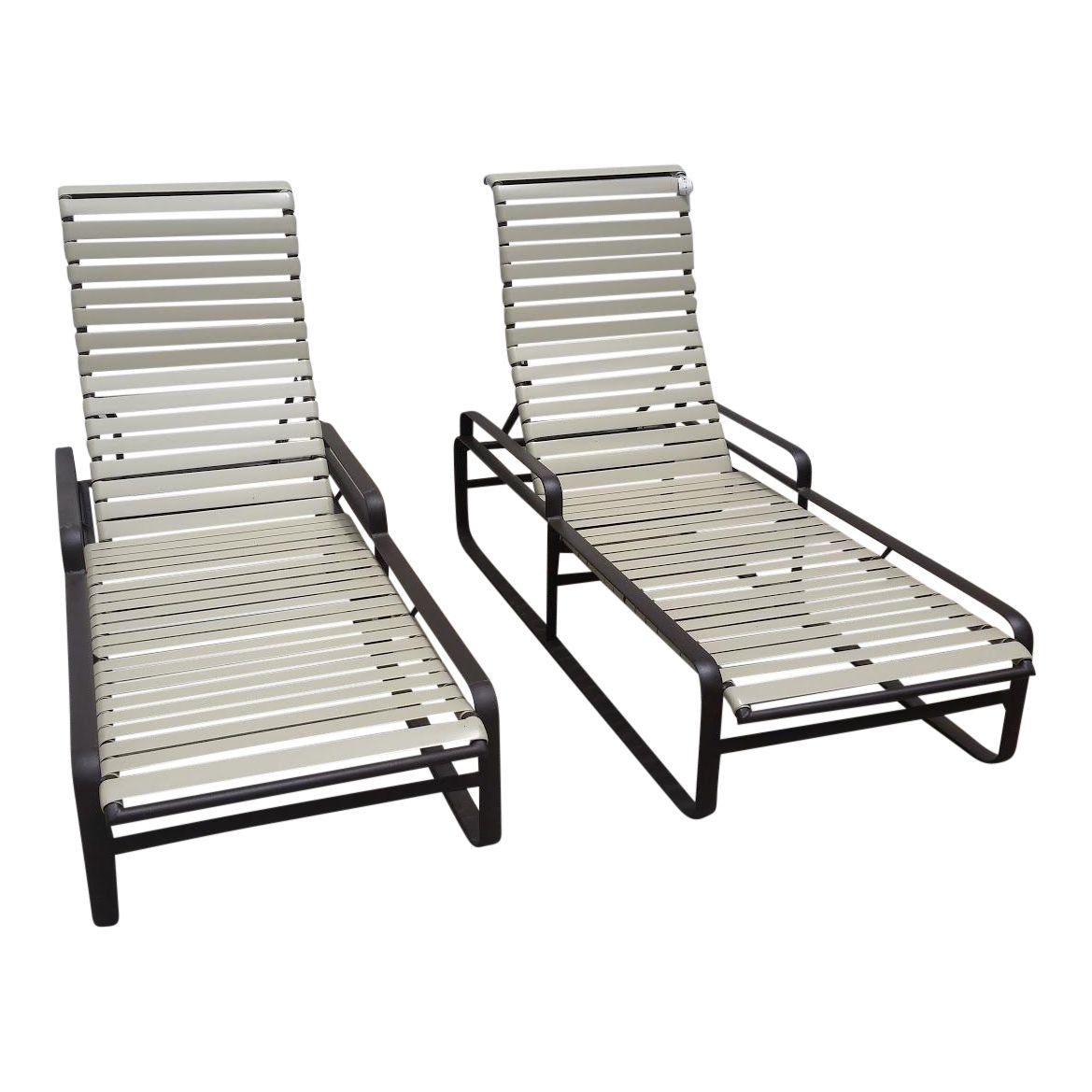
The old man sat with his can and his hat on an outdoor lounge that had once been a lustrous beige. But the plastic strands had long faded into a crusted white that matched the old man’s ashen pallor. He squinted at the sun’s harsh heat, warmer now in April than in previous years, and tried to find some shade beneath the olive tree he’d planted decades before during flusher times, but the branches had dried out and the leaves wouldn’t sprout back despite his best efforts at nurture. Even the tree surgeon had informed him what a hopeless cause it had been and suggested to him gently that he grow another one. But the old man retained some strange faith in the dying tree and, as he took another slow tug from his near beer, he angled his Panama tighter atop his forehead, the beads of sweat dripping into the fierce forest of his bushy gray eyebrows, finding moist pockets within the crags now multiplying faster than ever before on the dry soil of his face.

The world had changed too fast and the old man was getting tired. His candidate had won, but he felt that the victory was anticlimactic and that there was still a great deal to be angry about. FOX News’s paranoid drone had replaced the daily half pot of coffee he’d imbibed before the doctors told the old man that he needed to cut down on his caffeine intake. But the old man still needed to remain on edge in order to feel alive. This was why he often loosened molten rivulets of hot rage against anyone who had another worldview. The old man hadn’t yet learned that people two or three decades younger than him, people who didn’t share his skin color, people who weren’t him, had rich inner lives and he still didn’t know how to understand or apologize, even though he’d tell you over and over again that he didn’t need to. The old man’s lungs, once the storehouse of reliably truculent gulps, had thinned out of late into a faint wheeze. The old man could not accept that his time had passed and that his efforts to matter had been largely unsuccessful. If you caught the old man on a good day, he would hold you hostage with long tales that wandered nowhere. Even his patient wife would no longer listen to him. But if he had to be alone, he would be alone.

The old man had fooled himself long ago into believing that he didn’t need anyone, but the outdoor lounge had been there every day he had escaped outside and the outdoor lounge had listened very carefully and had observed him weeping when the old man thought that nobody else was paying attention. Outdoor lounges do not have tongues and thus cannot gossip. But if this outdoor lounge could talk, it would tell you everything it knew about the old man: the many times the old man had talked to himself, hating who he was and detesting what the world had become, and the outdoor lounge would say to you in a plaintive voice that here was a man who needed help. But the old man didn’t believe in therapy. He didn’t believe in changing. He didn’t understand why his family and his friends had deserted him.

What the old man had in this premature summer was the buffer of his paid up mortgage and the instinct of his convictions, even if the old man’s great plans had never quite panned out in his younger years. What he had was a lackadaisical resilience. As long as he was alive, his way would last. That had been the belief anyway.

Eventually the near beer was gone. The old man would not risk another can. He didn’t want his doctors to lay into him. He heard a faint rustling behind him and darted his head. The two kids next door were peeking at him through the slats in the hickory fence, a barrier built long before, one that he could not fathom reconstructing.

“Mister,” they said.

The old man refused to hear them.

“Mister, our ball,” said the first boy. “We threw it over your fence.”

“It was an accident,” said the second boy.

“We didn’t mean it.”

There had been a time in which the old man had once played shortstop. But it was too long ago.

The old man would not leave his outdoor lounge.

“Mister, please.”

“Go away,” said the old man.

And the two kids went away. Time passed and he heard a knock on the door. But still he did not budge from the outdoor lounge, even when he heard his wife’s mellifluous apologies. Even when he watched his wife slide open the glass door that led to the spacious patio that the old man had built from scratch in more pro-active times. Even when his wife picked up the ball without saying a word and the glass door rumbled and he remained alone with an empty can of near beer and a hat that seemed to grow tighter around his large head as the afternoon sweltered.

The outdoor lounge was appalled. And it decided to commit suicide. The rickety aluminum legs collapsed, causing the old man to take one hell of a tumble into the patch of lawn that was still dry even though the old man had watered it every week. The old man could not get up. He cried to his wife. His wife did not answer. The kids did not answer, but the old man could hear the pats of their baseball swooping into the brown leather of their gloves without either of the two boys risking a word. The lounge did not answer. Nobody answered.

It took twenty minutes for the old man to crawl across the desiccated grass and onto the deck before he could summon the will to pull himself up. And shortly after he climbed in bed that night, which was an altogether different but not dissimilar struggle, he asked his wife why she had not helped him. She replied, “Because you have been alone for a very long time and there was no point in intruding. Just go to sleep, dear. Tomorrow is another day.”

My Grandmother

Yesterday my grandmother died. I got the news this morning by email from my uncle. I didn’t get to say goodbye to my grandmother because my family didn’t tell me that she was near death and they haven’t informed me where or when the funeral services are. And I’m too shellshocked and grief stricken right now to find out. The one thing I can say is that my tears of rage are greatly diminished by a relentless sobbing that flows with the rhythm of the rain now pattering against my window. There is a fierce peace to these stronger tears, which mourn not only the majestic woman who my grandmother was and who I now celebrate and who I have also memorialized as the character Virignia Gaskell in my audio drama, but for the beauty of the human spirit. Despite coming from monstrous and unloving stock, my grandmother gave me the hope and the guidance I needed to live my life in defiance of meanness, especially in the last four years. She gave generously on all fronts. She checked in on people. She quietly helped others, whether they were people close to her or total strangers. And because of that, people remembered her. She believed in people and possibility. And despite all the hell I have been through, I still do too. I cannot seem to sour on life or the marvelous world around me. And I will always be grateful beyond words to my grandmother for imbuing me with this resilience.

I wish I could say that I was tough. But I’m not. Right now is a very raw place to be, especially when I consider my grandmother’s openness against the vile way the rest of my family left me for dead. My grandmother was the only member of my family who loved me for my totality when everybody else viewed me as evil and irredeemable. My grandmother saw benevolent qualities in me that I was too afraid to acknowledge until only recently. She taught me how to be kind and positive to others. She also taught me to be responsible. I am pretty sure that my ridiculous work ethic comes from her. I do know that my sense of the absurd springs in part from her.

I remember one time in my youth in which I didn’t have enough money to go to school. Despite being inexplicably pegged as a very smart and talented person, my education options were limited because I grew up poor and starved: a fragile kid coping with the residue of accrued abuse and trying to do the best he could. But I still went to school and I made up for any deficiencies by reading every book I could get my hands on and throwing myself into everything with all the natural exuberance I had. That scrappy and casual ability to roll with the punches despite all odds came from my grandmother. She did, after all, make her wedding dress from a parachute during the Depression. She was determined to celebrate life even when there weren’t a lot of options.

My grandmother was always baffled by the ways in which my mother neglected me and she said that I could borrow money from her. And I did, paying back the small sum each month. And when I did this regularly after about nine months, my grandmother said to me, “You don’t have to pay the rest back. I wanted you to learn something.” And I did.

People who come to know me understand that I am one of the most loyal advocates you can have. And this was because I learned from my grandmother that it was vital to be giving and not expect anything in return, even when there’s nobody in your life to give anything to you. Because of my grandmother, I do a secret good deed every day. Because of my grandmother, I have learned to love and take care of myself. Because of my grandmother, I give to others, often more than I have, when I have nothing. My grandmother would take the time to listen to everyone and she would always reframe every serious problem in a way in which it was never all that big of a deal. Had I not had my grandmother, and now I don’t have her and that not having her seems unfathomable but it is now regrettably and painfully true, I would never have landed back on my feet with a sanguine faith after a sustained period of homelessness and a series of baleful setbacks that I would never wish on anyone. My grandmother, in her own inimitable way, showed me that there was a benign way to not give a fuck and to devote yourself to living.

My grandmother always saw the good in people, even when they had severely wronged her. And she was always good for a devilish and very funny quip, which she would often mutter in a sneaky stage whisper in the kitchen, often with a glass of wine. When I lived in San Francisco, she would ask if I wanted to come up to her home in Marin County to celebrate the holidays. She was the only family member who seemed to understand that love didn’t involve a ledger, but amounted to being there for others and letting life work its strange magic.

This is the most staggering loss I’ve ever experienced. God, it hurts. My grandmother was really the only family I had. But I’m going to be kind and brave and I think that, in remembering my grandmother, I’m going to have to be more true to myself, true to the promising young man that my grandmother always saw. The rest of my family has wished me dead, but I am here, a feeling and caring and flawed and open and honest and quietly kind person who is quite happily alive, and I am now very much on my own. While my abusive and vituperative family would undoubtedly relish seeing their untrue and cartoonish vision of me confirmed, reveling in gossip and backtallk rather than listening and being present for other people and knowing that nearly every putative sully can be forgiven with enough time, I’m not going to give them that pleasure. Because that is not the way you live and love in this often hard world. And that was not the way of my grandmother.

In her own way, I think my grandmother was trying to tell me that I was her and that she was me. There was a great love and a beauty in that. There was also a great ease in the way my grandmother managed it. And I’ve been crying all morning thinking about it. And if I am her, if my heart is even one half as mighty as hers was, if that’s what she was trying to get me to see all these years, then maybe there’s some hope for me after all.

Notes on the Artistic Egotist

There is a type of person you encounter in every branch of the arts who believes that he is too cool or too good or too big or too important to deal with the peons, with “peons” often broadly defined as anyone else. We are not talking about people who are harmlessly lost inside their own heads, who may be initially misperceived as egotistical but who you come to know, once you get talking, as essentially bighearted neurotic oddballs. We are speaking here of the artistic egotist.

You see this with some midlist writers in publishing. You see this with certain flailing actors. You see this with some people on social media who have a large follower count. You see this with bestselling authors and big time performers who are never satisfied with their success and who don’t seem to comprehend the concepts of humility or plenitude. An artistic egotist may actually believe himself to be an artist even when he isn’t producing any art. A real artist will reach out to other artists and find beauty in their work. An artistic egotist never looks anywhere but inward. An artistic egotist will often prioritize money and audience reach above all other concerns, but the real artist will sometimes be baffled when he is compensated. Because he’s going to be making art no matter where he’s at or what the world says about it.

An artistic egotist almost always sees the worst in other people and often masks this with a sanguine or “nice” disposition, but the ego is pretty easy to suss out. What are some of the artistic egotist’s tools of the trade? Microaggressions, gaslighting, the casual slandering of other struggling artists who would never harm a fly, the wholesale denial and condemnation of entire perspectives and even new ways of making and creating and thinking about art. An interpretation of a difference in opinion as a threat rather than a possibility to have a healthy conversation. A failure to offer the common courtesy of a response or the dignity and grace of a polite consideration. You’ll see that look in an artistic egotist’s eyes as he coldly assesses you within minutes, ranking you on where you stand in the pecking order, performing swift calculations on just how your work and presence can be advantageous to him. Because in the mind of an artistic egotist, his way is the only way.

Don’t be this person.

If you are this person, don’t think we can’t suss out your solipsism. Don’t think we aren’t paying attention to the way you behave. Don’t think we’re not talking about it with our peers — not out of malicious gossip, but because we really do care and are truly baffled by your unfathomable deportment. Wondering why your career is stagnating? Look in the mirror. Wondering why you keep getting passed over? Look at the signature on your rent check and you may find your answer.

The one thing you learn very fast in the arts is that there’s always someone out there who is better than you. The artistic egotist sees such a person as a force to be stubbed out. The smarter type sees that person as an opportunity to learn and know and understand and be more connected. If the smarter type becomes a serious artist, he will usually be perspicacious enough to understand that wisdom comes from every corner and from every level. The smarter artist who endures realizes that every other artist is a person and treats him not with dehumanization or contempt or derision, but with the decency and respect that all human beings should be afforded.

You are not here to be praised. You are here to make art. You are not here to be the best. I can personally guarantee that there is someone out there who is better than you. You are here to hold your work to very high standards and, once those standards have been met, you must find new ones. And then, only after years of hard work and limitless passion and care to craft, you may very well be a serious artist.

Ego has no place in this journey. Connection, however, does. If you’re connecting with other artists because you want to make yourself feel better, you’re doing so for the wrong reasons. If you’re connecting because you think another artist and his work are pretty cool, then there’s a pretty good chance that you’re not an artistic egotist.

But if you rebuff connection because you think you’re above it, then I urge you to reconsider your priorities. I beseech you with every fiber of my being to seek and court possibility. Every career trajectory, no matter how successful, is marked by ups and downs. You may very well be crushing it right now, but if you cleave to this temperament, then there will come a day, maybe tomorrow or maybe years from now, in which you will very much need other people, big and small. And they won’t respond. Because they remembered how you treated them.

Hold yourself to high standards, but never be an artistic egotist.

An Open Letter to Carey Purcell

Carey:

I was in love with a Jewish woman for nine years. I am also a goy. On behalf of my many Jewish friends, who have claimed me “an honorary Jew,” I am thoroughly repulsed by your detestable anti-Semitic Washington Post essay, which says far more about you than it does about Jewish men.  It memorializes you indelibly as one of the most unattractive women in New York City. As Frank Zappa once said, the mind is the ugliest part of the body.  And yours is a very ugly mind indeed. I don’t give a fuck how strong your martini is. (Oh, did I offend your quaint Miss Manners temperament disguised within a intuitively hateful core by using the word “fuck”? I am so fucking sorry!) You’ve revealed so much ugliness about yourself that I would never want to date you. If the attitude you carry is truly reflected in your essay, then I’d venture to say that most men, whether Jewish or not, would not want to date you. “Interfaith relationships,” as you so deem them, are the most normal, indeed perhaps the most commonplace, relationships for many who date in this region of the nation. By your logic, the two women I dated in my twenties who married men after dating me (and who I am still friendly with) are part of a vast conspiracy of dark-haired women who have it in for me. It is, in short, a diseased fallacy.

At any time during your essay, you could have pointed to your flaws. You could have revealed yourself as vulnerable. This is what the best essays do.  Essay writing is all about striving to be the most human. But you opted to make yourself “look good” and, in so doing, you made yourself look very bad and very disingenuous indeed. The fact that you are so prissy and intolerant of anyone who does not conform to your loose religious views suggests that you not the “liberal” you think you are and that you are never going to find anyone. That you cannot willfully accept differences or find happy compromises pretty much says to me that you will live out a life of endless and superficial affairs. And your attitude is contemptible. Do you truly not understand that “a lackadaisical Jew” falls into the stereotype of the lazy Jew? The claim that you know more about Jewish faith when you have not grown up in it is the height of condescending hubris. Yes, the friends of your Jewish boyfriends liked you because Jewish folks in general are an incredibly welcoming bunch. For all your talk of raising a family with “an educated and respectful view of the world,” you fail to parse precisely how you have fallen short on that front.

If you truly know more about being Jewish than your partners, how then could you not possibly know that Jewish mothers can suss out the most pedantic intelligence known to humankind?  How could you not possibly anticipate that you would be contacted, interrogated, asked numerous questions, and badgered into arguments? This is the deal when you date someone Jewish. If you’re a good person, you roll with the punches and learn to appreciate the mother. If you’re an asshole, you write in the Washington Post that you “didn’t want this kind of involvement to be part of our relationship.”  Listen, Carey, you have to like the parents. That’s the way a relationship works. Is it any wonder why that man left you? Is it any wonder why you weren’t invited to seders? You essentially spit in the face of your boyfriend’s family. And if you want someone to stick around, you don’t do that. Relatively minor? Girl, you truly have no fucking clue.

It’s extraordinarily rich (and frankly it made me laugh) of you to claim that “not being Jewish was not the official reason either of these relationships ended,” while you remain completely incognizant about your own lack of self-awareness. I can only imagine how these conversations went. Jewish identity, whether one is Orthodox or not, is a big deal. That you wished to secularize (and thus vitiate) it during your conversations with these men says more about your inability to listen
and empathize than anything else.

A pattern you should pay attention to? You really don’t know the half of it. You invent the “last act of defiance” thesis because the truth of the matter is that you don’t have the guts to be honest about what you’re incapable of confessing: that you can’t accept other people who don’t fit within your narrowly rigid definitions, that you won’t find an enduring love unless you become more tolerant and embracing of other people (whether Jewish or not). And if you’re complaining about heartbreak, you’ll get no sympathy from me, kid. One of heartbreak’s great jokes is that it feels so crippling even as it is incredibly common. You can either roll with the punches and become stronger and allow your heart to regenerate and allow your soul to become more flexible and accepting. Or you can blame everyone else but yourself and have the effrontery to write a disgusting WaPo essay predicated on bigotry (complete with your insensitively anti-Semitic cocktail), cash a check, and never learn a goddamned thing.

You need serious help. And you need to stop writing such callow and superficial and subconsciously hateful bullshit. And you really need to take several steps back and accept that the problem here may very well be you and that the beauty in accepting other people into your life usually comes about because one is honest about one’s failings.

Yours,

Ed

[4/4/2018 UPDATE: Carey Purcell has apologized. I think this is a good start. I believe that she can change, but I think she has a lot of significant and honest soul-searching to do about the hate and bigotry she expressed in her vile essay (much as I have been contemplating why I was so driven by a white heat fury in my response, which a few friends have smartly called me on). This is not easy, but it is possible. Let us try to be kind and give Miss Purcell the space to take a very deep look at the anti-Semitism she has perpetuated and that she will hopefully address with thought and genuine compassion.]