While it’s good to see the ever reliable Liesl Schillinger offer a quirky and personal take on the new Clive James book, Schillinger’s pleasant review (as well as an appearance by the witty and dependable Lizzie Skurnick, regrettably reduced to capsules) is offset by the disastrous employment of Katie Roiphe, who, in her review of A.M. Homes’s The Mistress’s Daughter, demonstrates the troglodytic level of insight regularly witnessed in her Slate Audio Book Club appearances.
Roiphe gets so many things wrong about A.M. Homes that it’s hard to know where to start. She claims that A.M. Homes has “made a minor specialty of luridness,” only to contradict herself paragraphs later by characterizing Homes’s books as “sleek, violent cartoons.” Roiphe writes of Homes’s heightened reality as if ignorant of the relationship between realism and surrealism that has long been at the center of much of contemporary fiction from Flann O’Brien onwards, perhaps best epitomized by John Cheever’s “The Swimmer.” In fact, Homes herself has stated repeatedly in interviews that her m.o. is to to continue her work along the lines of this novelistic tradition.
Of course, auctorial intention, as revealed through interview answers, only takes us so far. So let’s ignore the idea of a narrative being only as realistic as an author’s ability to make it believable and dwell upon Roiphe’s limited perception of reality. Roiphe appears truly astonished that a husband and wife would “not only have affairs but smoke crack and set fire to their suburban house with a grill.” If Roiphe truly believes this moment, uncited but clearly referencing the first moments of Music for Torching, to be so unusual, I’m wondering why she was assigned this review. In a world in which a man pours gasoline on his girlfriend after she breaks off the engagement and crack cocaine has been in use in the Washington suburbs for many years, I think it can be sufficiently argued that Homes’s fiction is drawn from these darker and quite real aspects of the human condition. Describing this book then as a “sleek, violent cartoon” is thus inaccurate, more so because Roiphe prefers generalizations to concrete examples from the prose. Also resultantly wrong is Roiphe’s assertion that “the figures in Homes’s life often behave as if she had invented them.” Could it be that Roiphe is simply incapable of understanding that Homes’s fiction and particularly her memoir are, in fact, drawn from reality?
Of The Mistress’s Daughter, she writes, “the prevailing mood is that of film noir.” Never mind that Roiphe offers no examples. Perhaps she felt that any book containing a DNA test or detectives tracking down individuals, both inescapable aspects of Homes’s story, is intended to be categorized in the mystery section. Or maybe “this book is really about a wild goose chase.” Again, Roiphe appears unable to stick with an assertion. Maybe the book is just plain “false,” because the book “veers toward the sentimental, concluding with an unusually straightforward tribute to her inspiring adoptive grandmother.” Of course, any memoir involving two unexpected parents entering an author’s life is bound to unleash a torrent of emotions, particularly when the author is as fiercely protective of her private life as Homes is.
However, it never occurs to Roiphe that Homes’s “straightforward” memoir might just be an effort to come to terms with the private and the public. Sven Birkets, writing in the Los Angeles Times Book Review, certainly understood this and limited his cogent observations to the book in question. Roiphe, by contrast, wishes to contrast this memoir against the ferocity of her fiction.
While this comparative approach is certainly an interesting critical exercise, in Roiphe’s hands, it’s quite catastrophic. While Roiphe can at least see that Homes’s memoir as “a document of a flawed, incoherent self” and is able to pinpoint the memoir’s tendency to invent rather than confront, she opts not to dwell on the most interesting example of this — a moment in the book’s second half in which Homes imagines how her biological mother must have lived decades ago — but with the deposition testimony near book’s end.
Roiphe writes, “How can the ruthless author of ‘Music for Torching’ and ‘The Safety of Objects’ allow herself this easy way out of a story that can have no easy way out? It feels false.” Maybe false to Roiphe, because she seems to have no clear understanding that Homes is writing about reality. Birkets and others have understood this, and a careful reader can see what Homes is up to.
As Maud Newton observed last week:
The memoir in its contemporary iteration seems to demand a Triumphant Conclusion. Homes, to her credit, mostly sidesteps this trap, focusing on her adopted grandmother. The result is a muted finale honoring the mystery of family.
While I’m glad that Sam Tanenhaus has granted space to A.M. Homes’s The Mistress’s Daughter, I’m troubled by how poorly analytical these results are. I believe this book to be an interesting turning point in Homes’s career: an effort to confront aspects of her life that have hitherto remained private and a fascinating expansion of her concern for the existential moments that seem larger than they are and are often confused with surrealism.
But Roiphe lacks the critical chops to consider these questions, much less place them within the trajectory of A.M. Homes’s oeuvre. Thankfully, Birkets and Newton do. While Sam Tanenhaus may shy away from the kind of nuanced criticism I am suggesting should be the norm of any weekly book review section, at least there are other editors happy to devote their pages to these more serious questions.

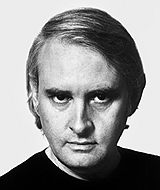 For those who don’t know the history, Paul Alexander called into question many of Helprin’s answers about his own life, smearing Helprin for being a Reaganite and an opportunist, and finding fault within Helprin’s myth-making. What any of this ever had to do with Helprin’s achievements as a fiction writer remains a mystery.