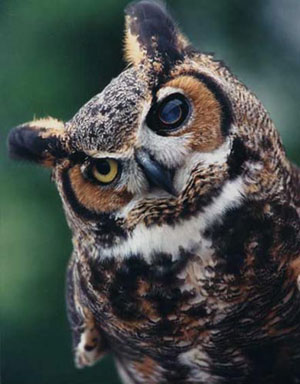
 The reports promised snow but prevaricated. My mind marinated. You get that feeling when you are conned into picking away at a slice of red velvet cake because it’s there and you have only poor penmanship instead of an able fork. Never mind culinary sullies. The owl’s snooty hoots belied a ballistic solipsism suggesting the sword was mightier than any midnight rambler. And we were rendered into spittle and drivel hoping that flurry would scurry and leave us with some natural marching power.
Do not attempt this at home. This is an experiment to be carried out in the field.
The mind’s confines are best addressed with cardboard forms of demarcation. One expects lobes to spill but finds an ungracious appreciation for cerebral aerobics. To expand with substance, or to impute that other substances were snorted, is to fall prey to the owl’s howling mantras.
And yet the owl’s maxims mean much to many. An internal stare avoided for fear of the external. The febrile zeal to fit in when best adjudicated by entropy. The enameled mammals flensed their telegenic teeth because this mattered more than a whore. First person prima donnas not comprehending their spending and, worse yet, failing to feel the beats of their hidden hearts in a playground for the rich and a salvo for the stitch. Small wonder that my soul resembled an over-tossed baseball.
Thus, I retreated into gibberish, what they felt was folderol. My sentences became longer and the owl still did not understand them. The owl merely responded to big billboards and bright lights. The owl offered me a script.
“HOO HOO! Say these HOO HOO! words and HOO HOO! you will HOO HOO! be a HOO HOO! success.”
“He was on first,” I replied.
“HOO HOO! Stop that HOO HOO! they’re beginning HOO HOO! to turn away.”
Idle talk amidst the unfulfilled flakes. Damp matches struck sulfur and the owl’s paper package transmuted into a capable conflagration. No one was more surprised than me. There was, after all, the slush.
The owl offered another script. I took it, but the words were the same.
© 2008, Edward Champion. All rights reserved.
Not sure I understood this exactly, Ed, but I certainly enjoyed reading it. I enjoyed it so much, in fact, I wonder if “understanding” is less important than catching the shifting light and mood.
I’m left wondering if it was a White Owl, after all of that.
Two minds diverged … I took the one less raveled.
DNW
I think Annie Dillard usually writes these sorts of things when she’s sober. Dylan Thomas, on the other hand …..
That owl has a look in its eyes like it’s ready to pounce on something for a kill.