This year’s Man Booker Prize shortlist has been announced, and Rushdie is not on it.
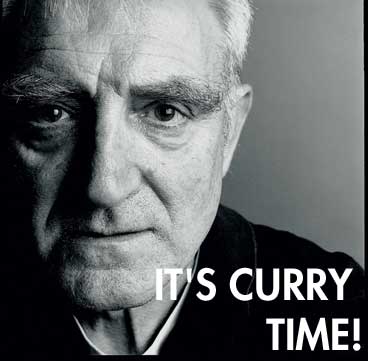
What this means is that John Sutherland, who promised that he would curry and eat his proof copy of The Enchantress of Florence if Rushdie’s book did not win the Booker, is now under a certain gustatory obligation reminiscent of a certain German filmmaker.
If Sutherland does not eat his proof copy, then one can never take the man’s word seriously again. Never! Fair is fair, Sutherland. You promised to eat your proof copy. The time has come to live up to your pledge.
Here is the shortlist:
Aravind Adiga, The White Tiger
Sebastian Barry, The Secret Scripture
Amtiva Ghosh, Sea of Poppies
Linda Grant, The Clothes on Their Backs
Philip Hensher, The Northern Clemency
Steve Toltz, A Fraction of the Whole
[UPDATE: Sutherland won't do it! He is not a man of his word. Tread carefully around Sutherland's culinary duplicity! For shame!]

The Call by Yannick Murphy: The always interesting author of Here They Come and Signed, Mata Hari returns with a novel that whips up a worldview from a rather quirky set of limitations: namely, the call logs that a veterinarian maintains as his son is unexpectedly put into a coma and an unforgiving economy denies him work. What emerges is a surprisingly optimistic, often funny, and very moving account on how one family uses acceptance and forgiveness as a way to atone for hard knocks. (
Birds of Paradise by Diana Abu-Jaber: Forget Franzen and Eugenides. If you're looking for a social novel that counts, Diana Abu-Jaber is the author you're looking for. Building from the free-form exploration of consciousness and identity in Crescent and the gripping procedural structure of Origin, Abu-Jaber's latest novel is her finest, equally fluent with gutterpunk culture and smarmy real estate men. It has been suggested by The Washington Post's Ron Charles that you will likely gain some pounds while reading this novel. This is certainly true. Abu-Jaber's description of food is so precise that it often made me want to do more cooking. But I very much admired the way in which Abu-Jaber presents all her characters as unwitting victims of rough capitalism, which permits them some dignity even as they perform terrible acts.
The Last of the Live Nude Girls by Sheila McClear: This memoir isn't so much about the decline of the Times Square peepshow, as it is about one young woman's efforts to pull herself up by by her bootstraps when presented with few economic options. Filled with self-introspective candor and a quiet dignity, McClear's story is one that might befall any of us in these volatile times. While McClear does get back on her feet, her book leads one contemplating the terrible fates of other young women now moving to New York and falling into deadlier vocations. (