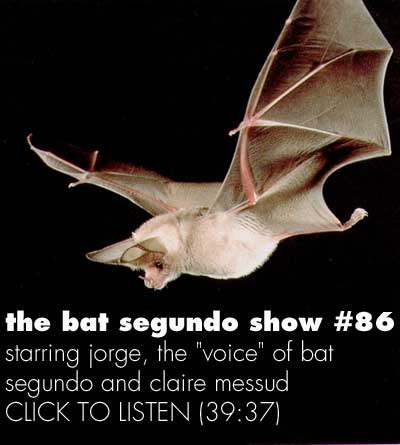
Condition of Mr. Segundo: Trying to locate his voice.
Author: Claire Messud
Subjects Discussed: Richard Yates’ Revolutionary Road, references to revolution in The Emperor’s Children, Russian literature, Chauncey Gardner in Being There, Dostoevsky, the influences that spawned Bootie, on Messud writing novels outside her generational milieu, responding to Meghan O’Rourke’s review, why Messud didn’t present contrasting ideologies in The Emperor’s Children, hermetic atmosphere, Deborah Solomon and New York media types, Tingle Alley and Infinite Jest, Fort Greene and getting New York neighborhoods right, the influence of decor on character action, preposterous book titles, the cat in Paula Fox’s Desperate Characters vs. the cat in The Emperor’s Children, Anglicized dialogue, fantastic vs. realist environment, cognitive development, The Great Escape, and Anthony Powell.
EXCERPT FROM SHOW:
Messud: I always think of Annabelle as somebody who’s actually out there accomplishing things when nobody’s paying attention. But “revolutionary” is probably too strong a word for [Bootie]. He’s someone who’s going to unsettle things and try to change things. And he comes from a different place: mentally as well as physically. I think that, for me, there’s a tension in the novel, I suppose, between Murray Thwaite, Bootie’s uncle, who is an old-fashioned liberal, and Ludovic Seeley, who is the person to whom the word “revolution” is most often attached. And he is a sort of — a slippery fish. He’s somebody — truth is a changeable thing. Meaning is a changeable thing. What’s good is a changeable thing. And Bootie is somewhere in between these two. And he’s somebody who would like to emulate his uncle and admire his uncle, and finds that when he sees him up close, that he can’t fully do that.
© 2006, Edward Champion. All rights reserved.
Listen: Play in new window | Download