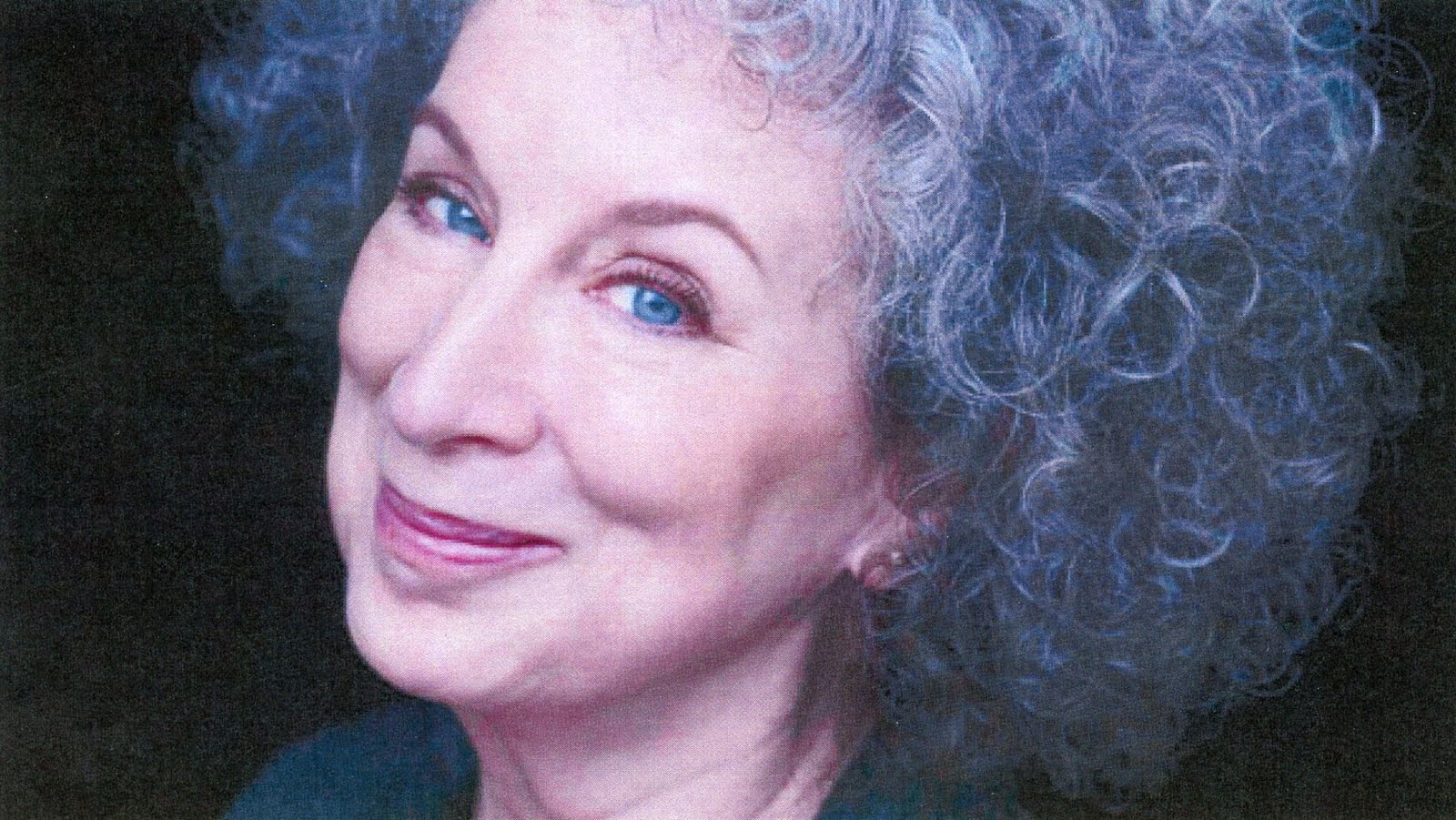
 In the Margaret Atwood universe, not even an innocent cookie is safe.
From The Blind Assassin:
“Myra had left me one of her special brownies, whipped up for the Alumni Tea — a slab of putty, covered, in chocolate sludes — and a plastic screw-top jug of her very own battery-acid coffee.” (37)
“She says [hamburgers] are pre-frozen patties made of meat dust. Meat dust, she says, is what’s scraped off the floor after they’ve cut up frozen cows with an electric saw.” (44)
“On the menu, displayed in the window — I’ve never gone inside — are foods I find exotic: patty melts, potato skins, nachos. The fat-drenched staples of the less respectable young, or so I’m told by Myra.” (51)
“jars of jam with cotton-print fabric tops, heart-shaped pillows stuffed with desiccated herbs that smell like hay” (52)
“I sat on the park bench, gnawing away at my cookie. It was huge, the size of a cow pat, the way they make them now — tasteless, crumbly, greasy — and I couldn’t seem to make my way through it….I was feeling a little dizzy too, which could have been the coffee.” (54)
“There was nothing much I wanted to eat: the draggled remains of a bunch of celery, a blue-tinged heel of bread, a lemon going soft. And end of cheese, wraped in greasy paper and hard and translucent as toenails.” (56)
“Consomme, rissoles, timbales, the fish, the roast, the cheese, the fruit, hothouse grapes dressed over the etched-glass epergne. Railway-hotel food, I think of it now; ocean-liner food.” (60)
“Breakfast in a haze of forgiveness: coffee with forgiveness, porridge with forgiveness, forgiveness on the buttered toast.” (77)
“I purchased a small iced tea and an Old-fashioned Glazed, which squeaked beneath my teeth like Styrofoam. After I’d consumed half of it, which was all I could get down, I picked my way across the slippery floor to the women’s washroom.” (83)
“I’d eaten too many cookies, too many slivers of ham; I’d eaten a whole slice of fruitcase.” (96)
“We’d have buttered white bread spread with grape jelly translucent as cellophane, and raw carrots, and cut-up apples. We’d have corned beef turned out of the tin, the shape of it like an Aztec temple. We’d have hard-boiled eggs.” (138)
I’d keep going, but I think the point is clear. Either the narrator’s very being is hindered by eating, or Atwood is a closet anti-culinary type. To which I reply, if music be the food of love, play on.
Addendum (May 21, 2013):
Margaret Atwood’s remarkably nihilistic food description has continued unabated in the past decade, helped in large part by the fact that she’s spent much of her fiction writing time building an apocalyptic universe in the Oryx and Crake trilogy. Here are more recent samples:
From Oryx and Crake:
He said it was only pure dumb chance he wasn’t dead — that this fucking country hadn’t killed him with its lousy food.
Worms and grubs were what he recommended for a snack food. You could toast them if you wanted.
…the food in the cafeteria was mostly beige and looked like rakunk shit.
No point thinking about it, not in this heat, with his brain turning to melted cheese. Not melted cheese: better to avoid food images.
From The Penelopiad:
Have I mentioned that there’s nothing to eat except asphodel?
He was sorry he’d asked them for something to eat.
From Moral Disorder:
I was not an orphan, I told myself; I was not nearly enough of an orphan. I needed to be more of one, so I could eat food that was bad for me… — “The Other Place”
As a child she’d separated her food into piles: meat here, mashed potatoes there, peas fenced into a special area reserved for peas, according to a strict plan of her own. One pile could not be eaten before the one already started had been consumed: that was the rule. — “Monopoly”
From The Year of the Flood:
“Why would we hunt?” said Zeb. “To eat,” said Amanda. “There’s no other good reason.”
© 2003 – 2013, DrMabuse. All rights reserved.