The crazed doom-and-gloom prophets of our world have this troubling ability to occupy the airwaves, becoming strangely confused with qualified experts. Gerald Celente is the latest soothsayer operating on his hunches — now being celebrated on Digg, Reddit, and just about every damn aggregator imaginable.
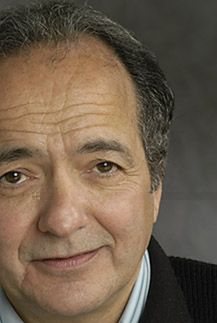 His predictions sound suspiciously similar to the storyline for Brian Francis Slattery’s excellent new novel, Liberation, but Gerald Celente, the CEO of Trends Research Institute, is determined to deliver. By 2012, Celente forecasts revolution in America, food riots, and tax rebellions. In four years, America will become an undeveloped nation. Holidays will be about food rather than gifts. Mass hysteria, dogs and cats living together. Doom and gloom.
The media — or, rather, FOX News and conservative websites — is listening to Celente because he “predicted” the 1997 currency crisis in Asia, the subprime mortgage disaster, and the dollar dipping south. But Infowars, a website run by paleoconservative radio show host Alex Jones, is basking in this dystopic news like an AIG executive riding high on Uncle Sam’s dime. What’s particularly strange is that Infowars hasn’t bothered to quibble with Celente’s statements, much less point to any of his inaccurate predictions.
How does Celente do it? From Invest in Yourself by Mark Eisenson, Gerri Detweiler, and Nancy Castleman:
According to Gerald Celente, Director of the Trends Research Institute and author of Trends 2000, the key to tracking trends is to read two newspapers every day with a purpose — either The Wall Street Journal or The Financial Times, plus The New York Times or USA Today. Look for stories with social, economic, and political significance, be it about the difficulties older suburbs face or the current currency crisis. (You’ll know by the headline or the first paragraph.) Skip the stories that are purely human interest or that are about something that hasn’t happened yet (for example, a jury resuming deliberation on a sensational trial).
When a crisis does occur, tune in to the extra in-depth analyses that you’ll find in accompanying background pieces probably in more than one of the newspapers. Read them as though you’re a “political atheist,” Celente recommends — not for what you want or hope, but for what is really going on, not only in your own profession or industry, but for trends that may directly or indirectly shape the future.
Aside from the Dale Carnegie-style language here, much of Celente’s “suggestions” seem more like a series of guidelines on how to become a successful “futurist” predicting a good deal of generalist nonsense that scares the shit out of people, using language lifted from a newspaper story’s barebones and riding on a few hunches. Of course, it also helps to have an aesthetic touch — something along the lines of a desktop covered with 12 globes, just so you can impress a New York Times reporter who comes by to write a small profile.
Since Infowars could not be bothered to perform even the most rudimentary act of journalism, the time has come to see if Celente’s record truly cuts the mustard.
- In May 1993, in a story about fiftysomethings losing their jobs written for the Orange County Register, Celente was quoted. He was advising IBM at the time during a period of downsizing. What was Celente’s golden advice? He informed displaced executives to “go for some kind of counseling.” Asked to comment on this situation, Celente offered the same doom and gloom boilerplate that he’s telling us today: “The Industrial Age is ending. All the systems are breaking down and that means disappointment and disillusionment for the people who grew up in the ’50’s.” He elaborated, “These people believed in the Ozzie and Harriet way of life. That concept is dead. So is the concept of retiring at 65.” These were hardly prescient or specific thoughts, but they were certainly dramatic enough to make it into an Orange County newspaper.
- Why not get topical? Let’s take Celente on a more specialized subject like restaurants. In 1993, Celente predicted “growing demands for take-out food, high- and low-end restaurants, and restaurants that offer live entertainment. Middle-range restaurants with mainstream fare will suffer.” Aside from the fact that Celente’s prediction accounts for about 90% of restaurants, doesn’t the fact that human beings need to eat remain a comfy ledge to launch a prediction?
- In 1998, Celente told Money Magazine that, as the population grows older, “Americans will be spending more time at home than ever before both for pleasure and business.” Imagine that. You grow old, retire, and then you suddenly have more time. How the hell did Celente know?
- In the September 21, 2000 edition of Newsweek, the great futurist weighed in on mindless chores. Why are they called mindless? “Your mind can’t be going all the time.” And when any problem becomes bigger, it becomes bigger than burnout. “It’s road rage, it’s air rage, it’s Columbine, it’s stress — and people don’t get it.” I’m wondering if it’s also the kind of impulse that will cause you to make impetuous predictions about the United States’s future.
- Asked by CBS News in May 2005 to comment upon where Dillard’s planned to go, Celente had this to say: “There is nothing Dillard’s has that you can’t find in 1,000 other places. America is vastly overstored.” Take out “Dillard’s” and sub it in with another department store chain name, and you begin to see what little Celente’s remarks say.
- But if we’re in for a future of doom and gloom, Celente has been sending us some mixed messages. He told the Associated Press in May 2005, “The bottom of the luxury market is not going to fall out.”
- Talking with the Associated Press in September 2005, Celente suggested that Wal-Mart could deflect its negative image with its philanthropy. That’s hardly a stunning insight. Any positive action has the probability of causing a company to look good. This is rudimentary probability. But what profound thoughts did our great seer tell the AP? “We try to refrain from making value judgments — what the motive is. But the fact is that [Wal-Mart was] there with trailer trucks being turned away. Amazing, isn’t it?” Amazing indeed. Presumably, the AP reporter who talked with Celente did so because the reporter needed somebody to describe the situation as “amazing” or “magnificent.” Some casual modifier that might be confused for profound thought.
- Celente was asked to weigh in on Internet trends by the San Francisco Chronicle‘s Patricia Yollin in December 2006. “People are more electronically connected and less humanly connected,” opined our great psychic. And if that general piece of advice wasn’t enough, Celente also took the time to badmouth public displays of affection, pointing out how unacceptable it was to put PDA in “techno jargon.” Perhaps Celente confused PDA with another type of PDA, but what he didn’t seem to tell the reporter was that acronyms have existed long before the Internet.
Here you have a history of a man who not only makes his living spouting this generalist nonsense at corporations, but who is listened to by the media. If we weren’t all scared shitless, this wingnut would be chased out of boardrooms and newsrooms with pitchforks.
But who needs rational thinking when you have the comforts of defeatism? If you really want to get your dose of passive-aggressive dystopia, just call up Gerald Celente. He’s on Line 2 and he’ll take your money when you have no faith in humanity or when you don’t have a clue about how to do your job. Have him rant in your newspaper. Give him money to advise your corporation. Above all, don’t look at history, science, or specific statistics. Because Celente will boil them all down for you with one of his seemingly pithy and mysterious predictions. And he’ll be right. Because like a trusted astrology columnist or a two-bit faith healer, Celente leaves just enough room in his answer to wiggle out. And you swallow it every time. Because you’re too scared to think for yourself, or do a background check on the guy in the lobby waving his arms.