Eric Kraft appeared on The Bat Segundo Show #268.
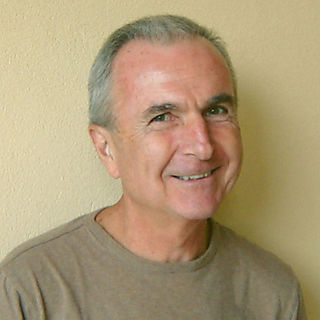
Eric Kraft is most recently the author of Flying. This is the first of a three part conversation with Kraft about all of his Peter Leroy books, an epic of more than a million words which Our Young Roving Correspondent was insane enough to read. These podcasts tie in with a roundtable discussion of Flying involving numerous people.
(To listen to Part Two of this conversation, go here. To listen to Part Three of this conversation, go here.)

Condition of Mr. Segundo: Searching for his alter ego.
Author: Eric Kraft
Subjects Discussed: The relationship between Kraft & Leroy, reexamining and reimagining biographical details through a fictional hero, MTV and the 1950s, acts of liberation and the shared mind, the Larry Peters books and the gaps between the chapters, references to other books, the love affair between Peter and Albertine, the stewardess and the dark-haired lady, alter egos, Matthew Barber and B.W. Beath, the many twins throughout the Leroy books, being taken back to an earlier conception of the work, Mark Dorset, characters who knock on the doors, Porky White, aerocycles that does not fly, being able to talk with machines, the burdens of memories and stories being tinkered with, aging and dreaming, memories that trigger events, whether misrepresented representations can be defended, maternal grandmothers and erotic jewelry, the importance of digressing, whether every dreamer needs a muse, Albertine as an enabler, exploring the possibility that Albertine doesn’t exist, strangers vs. maps, Phileas Fogg, the conflict between living life and getting it written down, finding the humor in losing people, “printing the legend” while taking a stance for truth, dogboarding accidents, life as “the first draft of memoirs,” and auditors vs. readers.
EXCERPT FROM SHOW:
Correspondent: Peter sets up this journey early on. He includes a helpful explanation and a chart that indicates his need to digress. He writes, “To digress, you must begin by traveling a route that will get you where you intend to go. You must have a goal and a plan for achieving it in order to depart from it. You cannot digress from the right path unless you are already on it.” And yet Peter does acquire a number of maps obtained from gas stations. He then tapes this up on the wall. And then he decides to do away with these maps. And he writes, “Having no map forced me to ask directions of strangers, and along the way I learned that doing so leads to fascinating exchanges, exchanges that are, more often than not, useless, but fascinating nonetheless.” But then, he writes that if he has to take his journey all over again, well, he would do so without a map. Because he’s decided in hindsight that maps are more trustworthy than the advice of strangers. So it seems to me that there’s a conflict going on here. Almost a tragic conflict. Because on one hand, he wants to digress. He wants to meet these particular strangers. On the other hand, if he had to do it again, he would do it through this kind of topographical thrust. And he becomes just as trapped by living on that particular structure and avoiding the digression, if he goes that particular route. So what of this notion of revisiting a possibility in hindsight like this? When Peter buys the candy bars also, it’s Albertine who comes up to the clerk and expresses the magic of receipts. And it’s a wonderful little passage. But this leads me to wonder if Albertine is something of an enabler so that Peter can occupy this disparity between what he did in this past (allegedly) and what he’s coming to terms with in the present, which might also be further tinkering as well.
 Kraft: Yes.
Correspondent: And what he insists he would do now if he had that particular chance again. I mean, could Peter even function without her?
Kraft: (laughs) No!
Correspondent: I’m wondering though if it’s your suggestion that every dreamer along these lines needs a muse? I know that’s a lot to throw at you. But go for it.
Kraft: Yeah. An enabler certainly she is, and muse she certainly is. She also grounds him. In the best sense. In ensuring that if his head is in the clouds, then his feet are somewhere near the ground at least. And she, at the same time, encourages him. She establishes for him a space within which he will be free to let his imagination roam. He wouldn’t be able to accomplish anything much in this life without her. Clearly, when he was a boy before they met, he attempted many things. Nearly none of them ever worked out as he hoped they would. Or even worked out at all. And that’s a pattern that is extended into his mature — can we dare to call him mature? Into his later life anyway. But Albertine, she smiles lovingly at his quirks and follies and the strange things that she tries to do. But she’s also there to say, “Peter, it’s time to calm down, sit down, and look at this rationally.”
Correspondent: But simultaneously, one might also consider that Albertine may also be a figment of his imagination. Certainly that’s what I thought.
Kraft: How dare you! (laughs)
Correspondent: Well, I’m telling you. You’ve been holding back on this whole meetup between her and Peter!
Kraft: You’ve found something that hardly anyone has even dared to suggest. But I have asked myself several times whether that could be the case. I’ll just ask the question. I don’t have an answer for this yet. Is Albertine Peter’s way of keeping himself under control to a degree? I don’t know yet.
Correspondent: It’s certainly possible.
Kraft: I don’t know if I want to explore that much more, but it’s certainly possible.
Correspondent: But since he is in the process of concocting composite characters like Raskol, his childhood friend, since Matthew Barber is fictive sometimes and possibly real in some sense, and since you have constantly avoided the question of how he met Albertine, this is why…
Kraft: Although, that’s coming up!
Correspondent: I know that’s coming up. I know you’ve settled that.
Kraft: But even if you read it, you’ll still be asking yourself whether he might not have concocted this. And I’ll be asking myself too.
BSS #268: Eric Kraft, Part One (Download MP3)
© 2009, Edward Champion. All rights reserved.
Listen: Play in new window | Download