(This is the thirtieth entry in The Modern Library Nonfiction Challenge, an ambitious project to read and write about the Modern Library Nonfiction books from #100 to #1. There is also The Modern Library Reading Challenge, a fiction-based counterpart to this list. Previous entry: The Gnostic Gospels.)
 Sixty-three years after The Rise of the West‘s publication, it’s easy to take William McNeill for granted. You see, for many years, scholars widely accepted the worldview, one remarkably myopic in hindsight, that civilizations were not influenced by other civilizations. Perhaps this casual and subconscious strain of passive xenophobia was all the rage among upper-crust academics because, for several decades, these historians had walked the earth wearing too much tweed.
I don’t think we discuss just how dangerous tweed is in our culture. Oh sure, it’s a rough-and-tumble wool that is often handwoven into highly appealing earth tones. But it does turn colorful personalities with the memorably destructive charm of a Molotov cocktail into bores with an inexorably reactionary view of the universe.
In the course of my five decades on this planet, I have witnessed dependable punks — surly o.g. types who once donned studded leather jackets, safety pins, mohawks, a dependably formidable sneer ratio on their faces, and ripped up T-shirts with the most obscure bands on the more recherché side of The Licks and The Angry Samoans — transform into the blandest and most intransigent and most insufferable home-owning, macchiato-sipping academics imaginable. Many of them are named Mark, Leon, Jonathan, Dwight, or Chuck. You may not know this, but those who wear tweed are now required to register with the Online Tweed Registry, lest the remaining hordes of innocent anti-authoritarian readers in America be subsumed by the baleful fabric that, much like golf, was one of the few inventions from Scotland in which the full implications on everyday life had not been seriously considered.
While those who have been enveloped — nay, terrorized — by tweed and converted into dull and invidious downers (they can now be found hawking timeshares to the few remaining affluent Americans with expendable income) are a tad more conversational than the pod people profiled by the great documentary filmmakers Don Siegel and Philip Kaufman, if you wear too much tweed, you tend to become a socially clueless introvert, which affects your ability to invite the right people to your weekend barbeque. I need not trot out the Great Historian Cocktail Party Massacre of 1867, in which many obnoxious academics fond of sucking the life out of the room — all naturally wearing tweed, of course — were momentarily congregated in a vestibule of a fancypants spread owned by a septuagenarian millionaire fond of kidnapping starving grad students — Edinburgh Medical School style (Scotland again!) — and withdrawing their blood in a desperate attempt to live throughout the duration of the 20th century.
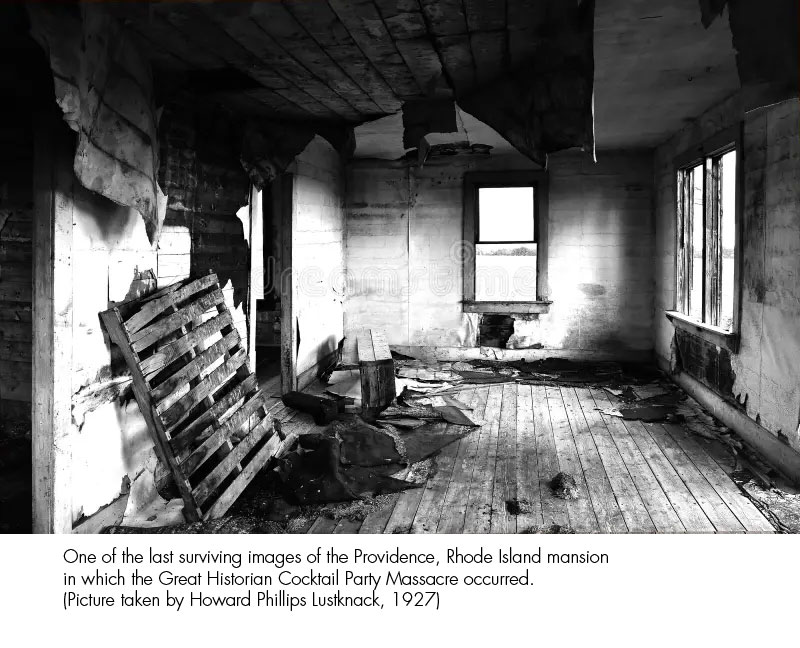
The collective social energy within this sprawling manse located in Providence, Rhode Island (razed to the ground sometime in the 1920s by a group led by Howard Phillips Lustknack to deter any additional academic homicides) was so draining that letter openers became improvised daggers. Soft hands that had once been solely committed to flipping the pages of obscure tomes became feverishly devoted to strangling the most annoying guests. While there was an undeniably effective social Darwinist remedy to this horrible tragedy, it took many years before historians could wear tweed again without transmuting into killers with blandly vampiric energy.
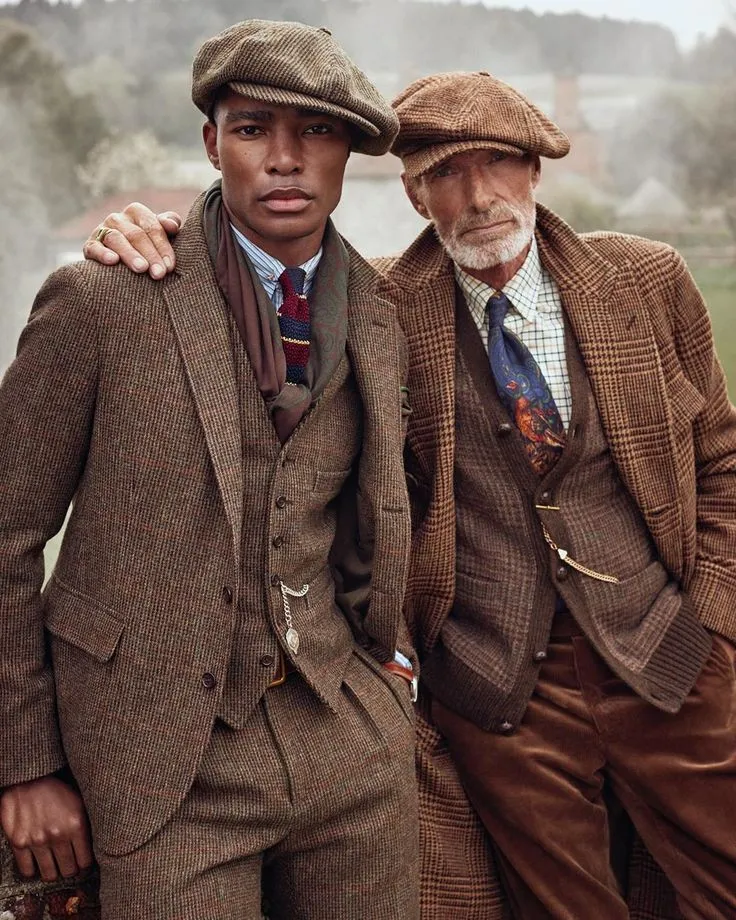 For the next two decades, historians stopped being social, fearing that vital scholarship would be curtailed by sudden violence until they were able to isolate tweed as the common factor. But time passed and the historians learned how to be gregarious while showing greater caution in the amount of tweed they wore on any given week. Thus, the troubling backwards thesis in which historians — egged on by Toynbee — believed that civilizations did not communicate and exchange ideas when caravans passed each other on a trade route remained.
Until William McNeill came along, believed by many to mostly eschew tweed, putting together a thick and formidable volume with more annotations than David Foster Wallace and a bag of chips.
Yes, I realize I’ve bullshitted about tweed in an attempt to divagate from writing an essay about a thoughtful book about the interconnected nature of disparate cultures that is incredibly depressing to read as we presently contend with a highly dangerous madman who has threatened the Iranian people with nuclear annihilation and shows no immediate sign of dropping dead. (Grim Reaper, you had one job!) What can I say? I have procrastinated for two years on this essay because, while McNeill served up a commendable arsenal of information, he did write this book in a far more intellectual time that the one we presently live in: an epoch that was fueled in part by less judgment, more curiosity, and a take-it-or-leave-it form of American exceptionalism that seems healthier than the present efforts by a fascist government to erase our greatest mistakes from the museums.
And while I do not feel especially proud of our ugly and cruel nation right now, I am at least able to summon some enthusiasm for a sunny and idealistic book that has valiantly covered thousands of years of human history, reminding me that even America, particularly in its present iteration, will eventually cease to exist. Perhaps sooner than we know.
Africa, McNeill rightly informs us, was the cradle of human civilization. This is likely extremely difficult for certain red state CHUDs of the hayseed Klansman pedigree to understand (not that I expect them to be reading my essay), but it’s true. Africa became the premiere continent for hunting, art, human inventiveness, agriculture (which has been reinvented throughout human history more times than David Bowie’s career), and pastoral culture. I mention pastoral culture because these were not idyllic and rustic shepherds living in harmony — a myth promulgated most notably by Hesiod, who needed his fantasies as much as anyone. No, these were rugged individualists who discovered rather swiftly that the easiest path to acquiring wealth was to steal other people’s crops and animals, particularly during droughts. These early human tyrants often did so with heightened aggression and were far from polite about it. Chivalry and codes of honor were some centuries away, although it is believed that at least one cutthroat cabal did mutter the equivalent of “pretty please with sugar on top” shortly after smiting down some poor bastard and his family with their scimitars.
Obviously something had to change. Despite the troubling tendency of ape-descended life forms to pass the time by engaging in selfishness and cruelty, Neolithic barbarism, much like capitalism today, wasn’t exactly a winning formula for endurance, given that there were countless victims and many deaths from the “plutocrats” (early adopters?) back then who insisted on hoarding all of the resources.
And while many of our ancestors became depressed and developed deadly new wrist slicing techniques over this state of affairs, McNeill notes that, even in the years before Christ, various civilizations began to realize that there were better forms of social camaraderie than brute force upon your neighboring farmers and foragers! Seasonal labor led to the early rise of culture. Mesopotamia worked out the canal system. And agricultural developments led to a grain surplus, which resulted in a managerial class. (Thankfully none of the managers were named Karen.)
The early cities came from the Sumerians, which resulted in water engineering maintenance. And by 2500 B.C., the first zigurrats during the Third Dynasty of Ur. (And who doesn’t like ziggurats?) Priests often served as actuaries and, when crops were tabulated, humans started to understand that they could feed and take care of other people! (Religious practitioners quickly started to understand that if you kept tabs on the population, you could track who was religious and who tithed. It was not unlike the Hollerith punch card machines given to the Nazis by IBM to track the Jews in the extermination camps.)
But it was Mesopotamia that outdid the Sumerians, devising the following elements that later civilizations would roll with:
1. The development of an imperial political theory
2. The development of bureaucracy (i.e., the aforementioned managerial class)
3. The improvement of administrative technique (it remains unknown if the Mesopotamians had anything similar to free parking validation and casual Friday)
4. The growth of trade and a merchant class
It is with the fourth element that William McNeill’s thesis starts to congeal. Trade wasn’t just a way for you to offload your ingots to another civilization. Journeys in those ancient times often took months and years. So it made sense for you to rest for a few days and, oh say, chat with the Assyrians about iron metallurgy or engage in a discussion of Vedic literature with the Brahmans. These cultural clashes were not always conciliatory. But if they were angry about any intersectional setbacks, they were, much like today’s keyboard warriors on social media, quite vociferous in memorializing their umbrage, which resulted in accidental innovation. As McNeill notes, “Had writing remained the monopoly of a privileged clique, the angry words of prophets who so freely attacked established practices would never have been written down. Hence the democratization of learning implicit in simplified scripts must be counted as one of the major turning points in the history of civilization.”
William McNeill had a remarkable talent for exhuming the vital trade-happy virtues of any civilization. Of the Mycenaeans, he notes that, even though they were very fond of war and armor, the elaborate fleets that they constructed to dominate the waters ushered in a fresh wave of trade and piracy. But it’s also important to note that McNeill’s emphasis is quite different from modern-day neoliberalism in which free-market Keynsian capitalism, often deregulated, is seen as the dubious Curad doled out to remedy most problems. For McNeill, trade is the delivery system for cultural and intellectual developments, not the ideological blunt blow that keeps impoverished nations in manumission to the wealthier ones. Additionally, despite the title, McNeill was an inclusive enough historian (perhaps too inclusive) to account for more “Eastern” civilizations. He took great care to include the Ecumene steppe warriors who turned to Islam between the fifteenth and the seventeenth centuries, noting that Muslim expansion did not curtail even as the Europeans colonized Africa. Trevor Getz of the OER Project has rightly observed that one of the reasons why The Rise of the West became such a big hit in the early 1960s was because it was believed at the time that was then no limit to what Western style capitalist economies could do. Of course, we know now that corporate greed, income inequality, and the egregious reduction of taxes against corporations and the wealthy have ushered in a new frightening age of mass layoffs from corporations during highly profitable quarters, job interviews conducted by AI, and ever-increasing assaults on affordability and the cost of living by avaricious plutocrats. Nobody in 1963 could see the great hellscape of the 2020s. And when McNeill revisited his magnum opus twenty-five years later, he was very careful to point out that China, Japan, and Eastern nations were as important as Europe and America in shaping the course of human history.
I don’t believe that William McNeill should be condemned for his 1960s optimism. He was hardly a grifter in the manner of Francis Fukuyama, who has been roundly ridiculed in the years since The End of History was published for his risibly Panglossian faith in Western neoliberalism. It’s clear from reading The Rise of the West that he was both a realist about the evil that humans do while also pinpointing the virtues of any civilization he studied. It may be a tough ask right now to commit to a massive 800 page book (one mercifully outside the sinister influence of tweed) that dares to suggest hope instead of bloodshed when civilizations meet up at an unexpected interbordered clambake. But in an age of vapid demagogues propped up by both political parties in America, you can do far worse than believing, if only for a minute, that history might be restored to helping each other instead of mindless destruction. Maybe in such an age, an eccentric oddball like me would be more concerned with devising progressive policies that help everyone on this planet rather than cloaking his considerable fears and anxieties about the future of the human race in long and ridiculous passages about tweed. But we do what we can to keep our souls surviving.
(Next Up! C. Vann Woodward’s The Strange Career of Jim Crow!)
© 2026, Edward Champion. All rights reserved.


