Dear San Francisco Speakers:
Hi there! You and I have had a pretty good relationship over the years. I’ve done my best to let pals know that one should not devalue your status in the dictionary, which is often placed just below humans who deliver lectures in front of a crowd. I’ve always thought this definition class was unfair. And I’ve had the sense over the years, with your tweeters and subwoofers and your tendency to surprise me with your performance when I feed something to you that’s too loud, that there was perhaps some consciousness at work.
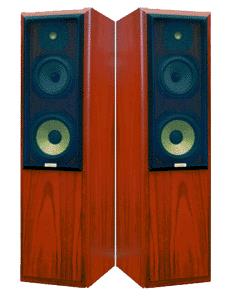 Preposterous, I know. You’re just a manufactured construct. And it’s unseemly for a nonreligious man to think these things. I know there’s thousands of you being sold at Best Buy every day, sometimes constructed inside small radios, but all of you pretty much the same. Bless the free market and mass production.
And yet I can’t help but wonder. Over the past four days, I have heard snippets of Foreigner’s “I Want to Know What Love Is” about twenty-seven times. I’ve heard it drifting out of a speaker in somebody’s apartment. I’ve heard it in cars that pass by. I’ve heard it in cafes. I’ve heard it in bars, seeing a tattooed man’s eyes mist up.
Now certainly there are worse songs in the world than this now more than two decades old ballad, a sincere though aloof attempt at sentimentality. But why are you going out of your way to play me this song? Why is it that every time I set foot outside, I hear a speaker playing this song. I simply cannot believe that the entire city population listens to KOIT all the time or that, further, KOIT plays this song endlessly in a four-song rotation or that the majority of my fellow San Franciscans really like Foreigner this much.
So I must believe that it is you who are the culprits and that there might be a great speaker conspiracy. Perhaps there are secret meetings that go on. Perhaps speakers walk away from their cabinets when I sleep and contrive plans to terrify me in dim alleys. Perhaps this is a first wave of sentient speakers unleashed by the government and I’m simply unaware of and it’s all part of a plot to condition me to be a good consumer. Perhaps you communicate on a sound spectrum that I cannot hear, letting another speaker know that I am about to walk by. I really don’t know.
But if you are communicating with me, are you employing this song to tell me that you, the great speaker population of San Francisco, want to know what love is? Are you trying to impute that you want me to show you?
Look, don’t take this personally. I’m really flattered by your attention and you’ve been really nice to me, but I’m involved with someone. Further, even if I weren’t involved with someone, I’d have no idea how to make love with you. Would I need to rip open your fabric with a Leatherman Wave and create an orifice? I know love conquers all, but I suspect this would be uncomfortable for me. Or is the Foreigner song an indication that you don’t know what love is? Perhaps this is your way of communicating that you’ve been neglected.
If so, I understand and I will do my best to whisper sweet nothings in your ears. You’re just going to have to tell me where I can find the auditory meatus.
Very truly yours,
Edward Champion
© 2006, Edward Champion. All rights reserved.