A good number of Charlie Rose interviews are now available through Google Video. (They had previously been available for $1.00 per view, but Google has since added video ads, making them free, and helpfully demarcated these ads through blue dots on the timeline.)
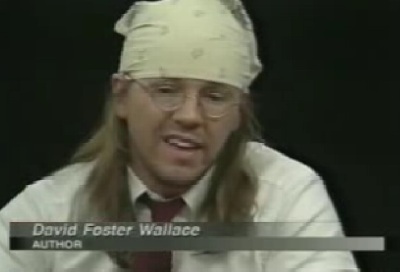 What this means, of course, is that the infamous DFW interview is now available. If you haven’t seen it, this is the interview in which Rose, who doesn’t seem to have read much of DFW’s work, asks DFW (wearing, believe it or not, a bandanna and shirtsleeves) about everything but his books. DFW comes in at the 23:17 mark.
It’s the telltale indicator of how low the literary journalism bar has fallen (compared with, say, the Dick Cavett shows of the 1970s, where Cavett or his researchers actually read the damn books) — a veritable train wreck and a true revelation of Rose’s illiteracy. A visibly uncomfortable DFW is bullied by questions that pertain to David Lynch, with Rose boasting about interviewing Lynch instead of talking about DFW’s work. Rose’s ignorance is astonishing, particularly as DFW educates Rose about the history of postmodern literature.
And this was only ten years ago.
[RELATED: Here’s Dave Eggers from 2000 (at the 25:38 mark), just as A Heartbreaking Work of Staggering Genius became a success and in the early stages of developing the humorless temperament we all know him for today. Early on, Eggers remarks, “I thought [the title] would anger the right kind of people.” Eggers angering people? Who would have thought? That’s not what McSweeney’s is about!]
[MORE FUN: David Foster Wallace, Mark Leyner & a very young Jonathan “I consider myself my own reader” Franzen (1996, all interviewed at the same time, 36:26), Ian McEwan (2005), Toni Morrison (2003), David Halberstam & Bret Easton Ellis (1999), Ian McEwan (2003), Victor Navasky (2005), Jonathan Safran Foer (2002), John Updike (1998), Martin Amis & Gore Vidal (2003), Richard Ford (2005), John Updike (2003), and Jhumpa Lahiri (2003).]
© 2007, Edward Champion. All rights reserved.
Man, somebody was procrastinating last night!
Axl Rose or David Foster Wallace? Separated at birth?
I’ve always felt it was this interview that made him swear off interviews, readings, public discourse of any type, for several years. Train wreck, indeed.
Awesome – the combo of the bandanna and the Office Space shirt and tie is like nothing else I’ve seen in a long time. What is this – freak geek? Rasta accountant?
Who’s up for some Ultimate Frisbee?
Man, what a train wreck! If Charlie Rose had asked “boxers or briefs” it would have been his best question. He obviously had read one article and someone had told him there were footnotes. Pathetic that he actually took home a paycheck for this.
Also in the Google Rose cavalcade is a show from 2000. First half, Tom Stoppard. Second half, a symposium about the late Robert Bingham and his novel “Lightning On The Sun,” with Tom Beller (this was around the time he hooked up with Parker Posey but she don’t show), RB’s widow, his sister, and Gerry Howard of Doubleday who edited the book. Score one for Gerry; I don’t think Fisketjon’s ever been on Rose (though Entrekin might’ve).
Yep – Entrekin turns up in a ’97 Rose, aired just after Burroughs died, talking about his Legacy.